标签: South America

南美洲

  • At least 16 killed, thousands displaced by gang attack in rural Haiti

    At least 16 killed, thousands displaced by gang attack in rural Haiti

    Haiti’s escalating gang violence has intensified with a series of coordinated assaults in the rural Artibonite region, leaving communities devastated and raising critical questions about security forces’ effectiveness. According to official reports, at least 16 individuals lost their lives during weekend attacks, though local journalists and human rights organizations estimate the death toll could reach 70 victims.

    The Gran Grif gang, designated as a Foreign Terrorist Organization by the United States in May 2023, is believed responsible for the systematic violence that forced approximately 6,000 residents to flee their homes. Witnesses described horrifying scenes as armed assailants descended upon Jean-Denis near Petite-Rivière de l’Artibonite, setting dwellings ablaze and opening fire on civilians attempting to escape the inferno.

    Romain Le Cour Grandmaison, director of the Haiti Observatory at Global Initiative, revealed the attacks demonstrated sophisticated coordination with roadblocks preventing police intervention. Most alarmingly, the violence appears to have been led by a commander known as “Ti Kenken”—a former vigilante leader who switched allegiances to join the criminal organization he once opposed.

    This development exposes the dangerous fluidity between vigilante groups, criminal organizations, and law enforcement in Haiti’s security landscape. The ombudsman’s office confirmed at least 19 individuals sustained gunshot wounds, with many victims remaining unclaimed due to ongoing gang presence in the area.

    The recent violence echoes October 2024’s Pont-Sondé massacre where Gran Grif killed over 100 residents, indicating an expanding pattern of rural terror campaigns. Despite the deployment of a multinational police force (MSS) in 2024, security forces have struggled against better-armed gang elements controlling significant territories.

    A new UN-backed Gang Suppression Force (GSF) is scheduled to replace the underfunded MSS with initial deployments expected in April, though experts warn that without addressing underlying governance issues and allegiances shifting within armed groups, sustainable security remains elusive.

  • Brazil’s dual-fuel ethanol fleet stabilizes gasoline prices despite Iran war oil shock

    Brazil’s dual-fuel ethanol fleet stabilizes gasoline prices despite Iran war oil shock

    As geopolitical tensions in the Middle East continue to destabilize global oil markets, Brazil stands uniquely insulated through its pioneering biofuels program that has evolved into a national energy security asset. The country’s extensive fleet of flex-fuel vehicles—capable of running on pure ethanol, gasoline, or any combination—provides both economic and psychological protection against supply disruptions.

    Initiated in 1975 during Brazil’s military dictatorship, the biofuel program has successfully transitioned through democratic eras to create what analysts describe as a “viable alternative” to fossil fuel dependency. This strategic foresight is now drawing international attention, with nations including India and Mexico examining the Brazilian model as a potential blueprint for their own energy security.

    The tangible benefits are evident at the pump: While U.S. gasoline prices surged 30% in March, Brazilian prices increased only 5%. This remarkable stability stems from a mature domestic biofuels industry centered on sugarcane-derived ethanol, which accounts for approximately 37.1 billion liters in annual sales according to state energy research data.

    The timing appears particularly fortuitous as Brazil anticipates a record sugarcane harvest beginning in April, projected to yield 30 billion liters of ethanol—4 billion more than the previous year. “That increase alone is equivalent to the total amount of gasoline Brazil imported in all of last year,” noted Evandro Gussi, president of the Brazilian Sugarcane Industry Association (UNICA).

    Brazil’s biofuel success story is rooted in São Paulo state, the nation’s agricultural and industrial powerhouse, where production ranges from high-tech export-oriented mega-farms to smaller family operations. Years of state-sponsored research have refined the technology, with institutions like the Science Development Center for Ethanol at Unicamp university driving innovation.

    “We have flexibility in ethanol production, in vehicle engines, and from the federal government, which sets the percentage of ethanol in the fuel blend,” explained center coordinator Luis Cortez. “This triple flexibility creates an unmatched adaptive system.”

    However, the biofuel shield has its limitations. Diesel prices surged over 20% in March, prompting President Luiz Inácio Lula da Silva to propose import subsidies through May. Unlike gasoline, diesel contains only 14% biodiesel (primarily soybean-based) and remains heavily dependent on imported crude—with Russia supplying most of the 20-30% monthly import requirement.

    The current crisis has accelerated international interest in Brazil’s model. Mexican President Claudia Sheinbaum has expressed particular interest in Petrobras technology for producing ethanol from agave, a plant abundant in Mexico. As Gussi observed: “The best news is that this solution has significant replicability potential—even amidst global turmoil.”

  • Clowns take to the streets of Bolivia to protest decree that could crush their livelihoods

    Clowns take to the streets of Bolivia to protest decree that could crush their livelihoods

    LA PAZ, Bolivia — The streets of Bolivia’s capital witnessed an unusual demonstration on Monday as dozens of professionally dressed clowns gathered outside the Ministry of Education building. Their vibrant protest targeted a recent governmental decree that restricts extracurricular activities in schools, potentially endangering their primary source of income.

    The controversial mandate, published in February, requires educational institutions to maintain 200 instructional days annually. This regulation effectively prohibits schools from hosting special events during regular academic days—precisely when these performers are typically engaged to entertain children.

    Wilder Ramírez, a representative of the local clown union known professionally as Zapallito, addressed media representatives stating, “This legislative action will significantly impact all professionals working with children economically.” He emphasized the developmental importance of laughter for children while questioning whether Education Ministry officials had forgotten their own childhood experiences.

    These entertainers traditionally perform at school festivities including the nationally observed Children’s Day celebration on April 12. The current administration under President Rodrigo Paz has stipulated that such celebrations may only occur voluntarily on weekends rather than during formal school days.

    Government officials have acknowledged the performers’ concerns, promising to consider their feedback when formulating the 2027 academic year regulations. However, these assurances provided minimal comfort to the protesting artists.

    Elias Gutiérrez, spokesperson for the Confederation of Artisanal Workers of Bolivia, expressed deep concern: “This mandate will substantially reduce our earnings. Combined with the nation’s ongoing economic challenges, our professional future appears increasingly uncertain.”

    Bolivia currently faces its most severe economic crisis in decades, characterized by declining natural gas production revenues and scarce U.S. dollar reserves that have driven import costs higher in the landlocked country.

    The protest gained additional support from tailors specializing in children’s performance costumes and photographers who regularly work school events. Together, they marched through central La Paz creating a spectacle with whistles and small fireworks. One prominently displayed sign captured the collective sentiment: “They’re taking away smiles, and taking work away.”

  • Suriname ex-president, Chandrikapersad Santokhi, who probed the 1982 political killings, dies at 67

    Suriname ex-president, Chandrikapersad Santokhi, who probed the 1982 political killings, dies at 67

    PARAMARIBO, Suriname — Chandrikapersad Santokhi, the former president of Suriname who steered the nation through economic stabilization and investigated one of the country’s most traumatic historical episodes, has passed away at age 67. The announcement came from current President Jennifer Geerlings-Simons via social media, though the precise cause of death remains undisclosed.

    Santokhi, affectionately known as “Chan,” served as president from 2020 to 2025 after previously holding the justice and police portfolio from 2005 to 2010. His career spanned multiple decades of public service, beginning as a police commissioner where he led the investigation into the December 1982 killings—a brutal episode where 15 political dissidents were executed under the military regime of former dictator Desi Bouterse.

    His tenure as president marked a critical transition period for Suriname. Inheriting an economically devastated nation from Bouterse, Santokhi implemented an International Monetary Fund program that restored fiscal stability but demanded significant sacrifices from citizens through the elimination of fuel, water, and electricity subsidies. These austerity measures sparked substantial public discontent, culminating in February 2023 when protesters stormed parliament demanding his resignation.

    Despite these challenges, Santokhi earned international recognition for his efforts to strengthen ties with the Netherlands, Suriname’s former colonial ruler. Dutch Prime Minister Rob Jetten expressed profound shock at Santokhi’s passing, noting his “tireless work” to enhance bilateral relations.

    Santokhi’s legacy includes his earlier role as “The Sheriff”—a nickname earned during his crackdown on drug trafficking as justice minister. His dogged pursuit of justice in the December killings case eventually led to Bouterse’s conviction and 20-year prison sentence, though the former dictator remained a fugitive until his death in 2024. The two maintained a fierce political rivalry throughout their careers, with Bouterse once accusing Santokhi of plotting against him.

    Santokhi’s political career concluded when voters denied him a second term in the May 2025 general elections, ending his leadership of the Progressive Reform Party which he had chaired since 2011.

  • Chile’s president vows tougher school security following recent stabbing and firearms incidents

    Chile’s president vows tougher school security following recent stabbing and firearms incidents

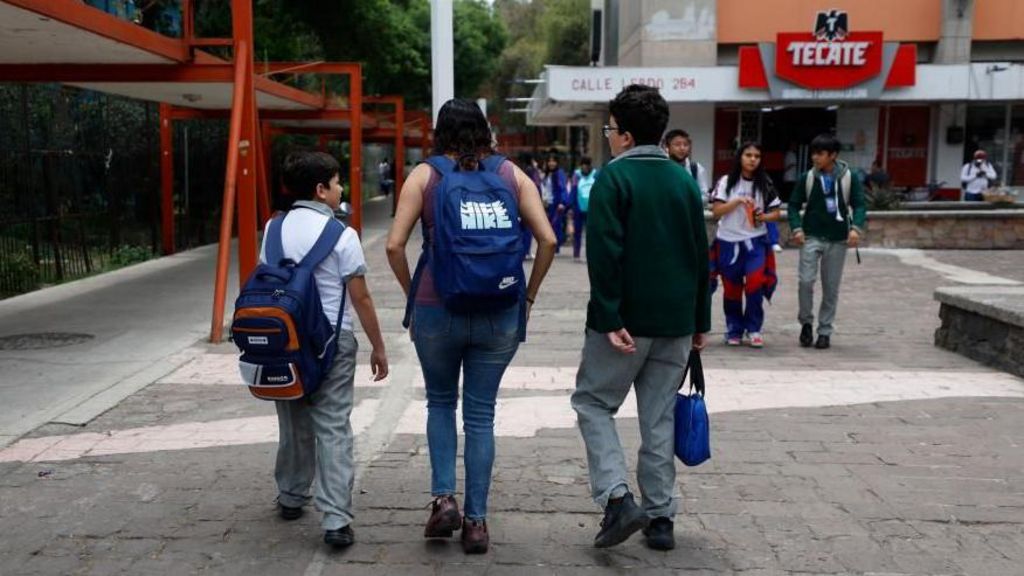
    SANTIAGO, Chile — The Chilean government has announced a comprehensive tightening of security protocols across educational institutions following two separate weapon-related incidents that have heightened national concerns about school violence. President José Antonio Kast declared Monday that his administration would implement “certain measures to protect our students” during an address at a capital city school. The policy shift comes in response to what Kast described as fundamental societal changes requiring revised approaches to campus safety. The security enhancement initiative follows Friday’s fatal knife attack in northern Chile, where an 18-year-old student killed a 59-year-old school inspector and wounded four others, leaving one victim in critical condition. This incident, categorized among Chile’s most severe school violence cases, was compounded by Monday’s separate event where authorities detained a 15-year-old student attempting to enter a Curicó school with a loaded firearm concealed in his waistband. Education Minister María Paz Arzola revealed that her office is drafting legislation to authorize backpack inspections by teachers while accelerating the installation of metal detectors in educational facilities. While Major Juan Díaz Serrano of Chile’s police force confirmed the detained teenager made no explicit threats, the occurrence has intensified national security discussions. Although armed attacks remain uncommon in Chile, the nation’s academic institutions have historically served as hubs for activism, particularly during the 2011 and 2019 social upheavals when students demanded systemic reforms. Recent months have witnessed increased campus violence, including a late-2024 explosion that injured over 30 students from homemade firebombs and May’s shooting incident in the Bío Bío region that wounded three students—the first recorded school shooting in Chilean history.

  • US reopens embassy in Venezuela months after military operation to remove Maduro

    US reopens embassy in Venezuela months after military operation to remove Maduro

    In a significant reversal of foreign policy, the United States has officially restored its diplomatic presence in Venezuela by reopening its embassy in Caracas. This move comes seven years after the facility was shuttered during the Trump administration, which had severed relations and recognized opposition leader Juan Guaidó as the legitimate president in 2019.

    The State Department confirmed the resumption of normal operations on Monday, characterizing the event as the beginning of “a new chapter” in bilateral relations. The reopening follows a carefully orchestrated three-phase plan initiated by the current administration to re-engage with the South American nation. Prior to the formal reopening, a limited contingent of U.S. diplomats had been operating from a temporary base in neighboring Colombia for over a month, conducting preliminary assessments and engagements.

    The embassy building itself required substantial rehabilitation, including remediation of mold infestations and other repairs accumulated during its prolonged closure. The State Department emphasized that a functional embassy is crucial for direct diplomacy with Venezuela’s interim government structures, civil society organizations, and commercial entities. This development signals a pragmatic shift from the maximum pressure campaign of the previous administration towards a more engaged diplomatic approach, though challenges remain in navigating the complex political landscape.

  • Russian oil tanker reaches Cuba after Trump appears to loosen blockade

    Russian oil tanker reaches Cuba after Trump appears to loosen blockade

    A Russian-flagged oil tanker has arrived in Cuban waters, delivering the first major shipment of crude oil to the Communist-run island since January. The vessel, identified as the Anatoly Kolodkin, is carrying approximately 100,000 tonnes of crude oil, described by Russian officials as a humanitarian shipment. This delivery comes as Cuba endures severe nationwide blackouts and a dire energy shortage that has crippled essential services, including hospital operations.

    The arrival follows a significant rhetorical shift from U.S. President Donald Trump. Aboard Air Force One, President Trump stated he had ‘no problem’ with Russia or other nations sending oil to Cuba, remarking, ‘they have to survive.’ This comment appeared to signal a potential softening of a de facto fuel blockade enforced by his administration since early January. The blockade was initiated following the U.S. seizure of Venezuelan leader Nicolás Maduro, a key ally who had provided Cuba with oil under preferential terms. The Trump administration had previously threatened tariffs on any country supplying oil to Cuba and had listed Cuba as barred from receiving Russian oil deliveries.

    Russian Energy Minister Sergey Tsivilev explicitly linked the shipment to U.S. policy, stating Cuba found itself in a difficult situation ‘as a result of sanctions pressure.’ The oil is expected to be offloaded at the Matanzas terminal, offering a short-term lifeline to the Cuban population. However, the underlying political stalemate remains unresolved. The Cuban government, led by President Miguel Díaz-Canel, is engaged in talks with the U.S. but both sides maintain firm red lines, with Cuba refusing any enforced political changes and President Trump recently stating he could ‘take’ Cuba. The nation’s crisis, already its worst since the Cold War due to pandemic-related tourism collapse and economic mismanagement, has been severely exacerbated by the fuel shortages.

  • Brazilian inmates find relief and reduce sentences through reading

    Brazilian inmates find relief and reduce sentences through reading

    In Brazil’s overcrowded prison system, an innovative reading initiative is offering inmates both intellectual escape and tangible benefits. The nationwide program, which allows detainees to reduce their sentences by up to 48 days annually through literary engagement, has gained significant participation—including from former President Jair Bolsonaro, currently serving a 27-year sentence for attempted coup.

    Emily de Souza, a 33-year-old incarcerated at Rio de Janeiro’s Djanira Dolores de Oliveira Women’s Prison, represents thousands who have embraced the opportunity. Sentenced to five years for drug trafficking after selling cannabis-infused brigadeiro chocolates, de Souza finds both practical and emotional value in the program. “One day is an eternity because it feels like it’s never going to end,” she explained, highlighting her motivation to reunite sooner with her 9-year-old autistic son.

    The program, formally regulated in 2012 and standardized nationally in 2021, operates through structured literary workshops. Participants select works ranging from Jorge Amado’s “Captain of the Sands” to Dostoevsky’s “Crime and Punishment” and Alice Walker’s “The Color Purple.” After reading, detainees discuss the material and produce comprehension demonstrations through reviews or artwork.

    Andréia Oliveira, coordinator of female prisons in Rio state, emphasizes the societal benefits: “When we encourage education, ludic activities, knowledge, we return to society someone who can reconnect, respect rules.”

    Despite its successes, implementation remains uneven across Brazil’s states. While some facilities provide Kindles with 300 literary works, approximately 30% of prison units lack adequate libraries or reading spaces. Rodrigo Dias of the National Secretariat of Penal Policies notes that reading remission requests have increased sevenfold since 2021, though bureaucratic barriers persist in conservative regions.

    Critics like Professor Elionaldo Fernandes Julião acknowledge the program’s value but caution against using reading initiatives as substitutes for comprehensive educational access. The program continues to evolve alongside Brazil’s “Just Punishment” plan, launched in 2025 to address systemic human rights violations in prisons while expanding educational opportunities.

  • Argentina beats Mauritania 2-1 as fans roar for Messi to chase a sixth World Cup

    Argentina beats Mauritania 2-1 as fans roar for Messi to chase a sixth World Cup

    BUENOS AIRES, Argentina — The Argentine national football team secured a 2-1 victory against Mauritania in an international friendly match at La Bombonera stadium on Friday. The encounter served dual purposes: allowing coach Lionel Scaloni to assess his squad ahead of the upcoming World Cup and providing fans an opportunity to voice their overwhelming support for captain Lionel Messi.

    The match unfolded with Enzo Fernández opening the scoring in the 17th minute, capitalizing on a precise cross from Atlético Madrid right-back Nahuel Molina. Nicolás Paz doubled Argentina’s advantage in the 32nd minute with a brilliantly executed left-footed free kick that penetrated Mauritania’s defensive wall, leaving goalkeeper Babacar Diop with no chance of intervention.

    The atmosphere intensified dramatically when Messi emerged for his warm-up routine, triggering passionate chants of “With Leo Messi leading the way, we’re all going to celebrate” from the Argentine supporters. A massive banner proclaiming “The best of the century” was unfurled from one of the stands, underscoring the emotional connection between the 38-year-old icon and his adoring public.

    Messi entered the match in the second half alongside Franco Mastantuono, a promising Real Madrid talent competing for a World Cup roster spot. The Inter Miami star created Argentina’s clearest scoring opportunity in the 55th minute with a powerful long-range effort that required an impressive save from Diop.

    This friendly was arranged as an emergency replacement after Argentina’s scheduled Finalissima match against European champions Spain in Qatar was canceled due to geopolitical tensions in the Middle East. With limited options available, the world champions settled on matches against Mauritania (ranked 115th by FIFA) and Zambia (91st) to complete their World Cup preparations.

    National teams face a May 30 deadline to submit their final 26-player rosters for the tournament. Argentina, drawn in Group J, will begin their title defense against Algeria on June 16 in Kansas City, followed by matches against Austria on June 22 and Jordan on June 27.

  • Colombia holds ceremony for 69 killed in military plane crash

    Colombia holds ceremony for 69 killed in military plane crash

    BOGOTA, Colombia — The nation of Colombia observed a solemn ceremony Friday honoring 69 members of security forces who perished in one of the country’s most devastating military aviation disasters. Photographs of the deceased were arranged before the altar of a capital city church as the nation grappled with the tremendous loss.

    Survivors of Monday’s catastrophic crash attended the memorial service, with some seated in wheelchairs assisted by medical personnel, others bearing visible injuries and bandages. The emotional gathering saw military leaders and government officials joining grieving families in remembrance.

    The tragedy unfolded when a Colombian Aerospace Force C-130 Hercules aircraft crashed shortly after departure from Puerto Leguizamo, a remote Amazonian town. The aircraft was transporting 126 security personnel to various regions for counterinsurgency operations when it went down, resulting in 57 survivors alongside the confirmed fatalities.

    Military Forces Commander General Hugo Alejandro López expressed profound sorrow, stating, ‘Our military family suffers deeply when any soldier or police officer falls in service.’ During the religious ceremony, a priest solemnly recited each victim’s name, recognizing their ultimate sacrifice for the homeland.

    Defense Minister Pedro Sánchez extended condolences to bereaved families, pledging institutional support while reflecting on the contrasting fates of those aboard: ‘For some, this would be their final earthly journey—transitioning to eternal flight. For survivors, it represented a rebirth.’

    Authorities have initiated a comprehensive investigation into the accident, having eliminated the possibility of armed attack by illegal groups. Current scrutiny focuses on aircraft maintenance, runway conditions, and crew performance. The disaster has sparked renewed national debate regarding Colombia’s aging military aircraft fleet, particularly after President Gustavo Petro questioned the operational approval of a plane manufactured in 1983 and donated by the United States in 2020. President Petro has emphasized the urgent need for modernizing Colombia’s Hercules fleet, which serves critical transport operations on unpaved runways in remote regions.