标签: South America

南美洲

  • Marco wins! Schwarz scores World Cup giant slalom victory with favored Marco Odermatt sixth

    Marco wins! Schwarz scores World Cup giant slalom victory with favored Marco Odermatt sixth

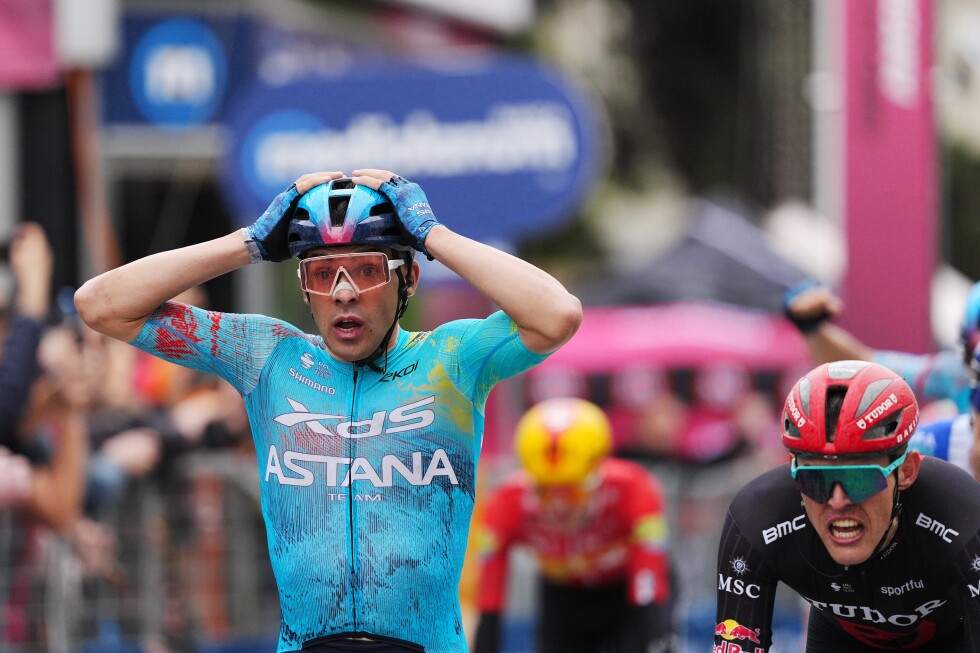
    ALTA BADIA, Italy — In a stunning reversal of expectations at the World Cup giant slalom, Austrian skier Marco Schwarz triumphed over the heavily favored Marco Odermatt on the challenging Gran Risa course. The victory marks a significant comeback for Schwarz, who spent nearly a year recovering from injury since his previous World Cup win in December 2023.

    Schwarz, starting with bib number 1, maintained his first-run advantage to secure a wire-to-wire victory, finishing 0.18 seconds ahead of Brazilian contender Lucas Pinheiro Braathen. The emotional win concluded with Schwarz embracing Austrian teammate Stefan Brennsteiner, who claimed third place.

    The outcome proved particularly surprising given Odermatt’s dominance at Alta Badia, where the Swiss skier had won five of the previous six giant slalom events. Odermatt finished a distant sixth, trailing Schwarz by 0.82 seconds and showing visible frustration upon crossing the finish line. Speculation emerged that fatigue from Odermatt’s demanding three-day speed racing program in nearby Val Gardena may have contributed to the uncharacteristic performance.

    Despite the setback, Odermatt maintains a substantial lead in the season-long overall standings, holding more than double the points of second-placed Schwarz as he pursues his sixth consecutive title.

    The race also marked several notable developments: Pinheiro Braathen’s strong performance continued his successful transition from representing Norway to Brazil, while Russian skier Aleksander Andrienko made his return to men’s World Cup competition after nearly four years of absence due to sanctions related to the Ukraine conflict. Andrienko competed with neutral status but failed to qualify for the second run.

    Additionally, the event saw the absence of Olympic contender Alexander Steen Olsen, who underwent season-ending knee surgery, removing a potential challenger to Odermatt’s giant slalom supremacy.

  • US forces stop a second merchant vessel off the coast of Venezuela, American officials say

    US forces stop a second merchant vessel off the coast of Venezuela, American officials say

    In a continued enforcement of maritime sanctions against Venezuela, United States naval personnel conducted a second interception of a commercial tanker in international waters off the Venezuelan coastline on Saturday. According to senior American defense officials who spoke under condition of anonymity, the vessel complied voluntarily with the boarding procedure.

    This operational development follows President Donald Trump’s recent announcement implementing a comprehensive blockade targeting all oil tankers operating under Venezuelan sanctions. The current interception represents the second such military action within days, succeeding the December 10th seizure of another oil tanker in the same maritime region.

    The anonymous briefing, provided by officials lacking authorization to publicly discuss ongoing military operations, confirms the sustained enforcement of Washington’s economic measures against the Venezuelan government. The strategic maritime operations demonstrate the tangible implementation of previously announced sanctions policies through direct naval intervention.

    This escalation in naval enforcement activities highlights the continuing geopolitical tensions surrounding Venezuela’s oil exports, which remain central to both the nation’s economy and the administration’s foreign policy approach toward the South American country.

  • Rubio will field questions on Russia-Ukraine, Gaza and Venezuela at news conference

    Rubio will field questions on Russia-Ukraine, Gaza and Venezuela at news conference

    WASHINGTON — Secretary of State Marco Rubio is scheduled to conduct a formal press briefing on Friday, marking a significant departure from the State Department’s recent media engagement practices. This year-end appearance, the first utilization of the briefing room since August, will primarily address three pressing international issues: ongoing Russia-Ukraine peace negotiations, Israel-Hamas conflict resolution efforts, and escalating military operations targeting Venezuelan narcoterrorism.

    The diplomatic spotlight intensifies as key meetings regarding Gaza and Russia-Ukraine are concurrently scheduled in Miami on Friday and Saturday. Secretary Rubio, who has concurrently assumed the role of national security adviser, has emerged as the principal architect and defender of President Trump’s ‘America First’ foreign policy doctrine. His tenure has witnessed substantial transformations in visa regulations, foreign assistance frameworks, and departmental reorganization efforts.

    The timing of this press conference coincides with critical diplomatic movements. Special Envoy Steve Witkoff is poised to engage with senior officials from Egypt, Turkey, and Qatar to advance the Republican administration’s Gaza ceasefire initiative, which has experienced sluggish progress since its October announcement. The proposed framework involves establishing a ‘Board of Peace’ to govern post-conflict Gaza and deploying an international stabilization force.

    Simultaneously, Saturday’s Miami meetings will host Russian President Vladimir Putin’s adviser Kirill Dmitriev alongside Witkoff, Jared Kushner, and potentially Secretary Rubio. Their agenda centers on reviewing the latest iteration of a U.S.-proposed resolution to the Russia-Ukraine conflict. This proposal has undergone multiple revisions amid President Trump’s fluctuating stance between supporting Ukraine and advocating for territorial concessions to Russia—a position firmly rejected by Kyiv.

    Regarding Venezuela, Secretary Rubio has championed intensified military operations against suspected drug-trafficking vessels in Caribbean and eastern Pacific waters. These operations, initiated in early September, represent the administration’s strategy to pressure leftist President Nicolás Maduro, who faces U.S. narcoterrorism charges. While President Trump declined to preclude military confrontation with Venezuela in recent interviews, Rubio and Defense Secretary Pete Hegseth maintain that current operations exclusively target narcoterrorists threatening U.S. security.

    Additional agenda items include the recent $11 billion arms sales package to Taiwan, which has provoked strong condemnation from Beijing, and the administration’s substantial restructuring of diplomatic operations. Secretary Rubio has implemented sweeping changes including the dissolution of the U.S. Agency for International Development and reduction of diplomatic corps size—actions critics argue have adversely affected global humanitarian efforts, though the administration cites ongoing disaster relief and new global health agreements as counterevidence.

  • Oscar contender ‘The Secret Agent’ capitalizes on the rise of Brazilian cinema

    Oscar contender ‘The Secret Agent’ capitalizes on the rise of Brazilian cinema

    SAO PAULO — Kleber Mendonça Filho’s politically charged thriller “The Secret Agent,” currently shortlisted for Oscar consideration, has emerged as a cinematic landmark that intertwines Brazil’s authoritarian past with its contemporary democratic struggles. The film follows an unassuming scientist and widower who becomes targeted by Brazil’s 1970s military regime not for revolutionary activities, but simply for maintaining his ethical principles against a business owner with regime connections.

    Star Wagner Moura, who received both Cannes and Golden Globe recognition for his performance, characterizes the protagonist’s peril as emblematic of authoritarian systems worldwide. “He faces danger merely for embodying his values,” Moura explained in an AP interview. “This demonstrates how dictatorship mechanisms operate universally.”

    The 2.5-hour drama expands in U.S. theaters following major Cannes Film Festival victories for both Mendonça Filho (Best Director) and Moura (Best Actor), alongside Golden Globe nominations for Best Drama, Best Non-English Language Film, and Best Actor. This recognition signals growing international appreciation for Brazilian cinema, coming shortly after another Brazilian production, “I’m Still Here,” secured this year’s Oscar for Best International Feature.

    Set against 1977 Recife’s Carnival celebrations, the film creates striking juxtapositions between personal turmoil and public festivity. Mendonça Filho masterfully blends political suspense with period urban legends, exploring themes extending beyond dictatorship into corruption, state violence, and institutional complicity. In one pivotal sequence, movie theater audiences emerge shaken from screenings of “Jaws” and “The Omen” while the nation lives under genuine terror.

    The film’s November 6 Brazilian premiere coincided with historic political developments as former President Jair Bolsonaro began serving a 27-year sentence for election interference, marking the first imprisonment of high-ranking military officers for attempted coup activities. Mendonça Filho notes this synchronization: “For the first time, we’re holding military officers accountable—and imprisoning a president who damaged the country.”

    Among the production’s most remarkable stories is that of Tânia Maria, a 78-year-old artisan who delivers a stunning performance despite having never acted before being discovered at age 72. Mendonça Filho wrote her character specifically to capture her “birdlike bearing, cigarette-shaped voice, and razor-sharp humor.” The seamstress-turned-actor has become a national sensation, aspiring to attend the Oscars in a self-made sparkling red dress.

    “The Secret Agent” represents part of Brazilian cinema’s decade-long reexamination of military dictatorship (1964-1985), with filmmakers increasingly confronting this unresolved national trauma. As Mendonça Filho asserts: “The military represents a trauma never properly examined. You cannot simply advise moving on—a crust forms over it, precisely what occurs with entire nations.”

  • Trump’s blockade of sanctioned Venezuelan oil raises new questions about legality

    Trump’s blockade of sanctioned Venezuelan oil raises new questions about legality

    The Trump administration’s naval interdiction campaign targeting sanctioned oil tankers near Venezuela is generating intense debate over its legal foundations and potential to escalate into armed conflict. While officially characterized as a narrowly tailored operation against vessels violating U.S. sanctions, legal experts and congressional Democrats express alarm that these maritime operations may violate international law and deliberately provoke Venezuelan forces.

    University of Pennsylvania national security law professor Claire Finkelstein warns the administration appears to be “bootstrapping our way into armed conflict” by implementing aggressive tactics without congressional authorization. This perspective finds support among military veterans in Congress, including Representative Jason Crow (D-CO), who fears the situation could spiral into unintended warfare due to insufficient consultation with legislative bodies.

    Republican leadership maintains support for the operations, comparing the Venezuelan oil interdiction to previous actions against Iranian tankers. Representative Michael McCaul (R-TX) asserts that targeting sanction-evading vessels represents legitimate enforcement action rather than acts of war.

    The semantic distinction between “blockade” and “quarantine” has emerged as a crucial legal differentiation. Pentagon officials prefer the latter term, which under international law constitutes a selective security measure rather than an act of war requiring formal declaration. This terminology echoes historical precedents, most notably President Kennedy’s “quarantine” during the Cuban Missile Crisis.

    Venezuela’s response has emphasized the economic threat posed by these operations, given the country’s dependence on oil revenues despite possessing the world’s largest proven reserves. Nicolás Maduro Guerra, the president’s son and a legislator, acknowledged the serious challenge presented by U.S. military pressure while affirming Venezuela’s commitment to peaceful resolution.

    Legal scholars remain divided on the operation’s legitimacy. Emory University’s Mark Nevitt questions the legal foundation, describing the policy as “a junior varsity blockade” that improperly applies wartime tools without formal conflict declaration. Conversely, Texas Tech’s Geoffrey Corn suggests the operations may represent intensified pressure tactics rather than deliberate provocation toward open warfare.

    The ongoing maritime campaign continues without congressional war authorization, despite Democratic efforts to require legislative approval for further military escalation in the region.

  • A look at the US military’s unusually large force near Venezuela

    A look at the US military’s unusually large force near Venezuela

    The United States has initiated its most substantial military mobilization in the Caribbean region in decades, deploying approximately 15,000 personnel as part of an intensified counter-narcotics operation targeting Venezuelan drug trafficking networks. This strategic buildup represents the Trump administration’s most assertive military response to the narcotics trade in the Western Hemisphere.

    Naval forces constitute the operation’s backbone, featuring an impressive armada of 11 warships led by the USS Gerald R. Ford—the Navy’s most advanced aircraft carrier. The carrier strike group is complemented by five destroyers, three amphibious assault ships, and two cruisers, creating an unparalleled maritime presence. The amphibious readiness group transports a full Marine expeditionary unit equipped with specialized aircraft including Osprey tilt-rotor aircraft, Harrier jets, and various helicopter squadrons capable of executing both troop transport and precision strike missions.

    The naval firepower includes Tomahawk cruise missiles with significant strike range capabilities, while a nuclear-powered submarine operates covertly in South American waters, further enhancing the mission’s strategic reach.

    Air operations have similarly expanded with advanced aircraft deployed to Puerto Rico’s strategic airfields. The Marine Corps has stationed F-35B Lightning II stealth fighter jets, while Navy EA-18G Growler electronic warfare aircraft provide electronic countermeasures capabilities. Most significantly, MQ-9 Reaper drones—capable of extended endurance and precision strikes—have been actively conducting surveillance and targeting operations.

    The aerial component also includes P-8 Poseidon maritime patrol aircraft and the heavily armed AC-130J Ghostrider gunship, capable of delivering precision firepower against ground targets. Demonstrative flights by B-52 Stratofortress and B-1 Lancer bombers, including one mission explicitly labeled a ‘bomber attack demonstration,’ underscore the operation’s serious intent.

    In a particularly provocative maneuver, US F/A-18 fighter jets recently conducted extended flights over the Gulf of Venezuela, bringing American airpower within 150 miles of Venezuelan territory—the closest approach since operations commenced.

    The Pentagon maintains operational secrecy regarding specific troop distributions, but confirms that nearly 10,000 personnel are deployed aboard vessels, with additional support from various military branches and government agencies. This comprehensive military response represents the Trump administration’s tangible implementation of its narco-terrorism charges against Venezuelan leadership.

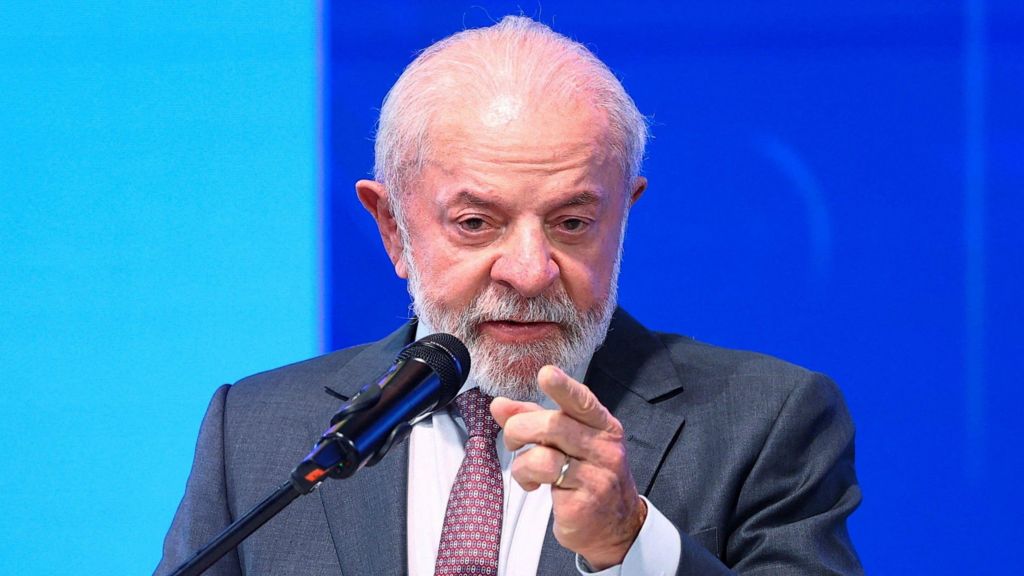
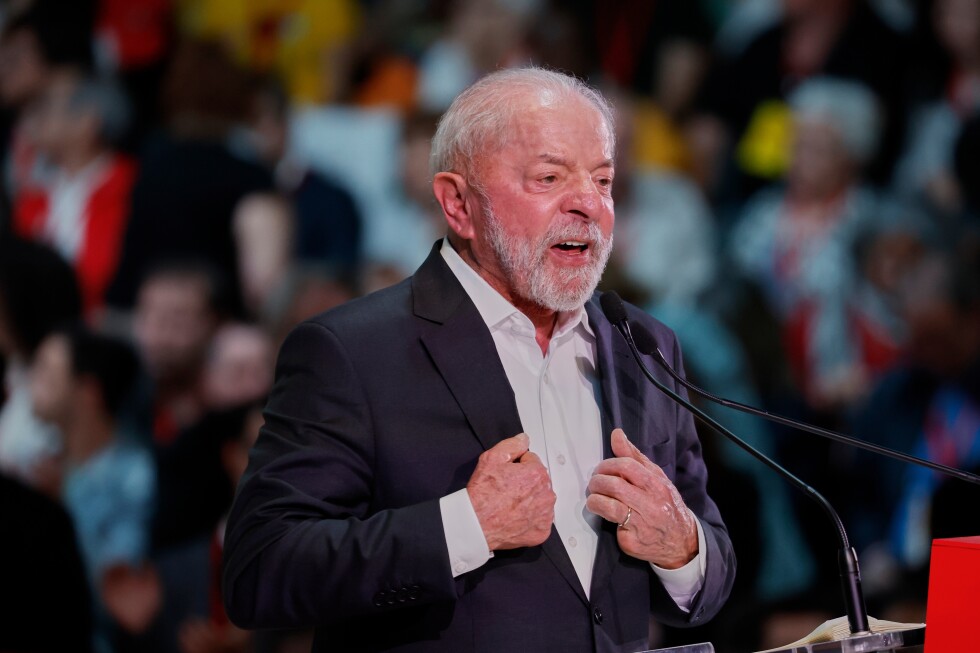
  • Brazil’s Lula vows to veto bill that could reduce Bolsonaro’s prison sentence

    Brazil’s Lula vows to veto bill that could reduce Bolsonaro’s prison sentence

    BRASILIA — Brazilian President Luiz Inácio Lula da Silva declared on Thursday his firm intention to veto legislative measures that would substantially diminish the 27-year prison sentence of his predecessor, Jair Bolsonaro. The former leader remains incarcerated since November following convictions related to attempted coup activities against Brazil’s democratic institutions.

    The controversial legislation, which cleared both the Chamber of Deputies and Senate this week, proposes significant modifications to Brazil’s penal system. It would accelerate the transition of convicted individuals from stringent to more lenient prison regimes and provide sentence reductions of up to two-thirds for crimes committed within crowd contexts—provisions that would directly benefit participants in the January 8, 2023, insurrection in Brasília.

    President Lula emphasized to journalists that those who committed crimes against Brazilian democracy must face appropriate consequences for their actions. His administration maintains that the proposed law undermines judicial accountability for acts threatening constitutional order.

    The legislative proposal faces additional challenges beyond presidential veto. Brazil’s Supreme Court is expected to review the bill’s constitutionality, particularly regarding provisions that would prevent cumulative sentencing for related offenses such as abolishing democratic rule and attempting a coup d’état—a central argument in Bolsonaro’s legal appeal.

    Political tensions surrounding the legislation have ignited nationwide demonstrations. Tens of thousands of Brazilians protested in major cities including São Paulo, Salvador, and the capital Brasília over the weekend, expressing opposition to what many perceive as special treatment for political figures convicted of anti-democratic actions.

    The developments occur against the backdrop of emerging electoral dynamics. Senator Flávio Bolsonaro, the former president’s eldest son and potential presidential candidate, has endorsed the legislation while criticizing the legitimacy of the judicial process against his father. Political analysts anticipate he may challenge President Lula in the 2026 elections, representing the Bolsonaro-aligned Liberal Party.

  • Ecuador defender Pineida killed in shooting

    Ecuador defender Pineida killed in shooting

    The Ecuadorian football community is in mourning following the tragic death of national team defender Mario Pineida, who was fatally shot in an armed attack in Guayaquil. The 33-year-old athlete lost his life on Wednesday when assailants on motorcycles opened fire outside a northern district shop, also injuring his mother and another woman who were with him at the time.

    According to local media reports, the coordinated shooting occurred in broad daylight, highlighting the escalating security crisis in Ecuador’s largest city. The Interior Ministry has deployed specialized police units to investigate the homicide, though no suspects have been apprehended yet.

    Pineida’s killing underscores Guayaquil’s transformation into a epicenter of gang-related violence and narcotics trafficking. Official statistics reveal a staggering 1,900 homicides recorded between January and September alone, marking the highest murder rate nationwide. This incident continues a disturbing pattern of violence targeting athletes: three second-division footballers were killed in September, followed by another player surviving a shooting in October.

    Having earned nine international caps between 2014-2021, Pineida spent the majority of his professional career with Barcelona SC of Guayaquil, where he played from 2016 after beginning at Independiente DV. His career included loan spells at Brazilian side Fluminense and domestic club El Nacional.

    The football world responded with immediate tributes. Barcelona SC expressed profound dismay, while former clubs Independiente and Fluminense posted memorial messages on social platforms. The Ecuadorian Football Federation issued an official statement condemning the violence and extending condolences to Pineida’s bereaved family.

  • Ecuadorian police say soccer player Mario Pineida has been shot dead in an apparent attack

    Ecuadorian police say soccer player Mario Pineida has been shot dead in an apparent attack

    Ecuador faces a deepening security crisis as professional footballer Mario Pineida, a 33-year-old defender for Barcelona de Guayaquil, was fatally shot in a violent attack in Guayaquil. The incident, confirmed by Ecuadorian police on Wednesday, resulted in two fatalities and one additional injury, marking another tragic episode in the nation’s escalating violence crisis.

    According to official reports from the Interior Ministry, the attack occurred in the Samanes region of northern Guayaquil, approximately 265 kilometers southwest of the capital Quito. While authorities have not released details about the second victim or the circumstances surrounding the shooting, local media indicates the violence reflects the deteriorating security situation affecting all levels of Ecuadorian society.

    The football community has been profoundly impacted by Pineida’s death. Barcelona de Guayaquil released an official statement expressing profound sadness among players, staff, and supporters. Pineida, who began his professional career with Independiente del Valle from 2010-2015, joined Barcelona de Guayaquil in 2016 where he achieved significant success, including two league championships. His career also included a brief tenure with Brazil’s Fluminense in 2022.

    This tragedy occurs against the backdrop of Ecuador’s most violent period in recent history. The Ecuadorian Observatory of Organized Crime projects the nation will exceed 9,000 homicides this year, surpassing previous records of 7,063 violent deaths in 2022 and 8,248 in 2023. President Daniel Noboa has committed to combating criminal organizations that have expanded operations within Ecuador, often linked to international drug cartels.

    Pineida’s death follows other football-related tragedies, including the November killing of a 16-year-old Independiente del Valle player by a stray bullet in Guayaquil, and the September deaths of three players from different clubs—Maicol Valencia, Leandro Yépez, and Jonathan González—all victims of gun violence.

  • Trump demands Venezuela pay for seized US oil assets after calling for ‘blockade’

    Trump demands Venezuela pay for seized US oil assets after calling for ‘blockade’

    WASHINGTON — President Donald Trump intensified pressure on Venezuela’s socialist government Wednesday by demanding the return of U.S. oil assets nationalized under previous administrations, framing his newly announced naval blockade as justified response to what he termed “illegal seizure” of American energy investments.

    The President explicitly connected Venezuela’s past appropriation of oil facilities to his current sanctions enforcement strategy, stating tankers violating U.S. restrictions would be intercepted. “They took all of our energy rights. They illegally took it,” Trump told reporters, referencing nationalization efforts that began in the 1970s and expanded under Hugo Chávez and Nicolás Maduro. “We want it back.”

    This economic confrontation unfolds alongside narcotics allegations, with Trump asserting Venezuelan oil revenues fund drug trafficking operations targeting the United States. The administration’s multifaceted pressure campaign has recently included:
    – Military seizures of sanctioned oil tankers near Venezuela’s coast
    – Coordinated strikes against suspected drug trafficking vessels
    – Consideration of potential land-based military options
    – Diplomatic efforts to isolate Maduro’s government internationally

    Stephen Miller, Trump’s deputy chief of staff, amplified the rhetoric by labeling Venezuela’s nationalization program “the largest recorded theft of American wealth and property” in a social media post, claiming expropriated assets subsequently funded terrorism and narcotics proliferation.

    The historical context traces to incomplete compensation for nationalized assets, notably a 2014 international arbitration ruling ordering Venezuela to pay $1.6 billion to ExxonMobil. While Chevron maintains limited operations under U.S. waiver, most American energy interests remain unresolved.

    Venezuela responded through diplomatic channels, with Foreign Minister Yván Gil denouncing tanker seizures as “piracy” in a letter to the U.N. Security Council obtained by The Associated Press. The communication demanded return of “kidnapped crew” and confiscated oil while seeking formal condemnation of U.S. actions.

    Notably, administration officials clarified Trump’s reference to designating Venezuela as a foreign terrorist organization should be treated as rhetorical rather than literal policy, though the Justice Department had previously indicted Maduro on narcoterrorism charges.

    Military analysts observe that interdiction operations and targeted seizures represent lower-risk alternatives to direct military confrontation while maintaining economic pressure on Caracas. The evolving situation continues to test international law boundaries regarding maritime sanctions enforcement and asset recovery claims.