标签: South America

南美洲

  • Canadian national health agency confirms 1 positive hantavirus test

    Canadian national health agency confirms 1 positive hantavirus test

    VANCOUVER, British Columbia — Public health officials in Canada have formally confirmed a positive hantavirus infection in one of four Canadian travelers who recently returned home from the MV Hondius, the cruise ship at the center of a global outbreak that has already claimed three lives. The confirmation from the Public Health Agency of Canada came one day after British Columbia’s provincial public health department announced the case had initially been classified as a presumptive positive, with final testing pending at the National Microbiology Laboratory in Winnipeg.

    In an official public statement Sunday, the national health agency confirmed that only one of the two tested samples from the returning group returned a positive result for the hantavirus. The negative test belonged to the traveling partner of the confirmed case, who is part of the same travel party. Both individuals are a couple in their 70s originally from Yukon, and they are currently receiving care in a Victoria hospital.

    The four Canadian passengers disembarked and returned to British Columbia one week prior to the confirmation. Alongside the Yukon couple, the group includes a second person in their 70s from Vancouver Island, and a 50-something British Columbia native who resides outside of Canada. All four travelers are currently in isolation per public health protocols.

    This newly confirmed Canadian case marks the 10th positive hantavirus infection tied to the MV Hondius outbreak. To date, the outbreak has killed three people, including a Dutch couple that public health investigators identify as the index cases — researchers believe the pair were first exposed to the virus during a stop in South America before boarding the vessel.

    Canadian health authorities have emphasized they are following strict precautionary measures to safeguard the general public. In their statement, the agency noted that the current population-level risk of Andes hantavirus linked to the cruise outbreak remains very low for people living in Canada. As of the update, every confirmed infection connected to the event has been limited to passengers and crew members who were aboard the MV Hondius.

    To support global public health safety, Canada has shared full details of the confirmed case with the World Health Organization, and will continue contributing data to the ongoing international investigation into the outbreak.

  • Venezuela says it deported a close ally of Maduro to face judicial proceedings in US

    Venezuela says it deported a close ally of Maduro to face judicial proceedings in US

    MIAMI — In a striking political shift that caps years of international legal wrangling, Venezuela’s transitional government confirmed Saturday it has deported Alex Saab, a once-powerful close associate of ousted Venezuelan leader Nicolás Maduro, to the United States to face federal criminal proceedings. The move comes less than three years after Saab was pardoned by U.S. President Joe Biden as part of a high-stakes prisoner exchange between the two nations.

    The 54-year-old Colombian-born businessman has long been labeled by U.S. officials as Maduro’s personal “bag man,” and his deportation marks a dramatic reversal of fortune. Just years ago, Maduro mounted an aggressive, all-out diplomatic and legal campaign to secure Saab’s release after his initial 2020 international arrest. Today, Saab’s transfer opens the door for U.S. prosecutors to compel his testimony against Maduro himself, who was captured in a surprise U.S. military raid in January and is currently awaiting trial on federal drug trafficking charges in a Manhattan courtroom.

    In a brief official statement released Saturday, Venezuela’s national immigration authority did not explicitly name the country Saab was sent to, but confirmed the deportation order was issued in direct response to multiple active criminal investigations being conducted by U.S. authorities. The statement’s choice to identify Saab solely as a “Colombian citizen” is widely viewed as a deliberate workaround of Venezuelan national law, which explicitly bans the extradition of Venezuelan-born citizens. This framing also marks a sharp break from the previous Maduro administration’s claims, when officials including then-acting President Delcy Rodríguez (now Venezuela’s current transitional leader) insisted Saab was a Venezuelan diplomat carrying out an urgent humanitarian mission to Iran when he was detained during a refueling stop in 2020.

    U.S. federal prosecutors have been scrutinizing Saab’s role in an alleged bribery and kickback conspiracy tied to Venezuelan government food import contracts for months, The Associated Press has confirmed. The investigation traces back to a 2021 federal prosecution filed in Miami against Saab’s long-time business partner, Alvaro Pulido, according to a former U.S. law enforcement official familiar with the case. The probe centers on activities tied to the CLAP program, a signature Maduro administration initiative launched to distribute subsidized staple goods including rice, corn flour and cooking oil to low-income Venezuelans grappling with devastating hyperinflation and a collapsed national economy.

    Saab amassed a massive personal fortune through his exclusive access to Venezuelan government contracts during Maduro’s tenure, but he fell out of favor rapidly following Maduro’s ouster in January. Since taking office as the head of Venezuela’s new transitional government on January 3, Rodríguez has moved systematically to cut Saab from power: he was removed from the cabinet, stripped of his influential position as the primary gatekeeper for foreign companies seeking investment access to Venezuela, and has been the subject of conflicting reports for months claiming he was either imprisoned or placed under house arrest.

    As of Saturday evening, the U.S. Department of Justice had not issued an immediate response to requests for comment on Saab’s deportation. Associated Press reporter Eric Tucker contributed additional reporting for this story from Washington, D.C.

  • Argentina’s beef consumption falls to lowest level in 20 years as prices soar

    Argentina’s beef consumption falls to lowest level in 20 years as prices soar

    BUENOS AIRES, Argentina — As dawn breaks at 6 a.m. over the Mataderos neighborhood of Argentina’s capital, workers haul sides of beef off delivery trucks outside a local butcher shop while a queue of customers already forms to grab discounted bulk cuts. Inside the shop, 73-year-old owner Jorge García and his small team have been prepping orders since before sunrise, but a quiet shift is visible across the space: alongside the stacks of beef boxes and hanging primal cuts, chicken and pork now take up far more shelf and hook space than they once did.

    For decades, Argentina has stood as one of the world’s most avid consumers of beef, a staple woven into the country’s cultural and culinary identity. Today, however, that longstanding tradition is shifting dramatically. New data from the Agricultural Foundation for Argentina’s Development shows that per capita annual beef consumption dropped to 44.5 kilograms (98 pounds) as of April 2026, down from 49.5 kilograms just one year prior, and a steep fall from the 63.4 kilograms recorded in 2006. This marks the lowest consumption level the country has seen in 20 years, a change directly tied to the harsh economic austerity measures implemented by libertarian President Javier Milei, who took office in December 2023.

    When Milei assumed office, Argentina was grappling with an annual inflation rate of 211%. The president campaigned on a promise to eliminate what he called “the cancer of inflation” via a drastic austerity adjustment plan, symbolized by his trademark chainsaw used to signal deep public spending cuts. His administration implemented cuts equivalent to nearly one-third of the country’s total public spending, a move that ultimately achieved a rare budget surplus — a milestone not seen in Argentina in recent decades. But the social cost of these policies has sparked widespread criticism, as millions of households have seen their purchasing power erode rapidly.

    Within the first few months of taking office, Milei’s government eliminated 13 federal ministries, laid off roughly 30,000 public sector employees, paused all new public works projects, and cut funding for core public sectors including education, healthcare, and scientific research. The administration also rolled back longstanding state subsidies for essential services including electricity, natural gas, water, and public transportation. Economist Camilo Tiscornia explained that these cuts directly hit household bottom lines: “That affects household income because families now have to pay more for services that were previously subsidized by the state. As a result, they have less disposable income and must give up certain more expensive goods, such as beef.”

    Wage growth has also failed to keep pace with rampant inflation. The latest available data shows that wages for formally registered workers rose just 1.8% in February, while monthly inflation hit 2.9% that same month. For working and retired Argentines alike, this gap has forced difficult trade-offs. “Before, I had the freedom to buy what I wanted,” said Alberto Brajin, a 61-year-old retiree who runs a street-side barbecue stall in Buenos Aires. Now, he said, he has to “trade down” to cheaper proteins like chicken to keep his business running.

    Multiple factors beyond shrinking disposable income have combined to push beef consumption down. Over the past 12 months, beef prices have surged more than 60%, hitting an average of 18,500 Argentine pesos (roughly $13) per kilogram in Buenos Aires this May, according to data from the Argentine Beef Promotion Institute.

    In July 2025, Milei’s administration rolled back decades of beef export restrictions put in place by former President Alberto Fernández to control domestic prices. The government cut export taxes on beef and poultry and eliminated production quotas to encourage overseas sales. The policy shift came at a time when Argentina’s domestic beef production had already dropped more than 10% due to severe droughts and flooding across major cattle-producing regions, according to CICCRA, a non-profit that represents Argentina’s beef producers.

    The opening of the export market came alongside a separate policy shift from the United States, which expanded Argentina’s tariff-free beef quota earlier this year to address domestic cattle shortages in the U.S. The combination of these changes has led to a boom in overseas sales: Argentina’s government reported this week that beef exports jumped 54% year-over-year in the first quarter of 2026, totaling nearly 200,000 tons valued at more than $1 billion. With more beef flowing overseas, domestic supply has tightened, and prices have risen to align with higher global market rates.

    “Previously, all meats had similar prices, which encouraged high beef consumption that did not reflect its real production costs,” agricultural consultant Iván Ordóñez explained. For meat distributor Juampi Quintero, 25, the change has been stark: he estimates that beef consumption among his local clients has fallen by more than half. “Beef moved into a completely different purchasing-power category. Workers’ wages fell far behind,” he said.

    As beef moves out of reach for many families, local butchers and food sellers have had to adapt to shifting consumer demand. Current price data shows chicken averages just 4,900 pesos ($3.50) per kilogram, while pork ribs run around 8,900 pesos ($6.30) per kilogram — far less than the $13 per kilogram average for beef. “We’ve chosen to buy pork and chicken because beef is too expensive,” said local shop owner Ruth Simon.

    García, the 73-year-old Mataderos butcher shop owner, added chicken and pork to his inventory less than a year ago, after he noticed consistent changes in what his customers were asking for. Like many small business owners across the country, he is adjusting to the new economic reality rather than resisting it. “You have to adapt,” he said. “We can’t just sit around crying. No crying. We have to work. We have to keep our dignity. We have to fight.”

  • The US turns to Guyana’s bauxite in its latest push for Latin America’s resources

    The US turns to Guyana’s bauxite in its latest push for Latin America’s resources

    Amid a shifting global energy landscape and intensifying great power competition in the Western Hemisphere, the Trump administration has announced a new push to unlock business opportunities in Guyana’s rich bauxite and mineral sectors, expanding Washington’s growing focus on Latin American energy and raw material supplies. This diplomatic outreach, centered on high-level talks held earlier this week between U.S. Under Secretary for Economic Affairs Jacob Helberg and top Guyanese leadership including President Irfaan Ali, comes as the small South American nation undergoes an unprecedented oil boom that has upended its global standing.

    Over the past decade, massive offshore oil discoveries have catapulted Guyana from a relatively overlooked economy to a geopolitically critical player, a shift that has only gained urgency amid the ongoing global energy shortage triggered by the Iran conflict. Beyond its newfound oil wealth, Guyana holds substantial bauxite reserves – a core input for aluminum production that has drawn growing global demand from industrial sectors worldwide.

    In recent months, the Trump administration has ramped up its focus on extracting and developing Latin America’s natural resources: it has pushed to expand oil output in Venezuela following the U.S. military incursion in January, while also pursuing expanded critical mineral cooperation with Brazil. This renewed regional focus marks a clear reversal of decades of declining U.S. attention to Latin American energy production, experts note.

    “In times of global energy scarcity, there’s a great deal more focus on Latin America as an alternative stable source of supply,” explained Benjamin Gedan, senior fellow and director of the Latin America program at the Stimson Center. “And Guyana is the leader of that story.”

    A core undercurrent driving Helberg’s visit is growing anxiety within the U.S. government that Chinese state-backed firms have already secured billions of dollars in major infrastructure and resource contracts in Guyana, locking out U.S. competitors. Guyanese officials have long observed that U.S. firms have been far less proactive than their Chinese counterparts, who frequently offer tailored financing packages and accommodate local labor requirements to win large-scale projects. Currently, Chinese mining giant Bosai Minerals dominates Guyana’s bauxite sector, holding a near-monopoly over production in the country.

    Following the bilateral talks, Helberg noted that both sides acknowledged Guyana’s extraordinary endowment of natural resources, confirming that the U.S. sees untapped potential in Guyana’s already well-documented bauxite reserves. Beyond the bauxite sector, Helberg added that the U.S. is prepared to support Guyana with advanced geological survey technology to map and develop additional untapped mineral deposits across the country.

    Jason Marczak, vice president and senior director for the Adrienne Arsht Latin America Center at the Atlantic Council, said the visit reflects a deliberate shift by U.S. policymakers to correct past missteps that allowed China to build a strong economic foothold across Latin America. While Guyana has actively sought to diversify its international trade and investment partnerships – including maintaining strong ties with China – Marczak emphasized that the country remains a core U.S. partner in the region. “President Ali in particular is very close to the United States and in general recognizes the importance of the U.S. as a key partner for Guyana,” Marczak said. “That’s reflected by Helberg’s visit to Guyana.”

    Speaking to the Associated Press on Friday, Guyana’s Foreign Secretary Robert Persaud confirmed the country’s interest in attracting new U.S. investment across its oil, gas and mineral sectors in the coming months. “The U.S. is our strategic partner and we made that clear to them but we would want value added to bauxite and other products,” Persaud said. “We are interested in processing and with improvements in energy generation.”

  • A political dynasty heiress and a former trade minister advance to Peru’s presidential runoff

    A political dynasty heiress and a former trade minister advance to Peru’s presidential runoff

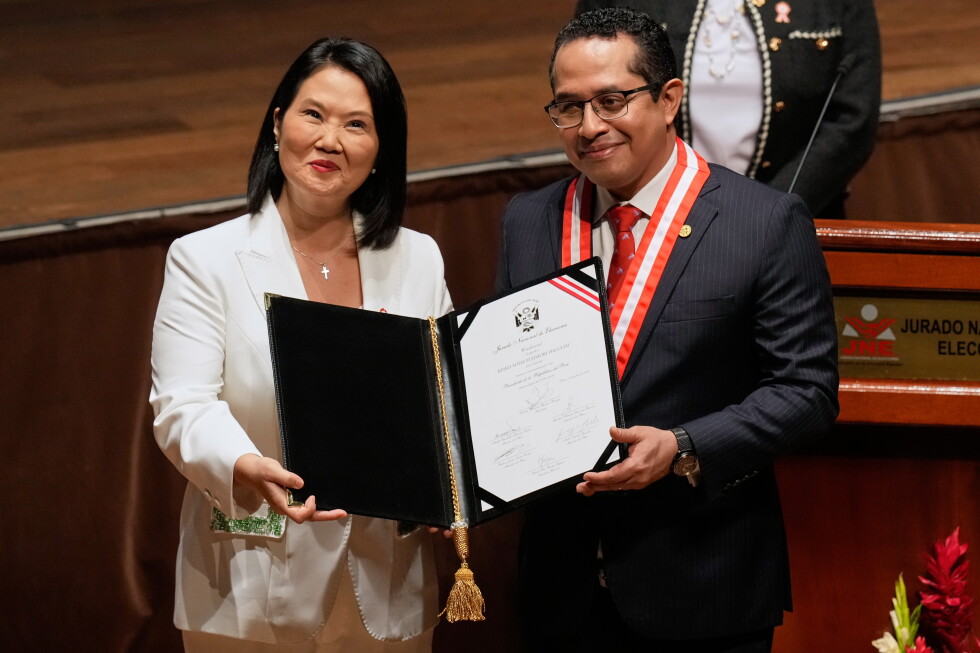
    LIMA, Peru — After final vote tallies were certified Friday, Peru has locked in its two candidates for the June 7 presidential runoff election, pitting a scion of one of the country’s most powerful political families against a nationalist former trade minister who has vowed to upend Peru’s long-standing mining policy. This runoff will shape the future of a nation that has seen eight presidents in just a decade, grappling with widespread public anger over crime and corruption even as its resource-driven economy holds strong against chronic political instability.

    Final official results from the April 12 first-round vote confirm that conservative Keiko Fujimori, leader of the Fuerza Popular party and daughter of disgraced former president Alberto Fujimori, secured first place with 17.18% of the vote. Trailing narrowly at 12.03% was nationalist congressman Roberto Sánchez of the Juntos por el Perú party, who edged out 33 other contenders to claim the second runoff spot. Both candidates have centered their campaigns on addressing Peru’s skyrocketing violent crime rate, which ranks as the top concern for most Peruvian voters.

    The first-round election was marred by widespread logistical failures, including widespread ballot shortages that left thousands of eligible voters both in Peru and overseas unable to cast their ballots on election Sunday. Authorities responded by extending voting for more than 52,000 Lima voters on Monday, as well as for Peruvian citizens registered in two U.S. voting locations: Orlando, Florida, and Paterson, New Jersey. Ballot access issues have already spurred an official investigation, with police raiding the former election chief’s home and a Peruvian court setting a mid-May deadline for the completion of official vote counting.

    The election unfolded against a backdrop of soaring violent crime and persistent corruption scandals that have left most Peruvian voters deeply disillusioned, with widespread public distrust of nearly all candidates’ integrity and preparedness to lead. In response to voter anger, dozens of first-round candidates put forward hardline crime proposals, including plans for mega-sized prisons, restricted inmate meals, and a return of the death penalty for serious offenses.

    Against this turbulent political landscape, Peru’s economy has emerged as an unexpected bright spot. As the world’s second-largest copper producer, the country has posted consistent 3% annual growth across 2024 and 2025, defying predictions that the constant turnover of presidents—three have held office since October alone—would derail economic performance. The mining sector that drives this growth is now one of the biggest points of contention between the two runoff candidates.

    The upcoming June contest echoes Peru’s 2021 presidential runoff, which also featured Fujimori as a candidate. That year, she faced off against rural schoolteacher and political outsider Pedro Castillo, whom Sánchez has openly supported and even emulates by wearing Castillo’s signature wide-brimmed campaign hat. Castillo defeated Fujimori by a narrow margin of roughly 42,000 votes, fueled by overwhelming support from low-income rural communities, but his presidency ended in impeachment and arrest in December 2022 after he attempted to dissolve Congress to block an impeachment vote.

    This marks Fujimori’s fourth run for the presidency. She has run on a promise of a hardline crackdown on rising crime, but her record is contradictory: her party supported legislation in recent years that legal experts say undermines criminal prosecutions, including measures that eliminated preliminary detention for certain offenses and raised the legal bar for seizing assets tied to organized crime. Sánchez has pledged to repeal these same laws, while also promising to strengthen police intelligence units to combat extortion, a crime that has increased fivefold across Peru in the last five years.

    On economic policy, Sánchez has broken with the market-friendly policies that have defined Peru for the last two decades. His core proposal is a sweeping overhaul of the country’s mining sector: he has promised to renegotiate existing contracts with foreign mining firms to increase state tax revenues, grant rural indigenous communities partial ownership stakes in mines operating on their land, and ban harmful open-pit mining operations. Political analysts note these reforms face steep odds, however, as Sánchez’s party does not currently hold a majority in congress.

    Will Freeman, a Latin America Studies fellow at the Council on Foreign Relations, noted that Fujimori holds a key structural advantage: she is one of Peru’s only remaining national career politicians, heading the country’s only enduring political organization with a full nationwide infrastructure. Freeman argued this structure could help her deliver on crime policy, but that her track record suggests any crackdown would be inconsistent. He pointed to the irony of Fujimori’s history: in the 2010s, her party supported anti-organized crime legislation that prosecutors later used to open corruption investigations against Fujimori herself, leading the party to roll back many of those same anti-crime measures in subsequent years.

    The winner of the June 7 runoff will be sworn in for a five-year presidential term on July 28.

  • Latin American nationals deported by the US to Congo face an uncertain future

    Latin American nationals deported by the US to Congo face an uncertain future

    Fifteen Latin American asylum seekers who were deported to the Democratic Republic of Congo under the former Trump administration’s hardline, widely panned migration crackdown are now stranded in a country they never knew existed, facing an impossible choice no protected refugee should ever have to make. For the 29-year-old Colombian woman at the center of this case, who spoke to the Associated Press on condition of anonymity out of fear of retaliation, what was supposed to be a search for safety after fleeing persecution has devolved into what she describes as an unending nightmare—an outcome far removed from Congolese President Félix Tshisekedi’s dismissive description of their situation as “living the Congolese dream.”

    The Colombian woman’s account lays bare the severe human cost of the opaque third-country deportation deals the Trump administration struck with at least eight African nations. Legal experts widely frame these agreements as a deliberate legal loophole designed to bypass longstanding U.S. asylum protections. The woman’s case mirrors that of dozens of other deportees: she had already received a formal protection order from a U.S. immigration judge, which barred her forcible return to Colombia, where she faced threats from armed groups and ongoing abuse at the hands of a former government-linked partner.

    Her journey to this crisis began in 2024, when she fled Colombia for Mexico, secured a U.S. border appointment through the official government system, and successfully established a credible fear of persecution at an Arizona port of entry that qualified her for asylum processing. For 18 months, she remained in U.S. Immigration and Customs Enforcement detention, where she described routine dehumanization: repeated racist abuse from officers, punitive solitary confinement, revoked access to basic amenities like showers, and a complete loss of personal privacy even when using restroom facilities. In May 2025, a federal judge granted her formal protection under the U.N. Convention Against Torture, confirming she could not be safely repatriated to Colombia. She won her release from detention in February 2026 and relocated to Texas, where she was required to wear a GPS monitoring device as a condition of her release. But at her first routine check-in with ICE, she was taken back into custody immediately.

    All officials told her was that a third country had agreed to accept her, she recalled. Less than three weeks later, she was strapped into a 24-hour charter flight to Congo—her destination was only disclosed to her 24 hours before departure. “When they told me they were going to deport me, I almost fainted,” she said. She and the 14 other Latin American deportees arrived in Kinshasa on April 17, their hands and feet shackled throughout the entire journey.

    Since her arrival, the woman and the other deportees have been confined to a locked hotel compound near Kinshasa’s N’djili Airport, housed in tidy white bungalows with all current costs covered by the Congolese government, according to the UN-affiliated International Organization for Migration, which oversees the group’s daily management. Deported migrants are only permitted to leave the hotel compound once per week, and every trip is strictly chaperoned by IOM staff—there is no unsupervised movement, even for routine errands like grocery shopping or banking. “They choose where we go and what we buy,” the woman explained. While IOM has organized recreational activities including painting classes, music groups and volleyball matches, many deportees have lost interest in the repetitive routine. The woman spends most of her time alone in her room, making late-night calls to her 10-year-old daughter who remains in Colombia, constantly uncertain of when she will see her again.

    With their three-month Congolese visas set to expire imminently, there is still no clear plan for their future, leaving the group in total legal and personal limbo. IOM has presented the woman with two unworkable options: accept “assisted voluntary return” to Colombia, where the U.S. judge already confirmed she faces extreme danger, or remain permanently in Congo with absolutely no financial, housing or social support from any agency. “What would one do in a completely unknown place, without a place to live and without knowing what to do?” she asked. She has experienced persistent stomach illness from the unfamiliar food, cannot speak French or Lingala—two of the most common languages in the country—and feels deeply unsafe in a setting that is entirely alien to her. “They treat us like we’re children,” she added. “The worst part is having to go through all of that without having committed any crime, simply for going to another country to ask for safety and protection.”

    Alma David, the woman’s U.S.-based attorney, has condemned the entire process as a fundamental violation of U.S. domestic law and international human rights obligations. “By deporting them to a third country with no opportunity to contest being sent there, the U.S. not only violated their due process rights but our own immigration laws and our obligations under international treaties,” David explained. She noted that current ICE policy allows for deportation to any third country that provides blanket diplomatic assurances it will not persecute deportees, requiring no additional screening, no advanced notice to the deportee, and no individual risk assessment.

    The full terms of the deal between the U.S. and Congo remain undisclosed. While other participating African nations have received millions of dollars in compensation for accepting deportees, Tshisekedi claimed earlier this month that Congo agreed to the arrangement as a free “act of goodwill between partners,” with no financial payment. Many regional analysts attribute Kinshasa’s willingness to comply to ongoing U.S. diplomatic pressure over the M23 rebel insurgency in eastern Congo, where Washington has openly condemned Rwanda’s support for the rebel group. Tshisekedi has downplayed the crisis, noting that the migrants are technically free to leave Congo at any time, and quipped that “they dreamed of living the American dream, and now they are living the Congolese dream.”

    Congolese human rights organizations have rejected the agreement as a blatant violation of international refugee law. The Kinshasa-based Institute for Human Rights Research has described the migrants’ confinement as “arbitrary detention by proxy for the United States.” The AP’s investigation has already uncovered similar abuses across other participating African nations, including a gay Moroccan asylum seeker deported to Cameroon, where same-sex relations remain criminalized nationwide.

    In response to requests for comment on the Colombian woman’s case, the U.S. Department of Homeland Security declined to answer specific questions. The agency has previously defended third-country deportation agreements, claiming they “ensure due process under the U.S. Constitution” and are a necessary tool to remove “criminal illegal aliens” whose home countries refuse to accept their repatriation. A recent U.S. court ruling that found the U.S. likely acted illegally in the deportation of another Colombian man to Congo has left the woman and her legal team uncertain what, if any, relief it will provide her case.

    In a statement on its involvement, an IOM spokesperson confirmed the organization provides humanitarian assistance to deportees based on individual vulnerability assessments, including protection support, service referrals and general wellbeing outreach, but declined to share further details. The organization offers assisted voluntary return services that cover travel documents, flight costs, transit and temporary housing for those who agree to go back to their home countries, and has stressed it plays no role in selecting which migrants are deported. IOM also reserves the right to end its assistance if “minimum protection standards” are not met, the spokesperson added. For now, the Colombian woman remains trapped, cut off from her family and her future, with no clear path forward.

  • Clashes erupt in Bolivia as miners set off dynamite and police fire tear gas

    Clashes erupt in Bolivia as miners set off dynamite and police fire tear gas

    Fresh violence has shaken Bolivia’s capital city of La Paz, where violent confrontations broke out Thursday between law enforcement and protesting miners, marking the second consecutive week of rolling nationwide civil unrest that threatens the young administration of President Rodrigo Paz.

    According to on-site reports, police deployed tear gas to scatter the crowd of thousands of mining workers, who had advanced toward the seat of national government, the Palacio Quemado, and set off small dynamite blasts to clear their path. The use of homemade explosives has grown increasingly frequent across recent days of unrest, as demonstrators escalate their tactics to push their demands.

    President Paz, who took office at the end of 2024, ended nearly two decades of uninterrupted single-party rule in the Andean nation when he was inaugurated, promising a new chapter of governance and reform. But just months into his term, he is facing a rapidly growing crisis that has paralyzed the capital and spread across the country.

    The mass mobilization of miners is the most high-profile in a wave of overlapping protests that have brought central La Paz to a standstill. Miners initially gathered to demand revisions to national labor policies and increased access to subsidized fuel, but as the demonstration dragged on, chants calling for Paz’s resignation grew louder among the crowd.

    The unrest has drawn in multiple groups in recent days, compounding pressure on the new government. Earlier on Thursday, thousands of rural public school teachers joined a separate march through the city center, calling for substantial pay increases. Combined with widespread road blockades erected by protest groups across the region, the overlapping mobilizations have completely choked off movement and normal activity in the capital.

    The current wave of demonstrations first began when rural farmers launched protests to oppose a recently passed law that allowed for private land to be used as collateral for mortgage loans. Responding to early pressure, President Paz announced a presidential decree Wednesday evening that formally annulled the controversial legislation and appealed directly to demonstrators to stand down and end their blockades and marches. Despite the concession, protests have only accelerated and expanded, with new groups joining the movement to push a broad set of additional grievances against the new administration.

  • Carlo Ancelotti extends contract with Brazil’s national team until 2030 World Cup

    Carlo Ancelotti extends contract with Brazil’s national team until 2030 World Cup

    SAO PAULO – Just days before unveiling his final roster for the upcoming 2026 FIFA World Cup, legendary Italian manager Carlo Ancelotti has made a major announcement: he will remain at the helm of the Brazilian men’s national football team through the 2030 World Cup, extending his original agreement by four additional years. The 66-year-old, who stepped into the head coach role in May 2025, confirmed the long-term extension in an official video shared Thursday by the Brazilian Football Confederation (CBF), a move he had publicly teased as a probable outcome in recent weeks.

  • Cuba has run out of diesel and oil, energy minister says

    Cuba has run out of diesel and oil, energy minister says

    Cuba’s national energy system has entered a state of unprecedented crisis, with the Caribbean nation completely exhausted of its crude oil, diesel and fuel oil reserves, Energy Minister Vicente de la O Levy confirmed in an interview with local state media. The minister made clear that only limited volumes of locally extracted natural gas remain available, placing the country’s entire energy infrastructure in a “critical” condition that he directly attributes to the long-standing U.S.-led oil blockade squeezing incoming supply.

    The acute fuel shortage has triggered staggering disruptions across daily life in Cuba. Multiple districts of the capital Havana are already experiencing scheduled rolling blackouts that last between 20 and 22 hours per day, forcing residents like the man photographed cooking over open firewood during outages to adapt to crippled basic services. De la O Levy acknowledged the public mood across the country has grown “extremely tense”, and on Wednesday, scattered public demonstrations against prolonged power cuts broke out across the capital, according to a Reuters on-the-ground report.

    Critical public services have been brought to a near standstill by the energy collapse. Hospitals can no longer maintain normal operations, leaving vulnerable patients without consistent access to life-saving equipment, while schools and government administrative offices have been forced to suspend in-person operations indefinitely. The crisis has also hit Cuba’s most vital economic driver: the tourism sector, which relies on consistent power and infrastructure to accommodate international visitors, has already reported significant disruptions that threaten already fragile revenue streams.

    Historically, Cuba has depended on fuel imports from Venezuela and Mexico to feed its domestic refining network. But those shipments have all but ceased in recent years, after former U.S. President Donald Trump introduced sweeping tariff threats against any third country that continued supplying fuel to Cuba, pressuring suppliers to cut trade ties.

    Amid the deepening crisis, the U.S. has reaffirmed a controversial offer of $100 million in humanitarian aid, which it has tied directly to demands for “meaningful reforms” to Cuba’s ruling communist system. This offer follows a recent escalation of U.S. pressure: in early May, Washington expanded its blockade with a new round of sanctions targeting senior Cuban government officials, accusing them of human rights violations. Cuban Foreign Minister Bruno Rodriguez has already decried these new sanctions as “illegal and abusive.”

    Last week, U.S. Secretary of State Marco Rubio claimed Cuban authorities had rejected the $100 million aid offer outright, a claim the Cuban government has formally denied. On Wednesday, the U.S. State Department repeated the aid proposal, stating the assistance would be distributed in partnership with the Catholic Church and what it described as “reliable” independent humanitarian organizations. “The decision rests with the Cuban regime to accept our offer of assistance or deny critical life-saving aid and ultimately be accountable to the Cuban people for standing in the way of critical assistance,” the State Department said in a statement.

  • Brazil presidential hopeful Flávio Bolsonaro denies wrongdoing after asking banker for millions

    Brazil presidential hopeful Flávio Bolsonaro denies wrongdoing after asking banker for millions

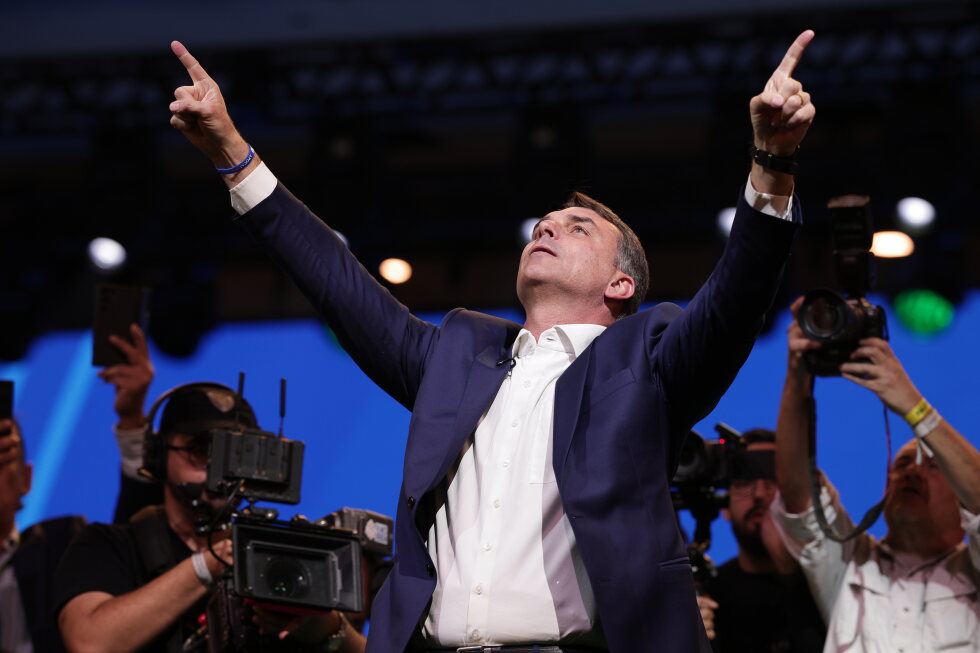
    SAO PAULO — Brazil’s political landscape has been upended by new allegations that Senate member and presumptive presidential candidate Flávio Bolsonaro solicited more than $12 million in funding from a jailed, fraud-accused banker, a scandal that threatens to derail his 2024 election bid against incumbent President Luiz Inácio Lula da Silva. On Wednesday, the lawmaker issued a flat denial of any illegal activity connected to the request. The controversy first came to light via an investigation published by The Intercept Brazil, which released leaked voice recordings of Bolsonaro asking Daniel Vorcaro, a former bank chief at the heart of one of Brazil’s biggest recent corruption scandals, for 61 million reais to fund a biographical film about his father, Jair Bolsonaro, the disgraced former Brazilian president who is currently imprisoned on corruption charges. Bolsonaro has framed the project, titled *The Dark Horse*, as a private work chronicling the elder Bolsonaro’s political life. Vorcaro, who led the now-defunct Banco Master until its forced shutdown, has been in custody since March this year, facing a slew of charges including orchestrating a massive fraud scheme that conned thousands of the bank’s clients out of millions of dollars through deceptive, unregulated investment deals. Both Brazil’s Federal Police and the Supreme Court have been leading a sprawling probe into the scandal, which has already dragged multiple high-profile political figures into its orbit since early 2024. In his first public response to the revelations, Flávio Bolsonaro pushed back hard against any implication of wrongdoing. “This is simply a case of a son seeking private sponsorship for a private film about his father’s story. No public funds were involved at all,” the senator said in an official statement. He went on to reject all claims of impropriety, adding: “I never offered any illegal favors in exchange for funding, I never held secret off-the-books meetings with Vorcaro, I never mediated business deals with the federal government, and I have not received any money from him at this point.” Political analysts warn that the timing of the scandal, which comes just days before Flávio Bolsonaro’s Liberal Party is set to formally nominate him as its presidential candidate for October’s election, could deal a catastrophic blow to his campaign. Thomas Traumann, a veteran Brazilian political consultant, noted that Flávio Bolsonaro’s political identity is almost entirely tied to his family name. “Flávio Bolsonaro is still a relatively unknown figure to most Brazilian voters, and his biggest political asset by far is his status as the son of the former president,” Traumann explained. “A scandal of this magnitude, where he is caught asking for large sums of money from a banker under active criminal investigation for fraud, and showing clear personal ties to him, could be devastating. It may even force the Brazilian opposition to replace its candidate at the last minute to preserve its chances of winning in October.” According to The Intercept Brazil’s reporting, the messages from Flávio Bolsonaro to Vorcaro were sent back in October 2023, months before Vorcaro’s arrest. Since being taken into custody, the former banker has been negotiating a potential plea deal with federal prosecutors in exchange for cooperating with their investigation. Brazil’s Central Bank first moved to shut down Banco Master, which held more than $16 billion in total assets at its peak, last November, after regulators uncovered massive irregularities in the bank’s operations. Since the allegations against Flávio Bolsonaro became public, he and his political allies have launched a counteroffensive, making unsubstantiated claims that the entire scandal is a plot orchestrated by the current Lula administration to undermine his campaign. To date, Brazil’s Federal Police have found no evidence linking Vorcaro or his scheme to Lula or his government. The controversy is just the latest to hit the Bolsonaro-aligned opposition in recent weeks: earlier this week, Sen. Ciro Nogueira, a former chief of staff to Jair Bolsonaro, also denied published reports that he had accepted regular, undeclared payments from Vorcaro in exchange for political support.