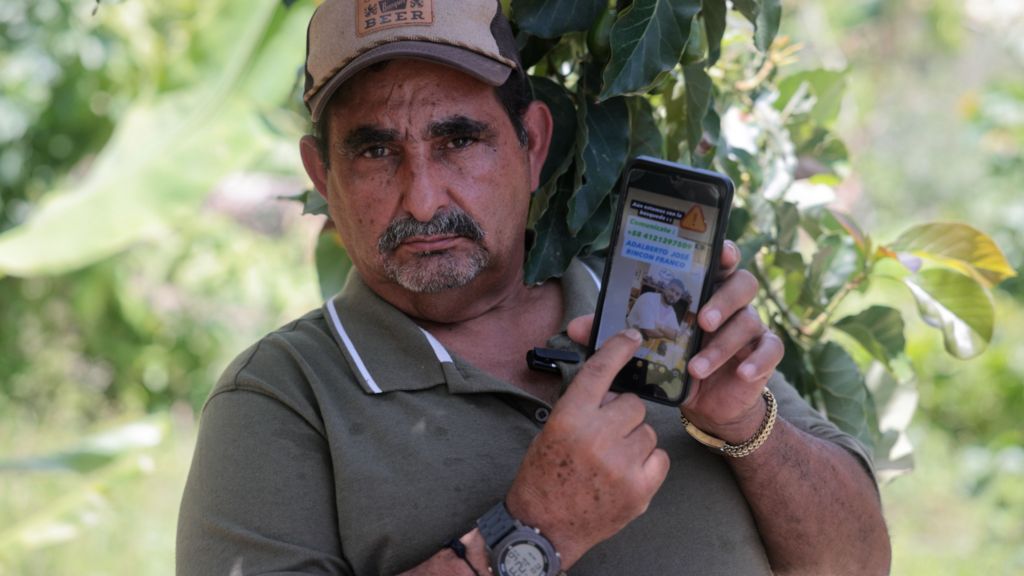
A chain of catastrophic events has left dozens of recently deported Venezuelans unaccounted for, after a pair of powerful earthquakes struck the country just hours after they arrived on a U.S. deportation flight, leaving hundreds dead and thousands displaced. Among the missing is 23-year-old Abelardo Rincón, who built a stable new life in Georgia over six years: he worked at a local car dealership, married, and was eagerly awaiting the birth of his first daughter. That future was cut short when U.S. immigration authorities detained him as part of a national immigration enforcement push, before putting him on a June deportation flight carrying more than 140 Venezuelan deportees.
Rincón landed in Venezuela on June 24, and while still in government custody, he managed to place a call to his family back in Atlanta, telling them he was being housed at a coastal hotel in La Guaira alongside the other flight passengers. Just hours after that call, twin earthquakes tore through central and coastal Venezuela. Official counts put the death toll at over 2,200, with more than 10,000 injured; United Nations data estimates as many as 50,000 people are still missing across the disaster zone. Rincón and dozens of other deportees from that flight, designated Flight 164, are among those unaccounted for, leaving their already fractured families reeling from a cascade of unthinkable loss: arrest, forced separation from their lives in the U.S., deportation, and now disappearance in a catastrophic natural disaster.
When contacted by the BBC for comment on the cases, the U.S. Department of Homeland Security (DHS), which oversees immigration enforcement agencies including Immigration and Customs Enforcement (ICE), issued a generic statement that provided no specific details about Rincón or other passengers on the flight. “This flight safely reached Venezuela and all illegal aliens on board were returned home,” a DHS spokesperson said Tuesday. “When an individual is no longer in ICE custody, ICE is no longer responsible for them.” It remains unclear whether the deportees were removed for illegal border crossing or other immigration violations. Venezuelan authorities have set up public information hotlines for disaster inquiries, but widespread infrastructure damage has left information extremely scarce in the days after the quakes.
All 140-plus passengers on Flight 164, which included 19 women and seven children, underwent medical screening and processing after landing, then were placed in Hotel Santuario La Llanada in La Guaira, one of the regions hit hardest by the earthquakes. The coastal city suffered widespread building collapses and massive destruction, reducing the hotel where the deportees stayed to rubble. Many of the returnees managed to contact their families to announce they had landed safely, only for the disaster to strike before families could process the news of their return.
Jose Rincón, Abelardo’s grandfather, told BBC Mundo he has examined more than 200 bodies across morgues in Caracas, still searching for any trace of his grandson. He attempted to reach the collapsed hotel site to search for himself, but Venezuelan authorities blocked access, telling him there were no survivors left at the location. “If we could just see what we need to see — if I could see the rubble, I’d be satisfied — but days have gone by and I still haven’t found him, alive or dead… So what am I supposed to do?” the grandfather said.
Another passenger, 35-year-old Darwin Eliecer Serrano Lopez, called his cousin at 5:32 a.m. local time to tell his family he had returned to Venezuela after four years living in the U.S. The first earthquake struck less than 30 minutes later. Serrano Lopez had been detained in Chicago and held in four separate detention centers before being placed on the deportation flight, relatives said. After nearly a week of fruitless searching, his cousin Paola Chacón said the family has resigned itself to the likelihood he did not survive. “So many days have passed… we aren’t getting any answers,” she said, adding that the family will not leave the search effort until they can bring his body home for burial.
Mildrey Sarazo, Serrano Lopez’s wife, had not seen her husband in three years, and as of earlier this week had not told their two daughters, ages 9 and 15, what has happened. “He didn’t want to come back yet” from the U.S., she said, adding that the family only wants confirmation and the chance to lay their loved one to rest. “We want to bury our relatives. We want them to hand him over so we can identify him and be certain.”
The family of 28-year-old Daniel Alejandro Nunez, another Flight 164 passenger who called his mother shortly after landing, is also grappling with conflicting reports and no clear answers. “We’ve searched for him in hospitals, in morgues – everywhere,” his stepfather Jose Alejandro Abache told BBC Mundo. For families already torn apart by years of separation due to immigration status, the potential loss of their loved ones immediately after their forced return to Venezuela is an unthinkable tragedy.
Not all passengers on the flight have been counted among the missing, however. A small number survived the collapse of the hotel, and have spoken of the surreal horror of escaping rubble in a country they had left years before. Fifty-eight-year-old Lisbeth Portillo, who was sharing a second-floor room with 16 other women when the building collapsed, told the Associated Press she saw the woman beside her fall as the structure gave way, with everyone screaming for help. “I was born again — God gave me a second chance,” she said.
For some families, word of a loved one’s survival has come only days after the disaster, often accompanied by devastating news of permanent injury. Twenty-two-year-old Anderson Daniel Salcedo, who had lived in the U.S. for three years and sent money home to support his family, was trapped under rubble for nearly 40 hours before he was rescued, Reuters reported. By the time his family located him at a university hospital in Caracas, doctors had already amputated both of his legs. Because he had no identification on him after the collapse, hospital staff could not identify him or contact his family for days, his grandmother Marlene Lozano told Reuters. “He spent 40 hours in that hole, he didn’t have an ID, they couldn’t account for him because he had no documents. We had no way to communicate with him and didn’t know anything,” Lozano said. Even as the family grapples with the permanent change to Anderson’s life, they remain grateful he is alive. “Here we are praying, asking God to give him strength and courage. We know he won’t be the same anymore — he’s missing his legs — but we love him, just the way is.”