标签: South America

南美洲

  • Argentina pushes forward with bid for men’s Rugby World Cup in South America in 2035

    Argentina pushes forward with bid for men’s Rugby World Cup in South America in 2035

    In a groundbreaking move for Southern Hemisphere rugby, Argentina has officially launched a multinational bid to host the 2035 Men’s Rugby World Cup. The Argentine Rugby Union (UAR) is spearheading this unprecedented initiative in collaboration with the rugby federations of Brazil, Chile, and Uruguay, marking the first concerted effort to bring the prestigious tournament to South American soil.

    The bid development enters a crucial phase with an upcoming working session between UAR representatives and World Rugby CEO Alan Gilpin to evaluate Argentina’s hosting feasibility. Gabriel Travaglini, President of the Argentine Rugby Union, characterized the proposal as “a federal objective and a legacy project that transcends our borders,” emphasizing the continent-wide significance of the endeavor.

    “Our vision is to deliver a World Cup that authentically captures the passion and remarkable development rugby has achieved throughout our diverse territories,” Travaglini stated, highlighting the bid’s commitment to regional representation.

    The 2035 tournament would represent the 13th edition of rugby’s premier global event, following the 2027 competition in Australia and the landmark 2031 event in the United States. Notably, three South American nations—Argentina, Chile, and Uruguay—will compete in next year’s Australian tournament, demonstrating the region’s growing rugby prominence.

    Argentina stands as South America’s rugby powerhouse, having achieved three semifinal appearances (2007, 2015, 2023) in World Cup history. This bid represents not just Argentina’s ambitions but a collective South American aspiration to elevate rugby’s global footprint and celebrate its expanding presence across the continent.

  • Venezuelans in Miami and Caracas celebrate historic WBC victory over USA

    Venezuelans in Miami and Caracas celebrate historic WBC victory over USA

    In an unprecedented triumph that captivated baseball fans worldwide, Venezuela secured its maiden World Baseball Classic championship with a nail-biting 3-2 victory over the United States. The monumental win sparked jubilant celebrations that transcended geographical boundaries, with Venezuelan communities from Miami to Caracas erupting in spontaneous festivities.

    The championship game evolved into a masterclass of tactical pitching and defensive excellence, with both teams demonstrating world-class athleticism throughout the nine innings. Venezuela’s strategic gameplay and remarkable composure under pressure ultimately proved decisive against the tournament hosts and defending champions.

    This historic achievement represents far more than just a sporting accomplishment for the Venezuelan people. Amid ongoing political and economic challenges facing the nation, this victory serves as a powerful symbol of national pride and unity. The team’s remarkable journey through the tournament showcased exceptional talent and unwavering determination, capturing the imagination of baseball enthusiasts globally.

    The victory celebrations created poignant scenes of cultural solidarity, with Venezuelans across the diaspora finding common ground in their shared triumph. From the streets of Caracas to neighborhoods in South Florida, the win provided a moment of collective joy and national pride that temporarily overshadowed political divisions.

    This championship victory not only establishes Venezuela as a new powerhouse in international baseball but also demonstrates the sport’s unique ability to unite communities across political and geographical boundaries. The team’s success story will undoubtedly inspire a new generation of Venezuelan athletes and baseball enthusiasts worldwide.

  • Argentina make pitch to host 2035 Rugby World Cup

    Argentina make pitch to host 2035 Rugby World Cup

    Argentina has officially launched an ambitious campaign to host the 2035 Rugby World Cup, potentially marking the first time the prestigious tournament would be held in South America. The Argentine Rugby Union, under President Gabriel Travaglini, is spearheading a regional bid that would include collaboration with neighboring nations Brazil, Chile, and Uruguay.

    World Rugby chief executive Alan Gilpin is currently conducting a fact-finding mission in Argentina to assess the country’s capabilities ahead of formal bid submissions scheduled for the latter half of 2026. This preliminary evaluation represents a crucial step in the selection process.

    “Our vision is to deliver a World Cup that truly reflects the passion and remarkable development rugby has achieved throughout our territory,” stated Travaglini, emphasizing the transformative potential of hosting the event.

    The South American bid faces significant competition from several global contenders. Japan and Spain have recently confirmed their intentions to bid for the tournament, while Italy has previously expressed interest. Additionally, rumors persist of a joint Middle East bid involving Saudi Arabia, Qatar, and the United Arab Emirates.

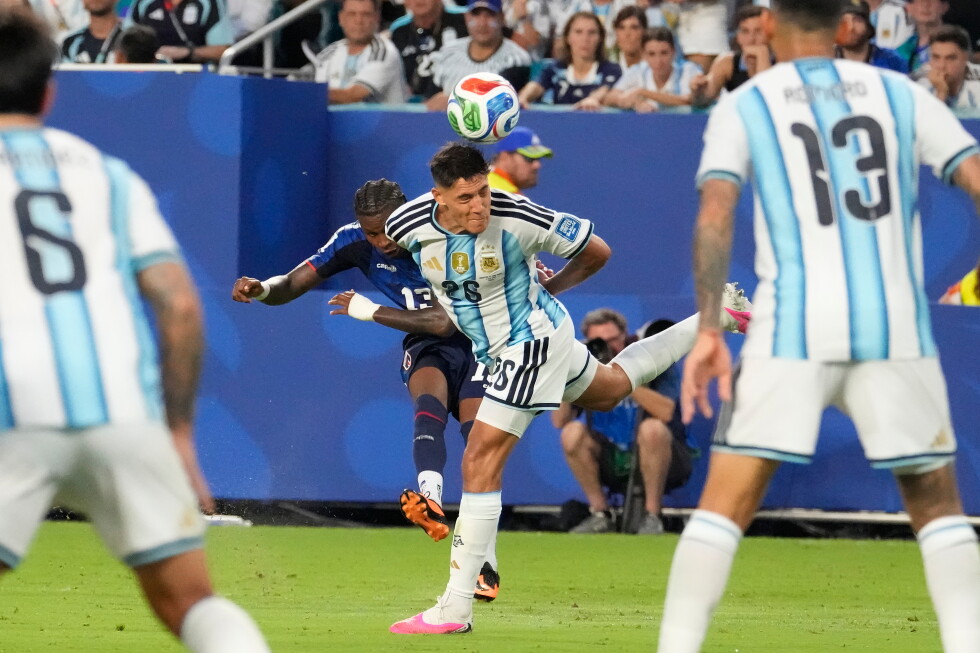
    Argentina’s rugby credentials are substantial. The national team, Los Pumas, has participated in all ten previous Rugby World Cups and reached the semi-finals in three of the past five tournaments. Despite being ranked among the world’s top eight rugby nations, Argentina remains the only team in that elite group never to have hosted a World Cup match.

    The country boasts several modern, multi-purpose stadiums capable of hosting international matches. These include the 57,000-capacity Estadio Mario Alberto Kempes in Córdoba, the 25,000-seater Estadio San Juan del Bicentenario, and the 30,000-capacity Estadio Único Madre de Ciudades in Santiago del Estero. Most notably, Buenos Aires’ Estadio Más Monumental, home to football club River Plate, stands as South America’s largest stadium with a capacity exceeding 85,000.

    World Rugby’s recent hosting strategy has balanced commercial considerations with expansion into new markets. The 2019 tournament in Japan marked the first time the event was held in Asia, while the United States is set to host in 2031. France (2023) and Australia (2027) represent traditional rugby nations that have hosted multiple times.

    The selection timeline will see World Rugby conduct thorough site visits and assessments before identifying a preferred host in May 2027. The final recommendation will be put to a vote in November of that year, determining which nation or region will host the 2035 tournament.

  • MLB teams pressure WBC managers to be careful with pitchers. Venezuela pushed back

    MLB teams pressure WBC managers to be careful with pitchers. Venezuela pushed back

    In a dramatic championship showdown, Venezuela secured its inaugural World Baseball Classic title with a narrow 3-2 victory over the United States, largely due to strategic managerial maneuvering regarding pitcher usage restrictions. Venezuela’s manager Omar López successfully negotiated with Major League Baseball organizations to relax initial limitations on his pitchers, enabling him to deploy Chicago Cubs closer Daniel Palencia for three appearances within four days. This contrasted sharply with U.S. manager Mark DeRosa’s approach, who strictly honored commitments made to MLB clubs by withholding his top reliever Mason Miller in non-save situations. The decisive moment came in the ninth inning when Venezuela’s Eugenio Suárez drove in the winning run against Boston reliever Garrett Whitlock. Palencia then sealed the victory with a dominant 11-pitch closing performance, striking out the final batter with a 99.7 mph fastball. The outcome highlighted the tension between national team ambitions and MLB organizations’ protective measures for their valuable pitching assets during international competition.

  • Venezuela beats Team USA to claim World Baseball Classic

    Venezuela beats Team USA to claim World Baseball Classic

    In a stunning upset that captivated the baseball world, Venezuela secured its first-ever World Baseball Classic championship with a dramatic 3-2 victory over Team USA in Miami. The thrilling final concluded Tuesday night with Venezuela’s ninth-inning heroics against a heavily favored American squad featuring MLB’s top award winners.

    The victory celebration unfolded amid both sporting triumph and political significance, coming just months after the controversial capture of Venezuelan President Nicolas Maduro by US forces. Venezuelan third baseman Eugenio Suárez delivered the championship-winning hit in the top of the ninth inning, triggering an immediate on-field celebration as players rushed the pitch while draped in national flags.

    “This championship represents something far greater than baseball,” Suárez declared post-game. “While nobody believed in Venezuela’s chances, we’ve demonstrated our resilience and brought this celebration to our entire nation.”

    The US team, featuring holders of Major League Baseball’s four most prestigious awards including Shohei Ohtani and Aaron Judge, had entered the tournament as overwhelming favorites. This loss marks another disappointing outcome for Team USA, which has captured only one title in the WBC’s six-tournament history since the event’s 2006 inception.

    The 2026 tournament marked the first World Baseball Classic to feature all current holders of MLB’s major awards, adding significance to Venezuela’s underdog triumph. The victory sparked emotional celebrations both in Miami’s loanDepot park and among Venezuelan communities worldwide, serving as a moment of national pride amid ongoing political challenges.

  • U.S. falls short again in WBC final as Venezuela stuns star-studded roster

    U.S. falls short again in WBC final as Venezuela stuns star-studded roster

    In a stunning upset that rewrote the narrative of international baseball, Venezuela captured its first-ever World Baseball Classic championship on Tuesday night with a dramatic 3-2 victory over the heavily favored United States team. The emotional triumph triggered tearful celebrations among Venezuelan players who fell to their knees on the Miami field, while the American squad, featuring the most expensive roster in the tournament’s history, stood frozen in disbelief.

    The outcome represented a second consecutive championship game disappointment for Team USA, which had won the 2017 title but fell to Japan in the 2023 final. This time, the Americans’ star-studded lineup—comprised of players who combined for 382 home runs and 1,111 RBIs during the previous MLB season—produced a meager three hits in the championship contest and managed only four runs across the final two games of the tournament.

    Venezuela’s victory was anchored by left-handed pitcher Eduardo Rodríguez, who masterfully neutralized the fearsome American batting order with measured ease. Rodríguez recorded four strikeouts across 5 1/3 dominant innings, twice fanning U.S. captain Aaron Judge who finished 0-for-4. The Venezuelan bullpen maintained this defensive excellence, surrendering just two additional hits including Bryce Harper’s game-tying, two-run homer in the eighth inning.

    The championship-winning sequence unfolded in the ninth inning when Luis Arraez worked a walk against reliever Garrett Whitlock. Pinch-runner Javier Sanoja promptly stole second base ahead of catcher Will Smith’s throw, then raced home on Eugenio Suárez’s clutch double. Suárez celebrated with arms outstretched toward the sky as teammates poured from the dugout to mob Sanoja at home plate.

    Despite fielding a roster featuring players with combined credentials of over 2,300 career home runs, 419 saves, and nine World Series participants, Team USA never displayed its anticipated offensive firepower throughout the tournament. The Americans batted just .250 over seven games with 44 runs, 10 homers, and 40 RBIs—well below expectations for a lineup considered among the most formidable in baseball history.

  • In Miami for the WBC final, Venezuelan fans had plenty to celebrate as their team won the title

    In Miami for the WBC final, Venezuelan fans had plenty to celebrate as their team won the title

    MIAMI — In a dramatic culmination of the World Baseball Classic, Venezuela secured its first-ever championship title with a tense 3-2 victory over the United States on Tuesday night. The historic win triggered euphoric celebrations both at Miami’s loanDepot Park and across Venezuela, transcending political divisions that have long plagued the South American nation.

    The championship game served as a powerful demonstration of baseball’s unique ability to unite people across geographical and ideological boundaries. Venezuelan-American fans like Pablo Cuerta embodied this dual allegiance, wearing Venezuela jerseys while draping themselves in American flags. ‘I was born in Venezuela, and this country gave me the opportunity to come, to be a citizen,’ said Cuerta, who traveled from near Orlando for the tournament’s final days. ‘I appreciate both countries. One I was born in, and one gave me everything I’ve got.’

    The game-winning moment came in the ninth inning when designated hitter Eugenio Suárez drove in the decisive run with a clutch double. ‘This is a celebration for all of the Venezuelan country,’ Suárez proclaimed after the victory.

    Remarkably, the tournament unfolded against a complex geopolitical backdrop. Venezuela’s deposed leader Nicolás Maduro remains jailed in New York facing drug trafficking charges, following a U.S. military operation to capture him earlier this year. Yet these political tensions remained largely absent from the ballpark, where Venezuelan fans created an overwhelming home-field atmosphere despite technically being the visiting team.

    Venezuelan manager Omar López emphasized baseball’s unifying power before the final, stating, ‘Together we are going to have better generations for our country, united with no color, political colors or ideology. Baseball is one of the best tools or ways to educate a country.’

    In Venezuela’s capital of Caracas, streets emptied as the entire nation watched the championship game. Thousands gathered in public plazas, with some like 75-year-old Miguel Blanco traveling significant distances to ensure they wouldn’t miss the game due to frequent power outages.

    The victory celebration extended well beyond the final out, with bands playing and flags waving in both Miami and Caracas. As retired teacher Enrique Cabrera exclaimed amid the celebrations, ‘The USA is the best country in the world, but Venezuela is the best at baseball.’

    The tournament provided a much-needed moment of national pride for Venezuelans worldwide. Ashley Peña, a 26-year-old youth organizer in Caracas, captured the sentiment: ‘This is a moment for every Venezuelan to regain faith. Wherever we are in any country, we are all supporting the national team.’

  • Paraguay becomes final South American country to approve Mercosur-European Union trade deal

    Paraguay becomes final South American country to approve Mercosur-European Union trade deal

    SANTIAGO, Chile — In a landmark decision that concludes a quarter-century of negotiations, Paraguay has become the final founding member of the Mercosur trade bloc to ratify the comprehensive free trade agreement with the European Union. This ratification establishes one of the world’s most significant economic zones, encompassing over 700 million people and representing approximately 25% of global GDP.

    The Paraguayan Chamber of Deputies unanimously approved the agreement with all 58 present legislators endorsing the deal, following the Senate’s approval nearly two weeks prior. The legislation now awaits President Santiago Peña’s signature to complete the national ratification process.

    This development marks the culmination of ratification by all Mercosur founding nations, with Uruguay and Argentina having approved the agreement in late February, followed by Brazil’s unanimous Senate ratification in early March. Bolivia, Mercosur’s newest member, did not participate in initial negotiations but will have the opportunity to join the agreement in subsequent years.

    During a marathon parliamentary session exceeding nine hours, legislators across party lines celebrated the achievement. Deputy Rodrigo Gamarra, presiding officer of the Mercosur Parliament, declared: “This constitutes a historic agreement for Paraguay, our region, and the global community. We are establishing what may become the world’s largest market.”

    The agreement represents a significant breakthrough after prolonged negotiations marked by periodic hesitations. Deputy Juanma Añazco characterized the pact as “the bridge to full integration,” while Deputy Alejandro Aguilera noted the historical significance of overcoming “years and years of negotiations and reluctance.”

    Opposition members likewise expressed support, with independent Deputy Raúl Benítez emphasizing that “where there is isolation, we respond with multilateralism.”

    On the European side, the European Commission has indicated it will provisionally implement the agreement while a legal challenge proceeds through the European Court of Justice. The pact faces opposition from France, left-wing political groups, and agricultural organizations concerned about potential destabilization of European farming sectors.

    European Commission President Ursula von der Leyen, alongside Brazilian President Luiz Inácio Lula da Silva, emerged as a principal architect of the agreement, which she described as “one of the most significant trade agreements of the first half of this century.” She further noted that “Mercosur embodies the spirit with which Europe operates on the global stage,” enhancing European strength and independence.

    The treaty emerges amid global political fragmentation and economic realignments, with several European nations confronting security challenges and strained transatlantic relations.

  • Peru’s prime minister resigns ahead of congressional confirmation vote

    Peru’s prime minister resigns ahead of congressional confirmation vote

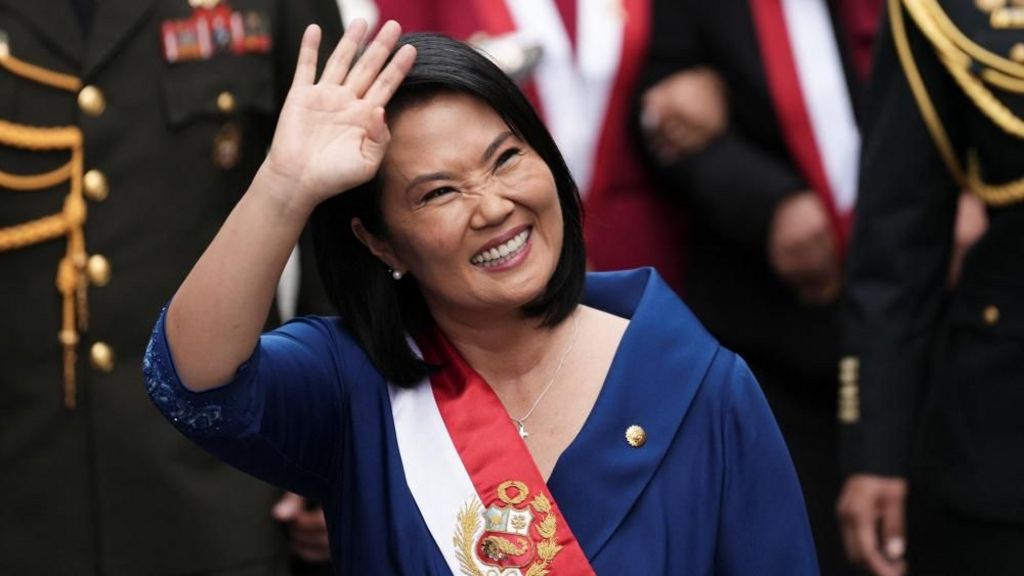
    LIMA, Peru — Peru’s political landscape witnessed another significant shift as Prime Minister Denisse Miralles abruptly resigned on Tuesday, just before facing a mandatory confirmation vote in the nation’s Congress. The resignation comes amid ongoing governmental instability that has characterized Peruvian politics in recent years.

    Miralles, who previously served as economy minister, had been appointed to the prime ministerial position in late February following the removal of Interim President José Jerí due to corruption allegations. Her appointment coincided with the ascension of congressman Jose María Balcázar to the interim presidency.

    Unlike executive leaders in other systems, Peru’s prime minister primarily coordinates government policy implementation rather than directing the executive branch, which remains under presidential authority. Despite this technical distinction, the position requires congressional confirmation—a hurdle Miralles determined she could not overcome.

    Although the former minister did not explicitly state her reasons for stepping down, she confided to journalists that she lacked confidence in securing the necessary majority support from legislators. Her concerns appear validated by recent scrutiny from the Fiscal Council, an independent public finance monitoring body. The council highlighted that Miralles’ ministry had permitted 26 congressional laws to pass without opposition, resulting in substantially increased government expenditures.

    This political development occurs against the backdrop of Peru’s upcoming presidential elections scheduled for April 12, featuring more than two dozen candidates. If no contender achieves over 50% of votes, a runoff between the top two candidates will follow in June.

    Peru has experienced remarkable political volatility with eight different presidents occupying office over the past decade, many removed through congressional actions following corruption allegations. Paradoxically, despite this governmental instability, the country has maintained economic stability through orthodox fiscal policies, restrained public spending, and continued foreign investment in sectors like mining and infrastructure.

  • Expect a festive WBC final crowd as the US plays Venezuela at an uncomfortable political moment

    Expect a festive WBC final crowd as the US plays Venezuela at an uncomfortable political moment

    MIAMI — The World Baseball Classic culminates in a geopolitically charged championship matchup on Tuesday night as the United States faces Venezuela at loanDepot park. Both teams arrive at this pinnacle moment following dramatically different tournament journeys, with the Americans narrowly avoiding early elimination while Venezuela has demonstrated consistent dominance throughout the competition.

    The American squad, featuring power hitters Aaron Judge, Roman Anthony, and Kyle Schwarber, seeks to claim its second tournament title and first since 2017. They’ll rely on rookie pitcher Nolan McLean, 24, who expressed the profound significance of representing his nation: “Putting U.S. on your chest and going out there and competing obviously means the world.” McLean will face Venezuelan starter Eduardo Rodríguez in what promises to be a compelling pitching duel.

    Venezuela, powered by All-Stars Ronald Acuña Jr., Maikel Garcia, and Luis Arraez, pursues its inaugural championship in the tournament’s sixth edition. The team carries not only national pride but continental ambition, as Garcia emphasized after their 4-2 semifinal victory over Italy: “As Venezuelan players, we are playing for our country. And, of course, putting Latin America in a high position, showing that we have great baseball, we have great talent.”

    The matchup unfolds against a backdrop of political tension between the two nations, particularly since the U.S. military’s capture of Venezuelan President Nicolás Maduro in January. Players and coaches have deliberately sidestepped these geopolitical complexities, with Acuña stating unequivocally: “We’re here to speak baseball. Our country deserves the game tomorrow.”

    The Venezuelan community in Miami has transformed loanDepot park into a vibrant home field advantage, creating a festive atmosphere throughout the tournament. This support has bolstered Venezuela’s impressive run, which included a stunning 8-5 upset over three-time champion Japan in the semifinals.

    U.S. manager Mark DeRosa seeks redemption after losing the 2023 final 3-2 to Japan in a memorable showdown that ended with Shohei Ohtani striking out Mike Trout. The Americans advanced to this year’s championship with a 2-1 victory over the Dominican Republic, powered by home runs from Gunnar Henderson and Anthony.

    Despite their success, Henderson believes the team hasn’t yet peaked: “I feel like we haven’t played our complete game yet”—a concerning assessment for opponents but a promising one for American fans anticipating a championship performance.