标签: South America

南美洲

  • Argentine plazas buzz with World Cup sticker trading fever

    Argentine plazas buzz with World Cup sticker trading fever

    MONTEVIDEO, Uruguay – As countdown clocks tick down to the opening kickoff of the FIFA World Cup, just four weeks away, a beloved quadrennial off-pitch tradition is bringing thousands of soccer fans flooding into public plazas across Argentina: the decades-old ritual of collecting and swapping stickers to complete Panini’s official World Cup sticker album.

    For more than 50 years, Panini sticker albums have been an irreplaceable, cherished cornerstone of the global World Cup experience. Neighborhoods, schools, workplaces, and town squares transform into informal trading hubs, where fans lay out duplicate stickers and negotiate to track down the rare, coveted entries missing from their collections. In South America, where the hobby carries special cultural weight, the tradition has expanded beyond in-person meetups to digital spaces, with hundreds of WhatsApp groups, dedicated mobile apps, and fan-run websites popping up to connect collectors and facilitate swaps.

    This past weekend, crowds packed central Buenos Aires to trade their stacks of multicolored stickers, each emblazoned with the portrait of one of the world’s top soccer stars. Some collectors spread their duplicates across folding tables, dealing cards just like a poker dealer at a casino, while children carefully carry their half-filled albums, waiting to paste their newly acquired stickers in precisely the right spot.

    Juan Valora, an Argentine collector who was trading stickers alongside his girlfriend, highlighted the unique social magic of the physical hobby. “This connects you with the world. Everyone does it,” he explained. “If this was only a virtual activity, you wouldn’t get that face-to-face interaction looking through the stickers and making trades. You’d lose a lot of that human connection that makes it special.”

    For this year’s expanded World Cup – the first to feature 48 participating nations, up from the previous 32 – Panini has released its largest sticker collection to date. Each pack contains seven stickers, retailing for roughly $1.50 in both Argentina and Uruguay. This era of Panini’s iconic stickerbooks will draw to a close after the 2030 World Cup, when global sports retail giant Fanatics takes over as FIFA’s exclusive licensed sticker and collectibles partner. Vintage, completed Panini World Cup albums already command thousands of dollars on the secondary collectibles market, a testament to their enduring cultural value.

    To skip the hassle of trading for rare stickers, many modern collectors now opt to buy pre-packaged bulk boxes of stickers, rather than hunt for individual missing entries. A full box can hold up to 104 packs, priced at $180 with flexible installment payment options, and often includes the album itself. Even the most sought-after rare stickers – featuring global superstars such as Lionel Messi, Cristiano Ronaldo, and Kylian Mbappé – can be purchased directly this way, cutting out the need for trades entirely.

    Matías Inglesi, a software developer whose 9-year-old son Lucas is an avid collector, said the bulk-buying approach actually saves money in the long run. “It’s a way to avoid spending extra extra money chasing down that last missing sticker to finally complete the album,” explained Inglesi, who estimates his family spends around $20 a week on the hobby.

    For many young fans, filling the entire sticker album is a more prized goal than watching their home national team lift the World Cup trophy, and many parents pitch in to help their children reach that milestone. Child psychologist Agustina Zerbinatti noted that the hobby offers more than just entertainment: it delivers tangible developmental benefits for children. Beyond being a fun, engaging challenge, collecting and pasting stickers helps kids build fine motor skills, she explained, while teaching them core academic concepts from geography – including learning about each participating nation and its languages – to basic math skills like number sequencing, cardinality, and ordinality.

  • Tourist hotspot at ‘end of the world’ denies causing hantavirus outbreak

    Tourist hotspot at ‘end of the world’ denies causing hantavirus outbreak

    Nestled at the southernmost tip of Argentina, Ushuaia has built its global reputation as the dramatic “End of the World” — a premier gateway for Antarctic expeditions and a starting point for explorers seeking the raw, untamed beauty of Patagonia’s landscapes. But in recent weeks, the popular tourist hub has been thrust into an unwanted spotlight, linked to a hantavirus outbreak that has spread to the Dutch cruise ship MV Hondius, currently anchored off Spain’s Canary Islands where all passengers and crew are being evacuated and repatriated.

    The MV Hondius departed Ushuaia, located in Argentina’s Tierra del Fuego province, on April 1 on a voyage that would end with an outbreak that has already claimed two lives. With 114 passengers and 61 crew members from 22 nations on board, public health investigators have operated under the working theory that the virus was introduced to the vessel during its stop in Ushuaia. But despite widespread media speculation, the exact origin of the infection and the full chain of transmission remain shrouded in uncertainty.

    The most prominent unconfirmed hypothesis, shared by anonymous Argentine officials with multiple media outlets, points to a popular birdwatching landfill on Ushuaia’s outskirts, where accumulated waste attracts large populations of rodents. But local health authorities have pushed back hard against this theory, emphasizing that Tierra del Fuego has no documented history of hantavirus infections anywhere in the province’s records.

    Juan Facundo Petrina, Tierra del Fuego’s Director General of Epidemiology and Environmental Health, has repeatedly defended his province against the ground zero claims in all recent press briefings and interviews. “In Tierra del Fuego we have no record of hantavirus cases in our history,” Petrina stated. “And specifically, since 1996 — when the National Surveillance System included it among mandatory reporting diseases — we haven’t had a single case in Tierra del Fuego.”

    Petrina, who took up his role in 2021 amid the COVID-19 pandemic, noted that the established endemic zone for hantavirus in Argentina sits more than 1,500 kilometers north of Tierra del Fuego, and the province lacks the conditions to support the disease’s primary vector. “To begin with, we do not have the subspecies of the long-tailed mouse which transmits the disease, nor do we share the same climatic conditions as northern Patagonia — neither in humidity nor temperature — for its development,” he explained. “And if rodents were to start moving, since they don’t respect geographical boundaries, it’s important to remember that we are an island. They would face the limitation of crossing the Strait of Magellan in order to infect local species, so that is an additional difficulty, beyond the climate.”

    Based on the World Health Organization’s estimated 1- to 8-week incubation period for hantavirus, Petrina estimates the original infection likely occurred between February 16 and March 13 — several weeks before the couple at the center of the outbreak arrived in Ushuaia. He believes the pair, a Dutch national who later died from the virus and is considered the likely patient zero, most likely contracted the disease in a northern Patagonian province such as Chubut, Neuquén or Río Negro. Chilean and Uruguayan health authorities have already ruled out their territories as the origin, based on the couple’s travel timeline.

    While many epidemiologists share Petrina’s skepticism that the outbreak began in Tierra del Fuego, Argentina’s national government has still authorized a team of specialist investigators to travel to the province to test for viral traces and confirm whether the disease-carrying rodent subspecies has expanded its range to the region. The team will collaborate with local biologists to trap rodents at the Ushuaia landfill and run hantavirus tests. Two days after the investigation was announced, however, the national expert team had not yet arrived, and a BBC visit to the site found no active testing or trapping underway.

    Eduardo López, head of the Department of Medicine and Infectious Diseases at Buenos Aires’ Ricardo Gutiérrez Children’s Hospital, argues that expanded investigation is still a necessary step, as shifting ecosystems have already altered rodent ranges across Argentina. “The case requires more study because ecosystems are changing,” López noted. “For example, the long-tailed pygmy rice rat, whose original habitat was the Patagonian Andes and north-western Argentina, can now be found in the province of Buenos Aires alongside other rodents that transmit the disease.”

    Beyond the public health urgency, resolving the origin question carries major economic stakes for Tierra del Fuego. Argentina’s youngest and least populated province relies on a mix of hydrocarbon extraction, fishing and tourism for its livelihood, and the cruise sector supporting Antarctic expeditions is a core economic pillar. Juan Manuel Pavlov of the Fuegian Tourism Institute confirms that more than 95% of all Antarctic-bound ships depart from Ushuaia’s port, with more than 500 vessel calls each year making the cruise industry fundamental to the provincial economy.

    To date, no official cruise cancellations have been recorded, though the industry’s summer season ended in mid-April, so any long-term impact on future bookings may not emerge for months. Local tourism stakeholders are pushing forward with preparations for the upcoming winter season, which they expect to be a strong one after years of investment in marketing and public safety protocols.

    On the ground in Ushuaia, daily life and tourist activity have continued largely as normal. Visitors still stroll the waterfront, book short excursions to landmarks like the iconic End of the World lighthouse on Isla de los Estados, and cruise the Beagle Channel. Tour operators report that the lack of local confirmed cases has helped keep visitor anxiety low.

    “The absence of cases here is very reassuring,” said Adonis Carvajal, an employee at a local tour operator. “People ask whether there are infections in the province, and the fact there are no reports of sick people here brings calm. The strain may be from the south — that’s not denied — but it didn’t originate here.”

    Many current tourists echoed that sentiment, saying they proceeded with their long-planned trips after confirming no local cases had been confirmed. David Bomparp, a Venezuelan expat living in Medellín, Colombia, who arrived in Ushuaia with his partner Daniela Sandoval just days after the outbreak news broke, said the couple decided not to cancel after checking official updates. “We planned this trip back in October, and only the day before boarding the plane did we find out what had happened,” Bomparp said. “As far as we understood, nothing had been confirmed here, so we came without worrying, following safety measures.”

    Sandoval added that while her mother was panicked enough to send constant worried updates through social media, she remained unconcerned by the unconfirmed claims. “I told her not to worry because there were no confirmed cases here,” she said. Costa Rican tourist Jordan Bermúdez, whose group traveled to Ushuaia from Chile’s Punta Arenas earlier this month, said the group researched the outbreak before departing and opted to keep their plans. “We arrived, found the city quite calm, did all the tours we had planned, and we think everything is normal,” Bermúdez said.

    Argentina’s National Ministry of Health has so far declined to endorse a definitive origin theory, noting that while a Tierra del Fuego origin cannot be completely ruled out, the province’s 27-year history of zero confirmed hantavirus cases is a critical contextual detail. Investigators hope that testing of passengers and crew evacuated from the MV Hondius in Tenerife will yield new genetic clues that help narrow down the virus’s origin. For now, however, with patient zero deceased and the couple’s full travel timeline not fully reconstructed, key questions about how the outbreak began remain unanswered.

  • Venezuela warns of ‘serious’ environmental impact from alleged oil spill in Trinidad and Tobago

    Venezuela warns of ‘serious’ environmental impact from alleged oil spill in Trinidad and Tobago

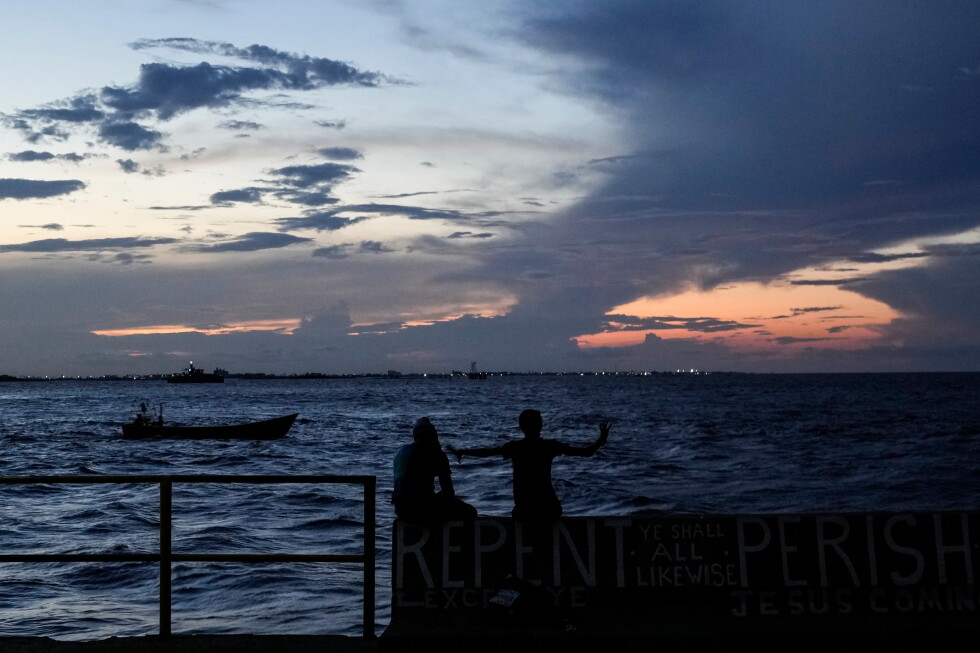
    CARACAS – In an official statement addressed to the global community released late Saturday, Venezuela has formally alleged that an oil spill originating in neighboring Trinidad and Tobago has left significant irreversible environmental harm across coastal regions of at least two of its states and a shared gulf in the Caribbean.

    Initial environmental assessments carried out by Venezuelan authorities confirm that the spill has created severe ecological risks for natural habitats in Sucre, Delta Amacuro, and the Gulf of Paria, the country’s Foreign Ministry confirmed. The contamination is already endangering critical mangrove forests, protected wetland ecosystems, and the broader environmental equilibrium that supports biodiversity and local livelihoods across the region, according to the statement.

    Venezuela has not yet released key details about the timeline of the first detection of the spill, nor has it provided an official estimate of the total volume of oil that leaked into the water. As of Monday, the government of Trinidad and Tobago has not issued any public comment, confirmation, or denial regarding Venezuela’s claims of the spill originating from its territory.

    In addition to requesting full transparency about the incident, including details of any containment and mitigation measures already in place, Venezuela is demanding formal reparations for the environmental damage in line with established international environmental law, the official statement added.

    The Gulf of Paria, a semi-enclosed inland sea positioned south of Trinidad and along Venezuela’s eastern coastline, is shared jointly between the two nations. The two countries signed a formal border delimitation treaty in the 1990s that laid out clear terms for the exploration and extraction of hydrocarbon reserves along the shared maritime boundary.

    According to data from Trinidad and Tobago’s own Ministry of Energy, the island nation is one of the largest energy producers in the Caribbean, with extensive oil and gas exploration operations across both onshore territory and shallow offshore waters, including in areas adjacent to the Gulf of Paria.

  • Bolivia’s fuel shortages and ‘junk gasoline’ drive a surge in electric cars

    Bolivia’s fuel shortages and ‘junk gasoline’ drive a surge in electric cars

    Against a backdrop of persistent gasoline shortages, skyrocketing fuel prices and a damaging fuel quality scandal, a small but fast-growing group of Bolivians are trading their fossil fuel-powered vehicles for electric alternatives, turning a national energy crisis into a quiet shift toward sustainable transportation.

    Simón Huanca, a 53-year-old Indigenous artisan, was one of the early adopters. Fed up with long waits at gas stations and soaring fuel costs that ate into his income, he imported an electric vehicle from China to get around El Alto, Bolivia’s high-altitude urban center. The car now serves double duty: it carries his family around the city and transports alpaca wool to his weaving workshop. To offset the lack of public charging infrastructure, Huanca installed a private charger in his own garage — a necessary workaround, given that just three public stations serve the entire 1.6 million-person metropolitan area covering El Alto and neighboring La Paz. “Since last year, I’ve been looking to switch to an electric car to cut down on running costs,” Huanca explained during a drive through one of the city’s working-class neighborhoods.

    Bolivia’s energy crisis began to escalate in 2023 under former president Luis Arce. For years, the government maintained a costly policy: it purchased fuel at global market rates and sold it to domestic consumers for half the price, an attempt to keep living costs affordable for ordinary Bolivians. But the policy became unsustainable: Bolivia imports 55% of its gasoline and 80% of its diesel, and a shrinking supply of foreign currency left the state unable to continue covering the gap. The subsidy drained more than $2 billion from public coffers every year, and long lines at gas stations became a daily sight across the country.

    Just one month after taking office in December, new President Rodrigo Paz repealed the decades-old subsidy. The immediate result was a near doubling of gasoline prices that hit household budgets hard across the nation. Weeks later, transport operators began reporting that low-quality fuel was damaging their vehicles’ engines. The administration blamed contamination left over from the previous government, claiming that state-owned oil giant Yacimientos Petrolíferos Fiscales Bolivianos had distributed so-called “junk gasoline” contaminated with gum and manganese that had lingered in unused storage tanks. The scandal sparked widespread strikes and protests from transportation workers, and forced the resignation of two top executives at the state oil company.

    For many Bolivians, the risk of further price hikes tied to global volatility from the Iran conflict was the final push to switch. Ever Vera, a 54-year-old lawyer who made the transition to electric, acknowledged the upfront cost of more than $36,000, but said the investment has already paid off. “I no longer waste valuable working hours searching for fuel or paying for vehicle repairs caused by bad gasoline,” Vera noted.

    Official data from Bolivia’s Single Registry for Tax Administration shows the shift is accelerating: the total number of registered electric vehicles in the country has jumped more than sixfold from 500 to 3,352 over the past five years. The sharpest surge has come in the last two years, directly coinciding with the deepening fuel crisis. Even with this rapid growth, electric vehicles still make up less than 0.13% of the estimated 2.6 million total vehicles registered in Bolivia, a nation of nearly 12 million people. The vast majority of electric vehicles on Bolivian roads are imported from China, with the United States a distant second.

    Freddy Koch, an electromobility expert with independent nonprofit Swisscontact, described the growth trajectory as exponential. While early adopters are mostly wealthier Bolivians who can afford the upfront investment, Koch expects electric vehicles to gain mass appeal quickly, predicting the total number could triple in just two to three years. Policy changes have also supported the boom: President Paz has eliminated all import tariffs on automobiles, a move that expanded the pool of importers and increased competition, driving down the cost of bringing electric vehicles into the country.

    The rising demand has also created new economic opportunities for local workers. Marcelo Laura, a 38-year-old electrician, recently carved out a lucrative new niche installing private charging stations for residential and commercial customers, filling a gap left by the lack of public infrastructure. “There still aren’t nearly enough public charging stations,” Laura said. “A year ago, I would never have imagined that electric cars would become this popular this quickly in Bolivia.”

  • Mexican parents criticise ending school year a month early for World Cup

    Mexican parents criticise ending school year a month early for World Cup

    As the 2026 FIFA World Cup co-hosted by Mexico, the United States and Canada approaches, a controversial government plan to cut the academic year one month short has sparked fierce backlash from parents, business groups and regional authorities across Mexico, forcing President Claudia Sheinbaum to soften the original announcement and rebrand it as a non-final proposal.

    The initiative, first unveiled publicly by Mexican Education Secretary Mario Delgado last Thursday, would have wrapped up the current school year on June 5 – a full 3 weeks ahead of the traditional end date. Delgado justified the move by pointing to two key expected challenges during the tournament, which runs from June 11 to July 19 across the three North American nations: crippling traffic congestion from an expected surge in domestic and international travel, and an forecasted extreme heatwave across much of Mexico. He added that the decision had been reached “unanimously” together with state-level education authorities, and that the next academic year would still launch as scheduled on August 31, with a two-week pre-term learning reinforcement period designed to prevent students from falling behind on coursework.

    The policy change triggered immediate anger from Mexican families, who were suddenly forced to scramble to find last-minute childcare for an extra month of summer break. Many parents also raised concerns about disrupted end-of-year academic assessments and the heavy financial burden of unplanned summer activities for children. Speaking to local newspaper El Universal, one parent questioned the rushed handling of student evaluations, noting that students would now be graded based on incomplete coursework, while another criticized the policy for prioritizing tourist convenience over working families’ livelihoods, asking “They want the city empty for tourists, but what are we supposed to do for income?”

    The National Union of Parents issued a formal condemnation of what it called a “unilateral decision”, labeling the use of the World Cup as a justification for cutting classes “inexcusable”. The union pointed out that World Cup matches will only be held in three Mexican cities, questioning why the policy would disrupt the education of nearly 23 million students nationwide under what it called an “absurd pretext”.

    Business groups also joined the criticism. Coparmex, Mexico’s leading employers’ association, warned that the sudden unplanned schedule change would create widespread uncertainty for both working parents and businesses, and called on individual state governments to implement their own localized solutions to address heatwave and travel disruptions, while minimizing damage to household finances and national economic activity.

    Even Delgado’s claim of unanimous state support quickly fell apart. Three state governments publicly spoke out against the plan – including two that are actually hosting World Cup matches – with one state confirming it would retain the original academic calendar regardless of the federal proposal.

    Facing this broad wave of opposition, President Sheinbaum used her daily Friday press briefing to walk back the original announcement, reframing the plan as a draft proposal still open to review and revision. “Since many Mexicans love soccer and are looking forward to the World Cup, this proposal was put forward to bring forward the holiday break,” Sheinbaum told reporters. “But we also have to take into account the school days of our boys and girls. So it is just a proposal; the final schedule has not been set yet, and we will wait before making a definitive decision.” She also noted that the idea originated from teachers’ unions and state education authorities, rather than being initiated by the federal government.

    The controversy over the school calendar is not the only challenge Mexico has faced ahead of the 2026 tournament. Earlier this year, a government crackdown on violent drug cartels that resulted in the death of the leader of the Jalisco New Generation Cartel (CJNG) sparked a wave of retaliatory violence across the country, raising international concerns about visitor safety. One of Mexico’s host cities is Guadalajara, the capital of Jalisco state and the epicenter of the recent unrest. Sheinbaum has repeatedly stressed that there is “no risk” to visiting football fans, while FIFA President Gianni Infantino has said he feels “very reassured” by Mexico’s security preparations. To address safety concerns, the Mexican government plans to deploy thousands of additional security personnel to host city streets throughout the duration of the tournament.

  • Uruguay’s Guillermo Silva wins crash-marred stage 2 of Giro and claims overall lead

    Uruguay’s Guillermo Silva wins crash-marred stage 2 of Giro and claims overall lead

    VELIKO TARNOVO, Bulgaria — Cycling history was written in Bulgaria Saturday, as Uruguayan rider Guillermo Silva claimed a dramatic sprint victory in a crash-disrupted second stage of the 109th Giro d’Italia, seizing the overall general classification lead and becoming the first Uruguayan to ever win a Giro stage and wear the coveted maglia rosa.

    The 137-mile hilly route from coastal Burgas to the historic north-central Bulgarian city of Veliko Tarnovo, marked by three moderate climbs, concluded after five and a half hours of racing. A wet road surface turned the late stages of the route into a dangerous test of skill and luck, with a large crash taking down roughly 15 riders just 20 kilometers from the finish line.

    Among those caught in the incident was British rider Adam Yates, twin brother of retired defending champion Simon Yates. Even with blood and mud covering his face, Yates pushed on to complete the stage, though he finished nearly 14 minutes behind Silva, ending his realistic chances of contending for the overall title. Two riders — Australia’s Jay Vine and UAE Team Emirates teammate Marc Soler — were not able to continue, and were taken from the course via ambulance. Race organizers paused competition for several minutes to allow medical teams to assist injured riders scattered across the roadside, with several athletes thrown over steel barriers in the impact.

    Prior to the crash, Italian Mirco Maestri and Spaniard Diego Pablo Sevilla launched an early breakaway that held off the peloton for more than 100 kilometers, before being caught with 27 kilometers remaining. The pair ended their joint effort with a gesture of good sportsmanship, patting each other on the back before rejoining the main group.

    Pre-race favorite and two-time Tour de France champion Jonas Vingegaard avoided the late crash, positioning himself at the front of the peloton in the closing kilometers to stay clear of trouble and capitalize on his climbing strength on the uphill run to the finish. The Dane, who is attempting to become one of the few riders to win all three of cycling’s Grand Tours in a career after taking the 2022 and 2023 Tours de France and 2023 Vuelta a España, ended up in the leading group of four on the home stretch. However, the breakaway was reeled in by a large group of sprinters with just 300 meters left to the line.

    Silva’s XDS Astana teammate Christian Scaroni delivered a critical lead-out, putting the Uruguayan in the perfect position to launch his sprint. Silva held off late challenges from Germany’s Florian Stork, who crossed second, and Italian climbing specialist Giulio Ciccone, who finished third, to take the historic win.

    In a post-race interview, the Maldonado-born rider said he could barely believe his career-defining result, saying, “I’m over the moon. It’s only my second stage at the Giro d’Italia and I’ve already managed to win and even take the maglia rosa. I was feeling good but I never imagined I could achieve something like this.” He also highlighted his teammate’s contribution, adding, “I have to thank Christian Scaroni, who helped me both in the chase to the leaders and in setting up the sprint. I don’t think I’ll ever forget this day.” As he crossed the finish line, Silva held his head in his hands in disbelief before playfully sticking out his tongue in celebration of the biggest win of his professional career.

    Silva took the overall lead and the pink jersey from French rider Paul Magnier, who won the opening Giro stage Friday. That first of three planned Giro stages in Bulgaria also ended with a major crash at the finish line. After Saturday’s race, Silva held a four-second advantage over second-place Stork and third-place Colombian Egan Bernal in the general classification. Vingegaard sits 10 seconds off the lead in 15th place overall.

    Racing continues Sunday with the third stage, a mostly flat 175-kilometer route starting in Plovdiv, one of the oldest continuously inhabited cities in Europe, and ending in Bulgaria’s capital city of Sofia. The 109th men’s Giro d’Italia will conclude on May 31 in Rome. The women’s Giro is scheduled to run from May 30 to June 7, with Italian star Elisa Longo Borghini returning to defend her 2023 title.

  • Argentina’s hot spot for Antarctic cruises insists it didn’t cause the hantavirus outbreak

    Argentina’s hot spot for Antarctic cruises insists it didn’t cause the hantavirus outbreak

    A public dispute over the source of a deadly hantavirus outbreak linked to an Antarctic cruise has erupted between regional authorities in Argentina’s southernmost province of Tierra del Fuego and national public health officials, raising questions about the country’s weakened disease monitoring system and threatening the region’s critical tourism economy. The outbreak, which centers on the Andes variant of hantavirus — a rare strain capable of limited person-to-person transmission — was traced by Argentine federal health authorities earlier this week to a landfill outside Ushuaia, Tierra del Fuego’s main city and the primary departure gateway for Antarctic cruises. Federal investigators named the site as the most likely location where two Dutch tourists, who later died from the infection, contracted the virus while birdwatching. But regional officials are pushing back fiercely against this conclusion, arguing there is compelling evidence that the infection occurred elsewhere during the couple’s four-month journey across South America, and warning that the false origin claim is causing severe damage to the region’s reputation.

  • Prosecutors seek to strip U.S. citizenship from diplomat-turned-Cuban spy

    Prosecutors seek to strip U.S. citizenship from diplomat-turned-Cuban spy

    MIAMI – In the final chapter of one of the most damaging espionage cases in U.S. diplomatic history, federal prosecutors have launched a civil action to strip U.S. citizenship from imprisoned former American ambassador Manuel Rocha, a Colombian-born double agent who secretly worked for Cuba’s communist government for more than 50 years.

    The U.S. Attorney’s Office for the Southern District of Florida filed the civil denaturalization complaint on Thursday, a legal step that would formally complete Rocha’s dramatic fall from influence. Rocha relocated to New York City at age 10 alongside his widowed mother and two siblings, and he obtained U.S. citizenship in 1978 – a status prosecutors now argue was gained through deliberate fraud.

    Now 75, Rocha was arrested in late 2023 and later sentenced to 15 years in federal prison after pleading guilty to 15 federal counts of espionage-related crimes. His guilty plea avoided a public trial that would have forced the disclosure of full details of his decades-long covert work for Havana, even as he rose to the most senior ranks of the U.S. foreign service. During his career, Rocha served as U.S. Ambassador to Bolivia and held senior diplomatic postings in Argentina, Mexico, at the White House, and other high-level roles within the U.S. State Department.

    Secret recordings captured by an undercover FBI agent capture Rocha praising former Cuban leader Fidel Castro as “El Comandante” and bragging that his espionage work against the United States was “more than a grand slam” against the American “enemy.”

    Court records outline that Rocha first made contact with Cuban intelligence operatives in 1973, half a decade before he submitted his application for U.S. citizenship. The connection came during a student program Rocha attended in Chile, at the tail end of socialist president Salvador Allende’s presidency. Following instructions from Cuban intelligence officials, Rocha enrolled in graduate programs at Harvard University and Georgetown University, successfully built a career, and ultimately secured a position with the U.S. State Department.

    Under U.S. federal law, prosecutors carry a high legal burden to revoke citizenship: they must present clear, convincing evidence that an applicant obtained naturalization through illegal means, or by willfully misrepresenting or concealing a material fact during the application process. In this case, prosecutors argue Rocha committed perjury during his 1978 citizenship application, when he swore under oath that he supported the U.S. Constitution and had no affiliation with the Communist Party of Cuba.

    U.S. Attorney Jason A. Reding Quiñones, head of the Southern District of Florida, framed the legal action as the concluding phase of a major national security investigation. “The Southern District of Florida helped take down one of the most prolific Cuban spies ever uncovered in the United States,” he said. “This civil denaturalization case is about finishing the job.”

    The move comes amid a broader shift at the U.S. Department of Justice, which has sharply increased its focus on denaturalization cases in recent years. In 2023, the department issued an internal memo directing federal prosecutors to prioritize denaturalization actions against individuals who pose a national security threat, including through espionage or terrorist activity.

    An independent investigation by the Associated Press has uncovered multiple unaddressed warning signs about Rocha that were missed by U.S. intelligence agencies over decades. Nearly 20 years ago, a senior CIA operative received an explicit tip that Rocha was operating as a double agent. Declassified intelligence also shows the agency was aware as early as 1987 that Fidel Castro had placed a “super mole” deep within the U.S. government, with multiple senior officials naming Rocha as a prime suspect even before his arrest.

    To date, the full scope of the damage Rocha inflicted on U.S. national security remains unclear. Over the past two years, teams from the FBI, CIA, and U.S. State Department have worked to piece together what classified information Rocha passed to Cuban handlers. Rocha has undergone months of debriefing by federal officials since he entered prison, but authorities have not disclosed what new information, if any, was obtained from those sessions.

  • FIFA waives one-game bans for Otamendi and Caicedo at World Cup after being sent off in qualifier

    FIFA waives one-game bans for Otamendi and Caicedo at World Cup after being sent off in qualifier

    In a landmark, unprecedented decision that has shaken up global football discussions, FIFA confirmed Friday that two high-profile South American stars – Argentina center-back Nicolas Otamendi and Ecuador midfielder Moises Caicedo – will not be forced to serve their one-match suspensions during the upcoming men’s World Cup, despite receiving red cards in the final match of their qualifying campaigns.

    This unexpected leniency comes as part of a broad amnesty for the vast majority of disciplinary sanctions incurred during World Cup qualifiers, a policy put forward and approved by the FIFA Bureau. That governing panel, which is made up of FIFA President Gianni Infantino alongside the leaders of FIFA’s six continental confederations, framed the rule change as a way to deliver a better tournament for fans and teams alike.

    In an official public statement, FIFA clarified that “Single yellow cards and pending one- or two-match suspensions … are not carried over to the final competition.” The governing body added that the core goal of this policy is to guarantee that all participating nations “can compete with their strongest possible squads on the biggest stage of men’s international football.”

    This is not the first time FIFA has broken with long-standing disciplinary precedent to clear a star player ahead of the World Cup. The organization previously made a similar unprecedented ruling that allowed Portuguese megastar Cristiano Ronaldo to avoid missing any World Cup matches, despite receiving a red card for elbowing an opponent during Portugal’s penultimate qualifying match last November. Under that ruling, the remaining two matches of Ronaldo’s three-match ban were put on hold for a probationary period, meaning they will not take effect during the tournament.

    The red cards for Otamendi and Caicedo both came in the same high-stakes qualifying fixture: a September match where Ecuador secured a 1-0 victory over Argentina. Otamendi received a straight red card after committing a foul on an opposition attacker who had broken clear on goal, while Caicedo was dismissed after picking up a second yellow card for a hard, sliding tackle. Under standard FIFA rules, both players would have automatically missed their teams’ opening World Cup fixture.

    Now, any required suspension for the two players will be postponed to a future competitive fixture after the conclusion of the World Cup.

    For Argentina, the defending World Cup champions, their opening match of the tournament is a matchup against Algeria, scheduled for June 16 in Kansas City. Ecuador, by contrast, kicks off their World Cup campaign against Ivory Coast on June 14 in Philadelphia.

  • Despite gains combating deforestation in Brazil’s Amazon, forest degradation is a looming threat

    Despite gains combating deforestation in Brazil’s Amazon, forest degradation is a looming threat

    SAO PAULO, Brazil — Brazil’s President Luiz Inácio Lula da Silva has repeatedly highlighted his administration’s landmark progress reining in Amazon deforestation, a win that is set to be confirmed when official annual data drops in October. Early projections indicate the 2025-2026 deforestation rate will hit its lowest point since 2012, a dramatic reversal from the record-high deforestation seen under former President Jair Bolsonaro’s environmentally deregulatory tenure. But this hard-won progress masks growing, underrecognized threats that continue to erode the world’s largest tropical rainforest, from the creeping damage of forest degradation to looming legislation that could cripple Brazil’s core anti-deforestation enforcement tool.

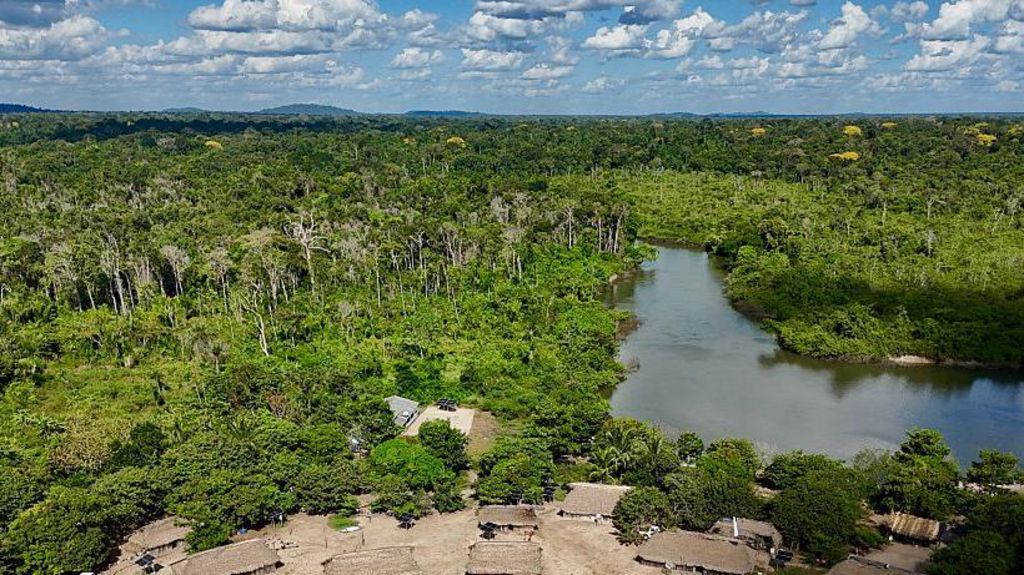
    The Amazon spans nine South American nations, with Brazil holding more than 60% of the total forest area — meaning ecological changes in the Brazilian Amazon shape the fate of the entire biome. While the Lula administration has cut total clear-cutting dramatically, official satellite data from Brazil’s real-time DETER monitoring system shows that forest degradation, the gradual damage of forest ecosystems from activities like illegal logging, wildfires, and drought-linked die-off, has outpaced full deforestation in recent years. Between August 2025 and April 2026, deforestation alerts marked roughly 1,700 square kilometers of cleared forest, while degradation affected more than 4,420 square kilometers of partially damaged woodland. Unlike clear-cutting, which leaves an obvious mark on satellite imagery, degradation progresses slowly and quietly. “Degradation is slower and more silent. It is like a chronic condition,” explained Taciana Stec, a climate policy specialist at Brazilian climate think tank Talanoa.

    This chronic damage is already pushing the rainforest closer to a catastrophic tipping point. Today, the Amazon still acts as a critical global carbon sink, absorbing massive volumes of the planet-warming carbon dioxide driving climate change. But if degradation and stress continue, scientists warn the forest could cross an irreversible threshold where it emits more carbon than it absorbs, triggering full or partial biome collapse. A 2024 study published in *Nature* estimates that between 10% and 47% of the Amazon could reach this critical tipping point by 2050 if current stress levels persist.

    The threat of extreme weather will only amplify this damage. A strong El Niño event, the cyclical warming of equatorial Pacific waters that drives higher temperatures and drier conditions across the Amazon, is projected for 2026. The 2023-2024 El Niño event already offered a preview of this risk: temperatures rose 2 to 4 degrees Celsius above the Amazon’s historical average, and severe drought fueled the worst wildfire season the region had seen in 20 years. During that event, forest degradation increased at a rate three times faster than deforestation fell, erasing much of the progress made to cut clear-cutting, according to research by Guilherme Mataveli, a scientist at Brazil’s National Institute for Space Research (INPE). A partially degraded forest remains standing, but loses much of its ecological function, making it far more vulnerable to additional stress from drought and fire. “If the Amazon were a human patient with a chronic illness, El Nino would strike like a flu, triggering a fever that leaves the body weaker and more vulnerable,” Stec noted. “Two years later, the flu returns. But this time, the patient has not fully recovered. The fever burns hotter, and the illness hits harder.”

    New long-term research has underscored this persistent damage. A 20-year study led by Yale University researcher Leandro Maracahipes, published in April in *Proceedings of the National Academy of Sciences*, found that repeated wildfires do not immediately turn the Amazon into savanna, as many earlier models predicted. Instead, the forest remains standing but permanently degraded: it loses specialized native species that rely on dense old-growth cover, and becomes far more susceptible to future damage. “The forest is resilient, but our message is that we need to preserve it even more, and urgently,” Maracahipes said. “And it has to be now.”

    Beyond climate and ecological threats, environmental regulators are bracing for a major legislative setback that could gut Brazil’s successful anti-deforestation policy. A fast-track bill sponsored by lawmaker Lucio Mosquini, currently pending a vote in Brazil’s lower house of Congress, would bar Brazil’s top environmental enforcement agency IBAMA from issuing sanctions for illegal deforestation based solely on satellite monitoring — the core pillar of Brazil’s current successful deforestation control efforts. Mosquini argues that satellite-based penalties unfairly harm farmers, who are not given an opportunity to defend themselves. But IBAMA officials note that farmers already have 20 days to challenge penalties, and can have sanctions overturned if they prove deforestation was legally authorized.

    IBAMA first adopted satellite monitoring in 2016 to complement limited on-the-ground inspections in remote parts of the rainforest. Bolsonaro halted the policy in 2019 as part of his administration’s deregulatory agenda, leading to a 15-year high in Amazon deforestation by 2021. When Lula returned to the presidency in 2023, his administration immediately restored the remote monitoring policy, driving the sharp drop in deforestation seen today. Political analysts expect the bill to pass, given the outsized political and economic influence of Brazil’s powerful agribusiness sector. If approved, it would be “a major environmental setback,” IBAMA President Jair Schmitt told the Associated Press. “In effect, you end up encouraging environmental offenders and unfair competition.” Schmitt compared satellite monitoring to speed cameras used by traffic enforcement: it is impossible to station a law enforcement officer on every corner of a city, just as it is impossible to place an IBAMA agent on every square kilometer of the 5 million square kilometer Brazilian Amazon.

    To address the growing threat of wildfires in the 2026 season, the Lula administration has already hired 4,600 new firefighters and launched expanded real-time monitoring of high-risk areas. IBAMA has combined historical fire data, deforestation records, and weather forecasts to identify properties at extreme risk of fire, and has ordered landowners in those areas to implement preventive measures. Still, Indigenous fire brigades on the ground already warn that conditions are worsening faster than expected. “The situation this year is worrying. We’re still in the rainy season, and we’ve already recorded two fires in April,” said Tainan Kumaruara, a member of the Indigenous volunteer Guardioes Kumaruara fire brigade in Para state. “The forest is different from what it was 10 years ago. It’s much drier. The trees no longer behave as they did.”

    Experts say addressing the growing threat of degradation will require Brazil to expand its focus beyond just stopping clear-cutting, to prioritize large-scale forest restoration. Brazil has committed to restoring 12 million hectares of degraded Amazon forest by 2030 under the Paris Climate Agreement, and the Brazilian Environment Ministry reports that 3.4 million hectares are already in the process of recovery. Even so, the dual threats of accelerating degradation and pending anti-enforcement legislation mean the long-term future of the Amazon remains far from secure, even with the Lula administration’s progress cutting deforestation.