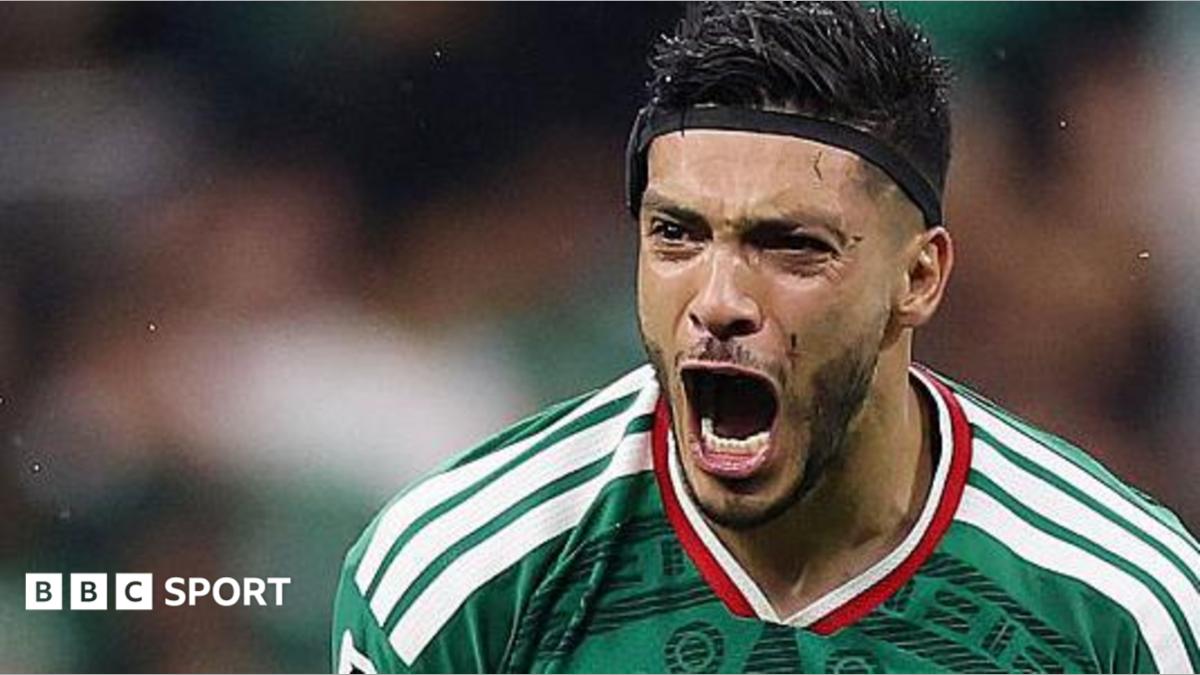
As the 2026 FIFA World Cup enters its knockout phase, co-host Mexico will lock horns with England in the round of 16, fresh off ending a 40-year dry spell of knockout stage victories and riding a wave of newfound momentum. For a nation with deep footballing roots at the world’s biggest sporting tournament, this clash carries far more than just progression stakes: it offers El Tri the chance to exorcise long-running generational curses and repeat the quarter-final runs they pulled off as hosts in 1970 and 1986.\n\nThis iteration of Mexico’s national side is far from considered a vintage generation by historical standards. Only a small handful of its players plied their trade in Europe’s top five domestic leagues this season, and the team’s most recognizable name, 35-year-old striker Raul Jimenez, is deep into the twilight of his professional career. In the lead-up to this World Cup, public opinion of the team’s tactical approach was muted at best; segments of fans even booed the side during pre-tournament goalless draws against Uruguay and Portugal. But the partisan home support across the tournament has shifted the mood entirely, with head coach Javier Aguirre describing the crowd backing as “a driving force” behind Mexico’s current four-match winning run that has also seen them keep every opponent off the scoresheet.\n\nAguirre, a 67-year-old veteran of Mexican football who represented his country as a player at the 1986 home World Cup, has built his current gameplan on defensive pragmatism. He typically lines up with a compact front three, relying on overlapping full-backs to provide attacking width out wide, and instructs his side to work relentlessly to win back possession immediately after losing it. As co-hosts, Mexico also hold key tangible advantages: they are playing at altitude in Mexico City, where thinner air gradually drains opposing teams of energy, and have benefitted from extra recovery time between matches. Their defensive solidity has already been on display in pre-tournament draws against elite sides Portugal and Belgium, and center-back pairing Johan Vasquez and Cesar Montes have formed an extremely effective complementary partnership that makes breaking Mexico down a major challenge for any attack. At 6ft 3in, Montes – who joined Lokomotiv Moscow in 2024 after an 18-month spell in La Liga – is a dominant physical presence in both penalty areas, and notched three goals during Mexico’s 2025 Gold Cup title run.\n\nWhere the side has struggled, however, is in finding consistent attacking fluency. Though they have notched eight goals through the tournament so far, most of those came against lower-ranked opposition. Tactical analysts note that if England can cut off Mexico’s central passing lanes and disrupt their structured attacking movements, El Tri could struggle to adapt with alternative gameplans.\n\nMexico’s lack of elite global star power has put early focus on 17-year-old creative midfielder Gilberto Mora, who many hope will emerge as the breakout talisman the side has been searching for. The Tijuana talent is the youngest player in Mexico’s World Cup history, and is also the youngest player from any nation to start a knockout stage match since Brazilian legend Pele lined up in 1958. Mora already has experience in high-stakes matches, too: he started Mexico’s 2025 Gold Cup final win over the United States at just 16 years old.\n\nVeteran Jimenez, who has agreed a summer transfer to return to Wolverhampton Wanderers from Fulham, remains the side’s clutch performer when it matters most. He delivered the match-tying goal in that same Gold Cup final against the US, helping Mexico secure a 2-1 comeback victory, and has already doubled his total World Cup goal tally in this tournament: he went scoreless across the previous three editions, but has two goals to his name already in 2026.\n\nThis current World Cup run marks Mexico’s ninth consecutive World Cup appearance, and a record third time hosting or co-hosting the tournament. Their path to the round of 16 was a smooth one: they won all three Group A matches against South Africa, South Korea and the Czech Republic, then secured a comfortable 2-0 win over Ecuador in the round of 32 to end that 40-year knockout win drought – a result that has lifted confidence ahead of facing England.\n\nFor generations, Mexican football has been haunted by the curse of the “quinto partido”, or fifth game: the side exited the round of 16 at seven consecutive World Cups between 1994 and 2018, then broke that sequence in the worst possible fashion by crashing out in the group stage at the 2022 Qatar World Cup. After that disappointment, the Mexican Football Federation hired and fired two head coaches before turning to Aguirre for his third spell in charge in 2024. The vastly experienced manager left no stone unturned in his preparations: El Tri played 22 warm-up matches in the 12 months leading up to the tournament, allowing Aguirre to experiment widely with tactics and personnel. He called up 54 different players across those matches, with fewer than half earning a spot in the final 26-man squad. The domestic-based players, who make up 12 of the final squad, were ordered to report for pre-tournament training as early as May 6, meaning some had been in camp for five full weeks by the time the World Cup kicked off. The hard work has paid off: Aguirre has restored both competitiveness and team harmony to the side, even if some fans still remain unimpressed with his pragmatic, defense-first approach. After this tournament, assistant coach Rafa Marquez – the only player in history to captain a nation at five separate World Cups – will take over as the full-time head coach.\n\nThe match between Mexico and England will kick off at 01:00 BST on Monday 6 July, with full coverage available across BBC platforms, including live television on BBC One and iPlayer, radio on 5 Live and BBC Sounds, and live text coverage via the BBC Sport website and app.\n\nAs a footballing nation, Mexico holds a unique place in World Cup history: it is a near-ever-present at the tournament, but holds the unwanted record of having played more World Cup matches (64 total) than any other side that has never lifted the trophy. Supporters have historically been demanding, but expectations heading into this tournament were fairly modest – a far cry from the confidence now coursing through the camp after ending that four-decade knockout drought. If they can beat England, they will not only secure a long-awaited quarter-final spot, they will match the historic achievements of the 1970 and 1986 host sides.