标签: South America

南美洲

  • Rubio says Cuba is threat to US as Havana accuses him of ‘lies’

    Rubio says Cuba is threat to US as Havana accuses him of ‘lies’

    Diplomatic tensions between the United States and Cuba have reached a new boiling point, after top US officials have ramped up aggressive rhetoric against the island nation and brought formal criminal charges against its former leader. One day after the US Department of Justice indicted ex-Cuban President Raúl Castro on murder charges linked to the 1996 shooting down of two private aircraft that killed four US citizens, Secretary of State Marco Rubio publicly labeled Cuba a persistent national security threat to the US, and downplayed the chances of any peaceful diplomatic breakthrough between the two nations.

    Rubio told reporters this week that while Washington officially still prefers a negotiated diplomatic resolution to decades of bilateral tensions, the probability of reaching such an agreement under the current Cuban leadership is extremely low. He further amplified US accusations, labeling Cuba as one of the primary state sponsors of terrorist activity across the Latin American and Caribbean region. The top US diplomat also declined to comment on potential plans to take former President Castro into custody to face trial in the US, noting that any operational details would remain confidential. Acting US Attorney General Todd Blanche, who announced the indictment in Miami, the heart of the US-based Cuban exile community, said Wednesday that Washington expects Castro to face justice in the US “by his own will or another way.”

    Cuban officials have pushed back forcefully against all US claims. Cuban Foreign Minister Bruno Rodríguez denied the accusations in an official post on the social platform X, calling Rubio’s comments outright lies. Rodríguez emphasized that Cuba has never posed any threat to the United States, and accused the Trump administration of deliberately stoking tensions to justify military aggression against the island. He also condemned what he called Washington’s systematic, ruthless campaign of pressure against the Cuban people.

    The escalating confrontation comes as Cuba already grapples with a severe humanitarian and economic crisis, worsened by a longstanding US oil embargo that has created acute fuel shortages across the country. For months, Cuban residents have faced extended, rolling power blackouts and widespread shortages of basic food goods. Rubio confirmed that Cuba has accepted a $100 million US humanitarian aid package, though the gesture has done little to ease the broader political standoff.

    President Donald Trump, who has made aggressive opposition to Cuba’s communist government a central part of his foreign policy agenda, has repeatedly leveraged economic and diplomatic pressure to push for regime change on the island. Speaking from the Oval Office, Trump characterized Cuba as a “failed country” and framed his administration’s actions as a humanitarian effort to support the Cuban people. He noted that decades of previous US presidential administrations failed to resolve the long-running conflict, and positioned himself as the leader who will finally address the issue. Many political analysts have drawn parallels between Wednesday’s indictment of Castro and the Trump administration’s 2025 arrest of Venezuelan President Nicolás Maduro, seeing the move as part of a broader pattern of aggressive action against left-leaning Latin American governments that are opposed by Washington.

  • China says US should stop ‘threats’ against Cuba after ex-leader charged

    China says US should stop ‘threats’ against Cuba after ex-leader charged

    A decades-old Cold War-era incident between the U.S. and Cuba has reignited a high-stakes diplomatic standoff, after a U.S. court unsealed murder and conspiracy charges against 94-year-old former Cuban President Raúl Castro. The charges stem from the 1996 downing of two small aircraft operated by Brothers to the Rescue, a Cuban-American dissident group based in Florida. Four people, including three U.S. citizens, were killed in the incident, which has remained a flashpoint of tension between Washington and Havana for nearly 30 years.

    At the time of the incident, Castro, who stepped down as Cuba’s head of state in 2018, led the country’s armed forces. He was indicted alongside five other co-defendants earlier this week, with the charges carrying extreme penalties including life imprisonment or the death penalty. Cuban President Miguel Díaz-Canel has rejected the accusations outright, labeling them a baseless political maneuver with no legitimate legal standing.

    The indictment comes as part of a broad, escalating campaign of pressure on Cuba by the Trump administration, which has openly targeted the country’s communist government for regime change. In recent weeks, the White House has ramped up sanctions: earlier this month, President Trump issued an executive order blacklisting officials across Cuba’s energy, defense, financial and security sectors, targeting individuals the U.S. accuses of human rights violations and public asset misappropriation. The U.S. has also tightened its long-standing trade embargo to block oil shipments to Cuba, a move that has exacerbated the country’s ongoing economic woes, triggering widespread power blackouts and acute food shortages.

    The Trump administration’s aggressive posture toward Cuba follows the January capture and extradition of former Venezuelan President Nicolás Maduro to the U.S. to face narco-terrorism and drug trafficking charges. In public remarks after the capture, Trump openly stated he believed Cuba was “ready to fall,” signaling further escalation against the island nation.

    In response to the latest indictment, Beijing has reaffirmed its long-standing diplomatic and economic support for Havana, a close ally. Chinese Foreign Ministry spokesperson Guo Jiakun issued a formal statement Thursday condemning the U.S. action, calling on Washington to end its use of “coercion” and “constant threats of force” against Cuba. Guo emphasized that China firmly opposes any attempt by outside powers to pressure Cuba under any pretense, and urged the U.S. to stop misusing sanctions and judicial mechanisms as tools of political coercion. “China resolutely supports Cuba in safeguarding its national sovereignty and dignity, and opposes external interference in Cuba’s internal affairs,” Guo said.

    China has deepened its economic and diplomatic ties with Cuba over the past decade, following President Xi Jinping’s 2014 official visit to the island. In 2018, formally joined China’s transcontinental Belt and Road Initiative, a massive infrastructure investment framework that has already funded multiple key strategic development projects across Cuba.

  • The fight against foreign developers buying Caribbean beaches

    The fight against foreign developers buying Caribbean beaches

    Against the backdrop of post-hurricane recovery and a booming global luxury tourism market, grassroots activists across multiple Caribbean islands are waging a growing battle to protect local communities’ long-held access to public coastlines, as wealthy foreign developers push to transform prime beachfront into exclusive, high-end resorts.

    One of the most high-profile cases centers on the tiny Caribbean island of Barbuda, where for more than two decades, Pink Sands Beach Bar served as the beating heart of local social life. Owned by Miranda Beazer, the open-air spot — named for its iconic rose-hued shoreline — drew generations of locals for Sunday post-church relaxation, domino tournaments, and casual community gatherings. That all changed in 2017, when Category 5 Hurricane Irma swept across the island, destroying every structure in its path, including Beazer’s bar and family home. All 2,000 Barbudans were evacuated to neighboring Antigua, and Beazer later lost her husband before she could begin rebuilding. When she returned to reclaim her plot, foreign developers quickly offered massive sums to buy out her claim, offers she rejected outright. “It’s not the money that I’m after,” Beazer explains. “I actually want to retain my land.”

    Barbuda’s unique land tenure system, rooted in post-emancipation justice, adds layers of complexity to Beazer’s fight. When slavery was abolished on the island in 1834, collective land ownership was established to guarantee all Barbudans access to territory. This system was formally enshrined in national law with the 2007 Barbuda Land Act, which states that all land on the island is communally owned; individual citizens can secure long-term leases to occupy plots, but the community retains collective oversight and final say over major development projects. Beazer holds a valid lease for 30 acres of southern Barbuda coastline, but today she can only access 8 of those acres. The Global Legal Action Network (GLAN), the international legal advocacy group supporting her case, alleges that the remaining 22 acres are being illegally occupied by two foreign developers: Murbee Resorts and Peace Love and Happiness (PLH). Both developers have denied any wrongdoing, with Murbee stating it only operates on land for which it holds valid legal leases, and PLH asserting it has never occupied Beazer’s plot and has strictly followed all local regulations since securing its own Barbuda lease in 2017. Beazer alleges that developers even bulldozed what was left of her damaged bar after the hurricane, leaving her locked in a protracted court battle to reclaim access to her leased land.

    Just a few miles up the coast from Beazer’s plot, one of the Caribbean’s most high-profile luxury resort projects is nearing completion. The Beach Club Barbuda, a 400-acre development from Paradise Found, a venture backed by Oscar-winning actor Robert De Niro and Australian billionaire James Packer, will include a 17-villa Nobu Beach Inn and 25 private luxury beachfront homes, with plot prices starting at $7 million. Locals report that a new bypass road built to ringfence the resort has already blocked public access to the beach the project sits on. The development’s approval highlighted how national governments have changed local land laws to clear the way for foreign investment: in 2015, the Antigua and Barbuda government passed the Paradise Found Act, which explicitly exempts the resort complex from the protections of the 2007 Barbuda Land Act. Local campaigners challenged the law all the way to the Judicial Committee of the Privy Council (JCPC) in London, Antigua and Barbuda’s highest court post-independence. In 2022, the JCPC ruled in favor of the government, stating that collective rights held by Barbudans do not constitute a formal property interest that can block development. Paradise Found has said it complied with all national laws, and that public access to Princess Diana Beach, now part of the resort, “remains unchanged.” John Mussington, chair of the Barbuda Council, the island’s local governing body, argues that the development only moved forward by violating the 2007 Land Act that protects community land rights. Beazer’s stretch of coastline is now the last remaining section of southern Barbuda’s shoreline still open to local access, making her fight all the more critical. “If you were to ever come here and experience it yourself, you would really understand why we’re so committed to this little piece of rock that we have,” she says.

    Barbuda’s battle is not an isolated case. It reflects a growing crisis across the Caribbean, where outdated colonial-era land laws and surging demand for luxury Caribbean getaways have combined to erode local access to public beaches. Some 1,600 kilometers west of Barbuda, Jamaica has been grappling with its own long-running dispute over beach access. Devon Taylor, president of the Jamaica Beach Birthright Environmental Movement (Jabbem), says current Jamaican land law explicitly denies locals any formal rights to the country’s foreshore, effectively handing control of most coastlines to private developers. The Jamaican government recently proposed a new bill meant to expand local beach access, but Taylor argues the legislation actually tightens restrictions by framing access as a paid benefit, requiring locals to purchase beach passes from large hotels. “You’re selling back the access to the people,” Taylor says, arguing that this echoes the exclusionary “colonial logic” of the past. According to Jabbem, less than 1% of Jamaica’s entire coastline remains freely open to local residents, and the group is currently involved in five separate legal challenges against the government and private developers to defend public access. The Jamaican government has not yet responded to requests for comment on the proposed legislation.

    Even smaller, less developed Caribbean islands such as Grenada are already facing similar tensions as international tourists seek out lesser-known, off-the-beaten-path destinations. Kriss Davies, chair of local advocacy group Grenada Land Actors, warns that unchecked large-scale resort development risks stripping the island of the cultural and natural charm that draws visitors in the first place, while displacing local communities from their traditional coastlines.

    According to the United Nations Development Programme, the Caribbean is the most tourism-dependent region in the world, with nearly half of all visitors arriving from the United States. For cash-strapped regional governments, foreign investment in luxury tourism offers an undeniably appealing path to economic growth and job creation. But local activists argue that this growth comes at a steep, irreversible cost to the communities that have shaped the Caribbean’s cultural identity. “Travel is never neutral — it carries both an economic and moral weight,” Taylor says. “These developments often displace residents from ancestral coastlines, restrict public access to beaches, and channel wealth away from the very people whose culture sustains the tourism experience.” As global demand for exclusive Caribbean paradise continues to rise, local land defenders warn that unregulated tourism could permanently alter the home they have stewarded for generations, erasing public access to the natural treasures that make the region unique.

  • US charges Cuba’s Raúl Castro with murder over 1996 downing of two planes

    US charges Cuba’s Raúl Castro with murder over 1996 downing of two planes

    In a sharp escalation of long-running U.S. pressure on Cuba’s communist government, the U.S. Department of Justice has unsealed long-dormant charges against 94-year-old former Cuban leader Raúl Castro, accusing him of conspiracy to murder U.S. nationals, destruction of civilian aircraft, and four counts of murder linked to the 1996 shooting down of two planes operated by Cuban-exile group Brothers to the Rescue that killed four people, three of them U.S. citizens.

    Acting U.S. Attorney General Todd Blanche made the announcement official during a press event Wednesday at Miami’s Freedom Tower, a site deeply symbolic for the Cuban-American exile community. Standing in front of photos of the four victims — Armando Alejandre Jr., Carlos Alberto Costa, Mario Manuel de la Peña, and Pablo Morales — Blanche confirmed that an arrest warrant for Castro has been issued, adding pointedly: “We expect he will show up here, by his own will or another way.” He emphasized that the U.S. and the Trump administration would never forget the lives of the four citizens lost in the incident.

    The charges, originally filed under seal in 2003, are being brought at a moment when the Trump administration has ramped up economic and diplomatic pressure on Cuba, aiming to force the country’s one-party government to adopt sweeping political and economic reforms. The move also coincides with Cuba’s Independence Day, when Secretary of State Marco Rubio released a pre-recorded message to the Cuban people framing the Trump administration as an advocate for change on the island. Rubio blamed GAESA, the Cuban military-controlled economic conglomerate that dominates major sectors from ports and energy to hospitality, for the widespread blackouts and acute food shortages that have gripped the country amid a decades-long U.S. trade embargo and recent targeted oil sanctions.

    Cuban President Miguel Díaz-Canel has rejected the charges outright, dismissing them as a baseless political maneuver designed to justify potential military aggression against Cuba. He reiterated the Cuban government’s long-held position that the 1996 interception of the planes was an act of legitimate self-defense carried out within Cuba’s territorial waters. Díaz-Canel also accused the U.S. of distorting historical facts and imposing collective punishment on the Cuban people through its sanctions policy. Cuban state media has echoed this condemnation, labeling the accusations false, and the government has signaled it will harden its long-held “no surrender, no concessions” stance against U.S. pressure, dimming prospects for the quiet exploratory talks between U.S. and Cuban representatives that have taken place in recent months.

    Now 94, Castro stepped down from formal leadership roles in 2018 after a decade serving as Cuba’s president, but he remains a revered, influential figure as the last surviving leader of the 1959 Cuban Revolution. During his tenure, he oversaw a brief historic thaw in bilateral relations with the U.S. under former President Barack Obama, a detente that has since been fully reversed by the Trump administration’s hardline policy.

    The announcement drew enthusiastic support from Cuban-American exiles who gathered in Miami for the event, many of whom have opposed the Cuban government for decades. Isela Fiterre, a member of the exile community, called the long-delayed action long overdue, saying: “Raúl Castro did not merely kill four individuals. Over the course of many years, he has killed countless people.” Fellow attendee Mercedes Puid-Soto echoed the sentiment, saying “Justice has been served” and noting the charges would help the victims’ families and the broader Cuban exile community find closure.

    Regional policy experts warn the charges carry significant geopolitical risks, drawing parallels to the January 2025 U.S. military operation to detain indicted Venezuelan President Nicolás Maduro. “Still looming over Blanche’s announcement was the answer to whether the Trump administration will use this indictment in a similar way that it used the indictment against Maduro, as a justification to carry out a military operation under the cover of a law enforcement action,” said Roxanna Vigil, an international affairs fellow at the Council on Foreign Relations. Vigil added that the Cuban government is unlikely to comply with U.S. demands, and any attempt to negotiate with Havana would face fierce pushback from the politically influential Cuban-American diaspora in the U.S.

    William LeoGrand, a Latin American politics specialist at American University, framed the move as part of a deliberate incremental pressure strategy. “The strategy is to increase the pressure gradually to the point where the Cuban government will give in and surrender at the bargaining table,” he explained. U.S. President Donald Trump framed the action around humanitarian goals when asked about its political motivations, noting his longstanding close ties to the Cuban-American community and saying “On a humanitarian basis, we’re here to help.”

  • US military jets and drones tracked near Cuba as tensions continue

    US military jets and drones tracked near Cuba as tensions continue

    In a deliberate show of pressure targeting Cuba’s communist government, the United States military has openly broadcast the position of its surveillance aircraft operating near the island via public plane-tracking platforms, in a move that comes as bilateral tensions between the two nations surge to multi-year highs. Analysis of open flight data from Flightradar24 conducted by BBC Verify confirms that since May 11, at least five U.S. Navy P-8A Poseidon surveillance planes and three MQ-4C Triton surveillance drones have conducted regular operations in Caribbean airspace close to Cuba, with some missions bringing the aircraft within just 50 miles (80 kilometers) of the island’s coastline.

    Military aircraft do not always broadcast their position during all stages of flight, meaning public flight tracking data cannot capture the full scope of U.S. surveillance activity off Cuba’s coast. This stepped-up deployment of intelligence-gathering assets follows a sharp escalation of tensions in recent months, after Washington imposed a de facto oil blockade on the Caribbean island nation. Recent reporting from news outlet Axios has further stoked friction, claiming Havana has obtained drones capable of striking the U.S. mainland. Cuba’s foreign minister has rejected the claim, stating the country “neither threatens nor desires war” and accusing Washington of constructing a “fraudulent case” to justify military intervention.

    In a direct address to the Cuban people delivered on Wednesday, the anniversary of Cuba’s independence from the United States, U.S. Secretary of State Marco Rubio framed a “new relationship” for the Cuban public, blaming the island’s “unimaginable hardships” on its communist leadership rather than the U.S.-led fuel blockade. Security analysts say the intentional decision to keep flight transponders active — making the missions visible to the public — is a core part of the U.S. strategy. UK-based drone expert Dr. Steve Wright notes that the move is almost certainly deliberate, designed to send a clear signal that the U.S. maintains constant surveillance to sustain its pressure campaign.

    The ongoing oil blockade has already triggered a severe humanitarian and economic crisis on the island, with widespread fuel shortages sparking rolling national power blackouts and small-scale public protests. U.S. President Donald Trump has ramped up pressure on Havana further, calling on the Cuban government to “make a deal” and threatening that the U.S. could intervene in the country just as it did in Venezuela earlier this year, when it captured sitting President Nicolás Maduro.

    BBC Verify’s tracking of the flights details the pattern of surveillance operations: on May 11, one P-8A Poseidon reached the 50-mile mark off southern Cuba, continuing operations into the following day when it flew north of Havana before returning to its home base in Jacksonville, Florida. On May 15, two MQ-4C Triton drones carried out operations off southern Cuba, following a flight path nearly identical to one previously used by a P-8A Poseidon.

    Mark Cancian, a retired U.S. Marine Corps colonel and senior adviser at the Center for Strategic and International Studies (CSIS), told BBC Verify that the repeated, consistent flight routes are primarily intended to spot incoming fuel ships approaching Cuba from the south, with a secondary focus on vessels approaching from the north. He emphasized that none of the surveillance flights have entered Cuban airspace over land, so the operations do not represent preparation for a full-scale invasion. Cancian also added that the increased frequency of the missions is almost certainly not routine, as the U.S. military has a limited number of P-8A and MQ-4C assets available for deployment globally.

    To contextualize the current surge in activity, BBC Verify compared recent data to operations between February 1 and 7 of this year, when only one P-8A flew near Cuba, with no comparable MQ-4C Triton activity recorded off the island’s coast. A U.S. Air Force RC-135V Rivet Joint reconnaissance aircraft did carry out two passes near the island during that February period, but operations were far less frequent than they have been since mid-May.

    Wright echoed the broader assessment that the surveillance is targeted at preventing Venezuela — a key ally of Cuba — from breaking the blockade and shipping fuel to the island. Analysts from defense intelligence firm Janes reached the same conclusion, noting that there has been a general uptick in U.S. intelligence, surveillance and reconnaissance sorties near Cuba since February. “The fact that these flights are visible through open-source tracking tools suggests they are intended to deter attempts to break the oil blockade and apply pressure on the Cuban government,” Janes told BBC Verify.

  • 5.8 magnitude earthquake hits Peru, damaging buildings and injuring 27

    5.8 magnitude earthquake hits Peru, damaging buildings and injuring 27

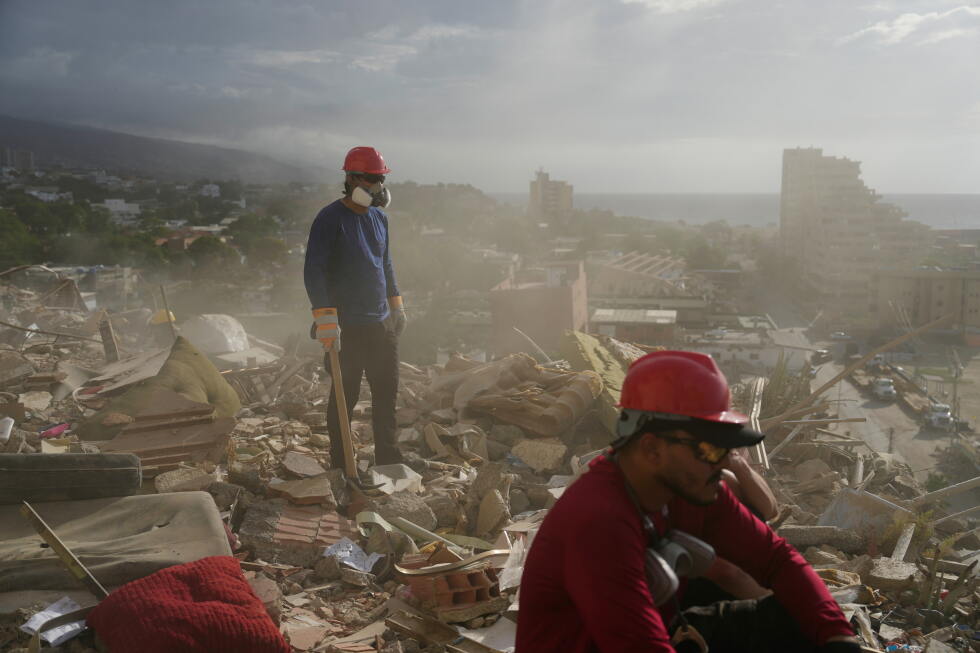
    A 5.8-magnitude seismic event has rattled the southern Peruvian Pacific region late Tuesday, leaving at least 27 people injured and causing structural damage to multiple buildings across the affected area. Local authorities have confirmed that no fatalities have been recorded in the wake of the tremor.

    According to data from the U.S. Geological Survey (USGS), the earthquake’s epicenter was pinpointed 20 kilometers, or 12.4 miles, east-southeast of Pampa de Tate, a small town located in Peru’s Ica region. The temblor originated at a depth of approximately 56.5 kilometers, equal to 35 miles, below the Earth’s surface.

    In response to the disaster, Peruvian Defense Minister Amadeo Flores traveled to the impacted zone to assess the destruction and meet with local response teams. During his visit, Flores inspected several damaged structures, most notably the main campus of San Luis Gonzaga University.

    Seismic activity is a frequent occurrence across Peru, a geographic reality that stems from the country’s position along the Pacific “Ring of Fire.” This geologically active zone is a horseshoe-shaped arc of volcanoes and tectonic fault lines that wraps around the entire Pacific Basin, making nations along its perimeter highly prone to regular earthquake and volcanic activity.

  • Venezuela plans to free 300 people including some whose detentions are considered politically based

    Venezuela plans to free 300 people including some whose detentions are considered politically based

    CARACAS, VENEZUELA – In a move that comes amid mounting public and international pressure over arbitrary political detentions, Venezuela’s sitting government has unveiled plans to free 300 detainees this week, a cohort that includes dozens of individuals held for years on what rights advocates describe as politically motivated charges. National Assembly President Jorge Rodríguez made the announcement Tuesday during a plenary session at Caracas’ legislative palace, stopping short of explicitly labeling the upcoming releases a political prisoner amnesty. But leading human rights defenders have already confirmed that many of the people named in the government’s release list were arbitrarily detained for their opposition to the current administration.

  • Pentagon watchdog to evaluate US military’s boat strikes in Latin America

    Pentagon watchdog to evaluate US military’s boat strikes in Latin America

    In the wake of mounting public and congressional scrutiny over a months-long U.S. military campaign targeting suspected drug smuggling vessels in Latin American waters, the Pentagon’s independent inspector general has launched a formal evaluation to assess whether military personnel adhered to established, standardized targeting protocols during the operations that have left nearly 200 people dead.

    The review, which the oversight body confirmed Tuesday is self-initiated, centers its examination on the military’s own six-step Joint Targeting Cycle – a structured framework that outlines clear requirements for defining a commander’s core intent, developing and vetting potential targets, conducting rigorous threat analysis, securing formal approval for action, executing the strike, and completing a post-operation assessment. Details of the evaluation, first reported by Bloomberg News, were laid out in a May 11 correspondence sent to senior Defense Department leadership.

    Notably, the inspector general’s office has stated it will not investigate whether the strikes themselves violate domestic or international law, a gap that comes as the operations have drawn sharp criticism from Democratic members of Congress and independent military legal scholars. To date, the watchdog has declined to share a projected completion date for the review, leaving the timeline for any findings unresolved.

    The controversial campaign, launched by the Trump administration in early September, frames its actions as a direct war on transnational Latin American drug cartels, which officials blame for the ongoing public health crisis of fatal opioid and drug overdoses devastating communities across the United States. Since the operations began, strikes carried out in the eastern Pacific Ocean and Caribbean Sea have killed at least 193 people, according to official tallies.

    In the most recent incident on May 8, U.S. Southern Command confirmed one person survived the strike, but there remains no public confirmation that U.S. Coast Guard teams located and rescued the survivor – an outcome that could push the final death toll even higher.

    A key point of contention that has fueled criticism is the U.S. military’s refusal to release public evidence confirming any of the targeted vessels were actually carrying illicit drug shipments. In public social media statements, military officials have repeatedly relied on vague references to unspecified intelligence and the fact that the boats were traveling along well-documented narco-trafficking corridors to justify the attacks.

    The very first strike carried out in early September sparked particularly intense outcry over reported rules of engagement. Military records show nine people on the targeted vessel were killed in the initial attack, leaving two survivors clinging to the capsized wreckage. The boat was hit a second time with ordnance, killing the remaining two survivors. In a December statement, Rep. Adam Smith, the ranking Democratic member of the House Armed Services Committee, condemned the action, describing the men as “basically two shirtless people clinging to the bow of a capsized and inoperable boat, drifting in the water — until the missiles come and kill them.”

    White House officials have publicly defended the follow-up strike, asserting it was carried out in self-defense, intended to fully disable the targeted vessel, and aligned with the established laws of armed conflict.

  • Argentines hunting for source of hantavirus outbreak trap rats in southernmost city

    Argentines hunting for source of hantavirus outbreak trap rats in southernmost city

    Nearly two weeks after launching a national probe into a fatal hantavirus outbreak that killed three passengers on an Antarctic cruise that departed from Argentina’s iconic “end of the world” destination, scientific teams are on the ground in Ushuaia, conducting the first systematic field testing for the pathogen in the region’s rodent population. The outbreak, which unfolded on the MV Hondius last month, not only claimed three lives and left multiple other passengers ill, it also triggered an urgent global contact tracing effort as authorities worked to contain potential spread to travelers who returned to their home countries around the world.

    On Tuesday, the research team, brought in from Argentina’s national Malbrán Institute — the country’s leading infectious disease research agency — entered the forests surrounding Ushuaia, the southernmost city on the globe located on the Tierra del Fuego archipelago. Decked out in protective blue gloves and surgical masks, the scientists checked 150 box traps set overnight, collecting euthanized rodents in sealed black plastic bags. The specimens were transported via pickup truck to a temporary on-site laboratory, where researchers will draw initial blood samples before moving the collection to the institute’s main testing facility in Buenos Aires. Local authorities confirmed the trapping protocol will repeat for three consecutive days to collect a robust sample size, and comprehensive testing for hantavirus could take up to 30 days to complete. Researchers on the ground declined to comment on ongoing work, and national officials have not released additional details on investigation timelines beyond initial confirmation.

    Martín Alfaro, spokesperson for Tierra del Fuego’s local department of health, confirmed the team captured the expected volume of specimens during the first day of field work. This trapping mission marks an expansion of the original investigation, which has centered on identifying where the first known case of the outbreak — a Dutch birdwatching couple who boarded the cruise on April 1 — contracted the virus. The couple, who completed a months-long road trip across Chile and northern Argentina before finishing their journey with several days of trekking and birdwatching in Ushuaia, both died from the infection, eliminating key witness testimony that would help investigators retrace their exposure path.

    From the start of the investigation, a sharp disagreement has persisted between national and local health authorities over the origin of the outbreak. National officials initially hypothesized the couple was exposed at a Ushuaia landfill, a claim local authorities have categorically rejected. Critically, hantavirus has never been officially recorded in the Tierra del Fuego archipelago, and the primary carrier of Andes hantavirus — the common colilargo, or long-tailed pygmy rice rat, which is endemic to northern Patagonia — has never been documented this far south, as the Strait of Magellan was long thought to act as a natural barrier, and the region’s colder climate was considered uninhabitable for the species. A subspecies of the rodent does live in the forests surrounding Ushuaia, however, and until this investigation, no formal research has ever been conducted to test whether this local subspecies carries or can transmit hantavirus.

    Northern Patagonian provincial health officials, who regularly record hantavirus cases carried by the common colilargo, have confirmed the Dutch couple never visited their endemic region during the exposure window before boarding the ship. This contradiction has pushed the investigation into uncharted territory, with researchers now tasked not just with solving the outbreak’s origin, but answering a larger public health question: does hantavirus exist in Tierra del Fuego at all, amid shifting ecological conditions driven by global warming?

    The team is currently targeting two high-density areas for the local rodent subspecies: Ushuaia’s nearby national park and the forested hillsides that overlook the city’s popular main pebble beach. For the tourism-dependent province, this research carries long-term public health benefits regardless of its findings on the cruise outbreak. “The province has never done this kind of testing before,” Alfaro noted. “It’s important that we rule out the possibility of transmission occurring here.”

    Public health data across Argentina has already documented a steady rise in hantavirus cases across the country in recent years, a trend that infectious disease researchers link to the expanding range of the colilargo rat. Ecologists say climate shifts and growing human encroachment into wild habitats have allowed the rodent to move further south than ever recorded before, bringing the pathogen it carries into new, previously unexposed regions. Andes hantavirus, the strain circulating in southern South America, spreads most commonly when humans inhale air contaminated by rodent feces and urine, though rare cases of person-to-person transmission have also been recorded.

  • Secret mission to ship uranium from Venezuela

    Secret mission to ship uranium from Venezuela

    Declassified satellite photographic evidence has brought to light a previously undisclosed joint operation that moved a shipment of uranium out of Venezuela and into United States territory, according to newly released observational data. The mission, which had been kept entirely under wraps since its execution, was only uncovered when commercial satellite analysts examining recent orbital shots of Venezuelan port facilities identified unusual cargo movement activity that did not match any recorded official shipments. Multiple independent verification checks of the imagery have confirmed that the large cargo containers documented in the shots match the profile of materials transported in cross-border uranium shipments, and the route tracked from Venezuela directly to a receiving facility in the U.S. The revelation of this secret operation has sparked immediate discussion about the undisclosed coordination between U.S. and regional partner agencies, as well as questions surrounding the origins of the Venezuelan uranium and the security protocols that allowed the entire mission to remain hidden from public and diplomatic scrutiny for an extended period. At the time of this reporting, no official government spokesperson from either the U.S. or Venezuela has issued a formal statement confirming or denying the details of the shipment operation.