标签: Oceania

大洋洲

  • Taylor Swift becomes youngest woman in Songwriters Hall of Fame

    Taylor Swift becomes youngest woman in Songwriters Hall of Fame

    On a milestone Thursday night in New York City, 36-year-old global pop superstar Taylor Swift etched her name into music history, becoming the youngest woman ever inducted into the prestigious Songwriters Hall of Fame. This achievement marks the latest in a long string of record-breaking honors for Swift, who has reshaped modern popular music over her nearly two-decade career. Before Swift’s induction, the title of youngest woman inductee belonged to Carole Bayer Sager, who joined the Hall at 43 back in 1987. Across all genders, Stevie Wonder still holds the record as the youngest inductee, earning his place at 32 in 1983. To qualify for Hall of Fame induction, artists must wait 20 years after the release of their first commercially distributed track. For Swift, that starting point came in June 2006, when she dropped her debut single “Tim McGraw” that launched her into the country music spotlight. In the years since that first release, Swift’s success has become almost unparalleled in the global music industry. She has released 12 full-length studio albums that span multiple genres, from her country roots to chart-topping pop and introspective folk projects. Her trophy case includes 14 Grammy Awards, with a historic four wins in the coveted Album of the Year category — a feat no other artist has achieved. The Songwriters Hall of Fame’s official biography of Swift highlights the unique versatility that defines her songwriting craft. “Swift’s ability to shapeshift as a songwriter, to inhabit different sonic landscapes and write as credibly in the world of one genre as she does another is part of her superpower as a songwriter,” the entry reads. The bio adds that this genre flexibility also showcases the creative courage of her artistry: “to explore new frontiers when the most practical next step would be to keep mining the material that has gotten you the success in the first place.” Ahead of the official induction ceremony, Swift posed for photos on the New York red carpet, stunning in a strapless black gown embroidered with delicate floral motifs. Swift was not the only creative celebrated at Thursday’s ceremony. Eight other songwriters and industry figures joined her in the 2024 induction class, including two founding members of legendary rock band KISS: Gene Simmons and Paul Stanley, the creative force behind iconic hits like “Rock and Roll All Nite” and “Detroit Rock City.” When asked about his feelings on joining the Hall, Paul Stanley kept his response characteristically blunt: “It doesn’t suck.” He added, “It’s really hard to digest the idea. I certainly don’t consider myself in that rarified air of some of the writers, but if you wanna be in that club, I’m there.” Another 2024 inductee is Kenny Loggins, the hitmaker responsible for some of the most iconic movie soundtrack tracks of all time, including “Footloose” from the 1984 film of the same name and “Danger Zone” from the original *Top Gun*. Loggins called his induction a high point of his decades-long career. “It’s a great honor and I appreciate it,” he told AFP. “It’s the culmination of a lifetime writing, and that’s exciting for me.” The 2024 induction class also includes 1990s breakout Canadian star Alanis Morissette, celebrated American record producer Walter Afanasieff, and four other honorees, bringing the total number of new inductees to nine. Beyond her Hall of Fame honor, Swift’s commercial success continues to break industry records. Industry estimates place her total global album-equivalent sales at more than 250 million units. Her groundbreaking 2023-2024 Eras Tour, which has spanned the globe, has grossed an unprecedented roughly $2 billion, making it the highest-grossing tour in music history. She also holds the record for the most top-10 Billboard Hot 100 hits by any female artist in the chart’s history. Swift has remained a constant presence in global pop culture in recent weeks, even beyond her music career. Fresh off releasing a new country track for the upcoming *Toy Story 5* film soundtrack, she made a high-profile appearance at Madison Square Garden Wednesday to attend a game in the 2024 NBA Finals, keeping her in the headlines across entertainment and sports media.

  • AFL 2026: St Kilda coach says injury returns too unpredictable to provide weekly update

    AFL 2026: St Kilda coach says injury returns too unpredictable to provide weekly update

    AFL head coach Ross Lyon of St Kilda has openly criticized the league’s mandatory injury reporting policy, arguing that the rigid framework of the rule fails to account for the unpredictable nature of athlete rehabilitation, particularly in the case of star forward Max King’s extended recovery from repeated injuries.

    King, the 25-year-old key Saints attacker, has not featured in a senior match since round 17 of the 2024 season, having battled a cascade of knee and soft-tissue setbacks over the past two campaigns. In a bid to accelerate his recovery, the forward recently relocated his rehabilitation program to the Gold Coast, with the club’s official injury list currently pegging his return to action as 1 to 2 weeks away.

    Under current AFL rules, all 18 clubs are required to publish updated injury statuses for sidelined players every Tuesday. But Lyon pushed back against this mandate during a recent press conference, when he faced yet another round of media questions about King’s timeline. The veteran coach argued that injury recovery is never a clear-cut, predictable process that fits neatly into the league’s structured reporting requirement.

    Speaking on the policy, Lyon noted: “To be honest, I don’t dive into it. Ideally clubs don’t have to do it – it’s sort of mandated. If you think rehab is an exact science and club websites are exactly accurate, then we’re all living in a fool’s paradise. Even our own rehabilitation experts can’t tell us an exact return date.” He went on to explain that comebacks are built on incremental progress, where a single misstep during high-speed running drills can push a player’s return back by a full week. “You either hit milestones and keep progressing, or you miss them. It’s not as rigid as everyone likes to think it is,” he said. “If you’re using that list as an access point to keep clubs accountable, I think you’ve got it wrong.”

    Lyon also moved to dispel any speculation surrounding King’s interstate rehabilitation stint, stressing that there was “nothing sinister” about the arrangement. He framed the move as a much-needed change of scenery to escape the constant media scrutiny surrounding King’s recovery, describing the environment in Melbourne as “the circus.” “It’s just an internal process, part of his rehab, a change of environment,” Lyon explained. “His brother is up there, so he gets some family connection and nourishment, get him away from all the noise to freshen him up. I’ve spoken to him, he feels good, he’s putting in the work – there’s nothing suspicious going on. He’s going to play a lot of great footy for the Saints, it’s just a matter of time.”

    Beyond the injury debate, the press conference also touched on St Kilda’s upcoming fixture this Sunday, which is scheduled to clash directly with the Socceroos’ opening World Cup match against Türkiye. When asked if the club had contacted the AFL to request a reschedule of the clash with GWS, Lyon gave a characteristically blunt response. “Yeah, we’re 9am at Surry Hills. The AFL system mate, we’re here, we’re standing up, our fans will be there. It’s irrelevant, thank you,” he said, closing out the press conference.

  • Australian sharemarket poised for surge as oil prices fall on Trump peace claim

    Australian sharemarket poised for surge as oil prices fall on Trump peace claim

    A surprise announcement from former US President Donald Trump has sent ripples through global financial markets, triggering a sharp rally in Australian equities and pushing crude oil prices to their lowest level in two months.

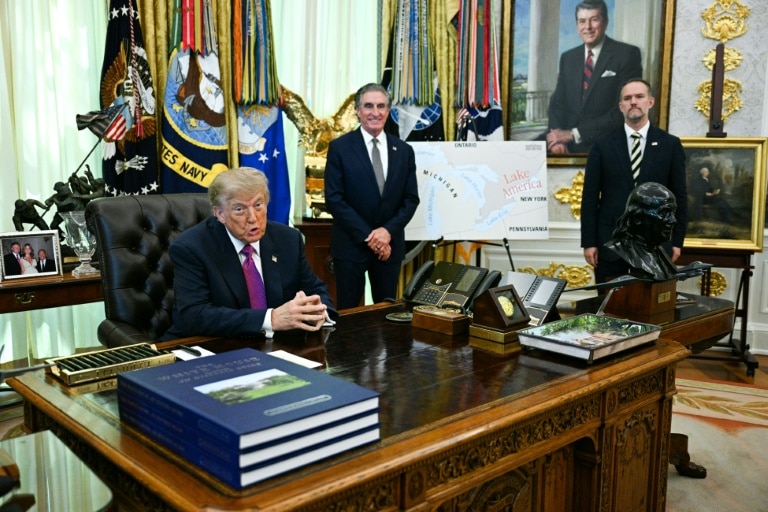
    Trump announced from the White House on Thursday local time that Washington and Tehran had reached a “great settlement” to end their conflict, confirming he had canceled planned additional military strikes against Iran. “We just made a great settlement of the war with Iran, and we’re going to be subject to finalisation of documents, which should get done over the next few days,” he stated.

    Minutes ahead of the Australian sharemarket opening, ASX 200 futures jumped 142 points, or 1.64%, to 8798.5, pointing to a strong bullish open for the benchmark index. Alongside the equity rally, Brent Crude oil fell below $89 per barrel for the first time in two months, while safe-haven gold climbed above $4200 per ounce. The Australian dollar also gained ground against the US dollar, rising 0.78% to trade at 70.48 US cents.

    Kyle Rodda, senior financial market analyst at Capital.com, noted that the global market uptick, including Australia’s rally, was directly tied to Trump’s decision to back away from planned escalation. He framed the shift with the informal acronym “TACO” – “Trump always chickens out” – pointing out that the president reversed earlier threats of new strikes against Iran by claiming the two sides had agreed to the final terms of a peace deal.

    But despite the market’s positive reaction, Rodda highlighted that both Iran and Israel quickly pushed back against Trump’s claim of a done deal. Iranian foreign ministry spokesman Esmaeil Baqaei clarified that Tehran has not yet reached a final conclusion on any agreement.

    Even with the disputed announcement, Rodda explained that the cancellation of new military operations and the clear signal that Trump has little interest in escalating the conflict was enough to drive down oil prices and lift demand for riskier assets across global markets. This development continues to unfold, with more details expected to emerge in coming days as negotiations around the proposed deal progress.

  • ‘Personal sledge’: Health Minister Mark Butler dismisses One Nation’s anti-Labor fundraiser

    ‘Personal sledge’: Health Minister Mark Butler dismisses One Nation’s anti-Labor fundraiser

    A fierce political clash has erupted between Australia’s ruling Labor Party and center-right Liberal opposition over a blockbuster anti-government fundraising campaign by far-right populist party One Nation, which has pulled in more than $2.5 million in less than 48 hours to oust sitting Labor MPs. Titled “FIRE THE LIAR!”, the campaign accuses Prime Minister Anthony Albanese of breaking campaign promises on three high-profile issues: the stage 3 income tax cuts, national energy prices, and the Indigenous Voice to Parliament referendum. Unlike most mainstream political fundraising platforms, the campaign does not publish public records of donor identities or individual contribution amounts, a lack of transparency that prompted Albanese to question the veracity of the posted fundraising totals just days after the campaign launched. To address these doubts, One Nation leader Pauline Hanson took to social media Wednesday to share what she called a “forensic audit” conducted by independent software developer Daryl Monnink, which she claimed confirmed the legitimacy of the fundraising haul. One Nation says more than 28,000 individual donors contributed to the campaign in its first 24 hours, with the largest single donation topping $15,000. The party plans to direct the full war chest to unseating Labor incumbents, starting with key seats in Western Australia – which Hanson called a top “hit list” target – and electorates held by high-profile Labor cabinet ministers including Tony Burke, Clare O’Neil and Madeleine King. Appearing on Seven Network’s morning current affairs program Sunrise Friday, federal Health Minister Mark Butler, a senior Labor figure, sought to downplay the significance of the large fundraising haul. He argued the amount raised would be far smaller than the six- and seven-figure donations One Nation has previously received from billionaire mining magnate Gina Rinehart. Butler framed the campaign as little more than a targeted personal attack on Albanese, which would quickly fade from public attention. “It’s not a big story beyond this week and maybe next week,” he said. Butler also pushed back against claims of a hidden ideological alignment between the Liberals and One Nation, arguing the partnership between the two right-wing parties represents a rebranded Coalition with the same conservative policy platform. “At the end of the day, what we’re seeing here is a remaking of the Coalition with some different faces but the same agenda,” Butler said. “Opposed to wage increases, we’ve heard that from the Liberal Party and One Nation, hostile to Medicare, determined to sow the politics of division and talk this country down.” Those remarks drew an immediate sharp response from Deputy Liberal Leader Jane Hume, who appeared alongside Butler on the same program. Hume accused the Labor government of panicking over the strong grassroots response to One Nation’s campaign, telling Butler: “You are rattled, aren’t you Mark? You are rattled.” She argued the massive donation total reflects widespread public anger at the current government’s performance, pointing out that a single Liberal colleague had raised more in donations in the month following Labor’s 2024 federal budget than he had in the entire preceding year. “Australians are angry, and that is playing out in our politics now,” she said. When pressed on whether the Liberals would negotiate a formal preference-sharing or non-compete agreement with One Nation ahead of the next federal election, scheduled for 2025, Hume ruled out any such deal for the immediate future. “That’s not on the cards. And an election is now 18 months to two years away,” she said. “To begin with, we never ever talk about preferences before an election is actually called because you don’t know what policies they have, you don’t know what candidates they have, you don’t know what One Nation are going to be doing in two years time.” The response from the junior Coalition partner, the National Party, was far more welcoming of One Nation’s anti-Labor campaign. Nationals leader Matt Canavan told Sky News that only a full Liberal-National government can deliver the stable economic plan Australian voters are demanding, but he praised One Nation’s efforts to target Labor incumbents. “I welcome everybody trying to take down this government, because that is the first step,” Canavan said. “So, good on One Nation for doing this. They’re saying that funding, now over $2 million, is going to be used to root out Labor members of parliament.” Canavan added that any efforts by One Nation to challenge sitting Nationals MPs would not help achieve the shared goal of removing the current Labor government, but emphasized that all anti-Labor forces are aligned on the immediate priority of defeating the ruling party. “We’re all on the same page here of getting rid of this government, it’ll be then up to the Australia people about what form of government they want,” he said.

  • Trump cancels Iran strikes, touts imminent deal

    Trump cancels Iran strikes, touts imminent deal

    On a Thursday that already carried high geopolitical and economic stakes, U.S. President Donald Trump upended global expectations with a sudden announcement: he had called off planned military strikes against Iran and claimed a historic peace deal to end the months-long U.S.-Iran war could be finalized and signed within days.

    The announcement broke as the 2026 FIFA World Cup kicked off in Mexico, sending immediate ripples through global financial markets. Major stock indices rallied sharply, while international oil futures dropped more than 3% — a clear market signal that investors welcomed the de-escalation of a conflict that has roiled energy supplies for months.

    In a social media post that quickly dominated global headlines, Trump stated that bilateral talks with Iranian officials had advanced to the highest levels of Iran’s leadership and received formal approval. “I have cancelled the scheduled strikes and bombings against Iran scheduled for this evening,” he wrote. “Time and place of the signing to be announced shortly.” He added that the core terms of the arrangement had already been signed off by the U.S. and its regional allies, most notably Israel, which joined Washington in launching the offensive against Iran back in February.

    The conflict, which began with a massive wave of joint U.S.-Israeli airstrikes on February 28 that killed long-time Iranian supreme leader Ayatollah Ali Khamenei, entered a paused state under a temporary truce brokered in April. But negotiations for a permanent ceasefire and peace agreement had appeared deadlocked in recent weeks, with both sides trading escalating threats in the days leading up to Trump’s announcement. Just 24 hours before his Thursday announcement, Trump had threatened to intensify U.S. airstrikes and seize control of Kharg Island, Iran’s critical oil export terminal in the Persian Gulf.

    Iranian officials quickly pushed back against Trump’s claims of a finalized, approved deal. Hours after the U.S. president’s announcement, foreign ministry spokesman Esmaeil Baqaei stated that “Iran has not reached a final conclusion on the agreement.” Iran’s semi-official Tasnim news agency pointed out that Trump has now claimed an imminent deal 38 times over the past two months, advising that any statements from Trump on the topic should be treated as unsubstantiated until confirmed directly by Iranian authorities. When pressed by reporters on the Iranian pushback, Trump doubled down on his claim, saying “I understand the answer is yes” when asked if Iran’s new supreme leader Ayatollah Mojtaba Khamenei had personally approved the deal.

    An official statement from the office of Israeli Prime Minister Benjamin Netanyahu confirmed that Netanyahu had spoken with Trump following the announcement, and that Trump had committed any final agreement would require Iran to remove all existing enriched nuclear material and dismantle its entire ballistic missile infrastructure program. Tehran’s municipal government also confirmed Thursday that the delayed funeral for former supreme leader Ayatollah Ali Khamenei will be held no earlier than late June, further adding to the atmosphere of ongoing uncertainty.

    Trump’s announcement suggests that months of quiet back-channel mediation led by U.S. partners Pakistan and Qatar may have produced tentative progress, despite the sharp public denial from Tehran. Even as hopes for peace rose, however, new reports of hostilities emerged: Kuwait announced Thursday that an Iranian strike targeted its territory, damaged an air defense radar installation, and forced a temporary closure of its airspace.

    Domestically, hardline factions on both sides have continued to undermine progress toward a deal. Earlier Thursday, amid escalating U.S. threats of new strikes, senior Iranian General Ali Abdollahi warned that any new American attack would draw a far harsher response than previous exchanges, warning that a widening of the war would spread instability across the entire Middle East. For ordinary Iranian civilians already reeling from months of conflict, that instability is already a daily reality. Majid, a 35-year-old Tehran pharmacist, expressed deep pessimism about the prospects of a final deal. “I am absolutely not optimistic about the agreement being finalized, because the gap between the two countries is too wide,” he said, blaming the ongoing deadlock on both Israel — which has exchanged frequent cross-border fire with Iranian forces in recent days — and hardline Iranian factions opposed to any compromise.

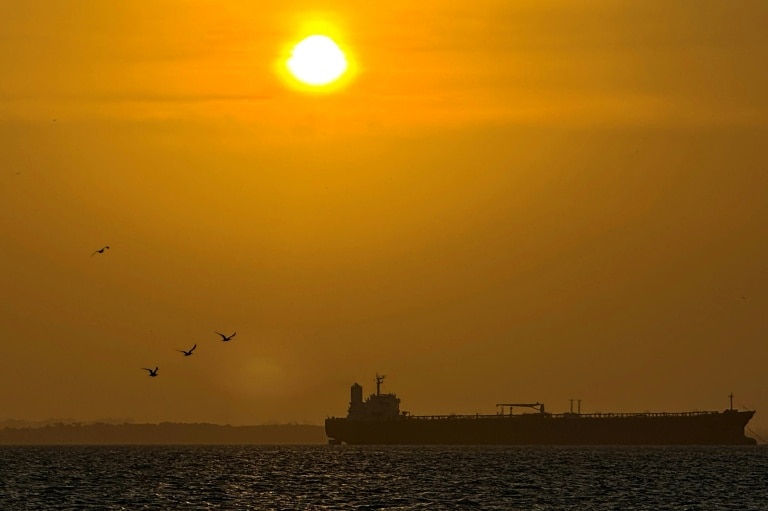
    The conflict has already hit the global economy hard. Earlier on Thursday, the World Bank downgraded its global growth forecast to its lowest level since the height of the coronavirus pandemic, explicitly citing the expanding economic fallout from the Iran war as a key driver of the downgrade. One of the most damaging ongoing economic impacts stems from Iran’s closure of the Strait of Hormuz, the critical global chokepoint through which roughly 20% of the world’s daily oil and gas supplies pass. Iran’s newly established strait oversight body reaffirmed Thursday that the waterway “will be closed until further notice”, keeping ongoing pressure on global energy markets despite the post-announcement drop in oil prices.

  • The parents whose boys play in two World Cup teams

    The parents whose boys play in two World Cup teams

    For football fans across Scotland, picking a team to cheer on at the 2026 FIFA World Cup is a straightforward choice. But for one Aberdeenshire family, the tournament brings a once-in-a-lifetime joyous dilemma: two sons, wearing the jerseys of two different nations, both competing on soccer’s biggest global stage.

    Jack and Heather Souttar, lifelong football lovers from the small village of Luthermuir, are packing their bags this week to travel across the Atlantic to the United States, where their middle son John will make his World Cup debut starting for Scotland, while their youngest son Harry lines up for Australia. The unique situation is a dream come true for the proud parents, even as it requires careful logistics to pull off.

    John and Harry are both professional centre-backs, who cut their teeth in the Scottish football system before moving to top clubs across the United Kingdom. John, who earned his first Scotland cap in 2018, currently plays for Glasgow Rangers after previous stints at Dundee United and Heart of Midlothian. Harry, who got his Australian eligibility through Heather, who was born in the country, has been a mainstay of the Socceroos squad since 2019, and currently plies his trade at Leicester City following spells at Stoke City and Dundee United. What makes the 2026 tournament extra special is that it marks John’s first appearance at a World Cup, while Harry already featured for Australia at the 2022 Qatar edition.

    The logistical challenge for Jack and Heather is significant: their sons’ two opening round group stage matches are separated by 3,000 miles and six days of travel across the U.S. The couple have already planned for the first two matches, but say they are keeping their plans flexible, holding out hope that both Scotland and Australia advance deep into the tournament, requiring them to travel further to continue cheering on both boys.

    Far from the family being torn between loyalties, the Souttars say their support for both sons is equal. “It’s a big thing, I suppose. We want to support both kids and both countries. Then the ball’s in the air for the rest of it,” Jack said in an interview, adding that the brothers share a warm, friendly rivalry rather than any bitter competition. Though they occasionally scrapped as children, the pair are close, regularly discussing matches and supporting one another through the ups and downs of professional football.

    Football has been woven into the Souttar family’s life for generations. Jack himself played for Brechin City in his youth, and all five of his children – oldest son Aaron, followed by Mhiran, John, Ailsa and Harry – grew up playing the game and following it closely. Over decades, Jack and Heather logged thousands of miles driving across the UK to watch their sons play at youth and professional levels, a commitment they never saw as a burden.

    “I think the big thing is that it was never a task for us,” Jack said. “We trained at Dundee twice a week. Then we were going down to Glasgow twice a week and training down there… We were all over the country supporting them and, to be fair, we both really enjoy football. It was excellent. We didn’t want to be grumpy parents. We treated it as a holiday.”

    This World Cup is not the first time the Souttar family has had a chance to watch Scotland compete at the tournament. In 1998, the last time Scotland qualified for the World Cup before 2026, Jack traveled to France with 10-year-old Aaron, while a toddler-aged John stayed home with Heather, who was heavily pregnant with Harry. Heather never got to make that 1998 trip, and joked that she has waited 28 years for her turn to attend a World Cup with her family. “I never made it. I was very pleased that they went and I said ‘well, I’ll go to the next one’,” she said. “But here we are, 28 years later for the next one. I’ve waited a while.”

    This year, a group of four generations of extended Souttar family and friends will travel to the U.S. with Jack and Heather, who has organized the entire trip. The only absence will be Aaron, the oldest brother, who passed away in July 2022 at the age of 42 after a multi-year battle with motor neurone disease. Both John and Harry have spoken publicly about how Aaron shaped their careers and served as a role model for them growing up.

    One of the biggest questions the Souttars have been asked is what will happen if Scotland and Australia both advance far enough to face each other in a knockout match, pitting brother against brother on the world stage. But Jack says the family’s love for both sons will not change, no matter the outcome. “I don’t think, because we’re from Scotland, our feelings for Harry are any less. We’re just so proud – as any parent would be – for their kids doing well. In any sport or any walk of life,” he said.

    For Heather, the 2026 World Cup is about more than just football: it is a chance to build new, lasting memories for the whole family, after 28 years of waiting. “On the football side we’ll have new stories, because we’ve heard the France ’98 stories for years, so we’ll have lots of new stories and new memories for all the family,” she said. “Memories and stories forever and that’s all you can want for families, isn’t it?”

  • UK defence minister quits with stinging rebuke of PM Starmer

    UK defence minister quits with stinging rebuke of PM Starmer

    In a shocking move that has sent ripples through British politics, Defence Secretary John Healey stepped down from his post Thursday, launching a blistering rebuke of Prime Minister Keir Starmer and the UK Treasury over what he calls insufficient funding commitments for national defence. The sudden exit comes after months of repeated delays to the Labour government’s much-anticipated 10-year Defence Investment Plan (DIP), a policy framework the prime minister has yet to publicly release.

    In a resignation letter published on his X social media account, Healey made clear his frustrations with the leadership: “You have been unable, and the Treasury has been unwilling, to commit the resources that the nation needs to defend the country at this time of rising threats.” He added that after warning Starmer he would not sign off on a DIP that failed to deliver adequate funding for British armed forces, he had no choice but to resign, warning that the underfunded proposal would leave Britain “less safe” amid growing global security risks.

    Within hours of Healey’s announcement, two more members of the defence team resigned: Armed Forces Minister Al Carns, who has previously been named as a potential Labour leadership contender, and Pamela Nash, a senior aide to Healey. The resignations mark a significant blow to Starmer’s already fragile authority, coming just one week ahead of a critical by-election that could open the door to a leadership challenge.

    Starmer responded quickly to Healey’s departure, pushing back against the criticism in a reply letter. The prime minister insisted his proposed spending plans would allow the UK armed forces to undergo necessary transformation and modernization, adding, “I will always do what is needed to keep our country safe.” He has repeatedly reaffirmed his commitment to publishing the DIP ahead of the NATO summit scheduled to take place in Turkey on July 7, despite repeated delays that have frustrated defence industry stakeholders and security experts.

    Starmer’s centre-left Labour government took power in July 2024, ending 14 years of Conservative Party rule. It campaigned on a promise to increase defence spending and prioritize NATO alliance commitments, a pledge that comes as Russian threats to European security grow and former U.S. President Donald Trump continues to pressure NATO allies to shoulder more of the cost of collective defence, reducing reliance on Washington.

    The prime minister has publicly pledged to raise UK defence spending to 2.5% of gross domestic product starting next year, with planned increases to 3% by 2029 if Labour wins re-election, and a final target of 3.5% by 2035. But behind the scenes, media reports have long pointed to deep internal discontent over the fine print of the spending plan. Healey revealed in his letter that he only received full access to the DIP draft earlier this week, and the proposal only projects defence spending will reach 2.68% of GDP by 2030, falling far short of public commitments. A source close to the former defence secretary added that the Treasury’s offer failed to set any firm timeline for reaching the 3% spending target. Calling the current proposal inadequate for Britain’s current security challenges, Healey said the plan fell “well short of what is required for defence and the country at this dangerous time”.

    Tan Dhesi, Labour MP and chair of the UK Parliament’s Defence Select Committee, urged the government to treat Healey’s warning “with the utmost seriousness”, describing the resignation as “a grave moment” for the government.

    The political pressure on Starmer is already mounting ahead of next Thursday’s by-election in the Makerfield parliamentary constituency, where Greater Manchester Mayor Andy Burnham is running for a seat. Both Burnham and former Health Secretary Wes Streeting, who resigned last month in the wake of disastrous local election results for Labour, have confirmed they would run in any future Labour leadership contest, though no challenge has formally been launched yet. While Healey has also been named as a potential leadership contender, there is no immediate evidence linking his resignation to leadership plotting.

    Political analysts warn the resignations have exposed deep divisions within Starmer’s government that further erode his standing. Patrick Diamond, a politics professor at Queen Mary University of London, told AFP the development “underlines that Starmer has become a lame duck prime minister who cannot get decisions through his own government”.

    Ed Arnold, senior associate fellow at the Royal United Services Institute (RUSI), a leading UK defence and security think tank, noted that Healey’s resignation “creates a sequence of political headaches” for Starmer. The prime minister must first quickly fill the vacant defence secretary post, then work to shore up internal support to finally get the delayed defence investment plan over the line for publication ahead of the NATO summit, a task that has grown far more difficult in the wake of the resignations.

  • UN experts, MSF condemn crackdown on women by Afghan morality police

    UN experts, MSF condemn crackdown on women by Afghan morality police

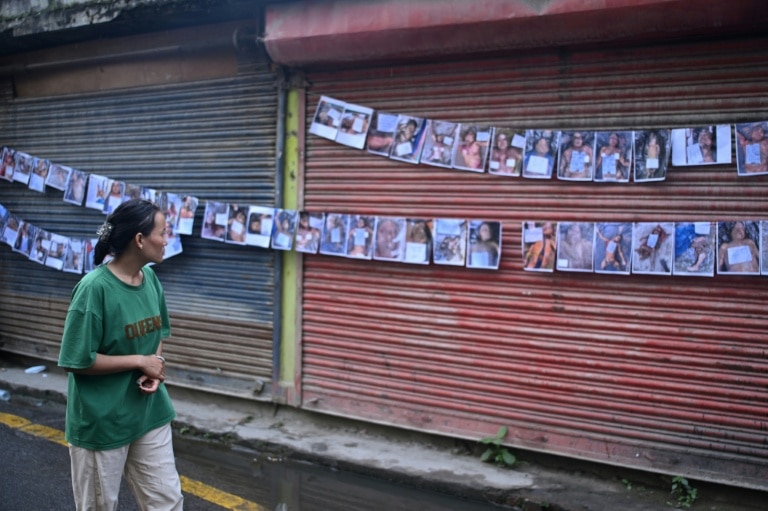
    In recent days, escalating tensions have gripped the western Afghan city of Herat after the Taliban’s Ministry for the Propagation of Virtue and the Prevention of Vice (PVPV) rolled out new restrictive rules targeting women, banning public exposure of feet and the use of makeup. The heavy-handed crackdown that followed has drawn sharp international condemnation from United Nations independent experts and Doctors Without Borders (MSF), amid reports of civilian casualties, mass detentions, and mounting harm to women’s access to basic services.

  • Drones, lone wolves, rowdy fans: US security officials ready for World Cup

    Drones, lone wolves, rowdy fans: US security officials ready for World Cup

    As the 2026 FIFA World Cup — the largest edition in tournament history, co-hosted by the United States, Mexico, and Canada — gets underway, top U.S. homeland security officials have outlined a sweeping multi-layered security plan for all 78 matches hosted across 11 American cities, while acknowledging lingering concerns over unpredictable lone wolf attacks and unruly international fan behavior.

    The first U.S.-hosted match of the tournament, pitting the host nation against Paraguay, is scheduled for June 12 at Inglewood, California’s SoFi Stadium, kicking off 38 days of play that will conclude with the final on July 19. In comments to Fox News’ *Fox and Friends* just hours before the tournament’s opening kickoff, Department of Homeland Security Secretary Markwayne Mullin emphasized that authorities have done everything in their power to secure match venues. “We feel like we’re as safe as we can possibly be,” Mullin said, noting that every venue will have dedicated crowd control protocols and anti-drone countermeasures. However, he added a key caveat: “But we can’t control… the lone wolf.”

    Mullin explained that the highest area of vulnerability lies in so-called “soft zones” outside the secured perimeter around stadiums, where crowds gather before and after matches. To mitigate this risk, he said local and state law enforcement agencies will maintain a visible, flexible presence in these outer areas to respond quickly to any incident, reaffirming that “the games are going to be very secure.”

    Drawing a comparison to the United States’ most-watched annual sporting event to put the World Cup’s scale in perspective, Mullin noted the tournament will deliver what amounts to 78 Super Bowls over just 38 days. Many matches will draw crowds larger than the annual NFL championship, he added, with a projected global audience of 1.4 billion viewers — far outstripping the 250 million who tune into the Super Bowl annually.

    Andrew Giuliani, head of the White House World Cup Task Force, detailed key new security upgrades this week during an appearance at the Washington-based Atlantic Council. A core addition is full anti-drone coverage for every U.S.-hosted match, backed by a $500 million federal grant that funded specialized training for local and state officers to counter unauthorized drone incursions. The need for this measure was underscored by recent incidents at other major global events: a French National Assembly report recorded 355 unauthorized drone intrusions during the 2024 Paris Olympic Games, resulting in 81 arrests.

    Giuliani noted that the 2026 World Cup marks the first time the United States has hosted a global sporting event of this scale since the 2002 Salt Lake City Winter Olympics. As of the tournament’s opening, he confirmed there are no credible active threats against the event, but authorities are maintaining constant, intensive monitoring. “I can tell you that a big part of my day gets spent in a SCIF” — a sensitive compartmented information facility, the secured room used to discuss classified intelligence — Giuliani said, adding that “the intelligence community is tripled down looking at this World Cup, and we’ll continue to monitor it between now and whenever the final goal is scored on July 19th.”

    Much of the on-the-ground security responsibility falls to local police departments, which face the unique challenge of adapting to the different crowd dynamics of international soccer, compared to the more reserved crowds the majority of U.S. officers are accustomed to managing at NFL games. The 2024 Copa America, held in the U.S. as a warm-up event for the World Cup, exposed this gap: stadium security and local officers were caught off guard by the more boisterous behavior of international soccer fans. Giuliani told ESPN that many common celebratory behaviors from international fans may look like a riot to officers who only have experience with domestic U.S. sports crowds, requiring adjusted training and expectations.

    Local departments have rolled out targeted adaptations to address this gap. The Philadelphia Police Department, for example, will equip all officers working matches with body cameras that feature live translation capabilities, to streamline communication with foreign fans who do not speak English. Philadelphia, a city with deep historical significance to the United States, will host six matches during the tournament — including a Round of 16 matchup on July 4, which coincides with 250th anniversary celebrations of the signing of the Declaration of Independence. The city’s Fraternal Order of Police Lodge 5 president Roosevelt Poplar told ESPN that the department has implemented mandatory overtime for all officers during the “all hands on deck” tournament period, with a focus on ensuring officers are prepared for the extended 39-day operational window. “We want to make sure our officers are mentally prepared to handle the long 39 days this is going to be,” Poplar said.

  • Mourinho named Real Madrid coach on three-year deal

    Mourinho named Real Madrid coach on three-year deal

    In a move that has sent shockwaves across global football, La Liga and 15-time European champions Real Madrid confirmed Thursday that iconic Portuguese manager Jose Mourinho will return to the Santiago Bernabeu as first-team head coach, penning a three-year contract that will keep him at the club until June 30, 2029. The 63-year-old veteran will officially step into his new role on July 13, the opening day of Real Madrid’s preseason campaign, taking over from interim coach Alvaro Arbeloa.

    Mourinho’s appointment comes on the heels of back-to-back trophy-less seasons for the Spanish giants, who have fallen behind domestic powerhouse Barcelona in recent campaigns. The move also follows a highly successful, if underrated, recent spell at Portugal’s Benfica, where Mourinho led the club through an entire unbeaten Primeira Liga season, even as the side ultimately finished third in the table. Benfica confirmed Wednesday that Real Madrid has paid a €15 million ($17.25 million) transfer fee to secure the manager’s release.

    This marks a full-circle moment for Mourinho, who previously held the Real Madrid head coaching position between 2010 and 2013. During his first tenure at the club, he cemented his legacy by delivering La Liga, Copa del Rey, and Spanish Super Cup titles, all while leading the club through one of the most heated rivalry periods in modern football against Pep Guardiola’s all-conquering Barcelona side. It was under Mourinho’s stewardship that Real Madrid became the first La Liga club in history to hit 100 points in a single season during the 2011–12 campaign, a landmark achievement that still stands as one of the most impressive in Spanish football history.

    Yet Mourinho’s first spell at the Bernabeu was not without controversy. The manager’s confrontational, iron-fisted leadership style divided the club’s dressing room: while some players including his predecessor Arbeloa remained fiercely loyal throughout his tenure, others clashed openly with the Portuguese coach. That reputation for controlling dressing room dynamics is exactly why Real Madrid has turned to him now, following a chaotic 2024–25 season marked by widespread internal conflict and tactical disarray. High-profile incidents included a physical altercation between midfielders Fede Valverde and Aurelien Tchouameni in May that left Valverde requiring hospital treatment, and three consecutive managers – Carlo Ancelotti, Xabi Alonso, and Arbeloa – failed to find a stable tactical balance that could integrate star attackers Vinicius Junior, Kylian Mbappe, and Jude Bellingham without disrupting the team’s overall structure.

    Real Madrid president Florentino Perez, who was re-elected to his post earlier in June after promising to bring Mourinho back to the club, has long credited the manager with laying the foundational work for the club’s six Champions League titles won in the years after Mourinho’s first departure. In comments made on Spanish television back in May, Perez reaffirmed that belief, setting the stage for Thursday’s official announcement.

    For Mourinho personally, the move marks a dramatic return to the pinnacle of European club football after several years plying his trade at lower-profile top-flight sides. The manager first rose to global stardom after leading a unfancied Porto side to a surprise Champions League title in 2004, before moving to Chelsea where he claimed back-to-back Premier League titles in 2005 and 2006, famously dubbing himself “The Special One” amid his instant dominance of English football. He followed that historic run with an unprecedented treble at Inter Milan in 2010, capped by another Champions League crown, which earned him the Real Madrid job the same year.

    After leaving Real Madrid in 2013, Mourinho returned to Chelsea for a second spell, claiming another Premier League title in 2015, before inconsistent results led to shorter, less successful tenures at Manchester United, Tottenham Hotspur, and Roma. He still added to his trophy haul during this period, winning the EFL Cup and Europa League with Manchester United in 2017 and the inaugural Europa Conference League with Roma in 2022. Most recently, he was sacked by Turkey’s Fenerbahce in August 2025 after the club was eliminated by Benfica in a Champions League qualification play-off, and he was appointed as Benfica’s manager just one month later, setting the stage for his rapid return to the Bernabeu.