标签: Oceania

大洋洲

  • Weather pattern El Nino is here and could reach historic intensity

    Weather pattern El Nino is here and could reach historic intensity

    The world has officially entered an El Niño event, the United States’ National Oceanic and Atmospheric Administration (NOAA) announced Thursday, with leading climate scientists warning the periodic weather pattern could strengthen to one of the most intense recorded since 1950 by the end of 2023, amplifying already record-breaking global warming fueled by fossil fuel emissions.

    El Niño is a naturally occurring climate cycle defined by above-average surface water temperatures across the central and eastern equatorial Pacific Ocean. This shift reshapes global wind and precipitation patterns, often triggering widespread erratic and extreme weather that ripples across every inhabited continent. The cycle emerges roughly every two to seven years, and most events persist between nine and 12 months, peaking in the final months of a calendar year.

    In NOAA’s latest official advisory, agency scientists calculated there is a 62 percent probability that El Niño will grow into a “very strong” event during the November-to-January period, a strength that would place it among the most powerful El Niño events documented in observational records stretching back to 1950. “El Niño is here, and it could be one for the history books,” NOAA meteorologist Haley Thiem explained in a public explainer video from the agency.

    Unlike many routine weather events, strong El Niño carries compounding risks for a planet already gripped by long-term warming from human-caused greenhouse gas emissions. Scientists warn that the additional ocean heat released by El Niño will push global average temperatures even higher, supercharging a wide range of extreme weather events from droughts to catastrophic flooding.

    Global climate experts warn the combined pressure of long-term climate change and a record-strength El Niño could push global temperatures to unprecedented new levels. “The combination of fossil fuel-caused climate change and a potential super El Niño event makes a terrible team,” noted Marc Alessi, a representative for the Union of Concerned Scientists. “It could easily push global temperatures to record levels.” Alessi added that growing research links anthropogenic climate change to increasingly intense El Niño events, even though the pattern itself is naturally occurring.

    For vulnerable communities across the globe, the arrival of a strong El Niño is far more than a routine climate forecast—it is an urgent warning of impending humanitarian crisis. “It’s not just another weather forecast, it’s a deadly siren to be feared,” said Mohamed Adow, director of Nairobi-based climate think tank Power Shift Africa. “It means failed rains, dying crops, rising food prices, and families pushed to the edge yet again.”

    Governments across Central America’s arid “Dry Corridor,” a region spanning parts of Guatemala, Honduras, El Salvador and Nicaragua, have already raised national alert levels in preparation for the event. The region has repeatedly faced devastating drought linked to past El Niño events, and authorities are already bracing for potential famine-level food insecurity. The Guatemalan government has already pre-positioned 1.1 million food rations to distribute in the event of a declared food security emergency. In East Africa, Adow added, extreme weather from El Niño will hit communities already reeling from back-to-back years of overlapping drought and flooding.

    International climate agencies outside the U.S. echo NOAA’s grim forecast. “The odds are strongly in favor of a moderate to strong, or probably strong to record-breaking, event at this stage,” Carlo Buontempo, director of the European Union’s Copernicus Climate Change Service, told Agence France-Presse.

    United Nations Secretary-General António Guterres has already urged global leaders to treat the forecast intense El Niño as the urgent climate wake-up call it represents. “El Niño conditions will pour fuel on the fire of a warming world,” Guterres said earlier this month. “The only effective response is climate action equal to the crisis — ending the addiction to fossil fuels, accelerating the shift to renewables, protecting the most vulnerable, and delivering early warning systems for all.”

  • Bangladesh claim first ODI series win over Australia

    Bangladesh claim first ODI series win over Australia

    Cricket history was made in Mirpur on Wednesday, as Bangladesh pulled off a landmark five-wicket victory over Australia in the second ODI, claiming their first ever ODI series win against the six-time world champions. The underdog hosts have now sealed back-to-back wins over Australia, adding an ODI series triumph to their T20I series victory against the same opponent in 2021, with one match still left to play in the three-match tour. What makes the win even more remarkable is the context of the matchup: before this series, Bangladesh had never won an ODI series against Australia, falling to 0-3 sweeps in each of their four previous encounters. Their only prior individual ODI win against Australia came in a tri-series with England back in 2005, and they waited 21 years between their first 50-over win, which they earned in the opening match of this current series. The match, disrupted by rain, relied on the Duckworth-Lewis-Stern (DLS) method to set a revised target for Bangladesh, after a late rain delay cut Australia’s innings short. Australia, missing several of their star first-choice players including pace spearheads Pat Cummins and Josh Hazlewood, top-order batters Travis Head and all-rounder Mitch Marsh, got off to one of the worst possible starts in ODI history. Inside the first two overs, Australia were 0 wickets for 3 runs, becoming only the fourth men’s ODI side in nearly 5,000 matches to lose three wickets without scoring a single run. A sensational collapse was only avoided thanks to a resilient fightback from stand-in captain Josh Inglis, who scored 34, and a match-saving seventh-wicket partnership of 103 runs between Marnus Labuschagne and Xavier Bartlett. Labuschagne finished the innings unbeaten on 55, while Bartlett hit a valuable 52 off 63 balls. Just before the rain rolled in to stop play, Bartlett and spinner Adam Zampa fell to the Bangladesh bowling attack, cutting Australia’s final total to 187 for 8 from 42 overs and adjusting the target Bangladesh needed to chase to 192 runs from 41 overs. Bangladesh’s chase got off to a shaky start, with opening batter Tanzid Hasan Tamim out for a golden duck on the very first over. Middle-order batters Soumya Sarkar and Najmul Hossain Shanto steadied the innings, putting together an 86-run second wicket partnership that put Bangladesh back on track, with Sarkar scoring 42 and Shanto adding 41. The pair fell in quick succession after their stand, leaving the hosts on 98 for 3 halfway through their chase, but Bangladesh never let the momentum slip. Tawhid Hridoy hit an unbeaten 40, and captain Mehidy Hasan Miraz contributed 22 not out to guide the side across the finish line with six full overs to spare. In a moment that underlined Bangladesh’s fighting spirit, Mehidy was hit on the body by a bouncer from Australian paceman Nathan Ellis, and required medical attention after a stretcher was called onto the pitch, but he refused to leave and finished his innings to secure the win. The result means Bangladesh cannot lose the series, with the final match of the three-match ODI series set to take place in Mirpur this Sunday, kicking off at 06:00 BST. Beyond the bilateral series, this result carries major implications for 2027 ICC Men’s Cricket World Cup qualification. Only the top eight teams in the ICC ODI rankings by September this year will qualify directly for the tournament. Currently, England sit in eighth place, Bangladesh ninth, and the West Indies 10th. England face a difficult away series against top-ranked India in July, meaning Bangladesh’s rising ranking points from this historic series could push them above England and alter the automatic qualification landscape ahead of the 2027 tournament. Bangladesh still hold an unfinished goal against Australia: while they now hold ODI and T20I series wins against the side, they are still yet to claim a Test series victory over Australia, a milestone they will look to reach in future matchups.

  • ‘Just tight’: Adam Reynolds downplays hamstring concerns as Michael Maguire declares premiership defence is alive despite horror loss

    ‘Just tight’: Adam Reynolds downplays hamstring concerns as Michael Maguire declares premiership defence is alive despite horror loss

    The 2026 NRL season is turning into a nightmare for defending premiers Brisbane Broncos, who slumped to their sixth consecutive defeat on Thursday night with a lopsided 48-6 hammering at the hands of the South Sydney Rabbitohs. The brutal loss has reignited questions about Brisbane’s ability to defend their title, while the team now faces a growing injury crisis that has sidelined multiple key players ahead of their upcoming bye.

    The biggest talking point after the match surrounded the fitness of Broncos captain and veteran playmaker Adam Reynolds, who was forced from the field with 20 minutes remaining in the contest. The issue began early when Reynolds notched an early interception and was chased down by Rabbitohs forward Lachlan Hubner; immediately after the tackle, the skipper was seen clutching his left hamstring, raising fears of a serious season-ending soft-tissue injury.

    Though Reynolds remained on the field through the first half, he grew increasingly visibly uncomfortable as the match progressed, eventually heading to the locker room with an ice pack wrapped around his injured hamstring. Speaking to reporters post-game, Reynolds downplayed the severity of the issue, insisting he only left the field due to severe cramping rather than a pulled or torn hamstring. “I’m right, just tight,” he said, brushing off further questions about his long-term health. NRL physiotherapy experts have backed this assessment, noting that the club’s use of pickle juice and on-field stretching to treat the issue is consistent with treating cramping, which would see Reynolds avoid a long spell on the sidelines if the diagnosis holds.

    Reynolds’ early exit was not the only injury blow for Brisbane on Thursday. Just minutes after the captain left the field, five-eighth Ezra Mam was also forced off with an AC joint injury. Mam, who has come off the bench in the Broncos’ last two matches, had turned in several promising plays before suffering the injury while making a game-saving try tackle on South Sydney winger Ed Kosi in the corner. He remained on the field for a handful of defensive sets before the pain became too much to continue. Broncos head coach Michael Maguire confirmed post-match that the full extent of Mam’s injury will not be clear until he meets with club medical staff.

    Brisbane already entered Thursday’s match without a host of star players, including lock Patrick Carrigan and utility Gehamat Shibasaki, who have both been sidelined with long-term injuries. Despite the mounting casualty list and the club’s slide into the bottom four of the NRL ladder after six straight losses, Maguire delivered a defiant, unexpected verdict on Brisbane’s premiership defence, insisting the defending champions are still very much in contention to play finals football this season.

    If Brisbane fails to qualify for the finals, they will become the first premiers since the 2005 Wests Tigers to miss the post-season the year after winning the title. But Maguire rejected suggestions that Brisbane’s campaign is already over, pointing to the return of injured stars as a potential turning point for the struggling side.

    “We’re still well and truly alive,” Maguire declared. “People will probably think I’m mad, but one thing I do know is I’ve got a number of guys that are not on the field at this present moment. And as a group, we said we’re not going to use that as any sort of excuse or anything like that. But they’ll all come back and there’s a lot of quality there that I know that can come back into the team. So although we’re probably in a bit of a tough hold at the moment, we will get those boys back at some stage.”

    Maguire added that the current slump could ultimately strengthen the side in the long run, even as the team prepares for a brutal run of upcoming matches after their bye next week. “We all know what the team’s capable of doing, so once they get back (things will improve). We’ve got to get through this little period now, which is tough for all of us. We don’t like going through it, but it can also be the making of us. These guys have had plenty of experience together. They’ve been through some tough times, they’ve been through some good times. I think they just have to come together like we do. I thought our prep this week was spot on, but it didn’t turn out onto the park so we’ve got to dig deep amongst ourselves to find that because I know I’ve got a team here.”

  • Scientists warn of record heat, threats to climate monitoring

    Scientists warn of record heat, threats to climate monitoring

    As the world grapples with accelerating planetary warming, a landmark annual study from more than 70 leading climate experts — including lead contributors to the United Nations Intergovernmental Panel on Climate Change (IPCC) — has delivered a stark dual warning: 2025 has already hit near-miss 1.5°C warming thresholds, and decades of robust global climate tracking is at greater risk of collapse than at any point in modern history. Published in *Earth System Science Data* between the IPCC’s 2023 assessment and its next report due in 2028–2029, the annual *Indicators of Global Climate Change* report paints a clear, alarming picture of a planet out of balance, and systemic failures that could leave policymakers blind to accelerating climate breakdown.

    The study confirms that 2025 global average temperatures hit 1.39°C above pre-industrial levels, with 1.37°C of that warming directly driven by human greenhouse gas emissions. On current trajectories, the scientists project that human-caused warming will cross the critical 1.5°C threshold as early as 2030 — a guardrail the 2015 Paris Climate Agreement set to avoid the most catastrophic, irreversible impacts of climate change. Piers Forster, lead author of the study and professor of physical climate change at the UK’s University of Leeds, explained that the planet is now suffering from a record-breaking “Earth energy imbalance,” a measure of the gap between solar energy entering the atmosphere and energy radiated back out to space. “Without human influence, it should be close to zero, but it has been growing since the 1970s and is now at a record high, doubling in recent decades,” Forster noted.

    This accelerated warming stems from two overlapping factors: greenhouse gas emissions hitting an all-time annual high, and reduced global aerosol pollution that has eliminated the temporary cooling effect these light-reflecting particles provided. While the rate of emissions growth has slowed, the study finds the remaining carbon budget — the total volume of CO2 that can still be emitted to keep warming below 1.5°C — will be fully exhausted in approximately three years. “Given that greenhouse gas emissions are still on the rise, keeping global warming below this 1.5°C threshold now seems unachievable,” said Aurelien Ribes, a climate scientist at the French meteorological service.

    Other key climate indicators tell an equally troubling story. Global sea levels have risen 23 centimeters since 1901, and the rate of increase has accelerated to 3.84 millimeters per year, driven by melting land-based ice and thermal expansion as oceans absorb excess heat. The report added a new metric this year to track ocean stress: the number of annual marine heatwave days, which has tripled since 1991 and hit an average of 65 days in 2025.

    Peter Thorne, co-author of the study, professor of physical geography at Ireland’s Maynooth University, and deputy chair of the UN-backed Global Climate Observing System (GCOS), compared climate monitoring to tracking vital signs for a gravely ill patient. “These indicators represent an essential monitoring of the vitals of a patient exhibiting ever increasingly troubling symptoms,” Thorne said. Yet unlike any prior period in his career, Thorne warned that the entire global observation network that underpins these critical readings is facing systemic collapse: “They all rest upon a suite of global observation capabilities which are, for the first time in my lifetime, systematically either actively degrading or at risk.”

    The report attributes this unprecedented threat to shifting political priorities and funding cuts across multiple nations, amplified by geopolitical conflicts, post-energy crisis budget constraints, and the resurgence of climate-skeptic political leadership in major economies. It specifically highlights cuts enacted by the second Trump administration in the United States, which ordered the removal of hundreds of deep-sea monitoring instruments that are critical to measuring how oceans absorb excess heat, shape weather patterns, and drive global ocean circulation. Samantha Burgess, climate strategic lead at the European Centre for Medium–Range Weather Forecasts (ECMWF), emphasized the irreplaceable value of these in-situ measurements: “We really need these in-situ observations to continue monitoring the climate.”

    Funding threats extend far beyond the U.S., the report confirms. Funding for the UN’s World Meteorological Organization has declined in recent years, and the coordinating GCOS program itself faces sustained funding uncertainty. Ground and atmospheric monitoring networks are shrinking across Africa, the western Pacific, and South America, and the UK recently cut all funding for a research plane that carries out critical atmospheric observation. “So it’s not just one nation, unfortunately,” Burgess noted.

    Launched in 2023 to fill the data gap between the IPCC’s decadal assessments, the annual Indicators report is designed to give policymakers up-to-date, robust data to guide climate action. But experts warn that if current funding and policy trends continue, even that critical annual update will be at risk — leaving the world flying blind as climate change accelerates.

  • Pope condemns ‘indifference’ towards migrants on Canaries trip

    Pope condemns ‘indifference’ towards migrants on Canaries trip

    On the sixth day of his week-long trip to Spain, Pope Leo XIV traveled to Spain’s Canary Islands on Thursday, using the high-profile visit to deliver a searing rebuke of global indifference toward migrants risking their lives along one of the world’s deadliest irregular migration routes to Europe.

    Standing at the Arguineguin port on Gran Canaria, a site that has become synonymous with the regional migration crisis, the pontiff carried out a solemn ritual: throwing a floral wreath into the Atlantic Ocean to honor the thousands of people who have perished attempting to reach the archipelago from northern Africa. Following the tribute, he met with recent arrivals and the aid workers who support them, before blessing a handcrafted cross carved from timber salvaged from broken migrant boats that washed up on the islands’ shores.

    During a public ceremony, Pope Leo called out the systemic failures that fuel ongoing loss of life along the route. “Even today, monsters lurk in these seas: mafias that profit from despair, traffickers that enslave women and children, and those whose indifference allows the poor to be swallowed up by exploitation or forgetfulness,” he told the assembled crowd.

    Data from the International Organization for Migration underscores the scale of the crisis: nearly 1,200 people died or disappeared while crossing from Africa to the Canary Islands in 2023 alone, cementing the route’s status as one of the deadliest migration corridors on the planet. Pope Leo pushed back against the hardline policy shift that has swept much of Europe in recent years, driven by rising far-right political pressure. “Europe cannot claim to uphold human dignity while growing accustomed to the Mediterranean and the Atlantic becoming unmarked graves,” he added. He also called on origin and transit nations, where migrants flee persistent poverty and armed conflict only to fall prey to smuggling networks, to confront the crisis and reexamine their collective conscience.

    Attendees at the ceremony heard the harrowing testimony of a Nigerian woman who survived trafficking during her journey to Spain, who chose not to appear in person for security reasons. She shared the impossible choice that millions of migrants face: “I had to choose: live in suffering, or cross and risk it all. Die trying, or stay and not have anything.” After being forced into prostitution in Spain, she had her newborn child taken from her. Responding to her story, Pope Leo affirmed his commitment to honoring the humanity of all migrants, saying “I bow before the dignity of every migrant. You are not just numbers or files. You are people who have left behind families and homes. You have dreams that no one has the right to despise.”

    The Canary Islands have borne the brunt of rising irregular migration across the Atlantic in recent years. In 2024, more than 46,000 people arrived on the islands – a new annual record – most crammed into overcrowded, unseaworthy small vessels. Arrival numbers have fallen in the months following that record surge. The pontiff’s trip fulfills a long-planned goal of his predecessor, Pope Francis, who passed away one year ago before he could make the journey to the islands.

    Pope Leo’s outspoken advocacy for migrant rights has already drawn political pushback: it has sparked public criticism from U.S. President Donald Trump, who has implemented sweeping new restrictions on irregular migration since returning to the White House last year.

    For migrant communities and advocates on the ground, the visit carries profound meaning at what many describe as a critical juncture for the crisis. Mohamed Amjahdi, a 37-year-old member of the Spanish Islamic Commission who arrived in the Canary Islands from Morocco on a migrant boat when he was 17, spoke to AFP about the visit’s significance. “We really value this visit. It’s very important for us at such a critical moment,” he said. “We also appreciate the Catholic Church and the vital work it does for migrants. When it comes to helping migrants, there’s no distinction. It doesn’t matter whether you’re Christian or not, whether you’re white or black — everyone receives the same support.”

    Arguineguin port gained infamy as the “dock of shame” after more than 3,000 migrants were forced to sleep in the open or under flimsy makeshift shelters during a massive arrival surge in 2020. For Thursday’s ceremony, local organizers installed a large new banner renaming the site the “dock of hope.”

    The visit comes as the Spanish government of Socialist Prime Minister Pedro Sanchez has broken with the broader European hardline trend, moving forward with a plan to regularize the status of around 500,000 undocumented migrants currently living in the country. Earlier in the trip, during an address to Spain’s parliament on Monday, Pope Leo outlined his policy vision for migration, calling for the creation of “safe and legal pathways” for migration and urging governments to extend “a respectful welcome and real opportunities for integration” to new arrivals.

    Thursday marks the penultimate day of Pope Leo’s week-long trip to Spain, which has already included stops in Madrid and Barcelona. The visit is set to conclude on Friday on the island of Tenerife, where the pontiff will tour another migrant support center.

  • ‘Racist thuggery’ condemned after second night of disorder in N.Ireland

    ‘Racist thuggery’ condemned after second night of disorder in N.Ireland

    Northern Ireland has been rocked by a second consecutive night of violent unrest, triggered by a recent stabbing in Belfast and stoked by far-right agitation targeting migrant communities. Senior UK government officials have labeled the violence unabashed “racist thuggery”, after 16 people were arrested and 12 police officers were injured during Wednesday’s clashes.

    The unrest first erupted on Monday, following a knife attack that left local man Stephen Ogilvie seriously injured. A 30-year-old Sudanese national, Hadi Alodid, appeared before Belfast magistrates on Wednesday charged with attempted murder, and was remanded in custody ahead of a next hearing scheduled for July 8. Within an hour of the attack, footage of the incident was posted to the social platform X by far-right activist Stephen Yaxley-Lennon, also known as Tommy Robinson, and was subsequently amplified by X owner Elon Musk, turning a local criminal incident into a tinderbox for anti-immigration rage.

    On Tuesday, the first major night of violence left the region reeling: masked rioters set vehicles and buildings ablaze, forced dozens of families from their homes, and forced Northern Ireland’s largest main mosque to close its doors for the first time in its 46-year history. Mosque chairman Mohammed Arshed noted that the community had never faced such severe, nearby unrest since opening in 1978.

    Violence spilled into a second night on Wednesday, when AFP correspondents on the ground witnessed dozens of masked agitators clashing with riot police into the late hours. Rioters set a civilian car and a boarded-up property on fire, and hurled projectiles including petrol bombs and bricks at officers responding to the unrest. Police deployed water cannon and mounted charges to push the rioters back, after the group attempted to advance on a local hotel that was being used to house asylum seekers. Northern Ireland Secretary Hilary Benn confirmed that while the scale of Wednesday’s disorder was smaller than Tuesday’s widespread violence, the harm and fear inflicted on vulnerable communities cannot be understated.

    “It was really important to convey the sense of fear that has been created, above all for those who were intimidated, burned out of their houses by masked thugs on the basis of the colour of their skin,” Benn told Sky News Thursday. Benn also added that authorities had received troubling reports of commuters being stopped and interrogated about their nationality while traveling to work. One such incident targeted a nurse en route to her shift at Belfast’s Ulster Hospital, who was chased and intimidated by rioters. Hospital officials praised the nurse for completing her shift despite the terrifying encounter, noting her bravery stood in stark contrast to the rioters’ actions.

    UK Prime Minister Keir Starmer quickly condemned the violent scenes as “shocking and completely unacceptable”, while Ogilvie’s own family issued an appeal for calm, urging the public not to use their family’s “terrible tragedy” to divide communities and fuel hostility. Ogilvie, who lost an eye in the attack, remains in stable condition as he recieves medical care.

    The unrest also spilled over to the Scottish city of Glasgow, and comes as anti-immigration sentiment simmers across the United Kingdom, stoked by far-right political groups. Most of Tuesday’s violence was concentrated in Protestant unionist areas of Northern Ireland, where some protesters expressed anti-immigration views shared by far-right groups across the country. One protester, who gave only his first name John, said that many working-class people felt they had been manipulated by political leaders, and shared widespread anxiety over rising migrant arrivals across Europe. Accounts linked to self-described “patriot” groups have flooded social media with the attack footage, urging supporters to join protests against mass migration.

    Immigration has long been a polarizing hot-button issue in UK politics, and has helped drive the recent rise of the hard-right Reform UK party led by Nigel Farage. Violent anti-immigration protests have become increasingly frequent across the country in recent years. Tensions were already running high across the UK before the Belfast unrest: last week, skirmishes broke out in southern England after far-right groups criticized police handling of the murder of a white student by a British Sikh man.

    Local residents in Belfast expressed deep dismay at the violence tearing through their tight-knit communities. A 28-year-old local resident who assisted in evacuating neighbors told AFP: “It’s just sad, this is a really close-knit community.” Another local, 50-year-old plumber Brendan who joined the protests, said no one supported the violence, noting that decades of sectarian conflict that ended with the 1998 Good Friday peace deal had already left the region weary of unrest. But he added that many shared anger over the stabbing, which had rallied disparate groups together.

  • G7 allies seek to bridge divide with Trump at France summit

    G7 allies seek to bridge divide with Trump at France summit

    Against the backdrop of shifting global alliances and mounting transatlantic tensions, leaders from the Group of Seven (G7) major advanced economies are convening in the scenic French spa town of Evian-les-Bains on the shores of Lake Geneva this Monday, with a core mission: narrowing deep divides between European allies and U.S. President Donald Trump. Chaired by French President Emmanuel Macron, the three-day summit is already shaping up to be dominated by the U.S. leader’s outsized presence, as local businesses in nearby Geneva prepare for the gathering by boarding up storefronts amid a massive multinational security operation that has deployed thousands of police and military personnel across the region.

    This summit marks one of the first large-scale international diplomatic gatherings since the U.S. and Israel launched their conflict against Iran in late February, a military campaign that has upended the entire Middle East and exacerbated long-simmering rifts between Washington and its European partners. Alongside prioritizing diplomatic efforts to end the Iran conflict and reopen the strategically critical Strait of Hormuz — a global shipping chokepoint whose closure has disrupted global energy and trade flows — leaders have a packed agenda rife with potentially contentious issues.

    A key focal point will be forging a unified front on the war in Ukraine, which enters its fifth year following Russia’s full-scale invasion in 2022. Ukrainian President Volodymyr Zelenskyy will participate in the talks, a presence Macron emphasized was critical to rebuilding G7 consensus after persistent disagreements over Ukraine policy between Trump and other alliance members over the past year. “Zelensky’s participation is very important for us because we need to rebuild consensus within the G7, including the need for negotiations,” Macron stated Wednesday, publicly acknowledging existing splits.

    Beyond Ukraine, other G7 members also plan to press Trump to accept concessions on global trade imbalances, pushing back against the U.S. leader’s well-documented protectionist trade policies. Another contentious topic will be new regulations for large technology platforms to protect minors online, an initiative that has already faced reluctance from U.S. negotiators. To inform this discussion, Sam Altman, CEO of AI giant OpenAI, and Arthur Mensch, head of leading European AI firm Mistral AI, will join a dedicated working lunch on digital child protection.

    In a push to expand the G7’s global reach beyond its traditional seven core members — Canada, France, Germany, Italy, Japan, the United Kingdom and the United States — Macron has extended invitations to leaders from five major emerging economies: Brazil, Egypt, India, Kenya and South Korea. For regional consultations on the Iran conflict, the French president has also invited leaders from key Arab states including Egypt, Saudi Arabia, Qatar and the United Arab Emirates to a special standalone session on Tuesday.

    As has become the norm for G7 gatherings, China will be absent from the main summit, even as Western nations grow increasingly concerned about Beijing’s market dominance and control over rare earth minerals — critical inputs for nearly all modern consumer electronics. In a gesture of outreach, however, Macron will host a virtual “World Convergence Summit for Growth” on Thursday, which will include participation from G7 members, China and other major emerging market economies.

    Trump, who will arrive at the summit just days after celebrating his 80th birthday on June 14 — an event that included an MMA cage fight on the White House lawn — has a history of unpredictable behavior at G7 gatherings. French officials are keen to avoid a repeat of the 2018 Canada G7, where Trump departed the summit early, and have held out hope of persuading him to extend his stay in France for a separate bilateral meeting with Macron in Paris or another location.

    For Macron, the summit comes as a critical late opportunity to leave a mark on the global stage, with less than 12 months remaining in his final presidential mandate. The gathering is a cornerstone of his long-held push to advance European strategic sovereignty at a time of shifting U.S. priorities. The talks will also serve as a precursor to the upcoming G20 summit, scheduled for December 2025, which will be hosted by Trump at his own Miami golf resort.

    Ahead of the opening, new polling from the European Council on Foreign Relations (ECFR) highlighted the depth of transatlantic friction. The survey of citizens across more than a dozen European countries found that trust in the United States has plummeted, with only 11 percent of respondents viewing the Trump administration as a reliable ally. In the face of U.S. “criticism and aggressive behaviour”, ECFR senior policy fellow Pawel Zerka noted that European leaders now have a unique window “to go further and faster” in building collective independent European security frameworks.

  • Horror show: Broncos in crisis as premiers slump to sixth loss in a row and lose star halves on emotional night for Jai Arrow

    Horror show: Broncos in crisis as premiers slump to sixth loss in a row and lose star halves on emotional night for Jai Arrow

    On an emotionally charged Thursday night at Sydney’s Accor Stadium, the South Sydney Rabbitohs delivered a crushing 48-6 defeat to the defending premiers Brisbane Broncos, all but ending Brisbane’s hopes of repeating their 2025 grand final victory. The match was overshadowed by an outpouring of support for former NRL forward Jai Arrow, who was forced into early medical retirement after a devastating diagnosis of motor neurone disease.

    The entire rugby league community put rivalries aside to honor Arrow, who debuted for the Brisbane Broncos in 2016 before finishing his playing career with the Rabbitohs. Before kickoff, both teams formed a joint guard of honour as a tearful Arrow walked out onto the pitch alongside his partner and young child. The Rabbitohs wore special all-white “whiteout” jerseys with Arrow’s name printed on the back, while the Broncos added Jai’s name and his former club number to their playing kits. After the pre-match ceremony, Arrow rang the iconic Rabbitohs Legacy Bell, and players from both sides embraced him as the 80,000-strong crowd rose to give a warm standing ovation in support of Arrow and his family. All of the match-worn jerseys will be auctioned off after the game, with 100% of proceeds going directly to Arrow and his family to cover medical and living costs.

    Once the match got underway, it quickly turned into a nightmare for Brisbane. The Broncos, already on a five-match losing slide, produced one of their worst performances in recent memory, missing 23 tackles in the first half alone and going into the halftime break trailing 30-0. Things went from bad to worse when key playmakers Adam Reynolds and Ezra Mam both left the game with serious injuries. Captain Reynolds, who first tweaked his left hamstring early in the contest while making a break, struggled on through severe cramps before exiting the match with 20 minutes remaining. Mam, who sustained a shoulder injury while making a last-ditch try-saving tackle, followed Reynolds off the pitch shortly after. The pair’s injuries compound an already brutal run of form for the defending premiers, who have now dropped six consecutive matches.

    Veteran Rabbitohs five-eighth Cody Walker turned in a vintage performance to lead his side to a much-needed win, snapping South Sydney’s own three-game losing streak. Walker notched three first-half try assists, including a spectacular set-piece play just before halftime where he pulled in a floating chip kick from Ashton Ward and offloaded to Jamie Humphreys for an easy try under the posts. Star winger Alex Johnston continued his historic try-scoring form at Accor Stadium, crossing for four tries, while forward David Fifita produced a series of powerful barnstorming runs in the opening 40 minutes. Rabbitohs coach Wayne Bennett praised his side’s first-half intensity, particularly with star fullback Latrell Mitchell sidelined through injury, though he admitted he was disappointed with the team’s sloppy play in the second half.

    For the Broncos, the 48-6 defeat marks their worst loss of the 2026 NRL season and leaves their finals hopes all but extinguished. To squeeze into the top eight, the premiers will now need to win at least eight of their remaining 10 regular-season matches, a feat made even more challenging by a brutal upcoming draw and the loss of their two key playmakers to injury. If Brisbane fails to qualify for the finals, they will become the first defending premiers since the 2005 Wests Tigers to miss the post-season the year after winning the premiership. Even with a bye next week, Brisbane coach Michael Maguire and his squad will face intense scrutiny from fans and media across Queensland in the coming weeks, just eight months after the club lifted its first premiership trophy in decades.

  • Iran warns Mideast truce ‘practically meaningless’ after US strikes

    Iran warns Mideast truce ‘practically meaningless’ after US strikes

    A new cycle of tit-for-tat military strikes between the United States and Iran has collapsed months of fragile ceasefire efforts in the Middle East, pushing the region to the brink of a wider full-scale conflict and raising alarm over global energy security at the Strait of Hormuz.

    The current round of unrest traces back to a three-month conflict that erupted on February 28, when a joint strike operation by the U.S. and Israel targeted Iranian positions. A ceasefire agreement brokered in April paused large-scale hostilities, but attempts to negotiate a permanent peace deal have repeatedly stalled. Sporadic cross-fire has kept the truce on the edge of collapse for weeks, until the latest escalation that broke the fragile calm.

    The latest confrontation began Wednesday, when U.S. President Donald Trump—who had repeatedly claimed a peace deal with Iran was within reach—accused Tehran of “playing us for suckers” and warned it would face consequences. Hours later, U.S. Central Command (CENTCOM) confirmed it launched a second consecutive day of strikes early Thursday, deploying dozens of Tomahawk cruise missiles to hit Iranian surveillance, communications, and air defense facilities across the country. Iranian state media reported multiple explosions across southern Iran, with at least three civilians wounded in Tehran province.

    Tehran quickly responded with what its Islamic Revolutionary Guard Corps called a “punitive operation.” Iran targeted a U.S. military base in Jordan, while multiple Gulf states reported incoming hostile fire. Jordan’s military announced it shot down 20 Iranian missiles, and Kuwait’s air defense forces engaged and intercepted unidentified aerial targets. In Bahrain, which hosts a major U.S. naval base, falling debris from the attacks injured an 11-year-old girl and damaged multiple residential properties and vehicles, with Bahrain condemning the attack as “sinful Iranian aggression.”

    In the wake of the U.S. strikes, Iran’s foreign ministry issued a sharp rebuke, stating that the illegal U.S. attacks are not only a blatant violation of international law and Iranian sovereignty, but have also rendered the April truce “practically meaningless.” U.S. Defense Secretary Pete Hegseth doubled down on Washington’s hardline stance, telling reporters that if ordered by President Trump, “we’ll negotiate with bombs.” He also confirmed the strikes could extend into a third consecutive night, promising future attacks would be strong and unambiguous. Fox News reported Trump threatened that if Iran refuses to accept U.S. peace terms, “We’ll bomb the S out of them tomorrow night.” Iranian officials quickly denied Fox’s report that Iranian leadership had called Trump directly amid the bombing, calling the claim completely false.

    The escalation has also put global energy supplies at direct risk. Iran’s Revolutionary Guard aerospace force commander Majid Mousavi warned in a social media post that if the U.S. makes the Strait of Hormuz—one of the world’s most critical chokepoints for global oil and natural gas transport—unsafe, “We will make the region hell for you.” Iranian military officials claimed the waterway is now “completely closed” and all commercial vessel traffic would be targeted, and confirmed Iranian forces had already struck two civilian ships attempting to transit the strait. CENTCOM pushed back on the claim, stating late Thursday that commercial shipping continued to move through the strait normally.

    The escalation has already claimed civilian lives beyond Iran and the Gulf. On Thursday, India’s shipping minister confirmed that three Indian civilian sailors were killed Wednesday when the U.S. struck the commercial vessel MT Settebello off the coast of Oman. India’s foreign ministry summoned a senior U.S. diplomat in New Delhi to lodge a formal strong protest over the incident.

    Despite the sharp escalation, regional mediators have not abandoned diplomatic efforts. A Qatari delegation was actually in Tehran holding talks when the U.S. strikes began, with a diplomatic source confirming the discussions were held “in coordination with the United States.” The Qatari team only departed Tehran after talks that extended into the early hours of Thursday morning. Pakistan, which co-mediates talks alongside Qatar and hosted the first round of direct negotiations between the two sides, said it has not completely lost hope for a negotiated solution. Still, Pakistani foreign ministry spokesman Tahir Andrabi acknowledged that “It is hard to be an optimist in the new exchange of hostilities.”

    International powers have called for an immediate de-escalation. Saudi Arabia, which faced Iranian attacks earlier in the conflict, issued a statement Thursday calling for renewed negotiations under the mediation of Pakistan and Qatar. China, Iran’s largest crude oil customer, also urged an immediate end to all military operations. “We call on relevant parties to immediately cease military operations, respond to the mediation efforts of relevant countries, and achieve a comprehensive and lasting ceasefire,” a Chinese foreign ministry spokesperson said Thursday.

  • Australian stocks fall as Middle East crisis fears rattle the market

    Australian stocks fall as Middle East crisis fears rattle the market

    Escalating geopolitical tension in the Middle East, triggered by new United States military strikes on multiple Iranian targets, has roiled Australian financial markets, driving a sharp jump in global crude oil prices and pulling Australia’s benchmark stock index lower on Thursday as investors braced for potential further conflict.

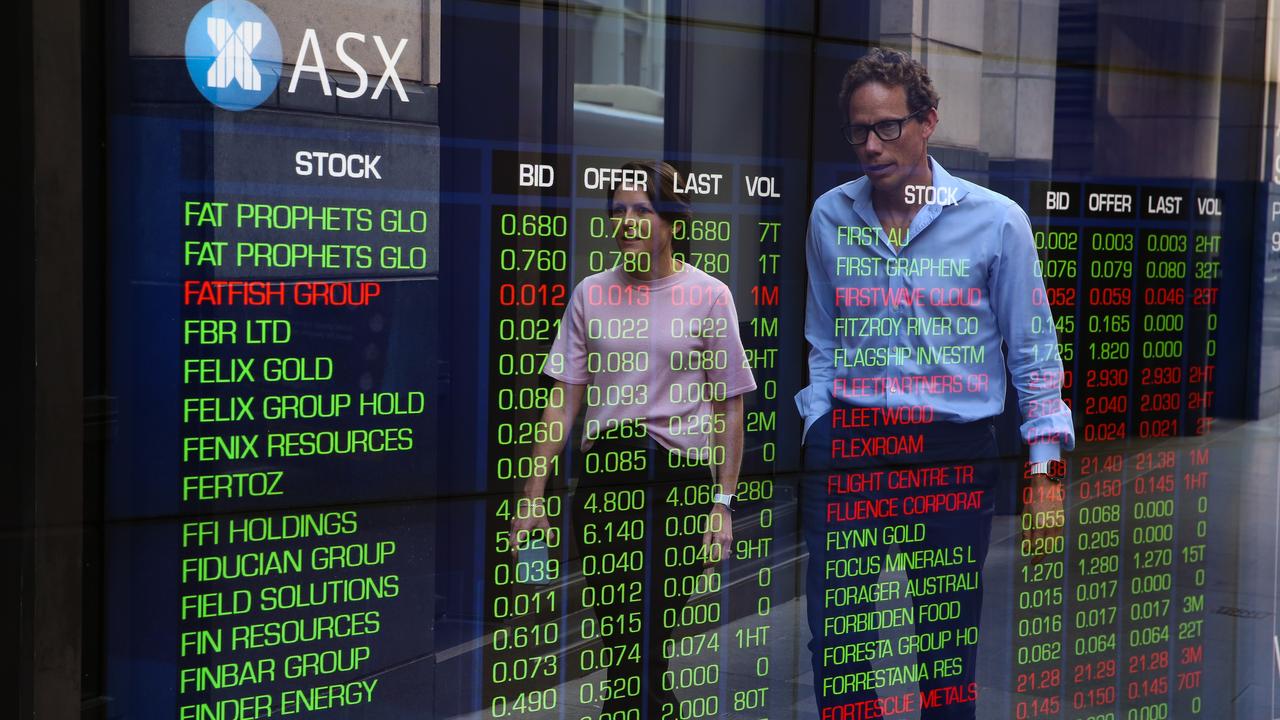
    The Australian Securities Exchange’s benchmark S&P/ASX 200 closed down 20.10 points, or 0.23%, at 8633.20, while the broader All Ordinaries index dropped by an identical 0.23% to settle at 8836.70, shedding 20.3 points. Against this broad market downturn, only four of the exchange’s 11 major industry sectors finished the trading session in negative territory, with losses in technology and large banking stocks offsetting gains for energy and healthcare equities. The Australian dollar bucked the downward trend, edging 0.14% higher to trade at 70.03 U.S. cents by market close.

    Tech stocks led the declines across the market. Leading accounting software firm Xero fell 3.58% to close at AU$74.07, logistics technology firm WiseTech Global dropped an additional 2.79% to AU$36.99, and data center operator NextDC plunged 4.23% to AU$14.50. The country’s four largest banking giants also weighed heavily on the benchmark index: Commonwealth Bank of Australia slipped 2.38% to AU$156.42, Westpac fell 2.57% to AU$34.50, while both National Australia Bank and ANZ Group dropped 1.79% to AU$35.68 and AU$33.80 respectively.

    The price surge in crude oil came as a direct response to the new U.S. military strikes, compounded by Iranian reports that it had intercepted two commercial vessels attempting to transit the Strait of Hormuz, a critical chokepoint that carries roughly a fifth of the world’s daily oil supply. By the close of Australian trading on Thursday, Brent crude had risen to $US94.08, equal to around AU$134 per barrel.

    Tony Sycamore, a market analyst at IG Group, noted that oil market volatility has remained muted so far, for three key reasons. First, he highlighted that former U.S. President Donald Trump has a well-documented pattern of stepping back from full escalation at the last moment. Second, any large-scale direct U.S. attack on Iran carries significant risk of Iranian retaliation targeting vulnerable energy infrastructure along the Persian Gulf, which would send global oil prices skyrocketing. Finally, Sycamore pointed out that Trump recently highlighted ongoing U.S. military escort operations that have already moved more than 100 million barrels of non-Iranian oil safely out of the region, keeping critical supply flowing through the strategic waterway.

    Even with relatively contained volatility in oil futures, Australian energy producers posted clear gains on the back of higher crude prices. Top Australian liquefied natural gas exporter Woodside Energy climbed 1.55% to AU$31.52, upstream oil and gas producer Santos rose 2.02% to AU$8.07, and fuel retailer Ampol added 0.30% to close at AU$36.77.

    Healthcare stocks emerged as another bright spot in an otherwise soft trading session. Biotech giant CSL rallied 4.16% to AU$107.23, medical imaging firm Pro Medicus gained 0.75% to AU$162.79, and medical device manufacturer Fisher & Paykel Healthcare closed up 0.22% at AU$31.77.

    Beyond the two outperforming sectors, several individual stocks posted notable moves. Retail chain operator Super Retail Group gained 0.73% to AU$12.35 after its annual shareholder day unveiled a new five-year strategic growth plan, which includes adding 110 new store locations to expand its national footprint to 900 stores, with a focus on under-served regional areas and expanding the product range of its discount auto brand Super Cheap Auto.

    In contrast, Southern Cross Media Group saw its shares slump 4.24% to AU$0.56 after parent company Seven West Media announced plans to cut between 250 and 300 full-time positions across its assets, which include the Seven television network, The West Australian newspaper and Southern Cross Austereo. The restructuring is aimed at delivering annual cost savings of between AU$145 million and AU$150 million.

    Infrastructure developer Lendlease was one of the day’s top large-cap gainers, jumping 4.58% to AU$2.74 after the firm announced that Nick O’Neil will take over as chief executive officer, while also reaffirming its full-year earnings guidance of 28 to 34 cents per share across its investment, development and construction divisions.