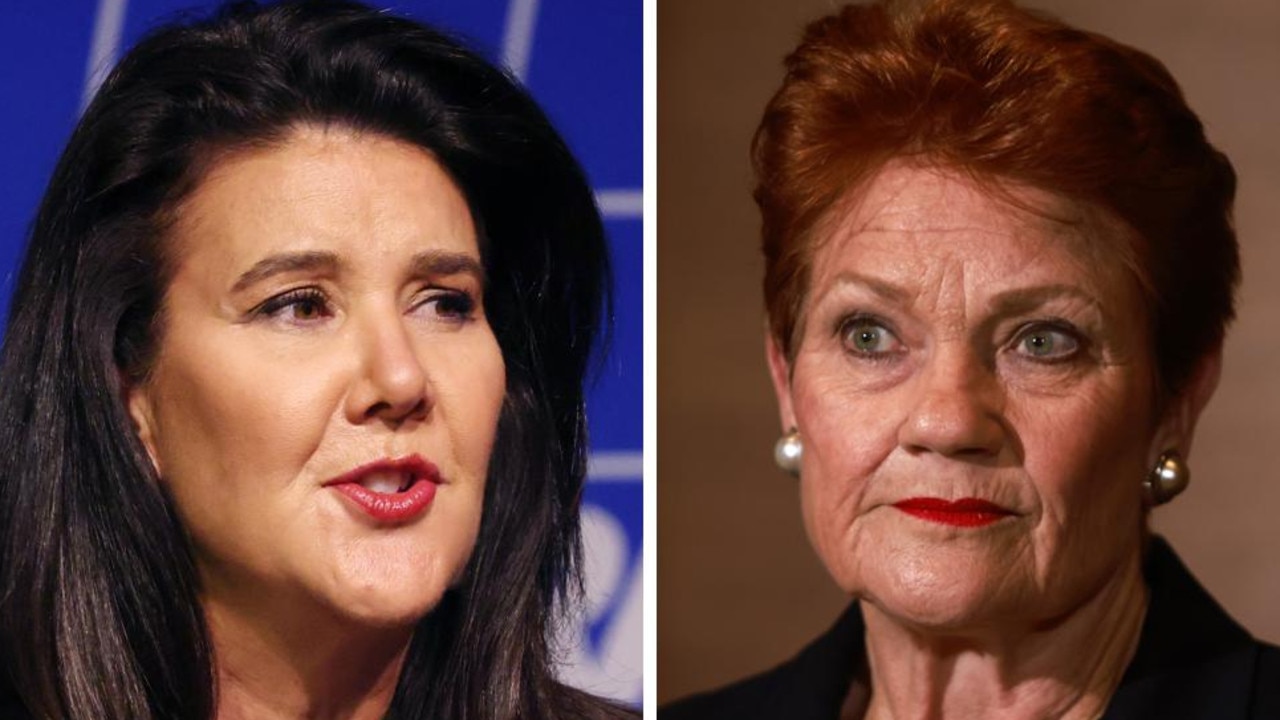
Internal tensions within Australia’s Liberal Party over a potential electoral or governing alliance with Pauline Hanson’s right-wing One Nation have burst into the open, with the party’s deputy leader forcefully rejecting any future partnership, contradicting ambiguous comments from several senior colleagues.
Appearing on ABC’s Insiders program on Sunday, Liberal deputy leader Senator Jane Hume pushed back firmly against speculation of a coalition between the center-right Coalition and One Nation, repeating her rejection multiple times amid growing questions about post-election arrangement scenarios. “No, no, we will not be governing in coalition with One Nation,” the visibly frustrated senator stated. “We are not forming a coalition with One Nation. I think we couldn’t be any clearer than that.”
Hume emphasized that the Liberal Party already holds a long-standing governing partnership with the National Party, an alliance that has anchored conservative federal governments in Australia for nearly a century. “That coalition has been a foundation of very successful governments for 80 years now, and it will continue to be so,” she added, cementing the party’s official position.
Hume’s blunt rejection comes in direct response to ambiguous comments from other senior Liberal figures earlier in the week that left open the possibility of a future arrangement with One Nation. Liberal frontbencher Senator Andrew Bragg first brushed off questions about preference deals or a potential three-way coalition as premature ahead of the next federal election, which is scheduled to be held no earlier than 2025. When pressed further on whether he would leave the door open to a formal arrangement, Bragg told the Nine Network’s Today show: “Well, we would definitely work out whoever would be interested in being in a coalition with us, if that’s what the numbers were. Of course, we’re not crazy.”
When grilled on Bragg’s comments and whether the Coalition would accept One Nation support to form a minority government, Hume dismissed the scenario as an unrealistic hypothetical, noting the next federal election remains at least 18 months away. She acknowledged that minority governments in Australian history have relied on crossbench support from a range of minor parties, but stressed that the Liberal-National Coalition’s explicit goal is to win a majority outright. “Our intention is to win outright, and we do that by making sure that we present a credible plan and a credible team to deliver that plan,” she said. Pushed again to confirm the party’s stance, Hume doubled down: “I’ve said that we have no plans, no intention … to have a coalition with One Nation. That is our commitment. We are already in coalition. We plan to govern as a coalition, as a Liberal-National coalition.”
Hume’s official rejection was not the only sign of division within Liberal ranks earlier on Sunday. Fellow frontbencher Dan Tehan also adopted a softer, ambiguous stance, saying parliamentarians would need to wait to see the final composition of the next parliament before ruling out any potential One Nation support. When asked to directly reject a potential arrangement, Tehan replied: “well, who knows what the Australian people will present when it comes to a parliament,” pointing to the Australian Greens’ past support for Labor minority governments as a parallel.
This public split follows a shifting position from federal Opposition Leader Angus Taylor. As One Nation’s polling surged earlier this year amid slumping support for the Coalition, Taylor initially left the door open to a deal with Hanson’s party. More recently, however, as One Nation’s polling has plateaued and even declined in some surveys, Taylor has shifted to a more confrontational stance, ramping up public criticism of the populist party.
For her part, One Nation leader Pauline Hanson has taken an equally flexible position: she has not actively pursued a formal alliance with other conservative parties, but has not ruled out entering an arrangement if the opportunity arises post-election.