
The Sydney Roosters’ 2024 National Rugby League (NRL) premiership aspirations now hang in the balance, as the club confirms star halfback Sam Walker underwent successful surgery on a severe syndesmosis injury to his left foot this past Sunday – while leaving the door ajar for a potential comeback before the end of the current season. The injury unfolded during the team’s round 26 clash against the Dolphins, when Walker was brought down in a tackle by Dolphins forward Kulikefu Finefeuiaki in the 53rd minute of play. Clearly in severe pain, the playmaker was unable to leave the pitch under his own power, requiring assistance from training staff to exit the field, and the match ended in a costly defeat for the Roosters. In the wake of the injury and back-to-back poor results, the Roosters have dropped two places in the NRL ladder standings, sliding from first position to fourth over just two weeks. Even with the loss and Walker’s unexpected injury, however, the club has already secured a top-four finish in the regular season, a result that guarantees them a second chance via the semi-finals knockout structure in September. That safety net does little to soften the impact of Walker’s absence, though: the Roosters’ long-held title ambitions are overwhelmingly dependent on the young star recovering fast enough to be cleared for game action before the end of the 2024 campaign. In the immediate lead-up to the team’s upcoming match against South Sydney Rabbitohs, utility back Hugo Savala has shifted into the halfback position, a role he is widely expected to retain for the upcoming fixture. In an official public statement confirming the injury and procedure, the Sydney Roosters outlined the next steps for Walker’s recovery. “Sydney Roosters halfback Sam Walker sustained a syndesmosis injury during the club’s round 26 NRL match against the Dolphins,” the statement read. “Walker underwent surgery on Sunday and will work closely with the club’s medical and rehabilitation staff towards a return to play as his recovery allows.” Team representatives and Walker’s teammates are scheduled to address assembled media on Monday afternoon to deliver an additional, more detailed update on the playmaker’s recovery timeline and progress. The injury has sent immediate ripple effects through the NRL title race, with experts and fans now debating how Walker’s potential absence – or a limited, late return – could shift the dynamics of the upcoming finals series.
标签: Oceania
大洋洲
-

‘Sorting that out soon’: Dolphins star Jack Bostock keen to stay beyond 2027 as his winning streak survives an unlucky test
As the NRL finals series approaches, the Miami Dolphins (NRL) are on track to lock down one of their most impactful rising stars, with emerging centre Jack Bostock confirming that contract extension talks are already underway and his priority is to remain with the club long-term.
The 23-year-old Origin rookie has just one year remaining on his current playing contract, which is set to expire after the 2027 season. With November 1 marking the opening of the free agency market, multiple rival clubs have already been cited as planning to target Bostock as a top signing priority should he become available. But in an exclusive interview with NewsWire, the in-form centre made his future plans unambiguous.
“I don’t really engage with all the transfer speculation. I try to avoid all the rugby league rumours on my phone, stick to social media for catching up with mates, and don’t read into any of that noise,” Bostock explained. “The Dolphins and I have already started talks to get something sorted out, and I’m confident we’ll have it wrapped up soon. For sure, 100 per cent — staying here is my preference.”
Bostock’s desire to stay comes as no surprise to fans and club officials, given the incredible run of form he has enjoyed since making his comeback from a devastating season-ending knee injury that cut short his 2025 campaign. The young centre has not lost a single professional game in 2026, stretching his personal winning streak to 13 consecutive NRL matches following the Dolphins’ recent victory over the Roosters that pushed the club up to third place on the overall ladder. He also claimed victory in his debut appearance for NSW in this year’s State of Origin decider, cementing his status as one of the league’s most exciting young talents.
The impact of Bostock’s presence on the Dolphins’ season is impossible to ignore: the club has lost seven out of the 10 matches he has been sidelined for this year, a stat that underscores just how critical retaining him is to the Dolphins’ long-term title ambitions. The young centre is now eyeing a chance to match one of the league’s most iconic winning streaks, set by Penrith Panthers champion Nathan Cleary, who notched 16 consecutive regular season wins on the way to a premiership title in 2021 as part of a 19-win campaign from 20 matches.
Asked about his historic undefeated streak, Bostock downplayed the hype, noting that he had missed several matches through injury this year. “It is a pretty cool streak, though,” he admitted. When asked about pre-game superstitions, Bostock joked he avoids building any rituals: “I’ve got a little bit of an addictive personality, so I might end up with a dozen silly superstitions by the end of the season if I start now.”
Bostock’s teammates have been quick to praise his incredible resilience and work ethic, crediting his dedication to rehab for his seamless return to top-flight form after a career-threatening ACL injury. Five-eighth Kodi Nikorima said the whole squad is aware of Bostock’s historic streak and thrilled to see him thrive after his long recovery.
“I’m on social media, so I’ve seen the stat floating around,” Nikorima said. “He’s incredible. To come back from an ACL injury and slot back in so seamlessly is a total testament to his character. He’s already gone above and beyond what he achieved last year. It’s just so rewarding to see how hard he worked through rehab pay off with him playing this well. It makes me so happy for him.”
With Bostock closing in on a new deal, the Dolphins look set to avoid a off-season fight for their star rising centre, strengthening their position as genuine title contenders heading into the post-season.
-
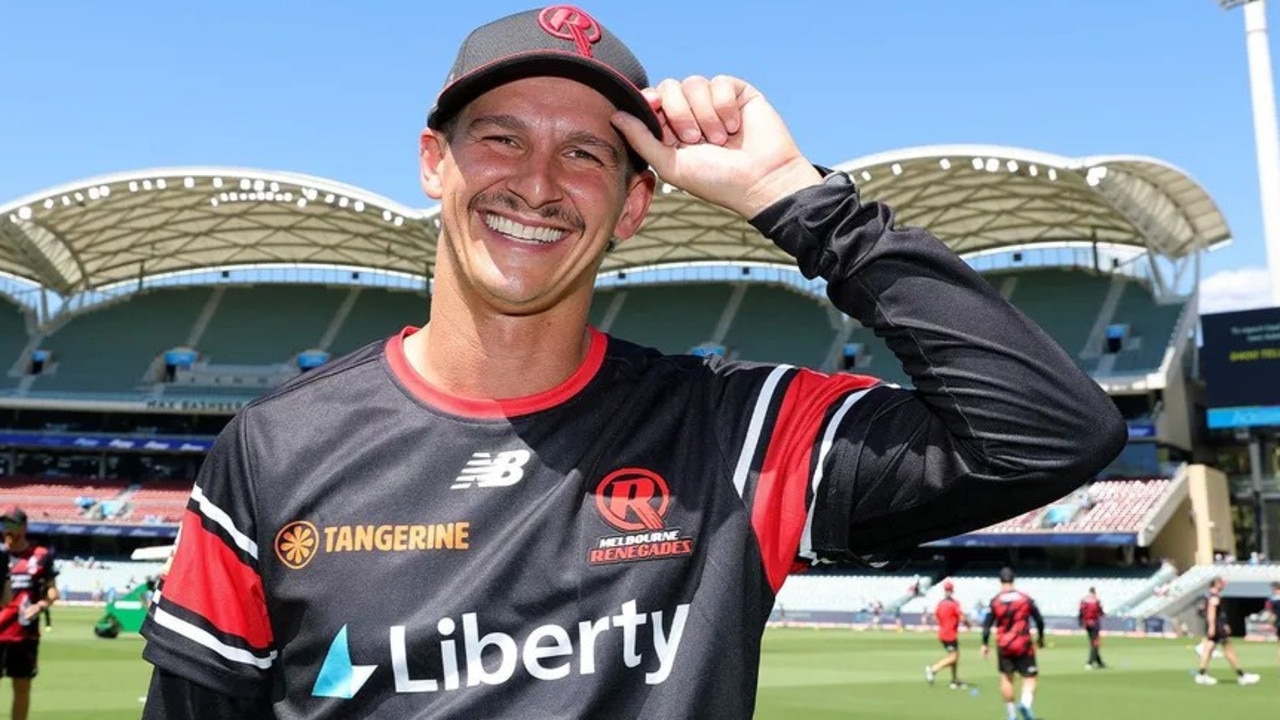
Inside Melbourne Renegades’ recruit Michael Archer’s journey to Big Bash League
For nearly a decade of grinding through local cricket, juggling a full-time career as a primary school teacher and making endless sacrifices to chase a professional dream, the phone call 29-year-old Michael Archer had waited years for finally changed everything.
Archer was walking the hallways of his Victorian primary school workplace when the call came through: he had earned a spot on the Melbourne Renegades full squad for the upcoming 16th edition of the Big Bash League (BBL), marking his first full professional contract in top-flight domestic Twenty20 cricket. The moment was so overwhelming that the first colleague he crossed immediately thought something had gone wrong – only to realize the leg-spinner was simply overcome with joy.
“I got in the car straight after and called my mum and dad,” Archer recalled in an interview after the announcement. “It was cool to play a single game last summer as a replacement, but I just wanted to be in it properly for the whole tournament. It was pretty surreal when the news came through.”
Archer’s path to a full BBL contract has been far from easy. For years, he has balanced full-time teaching with domestic Premier Cricket in Victoria, cutting his teeth first at the Greenvale Kangaroos before earning a spot at Carlton where he turned in consistent standout performances. The journey required long, daily drives from his home in the regional country town of Tatura to Melbourne for training and matches, and countless missed moments with loved ones.
“When I first started playing in Melbourne, I spent half my life in the car,” Archer said. “You miss your mates’ weddings and all kinds of important events. You just keep going, hoping that eventually something like this will pay off.”
There were plenty of moments where doubt crept in, he admitted. Early in his Melbourne cricket career, after a string of poor performances at Greenvale, he was dropped from the side, leaving him frustrated and questioning whether he would ever get his shot at professional cricket.
“100 percent, I had doubts,” Archer said. “My second year in Melbourne, I was traveling back and forth every day, not bowling well, and I got dropped. There were times I was emotional for all the wrong reasons. But I was so lucky – I always had incredible support from my partner, my parents, and my friends. They never stopped encouraging me, and when you feel like you’re doing this not just for yourself, it gives you the push to keep going.”
Archer’s father, a typically reserved man, was just as overwhelmed by the news as his son. Archer caught his dad just before he headed into a routine doctor’s appointment, and the emotion of the moment was impossible to hide.
“He was just so proud of me. He’s not much of an emotional person, but I got him right before his doctor went in,” Archer said with a laugh. “I was a little choked up talking to him, and I wouldn’t be surprised if he had a tear in his eye going into that office. The doctor actually asked him if he was okay before they even started the appointment.”
The Renegades’ announcement of Archer’s signing came just one day after the spinner delivered a stunning hat-trick for Victoria in the Top End tournament, anchored by his signature wrong’un – the delivery that has become his greatest strength. For Archer, that performance was just the latest confirmation that leaning into his best skill is the right strategy for his first full BBL season.
“I don’t think my stock leg-spin is anything special, but I’ve always been lucky to have a pretty decent wrong’un, that’s just how my game developed,” he explained. “Once I started getting some success with it, I realized I had something I could build on. I bowl it as often as I can, because that’s my strength. There’s no point going out and bowling 60 regular leg-spinners just to fill an over – that’s not what I do best. It works for me, so I’m not going to shy away from it this summer.”
For the schoolteacher who spent a decade grinding to turn his dream into reality, the full contract with the Renegades is more than just a spot on a roster – it is proof that the sacrifices, the long drives, and the moments of doubt were all worth it.
-

Google Maps renames Lake Ontario ‘Lake America’ in US — but not Canada
A surprising new flashpoint has emerged in the escalating trade war between long-time allies the United States and Canada, after former president Donald Trump’s administration moved to rename the shared Great Lake Lake Ontario to “Lake America,” prompting Google to roll out a geographically split labeling change on its popular mapping platform.
In an official update Sunday, the U.S. tech giant confirmed that users accessing Google Maps within U.S. borders will now see the water body labeled as “Lake America,” while Canadian users will retain the centuries-old Indigenous-derived name Lake Ontario that has been in use since the 17th century. Users based outside both countries will see both names displayed, the company added. Google explained the update aligns with its long-standing policy of reflecting changes to the U.S. Geographic Names Information System (GNIS), the federal government’s official database of domestic geographic names.
This unilateral naming change is not unprecedented for the current Trump administration: back in January 2025, Trump similarly unilaterally renamed the Gulf of Mexico to the “Gulf of America,” a move that the Mexican government swiftly and firmly rejected. Unlike Google, rival tech firm Apple has not updated its default iOS Maps app for U.S. users as of Sunday, retaining the original historic name.
The nomenclature dispute is the latest escalation of Trump’s signature “America First” policy agenda, which has already sparked a full-blown tit-for-tat trade war between the two North American neighbors. Washington and Ottawa have exchanged reciprocal tariffs on hundreds of billions of dollars worth of goods in recent months, and Trump launched a fresh rhetorical salvo against Canada Sunday, specifically targeting the deeply integrated cross-border auto manufacturing sector.
On his Truth Social platform Sunday, Trump lashed out, writing: “I don’t want Canadian cars, I don’t want Canadian parts, I don’t want Canadian anything.” He has followed through on this rhetoric by threatening to double existing tariffs on Canadian auto parts to 50 percent, a move that would upend integrated supply chains that currently see millions of Canadian-made components incorporated into vehicles assembled in U.S. factories. Even as Trump highlighted the output of the Ford Motor Company F-150 pickup plant near Detroit — one of the most popular vehicle lines in the U.S. — the vast majority of F-150 engines are actually manufactured just across the border in Windsor, Ontario.
Canadian officials have roundly condemned both the trade tariffs and the abrupt name change. Ontario Premier Doug Ford, speaking to ABC’s *This Week* Sunday, called the situation “absolutely backwards”, drawing a comparison to an absurd comedy sketch from U.S. television show *Saturday Night Live*. “No one’s going to call it Lake of America. It’s just so disappointing,” Ford said.
Ford warned that while the escalating trade war will cause economic harm on both sides of the border, the damage to the U.S. economy would be far more severe. Canada is the largest international buyer of U.S.-manufactured vehicles by a wide margin; if Canadian purchases of American vehicles dry up amid the tariffs, U.S. auto factories across the Midwest would face massive production cuts and layoffs. “A tariff on Canada is nothing more than a tax on American people,” Ford argued. “It’s probably the worst move you could ever do.”
Canada has already responded to Trump’s new tariffs by imposing counter-tariffs of 15 to 50 percent on a wide range of U.S. exports, deepening the rift between two nations that have enjoyed close economic and diplomatic ties for more than a century. Lake Ontario, the smallest of the five Great Lakes by surface area, sits squarely on the shared border between the Canadian province of Ontario and the U.S. state of New York.
-
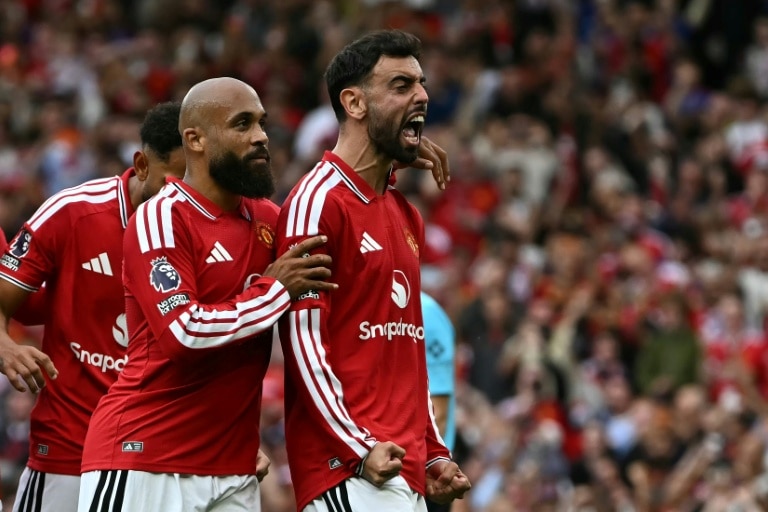
Fernandes treble inspires Man Utd rout, Chelsea beat Brighton in thriller
On the second matchweek of the new Premier League season, two dramatic encounters headlined Sunday’s slate of action, with Manchester United and Chelsea securing hard-fought, high-scoring wins to bounce back or extend impressive early momentum.
For Manchester United, the match marked a critical opportunity to redeem themselves after a humiliating 2-0 opening-weekend defeat to Hull at the hands of newly promoted Ipswich Town, who visited Old Trafford full of confidence after a solid start to their top-flight return. That confidence translated into an early lead for the visitors: in the 29th minute, Ipswich defender Leif Davis unleashed a strike that ricocheted off the crossbar and into the back of the net, putting Michael Carrick’s side on track for what would have been a second embarrassing early-season loss for United.
But United captain Bruno Fernandes turned the game on its head with a virtuoso, hat-trick performance that secured a final 5-2 scoreline and put United back on track in the new campaign. The turnaround began in the 40th minute, when a slip from Ipswich’s Marcelino Nunez let Matheus Cunha find Fernandes unmarked, who buried a clinical finish past the Ipswich keeper. United claimed the lead in the 56th minute, when Ipswich defender Jacob Greaves deflected Harry Maguire’s shot into his own net; Ipswich’s appeals for a handball against Maguire were rejected by VAR, extending United’s momentum. Five minutes later, Greaves’ difficult half turned to disaster when he fouled Cunha inside the box, conceding a penalty that Fernandes coolly slotted home to extend United’s lead. Fernandes sealed his treble in the 68th minute, sweeping home a close-range finish after shots from Kobbie Mainoo and Bryan Mbeumo were blocked by the Ipswich defense. This marked Fernandes’ second Premier League hat-trick for United, his first since a 2019 treble against Leeds United. Fernandes was not done contributing: in the 82nd minute, his perfectly weighted pass set up Mbeumo for a looping lob that clipped the crossbar and dropped over the line to make it 5-1. A late stoppage-time tap-in from Chuba Akpom was only a minor consolation for Ipswich, who fell to their first defeat since earning promotion back to the Premier League.
Across London at Stamford Bridge, new Chelsea manager Xabi Alonso extended his perfect start to life in charge with a chaotic 4-3 win over Brighton & Hove Albion, keeping the Blues unbeaten through their opening two matches. Alonso’s tenure kicked off with a 3-2 opening-weekend win over Fulham, and key attackers from that victory stepped up again against Brighton: Joao Pedro and Cole Palmer both found the net, while Morgan Rogers set up winger Pedro Neto for the Blues’ second goal as they held off a late Brighton rally.
The match included a milestone for Chelsea: goalkeeper Emiliano Martinez made his league debut for the club just hours after completing his transfer from Aston Villa, becoming the first player over the age of 30 to start a Premier League match for Chelsea in more than two years. Notably, Martinez’ Argentina international teammate Enzo Fernandez was left out of the matchday squad, as a potential transfer to Manchester City remains on the table ahead of Tuesday’s close of the winter transfer window.
Unlike last weekend, when Brighton raced to a 4-0 first-half lead over Aston Villa, Chelsea jumped out to a blistering 3-0 lead inside 35 minutes against the Seagulls. Midfielder Romeo Lavia opened the scoring, pouncing on a defensive mix-up between Brighton keeper Bart Verbruggen and midfielder Mats Wieffer to poke home from a corner. Neto then turned home Rogers’ pinpoint cross to double the lead, before Pedro finished off a blistering counter-attack that started inside Chelsea’s own penalty area to make it three. Brighton got on the scoresheet shortly after, when Malick Yalcouye beat new Chelsea keeper Martinez with a blistering volley. Just after the hour mark, Joao Pedro accidentally turned Pascal Gross’ cross into his own net to cut Chelsea’s lead to 3-2, setting up a tense final half hour. But Cole Palmer produced a moment of individual magic to restore the Blues’ two-goal lead: after a solo run across the face of the Brighton defense, he curled a stunning effort from outside the box into the bottom corner, sparking wild celebrations from Alonso on the touchline. A late stoppage-time header from Gross was only a consolation for Brighton, leaving Chelsea with six points from two opening matches, joining Manchester City and Hull as the only teams to claim maximum points so far this season.
In other Sunday Premier League action, Brentford looked set to join that group of unbeaten sides when Kevin Schade scored an audacious early flick to take the lead away to Leeds United. But Dominic Calvert-Lewin turned home Lukas Nmecha’s driven cross late in the match to salvage a 1-1 draw, keeping Leeds’ unbeaten start to the new campaign intact. In the only other top-flight match of the day, Sunderland earned their first three points of the season with a 1-0 home win over Fulham, with Wilson Isidor scoring the game-winning goal with 15 minutes left to play.
-
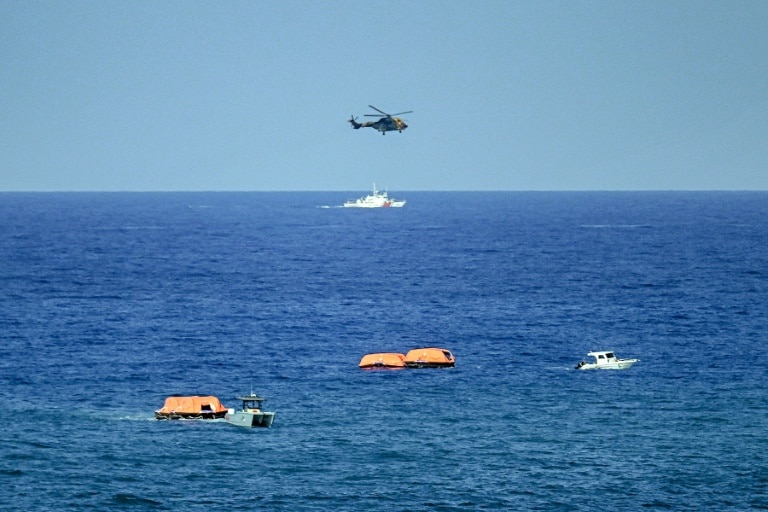
At least seven die in ferry capsize off Northern Cyprus; 23 missing
A devastating maritime disaster has unfolded off the coast of Northern Cyprus, where a passenger ferry carrying hundreds of people capsized and sank on Sunday, leaving at least seven dead and 23 others unaccounted for as multi-agency rescue teams continue search operations, local and Turkish officials have confirmed.
The ill-fated vessel departed from the Northern Cypriot port of Kyrenia (Girne in Turkish) bound for the Turkish mainland port of Tasucu, and overturned just 6.5 kilometers (four miles) from shore mere minutes after setting sail. By the evening, the ferry had settled completely on the seabed at a depth of 514 meters (1,686 feet), according to the Turkish Republic of Northern Cyprus (TRNC) Transport Minister Erhan Arikli.
Investigators have not yet confirmed the root cause of the disaster, but one rescued passenger has given a chilling firsthand account of an explosion moments before the ferry capsized. The 50-something unnamed survivor, who spent 90 minutes adrift in open water before being pulled out, told local TRNC television that a blast erupted in the bow of the vessel before it rolled over. “The front part exploded, they tried to turn around. And the side windows blew out. The boat starting taking on water,” he recalled. He added that many passengers were trapped below decks as water rushed in, and claimed the ship’s captain was among the first to abandon the vessel without coordinating an evacuation. Photographs broadcast on Turkish television showed survivors clinging to the upturned orange hull of the ferry while waiting for rescue, all wearing life vests.
Official counts confirm the ferry was carrying 267 people in total. As of the latest update, 172 people have been rescued from the water. Of those survivors, 161 have been transported to local hospitals for evaluation and treatment, while 76 have already been released and returned to their families, Arikli told Turkish public broadcaster TRT.
A large-scale rescue operation has been mobilized in response to the incident, drawing resources from both Northern Cyprus and Turkey. Private civilian boats were first on the scene to pull survivors from the water, and they have been joined by six Turkish naval vessels, a military helicopter and additional emergency response teams. Turkish Vice President Cevdet Yilmaz confirmed via the social platform X that Ankara is providing all necessary support for search and rescue efforts. “All necessary preparations are being made for a swift response from rescue and health services,” the TRNC’s health ministry said in a statement, adding that all hospitals across the territory had been placed on high alert to receive casualties.
Addressing the disaster during a public appearance on Sunday, Turkish President Recep Tayyip Erdogan said search efforts for the 23 missing people were continuing nonstop. “We hope to receive positive news from these efforts,” he added. Erdogan is scheduled to travel to Northern Cyprus on Monday for a pre-planned meeting with newly elected TRNC President Tufan Erhurmann, in what will be his first visit to the territory since 2023.
The TRNC, a self-declared independent state that controls the northern third of divided Cyprus, is recognized only by Turkey. The island has been split since 1974, when Turkish forces occupied the northern region in response to a Greek Cypriot coup backed by Athens that aimed to unite the island with Greece. Today, regular sea and air routes connect the TRNC directly to Turkey, the only country that maintains formal diplomatic relations with the territory.
-
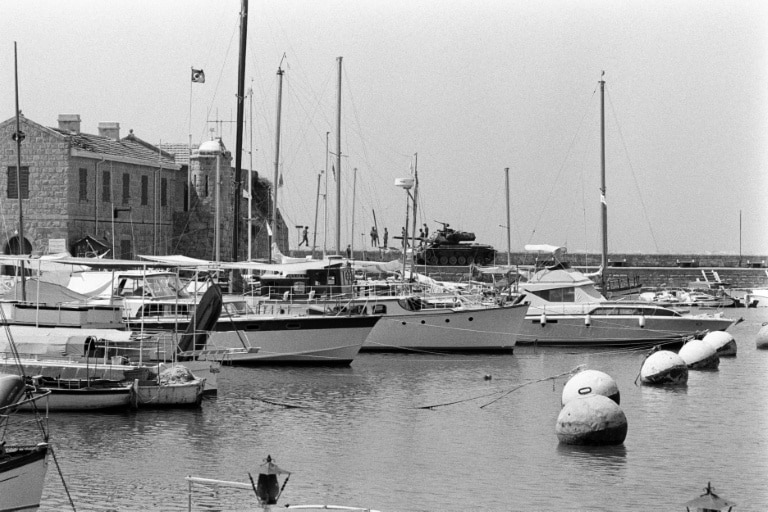
At least six die in ferry capsize off Northern Cyprus
A passenger ferry carrying hundreds of people capsized shortly after leaving the Northern Cypriot port of Kyrenia early Sunday, leaving at least six passengers dead and triggering a large-scale cross-border search and rescue operation between Turkey and the self-declared Turkish Republic of Northern Cyprus.
Preliminary casualty figures shared with Turkish media by Unal Ustel, prime minister of the TRNC, confirm six fatalities so far. Ustel told Turkey’s state-run Anadolu News Agency that the vessel was carrying 267 total passengers and crew when it overturned almost immediately after departing for the southern Turkish port of Tasucu. As of Sunday afternoon, 172 people had been pulled from the Mediterranean waters alive, with rescue teams continuing efforts to locate and evacuate the remaining people on board.
Ali Murat Basceri, Turkey’s ambassador to Nicosia, independently confirmed the deaths in an interview with Turkish public broadcaster TRT, though he declined to share a specific toll. In his remarks, Basceri noted that the large majority of the 259 recorded passengers had already been pulled from the water by rescue teams.
Footage broadcast across multiple Turkish television outlets on Sunday shows the fully overturned ferry floating off the coast, with dozens of survivors clinging to the orange inverted hull while wearing life vests. Multiple civilian and official rescue vessels were deployed to the scene, with witnesses reporting calm, sunny conditions at the time of the incident. As of Sunday, officials have not released any details on what caused the vessel to capsize.
The TRNC, a self-declared state that controls the northern third of divided Cyprus, is recognized exclusively by the international community by Turkey. The island has been split along political lines since 1974, when Turkey deployed military forces to northern Cyprus in response to a Greek nationalist coup backed by the Athens government that sought to annex the entire island to Greece. Today, regular air and sea passenger routes connect the TRNC directly to Turkey.
Local emergency authorities have activated full response protocols to handle the disaster. “All necessary preparations are being made for a swift response from rescue and health services,” the TRNC Ministry of Health said in an official statement Sunday, adding that all hospitals across the territory had been placed on high alert to receive injured survivors and provide emergency care as needed.
Turkey, which provides political, economic and logistical support to the TRNC, has mobilized its own resources to support the operation. Turkish Vice President Cevdet Yilmaz announced via the social platform X Sunday that the Turkish government was providing all necessary assistance to the search and rescue effort.
The disaster comes just one day before a planned visit by Turkish President Recep Tayyip Erdogan to the TRNC, scheduled for Monday. The trip will mark Erdogan’s first visit to the territory since 2023, and is intended to hold talks with newly elected TRNC President Tufan Erhurman, who won the territory’s presidential election last October.
-

NASA launches Roman telescope on cosmic mapping mission
In a landmark moment for space exploration, NASA launched its next-generation flagship observatory, the Nancy Grace Roman Space Telescope, on Sunday from the Kennedy Space Center in Florida. Lifting off aboard a SpaceX Falcon Heavy rocket at 7:26 a.m. local time (1126 GMT), the 12-meter-tall telescope begins a multi-year mission to construct the most comprehensive map of the cosmos ever created and tackle long-standing unsolved questions in fundamental physics.
The $4 billion project, more than a decade in development, honors Nancy Grace Roman, a pioneering American astronomer widely known as the “Mother of Hubble” for her foundational work on NASA’s iconic Hubble Space Telescope. Speaking at a pre-launch ceremony at NASA’s Houston headquarters Friday, former President Donald Trump emphasized the telescope’s transformative potential, noting it will open new windows into understanding the universe’s deepest secrets.
Unlike existing space observatories, Roman boasts a revolutionary field of view more than 100 times larger than Hubble’s, and far wider than that of the James Webb Space Telescope. Positioned at a vantage point 1.5 million kilometers from Earth — a journey that will take roughly 100 days to complete — the telescope will work in tandem with other leading observatories, including Webb, to advance multiple branches of astronomical research.
Among its core science goals, Roman is tasked with discovering thousands of exoplanets outside our solar system and cataloging tens of thousands of supernovae, the violent death throes of massive stars. “It will be the biggest catalog of astronomical objects anybody’s ever produced, and it will help us understand how common solar systems like our own are,” Dave Content, Roman’s technical manager, told Agence France-Presse.
The mission’s highest-profile objective is unpacking the nature of dark matter and dark energy, two invisible phenomena that together account for roughly 95 percent of the entire universe. While dark matter is hypothesized to act as an invisible gravitational glue holding galaxies together, dark energy is the repulsive force driving the accelerating expansion of the universe. Equipped with advanced infrared capabilities, Roman can detect light that originated from celestial objects billions of years ago, effectively allowing astronomers to peer back into the universe’s earliest history and trace the evolution of these mysterious forces.
Roman’s data will also complement ongoing work by the Vera C. Rubin Observatory in Chile and the European Space Agency’s Euclid probe, and scientists say the mission could upend long-held models of cosmic evolution. Senior project scientist Julie McEnery noted that recent astronomical observations have cast doubt on the standard cosmological model that underpins modern understanding of the universe’s early expansion. “Recent observations hint that our standard model of the universe is incorrect,” she told reporters Saturday ahead of launch. “Roman will definitively say, ‘Yeah, the model works, or it doesn’t.’ And if it doesn’t, it’s going to provide us with the precision and quality of data that will allow us to start to distinguish between those options.”
All data collected by Roman will be made publicly available to scientists and casual enthusiasts worldwide, though the scale of data collection presents unique logistical challenges. The telescope will generate roughly 1.3 terabytes of new data every day, a volume too large for most personal computing devices to store or process. For McEnery, however, the massive dataset is part of the mission’s greatest promise. “I very much hope, and in fact expect, that the most exciting science from Roman will be a surprise, something we couldn’t predict, and that will set the stage for the next deeper set of questions for future missions to address,” she said.
-
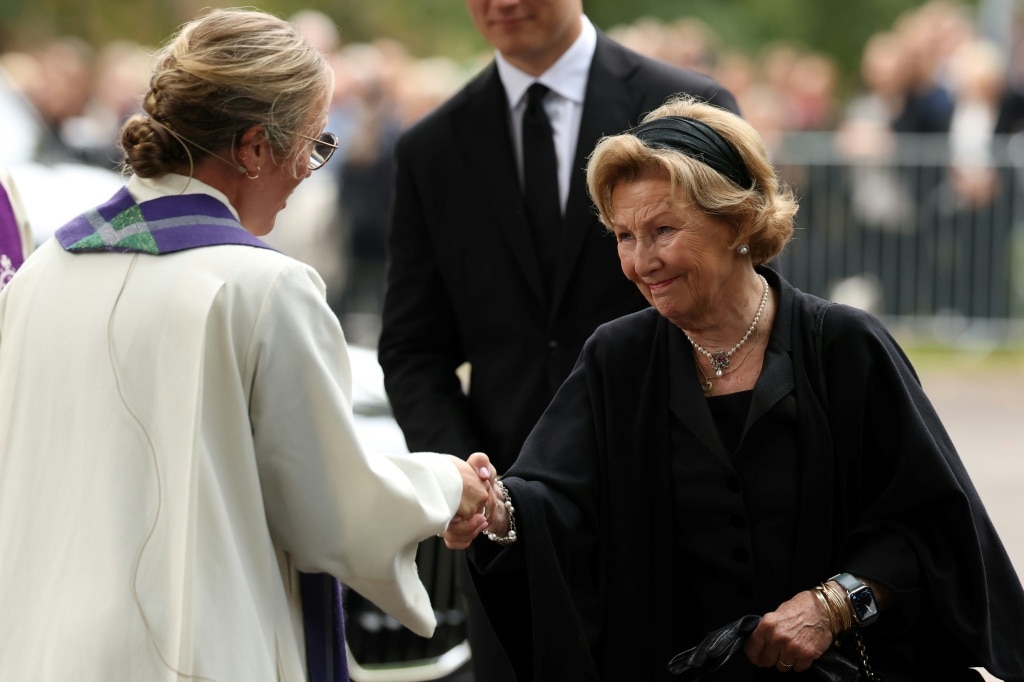
Norway’s churches hold services to late King Harald
Two days after the passing of former King Harald V of Norway, the Scandinavian nation came together Sunday to honor the late monarch, with memorial services held in churches across the country, led by newly ascended King Haakon VIII.
As Haakon, 53, arrived alongside the extended royal family for the primary service at Asker parish church, located just south of the capital Oslo, hundreds of ordinary Norwegians gathered along the route to catch a glimpse of the new king and pay their respects to his father. Outside Oslo Cathedral, where government officials gathered for a separate commemoration, crowds began forming before sunrise, with many waiting hours for a chance to secure a seat inside to join the national mourning.
Many attendees shared that showing up to honor Harald felt like a natural act of community grief. “I’ve been deeply affected by the fact that King Harald has died. I felt a desire to be part of the community and to share the grief over his passing,” Aud Ragnhild Skar, a lecturer at the University of Oslo, told Agence France-Presse while waiting in line. Fellow mourner Sissel Engedal, a nurse, echoed that sentiment, describing the late monarch as “a very significant and important and beloved king.”
A national period of mourning has been formally declared across Norway, though no official date for Harald’s state funeral has been announced to the public. Next week, Haakon will take the formal oath of allegiance to the Norwegian constitution before the national parliament, marking the official completion of the royal succession. Unlike historical European coronation rituals, Norway abolished formal coronation ceremonies for monarchs in 1908, so Haakon and his wife Queen Mette-Marit will not hold a crowning. Still, following the tradition set by his father and grandfather, Haakon is expected to hold a optional consecration service at Trondheim Cathedral, the historic site of Norwegian royal coronations between 1814 and 1906.
Across his 35-year reign, Harald earned widespread public affection and respect, widely viewed as the living embodiment of Norway’s values of openness, tolerance, and modest governance. He was widely praised for steering the Norwegian monarchy toward a modern, approachable model that aligned with the nation’s egalitarian culture. Even amid a series of high-profile scandals that hit the royal family in the final years of his reign, Harald retained broad public support.
In his first public address as king, broadcast Saturday, Haakon paid tribute to his father’s legacy. “Above all, you were a person who remained committed to your values and dedicated to your duties,” Haakon said. The new monarch added that he had been “deeply moved” by the outpouring of public grief, noting that “it gives us consolation and strength to know that there are so many who are grieving with us” as the royal family processes the loss.
Harald had been hospitalized in Oslo since August 17, receiving treatment for haemolytic anaemia, a blood disorder that causes the premature breakdown of red blood cells and leads to chronic fatigue and breathing difficulties. The late king, 89, had faced a series of declining health issues in his final years, which forced him to gradually reduce his official public duties and engagements.
The past 12 months have been marked by significant turmoil for the entire Norwegian royal household, beyond Harald’s declining health. Queen Sonja, Harald’s wife, also 89, was briefly admitted to a hospital for heart-related care in May. New Queen Mette-Marit has faced ongoing public scrutiny over her past connections to disgraced deceased American sex offender Jeffrey Epstein. In June, Marius Borg Hoiby, Mette-Marit’s son from a previous relationship, was sentenced to four years in prison on two counts of rape, a conviction he is currently appealing. Mette-Marit, who lives with a chronic serious lung disease, underwent a life-saving lung transplant just one month after the verdict in July.
-
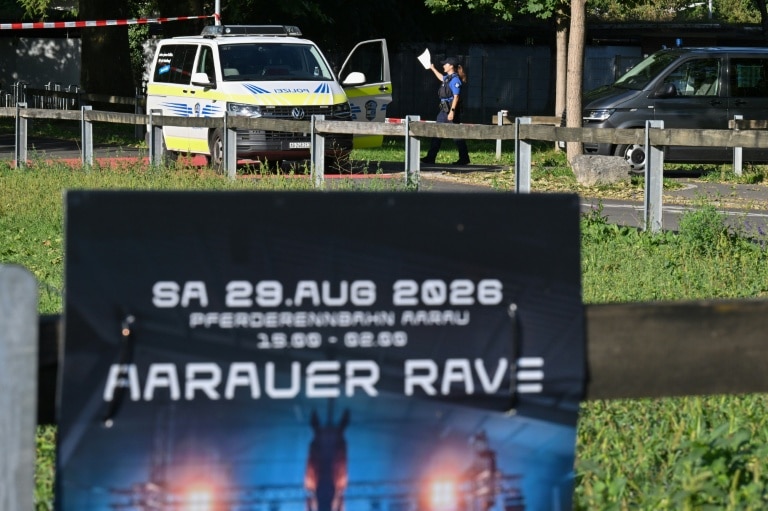
Manhunt in Switzerland after fatal rave shooting
A massive manhunt is ongoing across northern Switzerland Sunday after a gunman or group of gunmen opened fire on a large annual techno rave early Saturday morning, leaving one 22-year-old woman dead and five other young people wounded, Swiss law enforcement officials have confirmed.
The attack unfolded shortly before 3 a.m. local time at the Aarauer Rave, a yearly electronic music event hosted at the Aarau racetrack roughly 50 kilometers outside Zurich. The event drew approximately 3,500 attendees between Saturday afternoon and Sunday morning, turning the normally quiet racecourse into a crowded celebration before the gunfire erupted.
Witnesses initially mistook the sounds of gunfire for fireworks, before multiple attendees realized the danger and began fleeing for cover. Many partygoers took shelter in a nearby gymnasium to wait out the violence, with video posted to social media by local residents showing empty, locked-down streets near the event site, with repeated bursts of gunfire audible in the background.
Local police confirmed in a post to X that the 22-year-old female victim died of her injuries at the scene. The five other wounded people — four men and one woman between the ages of 24 and 27 — were transported to area hospitals, with injuries ranging from minor to life-threatening. All victims are Swiss residents, authorities confirmed.
In the hours following the shooting, Swiss authorities launched a large-scale multi-agency response to locate the perpetrator or perpetrators. Armed police units were deployed along highways up to 30 kilometers from the attack site, an army helicopter was brought in to assist with the search over Aargau, the cantonal capital, and hundreds of police officers, rescue workers and medical personnel were dispatched to the area. Authorities have cordoned off the entire attack site to preserve evidence while the investigation proceeds, and have urged local residents to avoid the region. Police have also asked any attendees who captured photos or video of the incident to share the material with investigators to help advance the case.
As of Sunday afternoon, the identity of the attacker or attackers remains unknown, and law enforcement has not released details on how many suspects are being sought or what type of firearm was used in the attack. Authorities have also stated that no potential motive for the shooting has been confirmed, and that the full circumstances of the incident are still under active investigation.
The shooting marks a rare outbreak of deadly gun violence in Switzerland, a country with a long cultural tradition of widespread civilian gun ownership tied to its military reserve system. Under current Swiss law, army reservists are permitted to keep their service weapons at home, though they are required to store ammunition separately at government facilities. Unlike many European nations, Switzerland does not maintain a national public register of firearms, making it difficult to track the total number of civilian-held weapons. A 2017 study from the Geneva-based Small Arms Survey estimated that Swiss civilians held more than 2.3 million firearms, equal to roughly three guns for every 10 residents, ranking the country 16th globally in per capita gun ownership.
The last high-profile mass shooting in Switzerland occurred more than two decades ago in 2001, when a lone gunman killed 14 members of the cantonal parliament and local government in Zug, a city near Lucerne, before dying by suicide.