标签: Oceania

大洋洲

  • Chinese robotaxis stall in apparent ‘malfunction’: police

    Chinese robotaxis stall in apparent ‘malfunction’: police

    A cluster of Baidu-owned autonomous robotaxis came to an unexpected standstill on roads in central China’s Wuhan city this week, leaving passengers stranded after what local police have preliminarily identified as a system-wide malfunction. The incident, which unfolded on Tuesday evening, prompted a flood of emergency calls to local law enforcement, with reports of multiple Baidu Apollo Go vehicles blocking lanes after becoming immobile.

    Launched as Baidu’s flagship commercial autonomous ride-hailing service, Apollo Go first rolled out paid driverless trips in Beijing back in 2021, and has since expanded its operational footprint to designated zones across dozens of Chinese cities. Wuhan alone hosts more than 500 vehicles from Baidu’s driverless fleet, making it one of the service’s largest domestic hubs.

    In an official statement released Wednesday, Wuhan police confirmed that preliminary investigations point to a system malfunction as the root cause of the simultaneous stalls, though authorities did not disclose the exact number of vehicles affected by the disruption. Footage and posts shared by affected passengers on Chinese social media platforms have offered a first-hand look at the disruption: multiple videos show riders stuck inside stationary robotaxis stuck in active traffic lanes, repeatedly attempting to reach Baidu customer service via in-car tablets with no response. One passenger documented they remained stranded in the middle of a road for more than 30 minutes, with a social media caption questioning if the entire Apollo Go service had been paralyzed.

    As of press time, Chinese tech giant Baidu has not issued an immediate public response or comment to Agence France-Presse’s request for information about the incident. Beyond its domestic operations, Baidu has actively pursued global expansion of its autonomous driving technology in recent years, striking integration deals with major U.S. ride-hailing platforms Lyft and Uber to bring its self-driving systems to international markets.

    Company filings show the service has seen rapid growth in ridership over the past 12 months: in the fourth quarter of 2024, Apollo Go completed 3.4 million fully driverless rides, representing a more than 200% year-over-year increase in total trip volume. The Wuhan malfunction comes as autonomous vehicle technology continues to face ongoing scrutiny around the world over system reliability, emergency response protocols, and public safety as companies scale commercial deployments.


  • Russian women decry plans to therapise them into having children

    Russian women decry plans to therapise them into having children

    Russia’s ongoing demographic decline, marked by the lowest birth rates in two centuries, has pushed the Kremlin to roll out a suite of increasingly coercive policies to push women into having children – but many of the country’s women are pushing back hard, calling these measures cruel, counterproductive, and disconnected from the real barriers to starting families.

    In February, Russia’s Ministry of Health greenlit new clinical guidelines that instruct medical providers to refer women who express no desire to have children to psychotherapists, with the explicit goal of cultivating a “positive attitude toward motherhood”. The policy comes on the heels of broader government restrictions that have already banned so-called “child-free propaganda” in media, outlawing public discussion of choosing to remain childless, and imposed heavy fines of up to 400,000 rubles (roughly $5,000) for violators. In recent years, authorities have also rolled back access to abortion, forcing private clinics across most of the country to stop offering the procedure.

    For decades, Russia has grappled with a persistent fertility gap: its current fertility rate sits at 1.4 children per woman, far below the 2.1 replacement threshold demographers identify as necessary to maintain a stable population size. The crisis has deepened dramatically since the full-scale invasion of Ukraine in 2022, which saw hundreds of thousands of young Russian men deployed to the front line, exacerbating population losses. President Vladimir Putin has repeatedly warned that sustained low birth rates could lead to “veritable extinction” for the country, framing the push for higher birth rates as a matter of national survival.

    But women interviewed by AFP say that instead of addressing the root economic and social barriers that lead many to delay or forgo having children, the government is leaning into coercion that will do nothing to reverse falling birth rates. All women interviewed requested to be identified only by their first names for privacy.

    “I don’t see myself as a mother and I don’t see any reasons why having children would make me happier,” said Maria, a 25-year-old IT professional. “I might change my point of view one day. But the state is doing everything possible to make sure that doesn’t happen.” She dismissed the government’s efforts to pull Russia out of its demographic decline as “pathetic”, adding: “Tightening the screws, making safe abortions inaccessible, brainwashing people, bragging about supposedly huge benefit payments, sending them to a psychologist. It’s cruel and completely ineffective. What women really want is social guarantees, a living wage, affordable housing, and most of all, peace and security.”

    Anastasia, a 29-year-old child rehabilitation specialist who has chosen not to have children due to financial instability, echoed those concerns. Her monthly salary sits at 100,000 rubles, a sum that makes saving for a home nearly impossible amid skyrocketing economic pressures. Since the invasion of Ukraine, sweeping international sanctions have spurred rampant inflation, and mortgage interest rates have jumped to as high as 20%, putting home ownership out of reach for many young Russians. Beyond economic hurdles, Anastasia pointed to a pervasive “lack of a fatherhood culture” in Russia, where few men take active roles in child rearing. The country has one of the highest divorce rates in the world, she noted, and after separation, men often leave women to raise children alone with little to no support. “First, you need to create conditions that make a woman actually want to have a child,” she said. “Not pressure her in every possible way.”

    Margarita, an English teacher who cannot have children for medical reasons, warned the new therapy mandate will cause lasting harm to women’s mental health by framing childless women as social outcasts. Even mothers who already have children are speaking out against the policy. “I believe that a woman has the right not to want to have children,” said Irina, a 45-year-old doctor and mother of two. “Why give birth if you don’t want to? Why force women to bear unwanted children?”

    Not all Russian residents interviewed shared this criticism. Maxim, a 49-year-old man, downplayed the policy, arguing it is only a recommendation, and added that he views the choice to remain childless as “unhealthy”.

  • Friend says Tess Crosley endures ‘endless harassment’ over Lachie Neale marriage split

    Friend says Tess Crosley endures ‘endless harassment’ over Lachie Neale marriage split

    For more than three months, an ordinary Australian mother who found herself accidentally caught in the high-profile marital split of Australian Football League (AFL) star Lachie Neale has been subjected to relentless, invasive harassment from media outlets and online trolls, a close personal associate has revealed.

    Tess Crosley, a former close friend of Neale’s wife Jules, became the center of sensational tabloid speculation after Jules Neale announced the end of her marriage to the Brisbane Lions midfielder three months ago, with widespread rumors linking Crosley to the relationship breakdown. Since that moment, what should have remained a private matter for all involved has spiraled into a campaign of intrusion that has devastated Crosley’s daily life, according to Lyall Mercer, a public relations strategist who knows Crosley personally and has shared her experience in a public LinkedIn post.

    Mercer was clear to emphasize he is not an official representative for Crosley nor is he being compensated for his statement, noting only that he has witnessed firsthand the damage the relentless coverage has inflicted. “No one outside of the three people involved actually knows the full truth of what led to the Neales’ separation,” Mercer wrote. “Yet that hasn’t stopped the entire spotlight from being thrown onto Tess, who never asked for any kind of public attention.”

    The scope of the intrusion goes far beyond sensational news articles, Mercer confirmed. Paid photographers have tracked Crosley for months across every part of her routine, trailing her to the gym, grocery stores, her private home, and even on a road trip from Brisbane to the Gold Coast when she visited her extended family. Media outlets have published photos of her spending private time on the beach with her young son and dropping the child off at his father’s home — moments that carry zero legitimate public interest, but only serve to feed ongoing online vitriol.

    That vitriol has escalated beyond hurtful commentary to direct threats against Crosley’s safety, leaving her in a constant state of anxiety. The constant scrutiny has taken a severe emotional toll on Crosley and her entire family, turning a private situation into a public spectacle that has left the mother feeling constantly vulnerable. Mercer stressed that the level of coverage has clearly crossed a line from acceptable reporting into outright harassment and bullying.

    Mercer added that Crosley has approved and fully supports his statement, and he is calling on media organizations and the public to shift their focus away from the private citizen, respect her right to a normal personal life, and end the campaign of intrusion that has upended her life.

  • Man, 19, shot by police, left fighting for life after alleged suburban altercation in Brisbane’s north

    Man, 19, shot by police, left fighting for life after alleged suburban altercation in Brisbane’s north

    A teenager is clinging to life after being shot by Queensland Police officers during a confrontation that unfolded at a suburban Brisbane property on Wednesday, following a call to respond to a mental health emergency.

    Emergency dispatchers received the alert shortly after 12:30 p.m. local time, directing officers to a residential address on Akebia Street in the quiet northwest Brisbane suburb of Arana Hills. First responders arrived at the scene with the primary mission of conducting a welfare check for the 19-year-old male resident.

    What began as a de-escalation effort quickly deteriorated into a violent altercation, according to initial police accounts. Authorities confirmed the young man was armed with a large bladed weapon when officers first attempted to engage with him. In a bid to subdue the individual without lethal force, law enforcement deployed a Taser on two separate occasions, but neither attempt successfully stopped the threat.

    After the failed less-lethal interventions, one officer fired a single shot that struck the teenager. First aid was immediately administered to the injured man at the scene by attending officers, before he was rushed by ambulance to a major Brisbane hospital in life-threatening condition. As of the latest update, he remains in critical but stable condition receiving ongoing medical care.

    By Wednesday afternoon, the entire residential property had been cordoned off with official police evidence tape, with dozens of uniformed officers and investigating detectives stationed at the site to secure the area and collect forensic evidence. Local residents reported seeing a female individual, believed to be a household member or acquaintance of the injured man, being interviewed by investigators at the perimeter of the scene.

    In an official statement released shortly after the incident, Queensland Police confirmed that a full internal investigation has been launched into the circumstances of the shooting. Oversight of the probe will be handled by the state’s independent Crime and Corruption Commission, in line with standard protocols for police use of lethal force incidents. The Ethical Standards Command, the internal watchdog unit for Queensland Police, will lead the day-to-day investigation into whether the officer’s use of force complied with operational policies and the law.

    No officers were injured during the incident, and authorities have not yet released further details about the specific mental health context that prompted the initial welfare call, or the identity of the officer who fired the shot. The investigation remains ongoing as investigators collect witness statements, forensic evidence, and body worn camera footage from the scene.

  • NFL says will not scrap diversity measure despite Republican pressure

    NFL says will not scrap diversity measure despite Republican pressure

    The National Football League will maintain its longstanding pro-diversity hiring policy, the Rooney Rule, despite escalating legal and political pressure from conservative Republicans led by Florida’s Republican attorney general, league commissioner Roger Goodell confirmed Tuesday at the NFL’s annual owners meeting. The Rooney Rule, a landmark policy first introduced in 2003 to address the persistent underrepresentation of people of color in top-tier coaching and front office roles, requires every NFL franchise to interview at least one minority candidate for open senior positions. Crucially, the rule does not mandate that teams hire a specific candidate based on race or ethnicity, only that they expand their candidate search to include qualified minority applicants. The policy has become the latest target of a nationwide conservative crackdown on diversity, equity and inclusion (DEI) initiatives, a movement spearheaded by former and current President Donald Trump, who has prioritized rolling back decades of anti-discrimination measures across U.S. public and private sectors. Last week, Trump signed an executive order barring federal contractors from implementing any workforce policies designed to counteract systemic racism or sexism. That same week, Florida’s top prosecutor James Uthmeier, a close Trump ally, sent a formal letter to the NFL declaring the Rooney Rule an “illegal” affirmative action policy, arguing that “NFL fans in Florida don’t care what color their coach’s skin is.” But Goodell pushed back firmly on these claims, emphasizing that the league’s core commitment to diversity remains unshaken despite shifting political and legal landscapes. “One thing that doesn’t change is our values. And we believe that diversity has been a benefit to the National Football League,” Goodell told reporters at the meeting. He added that the league has closely reviewed evolving state and federal laws, and remains confident that the Rooney Rule is fully consistent with all current legal requirements. Pushing back on claims of racial preference, Goodell reiterated that the policy “is not a hiring mandate.” Instead, he framed it as a mechanism to expand talent pools, noting that the framework has been adopted by industries far beyond professional football, and across countries around the world, as a tool to source stronger, more diverse candidates. “The rule gives us an opportunity to hire the best talent, ultimately, and the clubs make those decisions individually,” Goodell explained. While the NFL is defending the policy, pro-diversity advocacy groups have long pointed out that the Rooney Rule’s real-world impact has remained limited, even after it was expanded to cover general manager and coordinator positions in addition to head coaching roles. Currently, just five of the NFL’s 32 teams have a minority head coach, with three of those identifying as Black, despite African-American players making up roughly 70 percent of the league’s entire player pool. The standoff over the Rooney Rule comes as hundreds of DEI programs across corporate, academic and non-profit sectors face growing legal and political scrutiny at both the state and federal levels, in the most significant rollback of anti-discrimination hiring measures in a generation.

  • DR Congo fans dance in the rain after sealing World Cup spot

    DR Congo fans dance in the rain after sealing World Cup spot

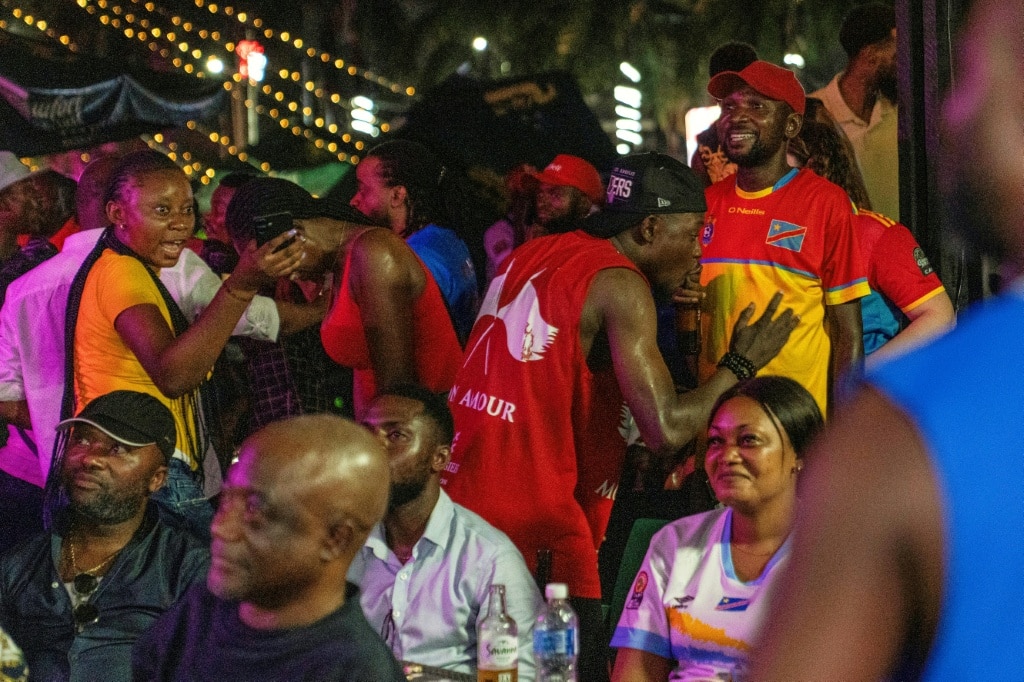
    After more than half a century of waiting, the Democratic Republic of Congo has secured its spot at the men’s FIFA World Cup for the first time since 1974, sparking wild, rain-soaked celebrations across the capital Kinshasa that stretched long into Tuesday night.

    The Leopards, as the national team is nicknamed, claimed their historic place in the 2026 World Cup with a dramatic 1-0 extra-time victory over Jamaica in the intercontinental playoff held in Guadalajara, Mexico. Burnley Premier League defender Axel Tuanzebe scored the all-important winning goal that sealed the result, cementing his status as a national hero overnight.

    This summer’s World Cup, co-hosted by the United States, Canada and Mexico, will see DR Congo drawn into Group K alongside Portugal, Colombia and Uzbekistan. It marks only the second time the Central African nation has ever qualified for the global tournament; its first appearance came in 1974, when the country competed under the name Zaire and exited the group stage after losses to Scotland, Yugoslavia and Brazil.

    By the evening of the playoff match, hundreds of supporters had already gathered in Kinshasa’s central public square to watch the game together, many having donned the team’s iconic sky-blue jerseys from the early hours of the day. Even when heavy rain began pouring down heavily throughout the 120 minutes of tense play, fans refused to leave, waiting patiently for the final whistle. The moment the referee blew the final horn, the packed square erupted into roars of celebration, with fans dancing and cheering in the downpour.

    Across the entire city of 17 million, the final result was met with a thunderous chorus of celebration: drivers honked their car horns nonstop, residents banged on pots and pans from their windows, and fans blew whistles into the late hours of the night. Many fans draped themselves in the DRC national flag, even as the fabric became soaked through by the persistent rain, declaring an unofficial national holiday the next day and vowing to celebrate straight through to dawn.

    What makes this moment even more meaningful is that it comes as a rare unifying joy for a country that has been marked by decades of regional conflict and the recent resurgence of the Rwandan-backed M23 armed group. For supporters from even conflict-affected regions of the country, the victory offers a much-needed break from instability and a moment of shared national pride. Standing in the pouring rain in Kinshasa, Merou, a fan from the eastern DRC city of Goma, which was seized by M23 in early 2025, called the qualification truly exceptional.

    “We are very proud of the Leopards today for this feat,” he said. “This victory will unify the Congo. We hope the whole country will benefit from it.”

    Another supporter, Maclain, echoed that sentiment, noting the country had earned this moment of collective happiness after years of violence and division. “We deserve a moment of happiness, away from the gunfire. We need to come together too,” he said.

    The qualification run itself was already a dramatic underdog story: the Leopards defied all expectations to eliminate African football powerhouses Nigeria and Cameroon earlier in the qualification process, before beating Jamaica to seal their historic spot at the World Cup.

  • Albanese cancels Gallipoli trip as Iran war intensifies

    Albanese cancels Gallipoli trip as Iran war intensifies

    Australia’s Prime Minister Anthony Albanese has scrapped his long-awaited first Anzac Day trip to the Gallipoli battlefields in Turkey, a journey that would have marked his first attendance at the transnational commemoration since he took office, amid rapidly escalating military tensions across the Middle East following the U.S.-Israeli attack on Iran. The cancellation was confirmed by Albanese himself during parliamentary question time on Wednesday, in response to a query from Deputy Opposition Leader Andrew Hastie. Though the prime minister had never formally announced the April 25 travel plans publicly, he acknowledged to the chamber that the proposal had been abandoned explicitly due to current travel conditions in Turkey. Albanese framed the decision as a responsible act of priority-setting, noting he is instead focusing on urgent ongoing matters, including active diplomatic engagement with Australia’s regional partners at a time of global instability. Hastie, who has been publicly critical of the Labor government’s response to the unfolding Iran conflict, used the question to also raise concerns over unconfirmed reports that multiple Australian government ministers have scrapped other scheduled April travel and events, and pressed the prime minister on whether the government has received official advice about delayed or canceled fuel cargo shipments bound for Australia. This cancellation breaks a pattern Albanese has maintained since taking office: he has opted to stay in Australia for Anzac Day commemorations in 2023 and 2025, and traveled to Papua New Guinea for the 2024 services, never having attended the Gallipoli Anzac Day events as prime minister before this planned trip. The prime minister’s choice comes at a moment of deep uncertainty over the trajectory of the Middle East conflict. After the joint U.S.-Israeli surprise military strike on Iran launched on February 28, which has killed more than 2,500 people across Iran, Lebanon and other regional territories, the outcome of the conflict remains far from clear. U.S. President Donald Trump has publicly suggested the conflict will wrap up within a matter of weeks, but on the ground, Israeli forces have expanded their ground invasion into Lebanon, and the country has for the first time come under direct attack from the Iran-aligned Houthi movement based in Yemen, further raising the risk of the conflict spreading across the wider Middle East.

  • Boris Ristic: Man charged over alleged failed carjacking in Kew seeks bail

    Boris Ristic: Man charged over alleged failed carjacking in Kew seeks bail

    A botched attempted carjacking targeting a father waiting to pick up his daughter from school in one of Melbourne’s most affluent suburbs has been laid out in detail at Melbourne Magistrates’ Court, with investigators revealing how the two accused offenders spent hours hiding in suburban shrubbery before their eventual arrest. The court proceedings on Wednesday centered on 40-year-old Boris Ristic’s bail application, one of the two men charged over the February 24 incident. According to Detective Acting Sergeant Terry Harvey, the victim had parked his luxury Mercedes-Benz on Wellington Street in Kew just after 4:30 p.m. when a white Mitsubishi Triton pulled up alongside his vehicle. Two men exited the truck, which then drove off from the scene, and brandished a knife to threaten the victim into surrendering his car keys, Harvey told the court. Prosecutors allege Ristic was the man who tried to drive off with the stolen Mercedes, but he was unable to shift the vehicle into gear. For roughly one minute, witnesses and the victim reported hearing the car engine rev repeatedly before the two frustrated suspects gave up and ran away down Wellington Street. Initial searches by police failed to locate the pair, but a breakthrough came just before 9 p.m. when a local resident on nearby Scott Street contacted emergency services. After checking her home security system, the resident spotted two unidentified figures entering the front yard of the property across from her home and hiding in dense front-yard bushes. The two men did not leave their hiding spot until approximately 8:50 p.m., the court was told. Police immediately cordoned off the neighborhood and quickly arrested 33-year-old Maker Jal in the backyard of a Scott Street property. Investigators say they found the victim’s Mercedes-Benz key in Jal’s possession, alongside a small quantity of methamphetamine. Ristic was captured only after a short manhunt, during which he allegedly jumped over multiple residential fences and hid on rooftop areas before being detained by the Critical Incident Response Team. Near Ristic’s arrest location, officers discovered a black Tommy Hilfiger holding $1665 in cash, three Valium tablets, a small bottle of Fireball cinnamon whiskey, and a replica firearm, Harvey confirmed. Lucien Richter, Ristic’s defense lawyer, has challenged the prosecution’s case, pointing out key inconsistencies in witness testimony. The victim described both suspects as Black men, while Ristic is Caucasian, Richter noted. He also argued that no evidence directly linking his client to the attempted carjacking was found on him at the time of arrest, adding that the CCTV footage of the incident is heavily obscured, making positive identification unreliable. Ristic, a professional painter with no prior criminal record, has the full support of his family, with his mother offering to put up a $20,000 surety to secure his bail. Richter told the court his client already has confirmed work waiting for him and is rooted in a stable, responsible family environment that would ensure he complies with any bail conditions. Magistrate Phillip Goldberg adjourned the bail application part-heard, with the next court hearing scheduled for April 15. Jal faces three charges: carjacking, theft, and possession of a controlled drug, and he is scheduled to make his next court appearance on Thursday.

  • Trump to watch Supreme Court weigh challenge to birthright citizenship

    Trump to watch Supreme Court weigh challenge to birthright citizenship

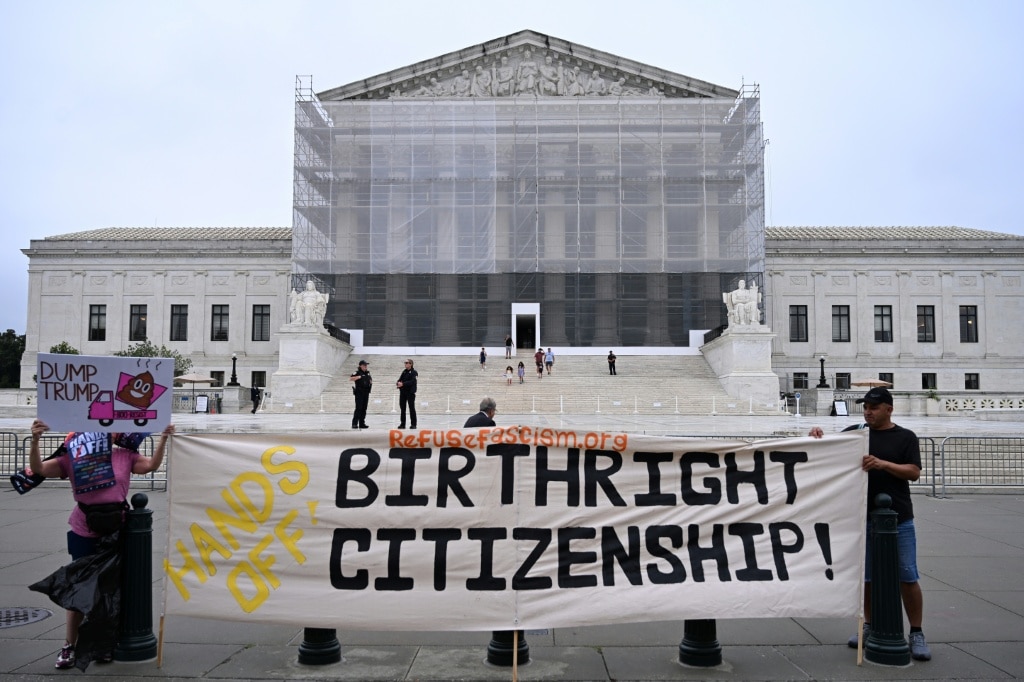
    In an extraordinary, potentially unprecedented move for a sitting U.S. president, Donald Trump will personally attend the U.S. Supreme Court’s oral arguments Wednesday for a landmark case examining the constitutionality of his controversial effort to restrict birthright citizenship.

    Shortly after returning to the White House following his 2024 election win, Trump signed an executive order that would eliminate automatic U.S. citizenship for children born in the country to undocumented immigrants and parents on temporary visas. Lower courts quickly blocked the order, ruling it directly violated the 14th Amendment’s Citizenship Clause, which enshrines birthright citizenship for nearly all people born on U.S. soil.

    The 14th Amendment, ratified after the Civil War, explicitly states, “All persons born or naturalized in the United States, and subject to the jurisdiction thereof, are citizens of the United States.” The only narrow exceptions to this rule apply to individuals not fully under U.S. jurisdiction, such as foreign diplomatic staff and members of sovereign Native American tribes.

    When reporters asked Tuesday if he planned to attend the hearing, Trump confirmed simply, “I’m going.” While Trump previously attended the 2017 investiture of his first Supreme Court nominee Neil Gorsuch, his presence at oral arguments for a case his administration is actively defending marks an extraordinary break from modern presidential precedent.

    The Trump administration’s legal argument hinges on a narrow interpretation of the 14th Amendment, claiming the provision was crafted exclusively to grant citizenship to formerly enslaved people after the Civil War, not to children of undocumented migrants or temporary visitors. The executive order is built on the claim that people living in the U.S. without legal status or on temporary visas are not “subject to the jurisdiction” of the United States, and therefore do not qualify for automatic citizenship.

    This narrow reading has already been rejected by the Supreme Court once before. In the landmark 1898 case United States v. Wong Kim Ark, the high court ruled that a man born in San Francisco to Chinese immigrant parents was a U.S. citizen by birth, even though his parents were not eligible for naturalization under the Chinese Exclusion Act.

    Many legal analysts expect the Supreme Court to reject the Trump administration’s challenge again. Steven Schwinn, a law professor at the University of Illinois Chicago, noted that the current conservative majority often relies on history and tradition to interpret the Constitution. “It would be a little surprising if, after 150 years, we suddenly discovered we were applying the Citizenship Clause all wrong,” Schwinn told AFP.

    The high court currently holds a 6-3 conservative majority, with three justices appointed by Trump during his first term. The administration’s solicitor general, John Sauer, argued in court filings that citizenship requires meeting both criteria laid out in the 14th Amendment: birth on U.S. soil and being subject to U.S. jurisdiction. “Children of temporarily present aliens or illegal aliens are not ‘subject to’ the United States’ ‘jurisdiction,’” Sauer wrote, adding that a person only meets this requirement if they “owes sufficient allegiance to, and may claim protection from” the U.S. Sauer also claimed automatic birthright citizenship acts as a “powerful incentive for illegal migration” and encourages so-called “birth tourism.”

    If the court rejects Trump’s bid, it will mark the second major legal defeat for the president during the current Supreme Court term. In February, the justices struck down most of Trump’s global sweeping tariffs, prompting an angry response from the president. On Tuesday, Trump doubled down on his criticism, calling birthright citizenship one of the “great scams of our time” a day after he posted on Truth Social denouncing “dumb judges and justices.”

    The American Civil Liberties Union (ACLU), which is arguing in defense of existing birthright citizenship before the court, warned the Trump administration’s request would upend the nation’s core constitutional order. “The government’s baseless arguments — if accepted — would cast a shadow over the citizenship of millions upon millions of Americans, going back generations,” the organization said.

    A final ruling in the case is expected by the end of June or early July 2025.

  • Australia’s largest wild prawn business collapses, costing 200 jobs

    Australia’s largest wild prawn business collapses, costing 200 jobs

    After decades of growth from a small family fish and chip shop to a national seafood industry leader, Australia’s largest wild-caught prawn producer Raptis and Sons Group has collapsed, sending ripples of economic uncertainty through coastal communities across the country and leaving 200 workers unemployed.

    Founded in the 1950s by Greek first-generation migrants Anna and Arthur Raptis Snr in Adelaide, the company built a sprawling fishing empire over three generations. It operated wild prawn harvests across four jurisdictions—South Australia, Western Australia, the Northern Territory and Queensland—and fin fish fisheries in waters off the NT, Queensland and New South Wales. Beyond fishing, the group owned popular seafood brands Agrios, Seaport and Ocean Pearl, ran a processing and packing facility in Brisbane, and distributed its own and third-party seafood to major national wholesale markets including the Sydney Fish Markets, as well as international buyers. Its 19-vessel fleet includes 15 boats based out of the tiny Gulf of Carpentaria town of Karumba, which has a total population of just 500 and relies heavily on Raptis’ operations to sustain its local economy.

    Appointed as administrators in March, insolvency practitioners have confirmed that all efforts to secure a buyer for the struggling business have failed. The company first launched a sale process in late 2024, drawing initial interest from multiple prospective investors, but no deal was finalized to save the business. Earlier hopes that a new buyer could inject emergency funding to allow the fleet to participate in the 2025 banana prawn season, which runs from April 1 to mid-June, have also been dashed, after negotiations for interim financing collapsed without agreement.

    Financial documents filed by administrator Ben Campbell reveal the full scale of the company’s liabilities. While Raptis holds more than $26 million in equity, it owes $35.2 million to the National Australia Bank. In total, 296 separate parties—including employees, local businesses and government agencies—are owed a collective $31.6 million. Company directors Jim Raptis and Christine Raptis are among the creditors owed $2.7 million in total. At the time of administration, the company employed 196 people: 123 full-time staff, four part-time workers and 69 casual employees, all of whom now face unemployment.

    Industry insiders and administrators point to a perfect storm of market and operational challenges that drove the business to collapse. The core triggers cited are a severe oversupply of banana prawns during the 2022/2023 season, followed by two consecutive years of lower-than-expected catch volumes, and rapidly rising operating costs that squeezed profit margins to unsustainable levels. Most notably, a national diesel shortage that followed the global energy price shock drastically increased fuel costs for the company’s fleet, adding further financial pressure.

    Veteran federal MP Bob Katter, whose electorate covers Karumba, has blamed Queensland state government policies restricting fishing licenses and the national fuel crisis for delivering the fatal blow to the historic business. He warns that the collapse is part of a broader, decades-long decline of Australia’s domestic fishing industry, driven by restrictive regulation that has already shrunk the Karumba fleet by two-thirds during his political career.

    Katter argued that environmental policies supported by green activists have gutted local fishing activity, pointing out that Australia now imports 40 percent of its seafood, a share that is projected to grow as more domestic operations close. “The fuel crisis hitting the once great fishing industry of North Queensland – soon there won’t be any left,” Katter told NewsWire. “The fuel crisis is going to kill what’s left of the fishing industry that’s been killed off by the greenies. I have said continuously we will go without fuel, and now what I am telling my fellow Australians is, ‘you will go without food’.”

    For small regional centers like Karumba, the collapse of the town’s largest employer leaves an uncertain future, with local businesses that rely on the fishing fleet now bracing for secondary economic shocks as jobs and economic activity disappear from the community.