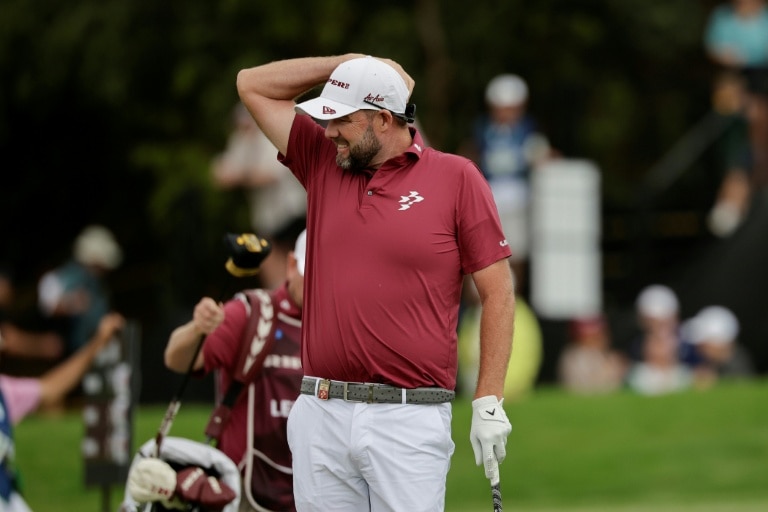
For many casual observers, writing off Saudi Arabia’s $5 billion investment in the controversial breakaway LIV Golf tour as an expensive business failure seems like a straightforward conclusion after the kingdom confirmed its exit after five planned seasons. But industry experts argue that framing the LIV experiment as a total loss misreads Saudi Arabia’s broader strategic goals, which extended far beyond turning a quick profit on professional golf.
Launched in 2022 by Saudi Arabia’s $900 billion sovereign wealth fund, the Public Investment Fund (PIF), LIV Golf upended the global golf landscape by poaching dozens of top stars including Dustin Johnson and Phil Mickelson with nine-figure signing bonuses. The reimagined tour format—featuring 54 holes of play, simultaneous shotgun starts, and on-course entertainment—sparked a bitter legal battle with the established PGA Tour that ended only when the two sides announced surprise merger negotiations, which dragged on for years without reaching a final deal. Ultimately, LIV never secured a lucrative major broadcast contract or built a large, loyal global fanbase, making continued large-scale investment unsustainable.
However, analysts emphasize that LIV always served a larger purpose beyond golf: advancing Saudi Arabia’s core strategic agenda of diversifying its oil-dependent economy and boosting its global profile as a destination for tourism, international business, and investment. As the world’s top crude oil exporter, Saudi Arabia has used its PIF to pour billions into high-profile sports properties to deliver on this vision, a strategy that has already yielded visible wins: securing hosting rights for the 2034 men’s FIFA World Cup, luring global soccer superstar Cristiano Ronaldo to the Saudi Pro League, and taking over English Premier League club Newcastle United. Even with LIV’s exit, experts say this broader strategic trajectory remains unchanged.
“Saudi Arabia is not going cold on sport,” Simon Chadwick, professor of Afro-Eurasian sport at Emlyon Business School in Shanghai, told Agence France-Presse. “It is evaluating the work that has thus far been done, what remains to be delivered, and what has worked (or hasn’t worked). The trajectory remains the same.”
Chadwick added that initial Saudi ambitions for sports investment may have been overly ambitious, opening the door for opportunistic actors in the global sports industry to exploit the kingdom’s aggressive spending spree. Other analysts note that LIV’s exit is part of a broader pullback from the most extravagant, unproven projects across Saudi Arabia’s economic diversification agenda, including scaled-back spending on the $500 billion futuristic megacity NEOM and luxury tourism resorts. Within sports, the Saudi Pro League has also pulled back from the blank-check spending spree that attracted veteran global stars, and PIF recently sold a majority stake in top domestic club Al Hilal. Other high-profile events, including the Saudi Arabia Snooker Masters, have also been scrapped years into long-term contracts.
Amro Elserty, a France-based Middle East sports affairs analyst, explained that LIV fulfilled its core initial purpose of putting Saudi Arabia on the global sports map, even if continued massive spending no longer made strategic sense. “That phase was primarily about visibility and positioning Saudi Arabia as a major global player,” he said. “What has changed is not that this objective disappeared, but that the marginal value of continuing to spend at the same level on a single project like LIV has declined.”
While LIV’s exit carries some minor reputational risk, Elserty argued that it is not viewed as a major failure inside Saudi policy circles. “Within the logic of PIF’s strategy, this is better understood as a controlled exit from an experimental phase rather than a failure in the conventional sense,” he said. Chadwick echoed that view, noting that outside observers have overblown the significance of the pullback, framing what is a routine strategic adjustment as a high-stakes sports melodrama. Critics have long dismissed Saudi Arabia’s sports investments as “sportswashing,” an effort to distract from global criticism of the kingdom’s human rights record, but that has not slowed the expansion of Saudi influence across global sport. Even with LIV’s end, experts confirm Saudi Arabia’s commitment to using sports investment as a core tool for economic and geopolitical positioning remains intact.