标签: Oceania

大洋洲

  • It’s happening: historic Moon mission set for launch

    It’s happening: historic Moon mission set for launch

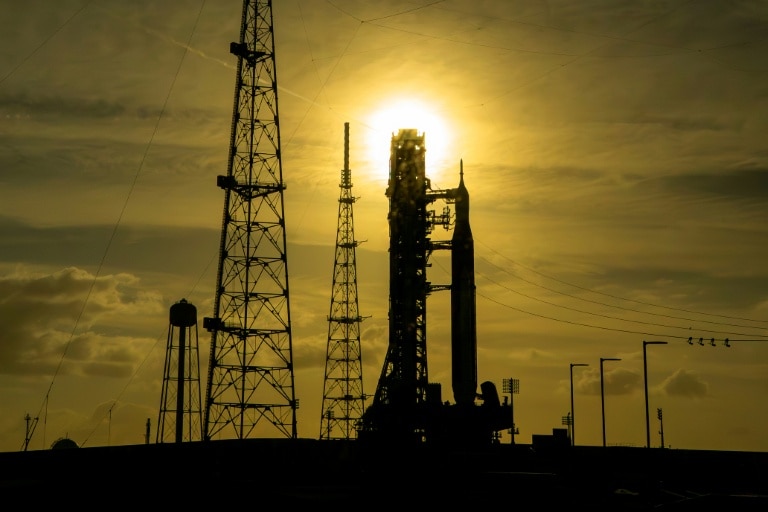
    Nearly 52 years after humanity’s last crewed trip to the Moon, NASA’s groundbreaking Artemis 2 mission stands on the cusp of launch, carrying four astronauts to make history as the first crewed lunar voyage since 1972. After years of planning, multiple delays and technical setbacks have pushed the mission from its original February launch window to its targeted liftoff at 6:24 pm ET (2224 GMT) on April 1 from NASA’s Kennedy Space Center in Florida.

    The four-person crew includes three NASA astronauts — mission commander Reid Wiseman, pilot Victor Glover, and mission specialist Christina Koch — plus Canadian Space Agency astronaut Jeremy Hansen. Over the course of a roughly 10-day expedition, the crew will fly a circumlunar trajectory, orbiting the Moon without landing, echoing the path of NASA’s 1968 Apollo 8 mission. This journey carries multiple historic firsts: Glover will become the first person of color to travel to the Moon, Koch the first woman, and Hansen the first non-U.S. citizen to join a lunar mission.

    Artemis 2 also marks the inaugural crewed flight of NASA’s powerful new Space Launch System (SLS), a massive orange-and-white rocket built to enable repeated U.S. missions to the lunar surface in the coming decades. The long-term goal of the Artemis program is to establish a permanent lunar outpost that will serve as a launchpad for future deep space exploration, most notably a crewed mission to Mars.

    Speaking at a press conference over the weekend, Koch framed the Moon as an invaluable scientific resource: “The moon is a witness plate to our entire solar system’s formation. It’s a stepping stone to Mars, where we might have the most likelihood of finding evidence of past life, but it’s also a Rosetta Stone for how other solar systems form.”

    After multiple scheduling delays that required rolling the massive rocket back to its assembly hangar for technical inspections and repairs, NASA leadership says all systems are go for launch. “The vehicle is ready, the system is ready. The crew is ready,” Amit Kshatriya, NASA’s associate administrator, told reporters at a recent briefing. As of Tuesday afternoon, agency officials confirmed that final pre-launch engineering preparations were progressing on schedule, and forecasters are predicting generally favorable weather conditions for Wednesday’s attempt.

    If the launch is scrubbed on Wednesday, backup launch windows remain available through April 6, though weather conditions are expected to become slightly less favorable later in the week. Launch weather officer Mark Burger noted Tuesday that meteorologists are monitoring scattered cumulus clouds, possible light showers, and gusty winds, but added that none of the potential weather hazards are expected to be severe enough to fully rule out launch. “We should be able to find some clear air to launch Artemis,” Burger said.

    Thousands of space enthusiasts have traveled to Florida from across the country to witness the historic launch, including 76-year-old Melinda Schuerfranz, a retiree from Ohio who watched earlier Apollo launches from afar decades ago. “We’re looking forward to it, we’ve never seen anything like this,” Schuerfranz told AFP, while relaxing on a Florida beach. She noted that public interest is already widespread at local businesses, but reflected that the cultural moment may feel less unified than the Apollo era, when nearly all Americans tuned in for lunar launches: “I think it was way more exciting then. Everybody tuned into it.”

    Despite the momentum ahead of Artemis 2, the broader Artemis program has long been plagued by costly delays and ballooning budgets. The program is under political pressure to meet the target of landing the first woman and first person of color on the lunar surface by early 2029, the end of a second presidential term if former president Donald Trump wins re-election in 2024. The primary objective of Artemis 2 is to validate the performance of the SLS rocket and the Orion crew capsule in deep space, clearing the way for the 2028 landing mission.

    That 2028 landing deadline has drawn skepticism from many space policy experts, in large part because NASA is counting on private sector development of a human-rated lunar lander. Two competing lander designs are currently under development by private companies led by billionaires Elon Musk and Jeff Bezos, and the program’s timeline hinges on these projects staying on schedule.

    In the broader global context, the U.S. return to the Moon is widely framed as a space race with China, which has its own crewed lunar landing program targeted for 2030. For new NASA administrator Jared Isaacman, the Artemis program pursues overlapping goals spanning scientific discovery, national security, and commercial economic opportunity, as well as intangible cultural benefits. “I guarantee after these astronauts fly around the moon, you’re going to have more kids dressing up as astronauts for Halloween,” Isaacman said during a recent television interview. “And that’s going to inspire the next generation to take us further.”

  • Apartment approvals soar 191pc as Australia faces rate rises

    Apartment approvals soar 191pc as Australia faces rate rises

    Australia’s new residential construction sector saw a dramatic jump in project approvals during February, even in the face of consecutive central bank interest rate hikes, though the country continues to fall short of its ambitious national housing supply goal, new official data shows.

    New statistics released by the Australian Bureau of Statistics (ABS) reveal that total dwelling approvals climbed 29.7% month-on-month in February, hitting 19,022 projects. The strong uptick was driven almost entirely by multi-unit developments: raw data shows apartment approvals skyrocketed 191.2% to 5,398 units, marking a 29.8% annual increase compared to February 2023. Townhouse approvals also rebounded sharply, rising 73.8% to 2,981 dwellings after a 38.7% drop in January.

    Despite the monthly surge, experts warn the overall pace of new home development is still not enough to meet the targets set out in the National Housing Accord, which aims to build an extra 1 million new homes over five years to address critical national supply shortages. To hit this goal, Australia needs to approve and complete roughly 20,000 new homes every month, but long-term approval trends remain well below this benchmark.

    AMP senior economist My Bui noted that monthly approval data is notoriously volatile, so a longer-term perspective offers more accurate insight into the sector’s trajectory. Looking across a longer timeframe, annualized approval levels have held steady around 196,000 new homes per year. While this volume roughly balances demand amid the current slowdown in population growth, it falls far short of the 240,000 annual approvals needed to make up for the cumulative supply shortfall that built up during the rapid population growth of 2023 and 2024. Bui added that completion rates have also failed to pick up as projected, remaining flat rather than following the upward trend that earlier approval numbers suggested would emerge by 2025.

    Notably, February’s approval surge occurred even after the Reserve Bank of Australia (RBA) implemented a 25-basis-point cash rate hike that pushed the benchmark rate to 3.85% that month. The central bank followed with another 25-basis-point increase in March, lifting the cash rate to 4.10%, and financial markets broadly expect another rate hike when the RBA’s board meets again in May.

    Beyond project approvals, the total value of the nation’s residential development pipeline also hit a new record high in February. Total combined approval value across all construction types reached $20.43 billion, representing a 14.4% annual increase. Residential construction alone accounted for most of the growth, jumping 30.8% to an all-time high of $12.5 billion, with new home builds rising 35.9% to $11.21 billion. That growth was partially offset by a 1.2% dip in renovation and extension project approvals, which fell to $1.29 billion. Non-residential construction, including offices, retail spaces and industrial facilities, also saw a 4.4% drop in approvals to $7.93 billion, following an unusually strong performance in January.

    As the development pipeline grows, national property market data indicates the sector has hit a clear turning point in its current cycle, with rising interest rates beginning to temper the rapid home price growth seen over the past two years. New figures from property analytics firm REA Group show national median home prices rose just 0.3% in March, pushing the national median value to $908,000. While that leaves prices 9.4% higher than one year ago – a gain of roughly $94,800 for the median property – the pace of growth has slowed significantly.

    REA Group senior economist Eleanor Creagh explained that slowing price growth confirms a clear shift in market momentum, as rising borrowing costs weigh on buyer activity. “Recent rate rises will weigh on buyer sentiment, borrowing capacity, and erode already poor affordability,” she said. However, Creagh noted that persistent supply shortages are preventing prices from falling, even as interest rates rise. A resilient national labor market, ongoing population growth, and targeted support for first-time home buyers continue to keep demand strong against a backdrop of severely limited available housing stock, she added.

  • War in the Middle East: latest developments

    War in the Middle East: latest developments

    Fifty-five minutes ago, Agence France-Presse compiled the most recent round of developments in the ongoing Middle East war, a conflict that has entered its fifth week of active combat between the US-Israeli alliance and Iranian-aligned groups, sending ripples across global politics, energy markets and international diplomacy.

  • Middle East war: global economic fallout

    Middle East war: global economic fallout

    The ongoing conflict in the Middle East has triggered widespread economic disruptions across continents, reshaping energy markets, straining national energy reserves, and driving volatile swings in global financial systems in recent weeks. While diplomatic signals of a potential de-escalation have temporarily calmed market jitters, the tangible damage to critical energy infrastructure and persistent supply chain risks continue to pressure economies worldwide.

    On Wednesday, global financial markets posted sharp gains following two consecutive days of upward momentum, driven by remarks from key leaders hinting at a possible end to hostilities between Iran and Western-backed forces. U.S. former President Donald Trump indicated that the conflict could wrap up within approximately two weeks, while Iranian President Masoud Pezeshkian confirmed Tehran holds the political will to reach a ceasefire with Israel and the United States – though he emphasized the need for ironclad guarantees to prevent future outbreaks of violence. The upbeat diplomatic signals sent Asian stocks soaring: Japanese and South Korean benchmark indexes jumped in early morning trading, following a massive rally on Wall Street a day earlier that saw the blue-chip Dow Jones Industrial Average close up 2.5%, and the technology-focused Nasdaq Composite surge 3.8%. Oil prices also pulled back from recent multi-year highs on the ceasefire hopes, though benchmark crude still held firmly above the $100 per barrel threshold, underscoring persistent supply uncertainty.

    Beyond market volatility, the conflict has already inflicted permanent damage to critical regional infrastructure. Iranian state media reported this week that a major desalination plant on Qeshm Island, located near the strategically vital Strait of Hormuz – the chokepoint through which roughly 20% of global oil supplies transit daily – has been completely knocked out of service by targeted strikes. Health ministry official Mohsen Farhadi told Iran’s ISNA news agency that the facility cannot be repaired in the short term, cutting off a key source of fresh water for the island’s population. Separate reports confirmed an Iranian attack ignited a fire on the Al Salmi, a 332-meter Kuwaiti-flagged crude tanker docked at Dubai’s port. No casualties were reported, and Dubai fire crews successfully extinguished the blaze within hours, but the incident highlighted the growing risk to commercial shipping in the region.

    Geopolitical risks have also disrupted transit for global shipping operators. China’s foreign ministry announced Tuesday that three Chinese-registered vessels have successfully completed transit out of the Strait of Hormuz, with assistance from unspecified relevant parties. Tracking data confirms two container ships operated by Chinese shipping giant Cosco made the passage on Monday, though Beijing has not released any details on the identity or status of the third vessel.

    The economic fallout of the conflict is already being felt far beyond the Middle East, with consumer prices and energy policy being upended across Europe, Africa, and Asia. In the Eurozone, March inflation climbed to 2.5% – the highest reading recorded since January 2025 – driven almost entirely by skyrocketing energy costs tied to Middle East supply disruptions. According to Jean Maynier, head of global maritime analytics firm Kpler, Asian economies face the most severe impact, with the region already sliding toward a full-blown energy crisis. Maynier told Agence France-Presse that Asian nations do not hold enough domestic energy reserves to offset the gap left by disrupted Middle Eastern supplies, noting that shortages will be felt across both large emerging economies like China and smaller developing nations including the Philippines and Indonesia.

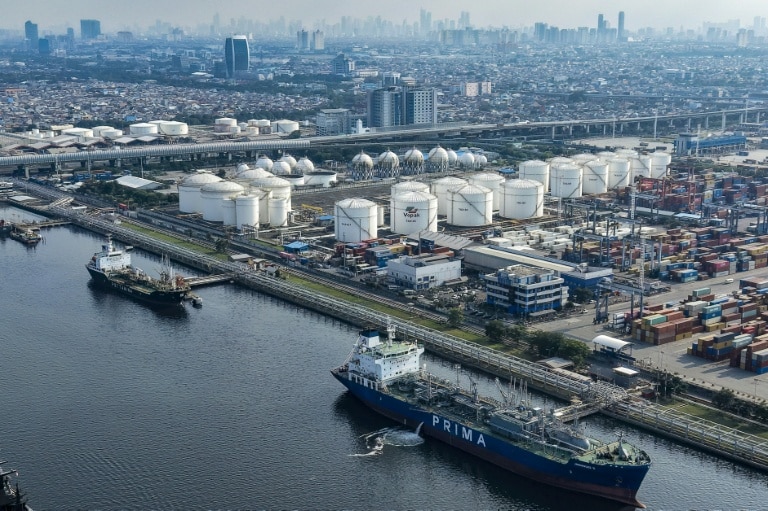
    To cope with the looming shortages, governments across the Global South have already implemented emergency energy conservation measures. Indonesia became one of the first major Asian economies to announce fuel rationing this week, alongside a mandatory work-from-home order for all civil servants, as the country moves to preserve existing energy stockpiles amid global price hikes. Jakarta has also ruled out any immediate fuel price increases, despite growing pressure on the national budget from the conflict. In East Africa, Ethiopia announced that it would prioritize fuel allocations for essential goods transport and public transit vehicles, as widespread shortages linked to the conflict grip the country. South Asia has seen even more drastic action: Sri Lanka this week announced a nearly 40% increase in electricity prices, effective Wednesday, to offset energy shortages stemming from the Middle East war. This marks the third fuel price hike the country has implemented this month, bringing total increases to more than 33%, and Sri Lanka has already moved to a four-day working week for public employees to cut overall energy consumption.

  • Steam-cleaner with non-compliant power adaptor recalled over risk of death

    Steam-cleaner with non-compliant power adaptor recalled over risk of death

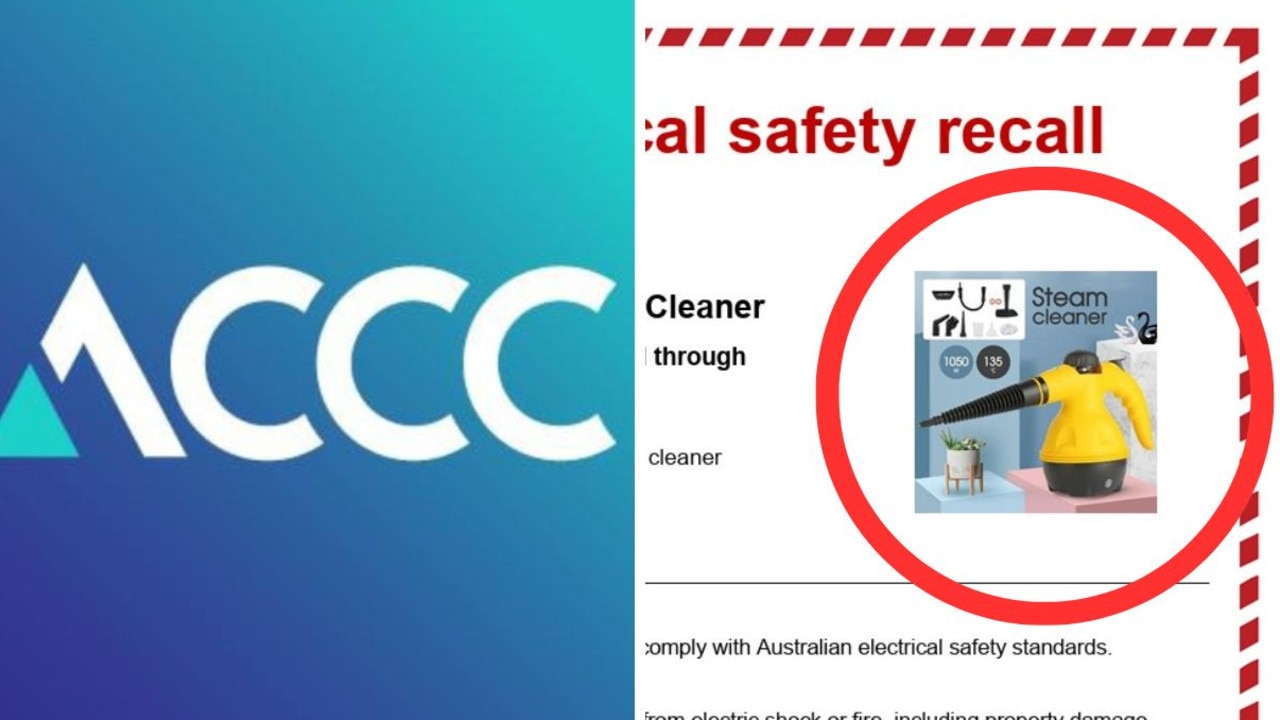
    Australia’s consumer safety watchdog has issued an urgent public recall and warning for a widely sold portable steam cleaner linked to severe, potentially fatal hazards including electric shock, burns and fire. The Australian Competition and Consumer Commission (ACCC) Product Safety Department announced the recall after testing confirmed the bright yellow “portable electric high pressure” steam cleaner sold by online retailer Ozstock fails to meet the country’s mandatory national electrical safety standards.

    The dangerous non-compliance centers on the device’s power adapter, a core component that allows the unit to draw household electricity. Manufactured in China, the recalled steam cleaners were distributed and sold to customers across all Australian states and territories via the Ozstock online platform between September 28, 2023, and March 19 of this year. ACCC documents note the product had been listed for sale on the platform for multiple years before safety concerns prompted the recall order, leading to widespread distribution among Australian households.

    In addition to electrical risks, the ACCC warns the faulty device poses direct threats of death, serious injury, and property damage from uncontrolled fire or accidental burns. The regulator has issued clear guidance for all consumers who may have purchased the product: stop using the device immediately, and store it in a secure location completely out of reach of children to prevent accidental exposure to hazards.

    Digitel International, the official Australian supplier of the recalled steam cleaners, has committed to providing a full refund to all customers who properly and safely dispose of their faulty units. Consumers who own the product are encouraged to reach out directly to Digitel International to arrange for their refund and confirm safe disposal protocols. The ACCC is also urging consumers who bought portable steam cleaners from Ozstock in the specified time frame to check their product against the recall description to confirm if they own the hazardous unit.

  • Golden toilet statue mocks Trump near renovated White House

    Golden toilet statue mocks Trump near renovated White House

    A provocative pop-up art installation has sparked public intrigue and political satire has drawn crowds in Washington DC just blocks from the newly renovated White House: a gold-painted toilet, styled as a mocking ‘royal throne’ for former and current President Donald Trump.

    Crafted with the same over-the-top faux marble finish that Trump has become famous for favoring in his personal and public design choices, the installation features a prominent plaque reading “A throne fit for a king.” The work was created and deployed by Secret Handshake, an anonymous guerrilla art collective that has become known for placing provocative temporary sculptures across the US capital over the past 12 months.

    When the installation debuted on Tuesday near the Lincoln Memorial, it immediately drew long lines of curious tourists and critical Trump opponents, all waiting for a chance to see and photograph the satirical piece. Among the visitors was 78-year-old Nancy Chase, who told Agence France-Presse she traveled specifically to Washington to snap photos of the golden toilet, citing her opposition to Trump as her core motivation.

    The satire comes amid a sweeping redesign of White House spaces that Trump has overseen during his second term in office, which have all bear his distinctively opulent aesthetic. The Oval Office now features extensive gold decorative accents, the traditionally understated elegant Rose Garden has been repaved, and the entire East Wing was demolished to clear space for a sprawling new grand ballroom. Beyond architectural changes, Trump has increasingly centered his own brand and image across Washington: his name already adorns the Kennedy Center for the Performing Arts in massive lettering, and a new official coin featuring his likeness is set to enter circulation soon.

    For many visitors who came to see the golden toilet, the work feels like a perfectly timed critique of Trump’s public persona. William Hoker, a 69-year-old retiree who biked to the installation site, called the piece a fitting characterization of the sitting president. “I wanted to see this statue before it disappeared, and I think it epitomizes perfectly the guy in the White House, he’s just a vulgar display,” Hoker explained to AFP. His friend Steve Toulotte echoed that sentiment, noting that political satire aimed at the president serves an important public purpose.

    This is not the first provocative work from Secret Handshake. Over the past year, the collective has placed multiple unauthorised temporary sculptures across Washington, including one that depicted Trump alongside his late disgraced associate, convicted sex offender Jeffrey Epstein.

  • At gas stations, Americans say they’re ‘paying the price’ of Iran war

    At gas stations, Americans say they’re ‘paying the price’ of Iran war

    Across U.S. gas stations from the Washington suburbs to New Jersey, American drivers are grappling with the immediate, painful domestic fallout of the ongoing conflict with Iran, as skyrocketing fuel costs squeeze already strained household budgets and send ripples of uncertainty through the broader national economy.

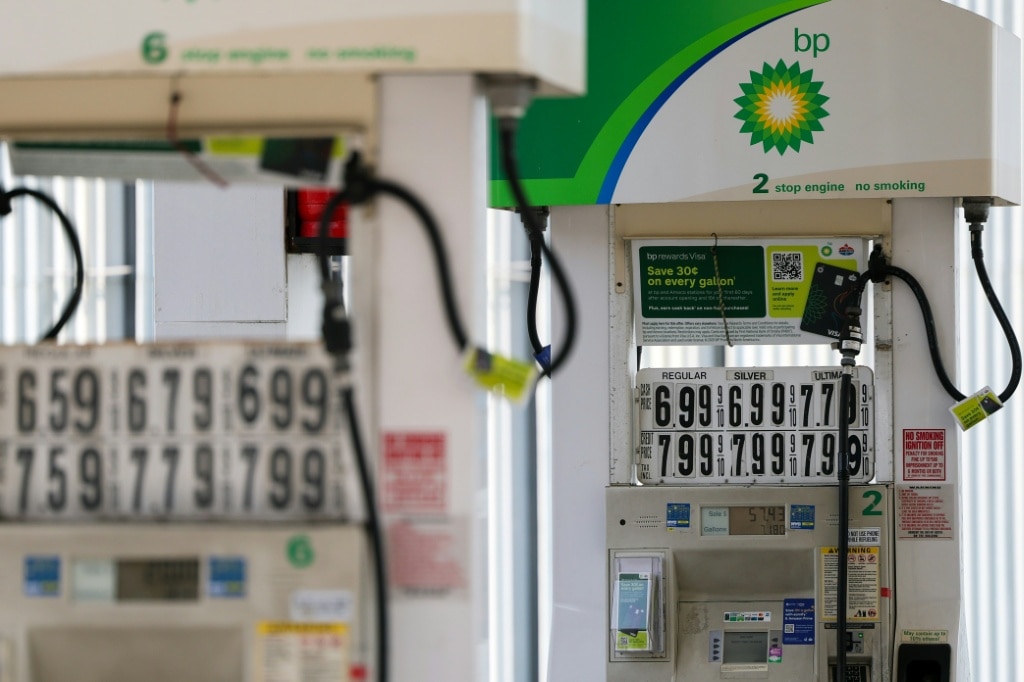
    On Tuesday, industry data from the American Automobile Association (AAA) confirmed that the national average price for a gallon of regular unleaded gasoline breached the widely watched $4.00 threshold. The figure marks a staggering 35% jump in fuel costs since the outbreak of hostilities following U.S.-Israeli strikes on Iran, leaving everyday consumers reeling from the sudden spike.

    At the Liberty gas station located along a busy commercial corridor in Falls Church, Virginia — just steps from an Anglican church, a local auto repair shop, and a dental practice — prices already start at $3.79 per gallon for customers paying with cash, with premium rates adding an extra surcharge for debit and credit card users. A short distance down the same road, some stations are charging as much as $4.25 per gallon.

    Eighty-three-year-old Jeanne Williams, a retired civil servant in active cancer treatment who drove 100 miles from Richmond, Virginia to visit her older sister, voiced shock at the prices displayed on the station’s LED billboard. “That is horrible,” she said, describing her reaction to the new rates. “I’m not angry. I’m just bewildered, confused, unhappy, because we didn’t ask for this war.” Though Williams calls her pension “fairly decent”, persistent U.S. inflation and rising fuel costs have forced her to draw down personal savings to cover basic expenses. “Luckily, I have no children, I don’t have a spouse, so it’s just me — and whatever I have, I share to help my sister,” she explained.

    While U.S. inflation has cooled from its 9.1% pandemic-era peak, core prices have remained stubbornly elevated, and economists warn the world’s largest economy has yet to achieve sustained price stability. Years of above-trend price growth have already eroded household purchasing power across the country, and the sudden fuel surge threatens to deepen that financial pressure.

    Eliza Winger, a U.S. economist at Bloomberg, noted that higher pump prices extend far beyond immediate pain at the station: they drag down overall consumer spending, creating cascading risks for economic growth. “We estimate that a 10% increase in oil prices reduces real consumer spending by approximately 0.2 percent,” Winger explained. Since the outbreak of the Iran conflict, U.S. fuel prices have risen more than three times that 10% threshold, pointing to a potentially significant hit to consumer activity in coming months. Fresh consumer confidence data released Tuesday underscored this unease, showing that U.S. inflation expectations surged in March to levels not seen in seven months.

    Twenty-six-year-old Luis Ramos, a New York City resident who spoke to AFP at a New Jersey gas station, said the new price hikes come on top of already unsustainable cost of living increases. “It’s ridiculous, honestly. Seeing these gas prices skyrocket, it’s incredible. The cost of living is already skyrocketing,” he said.

    For David Lee, a 39-year-old anesthesiologist who fills up his tank twice a week near Washington, every stop now costs roughly $10 more than it did just weeks ago. Though his income allows him to absorb the extra cost, he says many of his friends have already changed their behavior to cut costs. “I’ve seen a lot of my friends complaining about it that they’re not gonna drive as much as they used to,” he noted.

    Seventy-seven-year-old Joseph Crouch, a Vietnam War veteran who uses a cane, is among those who have scaled back driving to manage expenses. “It’s ridiculous. The prices are so high. I don’t think government is knowing what it is doing,” he said. Echoing a sentiment shared by many consumers interviewed, he argued, “We are paying the price of the war. They are trying to say it’s something else, but it’s definitely a war.” Seventy-eight-year-old Fred Koester echoed that frustration, calling the conflict a “stupid war” that was “totally unnecessary.”

    Not all perspectives aligned on public frustration, however. Kristen, a 36-year-old teacher who declined to share her last name, acknowledged that higher fuel prices cause real hardship, but argued it is “selfish” for Americans to only protest the conflict once it begins impacting their personal finances. “We should have cared long before it affects our pocket,” she said.

  • Italy again miss out on World Cup as Bosnia, Turkey, Czechs and Sweden qualify

    Italy again miss out on World Cup as Bosnia, Turkey, Czechs and Sweden qualify

    For the third consecutive FIFA World Cup cycle, four-time champions Italy have failed to secure a spot at the global tournament, suffering a crushing penalty shootout defeat to Bosnia and Herzegovina in the final UEFA play-off. Tuesday’s results also locked in three other qualifiers — Turkey, Sweden, and the Czech Republic — for the 48-team 2026 finals co-hosted by the United States, Canada and Mexico, bringing an end to a dramatic final night of European qualifying.

    Four-time World Cup winners Italy, who have not lifted the global trophy since 2006 and have not progressed past the group stage of any tournament they qualified for since 2006, now face another extended spell on the tournament sidelines. They already missed out on the 2018 and 2022 editions, falling to play-off defeats against Sweden and North Macedonia respectively, and their 2014 group stage exit remains their last appearance at the finals.

    The night unfolded in chaotic fashion for Italy’s Azzurri: Moise Kean put Gennaro Gattuso’s side ahead in the 15th minute, but a first-half red card for defender Alessandro Bastoni left Italy down to 10 men for more than an hour of play. Bosnia capitalized on their numerical advantage late, with Haris Tabakovic netting the equalizer in the 79th minute to force the match into extra time. With no additional goals scored through the additional 30 minutes, the tie was decided from the penalty spot.

    In one of the most lopsided penalty shootouts in recent European qualifying history, Bosnia converted all four of their spot kicks to win 4-1. Only Sandro Tonali found the net for Italy: Francesco Pio Esposito dragged his opening penalty over the crossbar, while Bryan Cristante saw his effort smash off the woodwork, confirming Italy’s early exit. A devastated Gattuso said post-match, “I don’t think the boys deserved to suffer such a blow. It’s difficult to digest.”

    For Bosnia, ranked 66th in the global FIFA rankings, the result marks just their second ever World Cup appearance, following their debut in 2014. They finished second in Group H behind Austria before beating Wales in a penalty shootout in the play-off semi-finals, and will now face Canada, Qatar and Switzerland in Group B this summer.

    Elsewhere on Tuesday, Turkey ended Kosovo’s fairy-tale run to qualifying with a 1-0 away win in Pristina, booking their first spot at the World Cup in 24 years. A 53rd-minute strike from Kerem Akturkoglu proved the difference for Vincenzo Montella’s side, eliminating a Kosovo side that had only earned FIFA membership a decade prior and was targeting its first ever major global tournament appearance.

    Ranked 22nd in the world, Turkey will make just their third ever World Cup appearance, having previously qualified in 1954 and reached the semi-finals on home soil of the 2002 Korea-Japan edition. “We achieved our dreams. The World Cup is the pinnacle in this profession,” Montella told reporters after the win. Turkey will join co-hosts the United States, Paraguay and Australia in Group D.

    Sweden booked their place in the most dramatic fashion of all, with Arsenal striker Viktor Gyokeres scoring an 88th-minute winner to secure a 3-2 home win over Poland in Stockholm. The side, now managed by English coach Graham Potter, finished bottom of their qualifying group without a single win, and only earned a play-off spot thanks to strong results in the UEFA Nations League.

    After beating Ukraine 3-1 in the semi-final last week, Sweden twice surrendered the lead against Poland: Manchester United’s Anthony Elanga opened the scoring in the 20th minute before Nicola Zalewski equalized, and Gustaf Lagerbielke restored Sweden’s lead before half time, only for Karol Swiderski to level the scores again early in the second half. Gyokeres eventually forced the ball over the line in a late goalmouth scramble to send Sweden through. They will face the Netherlands, Japan and Tunisia in Group F.

    The Czech Republic rounded out the night of qualifying with a penalty shootout win over Denmark in Prague, securing their first World Cup appearance since 2006. The match ended 2-2 after extra time: Pavel Sulc opened the scoring for the hosts before Joachim Andersen equalized for the Danes, Ladislav Krejci put the Czechs back ahead in extra time, and Kasper Hojlund levelled the match again to force penalties. The Czechs followed their semi-final penalty win over Ireland with another shootout success, winning 3-1 as Denmark converted just one of their four penalties, with Rasmus Hojlund, Anders Dreyer and Mathias Jensen all missing from the spot. The Czech Republic will face South Africa, South Korea and co-host Mexico in Group A.

  • Italy’s World Cup nightmare continues after shoot-out defeat to Bosnia

    Italy’s World Cup nightmare continues after shoot-out defeat to Bosnia

    Four-time World Cup champion Italy has etched a deeply unwanted place in global soccer history, becoming the first former tournament winner to miss out on three straight World Cup finals after a devastating penalty shootout defeat to Bosnia and Herzegovina in Tuesday’s qualification play-off final. The shocking 4-1 result on penalties in Zenica ended Italy’s hopes of reaching this summer’s 26-team tournament co-hosted by Canada, the United States and Mexico, and extended one of the most painful droughts in international soccer.

    The match began with a fast start that seemed to point toward an Italian victory. Italian striker Moise Kean got his side on the board in the 15th minute, capitalizing on a catastrophic error from Bosnia goalkeeper Nikola Vasilj. Under intense pressure from Mateo Retegui, Vasilj played a direct pass straight to Italy’s Nicolo Barella, who quickly slipped a through ball to Kean. The Juventus forward curled a clinical finish past Vasilj from the edge of the 18-yard box, notching his eighth international goal in just six appearances to put Italy ahead.

    Bosnia refused to fold, however, and began to pile consistent pressure on the Italian defense, amplified by a game-changing red card four minutes before halftime. Italy defender Alessandro Bastoni was ejected for a crude, late chop on Bosnia’s Amar Memic, leaving the Azzurri down to 10 men for more than an hour of play. The home crowd erupted, sensing an opening that the Bosnian side fully exploited for the rest of regulation.

    Down a man, Italy coach Gennaro Gattuso adjusted his formation to absorb relentless Bosnian pressure, but the equalizer finally arrived in the 79th minute. After Edin Dzeko’s header was parried off the goal line by Italy keeper Gianluigi Donnarumma, substitute Haris Tabakovic poked the loose ball into the net to level the score, sending the tie to extra time. The additional 30 minutes were just as tense: Italian players were furious that a second red card was not issued to Tarik Muharemovic for a foul on a breaking Marco Palestra, but Donnarumma’s two outstanding saves on headers from Dzeko and Ermedin Demirovic kept the score level to force penalties.

    The penalty shootout turned into a disaster for Italy from the very first kick. Pio Esposito hammered his opening effort well over the crossbar, and when Bryan Cristante’s subsequent strike clattered off the bar, Italy was already on the brink. Esmir Bajraktarevic converted the decisive spot-kick, squeezing his shot under Donnarumma to seal the historic win for Bosnia, sparking wild pitch invasions from thousands of elated home fans.

    For Bosnia, the result books their spot in Group B of this summer’s World Cup, paired with co-host Canada, Switzerland and Qatar. This marks just the second time the Balkan nation has qualified for the World Cup finals, with their only previous appearance coming back in 2014. “They’re guys with character. We have guys we’re proud of,” Bosnia coach Sergej Barbarez said after the match, joking that his goal was to qualify for a major tournament every two years.

    For Italy, the defeat extends a stunning streak of failure that began eight years ago. It marks the third consecutive World Cup the Azzurri have missed, following play-off eliminations at the hands of Sweden in 2018 and North Macedonia in 2022. They are the first ever World Cup winner to miss three straight editions of the tournament, a record that will stand as a dark mark on one of European soccer’s most successful programs.

    In the aftermath of the defeat, a visibly emotional Gattuso said he could not fault his team’s effort. “I don’t think the boys deserved to suffer such a blow, for the performance, the effort and the heart that they showed tonight… I’m proud of the boys,” he told reporters. “It’s difficult to digest.” When asked about his own future as head coach, Gattuso said that discussion was not important in the moment. Italian Football Federation president Gabriele Gravina later clarified that federation officials had asked Gattuso to stay on, and that the coach would not resign.

    The defeat also added an extra layer of embarrassment for Italian soccer, after footage emerged of multiple Italian players celebrating Bosnia’s semi-final penalty win over Wales just days earlier. That decision looks even more ill-advised after Bosnia’s focused, physical performance earned them a spot at the finals at Italy’s expense.

  • Wild way island is tackling invasive birds

    Wild way island is tackling invasive birds

    Kangaroo Island, a major natural habitat off the coast of South Australia, has achieved a breakthrough in its long-running battle against invasive non-native species, with an innovative night culling strategy using infrared thermal imaging technology and trained marksmen successfully reducing populations of destructive little corellas. This newly tested method comes as the island continues its broader campaign to eliminate harmful introduced species, following ongoing efforts to eradicate feral cats across the region.

    For more than a century, little corellas, a species of cockatoo not native to the island, have thrived alongside human settlement, growing into an overabundant population that disrupts the local ecosystem and damages key local industries. Unlike native wildlife that fits into Kangaroo Island’s balanced natural food web, these introduced birds have left a wide trail of harm: they cause irreversible damage to mature native trees, erode critical infrastructure, threaten the profitability of the island’s grain-growing sector, and push the vulnerable endemic glossy black cockatoo closer to risk by destroying their eggs and killing hatchlings. Beyond ecological harm, the growing corella population creates persistent noise pollution and spreads pathogens through their accumulated droppings, posing tangible public health risks to local communities.

    For years, Kangaroo Island’s environmental managers tested a range of conventional control strategies to curb the corella population, including trapping, gassing, and daytime shooting. However, the adaptable, quick-witted birds soon learned to avoid these methods, delivering only limited success that left managers searching for a more effective solution.

    In a two-year trial run across the 2022-2023 and 2023-2024 summer seasons, the Kangaroo Island Landscape Board rolled out an unconventional approach: deploying skilled marksmen equipped with infrared thermal imaging gear to target roosting corellas while they sleep at night. What initially sounds like a plot device from a James Bond spy thriller has turned out to be far more effective than any prior method, according to final trial results released this week.

    Over the course of the two-year trial, a total of 2,640 little corellas were humanely culled. The 2023-2024 summer season removed 1,467 birds, and the most recent 2024-2025 season culled 1,173 corellas in just five nights of operations. Will Durack, general manager of the Kangaroo Island Landscape Board, explained that targeting roosting flocks at night removes the corellas’ ability to avoid control efforts, delivering far higher removal rates per operation than conventional approaches. “Targeting birds at night while they are roosting allowed several hundred birds to be removed in a single operation and achieved a much higher catch per unit effort,” Durack said. “The trial now shows a proven method for effective and humane control of little corellas.”

    The successful trial comes as Kangaroo Island pursues an ambitious agenda to eliminate all feral invasive species from the island, following a public proposal for a strict “last cat policy” to eradicate feral cats, another major threat to the island’s native wildlife. Under the proposed cat policy, existing domestic cats would be allowed to stay with their owners, but no new cats would be permitted to be brought onto the island to prevent future feral populations from establishing. Durack added that the board is ready to share its successful night culling method with other environmental agencies across South Australia that are grappling with overabundant corella populations, to support more effective invasive species control across the state.