标签: Oceania

大洋洲

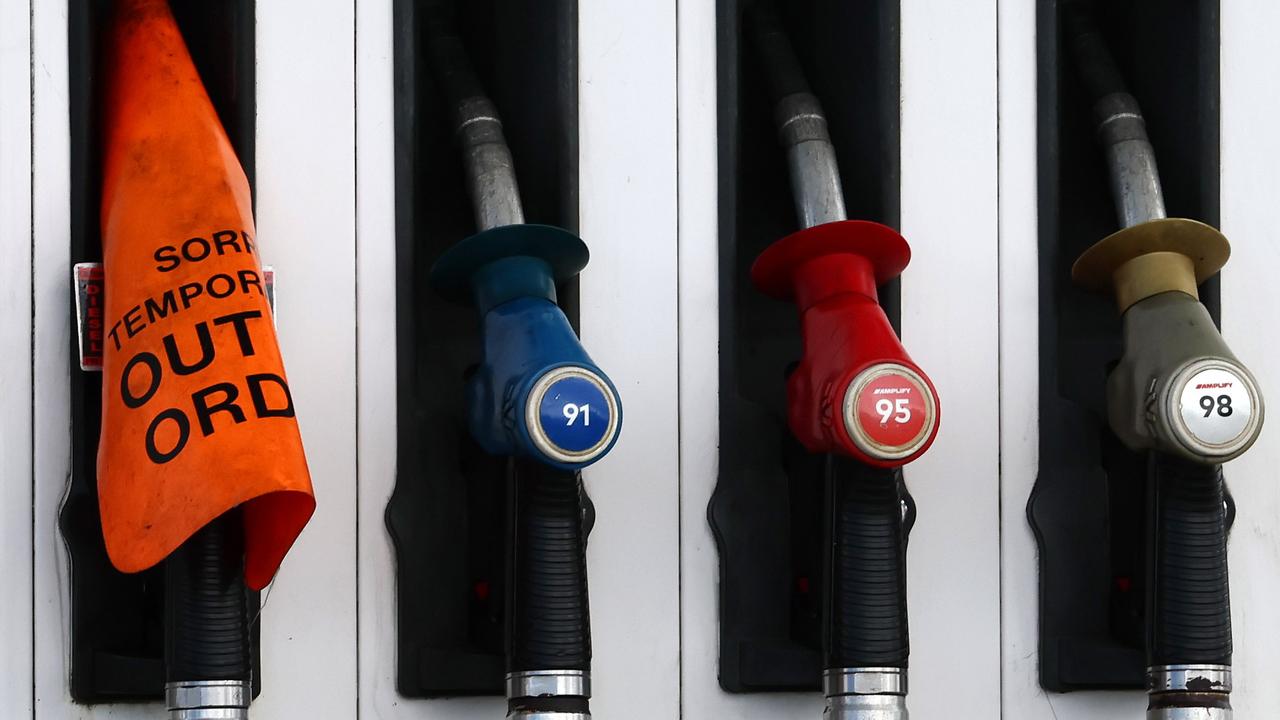
  • 3.4pc of service stations have run out of diesel, Energy Minister Chris Bowen says

    3.4pc of service stations have run out of diesel, Energy Minister Chris Bowen says

    Australia is currently facing localized diesel shortages that have left around 3.4% of its national service stations without the critical fuel, Energy Minister Chris Bowen has confirmed, with the problem most acute in New South Wales as authorities intentionally prioritize supplies to local farmers during key planting season.

    Speaking to reporters at the close of the Easter long weekend – a period that saw overall national fuel demand jump by as much as 30% due to increased travel – Bowen explained that the concentrated shortages in NSW were a deliberate trade-off to protect the nation’s food security. With the state in the heart of sowing and seeding season, Bowen said industry and government partners agreed to redirect available diesel supplies to agricultural operations to ensure farmers could plant their crops on schedule.

    “In New South Wales in particular, where we’ve been focusing with the industry on getting fuel to farmers because it’s sowing and seeding season, so therefore our service station numbers out of diesel have been higher than anyone would like,” Bowen told reporters. “Because I think rightly, people have been prioritised in getting diesel to our farmers to make sure they can get the seeds into the ground.”
    Bowen also publicly thanked fuel industry workers and retail staff who worked through the Easter holiday period to restock supplies and mitigate disruptions, noting that many employees gave up their long weekend break to address the shortage. As of Sunday, Bowen reported that 145 service stations across NSW remained out of diesel, down from 182 just two days prior – a change he framed as significant progress in restocking retail supplies, with full national updated data expected to be released Monday.

    Despite the current localized shortages, Bowen confirmed that Australia’s national fuel reserve remains secure through the month of May. As of the latest update, the country holds 39 days of reserve petrol supplies, 29 days of diesel reserves, and 29 days of jet fuel reserves. But the minister warned that long-term disruptions to global energy markets caused by the ongoing Middle East conflict cannot be fully forecast, even after major OPEC+ producers announced plans to raise output.

    The current global energy shock stems from the recent outbreak of conflict in the Middle East, which has led to the closure of the Strait of Hormuz – the critical global shipping chokepoint through which roughly a fifth of the world’s daily oil supplies pass. The closure has cut off oil exports from major OPEC+ producers including Saudi Arabia, the United Arab Emirates, Kuwait and Iraq. Even if the strait reopens immediately, Bowen said long-term damage to energy infrastructure will keep markets volatile for years.

    “There’s been gas fields and production facilities bombed. They take five years to rebuild, for example. So there’s going to be some impact,” Bowen told Australia’s Seven Network in an earlier interview. “The sooner the Strait opened, the sooner the international economy would settle and fuel prices would normalise. But every bit of delay means that tail, that tail is going to be there for quite a while and maybe show itself in ways that can’t 100 per cent be predicted.”

    Over the weekend, OPEC+ announced a plan to increase collective production quotas by 206,000 barrels per day starting in May. Industry sources told Reuters the move is largely symbolic right now, since major producers cannot export additional crude while the Strait of Hormuz remains closed, but it signals producers are prepared to ramp up output immediately once the waterway reopens.

    Global oil prices have already jumped to a four-year high of roughly $US120 per barrel, driven by reduced export volumes out of the Middle East. Financial firm JP Morgan has warned that prices could surge to $US150 per barrel if the strait remains closed through mid-May. Higher global prices have filtered through to Australian markets, while geopolitical uncertainty has also spurred panic-buying and increased demand for diesel across the country.

    Viva Energy’s Geelong oil refinery, one of Australia’s largest, recorded a 30% increase in diesel sales in the two days leading up to Easter compared to the same period in 2024, Bowen confirmed. While diesel demand remains far above normal levels, Bowen added that domestic petrol demand has returned to typical pre-shortage levels.

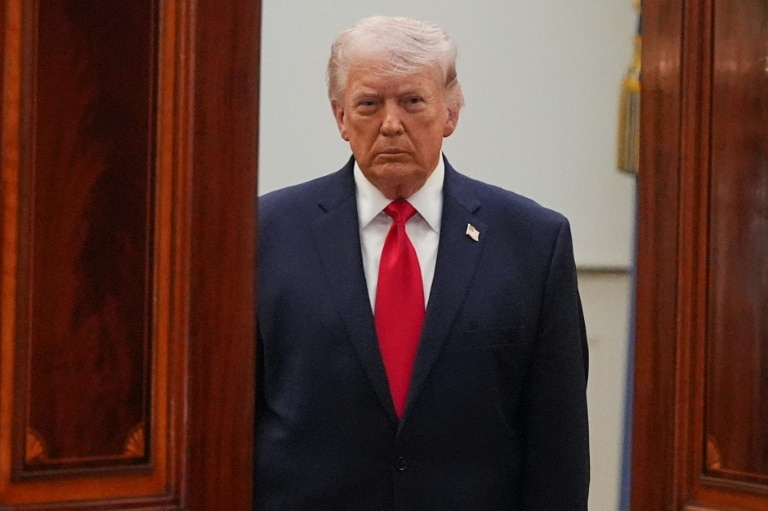
    The conflict has also drawn inflammatory commentary from former U.S. president Donald Trump, who posted a violent threat on his Truth Social platform overnight Australian time. Trump called for the immediate reopening of the Strait of Hormuz and threatened to attack Iranian civilian infrastructure, writing: “Tuesday will be Power Plant Day, and Bridge Day, all wrapped up in one, in Iran. There will be nothing like it!!! Open the F***in’ Strait, you crazy bastards, or you’ll be living in Hell – JUST WATCH! Praise be to Allah. President DONALD J. TRUMP.”

    Admitting that gaps in retail diesel supply remain unacceptable for many Australian motorists and businesses, Bowen acknowledged that “more work to do” to fully resolve the shortages, while noting that all possible steps are being taken to stabilize domestic supplies amid ongoing global volatility.
  • Israel renews Lebanon strikes, forces Syria border crossing closed

    Israel renews Lebanon strikes, forces Syria border crossing closed

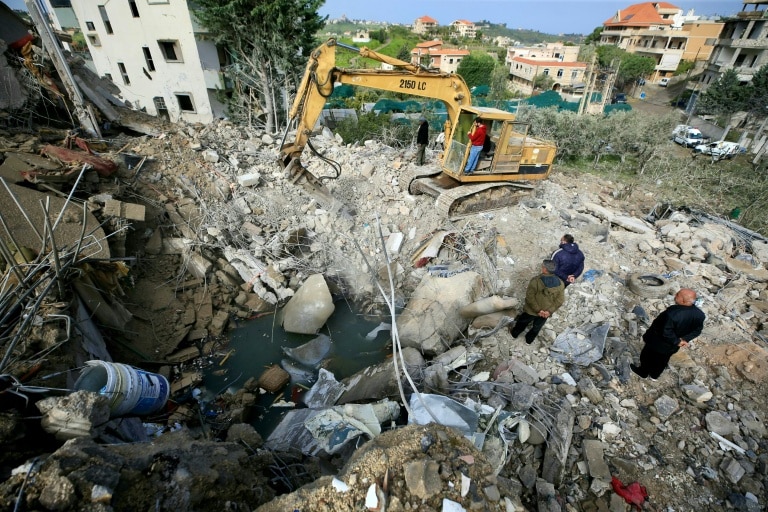
    A new wave of deadly Israeli airstrikes across Lebanon on Sunday left at least 15 people dead, one day after Israeli threats targeting the Masnaa crossing—Lebanon’s primary land gateway to Syria—forced the vital trade and transit point to shut down.

    The escalation marks an intensification of months of open conflict that began on March 2, when the Lebanese armed group Hezbollah joined the broader Middle East war in support of its principal backer, Iran. Since that date, Israel has conducted sustained airstrikes across Lebanese territory and launched a ground invasion into southern Lebanon. On Sunday, Israeli military chief Lieutenant General Eyal Zamir visited frontline troops stationed in southern Lebanon and publicly reaffirmed his commitment to ramp up offensive operations against Hezbollah.

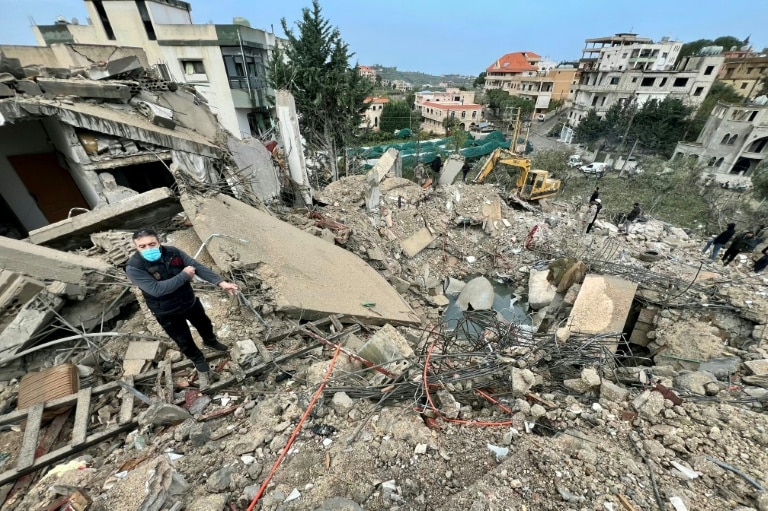
    The Lebanese Ministry of Health confirmed that Sunday’s strikes spread far beyond the contested southern border zone, reaching population centers near the capital Beirut. A strike on Beirut’s Jnah neighborhood killed at least five people and wounded 52 others, while an attack on an apartment building in Ain Saadeh, a town just east of the capital, left three dead and three more injured. In the southern Lebanese village of Kfar Hatta, located far from the Israeli border, a Sunday strike killed seven people, including a four-year-old girl.

    In a rare offensive claim Sunday, Hezbollah announced it had launched a cruise missile against an Israeli warship patrolling off the Lebanese coast. But the Israeli military told Agence France-Presse (AFP) it had no record of such an incident occurring.

    According to official Lebanese data, more than 1,400 people have been killed in Israeli attacks across Lebanon since the outbreak of the latest conflict, 126 of whom are children. Over one million Lebanese have been displaced by the violence.

    Medical sources told AFP that the Jnah neighborhood strike landed just 100 meters from Rafik Hariri University Hospital, Lebanon’s largest public medical facility. Zakaria Tawbeh, the hospital’s deputy head, said the facility received four fatal casualties – three Sudanese nationals and a 15-year-old girl – plus 31 wounded patients. “Lots of glass was broken, and some of our patients had panic attacks,” Tawbeh told reporters.

    For local residents, the strikes represent a repeated cycle of trauma. Nancy Hassan, a 53-year-old Jnah resident, said she believed she would be safe in her home after the first strike of the day. “Shortly after, the planes were flying overhead, and we heard a huge bang, then stones rained down on us,” she recalled. Hassan already lost her 23-year-old daughter to an Israeli strike on the same neighborhood during the 2024 Hezbollah-Israel war, and four of her daughter’s friends were killed in Sunday’s attack. “Every time, they bomb us in the neighbourhood without warning,” she added.

    Israel also carried out multiple strikes on the southern suburbs of Beirut, a Hezbollah stronghold that has been almost entirely evacuated in recent months. The United Nations Interim Force in Lebanon has issued a warning that exchanges of fire between Israel and Hezbollah near UN peacekeeping positions raise the risk of accidental retaliatory attacks on UN personnel.

    The closure of the Masnaa border crossing followed explicit Israeli threats made Saturday. Israeli military Arabic-language spokesman Avichay Adraee said the crossing would be targeted because Hezbollah uses it for military activity and to smuggle weapons and combat equipment, urging all civilians to evacuate the area immediately. The Lebanese side of the crossing was evacuated within hours. While Syrian border and customs director Mazen Aloush emphasized the crossing is used exclusively for civilian travel and trade, it was temporarily shuttered in response to the imminent threat.

    Masnaa is a critical economic artery for both Lebanon and Syria, and a key travel hub for Lebanese residents seeking access to the broader Middle East. Military analyst Hassan Jouni told AFP that Israel’s threat to target the crossing is not rooted in legitimate security concerns, but instead is intended to pressure the Lebanese government to take action to disarm Hezbollah.

    With Masnaa closed, travelers have flooded alternative border crossings. At the northern Qaa crossing, an AFP correspondent on Sunday observed long lines of cars and vans waiting to cross into Syria, as people sought alternate routes to reach their destinations.

    As Israeli forces push deeper into southern Lebanese border areas, destroying entire villages in their advance, Lebanese President Joseph Aoun has repeated his call for diplomatic negotiations with Israel to avert full-scale destruction similar to that seen in the Gaza Strip. “Why don’t we negotiate… until we can at least save the homes that have not yet been destroyed?” Aoun said in a televised address to the nation.

  • Artemis astronauts begin fifth day on historic Moon mission

    Artemis astronauts begin fifth day on historic Moon mission

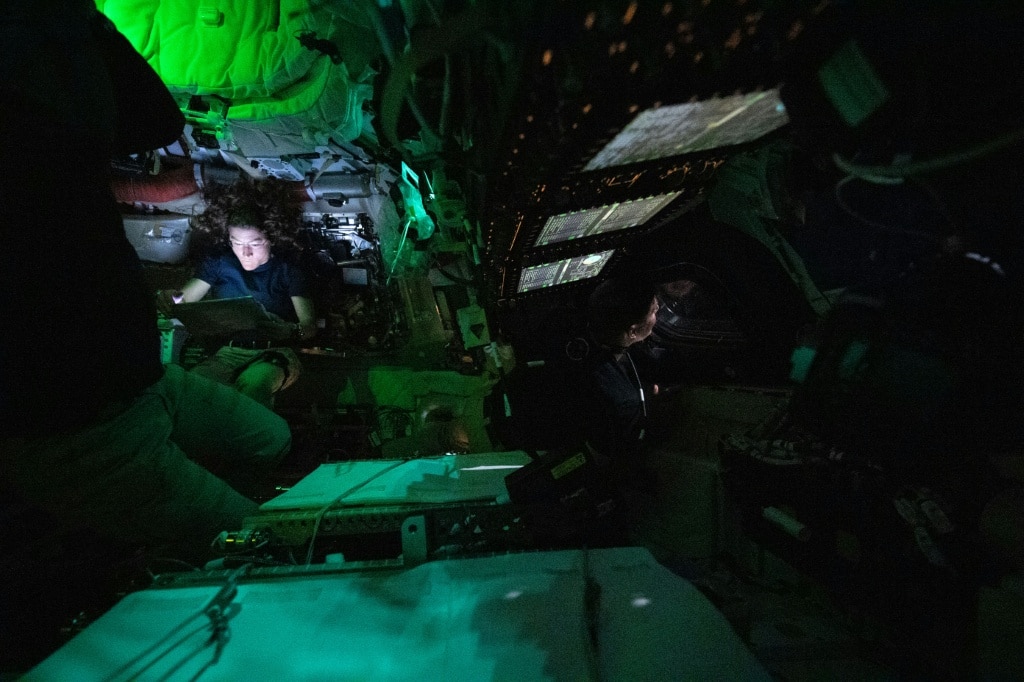
    Four astronauts aboard NASA’s groundbreaking Artemis II mission entered their fifth day of lunar exploration Sunday, having already captured unprecedented views of a massive lunar crater never before seen directly by human observers.

    As the crew woke to start their day on the 10-day voyage, NASA’s real-time mission dashboard placed the Orion spacecraft roughly 215,000 miles (346,000 kilometers) from Earth and 65,000 miles away from the Moon. The ceremonial wake-up call came from 90-year-old former Apollo 16 astronaut Charlie Duke, who walked on the lunar surface in 1972. In his message, Duke told the crew he had left a photograph of his family on the Moon, reminding them that people across the United States and the globe are rooting for their success, praising them for extending the historic legacy of the Apollo program through the Artemis initiative.

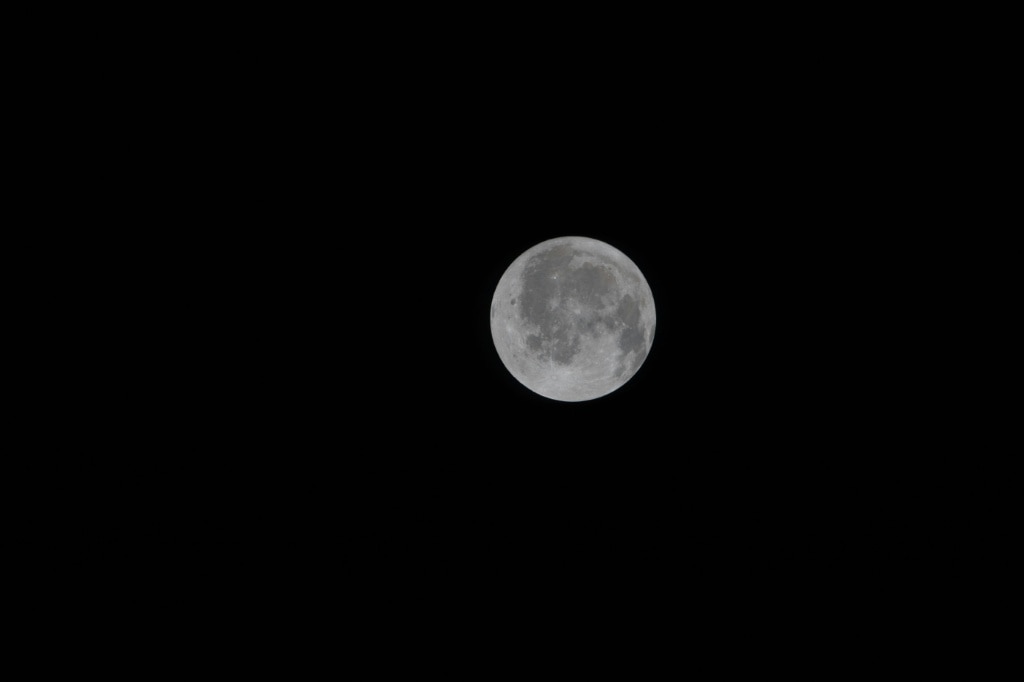
    Overnight Saturday into Sunday, NASA released a new image captured by the Artemis II crew showing the Moon from a distance, with the sprawling Orientale basin clearly visible. Space agency officials confirmed this marks the first time humans have ever viewed the entire massive basin with their own eyes. While previous orbital spacecraft have photographed the bullseye-shaped crater, which is often nicknamed the Moon’s “Grand Canyon,” no human mission has ever brought crew close enough to observe it directly. During a live question-and-answer session with Canadian schoolchildren hosted by the Canadian Space Agency, astronaut Christina Koch said the basin was the feature the entire team was most eager to see. “It’s very distinctive and no human eyes previously had seen this crater until today, really, when we were privileged enough to see it,” Koch told the young audience.

    The mission’s next major milestone is scheduled to occur between Sunday overnight and Monday, when the Orion capsule will enter the “lunar sphere of influence” — the zone where the Moon’s gravitational pull becomes stronger than Earth’s pull on the spacecraft. If all systems continue to operate as expected, the four-person crew, made up of American astronauts Koch, Reid Wiseman and Victor Glover, plus Canadian astronaut Jeremy Hansen, will break a decades-old space record as they swing around the Moon, becoming the humans that have traveled the farthest distance from Earth in history.

    So far, the crew has already checked off key mission objectives, including completing a manual piloting exercise and conducting a full review of their lunar flyby plan, which outlines the surface features they will document and photograph during their pass. In a televised interview with CNN Sunday, NASA chief Jared Isaacman explained that core priority of this mission is to test the Orion spacecraft’s critical systems ahead of future crewed landings. “We’re focusing very much on the ecosystem, the life support system of the spacecraft,” Isaacman said. “This is the first time astronauts have ever flown on this spacecraft before. That’s what we’re most interested in getting data from.”

    For the fifth day of the mission, NASA’s schedule calls for comprehensive testing of the crew’s bright orange emergency survival suits, which are worn during launch and re-entry and designed to protect the crew in crisis scenarios including cabin depressurization. The testing protocol will walk the crew through a full sequence of suit operations: donning and pressurizing the garments, running leak tests, simulating seat entry, and evaluating how easily the astronauts can move, eat and drink while wearing the suits.

    While the Artemis II crew will not land on the lunar surface during this test flight, their record-breaking distance milestone is expected to be reached over the next 24 hours, when the Orion capsule travels to the far side of the Moon. “They will eclipse that record, and we’re going to learn an awful lot about the spacecraft,” Isaacman noted, adding that the data collected on this mission will be critical for paving the way for future lunar missions, including the Artemis III landing currently scheduled for 2027 and the subsequent Artemis IV landing in 2028.

  • Trump draws criticism with fiery Easter message on Iran

    Trump draws criticism with fiery Easter message on Iran

    On the Christian holiday of Easter Sunday, U.S. President Donald Trump continued his characteristic polarizing public rhetoric with an aggressively worded social media attack targeting Iran that quickly drew condemnation from across the political spectrum. Posted to his Truth Social platform shortly after 8 a.m. local time, the message carried a blunt, expletive-laden demand: “Open the Fuckin’ Strait, you crazy bastards, or you’ll be living in Hell – JUST WATCH!”

    The post renewed Trump’s explicit threat to launch massive bombing strikes against Iranian power infrastructure and key river crossings if Tehran does not reopen the strategically critical Strait of Hormuz, a vital global chokepoint for oil and maritime trade. The president added the sardonic line “Praise be to Allah” to his Sunday message, mirroring the “Glory be to GOD!” he closed a separate threatening message with just one day prior.

    While Trump has long built a public brand around unfiltered, plainspoken communication, the timing and aggressive tone of the holiday post sparked widespread backlash, starting with top Democratic leaders on Capitol Hill. Senate Minority Leader Chuck Schumer took to X to condemn the outburst, arguing that on a day when Americans gathered for church services and family celebrations, the sitting president was instead lashing out like an unstable individual on social media. Schumer added that Trump’s threats amounted to inciting potential war crimes and alienated key U.S. global allies, noting that the country deserved far more thoughtful and stable leadership.

    Democratic Senator Chris Murphy of Connecticut, a longstanding opponent of military escalation with Iran, went even further, describing Trump’s language as “completely, utterly unhinged.” Murphy suggested that if he held a cabinet position in the Trump administration, he would spend Easter consulting constitutional scholars on invoking the 25th Amendment, the constitutional provision that allows for the transfer of executive power if the sitting president is deemed unfit to carry out their duties.

    Virginia Democratic Senator Tim Kaine also pointed out that this aggressive rhetoric is not an isolated incident. Since the U.S. and Israel launched military operations against Iran in late February, the 79-year-old president has repeatedly used excessively harsh language, Kaine noted, recalling earlier threats to “bomb them back to the Stone Age.” Appearing on NBC’s *Meet the Press*, Kaine called the outburst embarrassing and juvenile, framing it as performative tough guy posturing that masks a fundamental lack of coherent strategy or clear justification for the ongoing conflict.

    Criticism of the Easter message was not limited to Trump’s Democratic opponents. Even Marjorie Taylor Greene, the former Republican congresswoman who once counted herself among Trump’s most loyal allies but has since become a prominent critic, slammed the timing and content of the post. A vocal opponent of U.S. military intervention overseas, Greene argued on X that every self-identified Christian in the Trump administration should beg God for forgiveness, abandon their unwavering loyalty to the president, and intervene to stop what she called Trump’s madness. She added that Trump is not a Christian, and his words and actions should not receive support from Christian believers.

    Not all reaction to the message was negative, however. A small handful of Trump’s most hardline conservative supporters applauded the fiery rhetoric. Laura Loomer, a provocative right-wing commentator who maintains regular contact with Trump and has openly identified as an Islamophobe, hailed the post. “This is what I voted for,” she wrote on X. “Bomb jihadis back to the Stone Age where their mentality permanently lives. Trump said he’s going to bomb their infrastructure in Iran, and then he said ‘Praise be to Allah’. On Easter. Amazing. Just amazing.”

  • War in the Middle East: latest developments

    War in the Middle East: latest developments

    The fragile stability of the Middle East has crumbled further in the past 48 hours, with a cascade of military strikes, conflicting claims over a high-stakes rescue mission, and shifting energy policy roiling the already volatile region. What began as long-simmering cross-border clashes has erupted into broader confrontations that threaten to draw global powers into open conflict, with multiple interconnected developments unfolding across Iran, Israel, Lebanon and the Persian Gulf.

    One of the most high-profile rifts opened between the United States and Iran, centered on control of the Strait of Hormuz — the world’s most critical chokepoint for global oil shipments. Former President Donald Trump, in a profanity-laced social media post, issued an extreme threat to Tehran, promising “hell” and pledging targeted strikes on Iranian bridges and power plants if Iran did not reopen the strategic waterway by his self-imposed Monday deadline. Speaking to Fox News shortly after the post, Trump softened his tone slightly, saying he believed a negotiated deal with Iran remained achievable, but added that he was prepared to “blow everything up and take over the oil” if no agreement was reached.

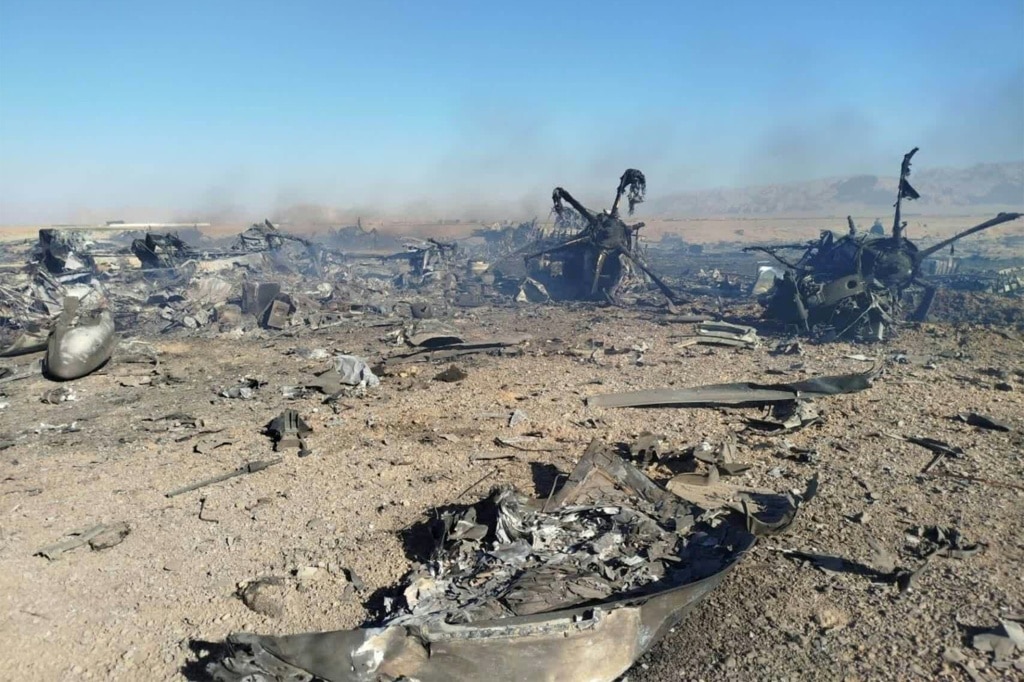
    Parallel to the Hormuz standoff, a contentious cross-border rescue operation deep inside Iranian territory has deepened mistrust between Washington and Tehran. The U.S. says a rescue mission conducted by American commandos recovered a missing airman whose F-15 fighter jet had crashed in Iranian territory, with Trump hailing the operation as “daring” and “miraculous”. Trump added that dozens of U.S. aircraft participated in the mission, and that the recovered airman had been seriously wounded. Iranian military officials have issued a starkly contradictory account, claiming the entire U.S. operation was “completely foiled”. Iranian military spokesperson Ebrahim Zolfaghari claimed two U.S. C-130 transport planes and two helicopters were destroyed during the incursion. U.S. mainstream outlets including The New York Times and CBS later corroborated parts of the Iranian account, reporting that two U.S. aircraft that became stranded at an abandoned airport in Iran’s southern Isfahan province were destroyed by American forces to prevent them from falling into Iranian custody.

    Military strikes have targeted key infrastructure across multiple countries in the region. A joint U.S.-Israeli airstrike hit the Qasem Soleimani International Airport in southwestern Iran, according to Iranian state media. Across the border in Lebanon, the Israel Defense Forces launched a new wave of strikes on the capital Beirut and its southern suburbs, targeting what it described as key infrastructure sites belonging to the Iran-backed militant group Hezbollah. Lebanese official data confirms the strikes killed at least four people and wounded 39 more. Further south in Lebanon, an Israeli airstrike on the town of Kfar Hatta — which Israeli officials previously ordered residents to evacuate — killed seven people, including an entire family of six who were waiting on the street for a relative to pick them up, Lebanese civil defense sources told Agence France-Presse. Following an Iranian attack on energy and civilian infrastructure across the Gulf, damage has been reported in three Gulf states: the United Arab Emirates, Bahrain and Kuwait. Kuwait’s state petroleum company reported “severe” damage to the country’s oil and petrochemical facilities caused by Iranian drones, while Abu Dhabi officials confirmed they were working to extinguish fires at a petrochemical plant sparked by falling drone debris.

    On the energy front, the OPEC+ alliance of major oil-producing nations announced a policy shift, agreeing to raise collective production quotas by 206,000 barrels per day starting in May. The cartel issued a stark warning alongside the quota hike, noting that repairing energy infrastructure damaged by recent regional attacks is both extremely costly and time-consuming, meaning disruptions to global oil supplies could persist for months or even years. OPEC+ also emphasized the “critical importance” of keeping global maritime trade routes open to ensure the uninterrupted flow of global energy supplies. Even as military tensions climb, limited diplomatic outreach continues: Oman’s state news agency confirmed that Omani and Iranian officials held talks focused on easing shipping restrictions through the Strait of Hormuz, with technical experts from both sides putting forward a range of proposals to de-escalate the standoff over the waterway.

    International voices have begun calling for de-escalation, with Pope Leo XIV issuing a urgent plea for peace in his first Easter blessing as pontiff, addressing thousands gathered in St. Peter’s Square. The pope condemned growing global indifference to the violence, saying “We are growing accustomed to violence, resigning ourselves to it, and becoming indifferent. Indifferent to the deaths of thousands of people.” He called directly on leaders with the power to authorize military action to “choose peace” over conflict. The shadow of war has even fallen over one of Christianity’s holiest sites: Israeli security forces imposed new access restrictions on the Church of the Holy Sepulchre in annexed East Jerusalem, the site where Christian tradition holds Jesus was crucified, buried and resurrected. On what is normally one of the busiest days of the year for the Old City, the usually crowded alleyways were silent on Easter Sunday, the holiday overshadowed by ongoing regional conflict.

  • Trump threatens ‘hell’ for Iran over Strait of Hormuz

    Trump threatens ‘hell’ for Iran over Strait of Hormuz

    Escalating tensions across the Middle East have reached a new boiling point, after former U.S. President Donald Trump issued fiery, explicit threats against Iran over its blockade of the strategically critical Strait of Hormuz, paired with revelations of a high-stakes U.S. search and rescue mission that extracted a wounded American airman from inside Iranian territory.

    In a incendiary post shared on his Truth Social platform Sunday, Trump demanded Iran immediately reopen the key oil and gas shipping lane, which Tehran has effectively closed amid the ongoing regional conflict that began with joint U.S.-Israeli strikes on Iran in late February. “Open the Fuckin’ Strait, you crazy bastards, or you’ll be living in Hell,” Trump wrote. He went on to warn that Tuesday would bring coordinated U.S. strikes on Iranian power plants and bridges, declaring “There will be nothing like it!!!” In a subsequent interview with Fox News, however, Trump softened his tone slightly, noting he saw a “good chance” Iran would agree to a diplomatic resolution on the Hormuz issue by Monday.

    The threats came just after Trump announced what he called one of the most daring rescue operations in U.S. history: the extraction of a seriously wounded U.S. airman from deep inside Iran’s mountainous interior. Multiple U.S. media outlets have since shed light on the risky mission, revealing the airman, a weapons systems officer, was equipped with a sidearm, location beacon and encrypted communications device to coordinate with rescue teams. According to reports from The New York Times and CBS, two aircraft intended to extract the airman and his rescuers became stuck at a remote Iranian base, forcing U.S. forces to destroy the planes to prevent sensitive technology from falling into Iranian hands. Three additional transport planes were ultimately used to successfully pull the team out of the country.

    Iran’s account of the operation differs sharply from the U.S. narrative. Tehran says it foiled the mission, which it claims made use of an abandoned airport in Iran’s southern Isfahan province, and released footage showing charred, smoking aircraft wreckage scattered across a desert area. Iranian state media reports five people were killed in strikes connected to the operation, and the Iranian military claims it destroyed four U.S. aircraft involved in the mission. Tehran has not explicitly denied that U.S. forces successfully extracted the airman, however. Trump also confirmed the operation marked the second successful rescue of an American service member in as many days, noting the first mission was kept secret to avoid endangering the second.

    Conflicting reports also surround the downing of the American fighter jet the airman ejected from. Iran says its forces shot the plane down, a claim U.S. media has repeated, though the Trump administration has not publicly confirmed the detail.

    The harsh exchange over the rescue operation comes as the broader regional war, which entered its third month after launching February 28, continues to expand and disrupt global markets. After opening the conflict with joint strikes, Iran responded by blocking the Strait of Hormuz — a passage through which roughly a fifth of the world’s oil supplies pass — and launching retaliatory strikes against Israel and its Gulf allies. On Sunday alone, Iran targeted critical infrastructure across the Gulf, damaging civilian facilities in the United Arab Emirates, Bahrain and Kuwait. Pro-Iran armed groups also launched two separate attacks on U.S. diplomatic sites in Baghdad overnight, the U.S. embassy confirmed.

    Diplomatic efforts to de-escalate tensions over the Strait of Hormuz are already underway, however. Reports indicate Omani and Iranian deputy foreign ministers have held recent talks focused on reopening the shipping lane to commercial traffic.

    For many ordinary Iranians, though, Trump’s stark threats have so far failed to disrupt daily life. In interviews with AFP on the ground in Tehran, residents appeared largely indifferent to the rhetoric. In a large western park, young Iranians gathered for picnics, played frisbee to techno music, and flew kites near the city’s iconic Milad Tower, going about their weekend routines as usual.

    The conflict has spread steadily to neighboring Lebanon, where the Iran-backed Hezbollah movement has traded near-daily strikes with Israel since the war began. Israel has responded with counter-strikes and deployed ground forces into southern Lebanon. An Israeli strike on the southern Lebanese village of Kfar Hatta Sunday killed a family of six who were waiting to evacuate, alongside a relative who had arrived to pick them up, a Lebanese civil defense source told AFP. A second Israeli strike on southern Beirut killed at least four people, Lebanon’s health ministry confirmed.

    The ongoing violence has also upended religious celebrations across the region. For Christian minorities marking Easter Sunday, the conflict cast a dark shadow over traditional observances. In Jerusalem’s Old City, normally bustling with pilgrims this time of year, silence reigned Sunday. Israeli security restrictions have limited access to the Church of the Holy Sepulchre, one of Christianity’s holiest sites, leaving many faithful unable to carry out their traditional Easter rites. “It’s very hard for all of us because it’s our holiday… It’s really hard to want to pray but to come here and find nothing. Everything is closed,” said 44-year-old pilgrim Christina Toderas, visiting from Romania. In his annual Easter blessing from the Vatican, the newly inaugurated Pope Leo XIV addressed the conflict directly, urging leaders with the power to end hostilities to “choose peace” and decrying global indifference to the “deaths of thousands of people” in the region.

    Tensions also spiked Saturday after a strike near Iran’s Bushehr nuclear plant killed a security guard. Russia, which helped construct the facility and continues to support its operations, condemned the strike as an “evil deed” and announced it would evacuate 198 Russian personnel from the site. Iranian Foreign Minister Abbas Araghchi issued a stark warning that continued strikes on the coastal plant could trigger catastrophic radioactive fallout that would threaten Gulf Cooperation Council capitals far more than Tehran, noting Bushehr sits much closer to Kuwait, Bahrain and Qatar than it does to the Iranian capital.

    Domestically, the Iranian government continues to crack down on dissent weeks after crushing a large wave of anti-government protests. Iran’s judiciary announced Sunday it had executed two men convicted of collaborating with the U.S. and Israel. Nationwide internet restrictions, implemented amid the unrest, have now stretched into the longest full-country blackout in Iran’s history, internet monitoring group NetBlocks confirmed Sunday.

  • ‘Choose peace’: Pope marks first Easter under cloud of Mideast war

    ‘Choose peace’: Pope marks first Easter under cloud of Mideast war

    In his inaugural Easter Sunday address as the supreme leader of the global Catholic Church, Pope Leo XIV delivered a urgent, impassioned call for global actors to prioritize peace amid the raging, region-spanning war that has reshaped life across the Middle East just months after his election to the papacy. Speaking to thousands of worshippers and pilgrims gathered in Vatican City’s St. Peter’s Square, the pontiff, who was chosen to succeed the late Pope Francis in May 2025, called out the growing global complacency toward violence that has settled over communities worldwide.

    “We are growing accustomed to violence, resigning ourselves to it, and becoming indifferent. Indifferent to the deaths of thousands of people,” Pope Leo told the assembled crowd. The conflict, which erupted on February 28 following joint U.S.-Israeli military strikes against Iran, has since escalated to draw in actors across the entire Middle East, sending shockwaves through global energy and commodity markets and severely disrupting economic activity worldwide. This year’s Easter celebrations, one of the holiest observances on the Christian calendar for the world’s 1.4 billion Catholics, have been overshadowed by the conflict from the Vatican to the Holy Land.

    Pope Leo, who has already established himself as one of the most prominent global voices calling for an immediate de-escalation of the conflict, revealed plans Sunday for a special prayer vigil to be held at the Vatican on April 11 focused on peace in the region. He also used the holiday address to pay tribute to his predecessor, Pope Francis, who made his final public appearance exactly one year prior on Easter Sunday, passing away just hours later. In a move that amplified his diplomatic pressure, the pontiff confirmed this week he had personally reached out to U.S. President Donald Trump to urge the administration to seek a diplomatic off-ramp to end the hostilities. Reflecting on the moral weight of the ongoing conflict, he added, “We live in a world ravaged by wars and marked by a hatred and indifference that make us feel powerless in the face of evil.”

    Thousands of kilometers away in Jerusalem, the heart of Christian worship, the holiday unfolded against a backdrop of eerie emptiness. The narrow, usually bustling alleyways of Jerusalem’s Old City stood silent, the area all but abandoned amid the expanding regional conflict that follows months of fighting in Gaza. Israeli security authorities have implemented harsh new restrictions on access to the Church of the Holy Sepulchre, the site where Christian tradition holds Jesus Christ was crucified and resurrected, citing ongoing security concerns. Only a small fraction of the usual number of worshippers were permitted to approach the sacred site, with police checkpoints deployed along all access routes to screen visitors. Every shop and business in the surrounding area shuttered for the holiday, deepening the pervasive sense of loss and disruption.

    For pilgrims who traveled thousands of miles to mark the holiday at the holy site, the restrictions have been devastating. “It’s very hard for all of us because it’s our holiday… It’s really hard to want to pray but to come here and find nothing. Everything is closed,” 44-year-old Romanian pilgrim Christina Toderas told reporters. Otmar Wassermann, a 65-year-old visitor who was turned away from the church, shared that he left the site feeling deeply frustrated by the disruption to the centuries-old tradition of open Easter worship.

    Cardinal Pierbattista Pizzaballa, the Latin Patriarch of Jerusalem, addressed the grim reality in his Easter Vigil homily delivered at the restricted site. “The doors are still closed,” he stated, referencing an incident just one week prior when Israeli police blocked him from holding a scheduled mass at the church, a move that sparked widespread international condemnation. In published excerpts of his sermon released by his office, he added, “The silence is almost absolute, broken perhaps by the distant sound of what war continues to sow in this holy and torn land.”

    The conflict has upended Easter celebrations across every corner of the Middle East, home to some of the world’s oldest and most vulnerable Christian communities. In southern Lebanon, majority-Christian towns along the border with Israel are trapped between ongoing crossfire between Israeli forces and the Iran-backed Hezbollah movement. In the small border village of Debel, residents marked the holiday to the constant roar of artillery bombardment surrounding their community. The village is now almost completely cut off from basic services, with residents relying entirely on humanitarian aid deliveries to survive. “The situation is tragic,” local community leader Joseph Attieh told AFP via phone. “People are terrified, and the sound of shelling and gunfire has not stopped for a moment since last night. We haven’t been able to sleep. We are putting our trust in God, because this is the only glimmer of hope we will not give up on.”

    Further afield, the security risks of the conflict have forced Christian leaders to cancel or scale back traditional Easter observances. In Dubai, all public Easter masses have been suspended indefinitely as a security precaution. In Damascus, the capital of Syria, Catholic officials confirmed Easter celebrations would be limited to small, private masses following a recent deadly attack on a majority-Christian town in central Syria, leaving communities reeling.

  • War in the Middle East: latest developments

    War in the Middle East: latest developments

    The ongoing conflict across the Middle East has entered a new phase of widespread escalation, with fresh violence, diplomatic overtures, and global calls for peace unfolding across multiple nations over the past 24 hours.

    In his inaugural Easter address to thousands gathered in St Peter’s Square, Pope Francis delivered a stark rebuke of rising global violence, urging leaders holding the power to initiate conflict to prioritize peaceful resolution. “We have slowly grown numb to bloodshed, accepting violence as an unchangeable reality and becoming desensitized to the deaths of thousands of innocent people,” the Pope stated, a message that comes as regional casualty counts continue to climb.

    One of the deadliest recent incidents occurred in the southern Lebanese town of Kfar Hatta, where an Israeli airstrike took the lives of seven people, including an entire family of six. Lebanese civil defense sources confirm the family had gathered in the town, located 45 miles from the Israeli-Lebanese border, to await evacuation after Israeli orders to clear the area. This strike comes amid a broadening Israeli offensive against Hezbollah targets across Lebanon, including the capital Beirut. The Israeli military confirmed it launched a new wave of strikes on Beirut targeting what it calls Hezbollah infrastructure sites, with eyewitnesses on the ground reporting low-flying Israeli warplanes and missile impacts on residential buildings in the city’s southern districts.

    Tensions between the U.S. and Iran have also spiked following a high-stakes rescue mission for a downed U.S. fighter jet crew. U.S. President Donald Trump hailed the recovery of the missing airman in what he called a “daring” special operations mission, noting the service member was injured but expected to make a full recovery. A second crew member was rescued a day earlier. However, Iranian military spokesman Ebrahim Zolfaghari rejected Trump’s account, claiming the operation was “completely foiled” by Iranian forces, who he says destroyed two U.S. C-130 transport planes and two helicopters during the confrontation.

    Iran has also launched a widespread aerial campaign against Gulf nations aligned with Israel and the U.S., causing widespread disruption to critical energy and infrastructure facilities. In Bahrain, an Iranian drone strike ignited a large blaze at a storage tank operated by state energy giant Bapco Energies. While the fire has been fully contained and no injuries have been reported, the company confirmed assessments of structural damage are still ongoing. Across the border in the United Arab Emirates, Abu Dhabi emergency crews battled fires at a major petrochemical plant caused by falling debris from Iranian attacks. The facility has suspended all operations pending damage assessments, with no casualties reported to date. Iranian forces specifically targeted UAE aluminum production facilities, according to statements from the UAE’s defense ministry, which confirmed its air defense systems are actively intercepting incoming missile and drone threats. Further north, two of Kuwait’s power and water desalination plants were damaged in an Iranian drone strike, forcing the shutdown of two major electricity generating units. No casualties have been reported in the Kuwaiti attack.

    Hezbollah, the Lebanese militant group, announced it had conducted its first cruise missile strike on an Israeli warship off the Lebanese coast, a significant escalation of cross-border hostilities. The Israeli military however said it had no confirmation of the attack taking place.

    On the Iranian domestic front, a record-breaking national internet shutdown has entered its 37th day, making it the longest sustained nationwide internet blackout ever recorded globally, according to internet monitoring group NetBlocks. In a separate development, U.S.-Israeli joint strikes killed five members of Iran’s Islamic Revolutionary Guard Corps in the country’s northwestern Ardabil province, Iranian state news agency IRNA confirmed.

    Amid the escalating violence, diplomatic efforts are still underway to de-escalate key flashpoints. Oman and Iran held bilateral talks focused on securing safer freedom of navigation through the strategic Strait of Hormuz, a critical chokepoint for nearly 20% of the world’s daily oil supplies, Omani state media reported Sunday. Both sides’ technical experts put forward a series of proposals to ease tensions around the strait, according to the agency. Lebanese President Joseph Aoun has also reiterated his call for urgent negotiations with Israel, saying he seeks to prevent southern Lebanon from suffering the same level of widespread destruction that Gaza has endured. “It is an open secret that Israel intends to replicate the Gaza campaign in southern Lebanon,” Aoun said in a national televised address following the launch of expanded Israeli airstrikes and ground operations in southern Lebanon.

  • Artemis astronauts glimpse Moon’s ‘Grand Canyon’ ahead of historic lunar flyby

    Artemis astronauts glimpse Moon’s ‘Grand Canyon’ ahead of historic lunar flyby

    Nearly five decades after the last Apollo lunar mission, humanity is once again on the cusp of a groundbreaking space milestone. Four astronauts traveling aboard NASA’s Orion capsule as part of the Artemis II mission have already captured never-before-seen views of the Moon’s surface, even before completing their highly anticipated close lunar flyby, the U.S. space agency confirmed Sunday.

    By the end of their fourth day in orbit, the 10-day mission had passed its two-thirds completion mark. Per NASA’s real-time mission tracking dashboard, the crew was positioned roughly 200,000 miles from Earth and 82,000 miles from the Moon as they ended their workday Sunday. The handout image released by NASA, taken by a crew member earlier that day, reveals the massive Orientale Basin—nicknamed the Moon’s “Grand Canyon”—stretching across the distant lunar surface, a sight no human had ever witnessed directly before this mission.

    “This mission marks the first time the entire basin has been seen with human eyes,” NASA stated in an official release. While orbiting robotic probes have previously photographed the bullseye-shaped impact crater, the crater formed by an ancient asteroid collision has only now been observed by human vision.

    During a live public Q&A session with Canadian schoolchildren hosted by the Canadian Space Agency, mission specialist Christina Koch shared the crew’s excitement over the unprecedented view. “It’s very distinctive and no human eyes previously had seen this crater until today, really, when we were privileged enough to see it,” she said. Koch also added that the crew had already observed the Moon’s far side for the first time, describing the view as “absolutely spectacular.”

    The mission’s next key milestone is scheduled for overnight Sunday into Monday, when Orion will enter the Moon’s sphere of influence—the point where lunar gravity exerts a stronger pull on the spacecraft than Earth’s gravity. If all systems operate as planned, the flyby that follows will make history: the four-person crew, made up of Americans Reid Wiseman, Victor Glover, and Christina Koch, alongside Canadian Jeremy Hansen, will travel farther from Earth than any human in history.

    To prepare for the flyby, the crew has already completed a manual piloting test and a full review of their flight plan, which includes mapping and photographing key lunar surface features during their pass. The crew’s day-to-day operations have blended rigorous mission work with small, personal moments: the team began one recent day with a breakfast of scrambled eggs and coffee, woken by Chappell Roan’s hit pop song “Pink Pony Club,” and mission commander Wiseman noted that morale onboard remains high following a chance to video call his two daughters.

    “We’re up here, we’re so far away, and for a moment, I was reunited with my little family,” Wiseman told a live press conference. “It was just the greatest moment of my entire life.” Wiseman called the entire mission a Herculean feat, one humanity has not attempted in more than 50 years.

    Unlike the Apollo missions of the 1960s and 1970s, which orbited just 70 miles above the lunar surface, Artemis II will make its closest approach at roughly 4,000 miles from the Moon. This higher vantage point allows the crew to observe the entire circular face of the Moon, including polar regions never before seen by human observers. Crew members completed extensive geology training ahead of launch to help them identify and document key lunar features, from ancient lava flows to massive impact craters. The crew has even been permitted to use personal smartphones to capture imagery, a new policy approved by NASA for crewed spaceflights.

    Before the release of the Orientale Basin image, NASA had already published a stunning full portrait of Earth captured from Orion, showing the planet’s deep blue oceans and swirling cloud formations against the black of deep space.

    Artemis II serves as a critical crewed test flight for NASA’s broader Artemis program, which aims to establish a permanent sustainable outpost on the Moon as a stepping stone for future crewed missions to Mars. For the astronauts on board, however, the mission is also the fulfillment of decades-long dreams of space exploration, with crew member Jeremy Hansen describing the simple joy of floating in microgravity: “It just makes me feel like a little kid.”

  • Girls dies following horror ATV rollover in Adelaide

    Girls dies following horror ATV rollover in Adelaide

    A devastating off-road accident on the outskirts of Adelaide has claimed the life of a young child, just 48 hours after the all-terrain vehicle she was riding in flipped, leaving her critically injured. The incident unfolded on Friday afternoon at a private property in Yattalunga, a semi-rural community on Adelaide’s northern fringe, when the recreational vehicle overturned in an open paddock while carrying three people.

    As the only critically injured person in the crash, the young girl, who was riding as a passenger on the ATV, was rushed by emergency responders to a nearby major Adelaide hospital for urgent treatment. Despite medical teams’ efforts to stabilize her and address her severe injuries, South Australian Police confirmed on Sunday that the child had passed away from complications related to the crash.

    Two other people involved in the rollover — an adult woman and a second child — escaped with only minor physical harm. They were also transported to hospital for evaluation and treatment of their non-life-threatening injuries.

    Authorities have launched a formal investigation into the circumstances of the fatal crash, with the South Australian Police Major Crash Investigation Unit taking lead on the case to determine what caused the vehicle to lose control and overturn, and whether any safety protocols were violated during the recreational outing.

    The report of the incident was originally prepared by court reporter Steve Zemek for NCA NewsWire. Zemek, a Queensland native who got his start in regional Australian journalism, joined the outlet in 2020 after transitioning from sports reporting to court and general news coverage.