标签: Oceania

大洋洲

  • Mother with $320k stolen Lego haul stashed in her shed learns court fate

    Mother with $320k stolen Lego haul stashed in her shed learns court fate

    In a case that has captured public attention across South Australia, a 34-year-old mother of three has avoided a custodial prison sentence despite being convicted for possessing a massive cache of stolen Lego worth an estimated $320,000, hidden in the garden shed of her former Adelaide home.

    Dai Truong, a Vietnamese national currently residing in Devon Park, entered guilty pleas last week to four criminal charges brought against her: one count of unlawful possession of stolen property, and three separate counts of dealing with property without the owner’s consent. The charges stem from a police search warrant executed at Truong’s former Dudley Park residence on March 31 this year. When officers arrived at the property, they uncovered an enormous stockpile of unopened, brand-new Lego sets spanning popular franchises from Star Wars to Disney, all stashed out of sight in the backyard shed.

    The sheer scale of the stolen haul was extraordinary: authorities required 15 full pallets and two large horse boxes to transport all the seized Lego sets away from the property. While the court did not receive evidence detailing the full origin of the entire massive cache, Truong confessed to direct involvement in three individual thefts carried out at the same Kmart location, and admitted that all the Lego found in her shed was stolen property.

    Court documents outline that Truong carried out the three small-scale thefts weeks apart from one another, sneaking Lego boxes out of the Kmart branch at Marion Shopping Centre by hiding them in the bottom storage compartment of her child’s pram. She only took a small number of sets per incident, and the combined value of these three thefts amounts to just $1,774 – a tiny fraction of the total $320,000 worth of Lego seized by police.

    One week after entering her guilty pleas, Truong appeared before Port Adelaide Magistrates Court for sentencing. Despite prior warnings that a prison term was a likely outcome, Magistrate Aaron Almedia opted to grant a home detention order instead of immediate custody, allowing Truong to serve her sentence at her current Devon Park residence.

    For the charge of unlawful possession covering the entire cache, Truong received an initial seven-month prison sentence, which was reduced to four months and six days to account for her early guilty pleas. In addition to the home detention order, the magistrate ordered Truong to pay $1,774 in compensation to Kmart Marion to cover the value of the three sets of Lego she directly stole, plus an additional $1,112 in victim-of-crime levies to the court.

  • ‘Game has certainly changed’: Storm make key adjustments for battling Bulldogs

    ‘Game has certainly changed’: Storm make key adjustments for battling Bulldogs

    As two National Rugby League sides prepare for a rare Sydney-based faceoff this Friday night, a Melbourne Storm prop has highlighted striking parallels between his club’s catastrophic early-season losing run and the Canterbury-Bankstown Bulldogs’ current five-game losing skid.

    For five consecutive seasons, this fixture has been hosted at Melbourne’s AAMI Park, but this week will mark the first time since 2021 that the two teams will take the field at Sydney’s Accor Stadium. Both squads will be missing key core players, who are sidelined for State of Origin representative duty, creating an unpredictable edge to the matchup.

    The Bulldogs have plummeted down the ladder in recent weeks, dropping every match since their standout upset win over the league-leading Penrith Panthers in Round 6. For Melbourne, by contrast, a pair of back-to-back wins over the Wests Tigers and Parramatta Eels have pulled the club out of a historic seven-game losing streak that left many long-time Storm fans stunned.

    With the season fast approaching its halfway mark, the loser of this Friday’s contest will slip into the competition’s bottom four. For Canterbury, the pressure is particularly intense: the side has failed to break the 20-point barrier in four straight outings, even with Melbourne set to be without star spine players Cameron Munster and Harry Grant for the clash.

    Speaking to reporters ahead of the game, Storm prop Josh King, a key part of Melbourne’s recent turnaround, drew clear comparisons between the two sides’ current and past form slumps. “I haven’t watched too much of them this year, but it looks a lot like us,” King explained. “I’m still really confident – and I have been really confident – in our team, but we’ve struggled in a few areas in the game. I assume they’ve been working on different things and trying to figure it out, so I’m expecting nothing less than a really competitive game and for them to come out firing because they’re quite a physical team.”

    After their unprecedented seven-game losing run, Craig Bellamy’s Melbourne side has begun showing glimpses of the form that carried the club to back-to-back NRL grand finals over the past two seasons. Though they currently sit in 13th place on the ladder, the Storm have yet to take their scheduled bye this season, and are still adapting to sweeping changes to referee rule interpretations that have reshaped the look of top-flight rugby league in 2024.

    King noted that the back-to-back wins have done more than just lift the club up the ladder – they have injected much-needed confidence into Melbourne’s younger playing group, many of whom had not experienced consistent winning results at the top level before this run.

    “It’s nice getting back in the winners’ circle,” King said. “In the overall season, we’re still not going too great with the start of the year that we had, but two wins on the trot gives some belief to the younger guys who probably haven’t experienced much winning in the past with the team.”

    The Storm veteran added that subtle tactical and focus adjustments over the past fortnight have been the driving force behind the club’s recent improvement, after the side struggled to adapt to the new-look game under updated referee guidelines. “We’ve changed a few things in the last couple of weeks and shifted our focus to a few different areas, and I think that’s really worked for us and been really helpful,” he said. “There has been a growing period and understanding that the rules aren’t too different, but the game has certainly changed. In the last 12 months you can definitely feel it on the field and the influence that the referees have on the game. Adjusting to a few of those things and getting back to our old ways has helped.”

    King also pointed out that integrating new playing personnel and building new combinations forced the club to reset and rebuild their core on-field foundations, a process that is finally starting to deliver results after a rocky start to the campaign. “We probably didn’t realise that getting a few new players and a few different combinations meant we needed to get back to our foundations and strengthen those up a little bit. I think we’ve had a bit of success with that in the past few weeks,” he added.

  • RBA sees ‘space’ to avoid fourth consecutive rate hike at June meeting

    RBA sees ‘space’ to avoid fourth consecutive rate hike at June meeting

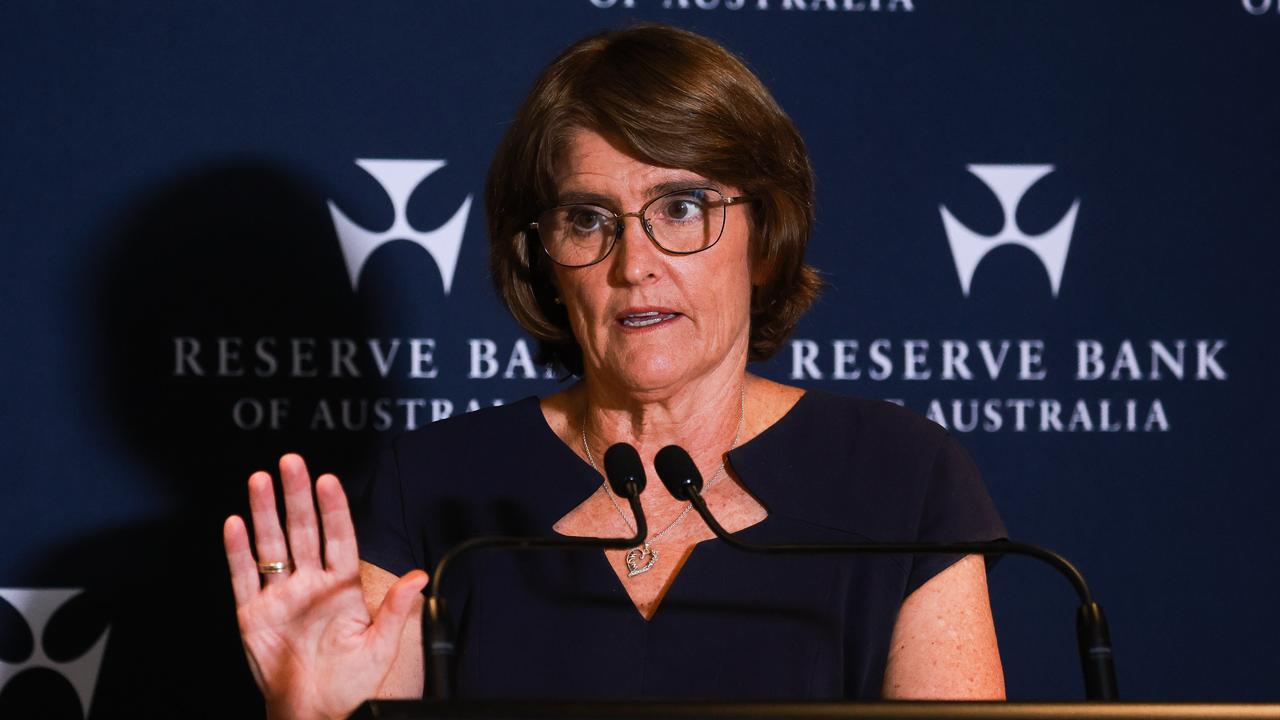
    Newly released minutes from the Reserve Bank of Australia’s May monetary policy board meeting have revealed policymakers see clear room to hold interest rates steady next month, breaking a streak of three consecutive rate hikes that kicked off 2026.

    At the early May gathering, a majority of 8 out of 9 board members voted in favor of a 25-basis-point hike that pushed the official cash rate to 4.25%, leaving the current benchmark at that level heading into June. The meeting’s deliberations, made public on Tuesday, center on balancing persistent above-target inflation with growing economic uncertainty triggered by the ongoing Middle East conflict.

    The minutes note that even before the conflict escalated, inflation had run far above the RBA’s 2-3% target range. However, the regional instability has delivered a sharp, unanticipated shock to the global economic outlook, driving up fuel prices and creating new near-term inflationary pressures that monetary policy is powerless to mitigate in the short term.

    “Having decided by majority to raise the cash rate target by 25 basis points, members considered what their deliberations implied for upcoming decisions … (they) agreed that the decision would give the board space to see how the conflict in the Middle East develops and Australian households and businesses respond,” the minutes read.

    Across multiple scenarios tied to the conflict’s trajectory, underlying inflation is projected to remain above the RBA’s target for an extended period. Policymakers emphasized that keeping monetary policy restrictive remains critical to preventing broader, long-lasting inflationary spillover from energy cost shocks and keeping medium- to long-term inflation expectations anchored. The RBA’s current baseline forecasts project headline inflation will return to the target range by mid-2027, with less volatile underlying inflation hitting the 2-3% band by mid-2028. That outlook, however, hinges on two key assumptions: a rapid resolution of the Middle East conflict that pulls oil prices lower, and a gradual easing of domestic capacity pressures across the Australian economy.

    Speaking at a Sydney Bloomberg forum on the same day the minutes were released, RBA Chief Economist Sarah Hunter added new context to the central bank’s outlook, noting policymakers are closely monitoring the housing market for cooling effects following changes to negative gearing and capital gains tax discounts announced in the recent federal budget. Hunter confirmed the RBA expects the pace of dwelling construction activity to slow over the forecast horizon, a trend consistent with the cumulative impact of previous rate hikes. Higher energy prices have already eroded Australian households’ real incomes, she added, a headwind that will likely weigh heavily on consumer spending in coming months. Hunter stressed that significant uncertainty remains around the inflation outlook: oil prices could stay elevated far longer than current market pricing suggests, and a wider escalation of the Middle East conflict could trigger prolonged global supply chain disruptions that push inflation even higher.

    The RBA’s cautious, wait-and-see approach has drawn criticism from some market analysts, who argue the central bank has repeatedly fallen behind the curve on tackling inflation. Marc Jocum, a strategist at Global X ETFs, argued that the RBA’s delayed response to persistent inflation has forced the stop-start pattern of rate adjustments this year, after rate cuts in 2025. Jocum noted that February inflation data and April cost pressures already made clear that broader inflationary pressure was spreading through the Australian economy months ago. “The RBA is again arriving late to the party, like a pilot announcing turbulence after passengers have already spilt their drinks on board,” he said. “The RBA no longer needs a telescope to spot the inflation iceberg, as it’s now right in front of them.” While he acknowledged the Middle East conflict was an unforeseen shock that upended projections, Jocum said the RBA’s inconsistent policymaking raises questions about the central bank’s credibility, making it harder for households and businesses to plan for future economic conditions.

    The dissenting board member who voted against the May hike shared concerns over downside demand risks, arguing that domestic capacity pressures were weaker than RBA staff projections suggested and that the risk of inflation expectations becoming unanchored was overstated.

    Major bank economists have broadly aligned with the RBA’s signal that a June pause is the most likely outcome. Commonwealth Bank forecasts the RBA will hold rates steady for the remainder of 2026, with senior CBA economist Ashwin Clarke noting the minutes confirm the central bank wants time to assess the impact of three consecutive hikes and the ongoing Middle East conflict before moving again. While CBA expects rates to remain on hold over the next year, Clarke added that risks to the rate path remain tilted to the upside.

    ANZ’s economics team also shares the view that a June rate hike is increasingly unlikely, and projects the RBA will hold the cash rate steady at 4.35% for an extended period. “The board thinks that financial conditions are tight but is uncertain on the extent of this and so is in more of a ‘wait and see’ mode with respect to developments, both with domestic activity and the Middle East conflict,” ANZ’s economists noted. Market consensus currently leans toward a pause in June, with a small share of analysts still projecting one final rate hike by November to bring inflation under control faster.

  • World Cup glory attracts superstar coaches into international battle

    World Cup glory attracts superstar coaches into international battle

    For years, top-tier club football has outcompeted international football for elite coaching talent, its unmatched salary packages and consistent exposure drawing the sport’s biggest names away from national team roles. But the 2026 FIFA World Cup is breaking that pattern, pulling five of the most respected coaches in the global game away from lucrative club positions to chase the one honor that no club success can match: World Cup glory.

    Thomas Tuchel, the German manager who lifted the Champions League with Chelsea and won domestic titles across Europe’s top leagues with Paris Saint-Germain and Bayern Munich, is the latest high-profile hire for the English Football Association. Tasked with ending England’s 58-year drought for a major men’s senior tournament title stretching all the way back to their iconic 1966 World Cup win, Tuchel takes over from Gareth Southgate, who came closer than any other England manager in modern history to breaking the drought – leading the Three Lions to two European Championship finals and a World Cup semi-final. Still, Southgate faced persistent criticism over his in-game decision-making and tactical flexibility in high-stakes knockout matches. While Tuchel’s club-level resume is far more decorated than Southgate’s, questions hang over how his demanding, detail-oriented style will adapt to the unique rhythms of international tournament football. A particular challenge will be managing an England squad already worn down by the relentless, congested schedule of English domestic football ahead of the 2026 tournament, which will be held in North America’s summer heat.

    Across the Atlantic, Brazil’s Selecao has turned to another European club legend to end its own 24-year wait for a sixth World Cup title. Carlo Ancelotti, the most successful manager in Champions League history with five trophy wins, has taken the helm after Brazil repeatedly fell to European opposition in late-stage World Cup knockout rounds over the past two decades. The Italian veteran brings unmatched experience navigating high-pressure knockout football, and already has an existing working relationship with Brazil’s biggest star: Vinicius Junior, who produced the best form of his career playing under Ancelotti at Real Madrid. This current Brazil side lacks the innate attacking flair that defined the nation’s legendary tournament-winning squads of the past, making a top-tier performance from Vinicius all the more critical if they are to lift the trophy again. Ancelotti’s famously calm demeanor and ability to manage big egos also make him well-suited to steady the often emotionally charged environment surrounding Brazil’s national team in their quest for global supremacy.

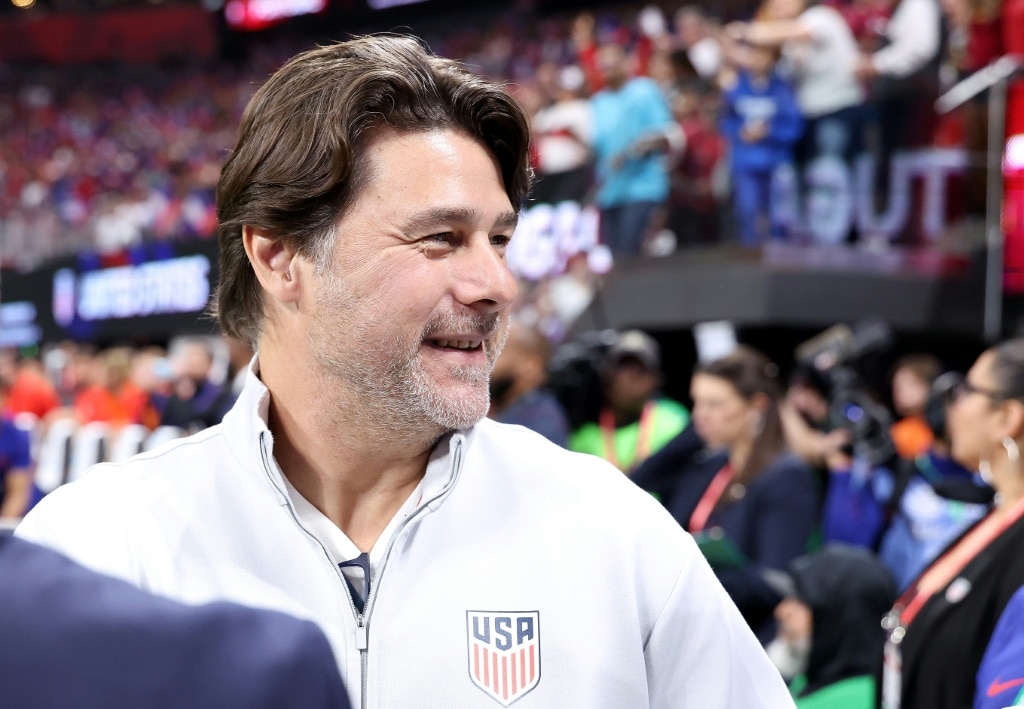
    For the United States men’s national team, Mauricio Pochettino’s tenure ahead of 2026 has already been a rocky road. The Argentine manager has held the post for two years, but limited competitive match play has left his progress untested – and underwhelming results have drawn sharp criticism. Under Pochettino, the US failed to claim either the CONCACAF Gold Cup or Nations League titles, suffering embarrassing home losses to regional rivals Panama, Mexico, and Canada. A brief spark of optimism followed impressive friendly wins over Uruguay and Japan, but that momentum was quickly snuffed out by lopsided defeats to Portugal and Belgium in March 2025, leaving the host nation’s campaign still searching for momentum ahead of the tournament.

    Uruguay turned to a revolutionary figure in modern coaching to lead their 2026 push: Marcelo Bielsa, the Argentine tactician whose high-pressing, attacking style has influenced generations of top managers from Pep Guardiola to Pochettino himself. This tournament marks Bielsa’s third time leading a different national side at a World Cup, and likely his final chance to claim global glory. Early qualifying wins over continental powerhouses Brazil and Argentina sparked widespread optimism around his appointment, but familiar cracks that have marked his club career have begun to show. Many of his young Uruguayan squad have struggled to meet Bielsa’s famously strict physical and tactical demands, and tensions boiled over after Luis Suarez retired from international football, revealing that Bielsa’s harsh half-time criticism reduced star striker Darwin Nunez to tears following a 2-0 qualifying win over Argentina. Results have also slipped in recent months, with Bielsa himself admitting he was “ashamed” after a 5-1 friendly defeat to the United States last November. Bielsa’s international history is mixed: his native Argentina crashed out in the group stage at the 2002 World Cup, but he guided Chile to the knockout round at the 2010 South Africa tournament.

    Rounding out the list of elite hires is 38-year-old Julian Nagelsmann, who took charge of Germany after a three-tournament run of disastrous results for Die Mannschaft between 2018 and 2024, which included consecutive group stage exits from the World Cup and three straight tournaments without a knockout victory. Nagelsmann has already restored pride to the national side, and narrowly missed out on Euro 2024 glory on home soil, falling to eventual tournament winners Spain in the quarter-finals. Widely expected to return to club coaching after the 2026 World Cup, this is Nagelsmann’s only shot to lead Germany to a record-equaling fifth World Cup title. Complicating his task, Germany’s key attacking trio – Florian Wirtz, Jamal Musiala, and Kai Havertz – all struggled through poor form or injury problems during the most recent club season, leaving their fitness and sharpness in question for the summer tournament.

  • Love, lust and gnomes as top UK flower show bursts into bloom

    Love, lust and gnomes as top UK flower show bursts into bloom

    The 2026 edition of the UK’s most prestigious horticultural event, the RHS Chelsea Flower Show, opened this week in London, blending centuries of gardening tradition with boundary-pushing modern themes, ambitious sustainability projects and unexpected playful touches that have drawn crowds and sparked conversation across the country. Opening its gates to the public starting Tuesday, the five-day event is projected to welcome more than 150,000 attendees, with all tickets sold out weeks in advance — a testament to the enduring public love for the iconic show, which has been hosted at the Royal Chelsea Hospital on the banks of the River Thames since 1913.

    Clare Matterson, director of the Royal Horticultural Society (RHS), framed the 2026 event as a particularly vital celebration of green spaces at a moment of global uncertainty. “We’ve never needed the joy of gardening, the power of plants for our planet or the peace of simply sitting in a garden, more,” she shared in an official opening statement.

    Thirty custom-designed gardens are competing this year for the show’s coveted annual awards, with exhibits running the gamut from tranquil community-focused spaces to provocative, conversation-starting installations. Turning heads and stirring mild controversy is standout exhibit *Aphrodite’s Hothouse*, a bold reimagining of floral display that designer James Whiting describes as a theatrical celebration of love and lust. Marked by pendulous, heart-shaped and suggestively sculpted blooms, the lush, fragrant indoor garden also includes discreet nods to adult intimacy in the form of small sex toys — a choice that has drawn pushback from some traditional gardening circles, which Whiting has openly dismissed.

    “People are excited to see something a bit fresh… and to see the RHS opening the doors to more modern topics,” Whiting told reporters from Agence France-Presse, arguing that the theme is inherently organic to horticulture. “Flowers are all about sex. So why not bring that to the Chelsea Flower Show?” he added, noting that this year’s show features a growing cohort of young, innovative new wave gardeners pushing the boundaries of the traditionally genteel hobby.

    Beyond the bold provocative displays, many 2026 exhibits center on themes of conservation, sustainability and community impact, carrying on the show’s growing focus on environmental action. One standout exhibit from the Campaign for Protection of Rural England, designed by Sarah Eberle, features a massive sculpture of the sleeping Greek goddess Gaia — or Mother Nature — carved entirely from fallen native trees. Titled *Garden on the Edge*, the installation emphasizes the natural world’s innate power of regeneration and protection, highlighting joy to be found in ordinary natural spaces. After the show closes, the entire garden, including the Gaia sculpture, will be relocated to a new communal public park for a housing estate in northern Sheffield, extending its impact far beyond the Chelsea showgrounds.

    Another sustainability-focused exhibit, the *Bring Me Sunshine* garden, is built to become a permanent part of the UK’s second Eden Project, which is scheduled to open in 2028 in Morecambe, northwestern England. Built to highlight coastal ecosystem restoration, the garden is surrounded by a retaining wall constructed entirely from recycled waste materials: waste shells from clams, mussels and cockles, paired with reclaimed coastal limestone, creating a low-carbon alternative to traditional concrete. The space is planted entirely with native edible coastal species from the Morecambe Bay area, including samphire, which is making its debut at the Chelsea show this year, sea kale and sea buckthorn.

    Designer Harry Holding, a keen professional forager, explained that food acts as an accessible entry point for new audiences to connect with nature. “An important way to connect with nature is using food as that gateway,” he said. The original Cornwall-based Eden Project, which transformed a disused clay pit into a world-famous global garden destination 25 years ago, has injected £6.8 billion ($9.1 billion) into the local Cornish economy and draws one million annual visitors. Organizers hope the new Morecambe site will replicate that success, bringing jobs, skills training and economic regeneration to the historically impoverished coastal region. Co-designer Alex Michaelis called the project a story of “hope and regeneration” for left-behind coastal communities.

    For vulnerable young people, the *Children’s Society* garden offers a quiet, informal safe space designed to help overstimulated teenagers step back from digital connectedness and reconnect with the natural world. Designer Patrick Clarke described the space as “a garden of safety, it’s a garden of calm, of protection,” noting that moving into the dense, green core of the garden feels like stepping into “the hug of the garden” for the always-on generation, giving them space to reflect and slow down. Clarke included small, hardy native plants that he calls “little jewels, that just need that little bit of love, that little bit of care that we all need,” mirroring the support the Children’s Society provides to vulnerable young people across the UK.

    In a playful break from tradition, this year marks only the second time in the show’s 113-year history that whimsical, often divisive garden gnomes have been allowed back onto the official showgrounds. A collection of gnomes painted by high-profile celebrities, including Oscar-winning actor Cate Blanchett and Queen guitarist Brian May, will be auctioned off after the show to raise funds for RHS charity programs.

    This year also features a special garden curated with input from King Charles III, who is expected to visit the show alongside Queen Camilla. Titled the RHS and The King’s Foundation Curious Garden, the exhibit celebrates the diversity of plant life and its profound impact on human life. Co-created by football icon David Beckham and designer Frances Tophill, the garden centers on King Charles’ favorite flower, the stately delphinium, with Tophill and her team tracking down one of the world’s rarest delphinium cultivars: the cornflower blue *Delphinium elatum* “Alice Artindale”. Beckham, who has long been an amateur gardener, echoed the exhibit’s core theme, saying: “In my experience, gardening is all about being curious.”

  • Asian markets cautious, oil dips after Trump holds off on Iran attack

    Asian markets cautious, oil dips after Trump holds off on Iran attack

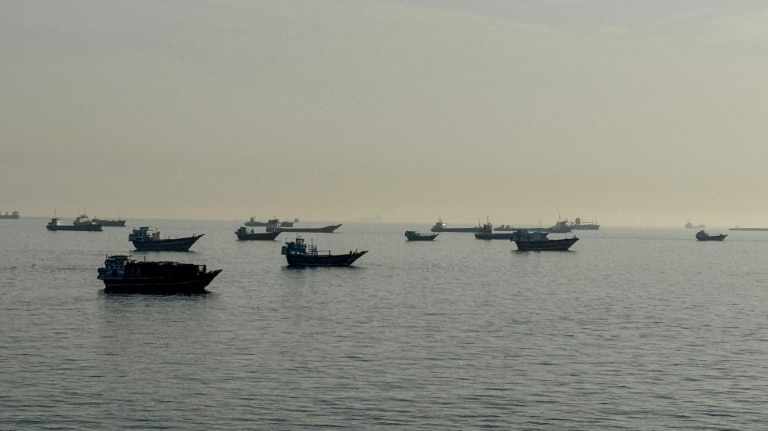
    Geopolitical tensions in the Middle East continued to shape global financial trading on Tuesday, as Asian equity markets traded mixed and crude oil pulled back from recent elevated levels after former U.S. President Donald Trump announced he would delay a planned military strike on Iran to allow for diplomatic negotiations. The pullback in oil prices came amid glimmers of hope for de-escalation, but ongoing uncertainty over the Strait of Hormuz kept energy markets volatile and investor risk appetite in check.

    The regional conflict that began in late February between the U.S.-Israel bloc and opposing forces has resulted in a de facto blockade of the Strait of Hormuz, the critical chokepoint that carries roughly 20 percent of the world’s global oil exports during peacetime. In a post to his Truth Social platform Tuesday, Trump revealed that the leaders of Qatar, Saudi Arabia, and the United Arab Emirates had requested he hold off the scheduled military strike to open space for negotiations. He wrote that he had granted the request, as “serious negotiations are now taking place.”

    Despite pausing offensive action, Trump stressed that U.S. military forces remain on high alert, ready to launch a full-scale large-scale assault on Iran at a moment’s notice if negotiations fail to reach an acceptable outcome. Speaking at a subsequent White House event, he framed the current diplomatic push as a “very positive development,” noting that key Arab regional allies believe a final deal is within reach that would see Iran abandon its nuclear program — a goal Tehran has long denied pursuing.

    “There seems to be a very good chance that they can work something out. If we can do that without bombing the hell out of them, I’d be very happy,” Trump told reporters, while reiterating his warning that military action remains on the table if talks collapse. This dual messaging underscored the continued fragility of security in one of the world’s most energy-rich regions.

    The prospect of a diplomatic breakthrough sent oil prices lower, though the decline provided only limited relief after weeks of extreme volatility driven by the ongoing Middle East conflict. At the time of reporting, global benchmark Brent crude hovered around $109 per barrel, while U.S. West Texas Intermediate traded near $107. Official data as of 0230 GMT recorded Brent down 2.1 percent at $109.75 per barrel, while WTI bucked the broader trend to gain 1.2 percent, hitting $107.40 a barrel.

    Across Asian equity markets, performance was uneven as investors balanced cautious optimism over diplomacy with lingering anxiety over geopolitical and economic risks. Japan’s Nikkei 225 opened and closed 0.5 percent lower at 60,537.87, as broader geopolitical jitters offset a better-than-expected first-quarter GDP report that showed the Japanese economy expanding 0.5 percent, exceeding analyst forecasts of 0.4 percent growth. South Korea’s Kospi index fell more than four percent, dragged down by steep losses in the technology sector that tracked downward movement on Wall Street a day earlier. Markets in Shanghai, Taipei, and Jakarta also closed lower, while the Hang Seng Index in Hong Kong gained 0.3 percent to hit 25,740.60, and benchmarks in Sydney and Wellington also finished in positive territory.

    Safe-haven assets edged higher on Tuesday, with gold and silver posting small gains, a signal that investor caution remains elevated despite the diplomatic opening. All market eyes are now turning to Wednesday, when U.S. semiconductor giant Nvidia is set to release its quarterly earnings results. The report is widely anticipated as investors seek clarity on whether massive current investments in artificial intelligence data center infrastructure will deliver the strong returns market participants have priced in.

    Other global market moves were muted. The Dow Jones Industrial Average closed up 0.3 percent at 49,686.12 in New York’s previous session, while London’s FTSE 100 gained 1.3 percent to close at 10,323.75. Currency markets saw minor shifts: the pound dipped to $1.3416 from $1.3422 on Monday, the euro edged up against sterling to 86.80 pence, fell slightly against the dollar to $1.1645, and the dollar gained marginally against the yen to reach 158.98 yen.

  • Hawthorn coach likens AFL’s Tasmania decision to being ‘kicked out of home’

    Hawthorn coach likens AFL’s Tasmania decision to being ‘kicked out of home’

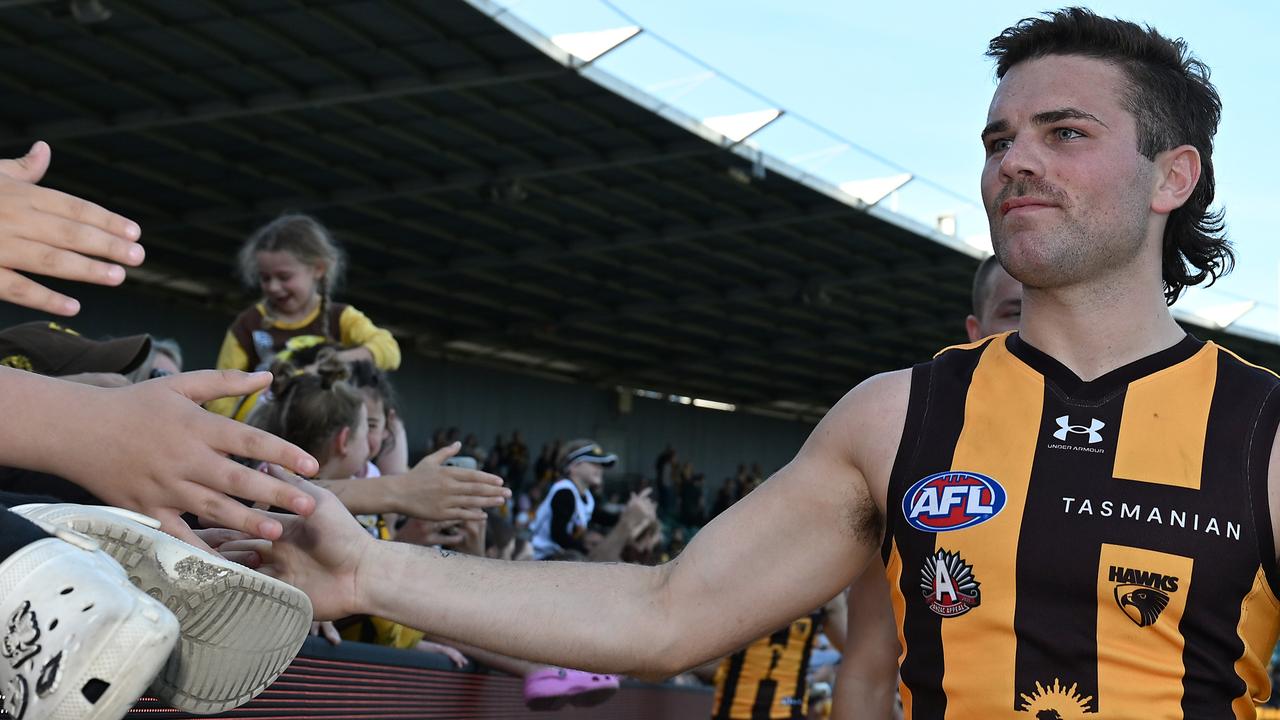
    After more than two decades of calling northern Tasmania home, Australian Football League (AFL) side Hawthorn FC is facing an uncertain future for its Tasmanian membership and local staff, after the governing body ordered the club to cede all of its Tasmanian match rights to the newly admitted Tasmania Devils expansion team ahead of the Devils’ 2028 debut.

    For years, Hawthorn has hosted four annual home-and-away fixtures and one pre-season match in Launceston, building deep roots in the northern Tasmanian community and creating some of the club’s most iconic on-field memories – including Lance Franklin’s legendary 13-goal performance against North Melbourne in 2012. The club had argued to retain its Launceston matches after the Devils’ entry, noting the expansion side would base its operations out of southern Tasmania’s Hobart. But AFL confirmed in an official announcement Tuesday morning that the new franchise will receive exclusive rights to host matches across the entire state, ending Hawthorn’s long-standing Tasmanian partnership.

    Hawthorn president Andy Gowers confirmed the club has already entered discussions with AFL to relocate the five displaced matches, with the club’s top priority being securing four extra home games at the Melbourne Cricket Ground (MCG), the league’s premier venue. Gowers also acknowledged the significant financial and community impact of the decision, noting that the Launceston games have long been a major contributor to the club’s bottom line. “I am not going to talk exact numbers (money lost), but what I will say is it is a significant factor in our bottom line and has been for a number of years. That’s part of our disappointment,” Gowers told reporters Tuesday.

    The biggest immediate concern for the club is the future of its 8,000 local members and full-time Tasmanian-based staff, who have been core to Hawthorn’s presence in the region for decades. “That is clearly one of our major considerations. Members down there on the ground but also staff, we’ve got full-time staff who work there. We feel for them and we’ll be communicating with every member, all of our staff, all of the people down there who have supported us and got involved in the football program down there – we feel for them,” Gowers said. When asked whether AFL would assist displaced Launceston-based staff with re-employment in Tasmania, Gowers said he could not confirm any support arrangements at this time.

    Hawthorn head coach Sam Mitchell echoed the club’s widespread disappointment, framing the decision as an unexpected loss of a second home for the club’s players and staff. “You know the people at the coffee shop, the hotels and go on the same sort of walks and around the same sort of people all the time. It feels like we’ve sort of been kicked out of a home and I understand, I guess, from the AFL’s perspective,” Mitchell said. “I mean it’s easy to group all of Tassie together, but we’ve spent the vast majority of our time in Launceston and we’ve loved our time there. We’re enormously disappointed we won’t get the opportunity to continue to be a part of that community.”

    Despite the disappointment, Mitchell noted the club remains focused on its remaining 2024 season fixtures, with the team set to play its next scheduled Launceston match this Thursday night. “Having said that, we’ve still got seven games to go, so we’ll do our best to show how much they mean to us on Thursday night,” Mitchell added.

  • AFL 2026: Hawthorn star Will Day will make his long-awaited return this weekend

    AFL 2026: Hawthorn star Will Day will make his long-awaited return this weekend

    After months of sidelined frustration and a years-long streak of cruel injury setbacks, the wait for Hawthorn Football Club and its star Will Day is finally drawing to a close. The talented 24-year-old is set to make his first competitive appearance of 2026 this Friday, stepping onto the field for the Box Hill Hawks in the Victorian Football League (VFL) as part of a carefully structured comeback plan, putting him in line for a potential return to the top-tier AFL squad as early as next week.

    Day’s path back to competitive football has been marked by repeated heartbreak. The young star has not seen a single minute of senior action in 2026, after damaging his shoulder during the club’s pre-season training camp. This latest injury blow follows a 2025 campaign cut short by a persistent foot injury, which itself came after a collarbone issue ended his 2024 season prematurely. Three straight years of season-interrupting injuries have kept one of the club’s most exciting prospects off the field far more than he has been on it, leaving fans hungry for his return.

    Hawthorn head coach Sam Mitchell confirmed the comeback news in an upbeat briefing this week, noting that Day has passed every fitness benchmark after two full weeks of full training with the senior squad. “He’ll play this week, he’ll play some limited minutes on Friday night with Box Hill,” Mitchell said. “It’s pretty exciting, pretty exciting for Will and I think for all of us. He’s obviously a very high-profile player to be getting back and playing some VFL time.”

    To protect Day from re-injury as he regains match sharpness, the club will manage his minutes very carefully in Friday’s outing. Mitchell outlined that the 24-year-old will start on the bench for each quarter to ease him back into the physical intensity of competitive play, and made clear that Day is not yet expected to be ready for full AFL-level action this weekend. “He certainly won’t be ready for AFL footy at this stage,” Mitchell added.

    The coach did, however, hint that Day could be recalled to the senior side much faster than most injured players, thanks to the nature of his recovery. Unlike lower-body injuries that force athletes to spend weeks building back cardiovascular fitness, a shoulder injury allowed Day to maintain his conditioning throughout his recovery. “He’s obviously coming back from a shoulder which means he’s fitter, you can get a lot more physical work in, your physical profile, they can work pretty hard. So he’s going to be ready for AFL footy at a high level straight away. Sometimes when you get back from a foot or a lower leg injury, it’s hard to get the fitness base needed,” Mitchell explained.

    Day’s potential comeback comes at a key juncture for Hawthorn, who are currently in the middle of their fixture run in Tasmania, with a match against Adelaide kicking off in Launceston this Thursday night, one of the club’s final seven scheduled games at the Apple Isle. Fans have long remembered Day’s standout performance in last year’s opening round, where he led the Hawks to a victory over Sydney at the Sydney Cricket Ground, a display that cemented his status as one of the club’s most promising young talents.

    Mitchell said the club will not push Day to replicate that electric form straight away, but he is confident the young star will be able to contribute from his first minutes back on the field. The timeline for his senior return will depend on how Day pulls up after Friday’s VFL outing, with assessments of his movement, fitness and confidence set to dictate next steps. “To be determined, we’ll see how he goes this week, see how his movement is, how his confidence is,” Mitchell said. “When he gets back, stay back. That’s the aim, it could be as early as next week or it could be longer than that.”

    For long-suffering Hawthorn fans who have followed Day’s injury battle over the past three seasons, Friday’s limited appearance will mark a small but incredibly exciting step forward for one of the club’s brightest stars.

  • As bee population collapses, US apiarists fear research cuts

    As bee population collapses, US apiarists fear research cuts

    Nestled in a lot behind an abandoned gas station at the foot of Appalachia’s rolling mountains in West Virginia, a dozen apiarists gather around veteran commercial beekeeper Roy Funkhouser, the air thick with the low buzz of thousands of honeybees. What began as a regular monthly meeting for the group — a mix of casual hobbyists and full-time commercial operators — has shifted from a skill-sharing workshop to a forum for growing anxiety: as U.S. bee populations collapse to historic levels, a looming federal funding cut threatens to shutter the nation’s oldest bee research lab, a 100-year-old institution that has led global efforts to combat the threats facing honeybees.

    For Funkhouser, the crisis is not an abstract policy debate — it is a devastating collapse of the livelihood he has built over decades. Where he once tended roughly 1,200 hives, fewer than 200 remain active this year. “It’s a real struggle,” he told Agence France-Presse. “The parasites that we’ve got now, the mites and everything — more viruses and more pesticide exposures, more chemical exposures — everything is just more of a struggle today than what it was in the past.”

    Funkhouser’s experience is far from unique. The latest data from Apiary Inspectors of America shows that U.S. beekeepers lost more than half of all their managed colonies in the 12-month period ending April 2025, marking the worst annual loss rate since the organization began tracking colony health decades ago.

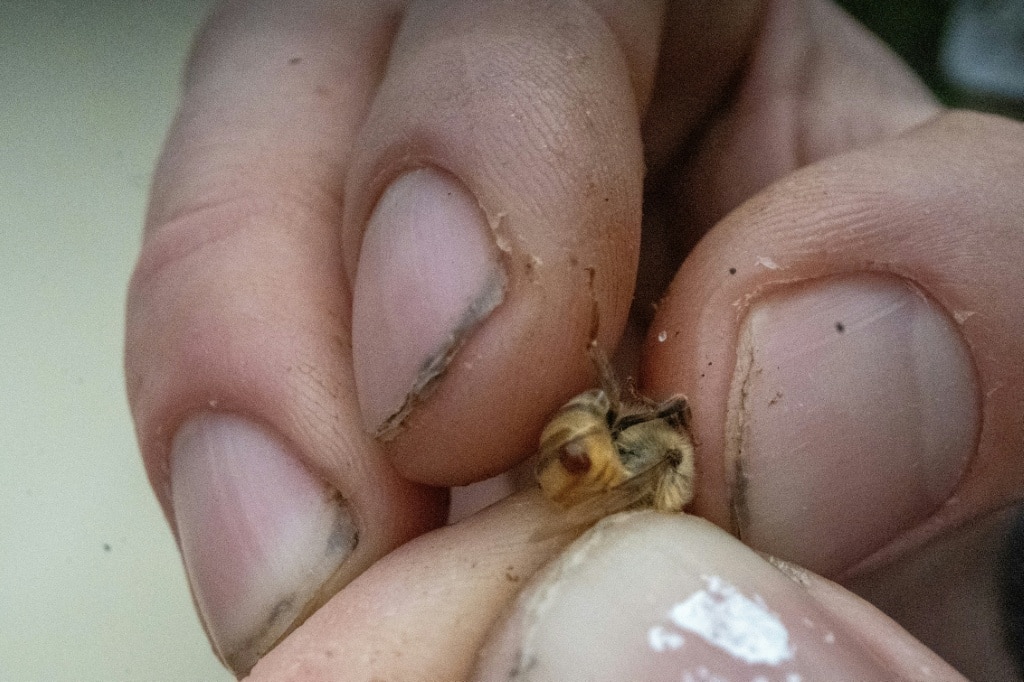
    At the top of the list of threats facing colonies is *Varroa destructor*, a tiny 1.5-millimeter parasitic mite that the U.S. Department of Agriculture (USDA) recognizes as the single most damaging honeybee pest in the country, inflicting higher economic damage than all other apicultural diseases combined. The crab-like parasites feed on honeybee tissue and fat stores, and spread a debilitating, wing-deforming virus that can wipe out entire colonies in months. Beyond threatening apiculture, the mites put critical agricultural pollination at risk: commercial beekeepers like Funkhouser truck their colonies across the country to pollinate high-value crops, from California’s vast almond orchards to fruit farms across the Midwest. Without sufficient healthy bee populations, crop yields drop sharply, threatening food supplies and raising prices for consumers.

    For years, Funkhouser and his fellow beekeepers have turned to researchers at the USDA’s Beltsville Agricultural Research Center (BARC) — home to the nation’s oldest bee lab — for evidence-based guidance to fight the mite crisis. Zac Lamas, one of the lead entomologists at the BARC bee lab, has worked directly with West Virginia beekeepers to sample colonies, test for genetic markers of disease and pesticide exposure, and develop tailored mitigation strategies.

    “It’s not that we’re working with one beekeeper,” Lamas explained during a field training session with beekeepers. “We might be working with several million dollars’ worth of colonies, or several million dollars’ worth of pollination services that won’t exist because these colonies are at risk.”

    But that support is now at risk of disappearing entirely. As part of a cost-cutting plan driven by congressional funding cuts that reduced USDA agricultural research budgets by more than $32 million in key priority areas, the agency is moving forward with plans to close the entire BARC facility. While some research programs will be redistributed to other federal facilities across the country, the fate of the iconic bee lab remains unclear, and the USDA has not responded to questions about where or if bee research operations will be reestablished.

    Lamas, who has already accepted a new position at a local university after facing layoff from the lab, argues that the closure is a short-sighted decision that undermines decades of progress. The entire bee lab program costs just $3.2 million annually, he says, a tiny fraction of the $600 million in annual economic losses that bee colony collapse currently inflicts on U.S. agriculture. “The idea that we’re redundant and expensive isn’t a good way to generalize the value of this lab or the cost of this lab,” he noted.

    Beyond the direct funding gap, Lamas warns that breaking up the lab will erase irreplaceable institutional knowledge. For a century, BARC has assembled a team of specialists with overlapping skills focused entirely on protecting bee health and supporting national food security. “When we have a new problem, multiple people with complementary skills can work on it quickly,” he said. That collaborative capacity will be lost if the team is scattered, he added.

    For beekeepers already grappling with record losses, the impending closure comes as a devastating blow. Just as researchers are beginning to untangle the complex mix of parasites, viruses, and environmental stressors driving colony collapse, the cut threatens to halt progress. “We’ve got results from a lot of our testing and figured out a lot of the things that are going wrong,” Funkhouser said. “The unfortunate thing is, it seems like when you figure out one thing the next year, it’s something else. Without the lab, we’ll be flying blind.”

  • Arsenal on the brink of Premier League title after nervy Burnley win

    Arsenal on the brink of Premier League title after nervy Burnley win

    The 2023-2024 English Premier League title race has entered its final, nail-biting stretch, with Mikel Arteta’s Arsenal side moving to the cusp of ending a two-decade-plus championship drought courtesy of a tense 1-0 victory over already-relegated Burnley at the Emirates Stadium on Monday.

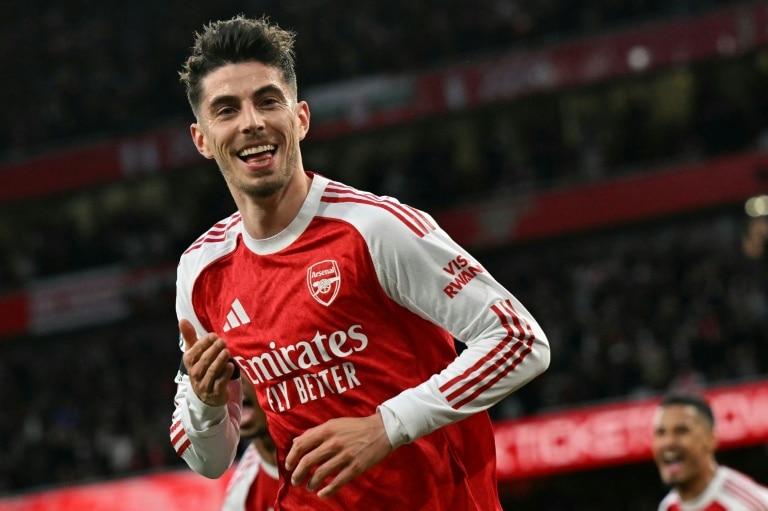
    Kai Havertz’s 37th-minute header from a Bukayo Saka corner proved the difference on the night, pushing the Gunners five points clear of defending champions Manchester City at the top of the table. Havertz’s goal marked Arsenal’s 18th Premier League goal scored from set pieces this season, a testament to the club’s well-honed tactical strength in dead-ball situations.

    However, the result could have been drastically different. In the second half, Havertz mistimed a challenge that raked his studs down Burnley midfielder Lesley Ugochukwu’s calf, an incident that went to a VAR review for potential dismissal. In a call that kept Arsenal at full strength, referees opted to retain the original yellow card decision rather than upgrade it to a red card that would have left Arteta’s side to defend their narrow lead with 10 men for the final 25 minutes of play. Havertz was shortly substituted off for new signing Viktor Gyokeres, though the Swedish forward’s introduction did not unlock a second wind for Arsenal’s attack.

    The match was far from the dominant victory many fans and pundits predicted. Buoyed by a sold-out home crowd for their final home fixture of the season, Arsenal were widely expected to cruise past a Burnley side that had claimed just two points from their previous 10 outings. But the already-relegated Clarets put up a staunch defensive fight, forcing the Gunners into a tense finale that kept spectators on edge until the final whistle. Before Havertz’s winning goal, Leandro Trossard hit the outside of the post from the edge of the penalty area, and a first-half penalty appeal from Bukayo Saka was turned away by officials.

    The narrow win leaves Arsenal on the brink of their first Premier League title since 2001-2002, ending a 22-year wait. The Gunners could even lift the trophy as early as Tuesday, if Manchester City fails to secure three points away to Bournemouth. Even if City maintains its title push by beating Bournemouth and wrapping up its final two fixtures against Bournemouth and Aston Villa, Arsenal only needs one more win away to Crystal Palace this coming Sunday to seal the championship. A draw at Selhurst Park would open the door for City to claim the title on goal difference if Pep Guardiola’s side wins both of their remaining matches.

    Speaking after the final whistle, Arteta emphasized that his side had completed everything within their control to put themselves in a winning position. “One more to go. We have done our job, what is in our hands. We have to wait and see what is going to happen tomorrow and then it’s time to prepare for the Palace game,” the Arsenal manager said. Acknowledging the narrow margin of victory, he added, “The margin should have been bigger but we haven’t achieved that. We have shown what we have shown all season that when we need to defend and get through the game, we can do it in an efficient way.”

    That defensive efficiency has been key to Arsenal’s recent run: since their loss to City last month, the Gunners have kept four consecutive clean sheets in Premier League play, a solid foundation that has allowed them to extend their lead at the top of the table. The narrow result, however, still leaves a narrow opening for City to clinch a fourth consecutive Premier League title. Adding further drama to the final days of the season, multiple reports emerged on Monday that Guardiola is set to depart Manchester City after a trophy-laden 10-year tenure following the club’s final home match against Aston Villa on Sunday.