The 2026 edition of the UK’s most prestigious horticultural event, the RHS Chelsea Flower Show, opened this week in London, blending centuries of gardening tradition with boundary-pushing modern themes, ambitious sustainability projects and unexpected playful touches that have drawn crowds and sparked conversation across the country. Opening its gates to the public starting Tuesday, the five-day event is projected to welcome more than 150,000 attendees, with all tickets sold out weeks in advance — a testament to the enduring public love for the iconic show, which has been hosted at the Royal Chelsea Hospital on the banks of the River Thames since 1913.
Clare Matterson, director of the Royal Horticultural Society (RHS), framed the 2026 event as a particularly vital celebration of green spaces at a moment of global uncertainty. “We’ve never needed the joy of gardening, the power of plants for our planet or the peace of simply sitting in a garden, more,” she shared in an official opening statement.
Thirty custom-designed gardens are competing this year for the show’s coveted annual awards, with exhibits running the gamut from tranquil community-focused spaces to provocative, conversation-starting installations. Turning heads and stirring mild controversy is standout exhibit *Aphrodite’s Hothouse*, a bold reimagining of floral display that designer James Whiting describes as a theatrical celebration of love and lust. Marked by pendulous, heart-shaped and suggestively sculpted blooms, the lush, fragrant indoor garden also includes discreet nods to adult intimacy in the form of small sex toys — a choice that has drawn pushback from some traditional gardening circles, which Whiting has openly dismissed.
“People are excited to see something a bit fresh… and to see the RHS opening the doors to more modern topics,” Whiting told reporters from Agence France-Presse, arguing that the theme is inherently organic to horticulture. “Flowers are all about sex. So why not bring that to the Chelsea Flower Show?” he added, noting that this year’s show features a growing cohort of young, innovative new wave gardeners pushing the boundaries of the traditionally genteel hobby.
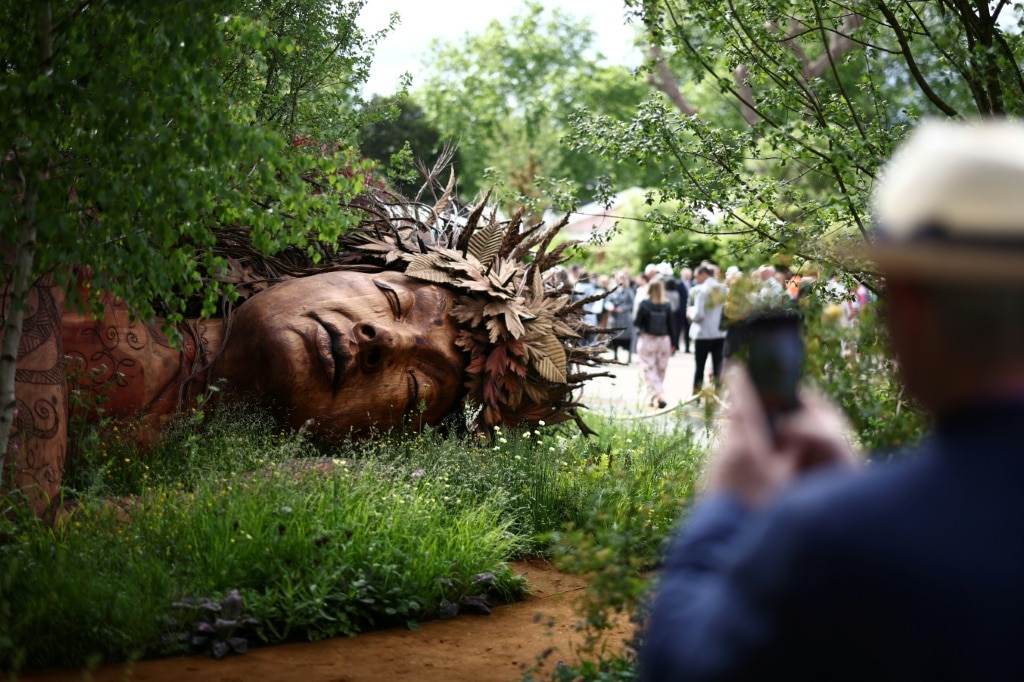
Beyond the bold provocative displays, many 2026 exhibits center on themes of conservation, sustainability and community impact, carrying on the show’s growing focus on environmental action. One standout exhibit from the Campaign for Protection of Rural England, designed by Sarah Eberle, features a massive sculpture of the sleeping Greek goddess Gaia — or Mother Nature — carved entirely from fallen native trees. Titled *Garden on the Edge*, the installation emphasizes the natural world’s innate power of regeneration and protection, highlighting joy to be found in ordinary natural spaces. After the show closes, the entire garden, including the Gaia sculpture, will be relocated to a new communal public park for a housing estate in northern Sheffield, extending its impact far beyond the Chelsea showgrounds.
Another sustainability-focused exhibit, the *Bring Me Sunshine* garden, is built to become a permanent part of the UK’s second Eden Project, which is scheduled to open in 2028 in Morecambe, northwestern England. Built to highlight coastal ecosystem restoration, the garden is surrounded by a retaining wall constructed entirely from recycled waste materials: waste shells from clams, mussels and cockles, paired with reclaimed coastal limestone, creating a low-carbon alternative to traditional concrete. The space is planted entirely with native edible coastal species from the Morecambe Bay area, including samphire, which is making its debut at the Chelsea show this year, sea kale and sea buckthorn.
Designer Harry Holding, a keen professional forager, explained that food acts as an accessible entry point for new audiences to connect with nature. “An important way to connect with nature is using food as that gateway,” he said. The original Cornwall-based Eden Project, which transformed a disused clay pit into a world-famous global garden destination 25 years ago, has injected £6.8 billion ($9.1 billion) into the local Cornish economy and draws one million annual visitors. Organizers hope the new Morecambe site will replicate that success, bringing jobs, skills training and economic regeneration to the historically impoverished coastal region. Co-designer Alex Michaelis called the project a story of “hope and regeneration” for left-behind coastal communities.
For vulnerable young people, the *Children’s Society* garden offers a quiet, informal safe space designed to help overstimulated teenagers step back from digital connectedness and reconnect with the natural world. Designer Patrick Clarke described the space as “a garden of safety, it’s a garden of calm, of protection,” noting that moving into the dense, green core of the garden feels like stepping into “the hug of the garden” for the always-on generation, giving them space to reflect and slow down. Clarke included small, hardy native plants that he calls “little jewels, that just need that little bit of love, that little bit of care that we all need,” mirroring the support the Children’s Society provides to vulnerable young people across the UK.
In a playful break from tradition, this year marks only the second time in the show’s 113-year history that whimsical, often divisive garden gnomes have been allowed back onto the official showgrounds. A collection of gnomes painted by high-profile celebrities, including Oscar-winning actor Cate Blanchett and Queen guitarist Brian May, will be auctioned off after the show to raise funds for RHS charity programs.
This year also features a special garden curated with input from King Charles III, who is expected to visit the show alongside Queen Camilla. Titled the RHS and The King’s Foundation Curious Garden, the exhibit celebrates the diversity of plant life and its profound impact on human life. Co-created by football icon David Beckham and designer Frances Tophill, the garden centers on King Charles’ favorite flower, the stately delphinium, with Tophill and her team tracking down one of the world’s rarest delphinium cultivars: the cornflower blue *Delphinium elatum* “Alice Artindale”. Beckham, who has long been an amateur gardener, echoed the exhibit’s core theme, saying: “In my experience, gardening is all about being curious.”