For years, top-tier club football has outcompeted international football for elite coaching talent, its unmatched salary packages and consistent exposure drawing the sport’s biggest names away from national team roles. But the 2026 FIFA World Cup is breaking that pattern, pulling five of the most respected coaches in the global game away from lucrative club positions to chase the one honor that no club success can match: World Cup glory.
Thomas Tuchel, the German manager who lifted the Champions League with Chelsea and won domestic titles across Europe’s top leagues with Paris Saint-Germain and Bayern Munich, is the latest high-profile hire for the English Football Association. Tasked with ending England’s 58-year drought for a major men’s senior tournament title stretching all the way back to their iconic 1966 World Cup win, Tuchel takes over from Gareth Southgate, who came closer than any other England manager in modern history to breaking the drought – leading the Three Lions to two European Championship finals and a World Cup semi-final. Still, Southgate faced persistent criticism over his in-game decision-making and tactical flexibility in high-stakes knockout matches. While Tuchel’s club-level resume is far more decorated than Southgate’s, questions hang over how his demanding, detail-oriented style will adapt to the unique rhythms of international tournament football. A particular challenge will be managing an England squad already worn down by the relentless, congested schedule of English domestic football ahead of the 2026 tournament, which will be held in North America’s summer heat.
Across the Atlantic, Brazil’s Selecao has turned to another European club legend to end its own 24-year wait for a sixth World Cup title. Carlo Ancelotti, the most successful manager in Champions League history with five trophy wins, has taken the helm after Brazil repeatedly fell to European opposition in late-stage World Cup knockout rounds over the past two decades. The Italian veteran brings unmatched experience navigating high-pressure knockout football, and already has an existing working relationship with Brazil’s biggest star: Vinicius Junior, who produced the best form of his career playing under Ancelotti at Real Madrid. This current Brazil side lacks the innate attacking flair that defined the nation’s legendary tournament-winning squads of the past, making a top-tier performance from Vinicius all the more critical if they are to lift the trophy again. Ancelotti’s famously calm demeanor and ability to manage big egos also make him well-suited to steady the often emotionally charged environment surrounding Brazil’s national team in their quest for global supremacy.
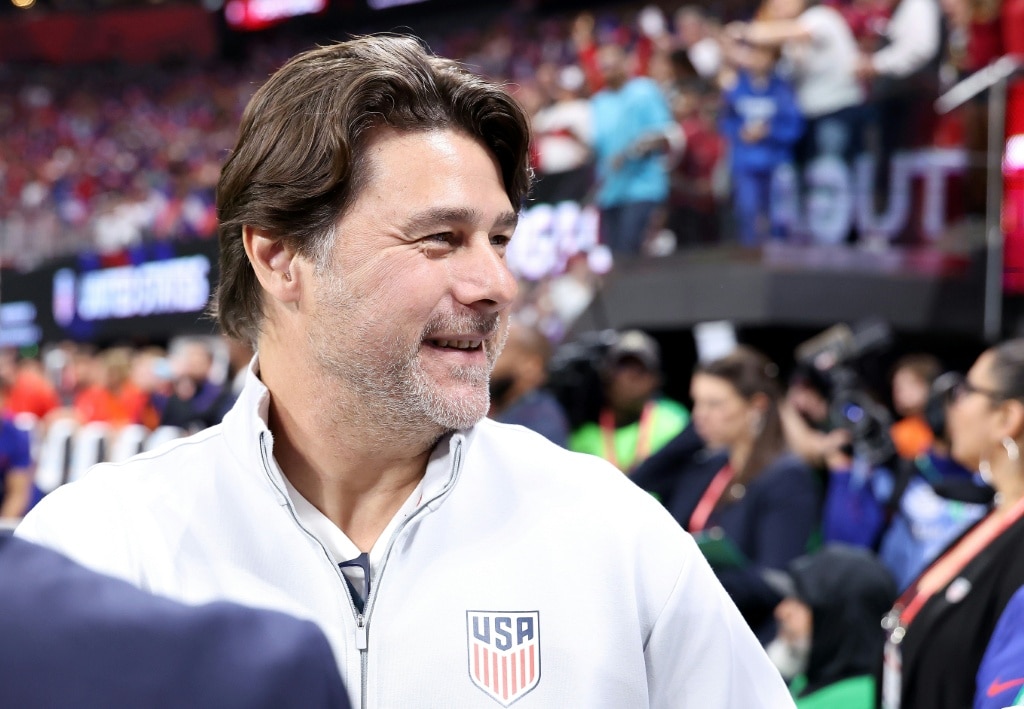
For the United States men’s national team, Mauricio Pochettino’s tenure ahead of 2026 has already been a rocky road. The Argentine manager has held the post for two years, but limited competitive match play has left his progress untested – and underwhelming results have drawn sharp criticism. Under Pochettino, the US failed to claim either the CONCACAF Gold Cup or Nations League titles, suffering embarrassing home losses to regional rivals Panama, Mexico, and Canada. A brief spark of optimism followed impressive friendly wins over Uruguay and Japan, but that momentum was quickly snuffed out by lopsided defeats to Portugal and Belgium in March 2025, leaving the host nation’s campaign still searching for momentum ahead of the tournament.
Uruguay turned to a revolutionary figure in modern coaching to lead their 2026 push: Marcelo Bielsa, the Argentine tactician whose high-pressing, attacking style has influenced generations of top managers from Pep Guardiola to Pochettino himself. This tournament marks Bielsa’s third time leading a different national side at a World Cup, and likely his final chance to claim global glory. Early qualifying wins over continental powerhouses Brazil and Argentina sparked widespread optimism around his appointment, but familiar cracks that have marked his club career have begun to show. Many of his young Uruguayan squad have struggled to meet Bielsa’s famously strict physical and tactical demands, and tensions boiled over after Luis Suarez retired from international football, revealing that Bielsa’s harsh half-time criticism reduced star striker Darwin Nunez to tears following a 2-0 qualifying win over Argentina. Results have also slipped in recent months, with Bielsa himself admitting he was “ashamed” after a 5-1 friendly defeat to the United States last November. Bielsa’s international history is mixed: his native Argentina crashed out in the group stage at the 2002 World Cup, but he guided Chile to the knockout round at the 2010 South Africa tournament.
Rounding out the list of elite hires is 38-year-old Julian Nagelsmann, who took charge of Germany after a three-tournament run of disastrous results for Die Mannschaft between 2018 and 2024, which included consecutive group stage exits from the World Cup and three straight tournaments without a knockout victory. Nagelsmann has already restored pride to the national side, and narrowly missed out on Euro 2024 glory on home soil, falling to eventual tournament winners Spain in the quarter-finals. Widely expected to return to club coaching after the 2026 World Cup, this is Nagelsmann’s only shot to lead Germany to a record-equaling fifth World Cup title. Complicating his task, Germany’s key attacking trio – Florian Wirtz, Jamal Musiala, and Kai Havertz – all struggled through poor form or injury problems during the most recent club season, leaving their fitness and sharpness in question for the summer tournament.