标签: Oceania

大洋洲

  • The tiny, defiant Nile island caught in the heart of Sudan’s war

    The tiny, defiant Nile island caught in the heart of Sudan’s war

    Nestled at the confluence of Uganda’s White Nile and Ethiopia’s Blue Nile, right in the center of Sudan’s war-ravaged capital Khartoum, the crescent-shaped Tuti Island has begun the slow, fragile process of coming back to life. A year after the Sudanese army broke a nearly 24-month paramilitary siege that emptied most of the island’s streets and homes, the deep, unbreakable bond between residents and their ancient land is on full display.

    At 80-some years old, Al-Shubbak is one of the few who never left. When the Rapid Support Forces (RSF) clamped down on the only bridge connecting Tuti to the mainland in June 2023, turning the island into an open-air prison, she refused to flee. “I didn’t even move for the English when they colonised us,” she told AFP, her toothless smile undimmed by hardship. She still recites the generations-old battle cry of Tuti’s defenders: “Our fathers resisted the occupiers with stones. Though they met them with gunfire, they still could not take Tuti the green.”

    The war between Sudan’s national army and the RSF first erupted in Khartoum in April 2023, and Tuti, positioned directly across the river from the first flashpoints of conflict, bore an outsize share of the violence. For nearly two years, no supplies could enter or exit without RSF approval. Islanders were forced to pay exorbitant bribes just to access food, medicine, or fuel for water pumps — and to buy the right to leave. For 34-year-old day laborer Salaheldin Abdelqader, who escaped seven months into the siege and returned after the army recapture, that toll hit 350,000 Sudanese pounds, roughly $90 today, more than double a Sudanese doctor’s average monthly salary.

    Local elder Sheikh Mohamed Eid, who spent months using community donations to smuggle food to trapped residents to prevent mass starvation, was detained by the RSF for his activism. Thrown into a series of the paramilitary group’s notorious prisons, he watched fellow Tuti inmates die one by one before he was released nine months later. Retelling his story from his home, where a gaping hole in the roof left by an artillery shell still opens to the sky, Eid explained that for Tuti’s residents, leaving the island is not an option. “We’re like fish in the water, we can’t survive outside Tuti,” he said, noting that even former president Omar al-Bashir’s government, which tried for years to relocate the community to make way for luxury real estate developments, never succeeded in severing that tie.

    By the final months of the siege, out of Tuti’s estimated 30,000 pre-war residents, only Al-Shubbak’s family remained, staying behind to care for the bedridden matriarch and guard their ancestral land. “We stayed to guard our soil,” said her daughter Najat al-Nour, a 50-something Quran professor who calls those who fled a mistake. For many others, however, leaving was the only way to survive. Nosayba Saad and her family endured a year and a half of RSF occupation, during which fighters repeatedly broke into homes, stole valuables, threatened residents, and left many dead from stray gunfire. By the time her family paid to leave in October 2024, the RSF had begun seizing even the last of residents’ food stores.

    Today, after the army retook Khartoum and lifted the siege in March 2025, hundreds of former residents have returned. Boarded-up shops have reopened, farmers have walked back to their fertile orchards and vegetable fields that once supplied most of Khartoum’s fresh produce, and Friday prayers draw crowds to the 15th-century red-brick mosque that has stood on the island for hundreds of years.

    Still, the joy of homecoming is deeply bittersweet. Saad’s two uncles remain missing, presumed dead, and every family on Tuti carries the weight of loss. The iconic riverfront spot where the two Niles merge to form the single Nile flowing north to Egypt is now littered with unexploded mines, a permanent reminder of the siege’s violence. To the south, the gutted, bombed-out skyscrapers of central Khartoum loom on the horizon, a constant reminder of the terror the island endured.

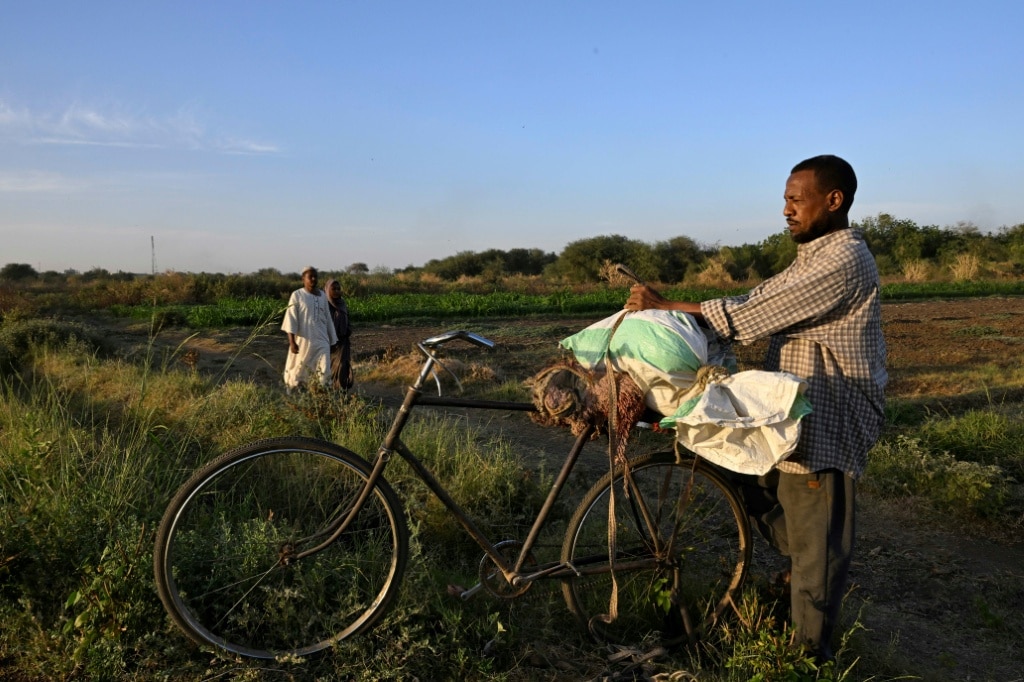
    Yet as the sun sets over the Nile, turning the water a glowing orange, small signs of normalcy are returning. A squash farmer trundles home with a heavy sack of his first post-war harvest. A fisherman packs up his rods beside a family picnicking on the cleared waterfront. A young couple on a date asks for a photo, a memento of their first trip home to Tuti. For the first time in two years, the scent of jasmine and incense drifts across the island, a quiet testament to the resilience of a community that refused to let their home be taken.

  • Experts urge sweeping tax overhaul to scrap stamp duty for land tax

    Experts urge sweeping tax overhaul to scrap stamp duty for land tax

    Australia’s deepening housing affordability crisis has prompted policy experts to call for sweeping tax reform centered on abolishing what they label the nation’s most economically harmful tax, a change that could open homeownership pathways to thousands of aspiring buyers and downsizers alike. The proposal was laid out during recent hearings of the Senate Select Committee on Productivity, convened to identify actionable solutions to Australia’s decades-long housing shortage.

    Matthew Bowes, senior associate at leading independent think tank the Grattan Institute, argues that replacing stamp duty — an upfront tax levied on property transactions — with a broad-based annual land tax would deliver two major wins: a fairer taxation system and a $19 billion annual boost to national economic output. “All taxes dampen economic activity to some degree, but stamp duty is by far the most damaging of all taxes levied in Australia,” Bowes explained. He noted that the reform would primarily benefit two groups locked out of flexible property market access: young households saving for their first home, and older Australians looking to downsize to more appropriate accommodation after their children leave home.

    Despite these long-term benefits, Bowes acknowledged that the reform creates significant near-term fiscal challenges for state governments, which currently rely on the bulk of stamp duty revenue collected upfront when a property changes hands. Shifting to a land tax would spread revenue collection over decades, creating an immediate fiscal gap that states have so far been reluctant to absorb. “When you move from an upfront lump-sum tax to a recurring annual tax, you defer a huge share of government revenue,” Bowes said. “That fiscal gap is the single biggest barrier holding states back from adopting this reform.”

    Additional structural barriers to reform also complicate adoption: the current GST distribution framework, designed to deliver horizontal fiscal equalization across Australia’s states and territories, penalizes states that grow their own revenue. If a state’s independent revenue increases after tax reform, its share of federal GST distributions is cut, creating an additional financial disincentive that has discouraged past attempts to change stamp duty policy.

    Beyond tax reform, the inquiry has also shone a light on deep-rooted productivity failures that have pushed housing prices higher and slowed new construction, worsening the nation’s housing shortage. The federal government’s National Housing Accord sets an ambitious target of building 1.2 million new homes by 2029, requiring 240,000 new completions annually to hit the mark. While recent data from the Australian Bureau of Statistics shows a strong 29.7% jump in dwelling approvals in February, hitting 19,022 for the month, total approvals over the past 12 months sit at just 196,000 — far below the required annual rate.

    The February growth was driven by a surge in multi-dwelling development: apartment approvals skyrocketed 191.2% to 5,399 units, while townhouse approvals rebounded 73.8% from a sharp January drop to hit 2,981. Even with this monthly gain, however, the national pipeline remains too small to close the gap between supply and strong population-driven demand.

    Housing Industry Association (HIA) managing director Jocelyn Martin told the inquiry that falling construction productivity over the past decade is a major driver of rising housing costs, with excessive regulatory burden the single biggest drag on sector performance. “Residential construction faces multiple overlapping layers of regulation across local, state, and federal levels — everything from planning and zoning rules to environmental approvals and frequent, complex changes to the National Construction Code,” Martin explained. “Every extra layer adds cost, delay, uncertainty, and risk, pulling resources away from actual home building and limiting the industry’s ability to innovate and scale up output.”

    Independent analysis from the Productivity Commission backs this assessment, finding that regulation adds between $135,000 and $320,000 in extra cost to the construction of a single detached home, and between $40,000 and $175,000 for each apartment unit. Martin emphasized that any push to improve productivity does not require cutting safety or quality standards, instead calling for smarter, more streamlined regulatory design. “The goal is to build regulatory systems that meet public policy objectives while allowing the industry to deliver homes efficiently at scale,” she said.

    Martin also noted that Australia’s concentrated settlement patterns amplify existing housing pressures, with strong sustained population growth flowing almost entirely to a small number of major capital cities. “This concentration ramps up pressure on housing markets, infrastructure, and labor supply, while making the productivity challenges this inquiry is investigating far worse,” she added. As the Senate committee continues its work, the dual proposals of tax reform and regulatory streamlining are emerging as core policy options to address one of Australia’s most pressing economic and social challenges.

  • ‘Wipe them out’: Independent Farrer candidate lashes preference deal as Coalition backs One Nation

    ‘Wipe them out’: Independent Farrer candidate lashes preference deal as Coalition backs One Nation

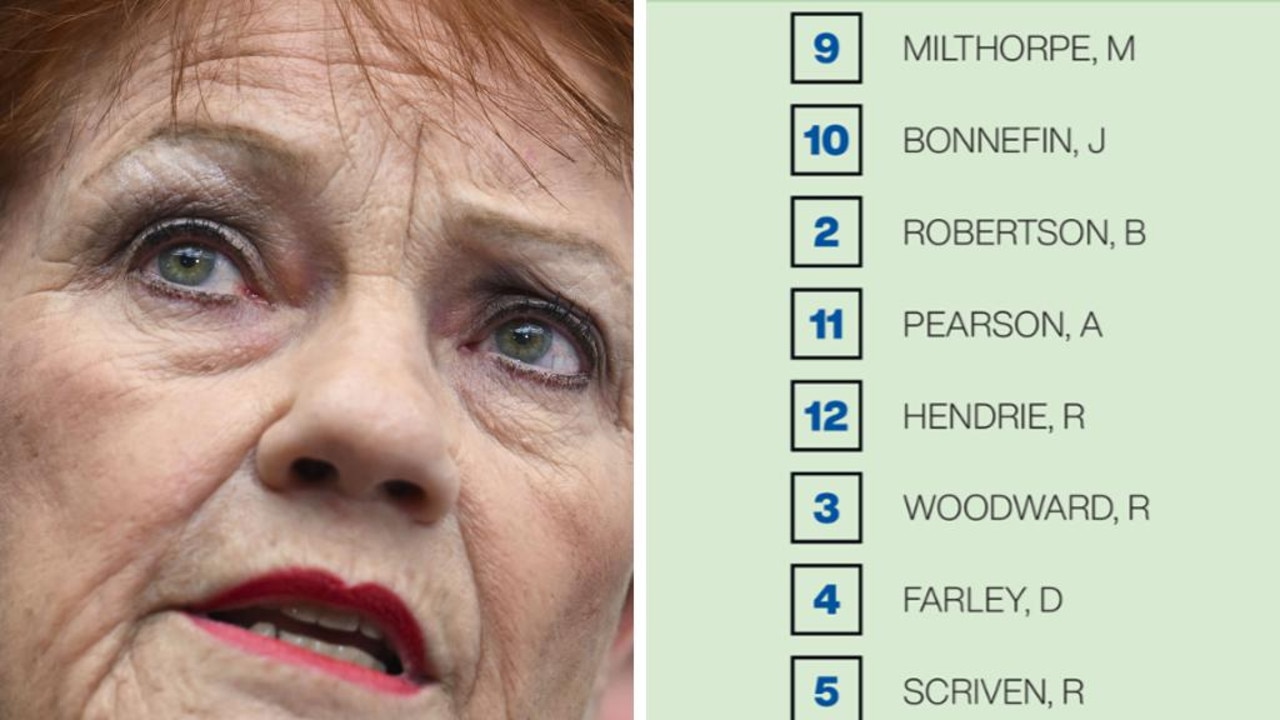
    The race for the vacant federal seat of Farrer, left open by the departure of former opposition leader Sussan Ley earlier this year, has erupted into controversy after the Liberal-National Coalition formalized a preference deal that places right-wing populist party One Nation ahead of Climate 200-supported independent candidate Michelle Milthorpe. The deal, revealed this week, has drawn sharp criticism from Milthorpe, who argues the Coalition’s decision stems from deep-seated anxiety that Pauline Hanson’s One Nation will eliminate their candidates from contention entirely.

    Farrer’s by-election has shaped up as a tight two-horse race between Milthorpe and One Nation’s candidate David Farley, even as both the Liberal and National parties maintain their own candidates in the contest. In tight marginal contests like this, preference flows between candidates often decide the final outcome, making pre-election preference agreements high-stakes political moves.

    Milthorpe, who grew up in a National Party-voting household in Cootamundra and once supported Sussan Ley in multiple elections, said she never would have considered running as an independent if regional communities had not been consistently failed by successive major party governments. “If we hadn’t been so let down in the regions by successive governments I can easily imagine running under the Liberal or Nationals banner,” she explained. “But I decided to run as an independent because for decades the parties have acted in their own self-interest, not in the interests of our community.”

    Responding to the Coalition’s preference deal, Milthorpe said the agreement served no purpose other than protecting the major parties’ own political standing. “The Coalition has done a deal with One Nation because they are worried One Nation will wipe them out,” she said. “We will never know what One Nation offered the Liberal/National Parties to strike this deal, but what we do know is this isn’t about Farrer. This is a decision made for the good of the Coalition, not for the good of our community.”

    Milthorpe drew a clear contrast between her own priorities and those of her One Nation opponent, noting that Farley would always be beholden to party leadership based in Queensland. “I vow to fight every single day for the people of Farrer and only the people of Farrer,” she said. “My One Nation opponent will have to vote every single time with his party boss from Queensland. The parties have not been listening to us, so I expect most voters will return the favour by not listening to their suggestions of who to vote for.”

    Preference documents published by candidate campaigns lay out the full order of recommendations. Liberal candidate Raissa Butkowski instructed supporters to rank her first, National candidate Brad Robertson second, and Farley fourth. For his part, Farley recommended voters put Robertson second, Butkowski third, and placed Milthorpe second last at 11th on his ranking.

    National Party Leader Matt Canavan, who has campaigned extensively in Farrer in the lead-up to the by-election, pushed back against criticism of the deal in a social media statement. “There is a lot of BS being spread about preferences in the Farrer by election,” he wrote. “But the local news has reported it right. The Nationals are preferencing One Nation ahead of the teal backed candidate because she is backed by people that support net zero and water buybacks.”

    The preference deal comes amid ongoing controversy for One Nation, which has faced sustained pressure in recent weeks over the party’s decision to rehire Sean Black, a man convicted of rape. One Nation leaders Pauline Hanson and former National Party leader Barnaby Joyce have both faced scrutiny over the rehiring decision, though that controversy has not been mentioned in public justifications for the preference deal.

  • ASX plunges as healthcare giant Cochlear and big banks drag down market

    ASX plunges as healthcare giant Cochlear and big banks drag down market

    On Wednesday, Australia’s benchmark stock market suffered its sharpest single-day decline in three weeks, driven by widespread selloffs across two of its largest core sectors: healthcare and financial services. The benchmark ASX 200 plunged 105.80 points, or 1.18%, to settle at 8,843.60, while the broader All Ordinaries index dropped 102.8 points, or 1.12%, to close at 9,074.30. Against this downturn, the Australian dollar gained ground through the trading session, ending the day at 71.72 U.S. cents.

    Of the 11 tracked sectors on the ASX, seven closed in negative territory, with healthcare and financials recording the heaviest losses. The healthcare sector as a whole tumbled 6.01%, led by an unprecedented 40.71% single-day crash for implant manufacturer Cochlear, which erased roughly $4.5 billion in market value to push the share price down to $99.58, its lowest level in a decade. Two core factors triggered the collapse: the company issued a downward revision to its full-year profit guidance, and new policy actions from the Trump administration targeting Medicaid spending have made it significantly harder for American patients to access coverage for Cochlear’s hearing implant devices.

    The downward momentum spread across the entire healthcare sector, dragging other major players into negative territory. Biotech and blood products giant CSL fell 5.7% to $129.19 after announcing the U.S. military would no longer require all service members to receive its flu vaccines. Sleep therapy device maker ResMed slid 2.47% to $30.76, while medical imaging firm Pro Medicus dipped 1.16% to $140.58.

    Australia’s big four retail banks, which are among the most heavily weighted stocks on the ASX, also delivered significant drag on the broader index. Commonwealth Bank of Australia shares fell 2.53% to $175.04, Westpac Banking Corporation dropped 2.11% to $39.40, National Australia Bank slid 2.4% to $40.22, and ANZ Group closed 2.33% lower at $36.41.

    Not all segments of the market ended the day in the red, however. Consumer staple stocks bucked the broader downturn, posting a collective gain of more than 1%. Supermarket giants Woolworths rose 0.87% to $38.15, while rival Coles Group added 0.39% to $23.07. A2 Milk Company closed 0.54% higher at $7.39, giving the consumer sector enough momentum to partially offset losses elsewhere. Two individual large-cap stocks also posted strong gains: Treasury Wine Estates surged 16.5% to $4.72 following its announcement of a major restructuring that will integrate its luxury Penfolds wine brand into a new regional operating model, ending Penfolds’ status as a standalone division. Mining multinational BHP added 1.19% to $56.17 after releasing its quarterly operational update, which revealed record-breaking iron ore production that beat market expectations.
    Geopolitical tensions in the Middle East also continued to hang over global market sentiment, even as oil prices edged slightly lower. Brent Crude dipped to $98 U.S. dollars per barrel after former U.S. President Donald Trump announced an extension of the ceasefire between the U.S. and Iran, noting that Iran’s leadership is currently facing severe internal fragmentation. But Kyle Rodda, senior financial market analyst at Capital.com, warned that the path to a lasting diplomatic resolution remains unstable. “The mooted second round of talks between the U.S. and Iran have fallen through and the Strait of Hormuz remains closed, with the markets driving like Thelma and Louise toward a major supply cliff in global energy markets,” Rodda said. He did add, however, that there is still cautious optimism that both sides have incentive to continue negotiations and ultimately reach a peace agreement that could ease energy supply pressures.

  • India orders school water bells to beat heat

    India orders school water bells to beat heat

    As India’s capital New Delhi braces for an approaching severe heatwave, local education authorities have rolled out a series of new protective rules for the city’s schools, including an unusual policy: regular “water bells” to remind children to stay hydrated and avoid dehydration amid soaring temperatures.

    India, the world’s most populous nation, has long grappled with deadly summer heat. Official government data shows that between 2012 and 2021, more than 11,000 people across the country died from heat stroke, a stark reminder of the public health risk posed by extreme high temperatures. The country hit a grim milestone in 2024, when it recorded the hottest annual average temperature since systematic climate record-keeping began in 1901, aligning with the global trend of increasingly frequent extreme weather events driven by human-caused climate change.

    In May 2024, New Delhi saw temperatures climb to 49.2°C, matching the capital’s all-time record high set just two years prior in 2022. While Wednesday morning brought relatively mild conditions, with temperatures hovering at a comfortable 29.4°C across the 30-million-person metropolitan region, forecasters warn that a sharp warm-up is already on the way.

    Temperatures are projected to jump to 41-43°C by Wednesday afternoon, and could climb even higher to 42-44°C by the end of the week. In response, the India Meteorological Department has issued a yellow heatwave alert for the entire Delhi region, signaling that sustained extreme heat is likely to arrive in the coming days.

    On Tuesday, the Delhi Directorate of Education released an official set of guidelines outlining new heat safety protocols for all city schools, designed to protect student health as temperatures rise. Beyond the distinctive water bell policy, the guidelines require schools to restrict or cancel all strenuous outdoor physical activities, hold public awareness sessions to educate students on the importance of consistent hydration, curtail outdoor school assemblies or move them to shaded or indoor spaces held for shorter durations, and ban all open-air classes entirely.

    One of the most unique requirements is the mandatory water bell system, which requires schools to ring a bell every 45 to 60 minutes throughout the school day specifically to remind students to stop and drink water to prevent dehydration. Another innovative addition to the guidelines is a mandated buddy system: every student is paired with a peer to monitor one another’s physical well-being and catch early signs of heat-related illness before they become serious. This low-cost, easy-to-implement policy is designed to help school staff catch at-risk students who may not speak up about discomfort on their own.

  • Fiji villagers reject plan for ‘Pacific ashtray’ in beach paradise

    Fiji villagers reject plan for ‘Pacific ashtray’ in beach paradise

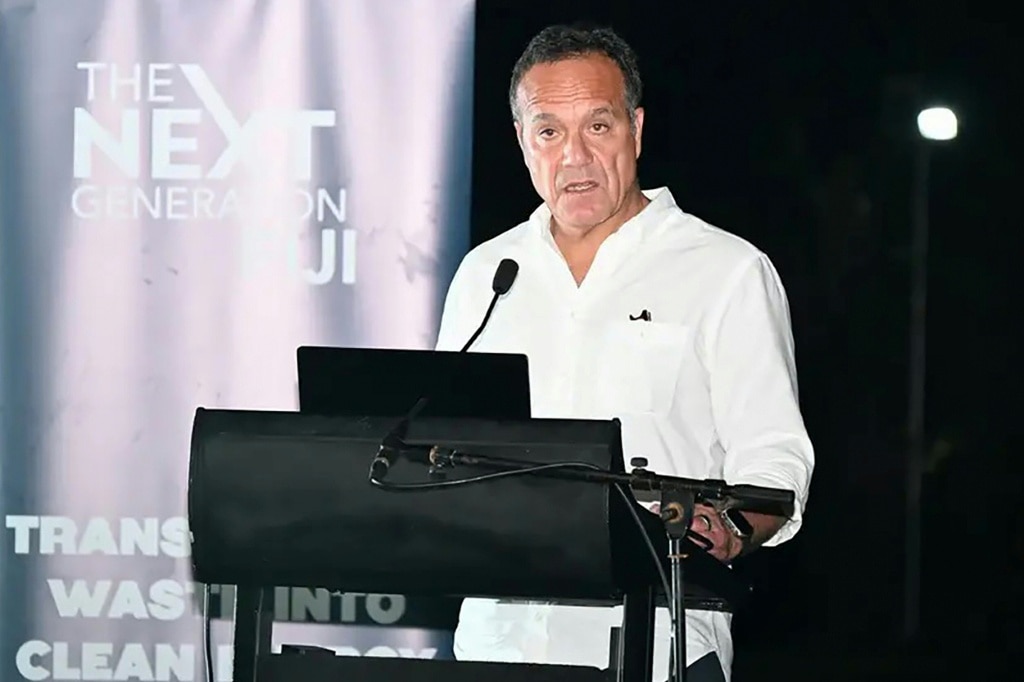
    A $630 million proposal to construct a massive waste-to-energy incinerator on Fiji’s main island has ignited widespread public and political pushback, with critics decrying the project as a form of “waste colonialism” that threatens one of the South Pacific’s most beloved coastal tourism hubs.

    The initiative is led by two Australian businessmen: Ian Malouf, founder of the Australian waste disposal giant Dial-a-Dump, and Rob Cromb, owner of the global fashion label Kookai, who was born in Fiji and maintains manufacturing operations for his brand in the country. The pair plan to build both the incinerator and a dedicated port just 15 kilometers from Nadi, Fiji’s primary international tourism gateway that welcomes hundreds of thousands of visitors annually to its iconic white-sand beaches and coral reefs.

    According to project projections, the facility would process up to 900,000 tonnes of non-recyclable waste each year. Proponents argue the incinerator could meet 40% of Fiji’s total electricity demand, cutting the small island nation’s heavy reliance on expensive and polluting diesel-generated power. In a formal statement, Cromb noted that energy-from-waste systems are widely deployed in regions with strict global environmental standards, asserting that diverting waste from landfills—where methane, a far more potent greenhouse gas than carbon dioxide, is released—would deliver net lifecycle emissions benefits. He also emphasized the project would address Fiji’s own domestic waste management challenges and rejected claims that it would primarily import foreign waste. “It is not a project intended to import waste from overseas,” Cromb said, adding that developer TNG has taken local concerns over environmental safety, transparency, and project scale seriously.

    However, official project documents submitted to Fiji’s government tell a different story: the facility is designed to process not only local waste but also up to 700,000 tonnes of waste shipped annually from Australia and other regional economies. Environmental documents also confirm the incinerator would increase Fiji’s total national greenhouse gas emissions by 25%—a striking figure for a low-lying island nation that has positioned itself as a global leader in climate change advocacy. Opponents add that toxic ash residue and dioxin emissions would contaminate local fishing grounds and the broader food chain, threatening the livelihoods of coastal villages that have relied on the ocean for generations.

    The project already faced a high-profile rejection years earlier in Australia: Malouf spent seven years pursuing approval for an identical waste-to-energy facility near Sydney’s Blacktown suburb, only to have it blocked in 2018 over documented risks to public health. Stephen Bali, who led local opposition as Blacktown mayor and now serves as a member of New South Wales’ state parliament, has publicly called on Fijian officials to commission independent scientific analysis of the proposal. “Gathering up rubbish from Australia, driving it in a diesel truck to port, putting it on a diesel ship to Fiji to be offloaded — it would be interesting to look at those emissions,” Bali told Agence France-Presse. “We need to deal with our own waste.”

    On Tuesday, Inoke Tora, a traditional Fijian landowner, traveled by bus from the proposed project site to the capital city of Suva to deliver a villagers’ petition opposing the plan to Fijian Prime Minister Sitiveni Rabuka. “There are hundreds of people living in villages in this place and they fish each day, eat fresh crabs. They call that beach paradise,” Tora told AFP during his journey. “The government should stop this.”

    High-profile Fijian figures have echoed the opposition. Fiji’s United Nations Ambassador Filipo Tarakinikini wrote in a social media post Monday that the Vuda Coast, the project’s proposed location, “must not become the Pacific’s ashtray,” echoing widespread criticism that wealthy nations are shifting their waste burdens to vulnerable Pacific island states, a practice opponents label as waste colonialism. Fiji’s Tourism Ministry has also warned that the incinerator could jeopardize the entire Nadi tourism region—Fiji’s economic backbone, which draws millions of visitors annually drawn to the country’s reputation as an unspoiled eco-tourism destination. The ministry noted that similar waste facilities globally are sited far from population centers and tourist hubs, while this proposal would place the incinerator near residential villages, hotels, and local schools. Local resident Eremasi Matanatabu, a food company manager based in the region, added that the industrial facility would irreparably alter the historic bay where the first Fijian settlers arrived centuries ago. “It will stick out like a big sore thumb,” he said.

    Opponents also point out that importing large volumes of foreign waste to Fiji would violate the 1989 Basel Convention, a global treaty restricting transboundary movement of hazardous waste, which both Australia and Fiji have ratified. As of this week, Fijian environmental officials confirmed the project is still under formal intergovernmental review, with no final decision yet reached. Malouf has not responded to multiple requests for comment from AFP.

  • ‘No ability or power’: Radio giant’s claim about bullying in Kyle & Jackie O stoush

    ‘No ability or power’: Radio giant’s claim about bullying in Kyle & Jackie O stoush

    One of Australia’s biggest radio powerhouses has fired back in a high-stakes legal battle with its former star breakfast duo, Kyle Sandilands and Jackie ‘O’ Henderson, making a bombshell legal claim that it had no ability to intervene to stop alleged on-air bullying against Henderson. Court documents filed by ARN Media’s subsidiary Commonwealth Broadcasting Corporation (CBC) have pulled back the curtain on the network’s formal defence, launched after both popular hosts launched multi-million-dollar lawsuits following their abrupt firing earlier this year.

    The sacking came in the wake of a fiery on-air blow-up between the long-time co-hosts, where Sandilands publicly lashed out at Henderson, calling her “off with the fairies”, “unfocused” and accusing her of not caring about their top-rating KIIS FM breakfast program. The explosive argument, which grew out of Sandilands’ criticism of Henderson’s well-known public interest in astrology, marked the breaking point for a working relationship that had been strained by allegations of ongoing mistreatment.

    Following their termination, both Sandilands and Henderson have taken legal action against the network, with vastly different claims. Henderson, through her production company Henderson Media, alleges her dismissal amounted to unlawful adverse action after she informed the network she could no longer continue working alongside Sandilands. She is seeking a staggering $82 million in compensation for the early termination of her 10-year contract, which paid Henderson Media $9.4 million annually to deliver her on-air services.

    For his part, Sandilands is pushing for immediate reinstatement to his old role. He argues that his blunt, abrasive comments to Henderson were simply in line with the on-air persona CBC actively cultivated for the show, and that his firing is unlawful because no serious misconduct or breach of contract actually occurred.

    In its formal defence lodged with the Federal Court, ARN has pushed back hard against both claims, taking a particularly controversial stance on Henderson’s bullying allegations. The network confirms it holds service contracts with the hosts’ own separate production companies – Henderson Media for Henderson, and Quasar for Sandilands – not with the personalities directly. ARN argues that under the terms of these commercial agreements, the production companies hold exclusive responsibility for controlling how program services are delivered, and for ensuring the health and safety of their talent while they are on air.

    “As a consequence, once any broadcast began, CBC had no ability or power to contemporaneously prevent Mr Sandilands from engaging in bullying or other unwanted conduct towards Ms Henderson,” the defence documents state. The network further emphasized that the $9.4 million annual deal with Henderson Media explicitly places the obligation to protect Henderson’s wellbeing on her own company.

    Henderson’s legal team has painted a far different picture of events. In a formal complaint letter sent to ARN and CBC just days after the February 20 incident, which was included in the network’s defence filing, lawyers allege that Henderson endured persistent, relentless bullying at Sandilands’ hands for a long time before the public blow-up. The letter claims that ARN had repeated opportunities to address the behaviour, but failed to take meaningful action, both legally and ethically.

    “The simple fact is that our client has been attacked and bullied on live prime time radio,” the complaint reads. “The consistent and ongoing bullying has left Ms Henderson psychologically unwell and has defamed and humiliated her in a public forum.” At the time the letter was sent, Henderson’s legal team noted she was actively considering additional defamation proceedings against the network and Sandilands.

    Both legal matters connected to the former KIIS FM stars are scheduled for a directions hearing in the Federal Court this Friday, marking the first public step in what is expected to be one of the highest-profile media legal battles in recent Australian history.

  • ‘Hoodoos’: Souths aim to end crazy losing streak in Melbourne against Storm side that is in all sorts

    ‘Hoodoos’: Souths aim to end crazy losing streak in Melbourne against Storm side that is in all sorts

    In the brutal, unpredictable world of National Rugby League, few hoodoos loom as large or as unbreakable as the South Sydney Rabbitohs’ staggering 20-match losing streak against the Melbourne Storm on Melbourne home soil. Yet, as the two clubs prepare to clash on Anzac Day, the Bunnies find themselves presented with the best possible opportunity to finally slay this decades-long ghost, taking on a Storm side mired in a five-match losing slide and lingering near the bottom of the 2026 NRL ladder.

    The grim numbers behind the streak paint a picture of complete dominance from the Storm across every era and venue in Melbourne. Across seven clashes at the old Olympic Park stadium, Melbourne outscored South Sydney by a lopsided 288 points to just 42. Since the Storm moved to AAMI Park, the result has remained the same: the Rabbitohs have dropped all 13 matches played at the venue, with three of those losses coming by a single, devastating point that has only added to the curse’s reputation.

    Despite the weight of this historic failure, South Sydney’s leadership and playing group say they have deliberately avoided discussing the streak inside the change rooms, choosing instead to focus on the task at hand rather than the ghosts of matches past. Fresh off a dominant victory over the St. George Illawarra Dragons, where star fullback Latrell Mitchell turned in a career-defining performance with four tries, captain Cameron Murray says he refuses to give the hoodoo any extra mental weight.

    When asked what could finally make the unwanted streak change on Saturday night, Murray downplayed the significance of past results, pointing to the New Zealand Warriors’ recent end to their own 17-match losing skid against the Storm as proof that old records can be broken. “I honestly try not to think too much about records or any hoodoos or anything like that,” Murray told reporters. “It’s always a big challenge going down to Melbourne. They’ve been the top team, the pinnacle of this competition for a long time. Playing them in their backyard has proven to be a little bit extra hard coming up against a team like that. They’re always strong, Melbourne. We always have to be on our A-game and we have to be ready to work hard for a win.”

    While the Storm’s aura of invincibility appears to have fractured in the 2026 season, ravaged by a long list of key injury absences that have left the perennial powerhouse sliding down the ladder, Murray warned against underestimating Craig Bellamy’s side. He noted that the 2026 NRL season has been the most competitive in recent memory, with any side capable of pulling off an upset on any given weekend, rendering traditional form guides all but useless.

    “I haven’t been keeping too close an eye on how they’ve been going, but the competition’s hard now,” Murray said. “It’s probably more even than it has been in the past, and we’ve always maintained the fact that any NRL team who turns up on their day is a hard team to beat. I guess that’s just proven this year with the mixed results. Staying true to that mentality, Melbourne have got the talent and the skill across the park to be dangerous regardless of how they’ve started the season. They’ve got some world-class players in that team, so we certainly won’t be taking them lightly and we’ll certainly be preparing for a good Melbourne team.”

    For the Rabbitohs, one bright spot heading into the clash is the incredible try-scoring form of record-breaking winger Alex Johnston against the Storm. Across 15 career matches against Melbourne, Johnston has crossed for 17 tries, a haul that most strike forwards would envy over an entire career. Like his captain, Johnston says he has no interest in dwelling on the club’s historic losing streak, focusing instead on executing South Sydney’s game plan to get the win.

    “That’s the past and we’re here to do a job this week,” Johnston said. “It should be a good little trip down there and we’re in a good space. We’ve just got to focus on playing good footy ourselves. We haven’t spoken about it until now when you brought it up. We haven’t really spoken about it and we’re just here to play and focus on ourselves and play good footy.”

  • Child safety staff suspended after bombshell review finds foster kids housed with triple-murderer Regina Arthurell

    Child safety staff suspended after bombshell review finds foster kids housed with triple-murderer Regina Arthurell

    A catastrophic failure of child protection protocols in New South Wales (NSW), Australia has sparked widespread public anger after a damning independent review revealed two vulnerable foster children were placed in the home of a convicted triple killer, despite an explicit warning raised with official child protection services.

    The NSW Department of Communities and Justice (DCJ) launched the review after Sydney radio outlet 2GB broke the story of the shocking placement last month. The investigation uncovered that a concerned individual first contacted the state’s official child protection helpline in December last year to flag that convicted serial killer Regina Arthurell, formerly known as Reginald Arthurell, was already living with one foster child.

    Rather than launching an urgent risk assessment, department staff dismissed the warning based on unsubstantiated assumptions about Arthurell’s age, wheelchair use and existing supervision arrangements. Shockingly, just three months later in March, a second foster child was approved to move into the same home.

    Arthurelle’s criminal record is one of the most serious in New South Wales justice history: the 50-year-old (who transitioned from male to female while serving a 24-year sentence for the 1995 murder of his fiancée) has three separate homicide convictions. In 1974, he was found guilty of stabbing his stepfather to death, followed by a 1981 conviction for killing a man during an armed robbery, before his 1995 conviction for bludgeoning his fiancée to death with a wooden plank. He was released from custody prior to the foster placement.

    The DCJ’s official review concluded that child safety was never made the central priority of the decision-making process that led to the placements. The investigation confirmed existing departmental policies and protocols were completely ignored, and required cross-checks within the department’s own case management system were never completed.

    “The offender’s history stood out as a clear indicator that they should not have been residing with children without a thorough, holistic risk assessment,” DCJ Secretary Michael Tidball stated in the official review report. “The safety of the children was not placed at the centre of decision-making. The review identified significant failures in casework practice, highlighting shortcomings in risk identification and assessment, triage, and safeguards within the child protection response for the children.”

    Following the release of the review’s findings, two senior child protection workers involved in the placement decisions have been suspended from duty. Tidball has referred the full report to the DCJ’s internal conduct division to launch a formal misconduct investigation, though no official findings against the workers have been published at this stage.

    NSW Minister for Families and Communities Kate Washington described the incident as an unacceptable failure that should never have occurred. “I was just so sorry that it had,” Washington told 2GB. “Not only have they made a determination based on unverified information about age and capacity, you know, the fellow was a serial killer.”

    Washington emphasized that the failure stemmed from individual wrong decisions that directly violated departmental rules, not a lack of system capacity or resources. “To be really clear, we had capacity in the system at the time for an investigation to be undertaken, we had the resources,” she said. “It was wrong calls made at the wrong time, but they are working in very difficult, complex environments. Our DCJ child protection caseworkers see the worst of the worst in our society, they walk into homes where parents are harming their children. There are difficult decisions made daily by our case workers, but we do expect them to follow department policies and procedures, and that’s what didn’t happen on these occasions that led to this awful situation.”

  • ‘She’s insane’: NSW squad unveiled for State of Origin opener, with star making shock move to forwards

    ‘She’s insane’: NSW squad unveiled for State of Origin opener, with star making shock move to forwards

    The New South Wales Blues have dropped a major selection bombshell for the opening match of the 2024 State of Origin women’s series, with superstar outside back Tiana Penitani Gray set to make an unprecedented positional shift to the forward pack. The announcement, made by head coach John Strange at the iconic Sydney Opera House, has turned pre-series expectations on their head just one week out from kickoff in Newcastle.

    Strange said the call to move Penitani Gray into the starting second row was anything but a gamble. The coach revealed it took just 13 minutes of an internal trial for him to be convinced that the versatile Sharks star, who has previously played wing, centre and five-eighth for NSW, had all the tools to excel in an unfamiliar forward role. Calling the selection a “no-brainer”, Strange pushed back on any criticism of his unorthodox approach to team selection, noting his eye for matching player attributes to untraditional positions has worked in the past.

    “I know I look at football differently to most coaches and most people, but I just look at the physical attributes they’ve got and the mindset they have,” Strange explained. “If you sit down and put all those down on a list, she ticks every box to be an outstanding back-rower. We’ve seen her in the centres, she loves running lines, which is a courage thing that not everyone has. She’s also a great defender, a really good communicator – which you need in the back row to coordinate the middle and edge on defense – and she’s incredibly aggressive.”

    Strange pointed to his successful conversion of former sevens winger Yasmin Meakes into a top-tier back-rower during his time coaching the Roosters as a precedent for the shift. “I did the same with Yasmin Meakes when I coached her at the Roosters,” he said. “I just said to her one day, ‘I’m going to put you in the back row because I think you’re going to be very good there because of those personal characteristics and a mindset’. Tiana, it’s a no-brainer for me. I think she’ll be outstanding there.”

    To accommodate Penitani Gray’s promotion to the starting forward line, Strange moved veteran edge forward Kezie Apps to an interchange spot. He also passed over the chance to select his own daughter Jasmin, who participated in the squad’s six-week pre-series camp, in favour of the high-risk, high-reward move for Penitani Gray.

    Another major feel-good story in the 17-person squad is the return of front-rower Millie Elliott, who is back in the Blues side 12 months after stepping away to give birth to her first child, Gigi. Elliott, who missed last year’s victorious series, has impressed throughout pre-selection camps, with NSW captain Isabelle Kelly revealing her fitness testing results are already identical to her pre-pregnancy levels.

    Rounding out the squad is young speedster Teagan Berry, who will make her State of Origin debut off the interchange bench. Berry earned her call-up after a stellar NRLW season with the Dragons, where she notched a prolific try-scoring record to catch the selectors’ eyes. Aside from Penitani Gray’s positional shift, the squad remains largely settled, retaining most of the core group that secured a 2-1 series win over Queensland last year.

    Kelly, who has played alongside Penitani Gray for years, has thrown her full support behind the positional experiment, saying the team’s vice-captain has all the qualities to thrive in the new role. “I think wherever ‘T’ plays, she’s incredible,” Kelly said. “I spoke to her as soon as the selection started… I just said, ‘Hey, big back-rower!’ There’s no one else I’d rather trust there. When you see the way T plays and how she can run the ball with the strength and the physicality that she has, it’s second to none. She’s a vice-captain to me and really helps me out with a lot of leadership skills, and I think when she plays, she showcases why she’s such a great leader. So no matter where that girl plays, she’ll always be incredible.”

    Of Elliott’s return, Kelly added: “She’s insane. We had a few compulsory sessions for the Roosters leading back in the back end of last year when she started with a lot of testing, and I’m pretty sure her testing results were the same before she went away to have the baby, so she’s insane. I think Millie’s mindset is something that’s very unique. She’s able to push herself in the times that a lot of people can’t and finds those one-percenters to be better every single time. I think her hard work and how many minutes she can play at that intensity is something that can help us really out there. She’s going to be great, and she’s got that extra motivation now with Gigi and wanting to be performing at a high level as well to showcase to her when she’s eventually older what she can do.”

    The first game of the 2024 State of Origin women’s series will kick off next Thursday in Newcastle, with the Blues looking to defend their 2023 title against a yet-to-be-announced Queensland side.