标签: Oceania

大洋洲

  • US government critical of Australia’s ‘opposition’ to ISIS bride repatriation

    US government critical of Australia’s ‘opposition’ to ISIS bride repatriation

    A diplomatic rift has emerged over the fate of 13 Australian citizens – four adult women and nine children – currently stranded in northeastern Syria, after senior United States State Department officials publicly condemned Canberra’s ongoing refusal to facilitate their repatriation. The stranded group, all linked to members of the defunct Islamic State (ISIS) militant network, had recently attempted to leave the overcrowded al-Roj camp where they have been held for years, only to be turned back and detained once again, a reversal that drew direct criticism from US policymakers.

    In a February 18 correspondence obtained and published by the *Sydney Morning Herald*, a senior State Department policy analyst laid out Washington’s formal position, noting that the US has actively pushed for all nations to repatriate their citizens held in Syrian detention camps. The official emphasized that this push has grown more urgent amid rapidly shifting security and political developments across northeastern Syria, where the future of camp governance remains deeply uncertain. “I see that the Australian government has dug in on its opposition to repatriating them from the camp,” the analyst wrote, adding that the frustration of the stranded group, now forced back to al-Roj after a failed exit, is entirely understandable. “I can only imagine how frustrating their return to Roj is,” the correspondence read.

    The group had made tangible progress toward a return to Australia earlier this year. With support from prominent Sydney community leader and respected medic Jamal Rifi – an Order of Australia recipient who has spent more than a decade assisting this population – the citizens secured valid Australian passports. By Saturday last week, they had exited al-Roj camp and even held confirmed tickets for commercial flights back to Australia, only for the effort to collapse when Australian authorities blocked the repatriation, forcing them back to the camp. Rifi has long argued that Australia’s domestic security is better served by bringing the group home, particularly the children, who he calls innocent victims of their parents’ ideological choices. In a February statement, Rifi noted, “I said publicly that these children were the first victims of the terrible actions of their fathers,” adding that bringing the group home would leave Australia safer than leaving them stranded in a unstable region where extremist radicalization remains a persistent risk.

    Major Australian Islamic and community organizations have echoed Rifi’s calls, placing mounting public pressure on Prime Minister Anthony Albanese’s center-left government to reverse course. The Australian National Imams Council, the Muslim Legal Network, and the Lebanese Muslim Association have all publicly urged the government to allow the group to return, framing the children’s situation as a humanitarian crisis that cannot be ignored.

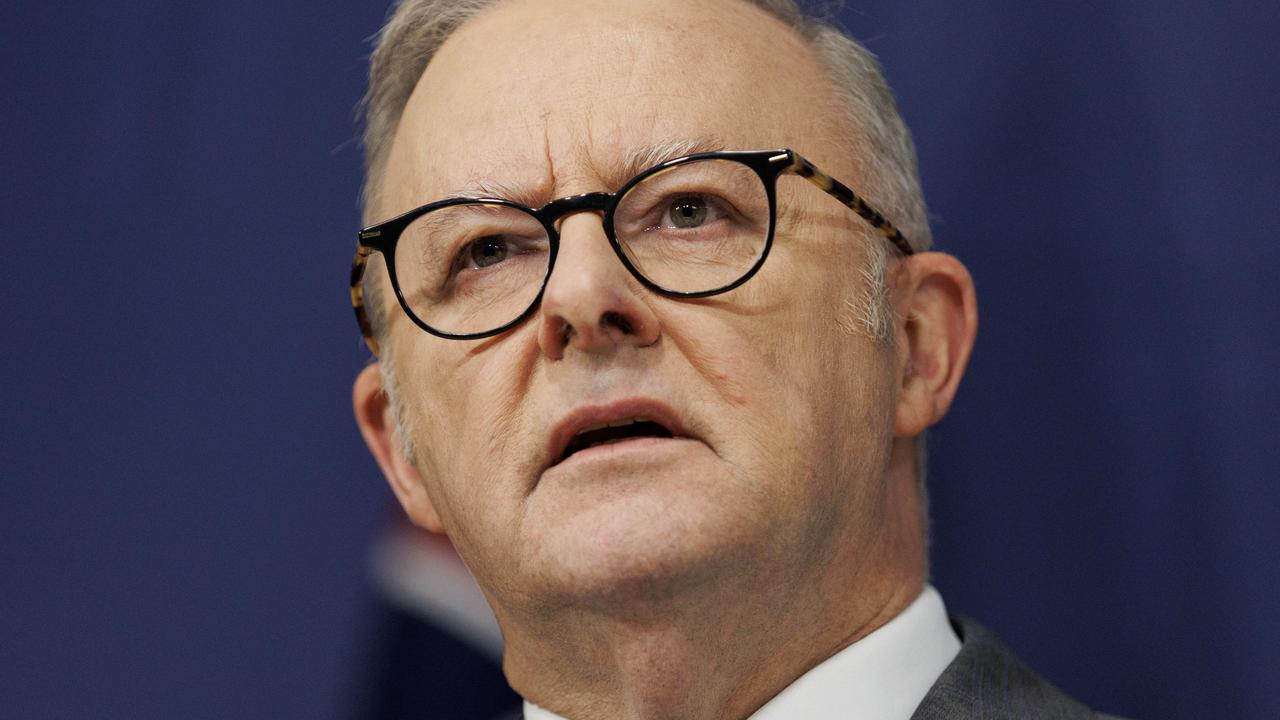
    In response to the unfolding controversy, the Albanese government has denied providing any official assistance to facilitate the group’s exit from Syria, though it has acknowledged that the citizens hold a legal right to enter Australian territory under existing national legislation. Prime Minister Albanese doubled down on his long-held position during a press briefing in Canberra Tuesday, reaffirming his opposition to voluntary repatriation for adult citizens who chose to join ISIS. “My views have not changed with regard to people who went overseas and chose to support ISIS rather than Australia, when ISIS had an objective of setting up a caliphate to literally attack democracies like Australia,” he told reporters. He did, however, acknowledge the vulnerable status of the children, describing them as “victims of their parents’ bad choices, evil choices, to undermine Australia’s national interest” – a stance that leaves the government caught between legal obligations, political pressure, and diplomatic criticism from its closest ally.
  • War in the Middle East: latest developments

    War in the Middle East: latest developments

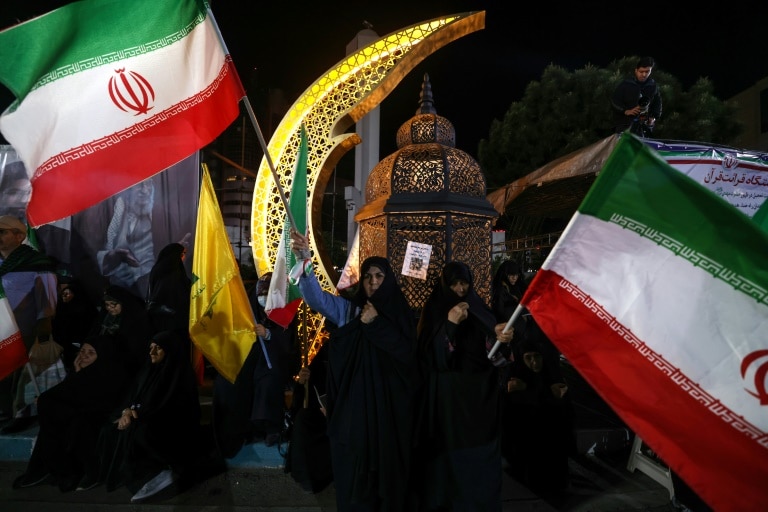
    Two months after a joint U.S.-Israeli military offensive sent shockwaves rippling through global energy markets and upended regional security, the Middle East remains locked in a state of elevated tension, with new diplomatic moves, ongoing military clashes and economic volatility defining the latest chapter of the crisis. On Monday, the White House confirmed it is reviewing a new proposal from Iran aimed at de-escalating tensions and unblocking the critical Strait of Hormuz, a chokepoint through which roughly 20% of global oil supplies transit daily. According to Iran’s Fars News Agency, Tehran transmitted the written proposal, which outlines Iran’s non-negotiable red lines covering both its nuclear program and activity around the strait, to Washington via diplomatic channels in Pakistan. U.S. President Donald Trump convened a meeting of his top national security advisors to assess the offer, with White House press secretary Karoline Leavitt telling reporters during a daily briefing that the proposal is “being discussed” among senior administration officials. As diplomatic talks remain in their earliest stages, the ongoing impasse between Washington and Tehran has already triggered fresh volatility across global markets. On Tuesday, international oil prices jumped sharply, while global equity markets sank, as shipping traffic through the Strait of Hormuz remains severely choked, disrupting global energy supply chains. Beyond the diplomatic standoff, Iran has laid out clear conditions for restoring security across the oil-rich Persian Gulf: Tehran demands ironclad security guarantees that the U.S. and Israel will not launch another offensive against its territory. “A durable and permanent cessation of aggression against Iran supplemented by credible guarantees of non-recurrence and full respect for the legitimate sovereign rights and interests of Iran” are non-negotiable preconditions for any de-escalation, Amir Saeid Iravani, Iran’s permanent representative to the United Nations, told a session of the UN Security Council Monday. Meanwhile, military clashes continue to claim lives across the region despite the existing ceasefire agreement between Israel and the Iran-backed militant group Hezbollah. Lebanon’s Ministry of Public Health confirmed Monday that recent Israeli airstrikes on southern Lebanon killed four people, including one civilian woman, and wounded 51 more, three of whom are children. Israeli military leadership has warned that the country faces an extended period of conflict across multiple fronts in the coming year. Israel Defense Forces Chief of Staff Lieutenant General Eyal Zamir noted that the IDF has maintained continuous, multi-front combat operations since the October 7, 2023 Hamas attack that sparked the ongoing Gaza war, and projected that 2026 will bring another full year of fighting across all active fronts. Israeli Prime Minister Benjamin Netanyahu echoed that assessment, emphasizing that Hezbollah remains a critical national security threat that requires continued Israeli military action in Lebanon. “There are still two central threats from Hezbollah: the 122mm rockets and the drones. This demands a combination of operational and technological activity,” Netanyahu said in a formal statement. While Netanyahu acknowledged that Hezbollah now retains only roughly 10 percent of the missile arsenal it held at the start of the current conflict, he added that the remaining weapons still pose a constant threat to Israeli civilians living in the country’s northern border regions. As tensions simmer on all fronts, the international community continues to monitor developments closely, with growing concern over the risk of the conflict expanding into a wider regional war that could have devastating consequences for the global economy and civilian populations across the Middle East.

  • ‘Two five-eighths’: Trent Hodkinson calls for the Bulldogs to make a change in the halves to fix their attacking woes

    ‘Two five-eighths’: Trent Hodkinson calls for the Bulldogs to make a change in the halves to fix their attacking woes

    As the last Canterbury-Bankstown Bulldogs halfback to steer the club to an NRL grand final, Trent Hodkinson knows firsthand how positional misalignment can derail a once-promising side. Now, he’s sounding the alarm on a familiar pattern unfolding at Belmore this season, one that mirrors the turbulence that forced him out of the club nearly a decade ago.

    Hodkinson’s legacy with the blue-and-whites remains one of the club’s most celebrated recent chapters. In 2014, just months after he and halves partner Josh Reynolds broke Queensland’s long State of Origin winning streak, Hodkinson led the Bulldogs to the NRL’s ultimate decider. Their successful pairing was built on complementary strengths: Hodkinson served as the chief playmaker, controlling match tempo with a pinpoint kicking game, while Reynolds thrived in the five-eighth role, playing off instinct and creating opportunities with spontaneous play. The dynamic worked seamlessly—until a 2015 roster restructuring pushed Hodkinson out the door to make room for two five-eighths, Reynolds and Moses Mbye. The result was disastrous: in 2016, the Bulldogs posted the lowest point total of any top-eight side in the competition.

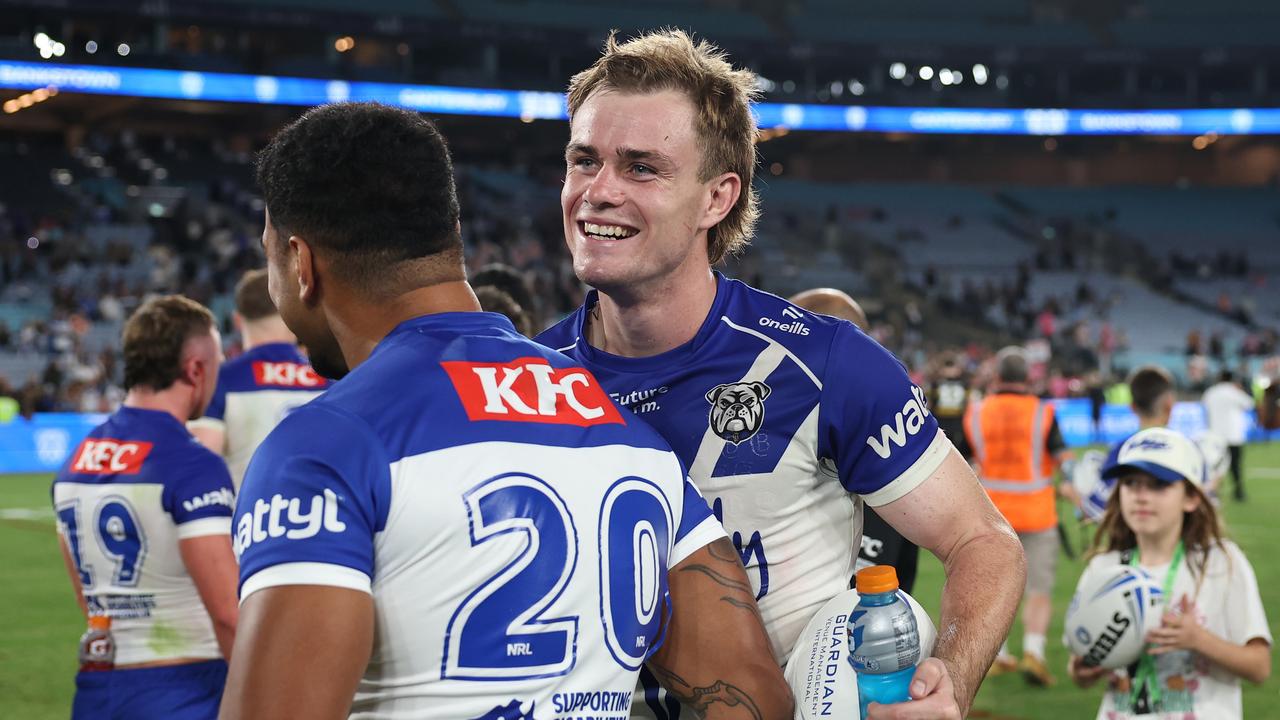
    Today, Hodkinson sees the same problematic setup taking shape. Current Bulldogs playmakers Lachlan Galvin and Matt Burton are both natural five-eighths, in his assessment, and the lack of a dedicated, controlling halfback at the No.7 position has left the team’s attack adrift. Through the early part of the 2024 season, Canterbury has scored the second-fewest points of any club in the NRL, a statistic that echoes the 2016 slump.

    NRL Immortal Andrew Johns has already publicly called for Galvin to shift permanently to five-eighth, a recommendation Hodkinson fully endorses. The former Bulldogs playmaker has thrown his support behind two candidates to fill the vacant halfback role: veteran experienced playmaker Sean O’Sullivan, who is already a member of the Bulldogs roster, and young up-and-comer Mitchell Woods, who is currently working his way back from injury.

    “It reminded me of 2015 when it was myself, Josh Reynolds and Moses Mbye, and three couldn’t go into two. I got pushed out of the club but I truly believe Moses and Josh were two five-eighths,” Hodkinson explained. “It’s a similar situation now. I know Lachie’s been playing seven and he played a really good game the other week against Penrith, but I feel like they’re very similar players. Toby Sexton, who left the club last year, was a genuine seven, and you’ve got O’Sullivan there who’s a genuine seven.”

    Beyond naming O’Sullivan as an immediate option, Hodkinson is pushing for the club to give the talented 19-year-old Woods an opportunity at the top level. As a member of the coaching staff for New South Wales’ under-19s Origin side, Hodkinson has seen Woods’ ability firsthand, and says the young prospect fits the profile of a traditional game-controlling halfback the club desperately needs.

    “I’m not the coach there and (Cameron) Ciraldo gets paid the big money to make the decisions, but I’d even like to see young ‘Woodsy’,” he said. “We had him last year in the 19s Origin team and he’s a genuine seven. I haven’t seen him too much the last 6-8 months with how he’s going physically, but he’d be more than capable to step up.”

    Hodkinson also suggested Galvin, who has a large physical frame, could make a successful transition to lock if the club opts to bring in a dedicated halfback. He added that while Galvin turned in an impressive performance against the Panthers recently, the young playmaker needs to improve consistency to hold the No.7 role long-term.

    Against the common modern argument that the halfback and five-eighth positions are interchangeable—just numbers on the back of a jersey—Hodkinson stands firm that the two roles remain distinct. “I still think they’re unique positions, I really do,” he said. “You’ve got to have that one dominant half and that guy that steers them around the field. They’re similar at times but I think they’re still separate positions. You’ve got a seven, a halfback, and you’ve got a six, a five-eighth. As much as they’re compared to being very similar, they’re still very different in a way.”

    Woods, who turns 20 next month, faces ongoing speculation over whether he is mature enough for the intensity of NRL football. But Hodkinson argues that young playmakers can only prove their readiness at the top level by being given an opportunity to compete.

    “You probably don’t know until you give them a crack and get out there and then they’ve just got to figure it out themselves,” he said. “I’m sure there’s plenty of eyes at the Dogs or at multiple clubs that know when these young fellas are ready to make the step. It’s exciting, there are some really good, talented young halves coming through and I’m excited to see how they all go.”

    For now, the Bulldogs’ coaching staff led by Ciraldo holds the final call on how the club will resolve its halves puzzle, but Hodkinson’s warning echoes across Belmore: failing to address the current positional imbalance could lead to a repeat of the struggles that derailed the side nearly a decade ago.

  • Australian shares hit longest losing streak in years on inflation fears

    Australian shares hit longest losing streak in years on inflation fears

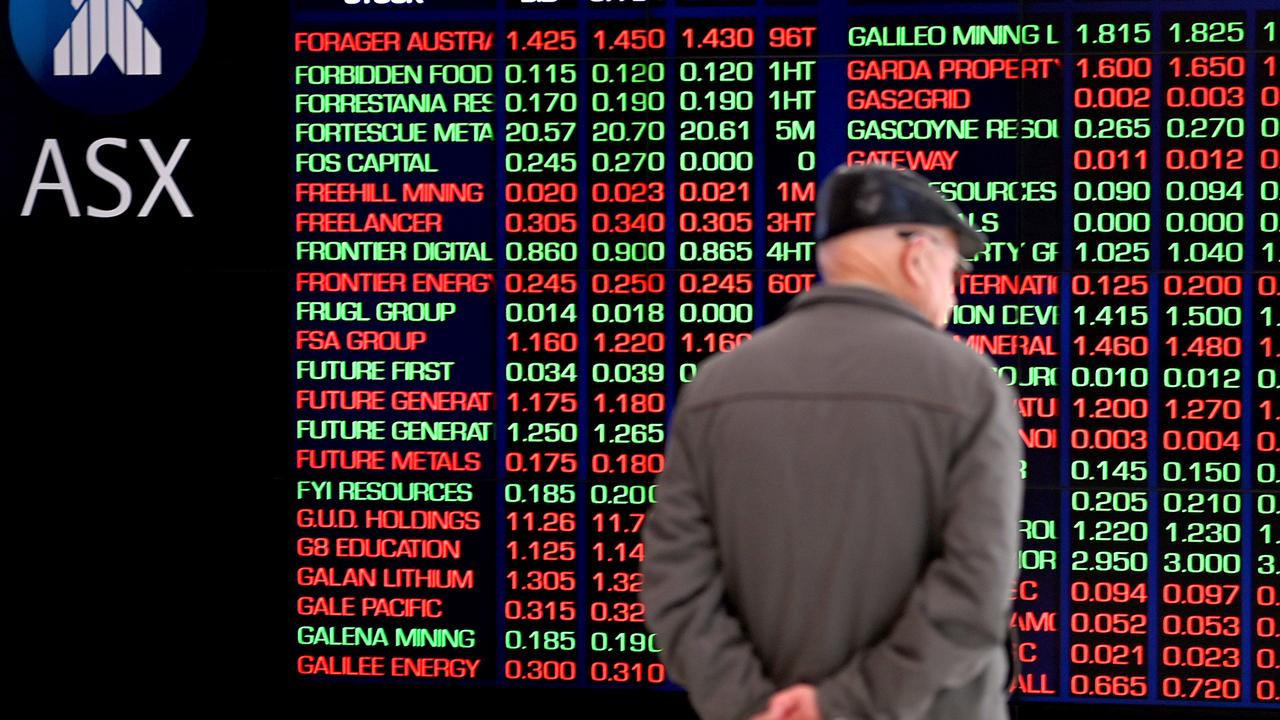
    Australia’s benchmark share market extended its downward trajectory into a sixth consecutive trading session on Tuesday, marking its longest losing run in more than two years, as spiking crude oil prices and widespread investor anticipation of a key upcoming inflation reading dragged most sectors lower.

    The flagship S&P/ASX 200 shed 55.70 points, a 0.64% decline, to close at 8710.70, while the wider All Ordinaries index followed a similar path, falling 55.80 points or 0.62% to settle at 8935. The Australian dollar also weakened against the U.S. dollar, ending the session at 71.63 U.S. cents. This six-session losing streak is the longest the ASX 200 has recorded since June 2022.

    Out of the 11 major market sectors, nine closed in negative territory, with only the energy sector delivering consistent gains, lifted directly by the ongoing rally in global oil prices. International benchmark Brent Crude climbed an additional 2.5% to hit $US110 per barrel on Tuesday, as traders monitored stalled negotiations over a potential U.S.-Iran peace deal that has stoked concerns over global oil supply disruptions.

    Major Australian energy names logged solid gains on the back of rising crude prices: Woodside Energy saw its shares rise 0.84% to $32.40, oil and gas producer Santos gained 1.18% to close at $7.74, and fuel retailer Ampol added 1.27% to end the day at $34.26.

    These energy gains were more than offset by broad declines across consumer discretionary, healthcare, and materials sectors, as investors braced for Wednesday’s critical inflation data release. Markets fear that a hotter-than-expected inflation reading will give the Reserve Bank of Australia justification to resume its cycle of interest rate hikes, a prospect that has weighed heavily on rate-sensitive sectors.

    Leading the declines in consumer discretionary stocks, conglomerate Wesfarmers dropped 2.10% to $72.31, gaming giant Aristocrat Leisure fell 4.21% to $46.20, and Lights Wonder slipped 3.27% to $116.32. In the healthcare space, biotechnology leader CSL extended its recent downward trend, falling 2.22% to $128.90, Sigma Healthcare declined 0.72% to $2.75, and medical technology firm Pro Medicus dropped 1.53% to $136.

    AMP’s chief economist Shane Oliver warned that headline inflation is likely to spike to 5% in the March quarter data, driven by surging fuel costs and rising insurance premiums. “We are going to see a spike,” Oliver noted. “On our rough estimates fuel prices rose by 30 per cent in the month of March – a bit less for petrol, a lot more for diesel – and that is on its own going to add more than one percentage point to inflation.”

    Major mining stocks also slumped, pressured by rising operational fuel costs and a 1.14% drop in gold prices to US$4628 per ounce. BHP fell 1.30% to $55.43, Rio Tinto slipped 0.47% to $172.12, though Fortescue Metals bucked the broader trend to climb 1.72% to $20.11. Gold producers were hit particularly hard: Northern Star Resources dropped 2.89% to $21.50, Evolution Mining fell 2.98% to $12.69, and Newmont sank 4.50% to $158.69.

    Beyond domestic inflation expectations, market volatility continues to be driven by geopolitical tensions in the Middle East, according to Kyle Rodda, senior financial market analyst at Capital.com. Rodda noted that equity prices have fluctuated wildly on unconfirmed reports about potential plans to reopen the Strait of Hormuz, a critical global oil chokepoint. He added that those reports lack credibility, as follow-up negotiations between parties have failed to materialize, former U.S. President Donald Trump has rejected the proposed deal, and military forces continue to build up around the Persian Gulf.

    Interestingly, while Australian markets grappled with downside pressure, Wall Street notched another all-time record high during overnight trading on Monday.

    In individual company news, Domino’s Pizza Australia saw its shares plunge 10.70% to $15.85, mirroring a selloff in its U.S.-listed parent company after the American fast food giant reported first-quarter sales that missed analyst expectations. The company blamed weak consumer sentiment, intense industry competition, and ongoing cost-of-living pressures for the underperformance. Bega Cheese also dropped 4.28% to $5.59 even though the company did not release any price-sensitive new information to the market. In contrast, Reliance World rallied 3.68% to $3.15 after the firm confirmed its full-year trading outlook for the 2026 fiscal year ending June 30.

  • AFL 2026: Richmond has lost two of its luckless young guns for an undetermined period of time

    AFL 2026: Richmond has lost two of its luckless young guns for an undetermined period of time

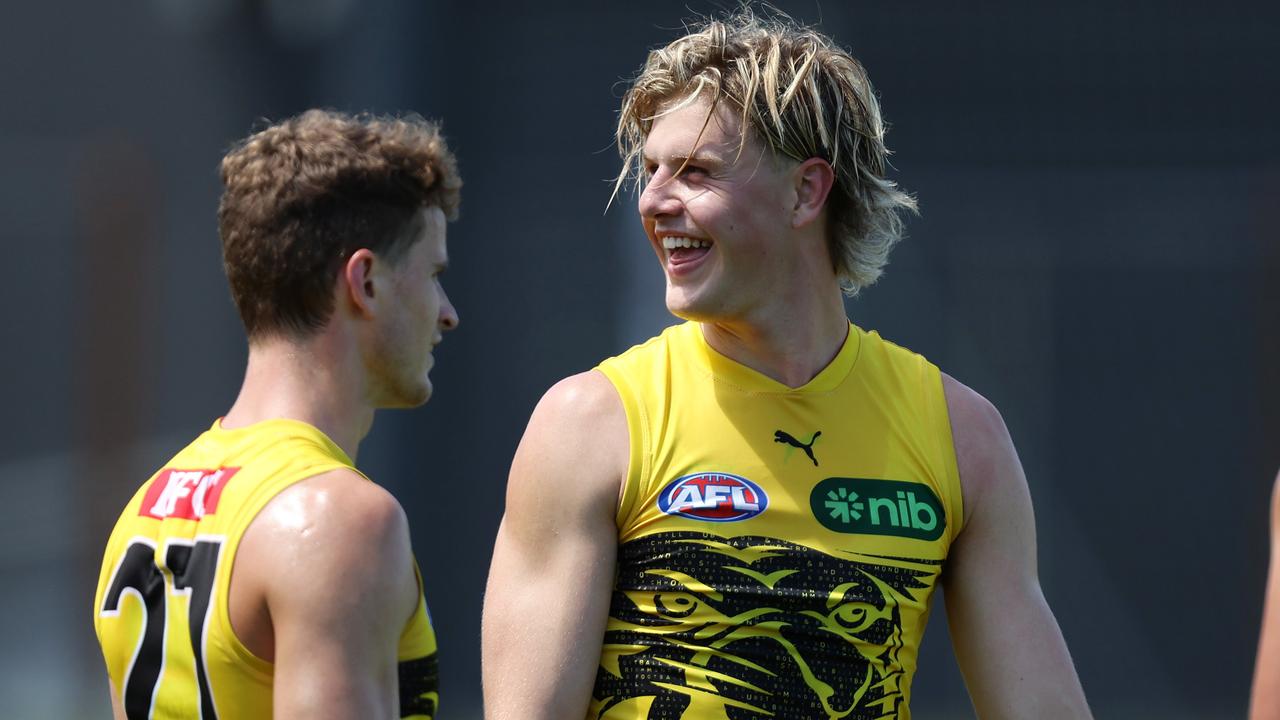
    The Richmond Tigers Australian Football League club has been dealt a fresh injury blow, with two of its young high-potential players set for extended time off the field after suffering new setbacks in training and VFL competition over the past week.

    First-round draft pick Josh Smillie, who has yet to make his senior AFL debut after being recruited by Richmond at the end of 2024, re-teared a previous quad injury during a low-intensity kicking drill at club training last week. Ben Serpell, Richmond’s high performance manager, confirmed that while the re-injury did not damage the original surgical site where Smillie underwent treatment for his prior quad issue, there is currently no confirmed timeline for the young talent’s return to competitive play.

    “To be clear, the original surgical site’s still intact, so we are going to shift him back to the TBC time frame,” Serpell told reporters. The high performance manager also acknowledged the deep frustration both players are feeling after their latest setbacks, noting that the entire club shares that disappointment. “Both Josh’s (Smillie and Gibcus) are clearly very frustrated with their injuries at this point in time, as is everyone at the Club. I think at this point in time it’s really important that we get our arms around these guys and support them through their respective recoveries and make sure that we get behind them as they progress forward.”

    The injury news is similarly discouraging for key defender Josh Gibcus, who picked up an ACL strain during a Victorian Football League (VFL) match over the weekend. Gibcus was initially assessed for the knee injury in the first quarter of the game, cleared to return to play, but reported ongoing discomfort in the days following the match. A follow-up MRI confirmed the strain, which Serpell emphasized is not a full rupture, and did not occur on the same knee that Gibcus previously had reconstruction surgery on.

    As the injury is an uncommon presentation, club medical staff will consult multiple specialist surgeons to weigh treatment options, including a non-surgical path that has already proven successful for another of the club’s players. “It is an uncommon injury, so we need to be considered with our approach for his return to play. We need to consult a number of different surgeons. We can see, for instance, Gab Seymour from our women’s program sustained a similar injury last year. She didn’t go through surgery, and she’s back out training. So we are hoping for the best for Josh,” Serpell said. The club plans to update supporters once a clear treatment and recovery plan is finalized for Gibcus, who will remain sidelined in the interim while the club assesses its options.

  • Round 9 team lists: Superstar fullbacks cleared to return as the Wests Tigers cop brutal triple blow

    Round 9 team lists: Superstar fullbacks cleared to return as the Wests Tigers cop brutal triple blow

    As the new round of the National Rugby League (NRL) approaches, the competition is bracing for a series of major team changes, driven by a mix of encouraging injury recoveries and devastating late-season setbacks for several franchises. One of the biggest stories heading into the weekend is the triple crisis hitting the in-form Wests Tigers, who will be without three critical players when they face off against the Cronulla Sharks this Sunday.

    Young star fullback Jahream Bula, who has been managing a nagging shoulder injury for multiple weeks, will be sidelined for up to four weeks to prioritize full recovery. He will be replaced in the starting lineup by Sunia Turuva. Bula’s absence is compounded by two more absences: inspirational captain Api Koroisau is suspended for three weeks, forcing hooker Tristan Hope to step into his position, while Kai Pearce-Paul will also miss the clash due to a head knock, with Tony Sukkar named as his replacement. This wave of injuries and suspensions marks a major blow for head coach Benji Marshall’s rapidly improving side, coming as they prepare to face a Sharks team that has shaken up its starting 17 to address defensive struggles. Cronulla has promoted veteran starters Cam McInnes and Briton Nikora to the first team to shore up their leaky defense ahead of the encounter.

    While the Wests Tigers face a major test of their depth, two of the league’s biggest superstars have received the all-clear to return to action, delivering a massive boost to their respective sides. In the Hunter region, the Newcastle Knights are preparing to welcome back star fullback Kalyn Ponga from a hamstring injury for their upcoming clash against the South Sydney Rabbitohs. Ponga’s return is paired with good news for the Knights: powerful centre Bradman Best has also been cleared to make his comeback. To fit the returning stars into the lineup, Fletcher Sharpe will shift to five-eighth, while Sandon Smith moves back to a bench role. For the visiting Rabbitohs, forward Keaon Koloamatangi has been named in the starting back row.

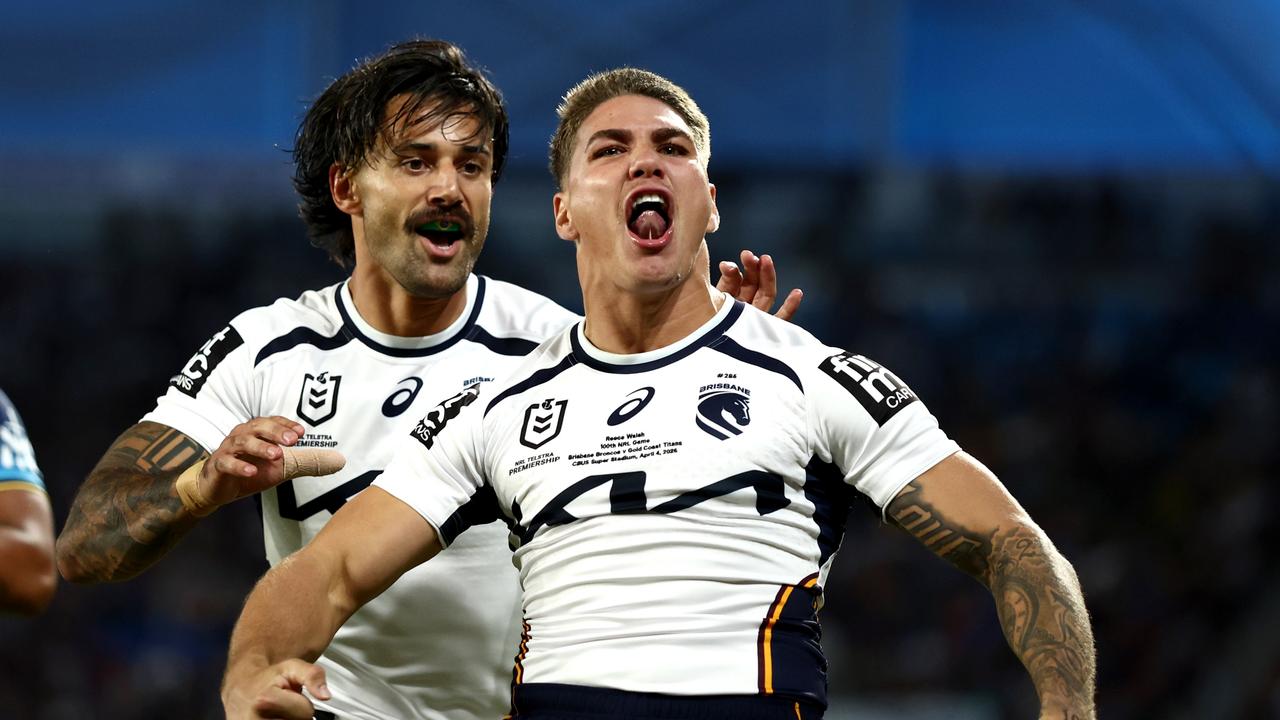
    Saturday night’s heavyweight matchup between the Brisbane Broncos and Sydney Roosters is already shaping up as an early preview of the upcoming State of Origin series, with another superstar returning to the field. Broncos fullback Reece Walsh, who has been sidelined with a facial fracture, has been named to start in the clash, where he will go head-to-head against Roosters captain James Tedesco, who is currently fighting to retain his spot in the New South Wales Blues Origin squad. Walsh is not the only key returnee for Brisbane: star forward Pat Carrigan is also back in the starting side after completing his suspension.

    Across the other NRL fixtures this weekend, a series of other changes and positional shakes have been confirmed. The Canterbury Bulldogs have retained Matt Burton and Lachlan Galvin in their halves partnership for their game against the North Queensland Cowboys, but winger Marcelo Montoya has been dropped from the starting side following a poor performance in Brisbane last round. The Cowboys have also made a change on the wing: Zac Laybutt will step in for Murray Taulagi, who misses out with a concussion.

    For defending premiers Melbourne Storm, halfback Jahrome Hughes will miss the upcoming game, with Tyran Wishart tapped to fill the void at halfback. The clash will also mark the NRL debut of exciting young winger Hugo Peel, who has earned a spot in the starting lineup. Melbourne has also made multiple changes to its back row, with Ativalu Lisati, Shawn Blore and Alec MacDonald all named to start.

    The Redcliffe Dolphins have named Brad Schneider at five-eighth for their next fixture, with winger Jack Bostock named to an extended bench as he works his way back from a long-term injury. The Canberra Raiders named Simi Sasagi in their starting back row, but the forward will need to pass a late fitness test later this week to take the field. Canberra will definitely be without Noah Martin (ankle injury) and Zac Hosking (concussion) for the round.

    Finally, New Zealand Warriors head coach Andrew Webster faces a selection call in the halves, with Luke Metcalf in line for a return after being named to the extended bench for the side’s trip to Sydney to face the Parramatta Eels. Parramatta has named experienced veteran Dylan Walker in its lineup despite the centre leaving last week’s game with his left arm in a sling.

  • AFL 2026: Adelaide forward Ben Keays reacts to ARC backflip ahead of season-defining Showdown

    AFL 2026: Adelaide forward Ben Keays reacts to ARC backflip ahead of season-defining Showdown

    As one of the players most personally impacted by the Australian Football League’s (AFL) experiment with ARC (AFL Review Centre) rule changes, Adelaide Crows forward Ben Keays was blindsided by the league’s sudden reversal of the new policy – just days out from the high-stakes annual Showdown clash against in-state rival Port Adelaide.

    Keays found out about the rule backflip during a routine media interview on Tuesday, barely hiding his shock at the sudden update. “Wow … I will probably leave it at that, I hope you guys don’t mind,” he told reporters, after confirming the announcement was the first he had heard of the change.

    The rule rollback brings the game back to the policy that directly cost Keays and the Crows a place in the 2023 finals. In that year’s round 23 match against Sydney, a late match-winning goal from Keays was incorrectly ruled a behind by the on-field goal umpire. By the old rules, the ARC could not intervene to correct the call once play had resumed after the score review. The mistake ended up eliminating Adelaide from finals contention by the thinnest of margins.

    In response to widespread criticism of that controversial incident, the AFL introduced a new rule for the 2025 season: the ARC would now be allowed to correct incorrect goal calls even after play had restarted, rolling back to the goal line to reset play once the correct call was made. However, after a series of logistical teething issues during the opening rounds of this season, league officials made the last-minute decision to scrap the new rule and revert to the pre-2025 framework.

    The unexpected policy change comes as the Crows prepare for one of their biggest matches of the 2025 season, Friday night’s Showdown at Adelaide Oval. Currently, Adelaide holds a 3-4 win-loss record after seven rounds, with a 96.1 percentage, while Port Adelaide enters the fixture on the back of a stunning upset win over premiership contender Geelong, putting Adelaide’s early premiership aspirations at serious risk.

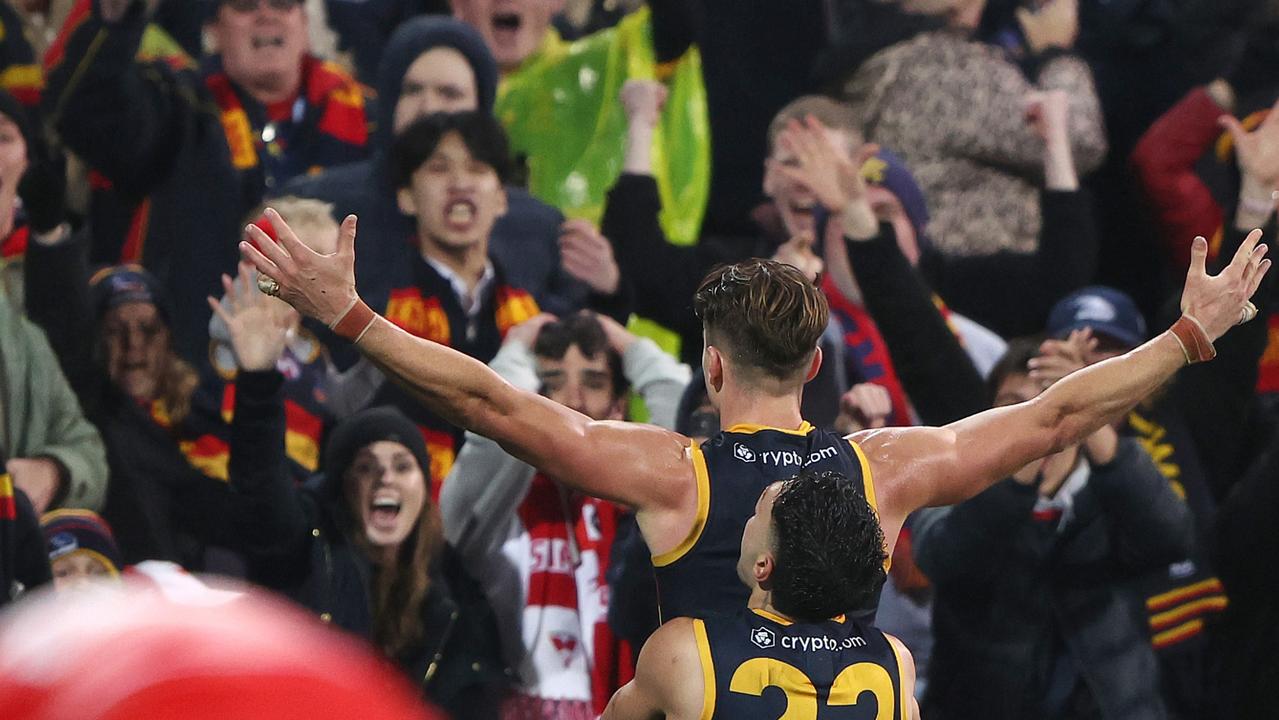
    Despite the off-field rule drama hanging over the build-up, Keays said he is relishing the unique intensity of the cross-town derby. “I just love the energetic and intense atmosphere, sort of the hum of the crowd. That’s what makes it such an amazing fixture, it’s like a bit of a cauldron out there on the Adelaide Oval and that’s created by both sets of fans. I am looking forward to all the Crows fans being there in full voice and bringing that intense atmosphere,” he said.

    One major off-field issue remains unresolved for the Crows ahead of the match: the availability of star captain Jordan Dawson, who is still grieving the sudden passing of his brother. Dawson took the field against Brisbane last weekend but was clearly emotional after the final siren, and the club has not yet confirmed whether he will feature on Friday. Keays confirmed the entire squad is standing behind Dawson and his family, whatever decision he makes. “Absolutely, we’re going to support Daws however he needs, support his family as a club and whatever he needs we’ll be there for him,” he said.

  • Simeone, Atletico chasing redemption against Arsenal

    Simeone, Atletico chasing redemption against Arsenal

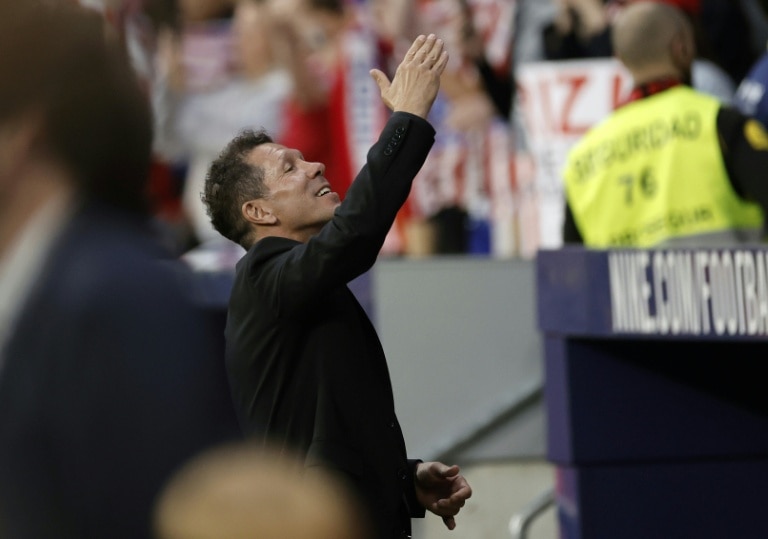
    Against a backdrop of repeated near-misses and crushing recent disappointment, Atletico Madrid and long-serving head coach Diego Simeone know exactly what is at stake when they welcome Premier League leaders Arsenal to the Metropolitano Stadium for Wednesday’s Champions League semi-final first leg. This high-stakes clash comes just over a week after the club’s devastating Copa del Rey final defeat, a result that left tens of thousands of traveling Atletico supporters returning home empty-handed — a familiar bitter feeling for a side that has fallen at the final hurdle of Europe’s top club competition three times before, including losses to city rivals Real Madrid in 2014 and 2016, and a defeat back in 1974. The club has never lifted the Champions League trophy, making this run a historic chance to end that long drought.

    This semi-final tie also falls during Atletico’s 123rd anniversary celebrations, adding extra emotional weight to a fixture that already promises to deliver electric atmosphere. In the team’s first home match following the Copa final heartbreak, Atletico fans greeted the side with a chilly reception during a La Liga clash against Athletic Bilbao. That negative mood shifted by the final whistle, however, as Atletico scraped a tense 3-2 victory — only their second win across all competitions in their previous nine outings. The three points provided a much-needed confidence boost heading into the Arsenal tie, and a reminder of the side’s fighting spirit.

    Simeone, Atletico Madrid’s most successful manager in history, has echoed the fans’ desire for tangible success. “The fans don’t need messages from me; what they need is to win,” he stated ahead of the semi-final. Star striker Julian Alvarez, who hit the woodwork twice during Atletico’s 4-0 group stage defeat to Arsenal back in October, echoed his coach’s determination, saying: “We have to get up from that blow and give everything to get to the final.”

    The Metropolitano Stadium, which opened in 2017 to replace the iconic Vicente Calderón, has already proven to be a fortress for Simeone’s side this season. While it lacks the decades of history of its predecessor, big European nights under the lights like this one are exactly how new legends are built. When Atletico eliminated Barcelona in the quarter-finals, the atmosphere was described as frenzied and intoxicating, and supporters are expected to turn up the volume even higher for Arsenal’s visit. Leading Madrid newspaper AS summed up the fan mood: “Congratulations Atletico — if you beat Arsenal, then the anniversary celebration will be perfect.”

    Simeone has publicly called on Atletico’s famously passionate fanbase to give his side the critical edge against the English leaders, noting that the club’s current run of deep Champions League runs has been built on hard work and unwavering supporter backing. “We need them now more than ever, and hopefully, we can give them what they want on the pitch,” he said.

    Critics have long clung to the myth that Simeone’s Atletico rely solely on dour, defensive football, but recent dominant home performances have blown that narrative apart. Earlier this season, they blitzed Barcelona 4-0 in the first leg of the Copa del Rey semi-final and romped to a 5-2 derby victory over Real Madrid, displaying clinical attacking flair alongside their trademark intensity. For Simeone, who is in his 14th season at the helm, non-negotiable traits have always remained the same: relentless work rate, unbreakable competitiveness, and the ability to dig in against superior opposition. The team’s motto “Coraje y corazon” — courage and heart — sums up this identity, and even in their current attacking setup, Atletico looks to hurt opponents with blistering power and pace.

    The squad is well-equipped to deliver on that identity: dynamic forwards Giuliano Simeone, Marcos Llorente and Alexander Sorloth bring constant physical pressure, while even creative talisman Antoine Griezmann — Atletico’s all-time top goalscorer, who will leave for MLS side Orlando City this summer — is renowned for his relentless work off the ball. Simeone joked at a recent press conference, sitting alongside Griezmann: “If you don’t run, you’re coming off tomorrow.”

    Alvarez confirmed he is 100% fit ahead of the tie, despite his difficult outing against Arsenal in October, but Atletico will be without energetic injured midfielder Pablo Barrios. Llorente noted that both sides have evolved dramatically since that early-season meeting, and the recent win over Athletic has given the squad renewed belief. Griezmann, who is soaking up every moment of his final weeks at the club, said: “I’m enjoying these last few games here. I hope I can gift something incredible to the fans.” For Simeone and the entire Atletico squad, though, the only gift that will satisfy the fanbase is silverware — and a win over Arsenal would put them one step closer to the redemption they have chased for so long.

  • ‘Full belief in what he can do’: Cameron Munster’s numbers are way down this year, but Storm teammates back him to respond

    ‘Full belief in what he can do’: Cameron Munster’s numbers are way down this year, but Storm teammates back him to respond

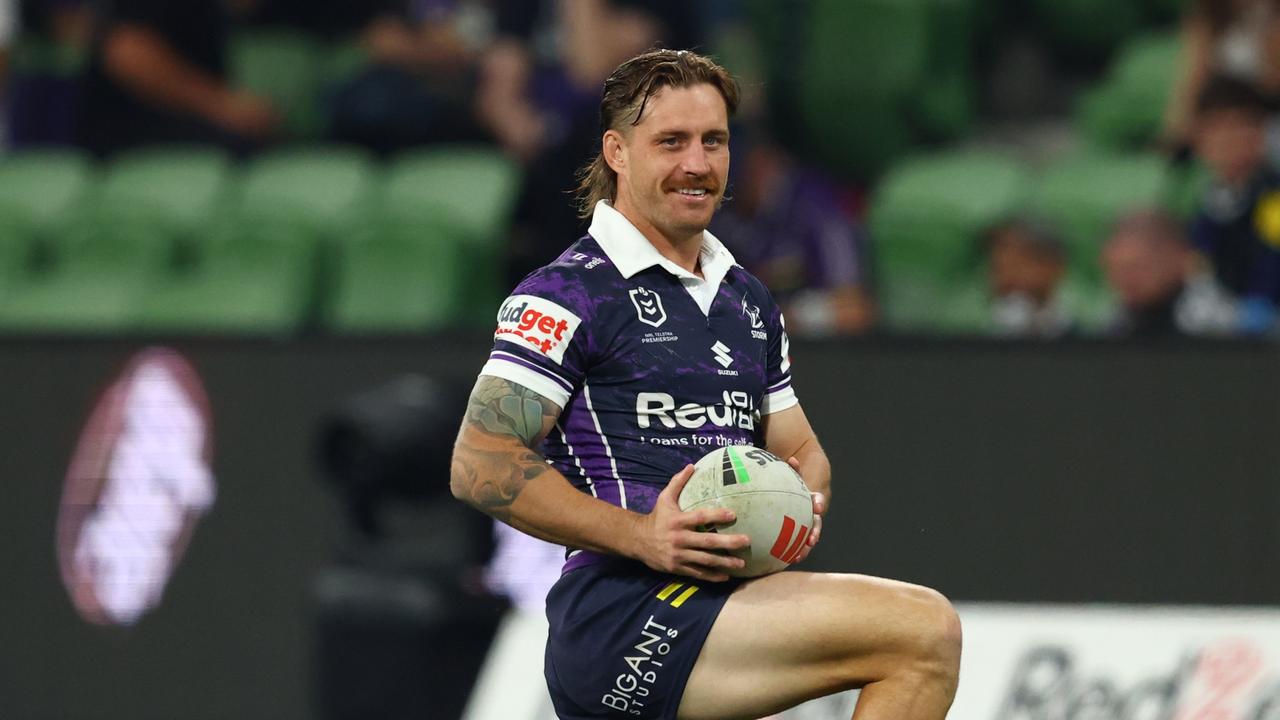
    The Melbourne Storm, one of the most dominant rugby league clubs of the 21st century, is facing its worst run of form in the Craig Bellamy era, after dropping a sixth consecutive match that has all but ended the club’s 2026 finals campaign. The slump has sparked widespread criticism of club and Queensland captain Cameron Munster, the franchise’s star five-eighth who has posted career-worst numbers across every key attacking and defensive metric this season. But teammate and utility Tyran Wishart has jumped to defend the veteran playmaker, saying the entire squad shares responsibility for the losing streak and that the team remains fully confident Munster can return to his elite best.

    Saturday’s 2026 Anzac Day clash at home against the South Sydney Rabbitohs marked a new low for the Storm: it was the first time the Rabbitohs had ever beaten Melbourne in Melbourne, and the defeat stretched the club’s losing run to six matches – a result Bellamy had never had to navigate across his decades-long tenure as head coach. Following the demoralizing loss, Bellamy made his frustration with the squad’s performance crystal clear.

    Speaking to Fox League post-match, Munster, one of the most dynamic running five-eighths of the modern era, opened up about the team’s struggle, admitting the side fell well short of the standards expected of the historic club on a day that honors Australian and New Zealand service members. “We spoke about today about how lucky we are to play on a day like Anzac Day. You want to turn up for your teammates, club and the soldiers who served our country,” Munster said. “We all had moments we want to have back as players and as a group. We were very poor again … as a spine, we’ve been very poor. It’s frustrating because we’re training so well. We’ll have to go back to the drawing board.”

    The 2026 season has been a stark departure from Munster’s usual elite form. He has not crossed the try line in 23 consecutive outings, and all of his key attacking statistics have plummeted from his 2025 campaign. Last year, Munster notched 25 try assists; this season, he has recorded just four. He has broken the opposition line only once all year, and his average running metres per game are the lowest of his entire 14-year professional career. Defensively, the trend is equally concerning: he is missing a career-high 4.1 tackles per match, and on Saturday he was outmatched by rising Rabbitohs forward Tallis Duncan, who dominated physical collisions when carrying the ball.

    With the season teetering, the Storm will be forced to adjust their line-up for Friday’s clash against the Dolphins: starting halfback Jahrome Hughes is ruled out after sustaining a head knock, meaning Munster will line up alongside a new halves partner. Despite the mounting pressure and off-field criticism, Wishart said the entire squad remains firmly behind Munster, emphasizing that the playmaker has never shied away from accountability and continues to put in maximum effort at training.

    “He always tries hard and you can never knock him for that,” Wishart said. “He’s the first to put the blame on himself, but we all love playing with him. We know what he can do, he’s a competitor, and that’s what we love about him. The rest of this year, we’ve got full belief in what he can do so that’s not an issue for us.”

    For a club that has dominated the NRL for more than 20 years, missing the 2026 finals would be a historic shakeup to the league’s hierarchy, as the Storm works to reset and recover from its worst losing run in modern club history.

  • Australia aims to tax tech giants unless they pay news outlets

    Australia aims to tax tech giants unless they pay news outlets

    On Tuesday, the Australian government introduced a sweeping set of draft regulations targeting three of the world’s largest technology companies — Meta, Google, and TikTok — that would mandate the firms compensate domestic news publishers for hosting journalistic content, or face a mandatory annual levy equal to 2.25% of their Australian revenue. The legislative update marks a major correction to the country’s existing news media bargaining framework, closing a longstanding loophole that previously allowed digital platforms to avoid payment obligations by simply removing all news content from their services, a tactic both Meta and Google have deployed in past standoffs with Canberra over similar policy proposals.

    Speaking to reporters after the draft was released, Prime Minister Anthony Albanese made clear that the new rules aim to hold large multinationals accountable for their reliance on original journalism to drive user engagement and platform growth. “Large digital platforms cannot avoid their obligations under the news media bargaining code,” Albanese said, noting that the three companies were specifically targeted based on their massive domestic user bases and significant Australian annual revenue. Under the draft framework, the firms will first get the opportunity to negotiate voluntary commercial compensation deals with local news outlets; only those that refuse to reach agreements will be subject to the compulsory levy.

    The policy comes as traditional news organizations across the globe face an existential crisis: as more consumers turn to social media and search engines for their daily news, the majority of digital advertising revenue has flowed to big tech platforms, rather than to the newsrooms that create the original content attracting those users and ad dollars. A 2024 study from the University of Canberra confirms this shifting landscape, finding that more than half of all Australian adults now get their news primarily from social media platforms.

    Albanese emphasized that the core principle of the legislation is basic fairness for journalism. “Journalism needed to have a ‘monetary value attached to it,’” he said. “It shouldn’t be able to be taken by a large multinational corporation and used to generate profits with no compensation.” Communications Minister Anika Wells echoed this sentiment, adding: “We believe it’s only fair that large digital platforms contribute to the hard work that enriches their feeds and that drives their revenue.”

    Reactions from the targeted tech firms align with past opposition to similar regulations globally. Meta pushed back against the proposal in a statement to Agence France-Presse, calling the new rules “nothing more than a digital services tax.” The company argued that news organizations voluntarily share content on its platforms to gain access to large audiences, adding that “the idea that we take their news content is simply wrong.” Google has also previously threatened to restrict access to its search engine in Australia if forced to implement mandatory compensation for news outlets, while Meta has already moved to end voluntary content deals with news publishers across the United States, United Kingdom, France and Germany in recent months. The 2021 debate over Australia’s original bargaining code saw Meta temporarily block all news content for Australian users, drawing widespread backlash.

    The draft legislation is now open for public consultation, with the comment period set to close in May. Following the consultation phase, the bill will be amended and introduced to the Australian Parliament for a vote later this year. Supporters of the reform say it is a critical step to sustain independent local journalism, which serves as a cornerstone of Australian democratic discourse, while critics argue the levy unfairly targets tech companies and could lead to reduced service access for Australian consumers.