标签: Oceania

大洋洲

  • AFL 2026: Melbourne coach Steven King on Harrison Petty, Jai Culley injuries

    AFL 2026: Melbourne coach Steven King on Harrison Petty, Jai Culley injuries

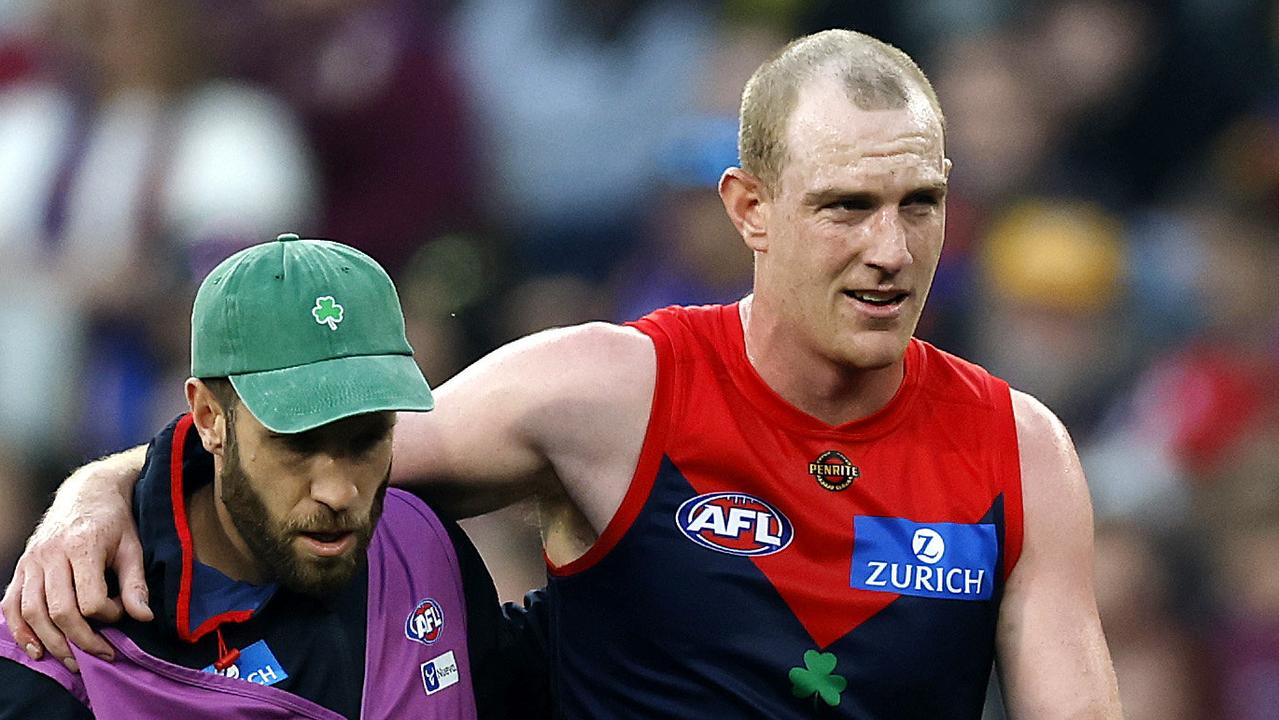
    A major health scare for Melbourne AFL defender Harrison Petty has ended with an unexpected positive update: the blurred vision that forced him out of last Sunday’s win over Brisbane is almost certainly the result of a severe vestibular migraine, not a concussion as initial fears suggested.

    Petty was removed from the field in the closing stages of the Demons’ thrilling clash against the Lions after he suddenly became disoriented following an uncontested kick. Immediately after the match, head coach Steven King confirmed the player had reported sudden blurred vision, which sparked widespread concern given Petty’s documented history of previous concussions, including a high-impact collision with a teammate during a 2018 training camp.

    Speaking to media ahead of Melbourne’s upcoming test match against Sydney at the Sydney Cricket Ground on Tuesday morning, King shared the much-anticipated results of multiple medical assessments that have all but ruled out a concussion diagnosis. “He’s going well, he’s had a lot of tests done and I think at this stage we’ve ruled out concussion even though we’ve put him in the protocols to look after his welfare,” King told reporters. While one final test result is still pending, King said extensive evaluations conducted by external medical consultants have pointed to a migraine as the root cause of Petty’s episode.

    “At this stage it looks some type of migraine – which is great news,” King said. “He’s still in the protocols, but we’re really bullish on him getting through. If he gets through protocols this week, he’ll be in a really good place to potentially play. We just want to make sure he gets through and ticks off the boxes he needs to, so that’s a great result for Harrison and for us.”

    King also pushed back on suggestions that Petty’s past concussion history was linked to this latest incident, noting that the defender felt surprisingly well immediately after the match – a symptom that did not align with a typical concussion presentation. “Remarkably, he was actually pretty good after the game, which sort of told us it might not be as simple as concussion,” King explained. Acknowledging he was not a medical expert, he clarified that the issue was classified as a vestibular migraine, and there was no connection to the player’s previous head injuries. “This was more a vestibular migraine – I am not sure if that’s the word, I am not a medical expert, so I can’t give too much opinion on it, but it’s not linked at all. It was probably the best scenario for us and outcome we could’ve hoped for, really.”

    In addition to the update on Petty, King addressed questions surrounding young player Jai Culley’s recent knee concern, confirming that an earlier routine check-up for minor knee discomfort was unrelated to the season-ending ACL rupture Culley later suffered. “No fear at all. I think players come off all the time to get assessed by doctors and Jai’s one incident was pretty obvious that’s where it happened,” King said. “I think a lot of players when they come off and complain of sort of (injury), you do get assessed, whatever part of the body. He’s fine, unfortunately it was that one incident which took place.”


  • LIV Golf postpones June event set for New Orleans: reports

    LIV Golf postpones June event set for New Orleans: reports

    The upstart Saudi-backed LIV Golf circuit has been forced to delay its planned debut tournament in New Orleans, Louisiana, multiple U.S. outlets reported Monday, a decision that comes as the series faces looming financial uncertainty following reports that Saudi Arabia’s Public Investment Fund (PIF) is preparing to end its financial backing of the league ahead of its fifth season.

    The new four-day event was originally scheduled to take place June 25–28 at Bayou Oaks Golf Course, located within New Orleans’ City Park. Both sports outlet The Athletic and local New Orleans broadcaster WDSU confirmed the postponement, which was agreed upon during a meeting last Friday between LIV Golf CEO Scott O’Neil and Louisiana Economic Development Secretary Susan Bourgeois. An official public announcement of the change is expected as early as Tuesday.

    As of Monday evening, the New Orleans tournament still remained listed on LIV Golf’s official 2026 schedule website. While both sides have expressed interest in revisiting the idea of hosting a revised LIV event in the city this fall, the league’s entire 2026 season is currently scheduled to wrap up in August, putting that timeline in question.

    Louisiana had invested heavily to attract the tournament, earmarking $2 million in public funds for course upgrades at the state-owned City Park venue and setting aside an additional $3 million hosting fee. State officials projected the event would generate up to $70 million in local economic activity for the New Orleans region. Under the terms of the postponement agreement, LIV will return $1 million of the $1 million already disbursed to the league according to WDSU, while The Athletic reports the refund total will be $1.2 million, with the remaining upgrade funds counted as a permanent public improvement to the state-owned golf facility. No additional public funds will be allocated to the tournament going forward.

    The postponement has amplified growing questions about the future of LIV Golf, which launched in 2022 with the goal of disrupting the professional golf world by poaching top PGA Tour talent with massive, nine-figure contracts. Jon Rahm of Spain, one of the highest-profile defections, has won the last two LIV season titles, but the league has struggled to build consistent global viewership and fan engagement. In a sign of those ongoing challenges, several high-profile players including Brooks Koepka and Patrick Reed have already returned to the PGA Tour, with more potentially following.

    The 2026 LIV Golf season remains on track for its next scheduled stop, set for May 7–10 at Trump National Golf Club in Washington D.C.’s Virginia suburbs. The circuit currently has other planned stops in South Korea in May, Spain in June, and England in July before wrapping the season with three U.S. events in August: a tournament at Trump National Bedminster in New Jersey, an event in Indianapolis, and the season-ending team championship in Michigan scheduled for August 27–30.

  • Taylor Swift files to trademark her voice amid AI clone boom

    Taylor Swift files to trademark her voice amid AI clone boom

    As artificial intelligence cloning technology grows more accessible and unregulated, global pop superstar Taylor Swift has taken official steps to shield her distinctive voice from unauthorized exploitation, joining a small but growing group of high-profile creators fighting to protect their intellectual property in the AI age.

    Swift has filed two trademark applications with the United States Patent and Trademark Office (USPTO) centered on her voice, according to filings first uncovered by intellectual property attorney Josh Gerben. The submissions include two separate sound recordings that each open with the singer’s recognizable greeting “Hey, it’s Taylor” before promoting her recently released October album *The Life of a Showgirl*. A third filing submitted Friday includes an official promotional photograph of Swift performing on stage. No additional details about the scope of the requested trademark protections have been made public in the filings, and Swift’s publicist did not immediately provide comment when reached by Agence France-Presse.

    Swift’s move mirrors a similar step taken by Academy Award-winning actor Matthew McConaughey in recent years, who filed his own USPTO application to protect his voice from unauthorized AI replication. McConaughey’s filings include audio of two of his most iconic lines: the oft-quoted “Alright, alright, alright!” from his 1993 breakout role in *Dazed and Confused*, as well as his personal mantra “Just keep livin’, right?” alongside a collection of other short signature phrases.

    The growing push for voice protection from A-list creators comes as rapid advances in generative AI have drastically lowered the barrier to creating convincing deepfake vocal clones. Where replicating a person’s voice once required hours of source recordings and days of processing, modern AI models can generate a nearly indistinguishable synthetic voice from a 30-second clip in mere seconds.

    This technological leap has sparked widespread anxiety among performers and creators, who warn that unregulated AI can duplicate their voice and likeness for unauthorized commercial use, scams, or deepfake content without any compensation or consent. In response, a handful of U.S. state legislatures have begun updating privacy and intellectual property laws to address the gap. Most existing state laws only ban malicious or for-profit unauthorized use, but a small number of regions have adopted broader protections — most notably Tennessee’s 2024 ELVIS Act, named for music icon Elvis Presley, which extends sweeping intellectual property protections to creators’ likenesses and voices.

    To date, legal action by performers against unauthorized AI cloning remains relatively rare. The highest-profile case came in 2023, when A-list actor Scarlett Johansson filed a lawsuit against the developer of the Lisa AI app. Johansson alleged the app created an unauthorized AI avatar matching her likeness to use in a commercial advertisement without her permission or compensation.

  • Man Utd beat Brentford to close on Champions League berth

    Man Utd beat Brentford to close on Champions League berth

    Manchester United has brought Champions League qualification firmly within their reach after a hard-fought 2-1 victory over Brentford at Old Trafford on Monday, with veteran midfielder Casemiro and striker Benjamin Sesko notching the decisive goals to cement the club’s grip on a top-four spot.

    The match got off to a electric start for the hosts, with Kobbie Mainoo carving open Brentford’s defensive line with a blistering 2nd-minute run, only for Amad Diallo to waste the opening chance when his close-range effort was cleared off the goal line by Sepp van den Berg. Moments later, returning from suspension, Harry Maguire came agonizingly close to scoring, his powerful looping header clawed away from the line by Brentford goalkeeper Caoimhin Kelleher.

    United’s sustained pressure finally paid off in the 11th minute, when a well-drilled corner routine ended with Casemiro finding the back of the net. Bruno Fernandes delivered the set piece to Maguire, whose header skipped past a cluster of Brentford defenders at the far post, leaving the Brazilian veteran to rise above the defense and nod home from a tight acute angle. The goal marked Casemiro’s fourth strike in his last six appearances, a reminder of the enduring quality he brings to a side that will see him depart at the end of the season when his contract expires. The 32-year-old celebrated by kissing the United club badge on his jersey, as the packed Old Trafford crowd chanted for him to extend his stay with “one more year”.

    Brentford had their chances to level before the break, though. Michael Kayode’s header forced United keeper Senne Lammens into a full-stretch save to keep the hosts ahead, while Brazilian forward Igor Thiago, who proved a constant physical threat throughout the first half, failed to convert two clear openings: he scuffed a first effort under pressure from Diogo Dalot, then saw a close-range shot stopped by Kelleher. A last-ditch challenge from United teenager Ayden Heaven on Thiago nearly resulted in an own goal, but Lammens pulled off another fine save to keep Brentford off the scoresheet.

    United capitalized on those missed opportunities to double their lead just two minutes before halftime. The counter-attack began when Diallo won a tough tackle deep in United’s own half, before Fernandes drove into the Brentford penalty area and slipped a perfectly weighted pass to Sesko, who lashed a clinical finish past Kelleher from 10 yards out. The assist pushed Fernandes’ season total to 19, leaving him one short of the all-time Premier League single-season record of 20 set jointly by Thierry Henry and Kevin De Bruyne.

    The second half saw United cede much of their territorial dominance, and Brentford finally got their goal in the 87th minute, when Mathias Jensen curled a stunning 20-yard strike past Lammens to set up a tense closing period. Carrick’s side wobbled under late pressure, but held on to secure three points: in stoppage time, Lammens comfortably clutched a Mikkel Damsgaard header to confirm the win.

    The result leaves United firmly in third place in the Premier League table, 11 points clear of sixth-placed Brighton, with the top five set to qualify for next season’s Champions League. Interim manager Michael Carrick, who took over in January after Ruben Amorim was sacked, needs just two points from United’s remaining four matches to lock in a return to Europe’s elite club competition for the first time since the 2023-24 season.

    Up next, United host bitter rivals Liverpool, who sit three points behind them in fourth, in a crunch clash that could go a long way to deciding the final top-four standings. Since stepping into the role, Carrick has stabilized the club after Amorim’s turbulent reign, putting in a strong case to be given the manager’s job on a permanent basis. Co-owner Jim Ratcliffe is currently weighing up his options for the role, and securing Champions League qualification would be a major boost to Carrick’s claim.

    The win comes on the back of a 1-0 away victory over Chelsea, which reinvigorated United’s push for a top-five spot after a dip in form that included a home defeat to Leeds and a draw at Bournemouth. For Brentford, the result extends their long barren run at Old Trafford – the London club has not won a away match at United since 1937, and their latest visit ended in disappointment after a slow opening cost them any chance of a shock result.

  • Trains collide near Jakarta, killing seven, injuring dozens

    Trains collide near Jakarta, killing seven, injuring dozens

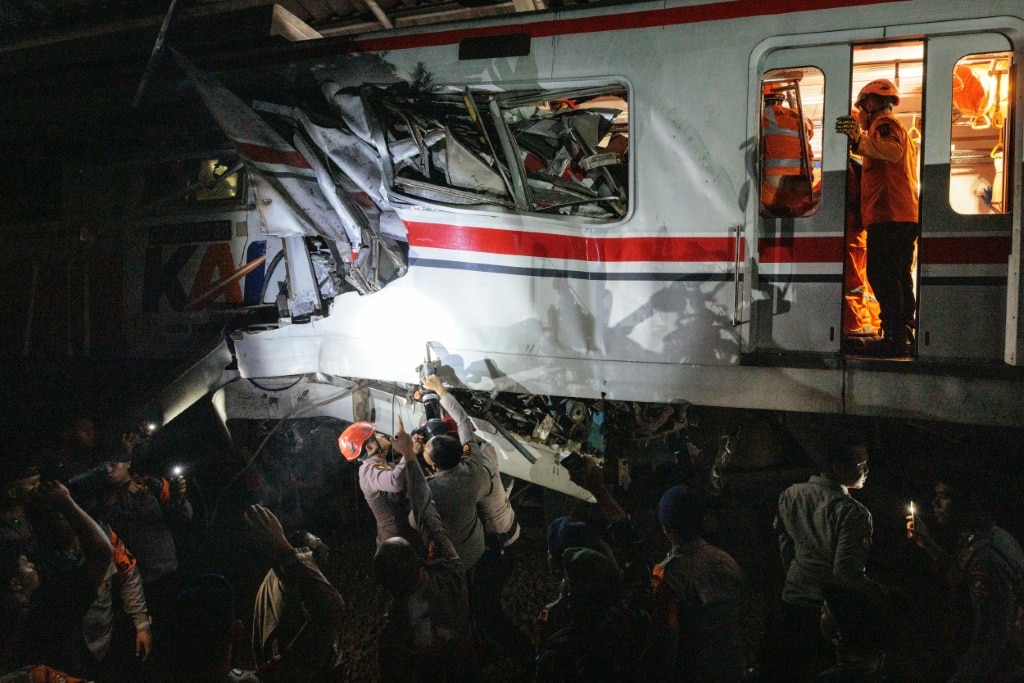
    Rescue teams have launched an urgent search and evacuation operation after a fatal overnight collision between two trains on the outskirts of Indonesia’s capital Jakarta, which has already claimed seven lives and left more than 80 others injured, with multiple passengers still trapped inside mangled carriages.

    State-owned rail operator Kereta Api Indonesia (KAI) spokesperson Anna Purba confirmed the initial casualty count to local media early Tuesday: seven fatalities and 81 injured people, with two trapped individuals confirmed alive in the wreckage as rescue work continued.

    Survivors have described the sudden, terrifying chaos of the incident, which occurred when a long-distance intercity train struck a stationary commuter train that had been halted on the tracks near Bekasi Timur Station, roughly 25 kilometers from central Jakarta. Sausan Sarifah, a 29-year-old commuter who was admitted to RSUD Bekasi hospital with a broken arm and deep thigh laceration, recalled the harrowing moments immediately after impact. She had been traveling home from work when her train stopped at the station, and passengers had already received announcements to prepare to disembark when the collision occurred. “It all happened so fast, in a split second,” Sarifah said from her hospital bed. “There was no time to get out, and everyone ended up piled up inside the train, crushed on top of one another. I thought I was going to die. Thank God I was on top, so I could be evacuated quickly.”

    According to KAI spokesperson Franoto Wibowo, the chain of events that led to the collision began when a taxi clipped the commuter train at a nearby level crossing, forcing the train to stop abruptly on the active main line where it was subsequently hit by the oncoming long-distance service. Jakarta police chief Asep Edi Suheri added that the long-distance train collided directly with the last carriage of the commuter train, which was designated as a women-only car. All confirmed fatalities and injuries are from the commuter train; all roughly 240 passengers aboard the long-distance train were evacuated without major harm, Purba confirmed.

    Witnesses at the crash site described chaotic scenes in the immediate aftermath of the incident: rescue personnel shouted urgently for emergency equipment such as oxygen tanks, ambulances formed a long, flashing queue along the access road, and stretchers carrying injured survivors were carried out of the wreckage as hundreds of shocked onlookers gathered. The Jakarta search and rescue agency noted in an official statement that the high-force impact caused “significant damage to several train carriages”, leaving multiple passengers pinned inside the twisted metal. Rescuers from the military, local fire department, national search and rescue agency, and Indonesian Red Cross have all been deployed to the site, using specialized extrication equipment to extract trapped survivors.

    As of Tuesday morning, evacuation work was still ongoing, and officials warned that the death toll could climb. Deputy house speaker Sufmi Dasco Ahmad, who was at the crash site, told reporters: “Judging from the evacuation process that is still under way, it is possible that the number of victims may continue to rise.”

    Local hospitals are also operating at a rush to treat the influx of injured patients, with medical teams conducting triage to prioritize the most severe cases. Eva Chairista, a 39-year-old woman who traveled to RSUD Bekasi after learning her 27-year-old sister-in-law Fira was injured, described a frenzied scene as families waited for updates on their loved ones. “The doctor told us to be patient, there are many whose condition is worse than my sister-in-law’s,” she said.

    This collision is the latest serious transport accident in Indonesia, a vast archipelagic nation where chronic underinvestment and poor maintenance have left much of the public transport fleet, including trains, buses and passenger aircraft, aged and unsafe. The previous major train crash in Indonesia, which occurred in West Java province in January 2024, killed four crew members and injured roughly two dozen people. One of the deadliest level crossing accidents in the country’s recent history occurred in Jakarta in 2015, when a commuter train collided with a minibus, killing 16 people.

  • Nations have chance to break ‘fossil fuel mindset’: Mary Robinson

    Nations have chance to break ‘fossil fuel mindset’: Mary Robinson

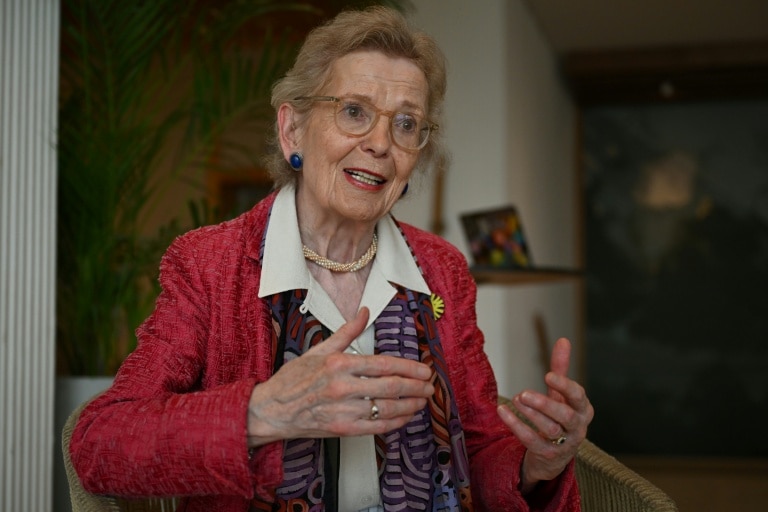
    As a former Irish president who has witnessed decades of global political and environmental shifts, Mary Robinson is positioning the upcoming high-level fossil fuel phaseout conference in Santa Marta, Colombia, as an unprecedented turning point in the global fight against climate change. Speaking to Agence France-Presse ahead of the April 28-29 gathering, the veteran climate advocate says the summit comes at a uniquely opportune moment: amid ongoing global energy market chaos sparked by the Iran conflict, the meeting is throwing a stark spotlight on the steep dangers of continued reliance on coal, oil, and gas — a burden that falls heaviest on the low-income communities Robinson has spent her career championing.

    Robinson, a member of The Elders, a collective of former global leaders founded by Nelson Mandela, served as the United Nations Special Envoy for Climate Change when the landmark Paris Agreement was signed in 2015. When asked whether the Santa Marta gathering, which emerged from widespread frustration with slow progress in the UN-led climate negotiation process, undermines the role of the annual Conference of the Parties (COP), Robinson pushed back on that framing. She emphasized that the COP process remains irreplaceable for global climate coordination, noting that the Colombia conference was never intended to replace UN talks — instead, it is designed to complement and accelerate the multilateral process.

    She pointed to the failed outcome of COP30 in Belém, where fossil fuel lobbying blocked any official agreement to include explicit language referencing a phaseout of fossil fuels, as the core catalyst for organizing the Santa Marta summit. What was not foreseen when the conference was planned, Robinson noted, was the eruption of one of the most severe global oil and gas crises in modern history. This unexpected timing has only amplified the meeting’s urgency, she argued, making it the ideal moment to break through decades of entrenched “fossil fuel mindset” and accelerate the global transition to renewable, clean energy systems. “It’s the way we have to go, it’s the way we are going, but we need to go far much faster,” she said.

    Unlike formal UN climate talks, the Santa Marta conference is not structured around binding, text-by-text negotiations, Robinson explained, which gives participants unprecedented space to collaborate on actionable action. Stakeholders from across sectors — national governments, sub-national governing bodies, private industry, civil society groups, and grassroots activists gathering for the concurrent People’s Summit — are attending ready to share concrete commitments they are prepared to implement, rather than haggling over negotiating language. This open, action-oriented dynamic, Robinson said, makes it likely the summit will spawn new coalitions of actors committed to moving rapidly away from fossil fuels, creating a new, results-first momentum that has been missing from global climate talks to date.

    When addressing concerns that hundreds of millions of people around the world still depend on fossil fuels for basic energy access, Robinson tied that reliance directly to the current energy crisis: the ongoing conflict has cut off roughly 20 percent of global oil and gas supplies, sending prices soaring and leaving the world’s poorest communities facing the steepest costs. Farmers have been hit particularly hard by skyrocketing fertilizer prices tied to fossil fuel markets, highlighting that continued reliance on dirty energy offers no long-term path to energy security or stable livelihoods. This reality, she argued, makes the Santa Marta conference a uniquely critical moment to build momentum for change.

    Robinson also addressed the growing pressure many governments face to expand fossil fuel production in response to the current energy crisis, arguing that far too many policy decisions around energy security are not grounded in the urgent warnings climate scientists have issued for decades. Drawing a parallel to the COVID-19 pandemic, where most nations relied on top chief medical officers to guide policy, Robinson called on all governments to appoint chief planetary scientists to provide authoritative, science-based guidance for climate and energy policy. “During COVID, lots of countries had chief medical officers, and we listened because we were scared. They had a lot of authority,” she noted. “We’re in the same position. We haven’t thought it through yet, but we are.”

    While the latest climate science paints a deeply alarming picture, with the planet approaching irreversible tipping points faster than many researchers predicted, Robinson says she retains cautious optimism for the future. That optimism was crystallized during a scientific expedition to Greenland, where she had a transformative experience listening to a glacier calve — the process where large chunks of ice break off into the ocean as temperatures rise. She described hearing sounds like thunder as a large section of ice split off, followed by smaller cracks that echoed like rifle shots, and found herself crying as the reality of human-caused climate change hit home. That moment, she said, underscored both the urgency of the crisis and the need to seize every available opportunity to act. With the open, action-focused space provided by the Santa Marta conference, the global community finally has a chance to build the momentum needed to accelerate the transition away from fossil fuels, she argued, and leaders must not waste this opening.

  • ‘It’s a funny story’: NRL gives its verdict on new Jason Saab tactic after Sea Eagles winger stuns fans with deliberate Falcon

    ‘It’s a funny story’: NRL gives its verdict on new Jason Saab tactic after Sea Eagles winger stuns fans with deliberate Falcon

    A bold, pre-planned unorthodox rugby league play from Manly Sea Eagles winger Jason Saab has sent NRL fans into a frenzy — and drawn an official warning from the competition’s governing body, which has confirmed the tactic will draw a penalty in any future matches.

    The viral play unfolded during a weekend fixture at Sydney’s 4 Pines Park, when Sea Eagles halfback Jamal Fogarty launched what appeared to be a standard attacking kick into the opposition’s 20-metre zone. The 199cm-tall Saab, instead of opting for the expected catch of the high ball or tapping it back to a supporting teammate, instead deliberately headed the ball forward into open space. The unorthodox move caught opposition Parramatta Eels defenders completely off guard, gifting Manly an extra 15 metres of territory, shifting the attack from the Sea Eagles’ 20-metre line to just five metres out from Parramatta’s try line.

    Far from a spontaneous accident, the play was actually the product of careful tactical planning from Manly assistant coach Jim Dymock. Dymock had identified a clear pattern in opposition defences: teams consistently held back to tackle Saab immediately after he caught attacking kicks, allowing them to shut down Manly’s attacking momentum early. To break this predictable pattern, he encouraged Saab to test the deliberate forward header, a trick Saab had openly discussed with teammates during the week leading up to the match.

    Saab, who does not come from a traditional rugby league background, embraced the out-of-the-box idea. After the match, he called the tactic a success despite not leading directly to a try, noting that it thrilled the packed crowd at 4 Pins Park and achieved more territorial gain than a standard catch would have.

    While teammate Haumole Olakau’atu knew the plan was in the works, he admitted he was so caught off guard by the unexpected moment that he forgot to chase the ball down for a potential try. Still, he praised the play as a clever tactical gambit that entertained fans and delivered valuable field position. Interim Manly head coach Kieran Foran also laughed off the play in his post-match press conference, noting that the coaching box reacted positively to the creative tactic, and credited Dymock for encouraging players to experiment with innovative plays to keep defences guessing.

    But the creative trick will not be allowed to feature in future matches. A spokesperson for the NRL confirmed to NewsWire that the deliberate heading of the ball forward is against the sport’s rules, and that Saab should have been penalized for the move during the fixture. Any repeat of the deliberate “Falcon” will result in an official penalty against the offending team going forward. Fans and analysts have suggested the club may tweak the tactic to present it as an accidental deflection to stay within the rules, keeping the surprise element of the play alive without drawing official sanction.

  • Trump and team renew attacks on adversaries after gala shooting

    Trump and team renew attacks on adversaries after gala shooting

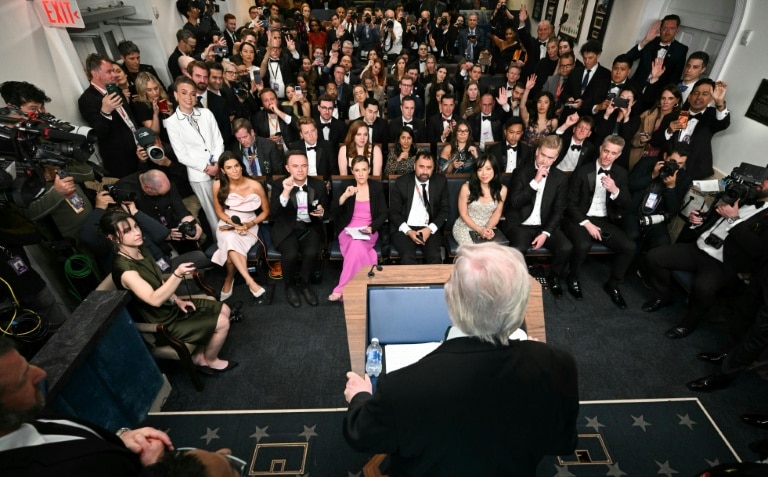
    What began as a rare moment of bipartisan unity and calls for unity in the wake of a shooting at the White House Correspondents Dinner quickly devolved into a familiar cycle of partisan vitriol, as former President Donald Trump and his administration have reverted to sharp attacks on political opponents, the media, and public critics just 48 hours after the alleged assassination attempt.

    Shortly after Saturday night’s incident, which unfolded in front of thousands of attending journalists and political figures, Trump struck an uncharacteristically reflective tone. Still clad in his formal tuxedo, he told the crowd he had originally planned to deliver a blistering, combative speech attacking the press, but opted instead to highlight a shared sense of unity after the scare. “I saw a room that was just totally unified,” he remarked at the time, pointing to a “tremendous amount of love and coming together” and even extending praise to the leadership of the White House Correspondents Association, the annual dinner’s organizer. Press Secretary Karoline Leavitt later confirmed the attack marked the third documented attempt on Trump’s life in just two years.

    That moment of detente proved extremely short-lived. By Monday, the White House had sharply hardened its tone, with Leavitt – who cut short her maternity leave to address the incident – blaming the attempted assassination on what she called “systemic demonization” of Trump by left-wing opponents. “The left-wing cult of hatred against the president and all of those who support him and work for him has gotten multiple people hurt and killed, and it almost did so again this weekend,” Leavitt told reporters during a formal briefing. She went on to argue that political opponents who repeatedly label Trump a fascist, frame him as a threat to democracy, or compare him to Hitler for political gain are directly fueling political violence against the former president and his allies.

    Leavitt’s condemnation was quickly followed by fresh attacks from Trump himself, who turned his fire on late-night television comedian Jimmy Kimmel over a joke targeting former first lady Melania Trump. In a post on his Truth Social platform, Trump demanded Kimmel’s immediate dismissal from ABC, which is owned by the Disney Entertainment conglomerate. Calling Kimmel’s joke “far beyond the pale,” Trump wrote: “I appreciate that so many people are incensed by Kimmel’s despicable call to violence, and normally would not be responsive to anything that he said but, this is something far beyond the pale. Jimmy Kimmel should be immediately fired by Disney and ABC.”

    The rapid shift away from unity has dashed any lingering hopes that the assassination attempt might prompt Trump to pull back from his long history of incendiary, confrontational rhetoric against political rivals, immigrant communities, and journalists – a pattern that has defined his political career over more than a decade. A former reality television star, Trump has long positioned the national media as one of his primary foils, famously branding reporters “the enemy of the people” and repeatedly targeting female journalists with aggressive, personal insults, including calling one reporter “piggy.” He has also pardoned hundreds of rioters convicted for their role in the January 6, 2021 attack on the U.S. Capitol, a riot staged to overturn his 2020 election loss to President Joe Biden. Just in recent months, Trump has publicly stated he was “glad” former FBI director Robert Mueller, who led the Russia probe into his 2016 campaign, had died, and issued an extraordinary threat to Iran warning that a “whole civilization will die tonight” if it acts against U.S. interests.

    By the time he appeared in an interview with CBS’s *60 Minutes* the day after the gala, Trump had fully returned to his combative form. When journalist Norah O’Donnell read extracts of a vague statement from the shooting suspect that referenced unsubstantiated claims without naming Trump, Trump snapped, calling O’Donnell and the network a disgrace. “I’m not a pedophile. You read that crap from some sick person… You shouldn’t be reading that on 60 Minutes,” he shouted.

    Democratic leaders have pushed back hard against Leavitt and Trump’s accusations, rejecting their claims that Democratic rhetoric is to blame for the violence. House Minority Leader Hakeem Jeffries dismissed the White House’s call for civility outright, telling reporters: “This so-called White House press secretary wants to lecture America and lecture us about civility? Get lost. Clean up your own house before you have anything to say to us about the language that we use.”

  • Milei bars media from presidential palace

    Milei bars media from presidential palace

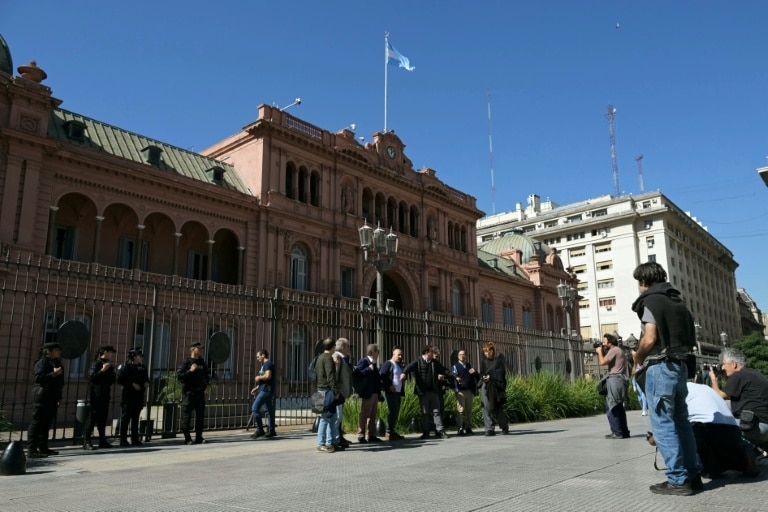
    A growing confrontation between Argentine President Javier Milei’s administration and the country’s independent press entered its third consecutive day on Monday, with accredited journalists still barred from entering the Casa Rosada presidential palace, deepening concerns over press freedom in the South American nation. The controversial libertarian leader, who has openly aligned himself with former U.S. President Donald Trump and held a long adversarial relationship with Argentine media, has repeatedly lashed out at press outlets since his inauguration in December 2023.

  • Separate goals, common enemy for Mali’s jihadists and separatists

    Separate goals, common enemy for Mali’s jihadists and separatists

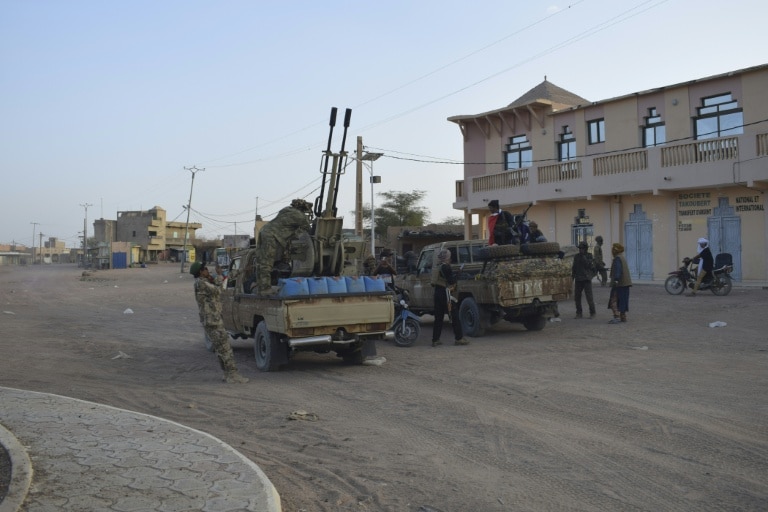
    In a shocking escalation of instability in West Africa, coordinated unprecedented attacks across Mali carried out by an unlikely partnership of Al-Qaeda-linked jihadists and Tuareg separatists have left the country’s military leadership reeling, marking the first full-scale implementation of an alliance struck between the two rival groups one year ago. The assault, which resulted in the death of Mali’s defense minister and the capture of the strategic northern town of Kidal, has thrown the Sahel region’s already fragile security landscape into new turmoil.

    The joint operation was officially claimed Saturday by the Group for the Support of Islam and Muslims (JNIM), Al-Qaeda’s regional affiliate in the African Sahel, which fought alongside the Azawad Liberation Front (FLA), a 2024-founded ethnic Tuareg separatist movement pushing for full independence of Mali’s northern Azawad territory. Alongside seizing Kidal — a town Malian government forces backed by Russian paramilitary fighters had captured from rebel groups in November 2023 — the militants targeted government outposts in multiple major population centers and even launched strikes on the outskirts of the capital, Bamako. In addition to Defense Minister Sadio Camara, the head of Mali’s intelligence service Modibo Kone was wounded in gunfire during the attacks, and junta leader Assimi Goita has not been seen or made any public statement since the offensive began. Security sources also confirmed joint JNIM-FLA operations in the northern town of Gao, where government forces repelled the assault but the militant alliance retains a significant presence in surrounding areas.

    While the two groups hold fundamentally divergent core objectives, regional security experts emphasize their cooperation is rooted in a shared, urgent enemy: the military junta that has ruled Mali since a 2020 coup, and its Russian paramilitary backers, the current Africa Corps force that has replaced the earlier Wagner Group mercenaries. This is not the first time Tuareg separatists and Sahel jihadists have aligned: a 2012 alliance saw the two capture major northern hubs before their partnership collapsed into open conflict, with jihadists ousting the separatists from seized territory. For years after that split, relations remained deeply hostile, culminating in direct armed clashes between FLA and JNIM along the Mauritanian border in April 2024. But by the end of 2024, the two groups negotiated a new power-sharing partnership, according to Wassim Nasr, a jihadist movement researcher at the Soufan Center think tank.

    The terms of the new deal outline clear compromises from both sides: FLA has agreed to accept the application of sharia law in jointly held territory, and requires judicial appointments to receive approval from both organizations. In exchange, the agreement divvies up administrative control: the FLA will govern captured urban centers, while jihadists will oversee rural areas. The partnership also includes critical military knowledge sharing: Nasr notes that JNIM has agreed to share its specialized expertise in building and deploying improvised explosive devices (IEDs) and mortar fire, capabilities the FLA had long struggled to develop independently. Saturday’s offensive marks the first time the full terms of this agreement have been put into operational practice, Nasr explained.

    Jean-Herve Jezequel, Sahel project director at the International Crisis Group, pointed out that the coherence of the alliance depends entirely on its unifying opposition to the current Malian regime. “JNIM pursues a political-religious agenda, centred on the establishment of sharia law and the rejection of foreign forces, whilst the FLA champions a territorial and autonomist agenda, centred on Azawad,” Jezequel explained. “This convergence is based above all on the existence of common adversaries, namely the Malian authorities and their Russian partners.”

    For the Tuareg people, a historically nomadic ethnic group spread across Mali, Niger, Algeria, Libya and Burkina Faso, the push for autonomy stems from decades of documented political and economic marginalization, particularly in the Kidal region. Their alignment with JNIM reflects a growing desperation to reverse military gains made by the junta and its Russian allies over the past two years.

    Experts note that the alliance’s strategic objectives do not include an immediate push to capture Bamako and seize full national power. Instead, their near-term goal is to reassert control over northern Mali’s traditional rebel strongholds. The capture of Kidal, Nasr explained, was achieved by pinning Malian army forces in central Mali, delivering a paralyzing blow to junta leadership in the capital, and consolidating gains in the north. Going forward, the alliance may expand its offensive into central Mali to increase pressure on the junta, with the broader goal of accelerating the regime’s collapse and forcing regime change in Bamako.

    Jezequel added that the group’s strategy focuses on steadily eroding the junta’s legitimacy and capacity through sustained security pressure, rather than a direct assault on the capital, which would be logistically difficult in the short term. Unlike the 2012 alliance that fractured almost immediately, experts say the current partnership may prove more durable, though its long-term future remains uncertain. The true test of the alliance, Nasr argued, will come when the groups move into the post-offensive phase of governing captured cities like Kidal — a test that has yet to begin.