On Friday, the World Health Organization announced it has upgraded the Ebola outbreak risk assessment in the Democratic Republic of the Congo (DRC) to the highest possible level — very high — as confirmed cases and deaths from the rare virus strain continue to climb faster than response teams can contain.
Current official figures from the WHO place the count of confirmed Ebola cases at 82, with seven confirmed fatalities. When including suspected cases, those numbers jump to nearly 750 potential infections and 172 suspected deaths. WHO leaders emphasize that the true size of the epidemic is already far larger than the confirmed case count, as the virus circulated undetected for weeks before being identified.
The outbreak is caused by the Bundibugyo strain of Ebola, an uncommon variant that has no specifically approved vaccines or antiviral treatments currently available to combat it. This critical gap in medical countermeasures has forced the global health body to fast-track testing of existing experimental treatments to assess their effectiveness against the strain.
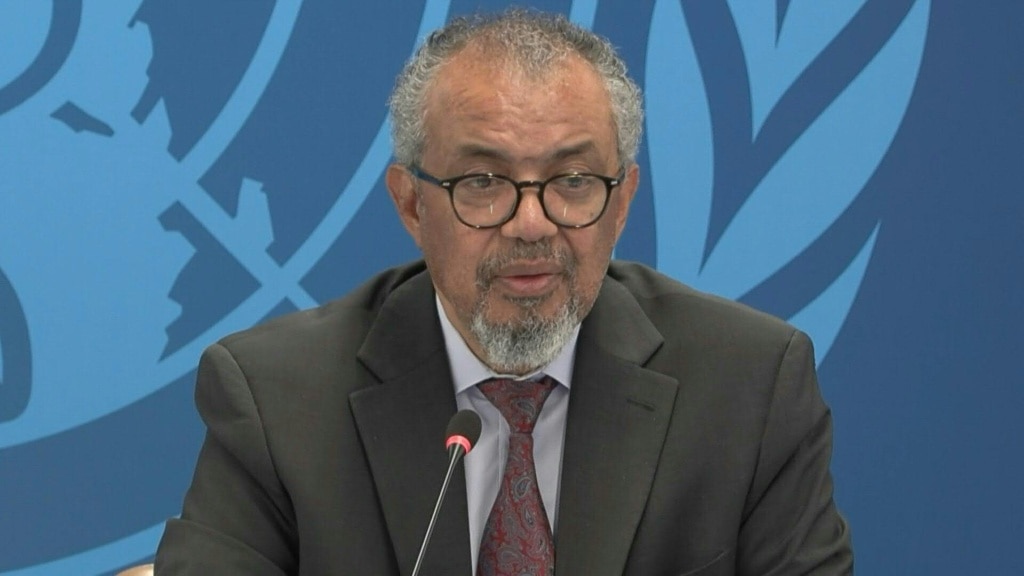
Speaking to reporters at WHO headquarters in Geneva, director-general Tedros Adhanom Ghebreyesus described the situation as deeply worrisome and uniquely challenging. Response teams are working in highly insecure regions of the country, scrambling to track the virus’s spread, trace close contacts of infected people, and establish full outbreak control measures. “We know the epidemic in DRC is much larger than the confirmed cases,” Tedros said.
The outbreak is centered in the northeastern DRC’s Ituri province, where more than 1,400 contacts are currently being monitored by health teams. Anne Ancia, WHO’s representative in the DRC, reported from the field that the virus spread silently and rampantly across the region for several weeks before detection, leaving response teams in a sprint to catch up. As of now, Ancia confirmed, “the spread is not yet under control.”
Without targeted vaccines or treatments, public health officials rely on the core Ebola control strategy of contact tracing and 21-day isolation to break chains of transmission. While rising case counts have raised alarm, WHO officials note the current increase is actually a positive sign that improved surveillance systems are working to uncover the true scale of the outbreak, rather than evidence of a sudden acceleration in new spread.
Neighboring Uganda has so far avoided sustained community spread, with the WHO reporting a stable situation: just two confirmed cases in travelers who crossed from the DRC, and one death. Intense contact tracing efforts are credited with halting further spread in the country.
Internationally, two U.S. citizens with links to the outbreak have been evacuated for care: one who tested positive was moved to Germany for treatment, while a second high-risk contact was transferred to the Czech Republic. The global risk level for the outbreak remains low, with regional risk assessed as high, per the WHO’s updated classification.
Abdi Rahman Mahamud, the WHO’s director of emergency alert and response, explained the upgrade to very high risk for the DRC stemmed from three key factors: the severe threat to human health, the high potential for rapid spread, and the limited current response capacity on the ground. “The potential of this virus spreading rapidly is very high, and that changed the whole dynamic,” Mahamud noted.
To address the gap in treatments, the WHO has fast-tracked plans for clinical trials of existing experimental drugs. The agency’s technical advisory group has prioritized two monoclonal antibodies — Regeneron’s 3479 and Mapp Biopharmaceutical’s MBP134 — for testing. It has also recommended evaluating the oral antiviral obeldesivir as a post-exposure preventive treatment for high-risk contacts. WHO chief scientist Sylvie Briand said the drug shows promise for preventing infected contacts from developing symptomatic disease.
For vaccines, the existing widely approved Ervebo vaccine only targets the Zaire strain of Ebola, with very little evidence that it provides cross-protection against Bundibugyo. While work on a Bundibugyo-specific vaccine has begun, no doses are currently available for clinical trials, and development would likely take six to nine months even if the project is prioritized. Another candidate vaccine targeting the strain, built using the ChAdOx platform, is currently in production but has not yet completed animal testing required to move forward with human trials.