标签: Oceania

大洋洲

  • Usyk rocked but beats Verhoeven to retain heavyweight titles

    Usyk rocked but beats Verhoeven to retain heavyweight titles

    One of the most unusual cross-sport heavyweight boxing bouts in recent memory delivered chaos, controversy and a stunning late finish on Saturday, as unified heavyweight champion Oleksandr Usyk retained his WBA, WBC and IBF titles against elite kickboxer Rico Verhoeven in a spectacular event staged in the shadow of Egypt’s Great Pyramid of Giza.

    The bout was billed as a ceremonial showcase for Usyk, who has already defeated former champions Anthony Joshua, Tyson Fury and Daniel Dubois in one of the most dominant reigns in modern heavyweight boxing. Few gave Verhoeven — a kickboxing legend who had only competed in one professional boxing bout, back in 2014 — a serious chance of troubling the Ukrainian champion. But what unfolded over 10 and a half rounds defied all pre-fight expectations.

    Verhoeven’s unorthodox, jerky striking style, relentless bulldozing aggression and devastating right hand kept a sluggish Usyk off balance for almost the entire contest. He landed brutal clean shots early, rocking the champion in the opening rounds and leaving Usyk struggling to find his consistent range. While Usyk claimed a strong fourth round after rocking Verhoeven with a sharp uppercut, the challenger largely controlled the pace of the fight through the first 10 rounds, and most ringside observers had him ahead on the unofficial scorecards heading into the championship rounds.

    The turning point came late in the 11th round, as a fatigued Verhoeven began to slow under the cumulative pressure of 12-round professional boxing. Usyk, digging deep, landed a stunning uppercut that dropped the Dutch challenger to the canvas. Verhoeven beat the count and climbed back to his feet with just 10 seconds remaining in the round, but Usyk immediately pressed forward, unloading a flurry of follow-up shots that sent Verhoeven stumbling against the ropes. With just one second left on the round clock, the referee stepped in to stop the contest, triggering immediate controversy over the early stoppage.

    Speaking after the bout, Verhoeven expressed disappointment with the referee’s decision, arguing he had earned the chance to see out the final seconds of the round and compete in the 12th. “I thought it was an early stoppage but in the end it’s not up to me,” Verhoeven told broadcaster DAZN. “I wanted the referee to let me go out on my shield or let me go in the 12th. I felt we were pretty even on the scorecards.” Despite the result, Verhoeven said he was proud of his performance, thanked organizers for the opportunity, and revealed that Usyk had already offered him a rematch. “I am super proud of my performance and hopefully, the boxing world embraces me as a boxer,” he added.

    For Usyk, the victory marked another successful title defense, but the champion made clear the fight carried far more meaning than just a belt retention. With his home country of Ukraine continuing to endure Russian missile attacks, Usyk shared a heartfelt message from his daughter, who was sheltering in a bomb shelter while watching the bout. “I know right now, Ukrainian people are sitting in the bomb shelter, my daughter too, in a bomb shelter, sent me a message saying, ‘Papa, I love you, you will win’,” Usyk said after the fight.

    Paying tribute to his game challenger, Usyk added: “Thank you so much, Rico. You are an amazing fighter. Thank you so much to your team. My team, I love you. My wife, I love you. You are my light and my heart. This fight was hard. It was a good fight.”

    The result leaves Usyk’s reign intact, but the controversial late stoppage and Verhoeven’s shock performance have already left fans calling for a rematch to settle the score.
  • Liberal Party too close to Labor, ‘failed’ on economy as One Nation surges, senator says

    Liberal Party too close to Labor, ‘failed’ on economy as One Nation surges, senator says

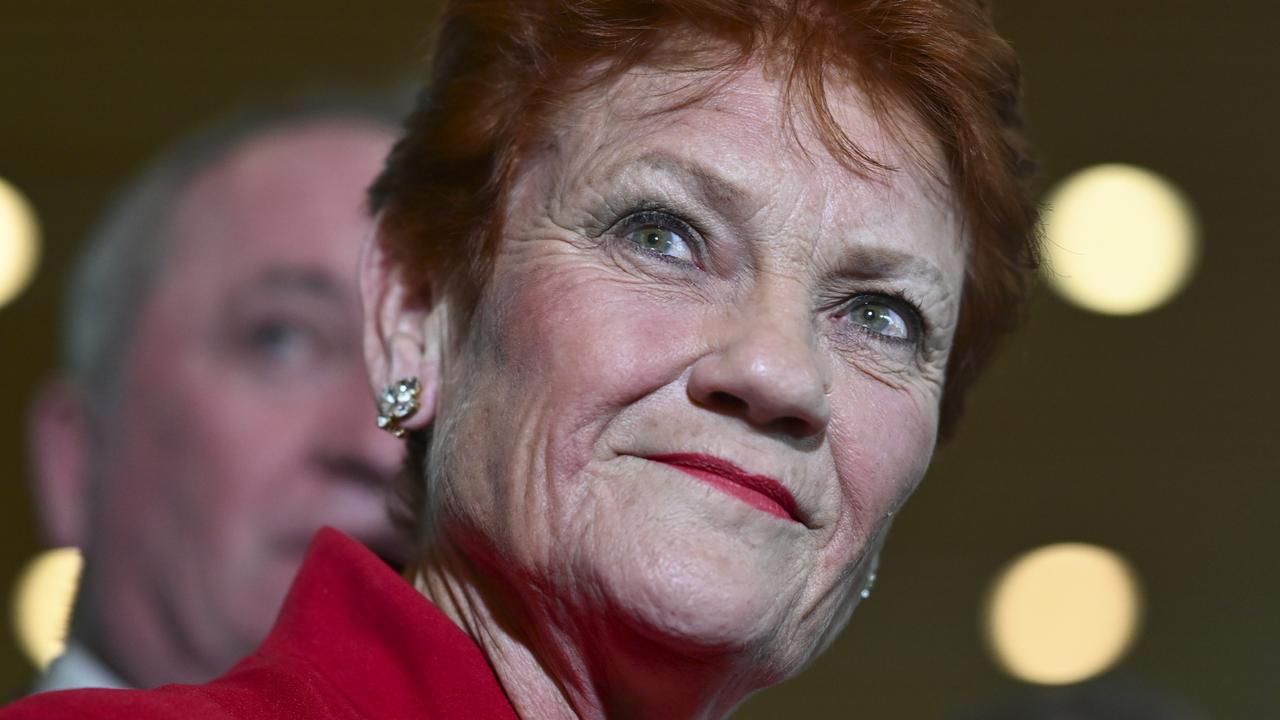
    Fresh voter polling has painted a seismic shift in Australia’s political landscape, projecting a historic surge for Pauline Hanson’s One Nation party and near-total collapse for the Liberal-National Coalition if a federal election were held today. A senior Liberal figure has publicly slammed his own party’s decades of ideological drift and economic policy missteps as the root cause of the projected catastrophe.

    The joint survey, conducted by the Redbridge Group and Accent Research, outlines a worst-case scenario for Australia’s two traditional major parties. The poll forecasts that the Coalition would be completely wiped out of parliamentary representation across four key states: Queensland, Western Australia, South Australia, and Tasmania. center-left Labor would hold onto a razor-thin 76-seat majority, while One Nation would capture up to 59 seats — a result that would upend nearly a century of two-party politics in Australia.

    Responding to the survey’s findings, Liberal opposition housing spokesperson Senator Andrew Bragg did not mince words in his criticism of his own party. Speaking to Sky News’ Sunday Agenda program, Bragg argued that the Liberal Party has steadily abandoned its ideological distinctiveness on economic policy, growing indistinguishable from the Labor Party to the point of becoming what he called a “uni-party” with the incumbent government on core fiscal issues.

    Bragg argued that the party’s failure to differentiate itself from Labor on tax policy, industrial relations, superannuation, and federal budget management over the past 10 years has left voters with no clear reason to support the Coalition, resulting in a widespread voter backlash that the new polling captures. “That’s my main takeaway, that we’ve had too much similarity with the Labor Party,” Bragg said. “We should have done more on tax, more on industrial relations, more on super, more on budget stuff … we’ve just been too similar to Labor over a long period, and we’re being punished. The chickens are coming home to roost.”

    The senator warned that the Liberal Party faces political oblivion if it does not immediately course-correct and draw sharp contrasts with Labor on policy, pointing to emerging work on addressing bracket creep as a first step in the right direction. He added that Australian voters are hungry for substantive economic change, and that it is still not too late for the party to reset its agenda and win back disaffected voters.

    Outlining his policy priorities, Bragg said he supports increasing the capital gains tax discount, rather than reducing it or rolling it back to the previous 50 per cent rate, arguing that adjustments to capital gains tax can be structured to incentivize greater private investment across the Australian economy. When pressed to identify which government programs he would cut to offset the cost of his proposed tax cuts, Bragg called out what he described as government “boondoggles” including the National Reconstruction Fund and the Housing Australia Future Fund as programs the Coalition could scale back or eliminate, noting that while the Coalition would continue to support the National Disability Insurance Scheme, other wasteful spending programs are fair game for cuts. “People are too afraid to say what they would cut,” he said, adding that the party needs to be clear about its policy trade-offs.

    Reacting to the same polling data, Labor’s Assistant Technology Minister Andrew Charlton acknowledged that the rise of One Nation in voter surveys is impossible to ignore, framing the far-right party’s growing support as part of a global populist trend. However, Charlton argued that One Nation has excelled at exploiting voter grievances but failed to deliver substantive policy solutions that benefit working Australian families.

    Charlton criticized One Nation’s voting record, noting that the party has repeatedly opposed policies that support ordinary workers, including the Same Job Same Pay legislation, wage increase measures, and cost of living relief. “Every opportunity they get … they vote against things that will benefit Australian families and workers,” Charlton said. “One Nation, every single time they face a choice between battlers and billionaires, they choose the billionaires.”

    When asked if Labor risks losing significant seats to One Nation ahead of the next federal election, Charlton said the outcome remains uncertain, but that Labor’s best strategy is to continue delivering tangible policy solutions to address the daily economic challenges facing Australian households, pointing to the recent federal budget as evidence of that approach.

    The polling shift comes as One Nation continues to build its electoral presence: earlier this month, the party seated only its second ever lower house federal MP, its first elected outright on a One Nation party ticket, and Pauline Hanson recently unveiled a new gas policy during a campaign visit to South Australia.

  • Large police presence around White House after reports of shots fired: AFP

    Large police presence around White House after reports of shots fired: AFP

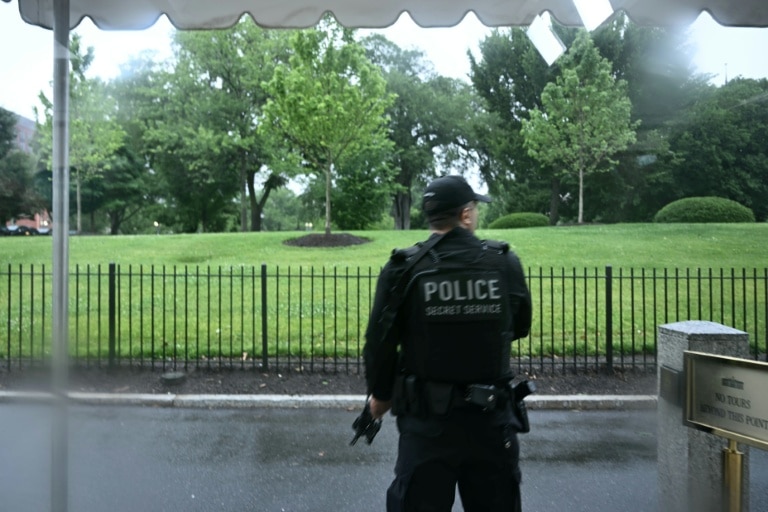
    On a Saturday evening in downtown Washington D.C., a sudden report of gunshots near the White House triggered a massive emergency response from law enforcement and national security agencies, sending the complex into lockdown as sitting U.S. President Donald Trump conducted high-stakes negotiations with Iranian officials inside the compound.

    Witnesses and on-site journalists described scenes of chaos immediately after the shots rang out. Reid Adrian, a Canadian tourist visiting the iconic area, told Agence France-Presse (AFP) that his group heard what initially sounded like fireworks, but quickly realized the noise was live gunfire. “We heard probably 20 to 25 what sounded like fireworks, but they’re gunshots, and then everyone started running,” Adrian recounted.

    Multiple journalists working on the White House North Lawn at the time of the incident confirmed the chaos via social media platform X. ABC News correspondent Selina Wang, who was filming a social media update when the gunfire began, captured the audio of the repeated shots while diving for cover. “It sounded like dozens of gunshots,” Wang wrote in a post following the incident.

    Within minutes of the first reports, uniformed and plainclothes police officers and Secret Service agents swarmed the perimeter of the White House, establishing tight cordons to block public and media access to the area. National Guard troops deployed to the site intercepted an AFP reporter and barred entry to the locked-down downtown zone. Federal law enforcement leadership confirmed their agencies joined the response shortly after: FBI Director Kash Patel posted on X that the bureau was on-site providing support to the United States Secret Service, which holds primary responsibility for protecting the sitting president and securing White House grounds.

    A spokesperson for the Secret Service told AFP in an initial text statement that the agency was still in the process of collecting details, verifying witness accounts, and securing the area, with no immediate update on potential suspects or casualties. The incident comes against a backdrop of heightened security for Trump, 79, who has already survived three separate reported assassination attempts. The most recent prior attempt took place on April 25, when an armed suspect breached a security checkpoint near a ballroom where Trump was attending a media gala.

  • Job-creating businesses punished by CGT ‘productivity tax’, Professor Richard Holden says

    Job-creating businesses punished by CGT ‘productivity tax’, Professor Richard Holden says

    Australia’s upcoming changes to the capital gains tax (CGT) regime will disproportionately penalize high-growth, job-creating small businesses while rewarding stagnant, low-productivity firms, a leading Australian economist has warned. Richard Holden, a respected professor of economics at the University of New South Wales (UNSW), has slammed the reforms as a “productivity tax” implemented at the worst possible time, as the nation grapples with a prolonged national productivity crisis. “This is the worst possible plan for a country desperate for more jobs and faster economic growth,” Holden said in his analysis, released publicly on Sunday. “It’s a productivity tax dropped right in the middle of a productivity crisis. The perverse logic of this policy is that it punishes high-productivity businesses for succeeding, scaling up, and creating new work for Australians.”

    To illustrate the inequity of the new framework, Holden modeled the tax outcome for two hypothetical small cleaning businesses launched by a husband-and-wife pair, each started with the couple’s combined $450,000 life savings, and both sold after five years of operation. The first business follows a low-growth trajectory, expanding just 3% annually and adding no new employees beyond the four founding staff over its five years. When sold, the new CGT regime imposes an effective tax rate of 26.6% on the capital gain from the sale. The second business, by contrast, grows 15% each year, scales to six employees, and delivers far stronger output and profit. When sold at the same four-times-fifth-year-profit multiple as the slower-growing business, the effective CGT rate jumps to 41.2% — more than 55% higher than the tax paid by the low-growth enterprise.

    The reforms, passed as part of the federal government’s May 12 budget, will ax the 50% CGT discount introduced in 1999, replacing it with an inflation indexation model applied to all asset classes starting July 1, 2027. The change will apply to investment properties, shares, and privately held small businesses alike. Originally, the Albanese government planned to limit CGT reform solely to residential housing to address a well-documented generational divide in Australian home ownership, a gap that has been confirmed by multiple independent inquiries including a March Senate inquiry report. But just four weeks before budget day, the Department of the Treasury advised the government to extend the changes to all asset classes, a last-minute shift that has triggered sharp criticism from Holden.

    While the CGT changes are the most controversial element of the government’s broader “productivity package”, the budget included a suite of pro-business measures alongside the tax overhaul. Officials made the $20,000 small business instant asset write-off permanent, cut redundant data requests from financial regulators, streamlined national retail tenancy rules, and eliminated Australian Standards access fees for construction, occupational health and safety, and product safety businesses, a change expected to save eligible firms up to $1,600 annually. The budget also expanded tax incentives for venture capital investment and introduced a new loss refundability provision for businesses amending prior year tax returns. In total, the government projects the full productivity package will cut business costs by $10.2 billion per year across the country.

    Many independent analysts have acknowledged the positive elements of the broader package, even as they push back on the scale and impact of the CGT changes. Analysts from the Commonwealth Bank of Australia noted in their post-budget assessment that the red tape cutting and pro-productivity small business measures are welcome changes. Still, they warned that the full suite of reforms is not large enough to materially lift Australia’s long-term economic growth ceiling or resolve the capacity constraints that are currently contributing to persistent domestic inflation.

    Holden called the skewed incentives of the new CGT regime a “profound oversight” that runs directly counter to the government’s stated goal of boosting national productivity, which has averaged just 0.8% annual growth across the last two decades. “Two identical businesses, delivering the exact same service — one highly productive, the other unproductive — will now face vastly different effective capital gains tax rates,” he explained. “Both took a risk, built a business, employed people, and paid taxes, and both sold for the same multiple of annual profit. The only difference is that one business was more productive, and in return, its owners get punished with a tax rate 55% higher than their less productive competitors. Put simply, this new system punishes the businesses most likely to create jobs and grow the economy, and rewards those that are more likely to cut positions and stagnate.”

    Treasurer Jim Chalmers has defended the full package, arguing that the reforms deliver progress on 13 of the 17 priority productivity reform areas identified by the independent Productivity Commission. Making the instant asset write-off permanent will save small businesses 376,000 hours of unnecessary tax compliance work annually, Chalmers said, while cutting duplicative regulatory data requests will save businesses a combined $181 million per year.

  • How the ‘Netflix effect’ is hampering a generation’s Australian dream

    How the ‘Netflix effect’ is hampering a generation’s Australian dream

    For generations, the Great Australian Dream – owning a fully paid-off home by retirement – stood as a defining life goal for working people across the country. Once widely achievable for most households, this long-held ambition has grown increasingly out of reach for younger generations today, driven by a toxic mix of skyrocketing property values and a shifting cultural attitude toward consumption and instant access that financial experts have dubbed the “Netflix effect.”

    Unlike the structural economic pressure of housing costs that have outstripped real wage growth for decades, the Netflix effect describes a broader cultural shift away from delayed gratification, a core value that allowed previous generations to slowly build wealth and save for a down payment on a home. Today’s young people, raised in an on-demand economy defined by streaming services like Netflix, ride-hailing apps such as Uber, and constant instant digital access, have grown accustomed to getting what they want immediately – a mindset that financial industry leaders argue is spilling over into long-term financial planning.

    Adelaide-based mortgage expert Marissa Schulze, founder of High Rise Financial Solutions, explains that the generational gap in expectation traces directly to this cultural shift. “When older generations were growing up, they had to wait for things – whether that was waiting until next week for the next episode of their favourite sitcom. They come to learn that good things come to those who wait,” Schulze said. “But nowadays, people are so much more use to having things now and at their convenience, through things like Uber and Netflix.”

    This constant access to instant satisfaction, she added, has eroded young people’s intuitive understanding of the value of long-term saving, making it far harder for many to set aside the funds needed for a property down payment. Even so, Schulze stressed that the Australian dream is not dead – just harder to reach than it was for previous generations. “It certainly is a lot harder for young people to save for a deposit, that is the big part, but it is still possible,” she noted. “I think maybe young people as a result of changing ideas and values do perhaps have less realistic expectations for what they want in a first home and so are less prepared to have a home as a first step then trade up. But I do also think there is a greater need to be more disciplined about saving, and lots of young people are.”

    That assessment is echoed by Sean Lee, director of Finance Quarter, who argues that the “want it now” mindset that defines modern culture comes with a tangible long-term cost. Lee points to social media as a key amplifier of this attitude, encouraging young people to take on debt for discretionary purchases ranging from new cars to international vacations just because they can qualify for borrowing. Small recurring costs, from multiple streaming subscriptions to monthly gym memberships, also add up over time, eating into funds that could otherwise go toward a housing deposit.

    “Social media in particular has created a culture where we want things now – so people may borrow for a new car or a holiday just because they can,” Lee explained. “This type of lifestyle makes it far more difficult to save up for a deposit. Things like subscription services and gym memberships do not sound a lot, but it does all add up. We have a ‘want it now’ society, but that does come at a price.”

    Like Schulze, Lee confirms that the dream remains achievable, but it looks different today than it did for older generations. It requires far more intentional financial planning, and is particularly challenging for single buyers, he said, adding that improved financial literacy education would go a long way to helping young people reach their goals. He also acknowledged that structural economic factors play a major role: in many parts of Australia, property prices have jumped 50% to 100% over just the past five years, a surge that average wage growth has nowhere near kept up with.

    Veteran financial advisor Peter White of the Financial Brokers Association of Australia, who has worked with first-time home buyers for 47 years, said saving for a deposit has always been challenging, even for previous generations. The biggest difference today, he argues, is the soaring cost of everyday living that leaves less disposable income for saving. To make the dream work, modern first-time buyers must be willing to compromise on location and size, he said.

    “It may be that you have to come to terms with not being able to buy in the same area as your mum and dad – you may have to move to a different suburb or something smaller,” White said. “Saving in the modern world is quite different to what it once was and it is a lot harder to do – and there’s always something that makes it harder. I do think we’ve become a bit more relaxed and prefer to have things the easy way than the hard.”

    His top advice for aspiring homeowners? Set realistic expectations, start saving immediately, and be prepared to make short-term sacrifices, such as taking on extra work to build up funds. He also reminds buyers to account for extra closing costs that can add up to roughly 5% of a home’s purchase price on top of the down payment.

    Ben Kingsley, managing director of Empower Wealth, echoes the call for adjusted expectations, emphasizing that younger buyers should not expect to purchase their ideal forever home as their first property. Instead, he encourages buyers to get on the property ladder with a more affordable entry-level home, then build equity to trade up to a larger or more desirable property later in life. That first step is particularly challenging for buyers who want to settle in major Australian capital cities, where prices have risen fastest, he noted.

    “Getting that deposit is definitely getting harder and harder,” Kingsley said. “However, if you trade down your expectations, you also trade down the size of the deposit you need and then have your first step. What you are finding is that people are coming into home ownership later in life. A big question is whether there is any sense of delayed gratification nowadays? The truth is, if you want the dream to become a reality, you are going to have to be prepared to buckle down.”

  • Quiet Chinese county hit by deadly coal mine disaster

    Quiet Chinese county hit by deadly coal mine disaster

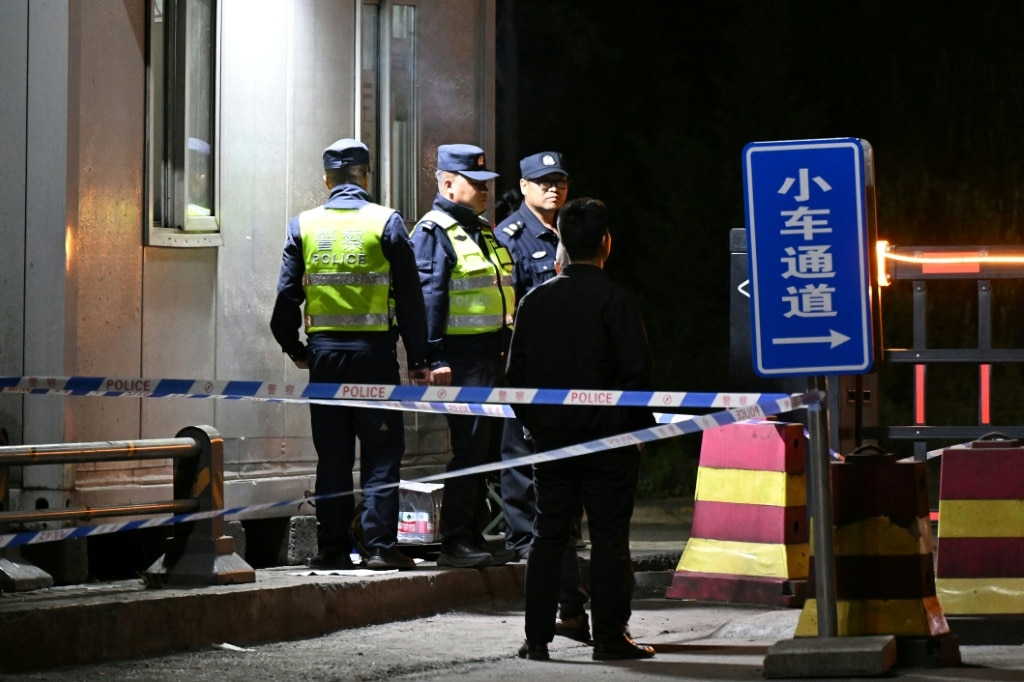
    The quiet rural county of Qinyuan in northern China’s Shanxi province, a region dotted with underground coal mines that have long been the economic backbone of the area, has been shattered by one of the deadliest industrial accidents in the country’s recent history. On the evening of Friday, May 22, 2026, a violent gas explosion ripped through the Liushenyu coal mine at 7:29 pm local time, when 247 miners were working deep below the surface. As of Saturday, official state media reports confirm at least 82 workers have been killed, with two miners still unaccounted for and search and rescue operations ongoing. A total of 128 injured workers have been transported to local hospitals for treatment, making this the deadliest coal mining disaster China has seen in 17 years.

    Preliminary investigations released by state outlets have already flagged severe regulatory violations by the company that operates the mine, raising urgent new questions about workplace safety enforcement in China’s $2 trillion coal industry. For residents of Qinyuan, a quiet county where mining is the primary source of employment for most working-age men, the grief of the disaster is deeply personal.

    Zhang, a local restaurant owner who runs a popular grilled meat skewer shop frequently visited by off-duty miners, especially on payday, told AFP the tragedy has left the tight-knit community reeling. “This is the first time such a big accident has happened here,” she said, speaking on condition of only releasing her surname. Most of the killed miners were the sole breadwinners for their families, she explained, balancing the financial burden of aging parents and young children. “He works in the coal mine, goes down the shaft and never comes back up. How are they supposed to go on living?” Zhang asked.

    When AFP journalists visited the area Saturday, access to the mine site was tightly restricted. Local law enforcement blocked all public roads leading to the Liushenyu facility, with security personnel posted at major road intersections only allowing authorized emergency and official vehicles to pass. Though the lit signage for the mine was visible from a distance, on-site security staff declined to comment on the status of rescue operations, saying they were not authorized to release information. One guard did confirm he had worked through the entire night without sleep, responding to the steady stream of emergency personnel responding to the blast.

    Local business owners near the mine site expressed a mix of grief, resignation, and caution when speaking to reporters. At a nearby gas station, staff declined to comment on the disaster, saying they were not aware of the full details and could not speak on the record. One worker did, however, share his quiet hope that the final death toll would not climb higher. At a neighboring Sichuan restaurant popular with miners, a staff member named Li said he had watched dozens of ambulances rush past his shop in the hours after the blast, and while he was shocked by the scale of the accident, he echoed a common sentiment among locals who have grown up around mining work. “Working in a coal mine, this kind of accident is inevitable,” he said, adding that he still holds out hope the two missing miners will be found alive.

    Hospitals that received injured survivors were also cordoned off with police tape, with multiple law enforcement vehicles stationed around their perimeters to control access. In a grim irony, an electronic display outside one local Qinyuan mine greets entering workers with the slogan: “Go to work happy, go home safely.”

    Zhang, who continues to run her small restaurant as the community grapples with loss, holds the same simple wish for the missing: that they will be brought out alive. Even though mining work pays better than most local jobs, she lamented, miners are essentially “earning money with their lives at risk.” Each life lost leaves a hole across multiple generations, she pointed out: “He is also someone’s son, someone’s father, someone’s husband.” Zhang called on national and local authorities to ramp up safety inspections, enforce existing regulations, and do everything possible to prevent similar tragedies from devastating other mining communities in the future.

  • Pajor, Paralluelo star as Barcelona thrash Lyon to win Women’s Champions League

    Pajor, Paralluelo star as Barcelona thrash Lyon to win Women’s Champions League

    In a display of overwhelming dominance that cemented their status as the new powerhouse of European women’s football, FC Barcelona demolished eight-time champions Olympique Lyonnais 4-0 in Saturday’s UEFA Women’s Champions League final at Oslo’s Ullevaal Stadion, with braces from Polish striker Ewa Pajor and Spanish star Salma Paralluelo delivering a historic fourth continental crown for the Catalan side.

    The first half remained deadlocked, with both sides trading near-misses that kept the capacity crowd of 24,258 on edge. Lyon thought they had snatched an early lead when Lindsey Heaps found the back of the net, but a VAR review ruled out the goal for offside. Minutes later, a defensive miscommunication between Lyon centre-back Wendie Renard and goalkeeper Christiane Endler gave Pajor an early lob opportunity from outside the box, but her effort clipped the side-netting. Barcelona keeper Cata Coll preserved the stalemate right before halftime, pulling off a sharp save to deny Selma Bacha’s well-struck free kick, sending the sides into the break goalless.

    The match flipped entirely just 10 minutes into the second half, when Patri Guijarro carved open Lyon’s defense with a surging run through the midfield and slotted a pass to Pajor, who controlled the ball, steadied herself, and fired home the opening goal to break the deadlock. For Pajor, the goal carried extra weight: she had fallen on the losing side in five previous Champions League finals, four with former club VfL Wolfsburg and one with Barcelona last season’s 1-0 defeat to Arsenal in Lisbon. She doubled her tally and Barcelona’s lead in the 69th minute, when Paralluelo cut a pass back from the byline to leave Pajor with a simple finish, putting the game firmly out of Lyon’s reach.

    As Lyon’s defense collapsed in the final stages, Paralluelo, a World Cup winner with Spain in 2023, put the icing on the cake with two late goals. Her spectacular rising strike in the 90th minute stood as the pick of the night’s finishes, before she added a second in stoppage time to cap the 4-0 rout. The lopsided result laid bare a growing gap between the two most successful clubs in women’s Champions League history, marking a clear shift in the balance of power over the last six seasons.

    Barcelona’s victory marks their fourth Champions League title in the last six seasons, a run that has seen them overtake Lyon as the sport’s current dominant force — only Lyon, with eight total titles, hold more wins in the competition’s history. The triumph also completes a domestic and continental clean sweep for Barcelona, which already claimed all major Spanish domestic honours this season. The Catalans were even able to welcome back reigning Ballon d’Or winner Aitana Bonmati from a broken leg, bringing her on as a second-half substitute to cap her comeback.

    “Finishing the season like this, it’s amazing,” Bonmati said after the match. “I’m so happy because it has been a tough one for me, different for me. I have learned a lot also, but ending the season and having the opportunity to play a little bit and helping the team, for me, I’m so happy.”

    Saturday’s final marked Barcelona’s sixth consecutive Champions League final appearance, and their seventh in eight seasons. They previously beat Lyon 2-0 in the 2024 final, and Saturday’s match was the fourth time the two sides have met in the showpiece. Lyon had taken the title in their two previous final meetings, winning in 2019 during their run of five consecutive titles and again in 2022, but Saturday’s defeat extends their drought to one title in the last six editions of the competition.

    Lyon’s star striker Ada Hegerberg, the competition’s all-time leading scorer and a former Ballon d’Or winner playing in her home country of Norway, failed to recapture her 2019 and 2022 final form that saw her score hat-tricks in both wins, cutting a muted figure all night. A one-on-one chance for Tabitha Chawinga that was saved by Coll summed up Lyon’s underwhelming performance, with former Barcelona defender Ingrid Engen summarizing the night for her side after the final whistle.

    “We really wanted to have the first goal of the game. We didn’t get that, and in the second half, they are so dangerous in the transitions, so when they get the first goal it makes it difficult, because the dynamic changes,” Engen said.

    Barcelona captain Alexia Putellas, a two-time Ballon d’Or winner, wore the armband on Saturday in what many speculate could be her final appearance for the club, with her contract set to expire this summer. For Lyon, the team must quickly reset, as they face a decisive French league title match against Paris FC next weekend, coming off a semi-final upset over defending champions Arsenal that set up Saturday’s final clash.

  • Ukrainian strike on college in Russian-occupied town kills 18: officials

    Ukrainian strike on college in Russian-occupied town kills 18: officials

    A deadly Ukrainian strike on a college campus in the Russian-occupied eastern Ukrainian town of Starobilsk has driven the conflict to a new peak of tension, with the death toll rising to 18 and Moscow promising a sharp military response even as Kyiv warned of an imminent large-scale Russian missile attack across Ukrainian territory.

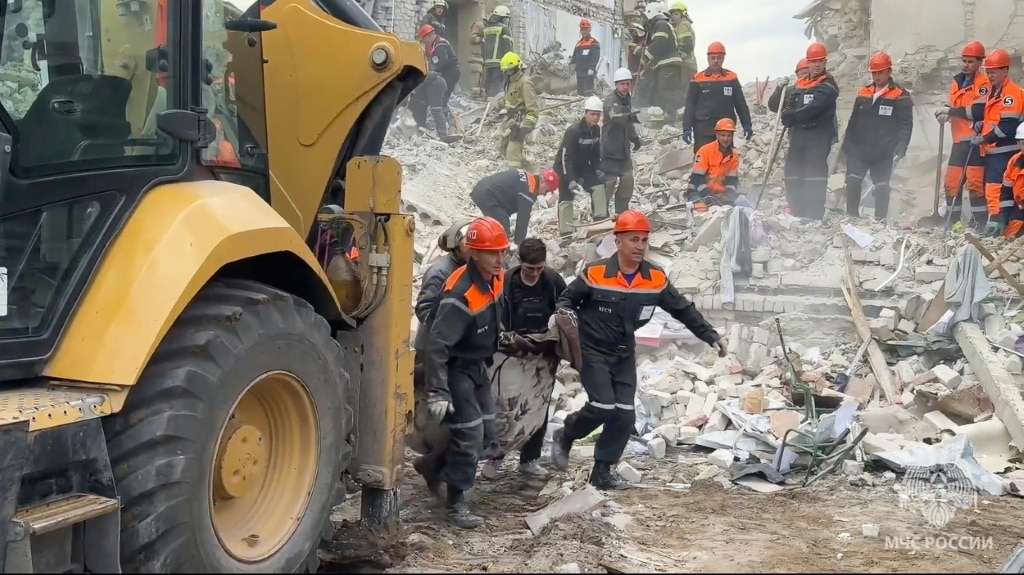
    The overnight assault between Thursday and Friday, one of the deadliest Ukrainian drone barrages launched against Russian-held territory in months, left 42 others injured and multiple people still trapped beneath the rubble of the building, Russian emergency officials confirmed Saturday. In an update Saturday, the ministry announced that two additional bodies had been recovered from the collapsed structure, bringing total casualties to 60, with 18 fatalities.

    Footage released by the Russian emergency services shows dozens of rescue workers combing through mounds of concrete and twisted steel that was once a section of the five-story college dormitory building, now reduced to a pile of rubble. According to Leonid Pasechnik, the Moscow-appointed governor of the occupied Lugansk region, the vast majority of those killed or listed as missing are young women born between 2003 and 2008. In a statement posted to Telegram, Pasechnik expressed collective grief, saying “The region and the entire country share the fate of these people and the pain of their families.” In the post-Soviet space, a college refers to a vocational education institution that typically serves students between the ages of 15 and 22.

    Starobilsk sits roughly 65 kilometers from the active front line in eastern Ukraine, and was seized by Russian forces in the early weeks of Moscow’s full-scale invasion in 2022. Today, nearly the entire Lugansk region falls under Russian occupation, with Moscow formally claiming the territory as part of the Russian Federation.

    Ukrainian officials have repeatedly denied intentionally targeting civilian sites, asserting that the strike hit a Russian military drone unit that was stationed in the Starobilsk area. Despite this denial, Russian President Vladimir Putin has ordered the country’s armed forces to prepare a formal response to the attack. Russia’s foreign ministry has also declared that those responsible for the strike will face “inevitable and severe punishment.”

    The United Nations issued a formal response to the strike Friday, stating it “strongly condemns any attacks against civilians and civilian infrastructure, wherever they occur,” while noting that it cannot independently verify casualty details due to restricted access to the occupied territory.

    As tensions escalated Saturday, both Ukrainian President Volodymyr Zelensky and the United States Embassy in Kyiv issued urgent warnings of an impending large-scale Russian air attack in the coming 24 hours. “We are seeing signs of preparation for a combined strike on Ukrainian territory, including Kyiv, involving various types of weaponry,” Zelensky wrote in a social media post, specifically naming the Oreshnik, Russia’s new nuclear-capable medium-range missile, as a potential weapon to be used in the assault. The US Embassy confirmed the warning in a public notice on its website, noting that it had received intelligence of a “potentially significant air attack that may occur at any time over the next 24 hours.” In an appeal to the international community, Zelensky called for increased diplomatic pressure on Moscow, saying “Pressure must be put on Moscow so that it does not expand the war.”

    The fatal college strike comes amid a steady escalation of cross-border drone warfare between the two nations. Ukraine regularly carries out drone strikes on Russian-controlled areas of its territory, framing the attacks as retaliation for ongoing Russian bombardments of Ukrainian civilian and infrastructure sites. In recent months, Kyiv has expanded its drone capabilities and increased the frequency of strikes deep within conventional Russian territory, targeting residential areas as well as critical oil export infrastructure.

    For its part, Moscow has launched mass missile and drone barrages across Ukraine almost every day since the full-scale invasion began in 2022. These strikes have repeatedly hit civilian infrastructure and caused widespread civilian casualties. Both sides have consistently denied intentionally targeting civilian populations.

    Since the full-scale conflict began in 2022, the United Nations Human Rights Monitoring Mission in Ukraine has recorded more than 60,000 total civilian casualties across the country. The conflict, the bloodiest in Europe since World War II, has devastated large swathes of eastern and southern Ukraine and forced more than 14 million people to flee their homes, according to UN data. Recent US-led diplomatic efforts to broker a negotiated end to the war through trilateral talks have stalled in recent months, as international attention and diplomatic resources have shifted to the ongoing conflict in the Middle East.

  • Bru challenges Bordeaux-Begles to show ‘true selves’ in Top 14 after Champions Cup defence

    Bru challenges Bordeaux-Begles to show ‘true selves’ in Top 14 after Champions Cup defence

    Fresh off their historic second consecutive European Rugby Champions Cup triumph, Bordeaux-Begles are turning their attention to the one major trophy that has eluded them since the club’s founding 19 years ago: the French Top 14 domestic crown. Head coach Yannick Bru issued a rallying cry to his squad Saturday, calling on the side to step up and reveal their full strength as they chase a maiden domestic title in the closing stages of the season.
    Bru’s side delivered a dominant 41-19 upset over four-time champions Leinster at Bilbao’s iconic San Mamés Stadium last week to secure back-to-back European titles, a performance headlined by a two-try outing from in-form winger Louis Bielle-Biarrey and 21 points from captain Maxime Lucu. The result marked a massive milestone for the club, which formed out of a merger of two local sides in 2006 and has never claimed the Top 14 crown. But the team’s domestic form has been uneven all season, leaving them fifth in the league standings with just two regular-season matches remaining. Barring a late surge in the table, Bordeaux-Begles will have to battle through the play-offs to lift their first domestic silverware.
    “The Top 14 is a boxing bout every weekend,” Bru told reporters following the Champions Cup victory. “I hope we will have all our resources to show our true selves in the Top 14.”
    The road to the second consecutive European title has already taken a visible toll on the squad. Since scraping past Bath in a tight semi-final clash three weeks ago, Bordeaux-Begles have only notched narrow wins against bottom-of-the-table sides Bayonne and Perpignan in league play. For veteran Tongan prop Ben Tameifuna, the final win marked a long-awaited weight off the team’s shoulders. “It is relief. It has been a hard few weeks,” the 34-year-old told Premier Sports. “This is one of the few times that I was nervous in my career. Back-to-back is special.”
    More than 50,000 fans packed into Bilbao’s sold-out San Mamés, nicknamed “The Cathedral,” with thousands of Bordeaux supporters making the four-hour drive down the Atlantic coast from southwest France to cheer on their side. Tameifuna praised the travelling support, adding with a joke: “What an arena and place to play. Thank you for everyone who made the trip. It is going to be a rough couple of days.”
    For Leinster, the defeat marked a devastating fifth Champions Cup final loss, extending the Irish side’s title drought that stretches back to 2018. Despite the heartbreaking half-time deficit – the side trailed 35-7 after conceding five tries before the break, including an 80-metre intercept try from Yoram Moefana – Leinster captain Caelan Doris said he remained proud of his squad’s resilience and confident the team would return to compete for the title again next season.
    “I admire the resilience of the group to keep knocking,” Doris said. “We have a lot of strength in the group to keep coming back, to keep working hard and keep reaching these stages. I have faith that we’re going to do the same again.”
    Doris acknowledged that Bordeaux capitalized on every small opportunity to build their unassailable lead, saying, “They’re capable of big moments out of nothing, a lot of the scraps went their way. We left ourselves too tall of a mountain to climb. I’m happy with the resolve and how we put the first half behind us.”
    The final was a quiet outing for New Zealand short-term signing Rieko Ioane, who was outmaneuvered in defense for Pablo Uberti’s 18-minute try that put Bordeaux ahead for good. Ioane will leave the province at the end of the current season after his seven-month deal concludes. Leinster now quickly shifts focus to their next title defense: next weekend, they will host the Lions at home in the quarter-finals of the United Rugby Championship, where they will aim to add another trophy to their cabinet to close out the campaign. “There are some lads moving on,” Doris said. “So we’re going to have to celebrate them over the next couple of days before turning the page to finish the season with silverware.”

  • Ebola claims more lives, other African countries seen at risk

    Ebola claims more lives, other African countries seen at risk

    A worsening Ebola outbreak across central Africa has triggered new alarm this week, with Uganda reporting three fresh confirmed cases and the International Federation of Red Cross and Red Crescent Societies (IFRC) announcing three volunteer deaths in the neighboring Democratic Republic of the Congo. Health authorities are now warning that the deadly, highly contagious virus could extend beyond the two most affected nations to reach multiple other countries across the continent, pushing global health bodies to label the outbreak an international public health emergency.\n\nSpeaking over the weekend, Jean Kaseya, director of the Africa Centres for Disease Control and Prevention (Africa CDC), confirmed that 10 additional African nations have been flagged as at immediate risk of transmission: Angola, Burundi, the Central African Republic, the Republic of Congo, Ethiopia, Kenya, Rwanda, South Sudan, Tanzania and Zambia. Kaseya cited two major structural challenges fueling the outbreak’s spread: high cross-border population mobility across the region and widespread persistent insecurity that complicates outbreak response efforts.\n\nThe three new cases confirmed by Ugandan health officials on Saturday bring the east African nation’s total confirmed infections to five since the outbreak was first detected in both Uganda and the DRC on May 15. To date, Uganda has recorded one fatality from the virus, and the three newly confirmed patients – a Ugandan commercial driver, a Ugandan frontline health worker, and a Congolese woman – all remain alive as of Saturday’s update. Contact tracing has linked all three new cases back to initial cross-border infections originating in the DRC: the driver was operating the vehicle that carried the first confirmed Congolese patient into Uganda, the health worker was exposed while treating that infected patient, and the third case is a Congolese woman who crossed into Uganda for travel before returning to the DRC and testing positive.\n\nEbola is a lethal viral hemorrhagic fever that spreads through direct contact with infected bodily fluids, and can progress to severe internal bleeding, multi-organ failure, and death in a large share of untreated cases. The current outbreak is centered in conflict-ravaged eastern DRC, where the virus was first detected in Ituri province before spreading to the neighboring South Kivu region. Updated data from the World Health Organization (WHO), released Friday, puts the DRC’s current outbreak at 82 confirmed cases and seven confirmed deaths, alongside nearly 750 suspected cases and 177 suspected deaths that have yet to be formally verified.\n\nThe three Red Cross volunteers who died were Congolese staff deployed to Ituri for a humanitarian mission unrelated to Ebola response. On March 27, the group was tasked with managing the collection and burial of deceased community members, when the outbreak was still circulating undetected in the region. The IFRC confirmed Saturday that the three volunteers are among the first known fatalities linked to the current outbreak. Since the first recorded Ebola outbreak in 1976, the virus has killed more than 15,000 people across Africa over the past 50 years.\n\nLast Friday, the WHO upgraded the DRC’s national risk level for the outbreak to its highest classification: “very high”, while labeling the regional risk for central Africa “high” and maintaining the global risk classification at “low”. Unlike better-known Ebola strains, the current outbreak is caused by the rare Bundibugyo strain, for which no widely approved vaccines or targeted antiviral treatments are currently available. Outbreak investigators also suspect the virus was spreading undetected across the DRC for weeks before it was formally identified, allowing transmission to accelerate across border areas.\n\nFollowing confirmation of its first two cases, Uganda implemented a full suspension of public cross-border transport with the DRC last Thursday to slow transmission. The outbreak has laid bare the structural challenges of responding to a major epidemic in eastern DRC, a region that has faced decades of persistent conflict controlled by dozens of armed non-state groups. State health and administrative services have been largely absent from rural areas of Ituri for generations, and much of South Kivu is currently controlled by the Rwandan-backed M23 armed group, which has no prior experience managing large-scale public health emergencies like Ebola.\n\nAddressing a joint press conference in Addis Ababa alongside Kaseya, Congolese Health Minister Samuel Roger Kamba framed the outbreak as a shared global and regional responsibility. “This is everyone’s problem,” Kamba said, adding that the Congolese national government requires full territorial control across eastern DRC to implement effective outbreak containment measures and stop the virus from spreading further across the continent.