标签: Oceania

大洋洲

  • Man who murdered UK dad in Australia declared mentally unfit for trial

    Man who murdered UK dad in Australia declared mentally unfit for trial

    A devastating unprovoked knife attack that claimed the life of a British tourist travelling through regional Australia has concluded with a landmark legal ruling: the perpetrator has been formally declared mentally unfit to stand criminal trial for the killing.

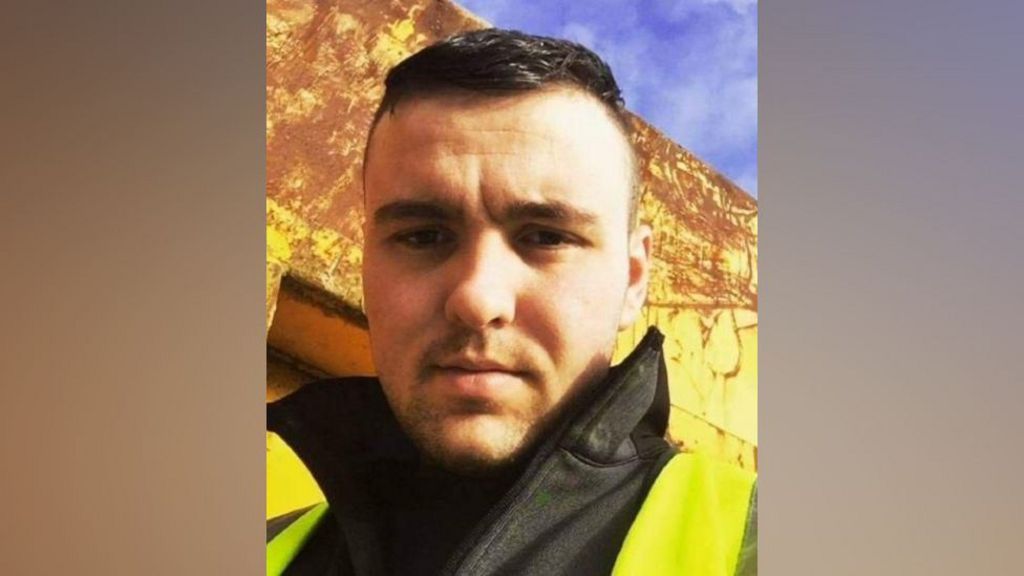
    Thirty-year-old Royce Mallett, a loving father of two from County Durham in the United Kingdom, was fatally wounded in the July 8, 2024 attack, which unfolded in the motel car park of the Hume Inn in Albury, a regional town in New South Wales. According to court testimony, Mallett had just climbed into a parked vehicle outside the accommodation when 29-year-old David Summers-Smith reached through the open car window and stabbed him once in the chest without warning or a single word, using a common steak knife as his weapon.

    Summers-Smith, who has a long documented diagnosis of schizophrenia, was experiencing acute psychotic episodes at the time of the fatal assault. He entered a formal plea of not guilty to the murder charge on the grounds of severe mental impairment. Following weeks of testimony and review of psychiatric evidence, Supreme Court Justice Dina Yehia delivered her ruling on Tuesday: while the court confirmed Summers-Smith did carry out the fatal stabbing, he cannot be held criminally responsible for his actions due to his mental state.

    In her written judgment, Justice Yehia described the single act of violence as “both catastrophic and tragic.” Court records show that immediately after the attack, Summers-Smith fled the scene, but within a short time contacted local police to confess he had stabbed a stranger, and reaffirmed his admission of guilt when officers took him into custody.

    Psychiatrists who conducted a formal assessment of Summers-Smith detailed his long and complex mental health history: his schizophrenia and persistent psychotic symptoms have not responded to standard prescription medication, and at the time of the attack, he was receiving court-ordered outpatient mental health treatment in the community. Experts also confirmed that in the weeks leading up to the stabbing, Summers-Smith had been self-medicating with illegal substances, including crystal methamphetamine, commonly known as ice, and cannabis. His psychiatric team noted he held persistent delusional beliefs and had no insight into the severity of his illness or his need for ongoing structured treatment.

    The ruling has shone a light on the devastating impact of the attack on Mallett’s grieving family, whose victim impact statements laid bare the lifelong damage the killing has caused. Mallett’s partner, Caitlin O’Keeffe, told the court she now faces the prospect of raising their two young children alone, with the permanent knowledge that the children will grow up without their father’s guidance, love and support. “It affects not just today, but every future moment that he should have been part of, and everyday moments that he’s already missed,” she wrote in her victim statement.

    Mallett’s father added that he had lost not only his son, but his closest confidant and “best friend,” telling the court he now struggles to find joy in daily life or any motivation to complete routine tasks. Citing the family’s statements, Justice Yehia noted that Mallett’s loved ones remain unable to comprehend how a person with treatment-resistant severe mental illness was allowed to live and receive treatment in the community.

    As part of her ruling, Justice Yehia ordered that Summers-Smith be detained indefinitely in a secured mental health facility. His case will be subject to regular periodic review by the New South Wales Mental Health Review Tribunal, which will monitor his progress and potential recovery, and holds the authority to modify or amend his detention order should his mental health improve significantly.

  • Rebel Wilson says claims she bullied women on her film are ‘absolute nonsense’

    Rebel Wilson says claims she bullied women on her film are ‘absolute nonsense’

    One of Hollywood’s most recognizable comedic stars, Rebel Wilson, has forcefully rejected allegations that she bullied female colleagues on the set of her directorial debut, calling the claims “absolute nonsense” during her first day of testimony in a high-stakes defamation trial unfolding in Sydney. The legal action against the *Bridesmaids* actor was brought by 26-year-old Australian performer Charlotte MacInnes, who appeared in Wilson’s first feature film as director, *The Deb*. The case centers on a string of Instagram posts Wilson published between 2024 and 2025 that MacInnes argues have irreparably damaged her professional reputation.

    At the core of the dispute is how MacInnes described a 2023 incident involving producer Amanda Ghost, who also worked on *The Deb*. In her posts, Wilson alleged MacInnes had initially complained of sexual harassment by Ghost during a post-swim encounter at Bondi Beach, only to withdraw the claim to advance her own career. MacInnes vehemently denies ever making a sexual harassment allegation against Ghost, saying Wilson’s version of events is entirely fabricated.

    The incident that sparked the entire conflict dates to September 2023, when MacInnes and Ghost joined for an late-afternoon swim at Sydney’s iconic Bondi Beach. Ghost suffered a sudden and severe allergic reaction to cold water, a rare condition called cold urticaria that left her covered in painful red welts and shaking uncontrollably, the court heard during earlier proceedings. The pair hurried back to Ghost’s nearby beachside apartment, where MacInnes drew a hot bath to help ease Ghost’s symptoms. After Ghost got into a shower to warm up first, MacInnes stepped into the bath to warm herself; Ghost later joined her, and both remained in their swimsuits. Ghost’s assistant eventually brought hot drinks to the bathroom, where the three spoke briefly before the assistant left.

    After the incident, Wilson spoke with MacInnes about what happened, and while both sides agree the conversation took place, they offer vastly conflicting accounts of its content. Wilson maintains MacInnes told her the encounter left her feeling “uncomfortable”, while MacInnes says she only ever described the situation as “weird” and “bizarre”, never indicating she felt sexually threatened or uncomfortable. Text messages presented to the court show Wilson told Ghost immediately after the conversation that “Charlotte says all good” and “She just meant ‘it was a bizarre situation’ not that she personally felt uncomfortable.”

    When cross-examined by Sue Chrysanthou SC, MacInnes’ lead barrister, Wilson was pressed on her public self-identification as a “champion of women” — a label Wilson affirmed she still embraces. Chrysanthou challenged Wilson on this stance, pointing to accusations that the actor had publicly and privately mistreated MacInnes, Ghost, and a female writer on the set of *The Deb. “That’s absolute nonsense,” Wilson told the packed courtroom, which was filled with reporters, supporters from both sides, and multiple witnesses including Ghost. Wilson also pushed back on claims that her critical public social media posts about the women constituted mistreatment, arguing the statements were truthful, not malicious.

    Throughout hours of questioning, Wilson repeatedly said she could not recall key details related to the case, including widespread backlash she received in 2018 after claiming she was the “first ever plus-sized girl” to lead a romantic comedy. She also denied any involvement in anonymous websites that have spread damaging rumors about both Ghost and MacInnes. Prosecutors have previously alleged Wilson hired a U.S. public relations firm to create websites that compared Ghost to disgraced sex trafficker Ghislaine Maxwell, who is currently serving a 20-year prison sentence for her role in Jeffrey Epstein’s criminal ring. Prosecutors have also raised the issue of a nude photo of MacInnes that was leaked online after her social media accounts were hacked, though no link between Wilson and the hack has been proven in court.

    Wilson’s legal team has argued MacInnes has not suffered any professional harm from the Instagram posts, pointing instead to a string of career advances she has secured since the posts were published: MacInnes recently signed a record deal with major label Atlantic Records and landed a role in a new U.S. theater production being produced by Ghost. MacInnes is seeking aggravated damages for the alleged defamation and a court order to stop Wilson from repeating the claims on any public platform.

    Wilson’s testimony is scheduled to continue on Wednesday, as the high-profile trial progresses through Sydney’s court system.

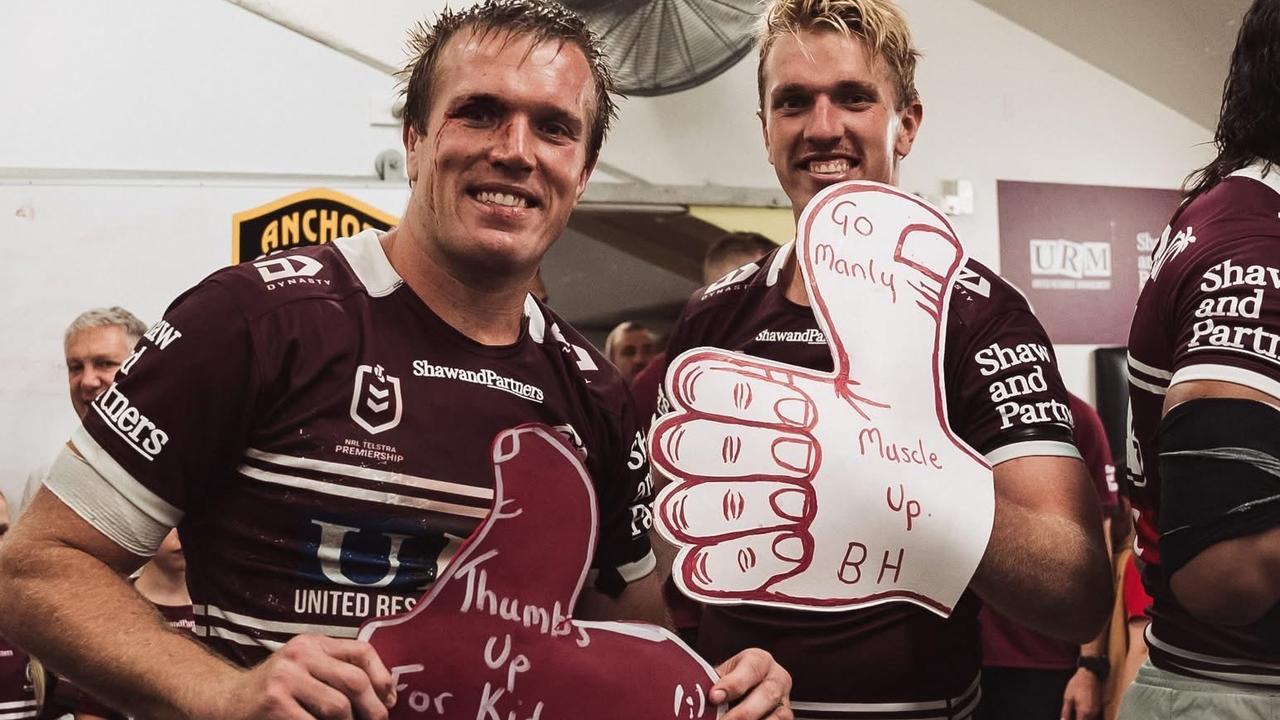
  • ‘No person deserves cancer’: Trbojevic brothers help launch new initiative to raise money at Magic Round

    ‘No person deserves cancer’: Trbojevic brothers help launch new initiative to raise money at Magic Round

    Australia and New Zealand’s National Rugby League (NRL) is adding a heartfelt new layer of purpose to this year’s highly anticipated Magic Round, launching the groundbreaking Kick for a Cause charity initiative that aims to raise $1 million to support children battling cancer across both nations.

    Replacing the league’s former Try July fundraising program, the new campaign has secured major backing from insurance provider Youi, which has committed to donating directly for every successful kick scored during the May 15-17 event in Brisbane. For every completed conversion kick and penalty goal, Youi will contribute $1,000, while a larger $2,000 donation will be made for every field goal kicked across the three days of competition.

    All funds generated through the initiative will be distributed to 11 leading pediatric cancer centers across Australia and New Zealand, in partnership with two respected non-profit organizations: the Sydney Children’s Hospitals Foundation and the Starship Foundation. These 11 institutions deliver specialized clinical treatment, fund pioneering medical research, and run critical support programs for young cancer patients and their families who face the daily challenges of the disease.

    Australian Rugby League Commission Chairman Peter V’landys emphasized that the campaign brings the entire rugby league community together around a shared mission. “Every child fighting cancer deserves the very best care, comfort and hope – and rugby league is stepping up to help deliver it,” V’landys said. “At Magic Round, our game comes together in a powerful way. Every kick, every cheer and every dollar raised will make a real difference for kids and families doing it tough. We thank our partner, Youi, for their support of this important initiative and urge all fans travelling to Brisbane for Magic Round as well as those cheering on from home to get behind a very worthy cause by helping those who need it most.”

    The official launch of the campaign took place earlier this week at Manly’s 4 Pines Park, where Manly Sea Eagles star brothers Jake, Tom and Ben Trbojevic led the event. The launch holds deep personal meaning for the trio, who formed a close bond with 12-year-old Beau Hewitt, a passionate Manly tragic who passed away last year from a rare form of cancer. The brothers first met Beau in 2024 through connections at the local Mona Vale Raiders junior club, and quickly grew close to the young fan, who had an extraordinary knowledge of the game that left a lasting impact.

    Beau, who played for the Mona Vale Raiders, even once tipped the brothers off about an impending coaching ambush from then-Manly head coach Des Hasler ahead of a key match. Recalling their time with Beau, Jake Trbojevic said the young fan’s love for rugby league was unmatched. “He played for the Raiders, and lots of people reached out for us to come meet him in the hospital,” Jake said. “We went and met him in the hospital, and just seeing how much he loved rugby league was like no other, honestly. He loved it. Seeing how much he loved rugby league, you could honestly ring and have a chat with him. He’d even text you about game plans. He was well advanced for his years.”

    Jake added that carrying on Beau’s legacy through the Kick for a Cause campaign is a point of pride for the brothers. “He was a great kid, we really enjoyed hanging out with him, and just seeing how it all went was horrible. It was horrible for his family, but seeing his legacy live on through things like this makes you proud. Getting to know Beau and seeing what that whole experience was like was horrible. I can only feel very sorry for families going through it, and I think cancer has a lot to answer for, especially when it’s kids. No person deserves cancer, but no kid does. So to see the NRL and Youi get behind this cause is remarkable, and it obviously makes us very proud.”

    Off the campaign trail, Jake Trbojevic offered a lighthearted piece of advice for wingers across the league: bring the ball under the posts whenever possible to set up easier conversion kicks that will boost total fundraising. The veteran forward also showed off his kicking skills at the launch, but confirmed he is happy to let Manly’s regular goalkicker Jamal Fogarty remain the team’s first option.

    For Tom Trbojevic, the superstar fullback will not take the field at Magic Round this year as he continues his recovery from a recurring hamstring injury. Still, he said his rehabilitation is progressing on schedule, and he remains optimistic about a return to action in roughly four weeks. “It’s going good. Obviously, I’m disappointed and it’s frustrating, but I’m back on the mend and just working hard to get back out there,” he said. “It’s probably hard to get a vibe right now, but it feels like I’m on schedule. I guess it’s hard to really tell.”

  • Nations to kick off world-first fossil fuel exit talks

    Nations to kick off world-first fossil fuel exit talks

    Against a backdrop of escalating geopolitical tensions, global energy market volatility, and growing alarm over accelerating climate change, more than 50 national delegations have gathered in the Colombian Caribbean port city of Santa Marta this week for the world’s first dedicated international conference focused on phasing out fossil fuels, the primary driver of anthropogenic global warming.

    Co-hosted by fossil fuel-dependent Colombia and the Netherlands, the two-day summit is being held outside the framework of long-running United Nations climate negotiations, a deliberate choice that reflects widespread frustration among participating nations over the UN process’s repeated failure to make meaningful progress on fossil fuel reduction. Santa Marta, the host city, is a fitting backdrop for the talks: it sits at the heart of one of Colombia’s busiest coal exporting hubs, a reminder of the deep economic ties many nations still retain to planet-warming fossil fuels.

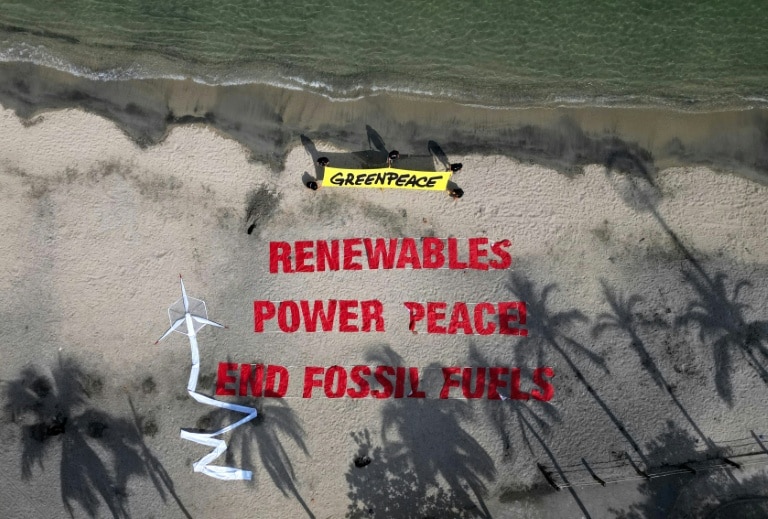
    As delegates arrived for the opening of talks on Tuesday, climate activists and Indigenous community groups marched through the city’s streets and along its beaches to demand urgent action, with coal tankers clearly visible lined up on the ocean horizon beyond the shore. The summit is not mandated to produce binding international commitments, but an independent scientific advisory panel has put forward a sweeping 12-point policy menu for attending nations to consider, headlined by a call for an immediate halt to all new fossil fuel extraction and infrastructure expansion projects.

    The attendee list includes a diverse cross-section of major fossil fuel producers, large energy consumers, and climate-vulnerable nations: major developed producers Canada, Norway and Australia, developing energy giants Brazil, Nigeria and Angola, European Union member states, coal-dependent emerging economies Turkey and Vietnam, and small island developing states that face existential risk from rising sea levels driven by climate change. Notably absent from the talks are the world’s three largest greenhouse gas emitters—the United States, China and India—as well as oil-rich Gulf nations.

    Organizers first announced the summit in late 2024, but recent geopolitical upheaval, including the ongoing Iran conflict and subsequent oil and gas market disruptions, has only sharpened the urgency of the conversation, according to speakers. UK special climate envoy Rachel Kyte told reporters on the ground in Santa Marta that the current crisis has underscored a core truth long argued by climate advocates: global reliance on fossil fuels is a major source of geopolitical and economic instability.

    “People seem refreshed to be able to talk about these issues without having to sort of argue the existential question of — do we need to do this at all?” Kyte said. “Many nations are here in good faith to really work through what is a very complex challenge made more urgent by the crisis.”

    Alongside calls to halt new fossil fuel development, the summit’s agenda includes work to map out a framework for equitable reductions in global fossil fuel production and consumption, and strategies to reform harmful fossil fuel subsidies that currently skew global energy markets and block much-needed investment in renewable energy. A new analysis released Monday by the International Institute for Sustainable Development highlights the scale of this challenge: the research found that governments around the world still spend five times more public funding on fossil fuel support than they invest in renewable energy alternatives.

    Scientists leading the advisory panel have stressed that there is no possible justification for opening new fossil fuel extraction sites, even as renewable energy investment hits record highs. Speaking to AFP in Santa Marta, Carlos Nobre, a Brazilian climate scientist and former member of the UN Intergovernmental Panel on Climate Change, warned that even if no new fossil fuel projects are developed, the existing reserves of coal, oil and gas already in production or development are enough to push global average temperatures 2.5 degrees Celsius above pre-industrial levels by 2050.

    The planet has already warmed 1.1 degrees Celsius above pre-industrial averages, and current policy trajectories put the world on track to blow past the 1.5 degree Celsius warming threshold that scientists identify as the limit for avoiding catastrophic, irreversible climate impacts. Beyond that threshold, scientists warn of irreversible losses including the complete disappearance of the world’s coral reef systems and the full collapse of the Greenland ice sheet, which would eventually raise global sea levels by more than seven meters, displacing hundreds of millions of people worldwide.

  • Horses unlikely saviours for those who serve in uniform

    Horses unlikely saviours for those who serve in uniform

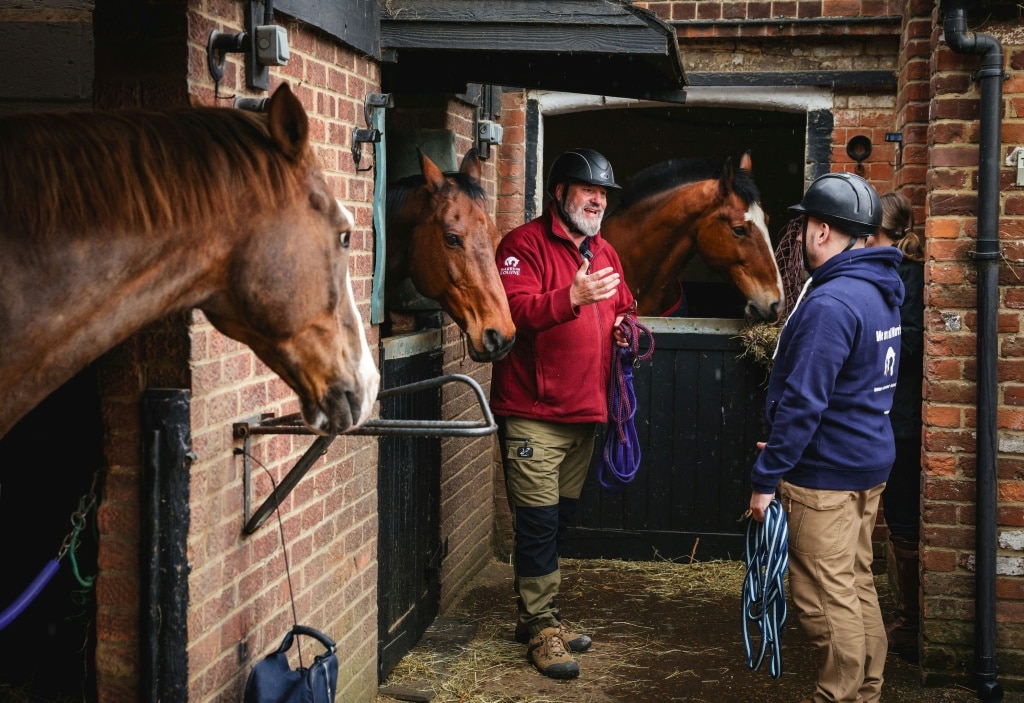
    For uniformed service members and police officers who routinely risk their lives in service to the public, breaking points are rarely discussed openly. But behind the stoic public image, many struggle with crippling physical injuries and unmanaged mental health trauma that traditional therapies often fail to address. For three British servicemen and law enforcement officers, the path to recovery did not come from a human clinician — it came from an unlikely source: horses.

    Former Royal Air Force reservist John Lewis, serving police officer Nick Morton, and ex-military intelligence operative Al Strudwick all reached catastrophic lows in their post-service or on-duty lives. Lewis, whose 12-year military career ended abruptly after a traffic accident left him with multiple broken bones that forced him into medical retirement, grappled with constant suicidal thoughts. Morton, a 20-year veteran police officer, suffered a total mental breakdown after years of responding to unspeakably traumatic incidents, including child murders. Strudwick, who underwent a double leg amputation after a life-threatening sepsis infection, lost all sense of self-worth and confidence after the procedure. Oddly enough, all three shared one additional common trait: a deep-seated fear of horses.

    Today, all three men credit their dramatic recovery to Warrior Equine, a small British charity that uses equine interaction to support vulnerable current and former service members. Founded in 2019 by Ele Milwright, whose husband is a serving RAF officer, the organization grew out of Milwright’s years of informal observation of the unaddressed trauma many veterans bring home after overseas deployments.

    “I did notice a lot of our friends and colleagues were coming back a little bit quirky,” Milwright told AFP. “You couldn’t quite put your finger on it, but they came back and it was different. Nobody told you what to do about it. It was the elephant in the room. So three things: understanding the value of horses, understanding how horses think, their psychology, and my commitment to help people with a military background or those who serve, all came together.”

    To keep operating costs low, the charity does not own permanent facilities or a herd of its own horses. Instead, it partners with civilian equestrian centers and borrows military horses to run three-day intensive therapy courses, hosting between six and eight cohorts of participants each year. Milwright works alongside chief equine instructor Jim Goddard, who has years of experience working with veterans.

    The core of the charity’s approach centers on the natural connection between equine psychology and emotional regulation for traumatized humans. During the courses, participants are tasked with leading a horse into an enclosed pen and using only their body language, breath control, and energy to encourage the animal to move and interact with them. Horses are innately attuned to tension and emotional instability; only when a participant can achieve a calm, focused state that feels safe to the animal will it choose to engage voluntarily. This exercise becomes a tangible, immediate reward for participants learning to manage their own overwhelming stress and trauma responses.

    For Lewis, who tried multiple traditional talk therapies and was so skeptical of the equine program that he turned around three times on his drive to his first course, the experience proved transformative. He ultimately pushed through his doubt, recognizing that he had nothing left to lose and wanted to build a stable life for his two children.

    “That vulnerability became exacerbated every time I was away from my family and my kids,” Lewis explained. “It became so overwhelmingly controlling. Even if I went into a supermarket to buy a loaf of bread and there wasn’t any bread on the shelf, that was me failing to be able to protect them. Then I would get into conflict in the supermarket just because there wasn’t bread on the shelf.”

    After working with the horses, Lewis says his life is unrecognizable. “The point where the horse can detect that you’re in control of those stress emotions going on inside you, they will, of their own free will, walk over to you and follow you around with no lead,” he said. “They’ll stay close to you in this amazing way. And the way it’s been described to us, and you can really see it, is that they just want to sit there and trust you.” Today, Lewis says his crippling controlling behaviors are gone, and while he acknowledges the trauma he experienced will always be part of his story, he is no longer trapped by it: “That dark tunnel doesn’t even stare me in the face. I know it’s there. But I’m able to turn my back on it every single time.”

    For Strudwick, the program restored the self-confidence he lost after his amputation, so much so that he was able to climb Wales’ Pen y Fan mountain — a core training test for British SAS candidates — from his wheelchair. “It made me realise how far I had come, from lying in a hospital bed for 50 nights, and being released with damaged kidneys and a slowly recovering liver, to climbing a mountain,” he said. Known for his sharp, self-deprecating humor even after his trauma — his upcoming memoir about his recovery is titled *Finding My Feet Again* — Strudwick says the program gave him his joy of life back.

    In recognition of the organization’s extraordinary track record of success, Warrior Equine has been selected as the official charity partner of the 2025 Royal Windsor Horse Show, one of the most prestigious equestrian events in the United Kingdom, running from May 14 to 17. The partnership is expected to raise critical funds to expand the charity’s reach and help hundreds more uniformed service members find healing through the unexpected connection with horses.

  • Crude extends gains as Trump considers latest Iran proposal

    Crude extends gains as Trump considers latest Iran proposal

    Global financial markets traded with heightened volatility on Tuesday, as crude oil prices extended upward momentum while equity indexes struggled for direction, driven by ongoing geopolitical negotiations between the United States and Iran that could reshape Middle Eastern energy security and end an eight-week-old regional conflict.

    Tehran has submitted a written peace proposal to Washington via diplomatic channels through Pakistan, outlining its core negotiating red lines that cover both its nuclear program and the future status of the Strait of Hormuz, the world’s most critical energy chokepoint. Under the reported interim framework, Iran has offered to immediately reopen the Strait of Hormuz — through which roughly 20 percent of global oil and liquified natural gas supplies transit daily — in exchange for the United States lifting its ongoing blockade of Iranian ports. More contentious negotiations over Iran’s nuclear activities, a long-standing sticking point for the Trump administration, would be deferred to a later date under the plan.

    The White House confirmed that President Donald Trump convened a meeting with senior advisors on Monday to review the Iranian proposal, but press secretary Karoline Leavitt declined to comment on whether Trump would accept the terms. The news comes just days after Trump abruptly scrapped a planned trip to Islamabad by top envoys Steve Witkoff and Jared Kushner, dashing earlier market hopes for a quick breakthrough. Top U.S. diplomat Secretary of State Marco Rubio already poured cold water on the proposal during an interview with Fox News, arguing that Iran’s offer does not meet Washington’s requirements. “If what they mean by opening the straits is, ‘yes, the straits are open as long as you coordinate with Iran, get our permission or we’ll blow you up and you pay us,’ that’s not opening the straits,” Rubio said.

    Separately, during a meeting with Iranian Foreign Minister Abbas Araghchi in Saint Petersburg on Tuesday, Russian President Vladimir Putin pledged that Moscow would deploy all possible efforts to bring an end to the ongoing Middle East conflict. Iran’s UN envoy Amir Saeid Iravani also told a UN Security Council session that Tehran requires binding guarantees that both the U.S. and Israel will halt future military strikes before it can offer full security assurances for Gulf waterways.

    Energy markets responded directly to the diplomatic developments, with both major global crude benchmarks extending gains. By 0230 GMT, West Texas Intermediate crude climbed 1.0 percent to settle at $97.32 per barrel, while Brent North Sea crude rose 1.0 percent to $109.27 a barrel, approaching the key $110 threshold that has stoked global inflation concerns. Equity markets were far more mixed, with most major Asian indexes ending the session in negative territory: Tokyo’s Nikkei 225 fell 0.5 percent to 60,238.21, Hong Kong’s Hang Seng Index dropped 0.3 percent to 25,851.82, and Shanghai’s Composite Index slipped 0.2 percent to 4,079.78. Gains were limited to a handful of regional exchanges including Seoul, Singapore, Taipei and Jakarta. In prior New York trading, the S&P 500 and Nasdaq notched new all-time record closes, while the Dow Jones Industrial Average edged 0.1 percent lower to 49,167.79 at close. London’s FTSE 100 also fell 0.6 percent to 10,321.09 on Tuesday.

    Tony Sycamore, a market analyst at IG, noted that mounting domestic pressures may push Iran toward a faster agreement. The country’s aging crude storage facilities are projected to hit full capacity this week, and if storage is exhausted, Iran will be forced to shut in production. “If forced shut‑ins follow, Tehran risks irreversible long‑term damage to its reservoirs and a serious hit to future production and revenue streams,” Sycamore explained. While he called the latest Iranian proposal a step in the right direction, Sycamore added that “it is hard to see the US accepting anything less than a comprehensive deal that both opens the Strait of Hormuz and addresses Iran’s nuclear weapons programme.”

    Beyond Middle Eastern geopolitics, global investors are also bracing for a packed week of high-stakes economic and corporate events. The Bank of Japan is set to announce its latest interest rate decision later Tuesday, with most market analysts expecting the central bank to hold policy steady. The U.S. Federal Reserve, European Central Bank and Bank of England are all scheduled to announce their own rate decisions this week, and most are expected to keep borrowing costs unchanged as the recent surge in energy prices stokes fresh fears of a renewed inflation spike. On the corporate side, earnings reports are due this week from three of the world’s largest technology companies — Apple, Meta Platforms and Microsoft — as well as major industrial and energy firms including Ford and ExxonMobil, which will give investors greater insight into the health of the U.S. and global economy.

  • Philippine museum brings deadly, lucrative galleon trade to life

    Philippine museum brings deadly, lucrative galleon trade to life

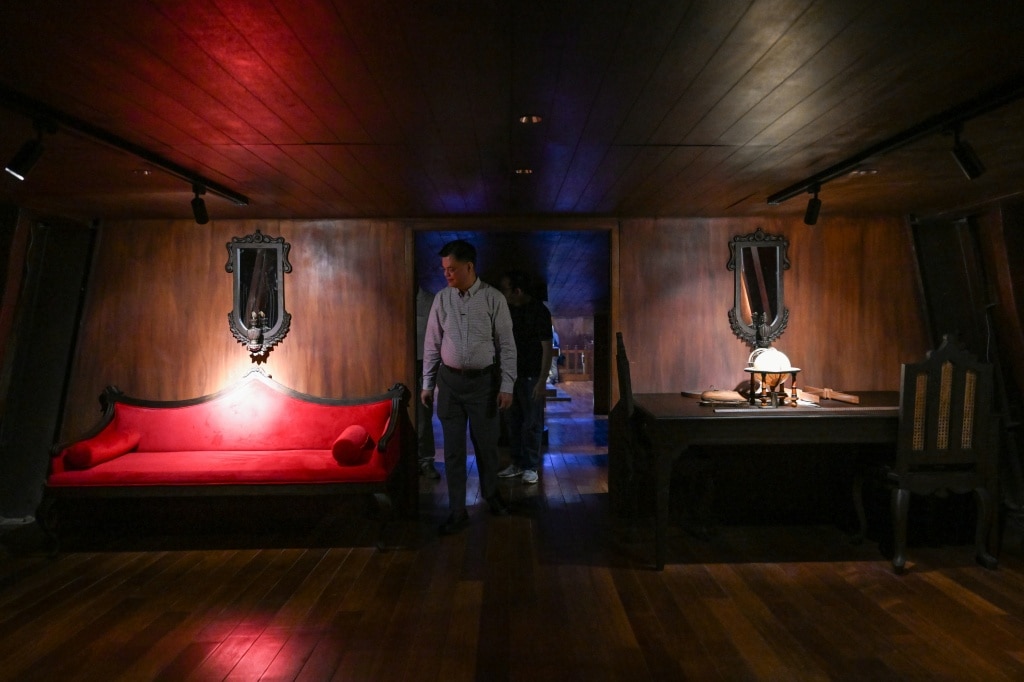
    Manila, Philippines – A striking new cultural landmark has opened on the shores of Manila Bay, inviting visitors to step back into one of the most transformative yet under-told chapters of global history: the 250-year era of Spanish Pacific galleon trade. At the heart of the newly opened Museo del Galeon sits a full-scale, meticulously crafted replica of the *Espiritu Santo*, a 17th-century galleon that once plied the deadly trade route connecting Manila, Acapulco, and Spain.

    Unlike many historical accounts of the galleon trade that center on European colonial powers, this new museum deliberately frames the story through the experiences of the Filipino people who built, crewed, and suffered under the colonial enterprise. From 1565 to 1815, 181 galleons completed hundreds of trans-Pacific crossings, forging the first sustained interconnected trade network linking Asia, the Americas, and Europe – a milestone many historians recognize as the dawn of early modern globalization. The *Espiritu Santo*, constructed with forced Filipino labor in 1603, was one of the most formidable vessels of its era.

    Manuel Quezon, the museum’s executive director and a noted historian, emphasizes that the institution does not shy away from the brutal human and environmental cost of the galleon trade. For centuries, Spanish colonial authorities required able-bodied Filipino men to complete 40 days of unpaid forced labor annually felling old-growth hardwoods and constructing the massive ships. Many others were conscripted to serve as crew for voyages that could last more than a year, with death tolls averaging one out of every three sailors per crossing.

    Cramped, overcrowded hulls loaded with luxury cargo left crewmembers surviving on a meager, often rotten diet of hardtack, spoiled salted meat, and rotting fish. Disease and starvation were rampant, and deadly uprisings against the exploitative system broke out across multiple shipbuilding sites, including the Cavite coast near Manila. Even as the trade reshaped global commerce and introduced new foods, religions, cultural practices, and ideas to the Philippines that shape modern Filipino identity today, it left a trail of environmental destruction, decimating local old-growth forests and shattering Indigenous communities.

    “It was the first global trade, connecting three continents. It made the world smaller,” explained Francis Navarro, archives director at Manila’s Ateneo de Manila University, of the trade’s historical significance. Quezon added that the long legacy of Filipino seafaring persists to this day: Filipinos still make up one quarter of the world’s merchant sailors, a tradition rooted in the exploitative galleon era that has never been fully highlighted in mainstream historical narratives.

    After 14 years of planning and development, the museum opened its doors to the public on May 1. Visitors can walk the decks of the replica *Espiritu Santo*, surround by immersive, wraparound LED displays that recreate the open Pacific skies. Artifacts recovered from actual galleon wrecks line the surrounding exhibit halls, including a fragment of a Chinese tomb stone once used as ballast in a 17th-century ship’s hold.

    The $16.5 million (billion-peso) project ultimately secured funding from some of the Philippines’ wealthiest families after attempts to secure government financing and support from a Mexican billionaire fell through. Unlike the original *Espiritu Santo*, the modern replica is not built from native hardwood – a choice made out of environmental responsibility. The original 1,000-ton galleon required 800 mature old-growth water-resistant hardwood trees, a stock that has been completely wiped out in the Philippines due to centuries of unsustainable logging for shipbuilding. Today, those trees can only be found in remote Myanmar forests, and clearing that many ancient trees to build a static display would have been unethical, Quezon explained. Instead, the replica was constructed from fiberglass and other synthetic materials while remaining scrupulously accurate to the original ship’s design and dimensions.

    Quezon notes that the museum fills a critical gap in Philippine historical memory. “We’re filling the blanks in with this museum,” he said during a pre-opening tour. “The child who comes through, we want them to realise that many of the things that they take for granted have absolutely amazing stories behind them.”

  • Queensland RSL’s Anzac Day decision condemned by Indigenous elder

    Queensland RSL’s Anzac Day decision condemned by Indigenous elder

    Australia’s annual Anzac Day commemorations have been roiled in fresh national debate this year over the inclusion of Welcome to Country and Acknowledgment of Traditional Custodians ceremonies, after a regional Queensland Returned and Services League (RSL) branch drew widespread backlash for removing the Indigenous recognition ritual from its flagship Dawn Service.

    The controversy centered on the Townsville RSL, based in the northern Queensland garrison city with deep, enduring ties to Australia’s military history. Thousands attended the city’s 2024 Anzac Day Dawn Service, where the traditional Welcome to Country and acknowledgment of First Nations peoples was omitted from the official program.

    Prominent Indigenous elder and academic Professor Gracelyn Smallwood condemned the RSL’s decision in comments to Seven News, calling the move “very disgraceful”. She emphasized the erased contributions of Indigenous Anzacs, who fought for Australia alongside non-Indigenous soldiers but returned home to systemic exclusion: denied the pensions, land grants, and citizen rights granted to their white counterparts.

    When approached for comment on the decision, Townsville Mayor Nick Dametto’s spokesperson distanced the local government from the choice, noting that event programming falls exclusively under the RSL’s control. The Townsville RSL itself has not yet issued a public response to the criticism, after repeated requests for comment.

    Townsville was not the only site of division around the ritual this Anzac Day. Booing broke out during Welcome to Country ceremonies at major Dawn Services in three of Australia’s largest cities: Perth, Sydney, and Melbourne, stoking national discussion over the place of Indigenous recognition in major public events.

    The backlash has drawn commentary from senior political figures across the ideological spectrum. Federal Opposition Leader Angus Taylor told ABC Insiders that while the public booing was “absolutely unacceptable”, he echoed the frustrations of some Australians by arguing that Welcome to Country ceremonies have become “overused” in national events. Taylor claimed that frequent, widespread inclusion of the ritual has diluted its meaning, saying “they are devalued” through overuse, and argued for fewer ceremonies to preserve their significance.

    Western Australia’s Aboriginal Affairs Minister Don Punch hit back at Taylor and state opposition leader Basil Zempilas, accusing the pair of embracing a populist stance that ignores the cultural importance of the ritual. Punch pushed back against critics of the practice, noting that while some hold strongly negative, often racist views of Welcome to Country, the ritual is a core part of respecting Australia’s First Nations heritage. “What a Welcome to Country is, it’s saying g’day, saying welcome to the land, it’s respecting First Nations culture,” he explained.

    Elsewhere across the country, many Anzac Day services maintained the longstanding practice of including Indigenous recognition. In far north Queensland’s Cairns, for example, the official program included an acknowledgment of country paired with a traditional didgeridoo performance, mirroring protocols at most major services including Sydney’s Martin Place Dawn Service, where Aunty or Uncle Raymond Minniecon delivered the official Welcome to Country this year.

  • AFL 2026: Hawthorn has plans to stop Collingwood’s Nick Daicos in Thursday’s blockbuster

    AFL 2026: Hawthorn has plans to stop Collingwood’s Nick Daicos in Thursday’s blockbuster

    Ahead of one of the most anticipated AFL matches of the season, Hawthorn Football Club senior coach Sam Mitchell has remained tight-lipped about his full game plan, but confirmed his coaching staff has prepared multiple strategic approaches to shut down Collingwood Magpies superstar Nick Daicos when the two sides face off on Thursday night.

    Currently riding a six-match winning streak, the Hawks have emerged as one of the most in-form teams in the 2024 AFL competition. However, Mitchell acknowledges that securing a seventh consecutive victory will depend heavily on his side’s ability to limit Daicos’ impact across the ground. While Hawthorn defender Finn Maginness successfully neutralized Daicos in their 2023 matchup, Mitchell stressed that relying on a single tactic would be insufficient against the young, rapidly improving star.

    In a playful press interaction, Mitchell joked about keeping his strategies under wraps, telling reporters: “That’s a good question, have you got any ideas? No? Me neither.” He later confirmed: “We’ve got a couple of things up our sleeve that we’ll use, you’ll find out on Thursday night, hopefully we can stop him.”

    Mitchell noted that Maginness’ 2023 performance remains a reliable option in Hawthorn’s tactical toolkit, but the 22-year-old Collingwood gun has elevated his game considerably since that clash. “Just because it worked once, it doesn’t mean it works again. Nick, even though he was a star from the first game he played, he’s improved his game year-on-year. He’s better now than what he was this time last year, so how we stop him is a big challenge,” Mitchell explained.

    The coach also emphasized that his staff has mapped out multiple contingency plans, accounting for the ripple effects of limiting Daicos’ involvement. “So if we stop him, what does it open up for them is something we need to weigh up because he’s obviously a potent player wherever he plays and we certainly need to have plan A, B and C for Nick Daicos,” he added.

    The blockbuster comes off the back of a hard-fought win for Hawthorn against the Gold Coast Suns in Tasmania last weekend. Mitchell used the post-match press conference to highlight clear growth in his young side, particularly in their ability to manage momentum shifts throughout matches – a key area of focus following their exit from the 2023 finals series at the preliminary final stage.

    “One of the areas we needed to work on was managing momentum and with that comes a little bit of maturity,” Mitchell said. “When I looked at our game last week, it felt like a bit more of a mature performance. It wasn’t just run and gun at all costs and it wasn’t slow it down at all costs. We picked and chose how to defend and how to attack different moments in the game and we felt like that gave us better opportunities to control momentum.”

    Mitchell acknowledged that the side still has room for improvement after conceding several unforced goals against the Suns, but framed the overall performance as a clear step forward in the team’s development. “We didn’t get it all right – we gave away some easy goals at different stages – but the thinking behind it I felt was a much more mature version of what we want to be,” he said.

    Drawing a parallel to past premiership-winning sides, Mitchell noted that consistent success at the highest level requires a foundational level of team maturity that complements the club’s young, exciting playing group. “If you look at premiership sides historically, there’s a level of maturity across their team. Hopefully we play with a young, vibrant energy that people want to come and see and they’re still going to do their celebrations. But underlying it is a level of maturity that is needed to win big games.”

  • Australian banks demand US tech giants pay their fair share of tax

    Australian banks demand US tech giants pay their fair share of tax

    Australia’s domestic banking sector is ramping up public pressure for regulatory and tax reform, after releasing new industry data that starkly exposes the wide gap between the financial contributions of local banks and large U.S. technology firms operating in the country.

    The 2025 Contribution Gap report, published by the Australian Banking Association (ABA), calculates that the entire Australian banking sector paid a total of $16 billion in taxes and government levies during the 2024-2025 financial year. This puts the industry’s effective tax rate at 40%, making it the second-highest contributing sector to Australian public finances, behind only the mining industry which reported $70 billion in combined taxes and royalty payments. Breaking down the contributions of the nation’s largest lenders, the report notes Commonwealth Bank of Australia paid $3.4 billion in tax, National Australia Bank paid $2.6 billion, Westpac Banking Corporation contributed $2.2 billion, and ANZ Group paid $1.6 billion.

    In contrast, the ABA’s analysis of three of the biggest U.S. technology companies offering bank-adjacent services in Australia found the trio paid a combined total of just $515 million in local taxes. Of that sum, Alphabet Inc. paid $323 million, Apple contributed $153 million, and Meta Platforms paid only $39 million — a sum less than 1.2% of the total tax paid by the four major domestic banks alone.

    Beyond the tax gap, the report also highlights broader regulatory imbalances between the two industries. Australian banks employ more than 30 times the number of local workers than the major U.S. technology firms operating in the country, and carry binding legal obligations to combat financial crime, cyber fraud, and money laundering that do not apply to the same extent to big tech platforms. The sector has also invested billions of dollars to build and maintain core national digital financial infrastructure, including $2 billion for the national New Payments Platform, $1.5 billion to implement the federal government’s Consumer Data Right open banking framework, and $100 million for Confirmation of Payee scam protection technology.

    ABA chief executive Simon Birmingham, a former Australian finance and foreign minister, emphasized that domestic banks have no issue meeting their tax and regulatory obligations to support Australian communities. “Australia’s banks pay their fair share of tax to fund critical public services, and do the heavy lifting when it comes to fighting financial crime,” Birmingham said. “Unfortunately, there is a current regulatory imbalance that is seeing global technology platforms and multinational payments firms deliver bank-like services here in Australia, without bearing proportionate regulatory and fiscal responsibilities.”

    The ABA warned that if the contribution gap is allowed to continue growing unchecked, it will erode public revenue that funds essential services from healthcare to education, and threatens the long-term fiscal sustainability of the Australian economy. Birmingham has called on the federal government to intervene to level the competitive playing field, requiring large foreign multinationals offering financial services to fall under the same regulatory framework as domestic banks, and to increase scrutiny of their local tax contributions to ensure they pay their fair share.