标签: North America

北美洲

  • Oil drops, stocks rise as US signals pause

    Oil drops, stocks rise as US signals pause

    Financial markets experienced significant volatility on Monday as diplomatic developments between the United States and Iran prompted dramatic shifts in both energy markets and equity performance. The catalyst emerged when US President Donald Trump announced a five-day postponement of planned military strikes against Iranian power infrastructure, citing constructive negotiations toward resolving Middle Eastern hostilities.

    Through his Truth Social platform, President Trump revealed that Washington and Tehran had engaged in what he characterized as ‘very good and productive’ discussions aimed at achieving ‘complete and total resolution of hostilities in the Middle East.’ This unexpected diplomatic overture immediately reverberated through global commodity markets, with Brent crude futures plummeting by approximately 11% to settle at $99.94 per barrel. West Texas Intermediate experienced similar declines, closing at $88.13 after shedding over $10 in value.

    The market reaction highlighted the extreme sensitivity of energy traders to geopolitical developments in the region. According to Reuters data, both major crude benchmarks had recently reached their highest volatility levels since April 2022, reflecting the market’s nervousness about potential supply disruptions.

    However, Iranian officials promptly contradicted the American narrative. Mohammad Bagher Ghalibaf, Speaker of Iran’s Parliament, explicitly denied any direct negotiations with the United States, suggesting instead that ‘fake news is being used to manipulate financial and oil markets.’ This discrepancy between American and Iranian accounts created uncertainty about the actual progress of diplomatic efforts.

    President Trump later provided additional context to journalists, revealing that his special envoy Steve Witkoff and son-in-law Jared Kushner had conducted discussions with a high-ranking Iranian official throughout Sunday evening, with plans to continue talks on Monday. While declining to identify the Iranian counterpart, Trump expressed optimism, stating, ‘We have had very, very strong talks. We have major points of agreement, I would say, almost all points of agreement.’

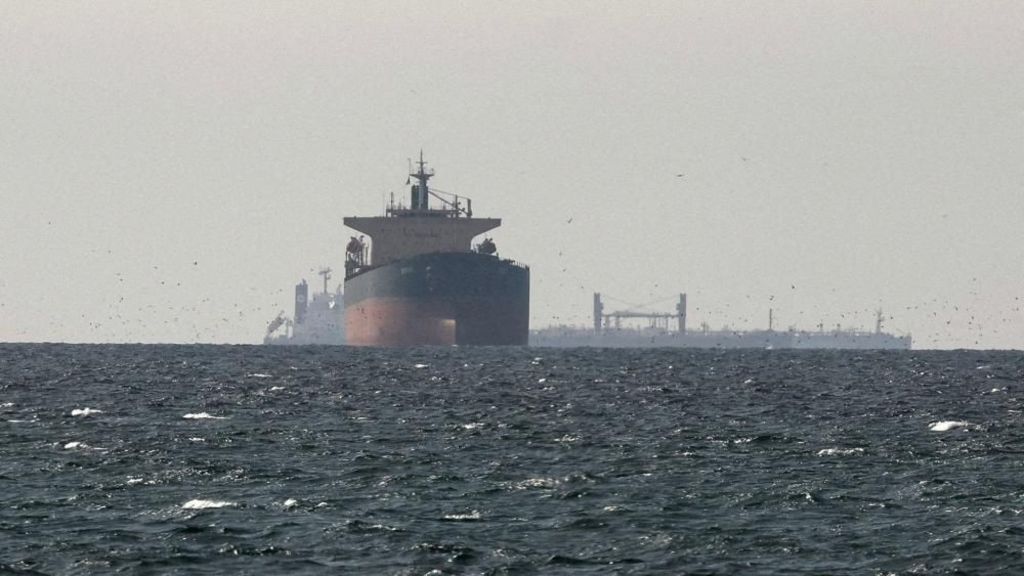
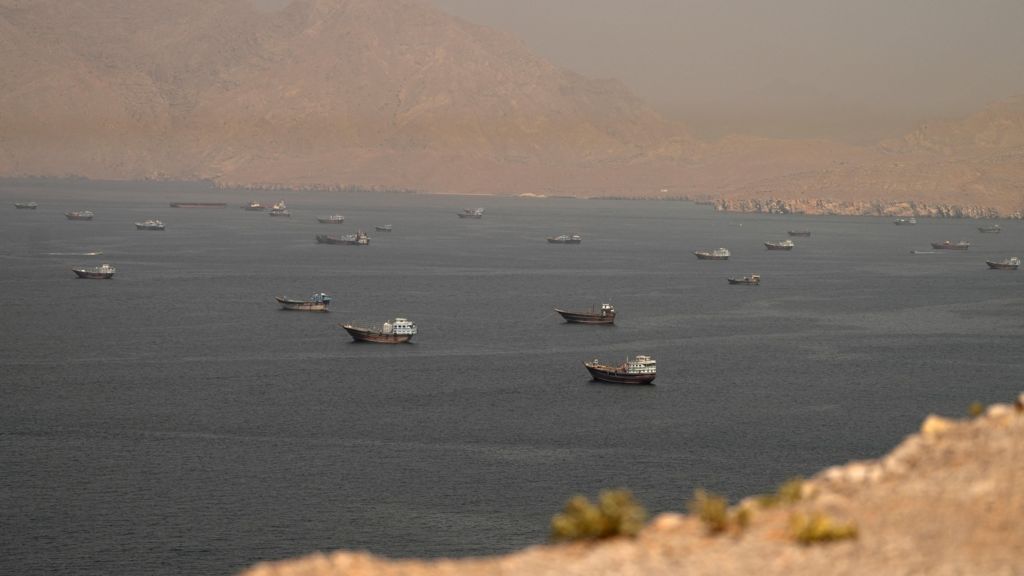
    The geopolitical developments occurred against a backdrop of significant regional disruption. According to International Energy Agency assessments, at least 40 energy facilities across nine Middle Eastern countries have sustained severe damage since conflict initiated on February 28. The agency has repeatedly warned that ongoing disruptions to shipping through the Strait of Hormuz—through which approximately 21% of global petroleum consumption passes—pose substantial risks to worldwide energy security.

    Meanwhile, military considerations continued to evolve. The New York Times reported that Pentagon officials were evaluating potential deployment options involving airborne troops from the 82nd Airborne Division’s Immediate Response Force. This brigade, comprising approximately 3,000 personnel capable of global deployment within 18 hours, could potentially be tasked with securing strategic assets such as Kharg Island, Iran’s primary oil export terminal.

    Federal Reserve Governor Stephen Miran addressed the economic implications, noting that it remained premature to assess the full impact of energy price shocks on inflation trajectories. Miran maintained that interest rate reductions might still be appropriate to support employment markets despite the geopolitical uncertainty.

    The US Central Command provided updated operational metrics, revealing that American forces had executed more than 9,000 strikes against Iranian targets since late February, including the damage or destruction of over 140 naval vessels. These military actions have profoundly affected global shipping patterns, contributed to oil price instability, and created ripple effects throughout the world economy.

  • Massive explosion reported at US Texas refinery

    Massive explosion reported at US Texas refinery

    A significant industrial incident unfolded Monday evening at the Valero energy refinery in Port Arthur, Texas, where a powerful explosion sent a massive plume of smoke towering above the facility. According to local reports from 12newsnow.com, the blast was substantial enough to rattle car windows throughout the vicinity, with witnesses describing a pronounced sulfur odor resembling rotten eggs permeating the area.

    Emergency response units from the Port Arthur Fire Department confirmed an incident at the petroleum processing plant, though specific details regarding the explosion’s cause remained limited initially. Jefferson County Sheriff Zena Stephens provided preliminary information suggesting the blast may have originated from a heater unit within the refinery’s complex infrastructure.

    Local authorities implemented immediate safety protocols, instructing residents in surrounding neighborhoods to shelter in place as a precautionary measure. While no formal evacuation orders were issued, the Texas Department of Transportation established traffic control measures, urging motorists to avoid the refinery vicinity to facilitate emergency operations.

    Environmental monitoring teams were deployed to assess air quality conditions following the incident, given the potential release of industrial compounds. Despite the dramatic nature of the explosion, initial reports indicated no injuries among refinery personnel or local residents, marking a fortunate outcome amid the concerning industrial event. The investigation into the precise cause and full extent of the incident remains ongoing with multiple agencies coordinating response efforts.

  • Woods to return from 13 months out in TGL finale

    Woods to return from 13 months out in TGL finale

    Golf legend Tiger Woods is set to make his competitive return to golf after more than a year away from competition during Tuesday’s TGL season finale. The 50-year-old athlete, who has undergone multiple surgical procedures over the past two years, last competed in February 2025 within the TGL format, with his most recent PGA Tour appearance occurring 20 months ago.

    Woods’ comeback announcement came via social media from his Jupiter Links Golf Club account, which posted a photograph of the 15-time major champion accompanied by the simple declaration: “I’m back.” Throughout the 2026 TGL season, Woods has maintained a non-playing role with Jupiter Links GC, the PGA Tour-supported indoor league that utilizes massive simulator screens within a specially constructed Florida venue.

    The golf icon’s return comes at a crucial moment as his team advanced to the championship round by defeating Rory McIlroy’s Boston Common squad in last week’s semi-final matchup. Jupiter Links will face Los Angeles Golf Club, featuring English professionals Justin Rose and Tommy Fleetwood, in a best-of-three finals series. Woods replaces Kevin Kisner on the roster after Los Angeles claimed victory in the opening match.

    Regarding his physical condition, Woods acknowledged the challenges of recovery from his October disk replacement surgery. “I’ve had a lot of procedures prior to that, so the body doesn’t quite heal like it was when I was 24,” Woods commented last month. “Doesn’t quite bounce back. So I have good days when I can pretty much do anything, and other days where it’s hard to just move around.”

    The athlete’s medical history includes severe leg injuries from a 2021 car accident, a back operation in September 2024, and a ruptured Achilles tendon in March 2025. While Woods has indicated that participation in the upcoming Masters Tournament (April 9-12) remains “not off the table,” the physical demands of Augusta National’s hilly terrain present significantly greater challenges than the controlled environment of TGL’s indoor venue with predominantly flat lies.

    Woods, who captured his fifth Masters title in 2019 ending an 11-year major championship drought, continues to demonstrate resilience in his pursuit of competitive golf despite his extensive injury history and advancing age.

  • Cuba restores power after 2nd nationwide blackout

    Cuba restores power after 2nd nationwide blackout

    Cuban authorities successfully restored national power distribution on Sunday following the second complete grid failure within a single week, exacerbating the ongoing energy crisis in the Caribbean nation. The blackout, which left all 9.6 million residents without electricity, was attributed to severe fuel shortages resulting from a US-imposed oil blockade implemented in January.

    Prime Minister Manuel Marrero Cruz confirmed the grid restoration via social media platform X, acknowledging the strenuous efforts of electrical workers who managed to reinstate the National Electric System (SEN). However, government officials cautioned that energy demand would continue to surpass available supply capacity, indicating persistent vulnerabilities in the nation’s infrastructure.

    The power disruption occurred amidst escalating geopolitical tensions between Havana and Washington. Recent statements from US officials regarding potentially ‘taking’ the Caribbean island have prompted Cuban military preparations for potential aggression, according to diplomatic sources. Deputy Foreign Minister Carlos Fernandez de Cossio emphasized Cuba’s defensive posture while maintaining openness to diplomatic discussions, though explicitly excluding any negotiations regarding political system alterations.

    This incident marks the seventh nationwide blackout since 2024, severely impacting daily life as citizens struggle with food spoilage due to non-functional refrigeration and compromised communication systems. The situation has deteriorated significantly following the January military operation in Venezuela that resulted in the seizure of President Nicolas Maduro, after which Washington threatened tariffs against nations supplying oil to Cuba.

    The comprehensive oil embargo has paralyzed multiple sectors beyond energy, including public transportation and aviation, dealing a substantial blow to Cuba’s crucial tourism industry. Medical professionals like nurse Alina Quinones describe increasingly difficult living conditions, with basic services becoming unreliable amid the protracted economic and energy crisis.

  • Explosion at Texas oil refinery creates huge smoke plume

    Explosion at Texas oil refinery creates huge smoke plume

    An industrial incident at a Valero Energy Corporation refinery in Texas resulted in a significant emission event, generating a massive plume of smoke visible across the region. The company confirmed through an official statement that no personnel injuries occurred as a result of the operational anomaly.

    The emergency response was immediately activated following the incident, with local authorities and plant emergency teams coordinating to assess the situation. Valero’s operational safety protocols were promptly implemented to contain the situation and minimize any potential environmental impact.

    While the exact cause of the emission event remains under thorough investigation by the company’s technical team, preliminary assessments indicate it involved operational equipment within the refining complex. The facility’s flare system successfully managed the operational excess, a standard safety measure in petroleum refining operations.

    Market analysts are monitoring the situation for potential impacts on regional energy infrastructure and fuel production capabilities. The Texas Commission on Environmental Quality has been notified and is coordinating with Valero officials to evaluate any environmental considerations.

    This incident occurs amid heightened scrutiny of industrial safety protocols in energy infrastructure nationwide, though Valero’s prompt response and absence of injuries demonstrate effective emergency preparedness measures.

  • Ultimatums, diplomacy and a trip to Graceland as Trump eyes a deal with Iran

    Ultimatums, diplomacy and a trip to Graceland as Trump eyes a deal with Iran

    In a dramatic escalation of geopolitical tensions, President Donald Trump delivered a 48-hour ultimatum to Iran over the weekend, threatening devastating airstrikes if Tehran failed to reopen the Strait of Hormuz to international shipping. The warning signaled a potential intensification of the three-week conflict that has seen ongoing U.S.-Israeli airstrikes against Iranian targets and reciprocal missile attacks from Iran.

    The president’s Saturday night declaration—that America would ‘plunge Iran into darkness’ by targeting energy infrastructure—appeared to set the stage for catastrophic civilian consequences. Iran promptly countered with threats to regional energy and water systems, creating imminent fears of further escalation.

    Yet by Monday morning, Trump’s rhetoric underwent a remarkable reversal. Citing unspecified ‘constructive’ discussions with Iranian leadership—contacts unconfirmed by Tehran—the president announced a five-day suspension of threatened strikes. ‘We have major points of agreement,’ Trump stated before departing for a previously scheduled trip to Memphis. ‘They want very much to make a deal. We’d like to make a deal, too.’

    The diplomatic whiplash extended to financial markets, where oil prices dropped and U.S. stocks surged on hopes of de-escalation. This optimism persisted even as Iranian state media portrayed Trump’s pause as a retreat in the face of their threats.

    Amidst the crisis management, Trump maintained a surreal schedule that included golfing in Florida, addressing National Guard personnel in Tennessee, and touring Graceland—Elvis Presley’s historic home. During his Memphis visit, the president curiously attributed reduced local crime rates to National Guard deployments while diplomatic channels buzzed with reports of calls with Israeli Prime Minister Netanyahu and potential direct talks with Iranian officials.

    The administration now operates under a new five-day deadline for military action, creating a tense window for diplomatic resolution. Trump’s oscillation between brinkmanship and optimism leaves allies and adversaries alike questioning whether this represents genuine progress or merely tactical delay from a president who may have overplayed his hand.

    As the world watches for concrete developments, the shadow of conflict looms alongside fragile hopes for negotiation. The coming days will determine whether this episode becomes a breakthrough toward peace or another chapter in a dangerous confrontation.

  • US Senate confirms Markwayne Mullin as homeland security chief

    US Senate confirms Markwayne Mullin as homeland security chief

    The United States Senate has formally confirmed Senator Markwayne Mullin as the nation’s new Secretary of Homeland Security following a 54-45 vote, concluding an accelerated confirmation process. The appointment fills the vacancy created earlier this month when President Donald Trump removed former Secretary Kristi Noem from the position.

    Mullin, a former mixed martial arts competitor known for his combative political style, will now assume responsibility for overseeing America’s immigration enforcement systems, border protection operations, and transportation security networks. The Department of Homeland Security remains at the center of ongoing political battles, particularly regarding immigration policy, and recently endured a partial government shutdown that disrupted funding for many of its services.

    The newly confirmed secretary brings a unique background to the position, having transitioned from professional fighting to political leadership. Prior to his Senate service, Mullin represented Oklahoma in the House of Representatives for a decade before securing his current Senate seat through a special election.

    Throughout the confirmation hearings, Mullin demonstrated unwavering support for the administration’s immigration agenda. In a statement posted on social media platform X following his confirmation, he endorsed President Trump’s border security initiatives, writing: “President Trump ran on restoring law and order, and he quickly delivered the most secure U.S. border in American history. I look forward to supporting @POTUS’ mission to safeguard the American people and defend the homeland.”

    The rapid confirmation process saw Mullin nominated on March 5th, followed by expedited committee hearings in both chambers of Congress. His appointment signals continuity in the administration’s approach to immigration enforcement and homeland security policy.

  • Even a ‘superpower’ is nowhere near as powerful as it looks

    Even a ‘superpower’ is nowhere near as powerful as it looks

    The ongoing military engagement between the United States-Israel alliance and Iran has revealed a fundamental truth about modern warfare: even the world’s foremost military superpower possesses significantly constrained capabilities against determined regional adversaries. While the political and economic repercussions of this conflict will reverberate globally for years, European nations may find reassurance in the demonstrated limitations of superpower military dominance.

    Despite maintaining a defense budget exceeding $900 billion annually—more than triple China’s and quadruple Russia’s military spending—the United States has encountered substantial operational constraints in its confrontation with Iran. The conflict has exposed critical vulnerabilities in weapons stockpiles, production capacity, and force deployment capabilities, particularly as America has been compelled to redirect crucial military assets from Asia to the Middle Eastern theater.

    The strategic miscalculations evident in this conflict reflect a persistent pattern in post-1945 military interventions. From Vietnam to Afghanistan, Iraq to Ukraine, superpowers have consistently underestimated the resilience of nationally supported resistance movements. The current administration’s failure to internalize these historical lessons represents a more profound deficiency than mere tactical errors or planning oversights.

    This military engagement has created significant gaps in America’s global deterrence architecture, particularly regarding China and North Korea. The rapid depletion of advanced missile systems and interceptor capabilities has highlighted concerning limitations in defense production capacity, raising questions about sustained combat readiness.

    Two potential strategic responses emerge from this reality: either substantial retrenchment of global military presence to reduce operational overstretch, or comprehensive alliance system revitalization incorporating enhanced coordination with Asian and European partners. The latter approach would necessitate leveraging Japanese and South Korean shipbuilding capabilities, improved missile defense collaboration, and genuine renewal of Cold War-era security partnerships.

    For European nations, the conflict reinforces the necessity of enhanced self-reliance in defense capabilities while demonstrating the enduring value of diplomatic engagement, international law adherence, and multilateral cooperation as complementary instruments of geopolitical influence.

  • Jury orders Cosby to pay $19m to ex-waitress after finding he abused her in 1972

    Jury orders Cosby to pay $19m to ex-waitress after finding he abused her in 1972

    A California jury has delivered a landmark verdict against comedian Bill Cosby, ordering him to pay $19.25 million in compensatory damages to Donna Motsinger, a former waitress who alleged he drugged and sexually assaulted her in 1972. The ruling represents the latest legal development in the decades-long series of allegations against the once-beloved television star.

    The civil case, heard in Santa Monica, centered on Motsinger’s claim that Cosby invited her to one of his comedy performances and provided her with wine and a pill during the limousine ride to the venue. According to court documents, the 84-year-old plaintiff testified that the substance rendered her intermittently unconscious, with her final memories consisting of ‘flashes of light’ before awakening at home partially undressed with physical evidence suggesting sexual assault.

    Cosby’s legal team, led by attorney Jennifer Bonjean, vigorously contested the allegations throughout the proceedings. They emphasized Motsinger’s admission that she possesses no complete recollection of the events in question. The defense maintains that all encounters between Cosby and his accusers were consensual.

    This verdict arrives against the backdrop of Cosby’s complex legal history. In 2021, the Pennsylvania Supreme Court overturned his previous criminal conviction for sexual assault on procedural grounds, resulting in his release after nearly three years of incarceration. Dozens of women have come forward with similar allegations spanning from the 1960s onward, fundamentally altering Cosby’s public image from America’s beloved father figure to a central defendant in the #MeToo movement.

    The jury continues deliberations regarding potential punitive damages, which could substantially increase the financial penalty beyond the already significant $19.25 million award. Cosby’s legal team has indicated they will appeal the verdict, ensuring continued legal proceedings in this decades-old case.

  • How the deadly LaGuardia Airport crash unfolded

    How the deadly LaGuardia Airport crash unfolded

    A severe runway incident occurred at New York’s LaGuardia Airport when a commercial passenger aircraft collided with an emergency response vehicle, resulting in significant damage and a multi-agency investigation into airport safety protocols.

    Eyewitness footage and official reports confirm the collision involved an active firefighting apparatus and an airliner on the tarmac, prompting immediate emergency protocols. The incident, which took place during operational hours, raises serious questions about ground coordination and runway safety management at one of the nation’s busiest aviation hubs.

    Aviation authorities have launched a comprehensive review of the event’s chronology, examining communication records between air traffic control, flight crew, and ground personnel. Preliminary information suggests the collision occurred during routine operations, though specific contributing factors remain under investigation by the National Transportation Safety Board (NTSB) and Federal Aviation Administration (FAA).

    The aftermath required temporary suspension of flight operations while emergency teams secured the area and assessed damage to both aircraft and emergency vehicle. No passenger injuries have been reported, though the fire truck operator received medical evaluation following the impact.

    This incident marks another significant safety event for New York area airports, following recent near-miss occurrences that have prompted increased scrutiny of air traffic control procedures and ground movement coordination. Aviation experts emphasize that such events, while rare, demonstrate the critical importance of continuous safety training and technological enhancements for runway incursion prevention.