标签: North America

北美洲

  • Military plane crash in Colombia leaves 66 dead

    Military plane crash in Colombia leaves 66 dead

    A devastating aviation tragedy struck Colombia on Monday when a Hercules C-130 military transport aircraft crashed shortly after departure from Puerto Leguizamo, resulting in at least 66 fatalities among the 128 personnel aboard. The catastrophic incident represents one of the most severe military aviation disasters in recent Colombian history.

    General Hugo Alejandro Lopez Barreto, head of Colombia’s armed forces, confirmed the grim casualty figures while indicating that four military personnel remain unaccounted for. The aircraft was carrying 115 army personnel, 11 crew members, and 2 national police officers when it went down near the Amazonian border region with Ecuador and Peru.

    Authorities have preliminarily ruled out hostile action by illegal armed groups, suggesting the crash likely resulted from mechanical failure or other accident-related factors. Defense Minister Pedro Sanchez stated via social media platform X that the aircraft was conducting routine troop transport operations within Putumayo province when the disaster occurred.

    Emergency response teams mobilized immediately following the crash, with local residents joining military personnel in rescue efforts. Deputy Mayor Carlos Claros described how community members rushed to assist victims amid the wreckage. The two modest medical clinics in Puerto Leguizamo provided initial treatment to survivors before arranging aerial medical evacuations to better-equipped urban facilities.

    Visual documentation from Colombian media outlets depicted thick black smoke billowing from the crash site in remote grassland areas, with military vehicles racing toward the scene. The investigation into determining the precise cause of the tragedy remains ongoing, with aviation experts expected to examine flight data recorders and wreckage evidence.

  • Trump’s approval rating hits new low amid surging fuel prices, Iran war disapproval: poll

    Trump’s approval rating hits new low amid surging fuel prices, Iran war disapproval: poll

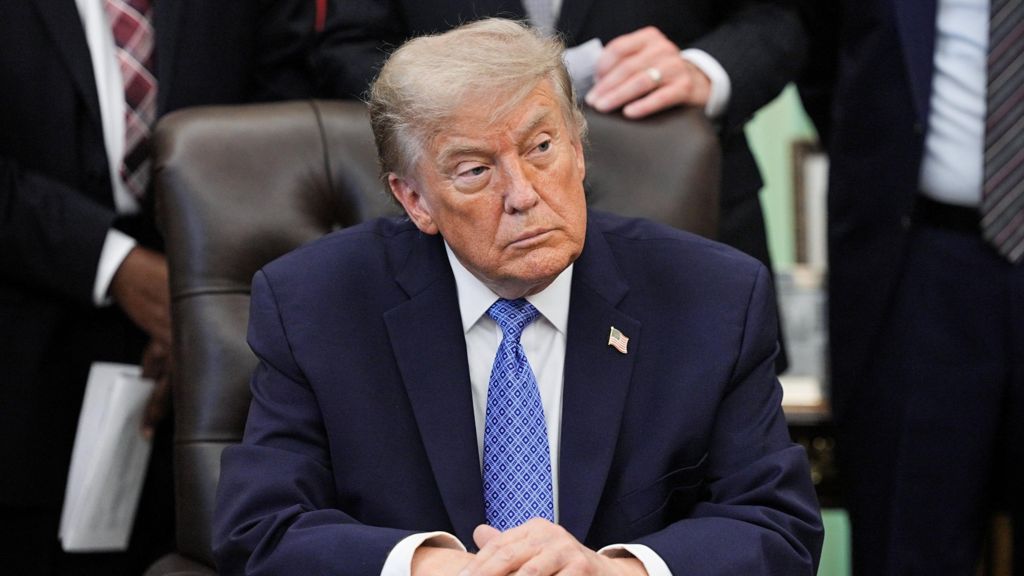
    President Donald Trump’s public approval has collapsed to unprecedented depths during his second term, reaching its lowest recorded level according to the latest Reuters/Ipsos survey released Tuesday. The comprehensive poll, conducted over four days through Monday, reveals only 36% of American citizens now endorse Trump’s presidential performance—a significant four-point drop from the previous week’s reading.

    The dramatic decline appears directly linked to two critical factors: skyrocketing fuel prices that are straining household budgets nationwide, and mounting public opposition to the ongoing military engagement with Iran that Trump initiated three weeks ago. The conflict has triggered unusual dissent from within the President’s own political orbit, including prominent MAGA movement figures who previously supported his agenda.

    Economic concerns appear central to the approval crash. A mere 25% of respondents expressed satisfaction with Trump’s handling of living costs—particularly striking given his campaign emphasis on economic issues during the 2024 election victory. The survey further indicates only 29% approve of his overall economic stewardship, representing the lowest economic rating of either Trump administration and falling below even the poorest ratings recorded by his predecessor President Joe Biden.

    The Iran conflict has generated remarkable internal pushback, with influential conservative voices including former strategist Steve Bannon, commentator Tucker Carlson, and media personality Megyn Kelly publicly breaking with the administration over military operations. This unusual dissent from key allies suggests deepening political vulnerability as business leaders and political figures increasingly call for conflict resolution.

    The convergence of economic pressure and foreign policy discontent has created the most challenging period of Trump’s second term, testing the resilience of his political base while providing ammunition to critics who question both his economic and military leadership.

  • Woods targets Masters after return to action in TGL

    Woods targets Masters after return to action in TGL

    Golf legend Tiger Woods has signaled potential competitive ambitions for next month’s Masters Tournament following his return to golf in the TGL season finale. The 50-year-old icon, absent from professional play for over a year, participated in Tuesday’s championship match where his Jupiter Links team suffered a decisive 9-2 defeat against Los Angeles Golf Club.

    Woods’ appearance marked his first competitive action since undergoing spinal disc replacement surgery in October 2024. Despite his extended absence and numerous recent operations, the 15-time major champion demonstrated promising physical condition, delivering multiple drives exceeding 300 yards during the indoor league competition.

    When questioned about potential participation at Augusta National, Woods maintained cautious optimism. “I’ve been trying—this body doesn’t recover like it did when I was 24, 25,” he acknowledged. “It doesn’t mean I’m not trying; I’ve been trying for a while. I’ve had a couple of bad injuries last year that I’ve had to fight through.”

    The golf champion emphasized his profound connection to the Masters, which he has won five times throughout his legendary career. “I’ve loved the Masters tournament since I was 19 years old,” Woods reflected. “It’s meant so much to me and my family over the years. I’m going to be there either way.”

    Woods served in a non-playing capacity for Jupiter Links throughout the 2026 TGL season, the PGA Tour-supported technology-driven league co-founded by his organization. His team advanced to the championship series after defeating Rory McIlroy’s Boston Common in last week’s semifinal matchup.

    Despite early momentum in the final match—Jupiter Links led 2-0—the team’s fortunes shifted dramatically when Woods missed a critical three-foot putt on the seventh hole. Los Angeles Golf Club, featuring English stars Justin Rose and Tommy Fleetwood, capitalized with three consecutive eagles, prompting Jupiter’s concession on the tenth hole.

    Reflecting on the physical demands, Woods noted, “It was fine physically. We got our ass kicked at the end. Three eagles in a row, we didn’t respond. I missed a short one to kind of get it started and give them momentum and we never got it back.”

  • ‘He liked the fear in our eyes’, Epstein survivors tell BBC

    ‘He liked the fear in our eyes’, Epstein survivors tell BBC

    A groundbreaking BBC Newsnight special has united five survivors of Jeffrey Epstein’s abuse for their first joint interview, revealing profound psychological trauma and systemic failures in protecting victims’ identities. The conversation, facilitated by Victoria Derbyshire, followed the unintended public disclosure of victim names in millions of documents released by the US Department of Justice.

    Joanna Harrison, whose anonymity was compromised in the document release, described her decision to speak publicly as an act of survival. “It gets to a point where you’re being suffocated and you need to breathe,” Harrison stated, recounting how Epstein’s assault began with what seemed like a normal massage appointment when she was 18. “When he began to masturbate, I completely froze. I don’t think I said two words in the car in the ride home.” She later detailed being raped by Epstein on his birthday.

    Chauntae Davies shared previously unseen photographs from what she described as a “once-in-a-lifetime trip” to Africa on Epstein’s private plane, featuring Ghislaine Maxwell, Kevin Spacey, and former President Bill Clinton. The humanitarian mission focused on AIDS prevention, yet Davies noted the experience was “tainted by what was happening behind closed doors.” She recalled giving Clinton a massage during a refueling stop in Portugal, describing him as “humble, kind and charismatic” in her journal at the time.

    The survivors expressed unanimous skepticism about Epstein’s official cause of death. “We knew him, we knew the kind of person he was,” stated Lisa Phillips, echoing the group’s disbelief in the suicide ruling. Phillips also revealed disturbing accounts of Epstein’s connections to British royalty, recounting how a friend was allegedly instructed to have sex with Andrew Mountbatten-Windsor at Epstein’s New York apartment in 2003.

    Davies and Phillips provided chilling descriptions of Epstein’s properties, particularly his Zorro Ranch in New Mexico. “That’s where the majority of the assaults happened. I have my darkest memories from Zorro Ranch,” Davies revealed. “It had a cold, dark, eerie feeling in there.” Phillips concurred: “I remember being like ‘this place is really creepy.’”

    The emotional climax occurred when survivors viewed photographs of themselves at the age they first encountered Epstein. Harrison observed, “I don’t smile the same way anymore,” while Phillips recognized Epstein’s island in the background of her photograph. “I was enjoying my life, and I had no idea what was about to happen to me,” she reflected. “This is not what I looked like when I left the island.”

  • Democrats flip Florida  seat that includes Trump’s Mar-a-Lago home

    Democrats flip Florida seat that includes Trump’s Mar-a-Lago home

    In a politically symbolic upset, Democrats have captured a Florida legislative district encompassing former President Donald Trump’s Mar-a-Lago estate. First-time candidate Emily Gregory secured victory over Republican opponent Jon Maples, who had received explicit endorsement from Trump, in the special election for Florida’s District 87 state House seat.

    The outcome carries significant weight as Trump himself had won this specific Palm Beach district by a comfortable 11-point margin during the 2024 presidential election, according to data from The Downballot, a specialized political elections tracker.

    This triumph continues a pattern of Democratic successes in various special elections held throughout Trump’s second term. Political analysts are interpreting Gregory’s win as a potential indicator of shifting momentum and growing Democratic enthusiasm. The result arrives as both parties intensify their campaigning strategies ahead of the crucial midterm elections later this year, suggesting that even traditionally secure Republican strongholds may be contested.

  • Oil at $150 will trigger global recession, says boss of financial giant BlackRock

    Oil at $150 will trigger global recession, says boss of financial giant BlackRock

    Larry Fink, Chairman and CEO of BlackRock, has issued a stark warning that sustained geopolitical tensions involving Iran could keep oil prices elevated above $100 per barrel for years, potentially reaching $150 and triggering a global economic downturn. In an exclusive interview with BBC, the head of the world’s largest asset manager outlined two extreme scenarios for energy markets amid current Middle East conflicts.

    Fink emphasized that should Iran remain an international pariah, the world could face prolonged periods of oil prices hovering near $150 per barrel, creating ‘profound implications’ for the global economy including a ‘stark and steep recession.’ Conversely, if diplomatic resolutions emerge and Iran reintegrates with the international community, oil prices could retreat below pre-conflict levels.

    The financial titan, whose firm oversees $14 trillion in assets, addressed multiple critical economic issues during the comprehensive interview. He dismissed concerns about an AI investment bubble despite massive capital inflows into artificial intelligence technologies. ‘I do not believe we have a bubble at all,’ Fink stated, while acknowledging potential isolated failures within the sector.

    Energy affordability emerged as a central theme in Fink’s analysis. He characterized rising energy costs as ‘a very regressive tax’ that disproportionately affects lower-income populations. The BlackRock chief advocated for pragmatic energy policies that utilize all available resources while aggressively pursuing alternative energy sources. He predicted that sustained high oil prices would accelerate global transitions toward solar and wind energy solutions.

    Regarding financial stability, Fink firmly rejected comparisons between current market conditions and the 2007-08 financial crisis. ‘I don’t see any similarities at all. Zero,’ he asserted, citing stronger financial institutions and limited contagion risks from recent fund withdrawal limitations.

    Fink also addressed workforce implications of technological transformation, suggesting that AI development will create substantial employment opportunities in skilled trades rather than eliminating jobs overall. He criticized the overemphasis on university education in recent decades, advocating for renewed respect for vocational training and hands-on professions like electrical work, welding, and plumbing.

    The BlackRock leader framed AI development as a geopolitical imperative, stating: ‘I believe there’s a race for technology dominance. I believe that if we do not invest more, China wins.’ He identified energy costs as the primary constraint on AI expansion in Western nations, urging accelerated investment in affordable power generation to maintain competitive advantages.

  • Meta told to pay $375m for misleading users over child safety

    Meta told to pay $375m for misleading users over child safety

    A New Mexico court has mandated Meta Platforms Inc. to pay a substantial $375 million civil penalty following a groundbreaking verdict that found the social media giant liable for endangering young users on its platforms. The jury determined that Meta, which operates Facebook, Instagram, and WhatsApp, systematically misled the public about platform safety while exposing minors to sexually explicit content and potential predators.

    The seven-week trial revealed compelling evidence through internal company documents and testimony from former employees, demonstrating Meta’s awareness of predatory behavior targeting children. Particularly damning was the account of former engineering executive Arturo Béjar, who testified about experiments showing underage users being served sexualized content. Béjar shared the disturbing experience of his own daughter receiving sexual propositions from strangers on Instagram.

    New Mexico Attorney General Raul Torrez hailed the decision as “historic,” marking the first successful state lawsuit against Meta concerning child protection issues. “Meta executives knew their products harmed children, disregarded warnings from their own employees, and lied to the public about what they knew,” Torrez stated following the verdict.

    The penalty amount reflects thousands of violations of New Mexico’s Unfair Practices Act, with each infraction carrying a maximum $5,000 fine. Internal research presented during trial proceedings indicated that at one point, 16% of Instagram users reported encountering unwanted nudity or sexual activity within a single week.

    Meta has announced its intention to appeal the decision, with a company spokesperson maintaining that they “work hard to keep people safe on our platforms” and remain “confident in our record of protecting teens online.” The company highlighted recent safety initiatives including Teen Accounts on Instagram and parental alert systems for self-harm content detection.

    This case occurs alongside thousands of similar lawsuits progressing through US courts, including a separate trial in Los Angeles where a plaintiff claims addiction to intentionally designed social platforms during childhood.

  • What happened in the seconds before Air Canada plane crashed at LaGuardia

    What happened in the seconds before Air Canada plane crashed at LaGuardia

    A meticulous investigation by BBC Verify has reconstructed the critical timeline leading to the catastrophic collision between an Air Canada aircraft and an emergency response vehicle at New York’s LaGuardia Airport. The incident, which resulted in multiple fatalities, unfolded during challenging weather conditions that significantly impacted visibility and operational protocols.

    According to verified flight data and air traffic control communications, the Airbus A320 was executing its final approach during reduced visibility conditions when the collision occurred. Preliminary analysis indicates the aircraft was slightly off its standard glide path moments before impact. Simultaneously, airport ground control had authorized the fire apparatus to cross the active runway following established emergency response procedures to another potential incident.

    The investigation reveals a critical 8-second window where both vehicles converged on the runway intersection. Enhanced radar tracking shows the aircraft’s descent rate and velocity were within operational parameters, while the emergency vehicle maintained regulated crossing speed. The convergence occurred during a period of particularly dense ground fog that reportedly impaired both cockpit and vehicle operator visibility.

    Aviation safety experts emphasize that such incidents require simultaneous system breakdowns across multiple safety layers. The investigation is examining communication protocols between tower control, ground control, and emergency response teams, alongside instrument landing system performance during the incident. This accident represents one of the most significant runway incursion events in recent U.S. aviation history, prompting immediate review of ground movement procedures at major airports during low-visibility operations.

  • US Democrats risk flubbing Trump’s flailing on Iran

    US Democrats risk flubbing Trump’s flailing on Iran

    The political landscape is undergoing significant shifts as former President Donald Trump faces mounting challenges despite previous electoral successes. The ongoing Iran conflict has evolved into a complex geopolitical quagmire, with Tehran’s continued stability and threats to Hormuz Strait oil traffic driving gasoline prices upward and potentially reigniting inflationary pressures. These developments compound Trump’s existing unpopularity stemming from cost-of-living concerns and controversies surrounding immigration enforcement practices.

    Electoral momentum appears to be shifting decisively toward Democratic candidates, with traditional Trump-supporting demographics showing signs of disillusionment. Current polling data suggests substantial midterm losses for Trump’s party unless extraordinary measures intervene.

    However, Democratic strategists face their own challenges in capitalizing on Republican weaknesses. The party’s favorability ratings remain concerningly low, with recent NBC News polling indicating net approval ratings below those of Republicans, Trump, and even immigration authorities. This unpopularity stems not merely from perceived insufficient opposition to Trump but from fundamental policy disagreements with the electorate.

    Comprehensive polling data reveals voter preference for Republican approaches on key issues including immigration and crime, despite intentions to support Democratic candidates. Internal party dynamics show Democratic voters themselves favor more moderate positions, particularly regarding social issues such as criminal justice and transgender policies.

    Research indicates a significant perception gap among progressive Democrats regarding their ideological alignment with the broader electorate. While Democrats self-identify as moderates, independent and Republican voters perceive them as strongly left-leaning. This divergence suggests many progressives operate within ideological bubbles, particularly within academic institutions and urban centers, limiting exposure to mainstream American values.

    The transgender rights issue exemplifies this divide, with polling showing 54% of Democrats supporting gender transition recognition compared to 74% of independents maintaining gender is determined at birth. As independents constitute a growing plurality of voters and crucial swing demographics, this alignment challenge becomes increasingly significant.

    Historical precedent shows Democratic parties have previously moderated positions on contentious social issues, from abortion (‘safe, legal, and rare’) to civil unions as stepping stones to marriage equality. Contemporary progressives increasingly resist such compromise, embracing ‘long arc’ historical thinking that assumes inevitable societal progression toward their positions.

    This philosophical approach risks repeating historical patterns where refusal to compromise led to political backlash. Research identifies racial discrimination, asylum policy, and public order as areas where centrist shifts could yield significant electoral benefits.

    The danger lies in assuming historical inevitability rather than recognizing the contingent nature of social progress. Liberal victories on civil rights and marriage equality resulted from strategic calculation and compromise as much as ideological purity. The communist movement’s historical failures serve as cautionary tales about overreliance on historical determinism.

    American history demonstrates that progressive movements experience both victories and defeats—affirmative action, busing policies, and immigration restrictions represent significant reversals of progressive priorities. The concept of ‘rights’ remains contested terrain rather than inevitably expanding in one direction.

    For progressives facing this crossroads, the choice remains between ideological consistency and electoral strategy. While moral principles should not be lightly abandoned, strategic compromise may be necessary to break cyclical political volatility and provide governing stability.

  • Small window open for US-Iran talks, but swift end to war still unlikely

    Small window open for US-Iran talks, but swift end to war still unlikely

    Recent assertions by US President Donald Trump regarding “very strong talks” with Iran have been met with immediate denial from Tehran, revealing a diplomatic landscape fractured by mistrust and ongoing hostilities. The characterization of potential negotiations toward a “complete and total resolution” of Middle East conflicts contrasts sharply with Iran’s official position, which dismisses these claims as tactical maneuvering to lower global energy prices and buy time for military preparations.

    Behind the scenes, preliminary communications are reportedly occurring between previous lead negotiators—Iranian Foreign Minister Abbas Araghchi and US envoy Steve Witkoff. However, Tehran regards these exchanges as subterfuge rather than genuine diplomacy. The shadow of US-backed Israeli attacks on Iranian residential areas continues to poison the well of trust, with recent assaults destroying parts of Tehran and further upending civilian lives.

    Attention has turned to Mohammad-Bagher Ghalibaf, a prominent Iranian figure with credentials as former police chief, IRGC air force commander, and parliamentary speaker. Despite four failed presidential bids and his characterization of Iranian protesters as “enemies and terrorists,” Trump apparently views Ghalibaf as a potential bridge between Iran’s security apparatus and political establishment. This perspective emerges amid a pattern of assassinations that eliminated other possible intermediaries, including hardline security chief Ali Larijani.

    Ghalibaf himself has publicly rejected negotiation claims, declaring on social media that Iran’s people demand “complete and humiliating punishment of the aggressors.” Meanwhile, regional dynamics continue to shift as Pakistan, Egypt, and Turkey—nations previously on the sidelines—inject themselves into mediation efforts. Oman maintains its traditional role as trusted intermediary, focusing particularly on reopening the strategically vital Strait of Hormuz, which Iran has weaponized during the conflict.

    Arab Gulf states, furious over what they term Iran’s “reckless” attacks on infrastructure including Dubai Airport, are reassessing relationships with Tehran. A senior Gulf official noted that repairing this rupture “will take decades.” Both sides have articulated hardened demands: Iran seeks closure of US bases, reparations, and security guarantees, while Gulf states insist on discussing Iran’s ballistic missiles and Strait of Hormuz control.

    The diplomatic dance continues against a backdrop of economic pressure, with Trump postponing threatened strikes on Iranian power plants until Friday—creating a tense countdown as markets watch for developments.