
In a high-stakes decision with far-reaching implications for November’s congressional midterm elections, the U.S. Supreme Court has delivered a major defeat to the Trump administration and Republican efforts to restrict mail-in voting, upholding a state law that allows counting postal ballots received after Election Day. The narrow 5-4 ruling maintains the legality of Mississippi’s policy, which permits mail-in ballots postmarked by Election Day but arriving up to five days later to be included in final vote totals. The outcome of the case had been widely watched because it could have forced changes to voting deadlines in more than a dozen key swing states that could ultimately determine which party takes control of the U.S. Congress after the 2022 midterms. While most of the states that offer this post-Election Day grace period for mail-in ballots lean Democratic, a small number of Republican-led jurisdictions also allow the practice, underscoring the broad policy implications of the court’s decision. Writing for the court’s majority, Justice Amy Coney Barrett—who was appointed by former President Donald Trump—was joined by Chief Justice John Roberts and the court’s three liberal justices in the decision. In her majority opinion, Barrett emphasized that the ruling does not contradict existing federal law, which sets the “Tuesday next after the 1st Monday in November” as the official national election day. “The election-day statutes say nothing about ballot receipt, and we cannot add to the words Congress chose,” Barrett wrote in the opinion. The legal challenge brought by Republican allies, backed by the Trump administration, centered on an 1845 congressional law that formally defines federal Election Day. Republicans argued that the statute requires all mail-in ballots to be both postmarked and received by Election Day, claiming that late-arriving ballots open the door to widespread voting irregularities and erode public trust in election outcomes. In a legal brief submitted to the court, the Trump administration argued that “Election-day receipt promotes election integrity and voter confidence as much today as it did when Congress passed that law.” The ruling marks one of the most significant political setbacks for Trump, who has spent years repeating unsubstantiated claims that widespread mail-in voting is rife with fraud and falsely insists that systemic voter fraud cost him victory in the 2020 presidential election against Joe Biden. In March, the former president’s personal attorney appeared before the Supreme Court to argue in favor of the Republican National Committee-led lawsuit targeting Mississippi’s mail ballot deadline rule. Election analysts note that the decision preserves current voting rules for upcoming competitive elections, leaving intact grace periods that millions of voters could rely on to cast their ballots in November’s high-stakes midterm contests.
标签: North America
北美洲
-

Supreme Court rejects Trump’s appeal of E Jean Carroll’s sexual abuse case
In a development that closes one chapter of the long-running legal battle facing former president Donald Trump, the US Supreme Court has declined to hear his appeal seeking to overturn a lower court verdict that found him liable for sexual abuse and defamation against writer E. Jean Carroll. The ruling marks the end of Trump’s last attempt to undo the 2023 jury verdict, and requires him to pay the $5 million in damages awarded to Carroll nearly two years ago.
The case dates back to the mid-1990s, when Carroll, a now 81-year-old former magazine columnist, alleged that Trump sexually assaulted her inside a Manhattan department store dressing room. Decades after the alleged incident, Carroll brought a civil claim against Trump, after he publicly denied her accusation in a 2022 post on his Truth Social platform, labeling the allegation a lie. In 2023, a jury in New York found Trump liable for sexual abuse and defamation, though it rejected Carroll’s claim of rape under New York state penal law. The jury awarded Carroll $5 million in compensatory and punitive damages. A separate defamation case later resulted in an additional $83 million in damages being ordered against Trump, an appeal for which he already lost last September.
Following the 2023 initial verdict, Trump repeatedly pushed to have the ruling thrown out, arguing that the trial judge had improperly allowed damaging evidence that skewed the jury’s perception of him. Specifically, his legal team objected to the admission of the 2005 *Access Hollywood* tape, in which Trump was recorded making lewd comments about grabbing and kissing women without consent. Trump’s appeal was rejected by a federal appeals court in 2024, which upheld the jury’s verdict and ruled that a new trial was not justified. That rejection led Trump to turn to the nation’s highest court as his final option to overturn the ruling. As is its standard practice, the Supreme Court released no explanation for its decision to decline the case.
Reaction to the ruling split sharply along the lines of the original case. Carroll’s lead attorney, Roberta Kaplan, released a statement saying the Supreme Court’s decision permanently validates the jury’s unanimous finding against Trump. “His multiple efforts to appeal that verdict have all failed and today’s ruling ends his quest to avoid accountability for his actions,” Kaplan added. Prior to the Supreme Court announcement, Carroll’s legal team had not made any public comment on Trump’s appeal.
For Trump’s legal team, however, the ruling is nothing more than another step in what they frame as a partisan political attack. Speaking to CBS News, a spokesman for Trump’s legal team said, “The American People stand with President Trump as they demand an immediate end to all of the Witch Hunts, including the Democrat-funded travesty of the Carroll Hoaxes.” The statement added, “President Trump will keep winning against Liberal Lawfare, as he continues to focus on his mission to Make America Great Again.”
The resolution of this appeal comes as Trump navigates a sprawling array of legal challenges even as he campaigns for a second term in the 2024 presidential election, cementing the outcome of one high-profile case that has shadowed his political and personal life for years.
-

Supreme Court blocks Trump’s attempt to fire Federal Reserve governor Lisa Cook
In a landmark 5-4 ruling that reinforces long-standing protections for the US central bank’s institutional autonomy, the US Supreme Court has blocked the Trump administration’s attempt to oust Federal Reserve Governor Lisa Cook from her post over unproven fraud allegations. The nation’s highest court found that the White House failed to grant Cook adequate due process to challenge her proposed removal, sending the entire case back to lower courts for further proceedings. If the administration intends to move forward with firing Cook, it will now need to formally present and prove its claims that she committed mortgage fraud, and Cook will be given full opportunity to contest these accusations in court. Cook has repeatedly and vehemently denied all allegations against her, with supporters of Federal Reserve independence arguing the charges are merely a pretext designed to let former President Donald Trump exert greater political control over the independent central bank.
Under existing US federal law, the sitting president is only permitted to remove members of the Federal Reserve Board of Governors “for cause” – a requirement intentionally written into law to insulate the central bank from partisan political pressure. This guardrail is designed to ensure the Fed sets monetary policy based on long-term national economic goals, rather than short-term political interests that could destabilize the economy.
The case stems from an announcement Trump made on social media last August, where he first outlined his plan to remove Cook, citing claims that she improperly listed two separate primary residences on concurrent mortgage application forms. Because financial institutions typically extend lower mortgage interest rates to borrowers purchasing primary residences, misrepresentation of a home’s status is the core of the administration’s allegations. During oral arguments held before the Supreme Court in January, Cook’s defense attorney, prominent conservative lawyer Paul Clement, argued that the administration’s handling of the attempted removal would effectively render the statutory protections for Fed independence “kind of a joke” if left unchallenged.
Representing the White House before the court, Solicitor General John Sauer contended that Trump’s public social media announcement satisfied the legal requirement for sufficient notice and gave Cook a reasonable opportunity to respond to the claims. Sauer further argued that even if the error was unintended, it amounted to negligence that could erode public confidence in the Federal Reserve, and that courts should defer to the president’s judgment when determining whether cause for removal exists.
-
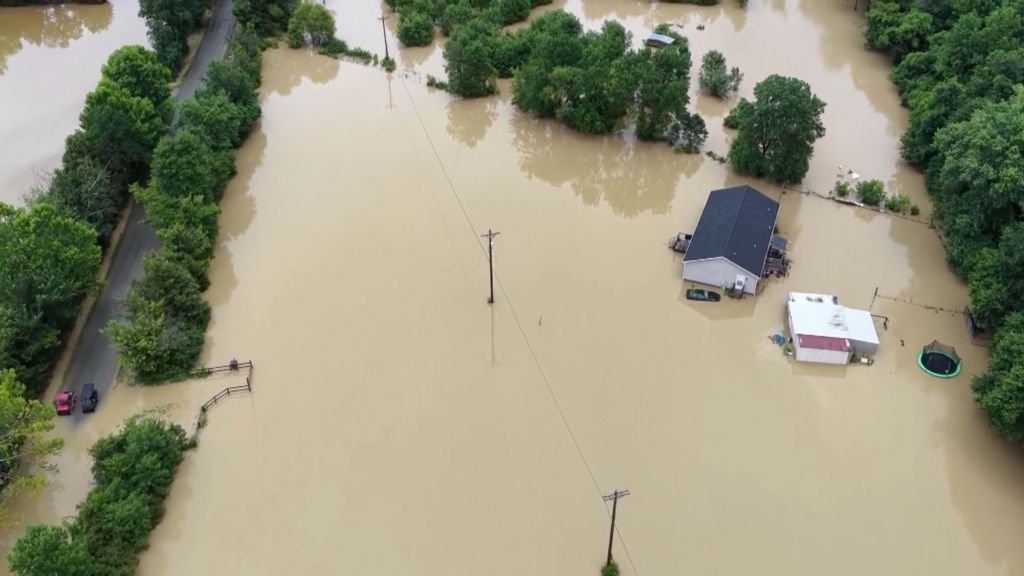
Deadly flash flooding hits Kentucky
A catastrophic flash flood event has swept through the U.S. state of Kentucky, bringing devastating loss of life and triggering an urgent large-scale response from emergency teams. As of the latest official updates, at least four residents have been killed by the fast-rising floodwaters, which have inundated roads, swallowed residential properties, and cut off access to critical infrastructure across multiple affected communities.
In the wake of the sudden downpour and subsequent flooding, emergency responders have launched an aggressive search and rescue operation, conducting no fewer than 60 separate water rescues and mandatory evacuations to move at-risk residents out of harm’s way. First responders have been working around the clock, navigating treacherous, fast-moving floodwaters to reach people trapped in their homes, vehicles, and other stranded locations.
Local officials have warned that flood damage assessments are still in their early stages, and the death toll could potentially rise as teams regain access to hard-hit, isolated areas. Residents are being urged to heed all emergency orders and avoid flooded roadways, as conditions remain dangerous for even experienced emergency personnel.
-
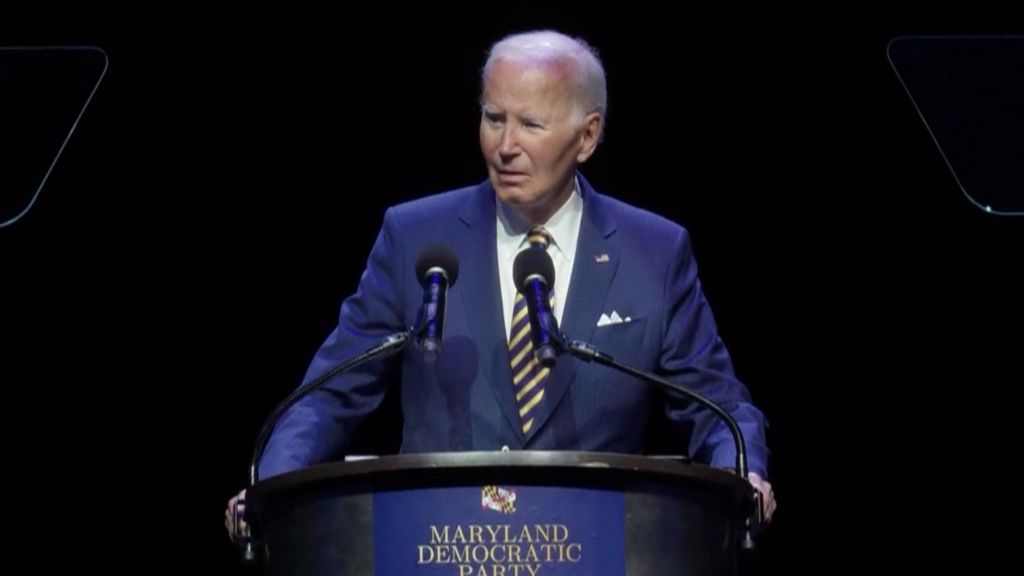
Watch: Biden calls Trump a ‘loser’ at fundraising event
A tense chapter in American political rivalry took center stage Wednesday at a Washington, D.C. fundraising gala, where former President Joe Biden launched a sharp public critique of his successor, current President Donald Trump. In remarks that underscored the deep partisan divide ahead of upcoming political cycles, Biden did not hold back, labeling Trump a ‘loser’ while taking aim at what he characterized as self-serving policy initiatives pursued by the current administration. The event, held to draw financial support for Democratic political causes, became a platform for Biden to voice sharp disapproval of the Trump White House’s policy priorities, which he framed as ‘vanity projects’ designed more to boost Trump’s personal brand than to deliver meaningful progress for the American public. The public rebuke marks one of the most direct and blunt criticisms Biden has leveled at Trump in a public setting, reigniting speculation about the future of Democratic political strategy and the ongoing friction between the two former and current heads of the executive branch. Attendees at the closed gala reported that the remark drew loud applause from the gathered crowd of donors and Democratic supporters, capping off a speech that focused heavily on contrasting Biden’s past policy record with what he framed as the failures of the current administration.
-
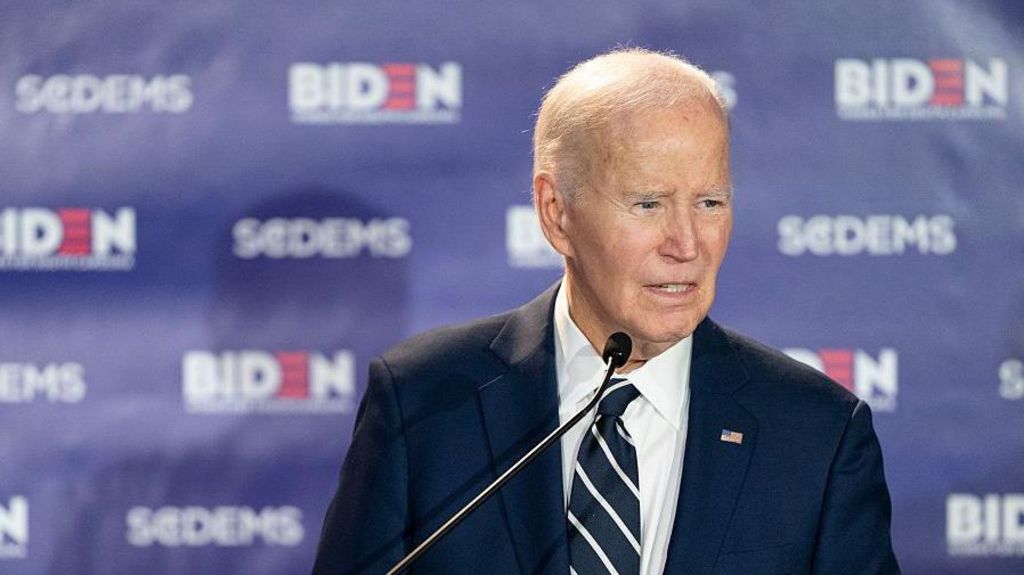
Biden blasts Trump ‘vanity projects’, calling him a ‘loser’ at fundraising event
In a sharp, uncharacteristically blunt rebuke of current President Donald Trump, former U.S. President Joe Biden launched a sweeping attack at a weekend Democratic Party fundraising gala in Hanover, Maryland, calling his successor “a loser” over a series of controversial self-focused projects in Washington D.C.
Biden’s 10-minute speech marked one of the harshest public critiques Trump has received from his predecessor since taking office in 2025, with Biden calling out multiple high-profile, polarizing initiatives Trump has advanced in the nation’s capital. Among the targets of Biden’s criticism were Trump’s plan to build a presidential ballroom by demolishing part of the White House East Wing, the failed attempt to add Trump’s name to the Kennedy Center for the Performing Arts, a self-named honorary arch project, and Trump’s appointment of a personal associate to oversee renovations to the Lincoln Memorial Reflecting Pool.
“Woah! What a loser,” Biden added after listing out the projects, leaning into a fiery tone that resonated with the Democratic donor audience.
Biden’s jabs about the Kennedy Center name change reference a 2024 Trump administration order that was later blocked by federal courts, which ruled the unauthorized addition violated historic preservation rules. For the proposed $400 million ballroom project, Trump has repeatedly defended the construction, framing it as a critical upgrade for national security protocols and to accommodate high-profile state visits and international events. The Reflecting Pool renovation, which cost taxpayers $14.7 million, also sparked public controversy after the project was completed: the iconic landmark quickly suffered from persistent algae blooms and infrastructure failures. Trump and the U.S. National Parks Service have pinned the blame for the ongoing issues on widespread vandalism, rather than flaws in the renovation work.
Beyond the vanity projects, Biden also targeted Trump’s handling of the 2021 U.S. Capitol insurrection, specifically criticizing the administration’s recent push to provide taxpayer compensation to rioters who claim they were wrongfully investigated or charged by federal authorities. “What makes me angry is that Trump wants to give taxpayers’ money, your money, to the January 6th insurrectionists,” Biden said. That compensation plan was ultimately withdrawn and blocked by a federal judge earlier this year.
As of Sunday, the White House had not issued an official response to Biden’s remarks, and the BBC’s request for comment remained unanswered. Trump has not directly addressed the latest critique, though he has a long history of attacking Biden on his Truth Social platform. Last month, he labeled Biden a “crooked politician,” and on Monday, he revived his well-known “sleepy Joe Biden” nickname in a post about an unrelated political issue.
The Saturday fundraiser speech came with a notable historical footnote: it fell exactly two years after Biden’s widely panned 2024 presidential debate performance against Trump. That poor showing triggered a wave of pressure from senior Democratic Party leaders for Biden to drop out of the race, leading then-Vice President Kamala Harris to step in as the party’s nominee. Harris ultimately lost the general election to Trump, clearing the way for his return to the White House.
The back-and-forth between the two former and current presidents underscores the deepening partisan divide in U.S. politics, as both sides continue to trade jabs ahead of upcoming congressional elections and future presidential contests.
-

Great stories, little jeopardy – does the new World Cup format work?
The 2026 FIFA World Cup has arrived with a transformative new format, expanding the tournament field from 32 to 48 teams and restructuring the group stage into 12 four-team groups. While the change has delivered unforgettable underdog narratives that captured global football fans’ hearts, it has also sparked fierce debate about whether the overhaul has delivered on its promise of a more competitive, entertaining tournament. Now, as the first 48-team group stage wraps up and the expanded 32-team knockout round gets underway, analysts and fans alike are weighing the successes and shortcomings of FIFA’s bold experiment.
The most compelling vindication of FIFA president Gianni Infantino’s expansion plan comes from the tiny Atlantic archipelago nation of Cape Verde. Written off by pundits before the tournament even began, Cape Verde pulled off one of the most remarkable underdog runs in World Cup history to claim a spot in the knockout rounds, ousting two-time champion Uruguay from their group alongside European champion Spain. A shutout draw against Spain, a 2-2 tie with Uruguay, and a final group draw against Saudi Arabia secured Cape Verde second place in the group with just three points, setting up a blockbuster round of 32 matchup against defending world champion Argentina in Miami this Friday.
The story of Cape Verde’s run is intertwined with the viral rise of their 40-year-old goalkeeper Vozinha, a journeyman who spent his entire club career in lower-tier European leagues across Moldova, Cyprus, Slovakia, and Portugal. His heroic penalty-saving performance against Spain turned him into an overnight global sensation: his Instagram follower count skyrocketed from 50,000 before the match to over 16.7 million today, and enough fan support raised funds to fly his mother to the tournament from Cape Verde after she was initially unable to afford a U.S. visa. That kind of once-in-a-lifetime, emotional narrative is exactly what expansion proponents promised the new format would deliver, giving smaller nations the platform to create moments that resonate across the sport.
Cape Verde is far from the only small nation that delivered memorable moments under the new format. Curacao, the smallest country to ever qualify for a World Cup, earned a credible draw against Ecuador despite failing to advance. DR Congo held defending champion Portugal to a 1-1 draw to sneak into the knockout rounds as one of the best third-placed teams, and Haiti’s Wilson Isidor scored what is already being called a contender for goal of the tournament against Morocco. For African football in particular, the tournament has been a historic breakthrough: nine of the 10 African qualifying nations advanced to the knockout round, a staggering show of strength that has validated arguments for expanding the tournament to give more African sides a shot at competing on the global stage. Six nations including Bosnia-Herzegovina, Canada, DR Congo, and South Africa have reached the knockout round for the first time in their history, a new milestone for global football representation.
For all the heartwarming Cinderella stories, though, the new format has faced sharp criticism for its structural flaws that stripped much of the tension and competitive jeopardy from the group stage. The biggest issue is the rule that allows the top two teams from each group plus the eight best third-placed teams to advance to the knockout round, paired with FIFA’s decision to make head-to-head results the first tiebreaker for teams level on points, rather than overall goal difference. The result was that by the final matchday, four group winners had already secured their top spot with a game to spare, and five teams had already been eliminated before their final group fixture, leaving nine matches with nothing tangible to play for. Had FIFA retained goal difference as the primary tiebreaker, every side would have still had something to compete for going into the final round of group matches.
This lack of stakes also created a lopsided dynamic that favored top elite nations, with almost no upsets of major sides in meaningful matches — a stark contrast to the 2022 World Cup, where Saudi Arabia stunned eventual champion Argentina in the group stage. Of the 12 tournament top seeds, only co-host Canada and Portugal failed to win their groups. Critics argue that the 12-group structure inherently reduces the risk of upsets, turning the 72-game group stage into a prolonged exercise to weed out the lowest-ranked teams before the real tournament begins. Even Ghana coach Carlos Queiroz, whose side advanced as a third-placed team, has spoken out against the format, calling it “vulgar and ordinary.”
Another glaring flaw is the uneven advantage given to teams in later groups for third-place qualification. Scotland and South Korea both finished with three points and were eliminated, but were forced to wait three full days for the final group matches to conclude to learn their fate. In contrast, Senegal knew exactly how many goals they needed to score against Iraq to claim the last third-place spot ahead of their match, and secured their place with a 5-0 win. In the final group match, Austria and Algeria both knew that a draw would see both advance and eliminate Iran, leading to a match that fizzled out in the final 20 minutes with neither side willing to risk attacking play.
On paper, the new format has delivered on one key promise: goals. This year’s group stage has averaged 2.99 goals per game, the highest average for any World Cup group stage since the 32-team format was introduced in 1998, and the highest overall across any World Cup since the 1958 tournament in Sweden. But much of this goal explosion has come in lopsided matches between elite and underdog sides: 18 group games were decided by three or more goals, compared to just five at the 2022 Qatar World Cup. Many of these lopsided wins came when the top side had already secured qualification and rotated their squad, or the weaker side had already been eliminated, leading to questions about how much this goal glut actually reflects a more competitive tournament.
The performance of different confederations also reveals a mixed picture of expansion’s success. While African nations exceeded all expectations, other regions have underperformed sharply. Asia received eight automatic qualification spots, doubled from four in the 2022 format, plus one additional spot via playoffs, but only Australia and Japan advanced. Across 27 matches, Asian sides picked up just three wins, averaging only 0.67 points per game. For the North American, Central American and Caribbean confederation CONCACAF, all but one of the confederation’s 20 total points came from the three co-hosts: the three additional qualifier sides Curacao, Haiti, and Panama scored just three goals and conceded 21 combined.
Now, after weeks of group stage play, the expanded 32-team knockout round is finally underway. For supporters of the new format, the Cape Verde Cinderella run and African breakout have already proven that expansion has opened up the World Cup to new stories and new talent. For critics, the structural flaws that reduce tension and create uneven advantages have turned the group stage into a prolonged, low-stakes warm-up for the knockout round that many describe as the “real World Cup” anyway. As the world watches the remaining teams compete for the 2026 trophy, the debate over whether the 48-team format is here to stay will only intensify.
-

‘You are Canadian heroes’ – the forgotten hosts making World Cup history
As the final whistle echoed across Los Angeles Stadium on Sunday, a new chapter of Canadian football was officially written. A last-gasp winner from midfielder Stephen Eustaquio secured a 1-0 knockout victory over South Africa, sending the co-host nation through to the Round of 16 at the 2026 FIFA World Cup for the first time in its history. Immediately after the full-time whistle, head coach Jesse Marsch pulled his entire squad and coaching staff into a tight, jubilant huddle, addressing his players as nothing less than “Canadian heroes.” \n\n”The future of the sport in this country is huge because of you,” Marsch told the group, words that carried far more weight than the coach’s famously impassioned rhetoric. For a nation long defined by ice hockey as its national sporting obsession, this breakthrough run has already shifted the cultural conversation around the game. Long referred to as “soccer” in Canadian public life, fans now openly embrace the global term “football” — a small linguistic shift that signals a far larger cultural change. \n\nWhen Marsch took charge of the Canadian national team two years ago, his goal of turning Canada into a recognized football nation sounded like a distant dream. As one of three North American co-hosts for this 2026 tournament, Canada spent much of the pre-World Cup buildup overshadowed: Mexico took the spotlight for the opening match, the United States claimed attention for hosting the final, and Canada was widely dismissed as the forgotten co-host. But the squad and its growing fanbase built momentum steadily, quietly cultivating domestic passion ahead of the tournament. \n\nThat growing enthusiasm has not gone unnoticed by the team’s star captain, Alphonso Davies, a veteran of packed stadiums playing for European giants Bayern Munich in the Champions League. Even Davies was overwhelmed by the shift in domestic support ahead of the tournament. Ahead of Sunday’s knockout clash, he recalled crying after watching thousands of Canadian fans pack viewing events in Toronto, clad in the national red and white, for the team’s opening draw against Bosnia-Herzegovina. \n\n”It was surreal because I’ve never seen so many Canadians at a football match before,” Davies said. “It brought tears to my eyes.” \n\nCanada’s historic run has already defied every pre-tournament expectation. Before this 2026 World Cup, the nation held a winless record across six previous World Cup matches, never picking up so much as a single point or victory. That drought ended in their opening fixture, with a hard-fought draw against Bosnia-Herzegovina that secured Canada’s first ever World Cup point. The team followed that breakthrough with a stunning 6-0 rout of Qatar, the tournament’s defending champions, to lock in their knockout stage spot — the first ever for Canada. \n\nA final group stage defeat to Switzerland forced the knockout match against South Africa to be played on American soil, marking the first time in World Cup history that a host nation has played a knockout match outside its own borders. That did nothing to dampen Canadian support, however: thousands of fans crossed the border to pack the stands, turning Los Angeles into a de facto home ground with chants and cheers that drowned out South Africa’s supporters. \n\nFor most of the 90 minutes, South Africa set out to grind out a result and force the game to penalties, putting Canada under persistent pressure to find a breakthrough. The Canadian side stayed composed, though, and it was Eustaquio who delivered the moment of magic in stoppage time, slotting home the winner to spark wild celebrations. \n\nMarsch later defended his decision to gather the entire squad for a full-time huddle on the pitch, a move some critics dismissed as performative. For Marsch, the moment was about pausing to celebrate the historic milestone together, amid the chaos of post-match media requests that pull players and staff in dozens of directions. \n\n”All I care about is our team and what we do together,” Marsch said. “I wanted to be able to voice to them how important a moment this will prove to be for the sport in the country. It is a shame we couldn’t do it in Vancouver, in front of our fans, but nevertheless I think you saw the character of the team, the quality of the team, the mentality of the team and the togetherness of the team.” \n\nUp next, Canada faces a stiff test in the Round of 16, with a clash against either Morocco — ranked 6th in the world — or the Netherlands, ranked 7th. But fans and players alike agree that regardless of the result of that upcoming match, the landscape of Canadian football has already changed forever. \n\nLong-time fan Harry, who attended matches in the 1990s when Canadian fans were often the minority at even home fixtures, marvelled at the turnout of supporters for the South Africa match. “It is incredible to see how many fans have come down into the USA to watch us, hopefully that energy can help improve us back home,” he said. \n\nFellow supporter Sean added that while large urban centers like Toronto have long held a dedicated soccer following, the hope now is that this World Cup run will expand interest across smaller cities and provinces, where ice hockey has long reigned supreme. \n\nWhile advancing past the Round of 16 will be no easy feat for Canada, the team has already surpassed every expectation placed on it heading into the tournament, making a upset far from unthinkable. Marsch echoed that confident mindset ahead of the next clash, framing the match as a free opportunity to test the team against global giants. \n\n”Given Morocco’s last six years they are a modern giant and given the success of the Dutch team for what feels like centuries that is a traditional giant,” Marsch said. “I feel like it is a free hit and we will go after it and do whatever we can to get a win.”
-
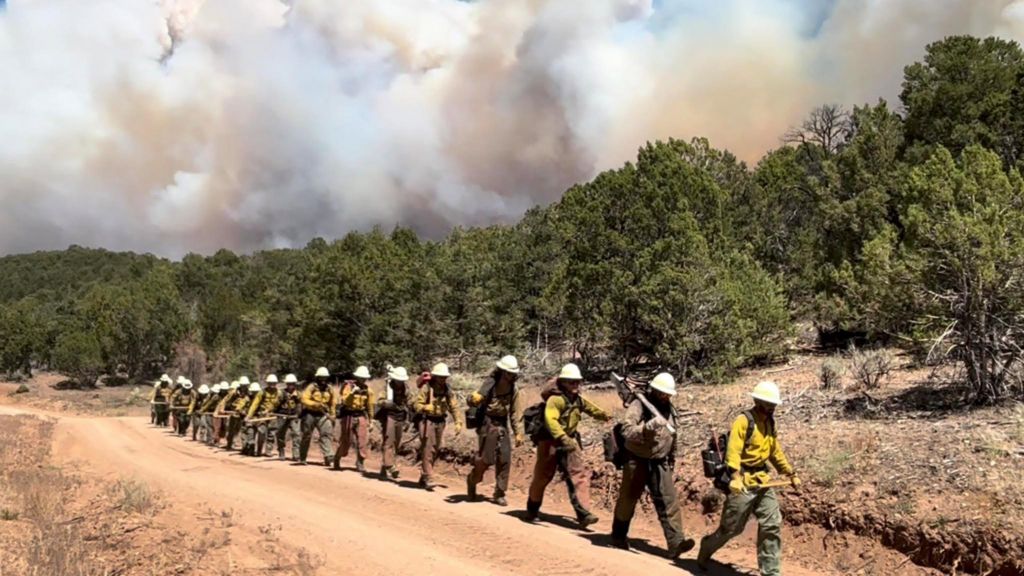
Three firefighters die battling huge wildfires on Colorado-Utah border
A devastating wildfire disaster on the Colorado-Utah border has claimed the lives of three elite federal firefighters and left two others with burn injuries, after a sudden, fast-moving blaze trapped the crew during containment operations on Saturday.
The fallen first responders were assigned to the Knowles and Gore fires, two separate blazes that have since merged with other wildfires to form the massive Snyder Mesa complex. As of Saturday evening, the merged fire had already scorched more than 28,000 acres of parched western land, according to a statement from Colorado Governor Jared Polis’s office.
According to the U.S. Department of the Interior, the crew was overwhelmed without warning by shifting flames as the fire expanded at an explosive rate. The incident is classified as a burnover — a rare but extremely dangerous scenario where rapid fire spread cuts off all escape routes for on-the-ground crews, forcing firefighters to deploy emergency last-resort fire shelters as their only chance of survival. The two injured crew members were airlifted to nearby medical facilities for treatment of their burns.
Identities of the deceased firefighters have not yet been released to the public, as agencies continue to notify next of kin. In the wake of the tragedy, officials have focused on supporting the affected families, friends, and fellow crew members through the crisis. “Our immediate focus is on supporting their families, friends, and fellow crewmates during this incredibly difficult time,” said a representative from the U.S. Wildland Fire Service. “The US Wildland Fire Service stands united with the USDA Forest Service in grief and in our unwavering support for the loved ones left behind. Their bravery, dedication, and sacrifice will never be forgotten.”
All five firefighters involved in the incident were employees of federal public land management agencies: the U.S. Wildland Fire Service and the U.S. Forest Service. Notably, the U.S. Wildland Fire Service, an agency under the Department of the Interior, was only established in January of this year to streamline cross-agency wildfire response across millions of acres of federal public land.
Hours after the fatal incident, Governor Polis issued a formal state of emergency for Colorado, activating the Colorado National Guard to assist overwhelmed local and federal firefighting teams. “I’m devastated about the loss of three heroic firefighters who died in the line of duty in Western Colorado,” Polis said in an official statement. “To the loved ones of those lost, and to their fellow crew members – some who are still battling the flames – know that the State of Colorado mourns alongside you.”
The disaster comes as the entire western U.S. faces an early and intense wildfire season, with dozens of active blazes burning across Colorado and Utah. In Utah, the largest active fire is the Cottonwood Fire, which had expanded to more than 93,000 acres by Sunday and remained 0% contained, per U.S. Forest Service updates. Utah Governor Spencer Cox has pre-emptively issued an emergency ban on all recreational fireworks ahead of the Fourth of July weekend, a popular holiday where firework use often sparks accidental wildfires in dry conditions.
While most of the fires burning across the two states are concentrated in sparsely populated rural areas, they have already started to threaten mountain resorts and remote recreational cabins, prompting evacuation orders for some local communities. The current outbreak of large blazes has been driven by a combination of record warm winters, persistent drought, and unseasonably high winds that have turned much of the region’s vegetation into tinder.
Climate scientists have long warned that human-caused climate change is increasing the frequency and severity of extreme weather conditions that fuel catastrophic wildfires, including prolonged heat waves and deep drought. Researchers project that without major action to cut greenhouse gas emissions and reform wildfire management, wildfires will only grow more frequent and intense across the American West in coming decades.
-
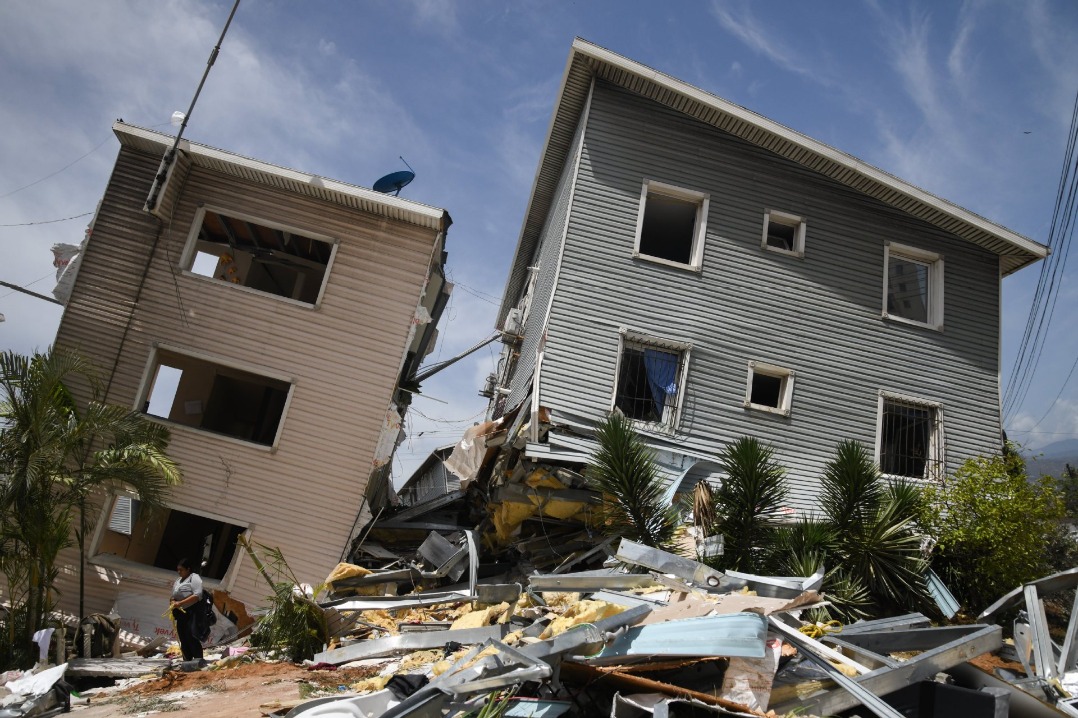
Venezuela quake death toll rises to 1,430
CARACAS – Six days after a pair of powerful back-to-back earthquakes rattled Venezuela, the nation’s top legislative official has released an updated casualty count that puts the total number of fatalities from the natural disaster at 1,430. National Assembly President Jorge Rodriguez announced the latest figures during an official appearance on Venezuela’s state television network on Saturday, confirming the rising toll alongside expanded data on the disaster’s widespread human impact. According to Rodriguez, the earthquakes have left 3,238 people injured and displaced or directly impacted more than 3,142 families across the affected regions. The initial seismic events, which struck the country last Wednesday, registered magnitudes of 7.2 and 7.5 respectively, triggering widespread damage to infrastructure, residential buildings, and public services across impacted areas. In the days following the main quakes, Venezuelan geological monitoring teams have recorded 430 light to moderate aftershocks, Rodriguez noted in the most recent official update on the country’s ongoing national emergency. Extending condolences on behalf of all Venezuelan government institutions, Rodriguez expressed deep sympathy to the families and communities that have lost loved ones in the disaster. He added that tens of thousands of emergency responders, rescue workers, and support personnel have remained on the ground working around the clock to pull survivors from rubble, deliver critical aid to displaced communities, and stabilize affected areas. The national emergency response remains in full effect as search and rescue operations continue.