标签: North America

北美洲

  • Cosmetics giant Estée Lauder in merger talks with owner of Jean Paul Gaultier and Rabanne

    Cosmetics giant Estée Lauder in merger talks with owner of Jean Paul Gaultier and Rabanne

    The global beauty industry is poised for a potential seismic shift as two cosmetic powerhouses, US-based Estée Lauder Companies and Spanish fragrance giant Puig, engage in preliminary merger discussions. This strategic move could culminate in the creation of a $40 billion beauty conglomerate, reshaping the competitive landscape of the luxury cosmetics sector.

    According to exclusive reports from the Financial Times, these negotiations remain at an exploratory stage, with Estée Lauder issuing a cautious statement emphasizing that “no final decision has been made” and that “unless and until an agreement is signed between the companies, there can be no assurances regarding the deal or its terms.”

    The potential union represents a convergence of complementary strengths. Estée Lauder brings its extensive portfolio of prestige brands including Clinique, Bobbi Brown, and the recently acquired Tom Ford Beauty, while Puig contributes its formidable fragrance expertise through iconic labels such as Rabanne, Jean Paul Gaultier, and Carolina Herrera, alongside fashion house Dries Van Noten.

    Founded in 1914 and still family-controlled, Barcelona-based Puig has demonstrated remarkable growth, reporting revenues exceeding €5 billion in 2025 with global distribution across 150 countries. Conversely, Estée Lauder, established in 1946 by its namesake founder with just four initial products, has evolved into the world’s second-largest cosmetics company after L’Oréal, though it faced recent challenges including workforce reductions amid sluggish sales performance.

    Market reaction to the news proved unfavorable, with Estée Lauder’s shares closing nearly 8% lower on Monday, reflecting investor uncertainty about the potential transaction.

    This development occurs against a backdrop of significant consolidation within the beauty industry, following recent high-profile acquisitions including E.l.f. Beauty’s purchase of Hailey Bieber’s Rhode skincare brand for up to $1 billion and L’Oréal’s €4 billion acquisition of Gucci-owner Kering’s beauty division last year.

  • Isolation or neutrality: The impact of Quebec’s secular law

    Isolation or neutrality: The impact of Quebec’s secular law

    Quebec’s contentious secularism legislation, formally known as Bill 21, has become the subject of a landmark constitutional challenge at the Supreme Court of Canada, sparking intense national debate about religious freedom and state neutrality. The law, which prohibits public servants in positions of authority—including teachers, police officers, and government lawyers—from wearing religious symbols while performing their duties, is facing rigorous judicial examination that could determine its future validity.

    At the heart of the legal battle are personal accounts from Muslim women who maintain they have borne the disproportionate burden of the legislation’s implementation. These individuals report being systematically excluded from public sector employment opportunities and educational pathways despite their qualifications, creating what they describe as an invisible barrier to professional participation in Quebec society.

    The provincial government defends the legislation as a necessary measure to maintain religious neutrality in public institutions, arguing it represents Quebec’s distinct cultural commitment to laïcité—a form of secularism that separates religion from state affairs. This perspective contends that the law ensures equal treatment of all citizens by eliminating visible religious influence in government services.

    Legal experts highlight that the case presents complex constitutional questions regarding the balance between provincial rights and fundamental freedoms protected under Canada’s Charter of Rights and Freedoms. The Supreme Court’s eventual ruling is anticipated to establish significant precedent concerning provincial authority to legislate on matters of religious expression in the public sphere.

    The human impact extends beyond immediate employment effects, with community advocates reporting increased social isolation and psychological distress among religious minorities. Educational institutions have simultaneously reported challenges in recruiting and retaining qualified teachers from diverse backgrounds, particularly in subjects already experiencing staffing shortages.

    As the judicial process unfolds, the controversy continues to reverberate through Quebec’s social fabric, raising profound questions about integration, diversity, and the meaning of secularism in a pluralistic society. The outcome will likely influence similar legislative initiatives across Canada and potentially redefine the boundaries between religious expression and public service throughout the nation.

  • ICE agents deploy to major US airports as security queues stretch for hours

    ICE agents deploy to major US airports as security queues stretch for hours

    The ongoing partial government shutdown, now in its sixth week, has triggered a critical operational crisis at major US airports as unpaid Transportation Security Administration (TSA) agents increasingly refuse to report for work. With over 3,400 call-outs recorded on Sunday alone, security checkpoints have descended into chaos, generating massive passenger queues and wait times exceeding three hours.

    In response to the escalating security staffing shortage, the White House has authorized the deployment of hundreds of Immigration and Customs Enforcement (ICE) agents to 14 major airports, including hubs in New York, Atlanta, and Houston. Their deployment, however, has sparked both operational and political controversy. Acting Deputy TSA Administrator Adam Stahl clarified that these agents would perform “non-specialized security functions” and crowd control to free up remaining TSA staff for specialized aviation security. Conversely, President Trump contradicted this, telling reporters the agents are “able to now arrest illegals as they come into the country,” describing airports as “very fertile territory.”

    A notable point of contention emerged over the agents’ appearance. Photographs from airports like Atlanta’s Hartsfield-Jackson and New York’s JFK showed ICE agents operating without the masks or face coverings they typically use. President Trump explicitly stated he had “request[ed] that they take off the mask,” deeming it an inappropriate look for an airport environment.

    The human impact on travelers is severe. The Department of Homeland Security confirmed that extreme wait times have forced some passengers to sleep in terminals to avoid missing their flights, with airlines officially advising customers to arrive three to four hours early. The epicenter of the absenteeism is most acute at specific airports; New Orleans and Atlanta saw over 42% and 41% of their TSA staff call out, respectively.

    The root of the crisis remains a deep political impasse in Washington. Congressional Democrats are refusing to fund the Department of Homeland Security without new, stringent curbs on ICE, an agency under intense scrutiny after its agents shot and killed two US citizens in Minneapolis. Republicans have rejected Democratic proposals to fund the TSA independently while negotiations over ICE reforms continue, showing little sign that a resolution to the funding standoff is imminent.

  • ‘Like the plane got cut in half’: Eyewitnesses describe chaos of LaGuardia crash

    ‘Like the plane got cut in half’: Eyewitnesses describe chaos of LaGuardia crash

    A catastrophic runway collision at New York’s LaGuardia Airport has resulted in multiple casualties and widespread disruption, following the impact of an Air Canada flight with an emergency vehicle during landing procedures on Sunday night.

    Eyewitness accounts from passengers aboard AC8646 from Montreal describe moments of terror as the aircraft encountered severe turbulence during descent before making violent contact with a fire truck on the tarmac. The impact occurred at 23:40 local time (03:40 GMT Monday), immediately claiming the lives of two pilots and sending 41 individuals to area hospitals with injuries ranging from moderate to critical.

    Audio recordings from LaGuardia’s control tower reveal air traffic controllers urgently issuing commands of ‘Stop, stop, stop!’ in the final seconds before impact. Preliminary investigations indicate the emergency vehicle had been dispatched minutes earlier to address a separate odor-related incident aboard another aircraft.

    Passenger Rebecca Liquori recounted to News12 Long Island: ‘We landed very roughly… then came a tremendous boom that threw everyone from their seats.’ The subsequent evacuation saw travelers assisting one another via the aircraft’s wings to safety amidst scenes of chaos and confusion.

    Leo Medina, a passenger on a nearby aircraft, witnessed the immediate aftermath: ‘The plane appeared severed in half from our vantage point just 100 meters away.’ The incident has triggered extensive flight cancellations and delays at one of America’s busiest aviation hubs, stranding thousands of travelers including Katie Rojas who noted: ‘The randomness of such events is truly frightening.’

    Federal aviation authorities have launched a comprehensive investigation into the circumstances surrounding the collision, while airport operations remain partially suspended during evidence collection and cleanup operations.

  • OnlyFans owner Leonid Radvinsky dies at 43

    OnlyFans owner Leonid Radvinsky dies at 43

    Leonid Radvinsky, the Ukrainian-American billionaire who transformed OnlyFans into a multi-billion dollar content subscription platform, has died at age 43 following an extended battle with cancer. The platform confirmed his peaceful passing in an official statement requesting privacy for his family during this difficult time.

    Radvinsky, an economics graduate from Northwestern University, acquired the then-nascent platform in 2018 from its British founders. Under his leadership, OnlyFans experienced explosive growth during the COVID-19 pandemic, propelling Radvinsky onto Forbes’ billionaire list by 2021 with an estimated net worth of $4.7 billion.

    The platform revolutionized content monetization by enabling creators to share exclusive material with subscribers for monthly fees or tips, while retaining 80% of all payments. Though hosting diverse content ranging from culinary arts to fitness, OnlyFans gained particular notoriety for its adult-oriented material and direct creator-fan interaction features.

    Recent Companies House filings reveal staggering metrics: $1.4 billion in revenue from over £7 billion in transactions, 377 million subscribers, and 4.6 million active creators in 2024 alone.

    Radvinsky’s tenure coincided with significant regulatory challenges. British regulators investigated minor access to pornography in 2024, resulting in a £1 million fine for inadequate response to information requests despite the probe’s eventual dismissal. The platform previously faced allegations regarding insufficient handling of illegal content.

    In a controversial 2021 episode, OnlyFans announced plans to ban sexual content before abruptly reversing the decision following intense creator backlash. The company also navigated legal challenges regarding third-party messaging practices, though these cases proved unsuccessful.

    Beyond OnlyFans, Radvinsky invested in technology ventures through his Florida-based Leo.com venture capital firm and contributed philanthropically to cancer research institutions including Memorial Sloan Kettering Cancer Center. At the time of his passing, he had been exploring potential sale options for the platform he helped build into an internet phenomenon.

  • ‘Stop, stop, stop’: Listen to LaGuardia control tower audio during collision

    ‘Stop, stop, stop’: Listen to LaGuardia control tower audio during collision

    A routine arrival at New York’s LaGuardia Airport turned perilous on Sunday evening when an Air Canada aircraft, having just completed a safe landing from Montreal, collided with an airport firefighting vehicle on the ground. The incident, which involved Flight carrying 72 passengers and four crew members, is now under investigation by aviation authorities.

    Exclusive audio recordings from LaGuardia’s control tower reveal the tense moments surrounding the collision, with air traffic controllers urgently issuing ‘stop, stop, stop’ commands in an attempt to prevent the accident. The recordings capture the immediate response protocols activated following the impact between the commercial aircraft and the emergency response vehicle.

    While initial reports indicate no serious injuries resulted from the collision, the event has raised significant questions about ground operation safety protocols at major airports. Aviation experts emphasize that such incidents, while rare, highlight the complex coordination required between air traffic control, flight crews, and ground personnel during airport operations.

    The Federal Aviation Administration has launched a full investigation into the circumstances leading to the collision, examining communication protocols, vehicle positioning, and operational procedures during aircraft arrivals. This incident marks another notable event in recent aviation safety discussions, particularly concerning ground operations at congested airport facilities.

  • Trump says ‘good’ talks ongoing with Iran – but offers few details

    Trump says ‘good’ talks ongoing with Iran – but offers few details

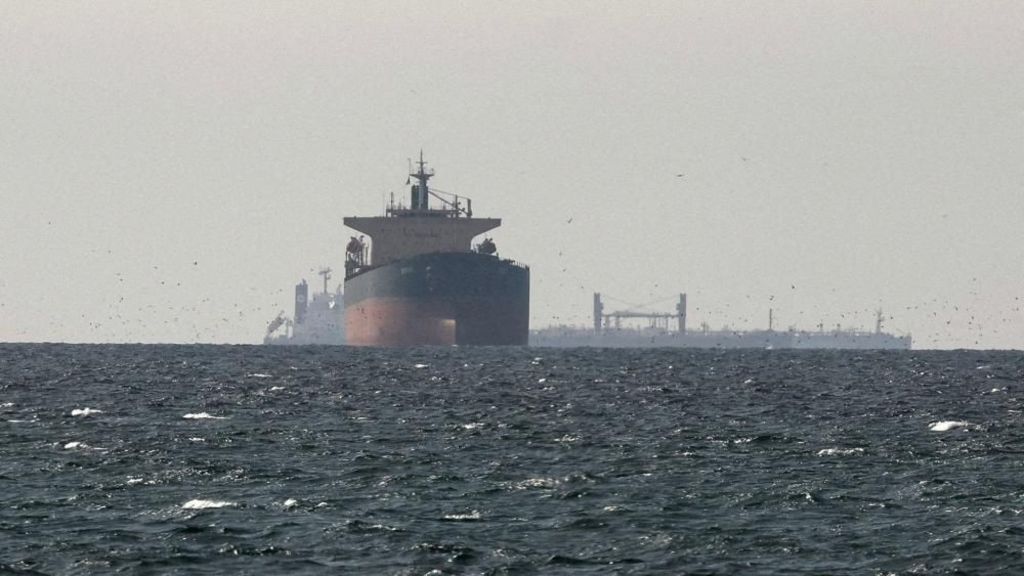
    In a surprising diplomatic shift, U.S. President Donald Trump declared a five-day cessation of hostilities against Iranian energy infrastructure, claiming both nations are engaged in productive negotiations—a statement immediately contradicted by Iranian officials. The announcement, made via Truth Social just hours before Monday’s market opening, temporarily halts Operation Epic Fury’s campaign against power plants and energy facilities that Trump had previously threatened to “obliterate” if Iran refused to reopen the Strait of Hormuz.

    The president told reporters in Palm Beach that both countries seek to reach an agreement, emphasizing America’s “great relationship” with potential Middle Eastern partners without identifying specific nations. He revealed that special envoy Steve Witkoff and senior advisor Jared Kushner participated in discussions, though provided no details regarding Iranian counterparts or negotiation agendas. Potential topics include strait access, ballistic missile programs, uranium enrichment, or ceasefire terms—previously dismissed by Trump as unlikely.

    This conciliatory stance contrasts sharply with the administration’s recent assertions that Iranian leadership had been decimated. At a White House event last Friday, Trump remarked that it’s “hard to find leaders in Iran to talk to because they keep getting killed,” yet told CNBC that remaining Iranian representatives are “behaving differently”—a characterization interpreted by some as implying regime change.

    Tehran’s denial of any diplomatic contact complicates the White House narrative. Fars News Agency, affiliated with Iran’s Islamic Revolutionary Guard Corps, quoted anonymous sources portraying Trump’s move as capitulation to Iranian threats of regional retaliatory strikes. Historical precedent suggests caution: last summer’s Operation Midnight Hammer saw negotiations proceed until U.S. bombs struck nuclear facilities.

    Despite ambiguous evidence of actual diplomacy, Trump’s announcement immediately impacted global markets. U.S. stock futures rallied while oil prices dropped significantly, transforming anticipated economic turmoil into cautious optimism. The timing—just before market opening—raised questions about whether the declaration aimed to calm financial nerves rather than reflect genuine breakthrough.

    The five-day pause temporarily alleviates fears of escalated conflict, though fundamental questions persist regarding Strait of Hormuz access, continued airstrikes by U.S. and Israeli forces, and the authenticity of diplomatic engagement. This development either represents genuine de-escalation or a strategic maneuver by a president seeking respite from previously established red lines.

  • What we know about the LaGuardia Airport crash

    What we know about the LaGuardia Airport crash

    A catastrophic ground collision between an Air Canada regional jet and an emergency response vehicle has resulted in a fatal aviation incident at New York’s LaGuardia Airport, claiming the lives of two pilots and causing significant operational disruption.

    According to official reports from Port Authority executive director Kathryn Garcia, the devastating accident occurred at approximately 23:40 local time on Sunday. Air Canada flight AC8646, which had recently arrived from Montreal with 72 passengers and four crew members aboard, collided with a firefighting vehicle while on the tarmac. The CRJ 900 aircraft sustained severe damage, with photographic evidence showing the cockpit area nearly severed and the plane tilted backward amid scattered debris and twisted metal.

    The emergency vehicle involved had been dispatched minutes earlier to address a separate incident concerning an odor report aboard another aircraft. Following the impact, authorities immediately activated emergency protocols, transporting 41 individuals to medical facilities. While 31 have been discharged, several remain hospitalized with serious injuries. The two firefighters in the truck were reported in stable condition with non-life-threatening injuries.

    New York Governor Kathy Hochul characterized the event as “heartbreaking,” while Mayor Zohran Mamdani acknowledged the “tragic collision” and expressed gratitude for first responders whose swift actions prevented further casualties.

    The National Transportation Safety Board (NTSB) has initiated a comprehensive investigation examining multiple factors including aircraft speed, air traffic control staffing patterns, and whether any occupants were ejected during the impact. The probe will seek to determine the precise sequence of events that led to this rare ground collision.

    LaGuardia, ranking among America’s busiest airports with over 32 million annual passengers, remains closed indefinitely. Airport authorities indicate the earliest potential reopening would be 14:00 ET Monday, though hundreds of flights have already been canceled affecting major carriers including American Airlines, Delta Air Lines, Southwest Airlines, United Airlines, and Air Canada.

    Travel advisories from the New York City Police Department and Fire Department warn of extensive cancellations, road closures, and traffic delays, urging travelers to avoid the area and utilize alternate routes. The incident represents one of the most significant ground accidents at a U.S. airport in recent years, raising immediate questions about tarmac safety protocols and emergency vehicle coordination.

  • Two pilots dead after plane and ground vehicle collide at New York’s LaGuardia Airport

    Two pilots dead after plane and ground vehicle collide at New York’s LaGuardia Airport

    A catastrophic collision between an Air Canada regional jet and a firefighting vehicle has resulted in a multi-fatality incident and massive disruptions at New York’s LaGuardia Airport. The tragic accident, which occurred on Monday, claimed the lives of two pilots and sent dozens to hospital, prompting a full-scale investigation by federal authorities.

    According to Port Authority Executive Director Kathryn Garcia, the aircraft—a CRJ 900 operated by Jazz Aviation—had just landed from Montreal with 72 passengers and four crew members onboard when it struck the Port Authority fire truck. The emergency vehicle was responding to a separate incident involving a United Airlines flight that had reported an odor-related issue.

    Tragically, both pilots aboard the Air Canada flight perished in the collision. Forty-one individuals were transported to area hospitals, with thirty-two subsequently discharged. Several passengers sustained serious injuries, while the Port Authority sergeant and police officer inside the fire apparatus were hospitalized in stable condition with non-life-threatening injuries.

    Visual evidence circulating on social media platforms depicted the severely damaged aircraft with its nose section visibly upturned, coming to rest on the airport surface. The impact caused significant damage to the regional jet, though all occupants have been accounted for.

    In response to the emergency, LaGuardia Airport authorities immediately activated emergency protocols and closed the facility indefinitely. All arrivals and departures were canceled or delayed, affecting hundreds of flights across multiple carriers including American Airlines, Delta Air Lines, Southwest Airlines, and United Airlines.

    Transportation officials announced the airport would remain shuttered until at least 2:00 PM local time (18:00 GMT) Monday, while ground access routes were similarly restricted. The National Transportation Safety Board has launched a comprehensive investigation into the circumstances surrounding the collision.

    New York City Mayor Zohran Mamdani characterized the event as a ‘tragic collision’ and praised the swift response of emergency personnel whose actions undoubtedly saved lives. Confused passengers were seen throughout Terminal B—where Air Canada operates—huddled on benches or sleeping on floors as they attempted to rearrange travel plans amid the widespread cancellations.

  • Ties that bind

    Ties that bind

    In the expansive floodplains of Brazil’s Solimoes River, the upper reaches of the Amazon basin, an ancient economic practice is gaining modern global significance. Local communities are meticulously harvesting and processing malva fiber—a natural textile resource—creating sustainable economic opportunities while preserving traditional knowledge.

    The production process reveals both ecological harmony and economic potential. Under the intense Amazon sun, harvested malva stalks are arranged in precise rows across forest clearings, their pale hues creating a striking visual contrast against the lush green canopy. This natural drying technique, perfected through generations, transforms the raw vegetation into durable fiber ready for market.

    This traditional industry has evolved into a vital economic bridge connecting remote Amazonian communities with international markets. The natural fibers, prized for their sustainability and quality, are increasingly sought by global manufacturers seeking eco-friendly alternatives to synthetic materials. The trade represents more than mere commerce—it embodies a sustainable development model that simultaneously supports local livelihoods and forest conservation.

    Recent photographic documentation from the Sao Sebastiao riverine community in Manacapuru captures the seamless integration of this industry with Amazonian life. Images show local harvesters navigating waterways abundant with giant water lily plants while transporting their valuable natural cargo, demonstrating how traditional practices coexist with the region’s unique ecosystem.

    The malva trade has emerged as an economic lifeline for riverside communities, providing stable income while encouraging forest preservation. Unlike extractive industries that damage rainforest ecosystems, fiber harvesting represents a renewable economic model that aligns economic interests with environmental stewardship. This balance between utilization and conservation offers a template for sustainable development in biologically sensitive regions worldwide.

    International market demand for sustainable natural materials has transformed this traditional practice into a commercially viable industry with global reach. The fibers eventually reach international supply chains, connecting Amazonian harvesters with conscious consumers worldwide who prioritize environmentally responsible products. This economic linkage demonstrates how localized traditional knowledge can find relevance in contemporary global markets while maintaining ecological integrity.