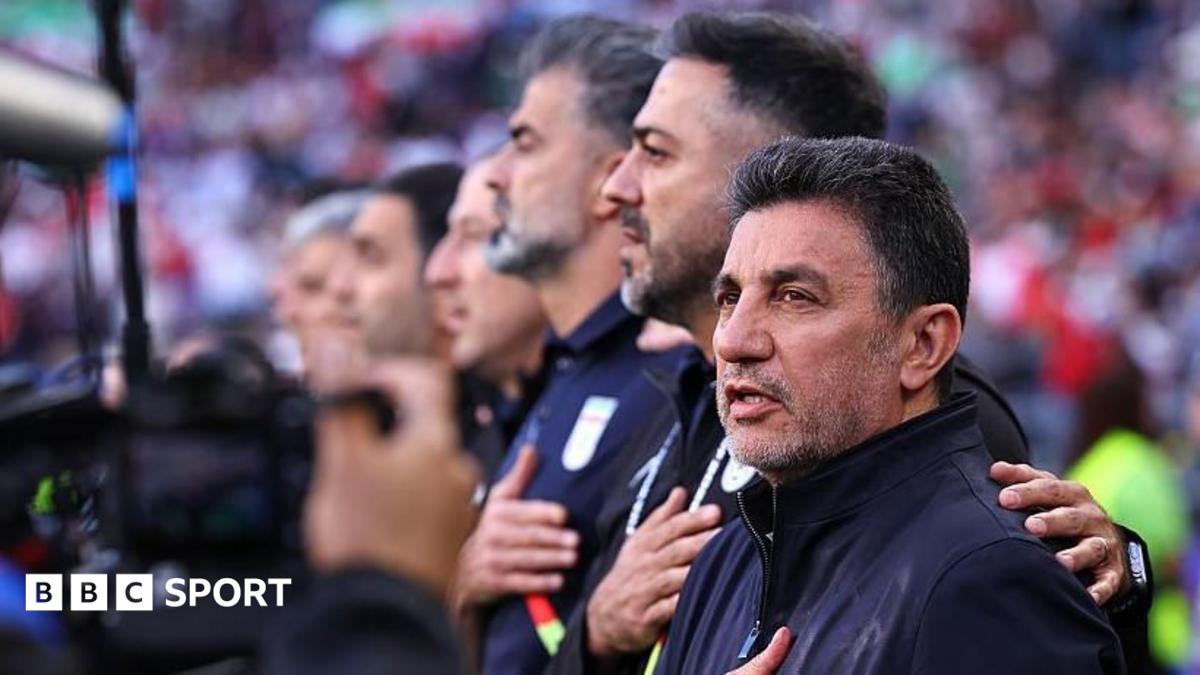
Against the high-stakes backdrop of the 2026 FIFA World Cup Group G stage, Iran’s national football team has found itself at the center of a growing controversy, with head coach Amir Ghalenoei publicly accusing the United States of unfair treatment and calling on global football’s governing body FIFA to implement new protections for visiting teams in future tournaments.
Iran’s participation in this World Cup has been complicated from the start by long-running geopolitical tensions between the Islamic Republic and both the United States and Israel. Long before the team kicked off its first group match, logistical disruptions upended their pre-tournament preparations: their original pre-tournament training base, planned in Arizona, had to be relocated to Tijuana, Mexico, and persistent travel restrictions imposed by U.S. authorities hampered their ability to prepare for matches held on U.S. soil.
For Iran’s opening two group fixtures hosted in Los Angeles, visa restrictions forced the entire squad to enter the U.S. only 24 hours before kickoff and depart immediately after the final whistle, leaving no time for post-match recovery or on-site acclimatization. While restrictions were slightly loosened for their decisive final group match against Egypt in Seattle, allowing the team to arrive two days ahead of game day, they were still required to return to their Mexican base immediately after the final whistle.
The already tense situation boiled over after a dramatic late twist in the Egypt match that ended Iran’s knockout stage hopes. With the game tied 1-1 in stoppage time, defender Shoja Khalilzadeh fired a loose ball into the back of the net, a goal that would have secured Iran a guaranteed spot in the tournament’s round of 32. Jubilant celebrations among Iranian players and fans in the stadium were cut short when video assistant referee (VAR) review chalked the goal off for offside, leaving the final score locked at 1-1.
The result sent Egypt through to the knockout stage and left Iran’s qualification hopes hanging by a thread, depending on results from remaining groups. Speaking after the final whistle, Ghalenoei expressed immense pride in his squad’s resilience while leveling harsh criticism at the host nation’s treatment of his team. “What these young players have achieved against all odds deserves to be written into history, because the host country treated us very unfairly,” Ghalenoei said. “Despite every obstacle placed in our path, we have performed well, and the entire world can see the quality of Iran and our team. I urge FIFA: do not allow host nations to treat visiting players and teams this way in any future World Cup.”
The coach added that the disallowed late goal compounded the team’s struggles, saying “I used to think we were just an oppressed side facing unfair treatment, but after these three matches, I see we have also had terrible bad luck.”
Iran captain Mehdi Taremi echoed his coach’s frustrations, describing the entire tournament experience for the squad as a “logistical disaster.” While Taremi emphasized he and his teammates held great affection for the people of Tijuana and Mexico, he noted that the constant cross-border travel was incompatible with professional football competition.
FIFA has yet to publicly respond to the criticisms, with BBC Sport confirming it has contacted the governing body for comment. This is not the first time FIFA’s handling of Iran’s participation has come up: prior to the tournament, FIFA President Gianni Infantino defended the organization’s work, saying he had personally guaranteed Iran would be allowed to compete despite widespread claims it would not be possible. “When people said it would be impossible for Iran to come to the World Cup, I promised them they would be here,” Infantino said before the tournament, adding that he did not believe any other organization could have secured Iran’s participation under the difficult circumstances. Infantino also visited the Iranian dressing room after the team’s opening draw with New Zealand earlier in the group stage.
As of the time of reporting, Iran sits sixth among all third-placed group teams, with only three group stages remaining to be completed and the top eight third-placed sides advancing to the knockout round, leaving Iran’s qualification chances all but eliminated.