Escalating tensions in the Persian Gulf have spiked sharply after the United States launched a second round of targeted strikes on Iranian military infrastructure within 24 hours, launching the most serious confrontation between the two nations since a June 17 ceasefire agreement collapsed.
The latest U.S. military action came in direct response to a drone attack Saturday that struck the Panama-flagged commercial tanker MT Kiku in the strategically critical Strait of Hormuz, according to U.S. Central Command (Centcom). The airstrikes hit a range of Iranian assets including military equipment stockpiles, command and communication networks, air defense installations, and drone storage facilities. Centcom officials emphasized the operation was a direct retaliation for what it calls sustained Iranian aggression against international commercial shipping transiting the waterway.
“Iran was given a chance to honor the ceasefire agreement but elected not to when its forces launched a one-way attack drone that hit MT Kiku,” Centcom said in an official statement, adding that international commercial shipping operations continue through the strait despite the upsurge in violence.
U.S. President Donald Trump quickly addressed the escalation on his social platform Truth Social, doubling down on hardline rhetoric against Tehran. Trump argued the strikes were a justified response to repeated Iranian violations of the June ceasefire deal, warning that continued Iranian noncompliance could force a far more drastic American military response. “There may come a point when we are no longer able to be reasonable, and will be forced to militarily complete the job that we very successfully started,” he wrote Saturday evening. “If that happens, the Islamic Republic of Iran will no longer exist!” he added. He also suggested that it remained “very possible” that Tehran would “never learn” to respect the terms of negotiated peace.
In the hours following the U.S. strikes, two Gulf Arab neighbors – Kuwait and Bahrain – triggered their national air defense systems in response to incoming hostile threats. The Kuwaiti Armed Forces confirmed via X that its defenses were actively engaging incoming missiles and drones, urging the public to follow official emergency security protocols. Bahrain’s Ministry of Interior similarly issued a public alert asking citizens to remain calm and seek shelter at the nearest designated safe location.
Saturday’s strikes follow just one day after the U.S. conducted an initial round of retaliatory strikes against Iran, a response to a June 25 drone attack that damaged the Singapore-flagged cargo vessel MV Ever Lovely. Centcom framed that first strike as a “powerful response” to unprovoked aggression that explicitly violated the ceasefire framework.
Tehran has pushed back against U.S. claims, rejecting accusations of ceasefire violations and framing its actions as a legitimate response to unauthorized shipping activity in its territorial waters. Iran says the MV Ever Lovely attacked last week was targeted for transiting the Gulf waterway via an unapproved route, and has labeled the initial U.S. retaliatory strikes as the actual breach of the June truce. On Saturday morning, Iran’s foreign ministry released a statement accusing the “treaty-breaking U.S. regime” of orchestrating the crisis, and confirmed it had launched additional retaliatory strikes against targets linked to U.S. forces in the region. Iran has not yet issued an official comment on Saturday’s fresh U.S. strikes as of publication.
The current escalation marks a complete collapse of the 14-point ceasefire memorandum of understanding reached between Washington and Tehran on June 17. That deal was intended to end two months of hostilities and required Iran to deploy its “best efforts” to guarantee unimpeded, toll-free safe passage for all commercial vessels through the strait for a 60-day period.
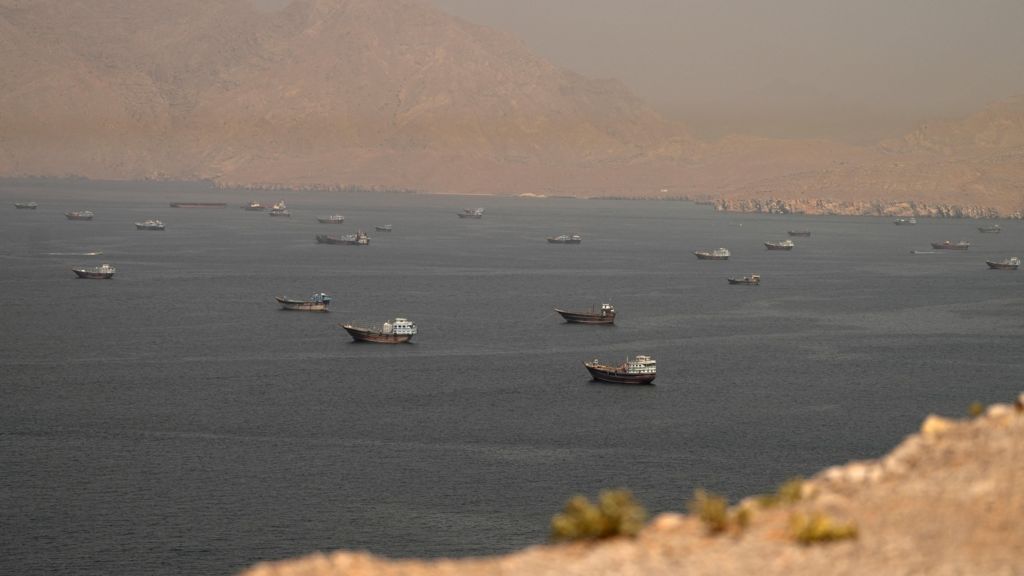
As one of the world’s most critical maritime chokepoints, the Strait of Hormuz handles roughly a fifth of global oil and liquefied natural gas shipments, plus large volumes of other key commodities including agricultural fertiliser. After the U.S. and Israel launched joint military strikes against Iran in late February, Tehran effectively closed the strait to commercial traffic, triggering an immediate spike in global energy prices and disrupting global supply chains for essential goods.
Until just days ago, the Trump administration had repeatedly claimed ceasefire negotiations were progressing smoothly, saying Iran had formally abandoned any plans to impose transit fees on vessels passing through the strait. In a Truth Social post Wednesday, Trump said Iran had given the U.S. formal assurances that “there would be ‘no tolls, no insurance costs and no other charges of any kind being sought or received’”, adding “If this is false information, negotiations would end, immediately.” The U.S. has long maintained that any Iranian tolling system for the strait violates international maritime law.
Just this week, Iranian and Omani officials held talks in Muscat, Oman’s capital, to discuss long-term navigation management in the strait. Omani Foreign Minister Badr Al-Busaidi said both sides reaffirmed their commitment to “toll-free safe passage” for commercial shipping. However, Iranian chief negotiator Mohammed Bagher Ghalibaf told Iranian state media that “everyone should know that the administration of the Strait of Hormuz will never go back to the way it was before the war”, signaling Tehran’s intention to assert greater long-term control over the waterway.