标签: Europe

欧洲

  • Who is Mykhailo Drapatyi, Ukraine’s new commander-in-chief?

    Who is Mykhailo Drapatyi, Ukraine’s new commander-in-chief?

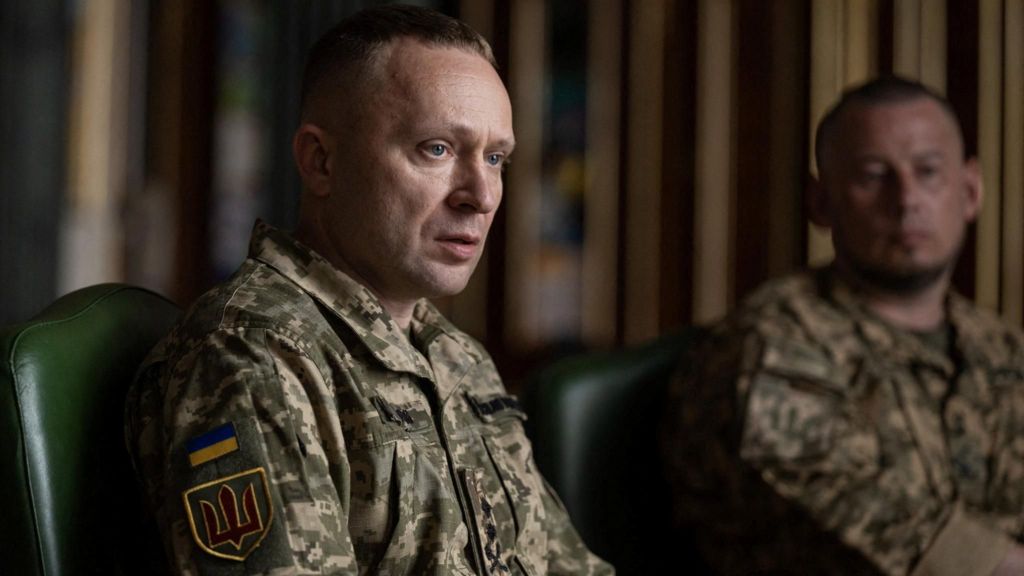
    Ukraine has installed a new top military leader amid ongoing conflict with Russia, with 43-year-old Major General Mykhailo Drapatyi taking over the role of Commander-in-Chief from Oleksandr Syrskyi. This appointment marks the third leadership shake-up for Ukraine’s armed forces since Russia launched its full-scale invasion in February 2022, and it has already earned broad backing from both civilian society and rank-and-file military personnel. Drapatyi’s rise to the top position came amid public protests that initially formed to support his ally, former defense minister Mykhailo Fedorov, but eventually shifted to demand Syrskyi’s removal – with crowds chanting Drapatyi’s name in the streets. One frontline Ukrainian soldier told the BBC, “There’s no better person for this position nowadays in Ukraine.”

    Drapatyi’s reputation as a “humane and strong” commander has been built over more than two decades of military service in post-Soviet Ukraine. He graduated from the Kharkiv Institute of Tank Troops in 2004, beginning his career as a junior lieutenant, and first rose to public attention in 2014, when pro-Russian separatists seized swathes of eastern Ukraine. That May, Drapatyi led a battalion into the besieged southern city of Mariupol to free hostages held at the city’s police department. When told a kilometer-high makeshift barricade blocked the advance, he ordered his infantry fighting vehicle to smash straight through it, and the footage of the maneuver quickly went viral around the world. “I said, let’s take it by storm. This video flew around the world,” he later recalled in an interview. Later that same year, he earned further acclaim for successfully extracting encircled Ukrainian units from a contested border area in Luhansk Oblast.

    In 2021, Drapatyi returned to academic training to deepen his expertise in operational and military strategy, graduating at the top of his class that June. He was awarded a ceremonial sword of honor by then-British Ambassador to Ukraine Melinda Simmons for his performance. When Russia launched its full-scale invasion in 2022, Drapatyi was already serving as deputy commander of Ukraine’s joint forces, and he immediately stepped into frontline leadership roles. He led temporary operational task forces across multiple hotly contested sectors of the front, successfully halting Russian advances toward Kryvyi Rih and overseeing the liberation of dozens of settlements in the Kherson and Dnipropetrovsk regions. By 2024, he had risen to command Ukraine’s entire Land Forces, leading operations in some of the bloodiest combat zones in eastern Ukraine.

    A defining moment for Drapatyi’s public reputation came in early 2025, when a Russian missile strike targeted a military training ground in the Dnipropetrovsk region, killing 12 soldiers and wounding 60 more. Drapatyi tendered his resignation that same day, taking personal responsibility for the “conspiracy of silence and impunity” that he said had allowed the tragedy to occur. “An army in which commanders bear personal responsibility for the lives of personnel keeps living. An army in which nobody is responsible for a loss dies,” he wrote in his resignation letter. The move was widely praised as an unprecedented demonstration of accountability among Ukraine’s senior military leadership, and President Volodymyr Zelensky declined to accept his resignation – instead appointing him commander of the Joint Forces of the Armed Forces of Ukraine.

    From that point, open speculation about tensions between Drapatyi and Syrskyi grew steadily. A senior unnamed Ukrainian officer told local media in June 2025: “Drapatyi is a relatively young general. He is gifted. He was always sent to places where the situation was extremely difficult. I do not think he has political ambitions. Yet I am sure his ambitions are not confined to the position of commander of the ground forces or the Joint Forces.” Just over a year later, Syrskyi stepped down, and expectations for Drapatyi’s tenure are running high.

    Mykola Bielieskov, a senior analyst at Ukrainian NGO Come Back Alive, notes that Drapatyi enjoys widespread popularity among rank-and-file troops, particularly among civilian volunteers who joined the military after the 2022 full-scale invasion. But Bielieskov also cautions that the new commander-in-chief will operate under severe, systemic constraints: “The Commander-in-Chief has a lot of leverage. But war is a combination of government, the president’s office, military suppliers, dependence on [Western] partners… so he’s got a tricky path before him.”

    Ceasefire negotiations with Russia remain stalled with no near-term breakthrough in sight, and Ukraine is bracing for another harsh winter of active combat. Drapatyi’s immediate priorities include shoring up Ukraine’s mobilization system to replenish frontline ranks, rooting out systemic corruption that has plagued everything from conscription processes to defense procurement, and leveraging Ukraine’s fast-growing domestic defense tech sector – which has driven key battlefield gains in recent months – to maximum effect.

    In his first public address after taking up his new post, Drapatyi acknowledged the enormous weight of his new role, promising to lead “without making loud promises, with responsibility for our decisions, and with respect” for all frontline service members. Many Ukrainians are hoping Drapatyi will bring a sharp break from Syrskyi’s tenure, which was widely criticized for relying on outdated, human-costly offensive tactics that prioritized territorial gains at the expense of troop safety.

    Analysts have warned against overestimating how quickly Drapatyi can deliver change, however. “It’s a major role and people will expect change quickly,” Bielieskov said, cautioning against “oversimplification” that can lead to unrealistic demands for sweeping progress in an impossibly short timeline. Oleksiy Kopytko, a former interior ministry adviser, echoed that note of caution, pointing to the fickle nature of public support for senior wartime leaders: “As commander-in-chief, you are worshipped and loved by all today, not loved by everyone tomorrow, and are guilty of everything the day after tomorrow, with none of your achievements mattering.” Valery Zaluzhnyi, who was removed from the post of Commander-in-Chief in 2024, also predicted that “Drapatyi will have a very difficult time. Much harder than he imagines.”

    Even so, many ordinary Ukrainians and frontline soldiers share a palpable sense of optimism about the new leadership. Some have gone so far as to say that if Drapatyi’s ally Mykhailo Fedorov is reinstated as defense minister, the pair’s combined leadership would become “Russia’s worst nightmare.” Long before taking on the role of Commander-in-Chief, Drapatyi signaled his willingness to take on entrenched problems within the military: when he resigned from his Land Forces command in 2025, he outlined a series of systemic flaws he had already targeted, ranging from combat training reform to unfair mobilization practices, corruption and broken procurement systems. “There is expected resistance, but efforts need to be stepped up,” he said at the time. Now, he will face those same challenges on a far larger national stage, with the eyes of the entire country fixed on his every move.

  • Vatican defends secrecy in sensitive abuse case involving ex-Jesuit artist Marko Rupnik

    Vatican defends secrecy in sensitive abuse case involving ex-Jesuit artist Marko Rupnik

    VATICAN CITY (AP) — In an official clarification Wednesday, the Holy See has confirmed that the canonical trial of high-profile former Jesuit priest Marko Ivan Rupnik — accused of widespread spiritual, sexual and psychological abuse against multiple women — remains actively underway, pushing back against recent Italian media reports that an acquittal had already been issued. The Vatican also defended the strict secrecy surrounding the proceedings, framing it as a necessary guardrail to protect the integrity of the church’s internal judicial process.

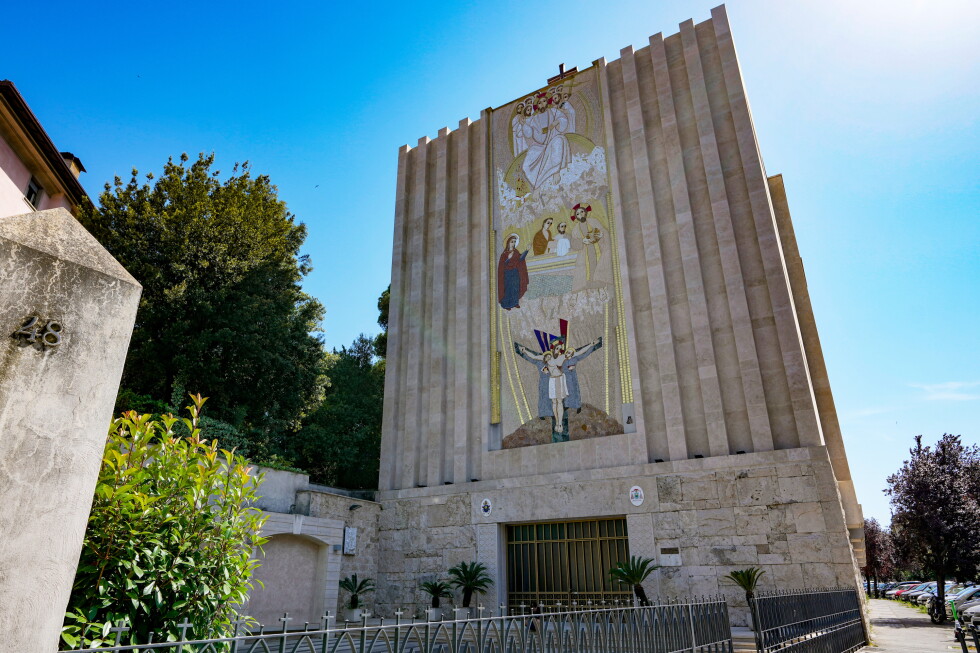
    Rupnik, a renowned Slovenian artist whose mosaic works adorn Vatican chapels and major Catholic basilicas across the globe, first became the center of a global clerical abuse scandal in late 2022, when multiple women and nuns came forward with abuse allegations dating back to the 1990s. The claims detailed decades of alleged dismissal of their complaints by senior Catholic leaders, a revelation that sparked intense criticism of the Vatican’s handling of adult abuse cases and drew questions about whether senior church officials, including Pope Francis, had shielded Rupnik due to his celebrity status within the church.

    The case has emerged as one of the most sensitive abuse matters facing the Holy See amid the global #MeToo reckoning over clergy misconduct. Church records show Rupnik was briefly excommunicated in 2020 after being found guilty of one of the Catholic Church’s most severe offenses: using the sacrament of confession to absolve a woman he had been sexually involved with. The Jesuit order expelled Rupnik from its ranks in 2023, following growing public pressure over the allegations.

    For months after the scandal went public, the Vatican declined to prosecute additional abuse claims from other women, citing the age of the allegations and noting that all the accusers were adults at the time of the reported abuse — a distinction rooted in longstanding Vatican policy that only classifies sexual abuse of adults as a criminal offense under church law if the victim is deemed incapable of rational consent. Facing mounting backlash over claims that the church had protected Rupnik, Pope Francis waived the church’s statute of limitations on the older allegations earlier this year, clearing the way for a full canonical trial to proceed. Rupnik retains his status as a priest, and his supporters have repeatedly denied all wrongdoing, dismissing the accusations as unproven defamation and what they have called a media “lynching.”

    Recent speculation over the case’s outcome was triggered by an Italian blog report Monday claiming judges had already issued an acquittal verdict. That report prompted a harsh rebuke from Laura Sgro, the attorney representing five of Rupnik’s accusers, who issued a scathing condemnation of the Vatican’s secretive canonical legal system. In an open letter Tuesday to the head of the Vatican’s Dicastery for the Doctrine of the Faith — the body overseeing the trial — Sgro said her team had received no response to two years of requests for basic updates on the case’s progress. She added that the unconfirmed acquittal report had left her clients deeply discouraged and shaken, particularly since none of the accusers have ever been interviewed by the tribunal about their claims.

    In its Wednesday statement, the Vatican press office dismissed the blog’s acquittal report as “totally unfounded,” noting that judges are still in the process of reviewing evidence submitted by participating dioceses, the Jesuit order, the parties involved and public media reports. The Holy See defended its policy of confidentiality, arguing that withholding information during proceedings is required to protect the integrity of the process and prevent unnecessary harm to all individuals involved. The statement added that if the judicial panel requires additional evidence to reach a ruling, it will take proactive steps to obtain it, a comment that left open the possibility that accusers may still be called to testify.

    Responding to Sgro’s complaints about the lack of transparency — a standard expectation in public civil and criminal courts — the Vatican noted that canonical trials only address internal church matters governed by canon law, and are not intended to replace external civil or criminal judicial processes. Under the current structure of canonical abuse investigations, accusers are only classified as third-party witnesses, rather than active parties to the case. They are barred from attending secret proceedings, denied access to case files, and have no inherent right to be notified that an investigation has even been opened, let alone receive regular updates on its status. A 2019 reform by Pope Francis only grants victims the right to receive the final verdict once it is issued, with no other access to procedural information.

    Notably, the church’s canonical system has drawn repeated condemnation from independent international abuse investigations, which have consistently found that the culture of secrecy and lack of basic procedural rights for victims retraumatizes survivors. Critics point out that canon law was never designed to address the needs of abuse survivors or support their healing; the core purpose of the system is centered on protecting the institutional church, with stated goals of restoring internal order, reforming the offender and managing public scandal. Accused priests also face limited procedural protections in canonical trials, and have long raised their own concerns about secrecy and the absence of the due process rights guaranteed in public court systems.

  • Morocco defender Issa Diop joins Ipswich for club’s return to Premier League

    Morocco defender Issa Diop joins Ipswich for club’s return to Premier League

    Just weeks after featuring in Morocco’s historic 2022 World Cup run, center back Issa Diop has sealed a cross-Premier League move, signing with newly promoted Ipswich Town from Fulham. The transfer was officially confirmed by Ipswich on Wednesday, with the 29-year-old defender putting pen to paper on a four-year contract. While the club has not publicly disclosed the transfer fee, multiple industry reports peg the deal at a reported £8.5 million, equal to roughly $11.4 million.

    Born in France, Diop built his early international career through France’s youth and Under-21 national teams, before a change to FIFA’s eligibility rules allowed him to switch his senior international allegiance to Morocco in March 2022, thanks to his family connections to the North African nation. That switch set the stage for his spot in Morocco’s groundbreaking World Cup squad, which became the first African nation to reach the tournament’s semi-finals.

    During Morocco’s six-game World Cup campaign, Diop started in five matches, including the dramatic round of 32 clash against the Netherlands. In that game, he scored a stoppage-time header to level the score, sending the match to penalties where Morocco ultimately upset the Dutch side to advance. Morocco’s run ended in the quarterfinals with a 2-0 defeat to Diop’s native France.

    The transfer to Ipswich marks the third Premier League club for Diop, who spent four seasons apiece at West Ham United and Fulham earlier in his professional career. He now joins an Ipswich side that earned promotion to the top flight of English football for the 2024-2025 season, bolstering their defensive lineup ahead of their return to top-tier competition.

  • Firefighters in central Spain battle huge wildfire during heat wave

    Firefighters in central Spain battle huge wildfire during heat wave

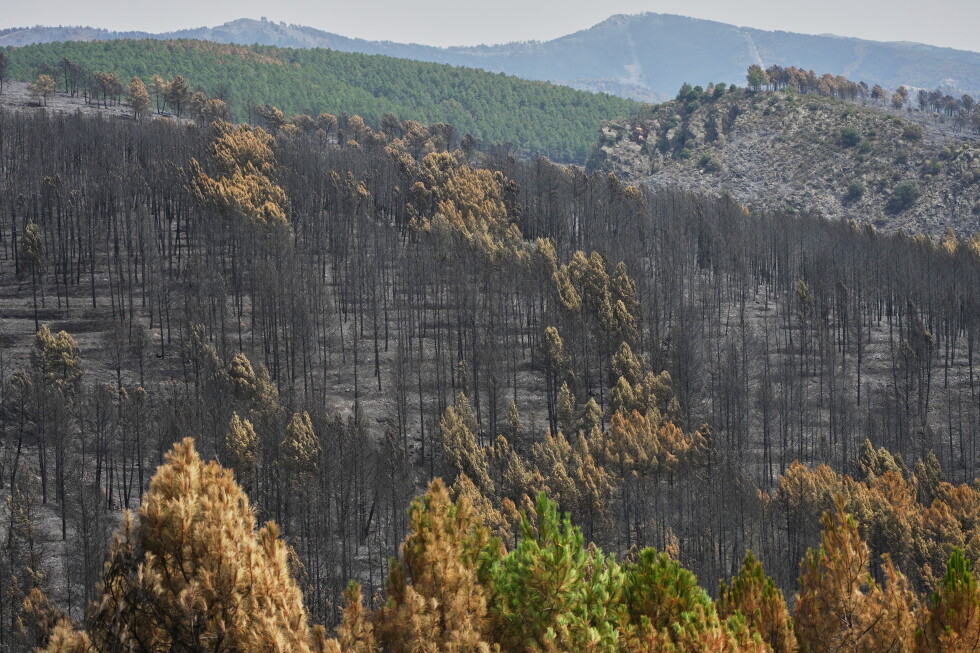
    On July 22, 2026, hundreds of firefighters and aerial water-bombing teams continued their battle against an unprecedented wildfire burning through rural central Spain’s Guadalajara province, a blaze already ranked as one of the largest the southern European nation has faced in modern history. As of Wednesday, the inferno had scorched more than 32,000 hectares (79,000 acres) of land, 90% of which lies within a protected national park, forcing the evacuation of 34 nearby villages.

    The emergency comes less than two weeks after a far deadlier wildfire ripped through a small coastal expat community in southern Spain, killing 13 people—including multiple foreign residents—in one of Spain’s deadliest wildfire events on record. Unlike that earlier blaze, no fatalities or critical injuries have been reported from the Guadalajara fire so far, a small relief for responding authorities.

    During an official visit to the fire-stricken town of Tamajón, a two-hour drive northeast of the Spanish capital Madrid, Prime Minister Pedro Sánchez highlighted the clear link between rising global temperatures and the growing wildfire crisis facing the nation. “Year after year we clearly see how climate change kills and destroys wealth in our communities,” Sánchez told reporters on site. He emphasized that the threat of climate breakdown is not a partisan political issue, but a fact-backed scientific reality, and issued a call for all national political parties to join a unified cross-party pact to strengthen Spain’s climate action and wildfire preparedness.

    Sánchez also shared grim new data showing the accelerating scale of Spain’s 2026 wildfire season: the country has already recorded 22 major blazes (defined as fires burning more than 500 hectares) this year. The total area scorched by wildfires across Spain in 2026 is already four times the amount burned by this point in 2025, with more than 100,000 hectares (247,000 acres) lost as of mid-July—already matching the full-year average recorded over the past decade.
    Spain’s Minister for the Ecological Transition, Sara Aagesen, confirmed that the Guadalajara fire is the largest wildfire ever recorded in the Castilla-La Mancha region, and one of the largest in the country’s recent history. Regional president of Castilla-La Mancha Emiliano García-Page noted that responding teams have successfully protected all residential properties across 40 villages in the fire’s path, and crews are aiming to bring the week-old blaze under full control by Friday. That timeline, however, is at growing risk from an incoming extreme heat wave that is already raising temperatures across the country.

    Spain’s national weather agency has placed Guadalajara and much of inland Spain under high temperature alerts, with the current heat wave peaking between Wednesday and Thursday. Forecasters predict temperatures will climb to nearly 40°C (104°F) in most inland areas, and could exceed 42°C (108°F) in parts of southern Spain’s Andalusia region. Like many Mediterranean nations, Spain is facing a perfect storm of wildfire conditions: extreme heat, persistent drought, low rainfall and gusty winds that allow small ignitions to spread rapidly into large, out-of-control infernos.

    Local officials have praised the tireless work of frontline firefighting teams. Miguel Ángel Moreno, mayor of the evacuated village Zarzuela de Jadraque, told Spain’s national broadcaster TVE that all 100 of the town’s residents were evacuated the previous Friday, with 14 residents taking shelter at a local Red Cross facility. While two local barns were destroyed in the blaze, firefighters managed to save every residential home in the village. “Besides the heroes who won the World Cup, we have other heroes who remain nameless,” Moreno said, comparing the firefighters to the nation’s recently victorious World Cup soccer squad. “(They) had to run from one side of the village to the other putting out fires.”

    Climate scientists have long warned that wildfire risk across southern Europe will grow more severe as the planet warms. Data from the European Union’s Copernicus Climate Change Service confirms that Europe is warming faster than any other continent on Earth, with temperatures rising twice as quickly as the global average since the 1980s. Globally, 2025 was the third-hottest year ever recorded, bringing repeated extreme heat events across the continent. Researchers warn that climate change is intensifying the frequency and severity of heat waves and drought across southern and southeastern Europe, leaving the region far more vulnerable to destructive wildfires and public health crises.

  • Hungary’s Orbán declares resistance movement against Magyar government’s ‘tyranny’

    Hungary’s Orbán declares resistance movement against Magyar government’s ‘tyranny’

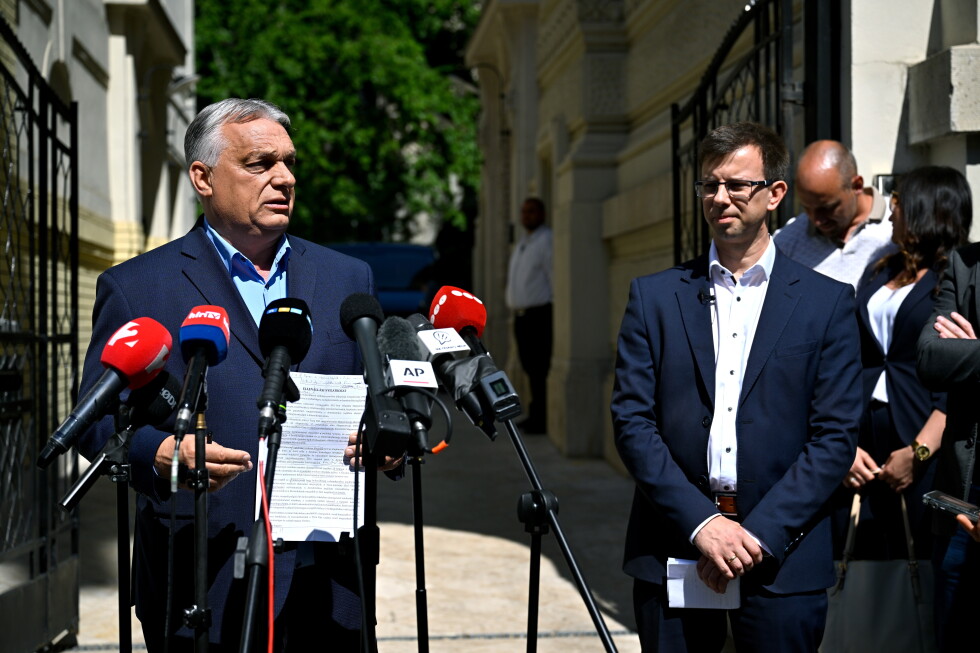
    BUDAPEST, Hungary — In a striking public move Wednesday, former Hungarian prime minister Viktor Orbán announced that his far-right Fidesz party will spearhead a peaceful national resistance campaign against the newly installed center-right administration he accuses of exercising tyrannical power. The announcement comes three months after Orbán’s 16-year unbroken grip on national governance came to an abrupt end, following a landslide April election loss to Prime Minister Péter Magyar and his pro-European Tisza party, a defeat that has left Fidesz grappling with plummeting support and internal upheaval.

    Speaking outside Fidesz’s Budapest headquarters, Orbán centered his attack on a recent constitutional amendment passed last week by Tisza’s parliamentary supermajority. The amendment, which removed the Orbán-aligned sitting president of Hungary and introduced a 12-year cumulative term limit for members of parliament, has, in Orbán’s view, dismantled the country’s rule of law and eliminated the system of checks and balances that underpinned Hungarian democracy.

    Orbán went further, arguing that the retroactively applied term limit pushes Hungary back to the authoritarian conditions of the late 1980s, the final years of the country’s Soviet-backed Communist dictatorship, when free democracy and independent rule of law did not exist. He added that the new regulation would bar roughly half of Fidesz’s sitting parliamentary caucus members from running in the 2030 national election, cementing what he labeled an undemocratic power grab. “This new political system is not a democracy, it is tyranny,” Orbán declared.

    Since taking office in May, Magyar’s administration has moved rapidly to roll back the institutional changes Orbán put in place during his tenure, framing the effort as a crackdown on what the prime minister calls Orbán’s corrupt “mafia state.” The new government has removed hundreds of political appointees installed by Fidesz, ousted leaders of state institutions that Magyar’s allies say enabled Orbán’s autocratic shift, suspended Hungarian public broadcasting’s news division — which Magyar argues operated as a state-funded propaganda factory for Fidesz — and shut down the controversial Sovereignty Protection Office, a body widely criticized by Orbán’s opponents as a tool to intimidate government critics and suppress independent media.

    Fidesz has pushed back against these moves, framing them as unconstitutional attacks on democratic opposition and warning that Magyar’s government is building its own authoritarian system. Tisza, by contrast, argues that the administration is acting on the overwhelming electoral mandate it won in April to deliver on campaign pledges to root out systemic corruption and restore the rule of law eroded during Orbán’s 16-year tenure.

    Wednesday’s announcement formalized Fidesz’s opposition: Orbán said the party considers all officials appointed by Tisza to replace Fidesz-era appointees illegitimate, and publicly released the party’s pre-planned “Declaration of Resistance” against the new administration. The declaration, published by Fidesz late Tuesday, states that “from this day forward, our mission is to restore the democratic rule of law” and asserts that “every citizen has the right to stand against tyrannical rule.” Orbán emphasized that the movement will rely exclusively on peaceful tactics, both within the parliamentary system and through public action outside the legislature, to oppose what he calls arbitrary state power. The declaration provides few concrete details on what the resistance will entail, beyond noting that the party will offer support to people it describes as “victims of the authoritarian regime” and document alleged violations of Hungarian law.

    Polling data from recent weeks illustrates the dramatic slide Fidesz has experienced since its election defeat. A June survey conducted by independent pollster Medián and published by Hungarian news site HVG.hu found that Tisza holds the support of 60% of Hungarian adults, while Fidesz’s support has collapsed to just 18%.

    The pressure on Fidesz ramped up even further just ahead of Orbán’s announcement: on Tuesday, Hungarian prosecutors and tax authority investigators raided Fidesz office space that houses the party’s data servers, as part of an ongoing investigation into suspected embezzlement and other criminal activities that allegedly occurred during Orbán’s time in office. Orbán called the raid a politically motivated act Wednesday, saying such targeting of an opposition party “could occur only in severe dictatorships.”

    In addition to plummeting poll numbers and legal investigations, Fidesz has faced high-profile departures in recent weeks. Last week, Gergely Gulyás, the party’s long-serving parliamentary caucus leader, stepped down from his leadership role, while Péter Szijjártó, who served as foreign minister throughout Orbán’s final terms in office, announced he would resign from parliament to take a senior executive role at Chinese electric vehicle manufacturer BYD.

  • Further infant remains uncovered at former mother-and-baby home

    Further infant remains uncovered at former mother-and-baby home

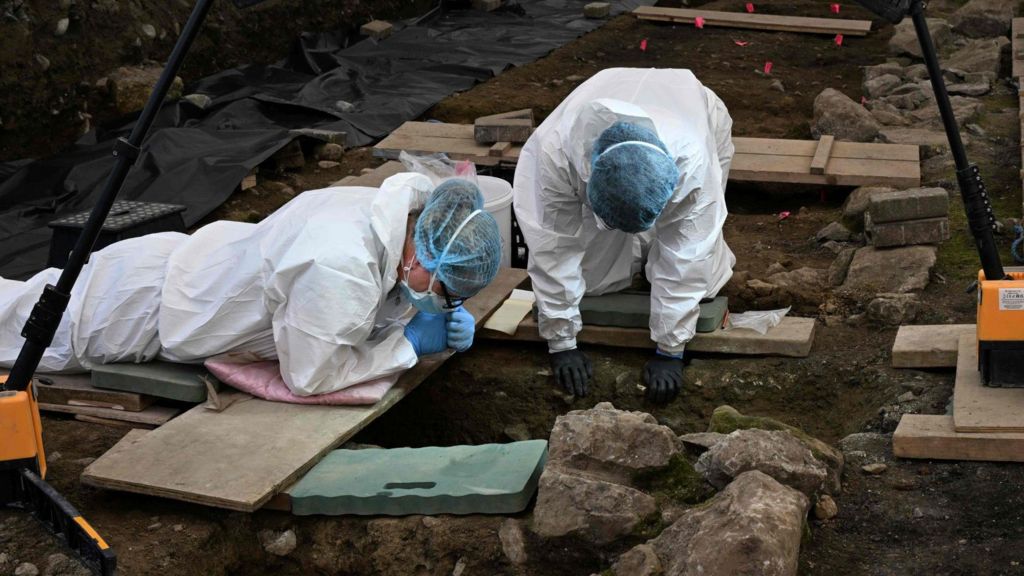
    A decades-long chapter of Irish historical injustice continues to unfold as archaeological teams working at the site of a defunct mother-and-baby institution in Tuam, County Galway, have recovered 22 additional sets of infant remains. This latest discovery pushes the total number of infant bodies recovered at the former facility to 99, according to the latest official update from the excavation oversight body.

    The home, which was established to house unmarried mothers and their children, operated from 1925 through 1961. Its existence and the grim fate of hundreds of infants who died within its walls only captured global public attention in 2014, when local historian Catherine Corless made a chilling discovery: official records listed 796 death certificates for children and infants who died at the institution, but no formal documentation existed to show where the bodies had been buried.

    The current full excavation work launched one year ago, and this latest update covers findings from a six-week window ending July 15 of this year. The 22 newly recovered remains were found inside coffins in a section of the site’s southwestern edge, an area mapped in historical archives as an official burial ground.

    All recovered remains are now being transported to a purpose-built mortuary and analytical laboratory in Toghermore, near Tuam. The facility was specifically outfitted for this project by the Office of the Director of Authorised Intervention, Tuam (ODAIT), the government-aligned agency leading the excavation work.

    Per ODAIT’s official statement, a team of specialist experts will undertake a rigorous process to clean, preserve, and analyze each set of remains. The core goal of this work is to reconstruct key details about each infant’s short life and death, including their approximate age and biological sex. Advanced analytical techniques will be used, including medical radiology and high-resolution 3D scanning to document the remains in detail.

    These forensic details are expected to help narrow the pool of possible matching identities, bringing researchers closer to the goal of connecting each set of remains to a name documented in historical death records. To support this identification effort, 62 family members with ties to infants who died at the home have already donated DNA samples for cross-referencing.

    Not all sections of the site have been fully excavated yet: work has not commenced in the area of the existing memorial garden, where preliminary investigations in 2017 uncovered large quantities of human remains in hidden underground septic chambers.

    Historically, the Tuam institution was owned by Galway County Council and managed by the Bon Secours Sisters, a Catholic religious order. The order has previously issued a formal public apology, acknowledging that the children and infants who died at the home were “buried in a disrespectful and unacceptable way.” It has also contributed €2.5 million (£2.14 million) to cover the costs of the excavation and forensic work. Galway County Council similarly issued a public apology in 2021 following the release of an official inquiry report, saying it “failed mothers and children” held at the institution.

    Excavation work at the site is scheduled to continue through 2027, with additional years of follow-up forensic analysis and identification work expected to be completed after fieldwork concludes.

  • Modelling scout linked to Epstein found dead in Paris suburbs

    Modelling scout linked to Epstein found dead in Paris suburbs

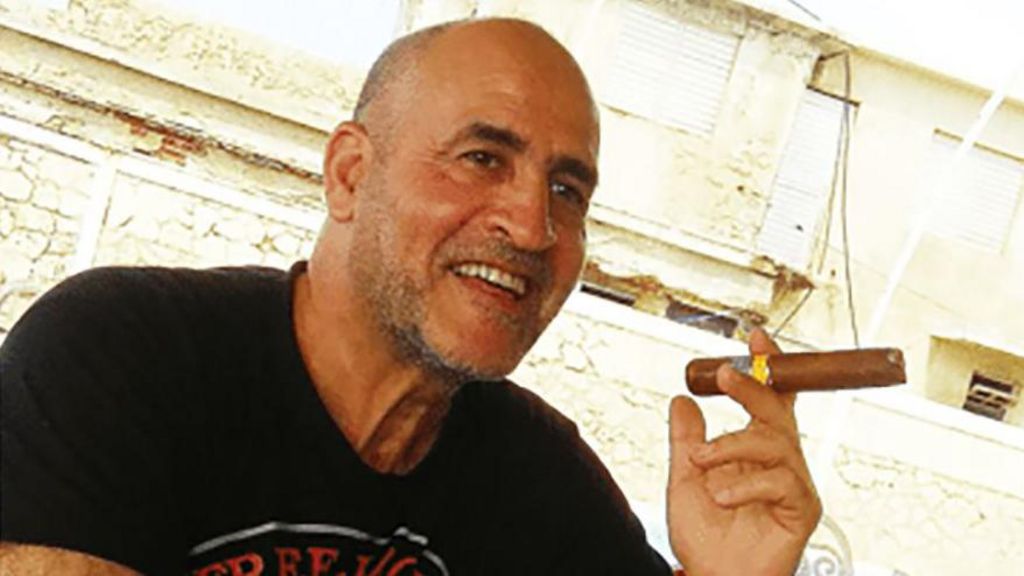
    A 69-year-old modelling scout with deep documented connections to the deceased convicted sex trafficker Jeffrey Epstein has been found dead at his residence in the Paris region, French law enforcement officials have confirmed. Daniel Siad was discovered at his home in Colombes, a quiet northwest suburb of the French capital, on Monday, according to a formal statement from the Nanterre prosecutor’s office shared with the BBC.

    Following the recovery of Siad’s body, local authorities have launched a full investigation to pinpoint the exact cause of his death, with a scheduled autopsy planned to gather critical forensic evidence, the prosecutor’s office added.

    Siad’s connections to Epstein have been a focal point of ongoing scrutiny in the wake of Epstein’s crimes, with thousands of mentions of Siad’s name appearing in the trove of Epstein-related court documents unsealed and released to the public by the U.S. government. Siad had long maintained that he had no awareness of the dangerous criminal activity Epstein was engaged in, a stance he held through the years of growing public attention to his ties with the convicted offender.

    One of Epstein’s accusers, who spoke to the BBC on condition of anonymity under the pseudonym Anya, previously alleged that Siad was the person who first introduced her to Epstein, placing him directly at the center of the network that enabled Epstein’s sex trafficking scheme.

    Ahead of a BBC investigative report published on July 18, Siad’s legal representative confirmed that Siad would not be making any public statements or responding to media queries. That marked a continuation of his long-held position denying any knowledge of Epstein’s harmful, illegal conduct before Epstein’s arrest and death in 2019.

  • France’s environment minister resigns over emergency bill allowing 2 banned pesticides

    France’s environment minister resigns over emergency bill allowing 2 banned pesticides

    PARIS – In a high-profile move that lays bare deep divisions over France’s environmental and agricultural policy, Monique Barbut, the country’s Minister for Ecological Transition, has announced her resignation in protest of emergency legislation that carves out temporary legal exemptions for two restricted pesticides widely linked to harm in bee populations.

    Barbut, who assumed her cabinet role just nine months ago in October 2023, confirmed she would formally submit her resignation to President Emmanuel Macron on Wednesday. The controversial bill, which was approved by French national legislators on Tuesday, grants France’s public health agency for food, environment and occupational safety the authority to approve limited use of the two neonicotinoid-derived pesticides — acetamiprid and flupyradifurone — for agricultural sectors facing acute production challenges.

    In a public statement shared via social media, Barbut framed her tenure as a fight for underrepresented environmental priorities. “Over the past nine months, I have defended those who do not march, who do not vote, and who do not shout: the silence of our forests, the quality of our water, the purity of our air, the richness of our soils, and the diversity of life,” she wrote. “Today, I must acknowledge that the forces opposing these goals have become so powerful that I no longer have the means to carry this ambition through.”

    The two pesticides at the center of the debate fall under the neonicotinoid class of agrochemicals. While they are permitted under broad European Union regulatory frameworks, France has enforced a full national ban on their use for years. The new exemptions will allow their application on four high-value crops: sugar beets, apples, hazelnuts, and cherries.

    Barbut added that the government had blocked all attempts to amend or debate the pesticide exemption provision, breaking explicit commitments made to her when she took office. This political clash comes exactly one year after France’s Constitutional Court struck down a similar provision in a broader agricultural reform bill that would have reauthorized acetamiprid. The pesticide has been banned nationwide since 2018, after research confirmed its toxic impact on bees and other critical pollinator species. In its 2023 ruling, the high court found the proposed reauthorization violated legal obligations to protect the environment and the interests of future generations, setting the stage for the current standoff.

  • Louvre reopens Apollo Gallery after a brazen heist, but no jewels on display

    Louvre reopens Apollo Gallery after a brazen heist, but no jewels on display

    Nearly one year after a brazen daylight heist stole priceless crown jewels worth an estimated 88 million euros, the Louvre Museum’s historic Apollo Gallery has once again opened its doors to visitors from around the world. This reopening marks a dramatic shift in the gallery’s purpose, moving away from its former role as a display space for the French monarchy’s precious gem collections to return to its original 17th-century function as a grand ceremonial hall. All the jewel collections that were previously on exhibit have been permanently relocated ahead of the reopening.

    The high-profile heist, which unfolded over a weekend, shocked the global cultural community. Thieves completed their break-in and theft in under eight minutes, forcing entry through a glass window before escaping with the historic artifacts. The audacious crime exposed significant gaps in the museum’s existing security infrastructure, prompting urgent reforms across the institution.

    In response to the vulnerabilities revealed by the heist, the Louvre has implemented sweeping security upgrades at the Apollo Gallery. New high-resolution surveillance cameras and advanced anti-intrusion detection systems have been installed across the entire space, forming a layered security network designed to prevent similar incidents in the future.

    This security overhaul is not an isolated project, but part of the museum’s ambitious decade-long transformation initiative called the “Louvre New Renaissance” plan. Launched last year with a total projected budget of up to 800 million euros, the initiative aims to comprehensively modernize the museum’s aging infrastructure, reduce dangerous overcrowding in high-traffic wings, and create a dedicated, standalone gallery for Leonardo da Vinci’s Mona Lisa by 2031. Museum leaders frame the reopening of the Apollo Gallery as a key milestone in this multi-year project, balancing the preservation of the Louvre’s historic architectural legacy with the need for updated safety and visitor experience.

  • Police station opens at Hitler’s birthplace in bid to rid site of Nazi link

    Police station opens at Hitler’s birthplace in bid to rid site of Nazi link

    After more than a decade of public debate, legal battles, and extensive renovations, Austria has formally opened a new police station in the 17th-century building where Nazi dictator Adolf Hitler was born in the small border town of Braunau am Inn. The completion of this project marks the end of one of the most politically fraught legacy projects in modern Austrian history, as officials have long worked to block the site from becoming a shrine for neo-Nazi sympathizers and far-right extremists.

    Hitler, born in the building in April 1889, only stayed at the address Salzburger Vorstadt 15 for a few weeks before his family moved within the town, and they left Braunau permanently when he was three years old. He made only one brief return visit in 1938, shortly after annexing Austria to Nazi Germany, on his route to Vienna.

    For decades, Austrian authorities took a proactive step to prevent far-right tourism by renting the property from its long-time private owner, local resident Gerlinde Pommer, paying her above-market rent to block any extremist takeovers. For many years, the building housed a day center and workshop run by local disability charity Lebenshilfe, supporting people with special needs. That arrangement collapsed in 2011, when Pommer refused to approve government-led renovations and rejected repeated offers to sell the property to the state, leaving the building vacant for years amid ongoing negotiations.

    The stalemate broke in 2016, when Austria’s national parliament passed a special law allowing the government to expropriate the building, awarding Pommer €812,000 (approximately £690,000) in compensation. Pommer challenged the compensation sum in court, arguing it was far below the property’s market value, but ultimately lost her legal challenge. At the time, then-Interior Minister Wolfgang Sobotka called for the entire structure to be demolished and replaced with a new building, echoing an earlier provocative proposal from a Russian lawmaker who offered to purchase the site to destroy it. That plan sparked widespread public outcry, with critics arguing that demolishing the building would amount to erasing Austria’s complicit role in the Nazi era.

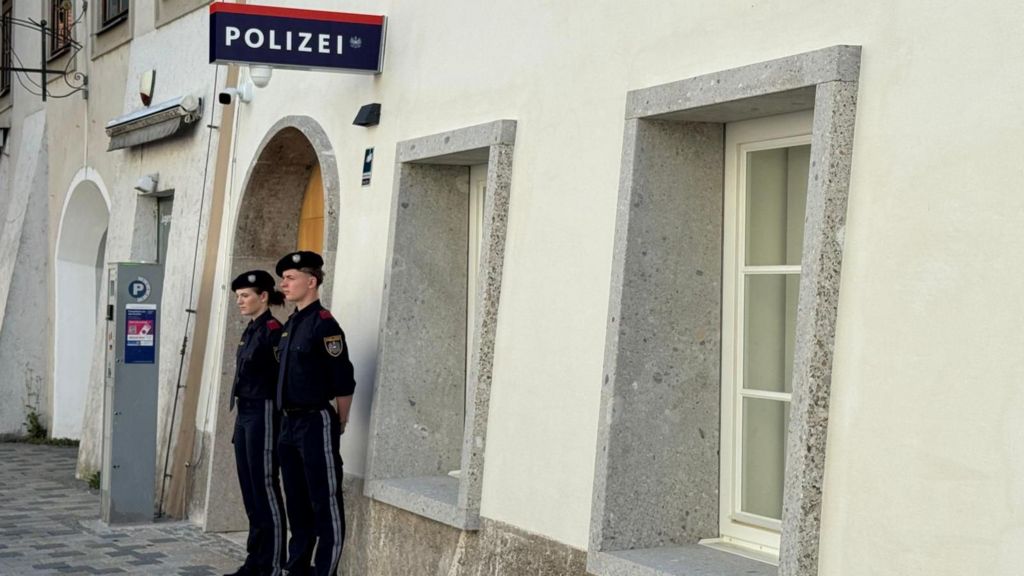
    In 2019, the government settled on a new plan: convert the property into a local police station, and launched a European-wide design competition for architects to reimagine the space. Millions of euros were invested in a full structural and cosmetic renovation, drastically altering the building’s original yellow-plaster facade to remove any visual connection to its historic association. The project opened to the public on Wednesday, with uniformed police posted permanently outside the building to monitor visitors.

    Not all stakeholders have supported the final plan, however. Critics argue that turning Hitler’s birthplace into a police station sends the wrong symbolic message, with many calling for a dedicated educational center focused on confronting Austria’s Nazi history. Even local historian Florian Kotanko, who previously supported a plan to let Lebenshilfe return to the site, acknowledged that the charity itself declined to come back, fearing it would be used as a political token to avoid harder conversations about the past.

    Today, there are no markers on the building itself noting its connection to Hitler. High-resolution security cameras are installed across the property to track any potential neo-Nazi pilgrims, and the only public reference to the site’s history is a memorial stone installed on the sidewalk outside in 1989. Quarried from the nearby former Mauthausen concentration camp, the stone bears the inscription: “For Peace, Freedom and Democracy – Never Again Fascism – Millions of Dead Warn,” and never mentions Hitler by name.

    Kotanko notes that even with the new police station and reduced extremist traffic, the site’s painful history can never be erased. “You have to deal with it, and so we all try to deal with it in an open and correct way. It’s not a matter of being proud, but it’s a matter of dealing with the fact,” he told the BBC.