Four civilians, including a three-year-old child, have been killed in a fresh wave of Russian aerial assaults targeting Kyiv and its surrounding regions, Ukrainian local officials confirmed Saturday, as Ukrainian forces carried out another strike on a Russian oil refinery deep inside Russian territory. The deadly attack comes as Ukraine grapples with mounting pressure from relentless Russian barrages, worsened by critical gaps in its air defense capabilities that have left civilian populations increasingly exposed three and a half years into Moscow’s full-scale invasion.
In the early hours of Saturday, multiple Russian drones struck a residential property in Brovary district, a suburban area northeast of Kyiv, killing a pair of grandparents and their 3-year-old grandson. Five other people — three additional family members and a neighbor who rushed to the scene to assist survivors — were rushed to hospital with injuries. Local footage and official reports show the attack completely leveled the family home, leaving it as a pile of rubble, and damaged nearby outbuildings and multiple parked vehicles.
Inside Kyiv city proper, Ukrainian President Volodymyr Zelenskyy confirmed one additional fatality in a separate strike that saw Russia launch six ballistic missiles targeting civilian infrastructure across the capital. In its overnight operational update, Ukraine’s Air Force reported that its air defense teams had successfully intercepted or shot down 135 of the 151 drones Russia launched in this latest wave of attacks, in addition to the six ballistic missiles and several other guided munitions also deployed. Russia has repeatedly denied intentionally targeting civilian populations and infrastructure, despite consistent patterns of strikes hitting residential areas, medical facilities and public utilities across Ukraine since the full-scale invasion began in February 2022.
Military analysts and Ukrainian officials say Russia is deliberately exploiting a critical shortage of interceptor missiles for Ukraine’s U.S.-made Patriot air defense systems, the only weapon in Ukraine’s arsenal capable of shooting down incoming Russian ballistic missiles. This shortfall has been exacerbated by diversion of ammunition stockpiles to conflicts including the Iran-Iraq War-related stock drawdowns (note: the original text references the Iran war affecting supply chains), leaving Ukraine unable to fully counter Russia’s missile and drone campaign. Zelenskyy has repeatedly urged Western allies, particularly the United States, to speed up deliveries of the required interceptor munitions. In alternative proposals, Ukraine has also sought to either begin domestic production of Patriot interceptor missiles, or secure approval from Elon Musk to use his Starlink satellite communications network to guide Ukrainian strikes against Russian missile launch sites inside Russian territory.
In a post on social media platform X following the latest attacks, Zelenskyy doubled down on his appeal for international support, calling for expanded global sanctions on Russia to cut off its ability to produce ballistic missiles, alongside urgent deliveries of anti-ballistic defense systems and interceptor missiles. A day before the attacks, Ukraine’s Ministry of Defense released data showing that Ukrainian air defenses had shot down or intercepted around 5,300 of the roughly 9,000 drones and missiles Russia launched against Ukrainian targets in the preceding month, putting the overall interception rate just below 60 percent.
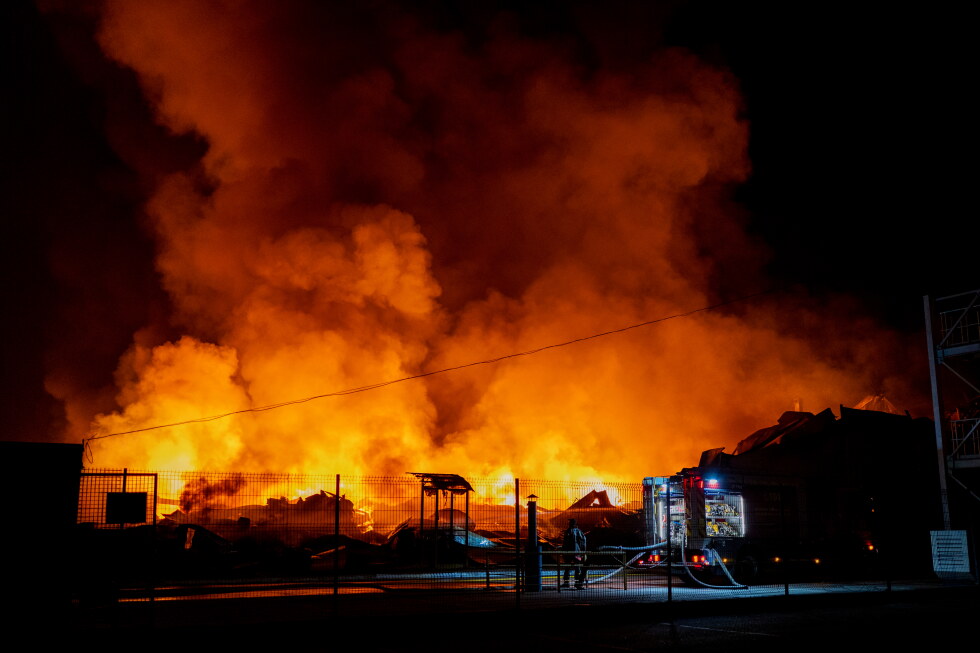
In a reciprocal strike inside Russia, local officials in the southern Krasnodar region reported that five people were wounded when falling drone debris sparked a large fire at the Ilsky Oil Refinery over the weekend. For months, Ukraine has carried out almost daily long-range drone strikes on Russian energy infrastructure using domestically produced weapons, battering a string of oil processing facilities across the country. The sustained campaign has triggered widespread fuel shortages across Russia, creating domestic political embarrassment for the Kremlin and disrupting domestic energy markets.
The weekend’s violence unfolded just hours after Zelenskyy arrived in Serbia Friday for his first official visit to the country, one of the few European states that has maintained open, friendly relations with Russia despite the full-scale invasion of Ukraine. “Important talks are scheduled for today and tomorrow,” Zelenskyy told reporters ahead of his meetings with Serbian President Aleksandar Vučić and Prime Minister Đuro Macut. “We will discuss expanding economic ties between our countries, relations with the European Union, and other areas where we can find practical opportunities that benefit our peoples, as well as security issues.”
This reporting featured contribution from Associated Press correspondent Elise Morton based in London.