标签: Europe

欧洲

  • Dismissal of Ukraine’s defense minister started a sudden transformation of the military

    Dismissal of Ukraine’s defense minister started a sudden transformation of the military

    KYIV, Ukraine — In a dramatic week of political and military upheaval, a single leadership decision has triggered a sweeping transformation of Ukraine’s top military command, ousting long-entrenched old-guard figures and clearing a path for a new generation of wartime leaders. What began as President Volodymyr Zelenskyy’s dismissal of popular reformist Defense Minister Mykhailo Fedorov quickly spilled into public demonstrations, shifting public fury to the country’s top military commander and laying bare deep, long-simmering divisions over the future of Ukraine’s armed forces amid ongoing war with Russia.

    Protesters united in denouncing Commander-in-Chief Oleksandr Syrskyi, rallying overwhelmingly behind Fedorov, who had emerged as one of Ukraine’s most influential wartime reformers and a standard-bearer for a public hungry for systemic military change. Demonstrators carried signs and chanted demands for Fedorov’s immediate reinstatement, capping months of bitter public and private disagreements between Fedorov and Syrskyi that had divided Ukraine’s military and political establishment.

    The leadership shuffle marks the second time in 12 months that a wartime decision by Zelenskyy has sparked significant public backlash, following a mid-2025 move to curtail the powers of Ukraine’s anti-corruption agencies. Mirroring his response to that earlier crisis, Zelenskyy moved swiftly to contain the political fallout, announcing Syrskyi’s dismissal just days after protests erupted. In his place, the president appointed Mykhailo Drapatyi, a disciplined, battle-tested commander who built his reputation defending Ukrainian positions in the years following Russia’s first 2014 invasion of eastern Ukraine.

    Drapatyi’s ascension represents a sharp generational and ideological break from Syrskyi, whose career and thinking were rooted in Soviet-era military doctrine. Even with the new command appointment, public support for Fedorov continues to solidify, with the protests catapulting the former minister to new heights of political popularity among the Ukrainian public.

    Much of the public anger that followed Fedorov’s dismissal focused squarely on Syrskyi, who had become a symbol for the accumulated frustrations building within Ukraine’s military since Russia’s full-scale 2022 invasion. Drapatyi’s appointment, however, has helped ease a portion of these tensions. Widely respected by frontline troops and fellow officers alike, Drapatyi represents the cohort of younger commanders who earned their credibility through battlefield experience rather than through the rigid hierarchies of the old Soviet military system.

    “He enjoys a high level of trust within the military. I think this appointment could boost what is often called morale, that is, strengthen the fighting spirit,” explained Oleksandr Musiienko, a Kyiv-based independent military analyst.

    One anonymous Western defense official, not authorized to speak on record to journalists, described the divide between Fedorov and Syrskyi as a chasm “between different planets.” The core of the split lay in their competing approaches to modern warfare: Fedorov championed a data-driven, technology-first strategy focused on preserving troop lives through innovation, while Syrskyi clung to a traditional, large-scale ground forces doctrine rooted in Soviet military tradition.

    Analysts note that Drapatyi is uniquely positioned to act as a bridge between these two competing camps. A low-profile but widely respected leader, he has earned the confidence of frontline commanders while embracing the sweeping military reforms that Fedorov championed in Kyiv. “He has shown an ability to adapt to the realities of modern warfare, to changing battlefield conditions and to shifting and reallocating resources,” Musiienko added.

    For many Ukrainians, Syrskyi embodied exactly the kind of rigid command structures and outdated Soviet-era thinking that Fedorov’s reforms sought to dismantle. When Fedorov publicly named Syrskyi as the primary barrier to his reform agenda, it brought long-simmering public grievances into the open: the military’s deeply entrenched bureaucracy, Syrskyi’s overly centralized, micromanaging command style, and the persistent, systemic challenges of mass mobilization.

    Syrskyi also faced intense public scrutiny over his ties to the 425th Separate Assault Regiment, commonly known as Skelya. The regiment became a national symbol of the costly, reckless tactics that critics say wasted soldiers’ lives in exchange for minimal territorial gains. It was also at the center of a major national scandal after Ukrainian outlet Babel published an investigation alleging systemic abuse, torture in training camps, and dozens of preventable noncombat deaths. The report triggered an official investigation, led to the suspension of the regiment’s commander, and amplified public calls for broader reform of Ukraine’s military command culture.

    The series of leadership changes marks the second high-profile reversal for Zelenskyy since mid-2025. To some Ukrainian lawmakers and independent analysts, the episode demonstrates that democratic accountability remains functional in Ukraine despite the imposition of martial law and the suspension of national elections. They argue that Zelenskyy’s rapid response to public pressure proves the presidency remains responsive to the will of the Ukrainian people.

    Other lawmakers, however, have warned that the chain of events could set a troubling precedent, allowing public protest rather than structured institutional decision-making to shape appointments to the military’s highest ranks. Tetiana Shevchuk, a board member of Ukraine’s Anti-Corruption Action Center, noted that public protest remains one of the only channels for citizens to express their views amid the absence of scheduled elections.

    “Frustrations built up to the point where people felt the only way to be heard was to take to the streets. That’s not a healthy precedent, but it should also be a signal to the government to address problems before they reach that stage,” Shevchuk said.

    Ukrainian social media erupted with memes mocking Zelenskyy’s scramble to find a new military chief, a wave of jokes that underscore the significant political cost the president has paid amid the crisis. Many of the viral memes depicted Zelenskyy interviewing absurd candidates, ranging from Game of Thrones character Jon Snow to extraterrestrials and marine mammals, highlighting the sense of chaos that has surrounded the leadership shuffle.

    The crisis comes as Zelenskyy is already weathering the political fallout from a damaging corruption investigation that ensnared several of his closest associates, including former chief of staff Andriy Yermak, who was dismissed last year under mounting public pressure.

    Shevchuk emphasized that the public protests surrounding Fedorov’s dismissal are not merely a show of personal support for the former minister — they are a clear reflection of broad public backing for the sweeping reforms he championed. “Fedorov was pushing the idea that Ukraine had to preserve every soldier’s life and become more efficient than Russia,” Shevchuk explained. “Over the past six months, people finally felt Ukraine was gaining an advantage. For the first time in a long time, there was hope that this war was winnable — that we weren’t just taking loans while slowly losing territory.” That momentum was upended abruptly when Zelenskyy announced Fedorov’s dismissal.

    Even with Drapatyi’s appointment to top command, the political drama is far from resolved. Reports indicate Fedorov has refused to accept any other government position unless he is reinstated as defense minister, a demand that thousands of protesters continue to voice publicly. Fedorov’s next steps, and whether he will return to government at all, will shape the next chapter of Ukraine’s wartime political and military trajectory.

    The crisis has also dramatically elevated Fedorov’s national political profile. Once best known as the architect of Ukraine’s pre-war digital transformation and a largely loyal subordinate to Zelenskyy, he now commands a broad, independent base of public support across the country. That new popularity has inevitably sparked widespread speculation about his long-term political future, beyond the current military leadership crisis.

    During his six months as defense minister, Fedorov pursued an aggressive reform agenda designed to accelerate Ukraine’s military modernization. He reallocated funds originally budgeted for general personnel costs to expand long-range strike capabilities, fiber-optic drone systems, reconnaissance technology, and other cutting-edge military tools. He also secured new drone acquisitions, finalized new contracts for Patriot air defense systems, oversaw successful domestic ballistic missile tests, and implemented a sweeping overhaul of Ukraine’s notoriously corrupt military procurement system. He additionally proposed a full rewrite of military service contracts designed to make frontline service more sustainable for infantry troops, including higher base pay, expanded leave allowances, and greater service flexibility — changes that resonated deeply with rank-and-file soldiers.


  • Hosepipe ban across Republic of Ireland but NI avoids same precaution

    Hosepipe ban across Republic of Ireland but NI avoids same precaution

    As unusually prolonged warm and dry conditions stretch across Ireland, national water utility Uisce Éireann, formerly known as Irish Water, has implemented a full nationwide six-week hosepipe ban that took effect immediately after midnight on Friday. The restrictions will remain in force through August 26, marking a significant expansion of local conservation measures that were rolled out just one week earlier across the greater Dublin region and parts of six other southern and eastern Irish counties.

    Utility officials cited two key drivers behind the new nationwide order: consistently soaring consumer demand for water paired with weeks of well-below-average rainfall that has depleted reserve supplies across the country. A national heat warning was also issued for the Republic of Ireland earlier this month, when temperatures climbed well above seasonal averages, exacerbating strain on water infrastructure.

    Under the newly enacted Water Conservation Order, the use of hosepipes is strictly prohibited for a range of non-essential activities, including residential garden watering, private vehicle and boat cleaning, and filling personal recreational items such as paddling pools, as well as private ponds and outdoor fountains. Uisce Éireann emphasized that such restrictive measures are only enacted when absolutely necessary, and urged all residents to shift to only essential water use for the duration of the ban. “Conserving and reducing water consumption in these circumstances is critical to ensure continuity of supply,” the utility stated in an official release.

    Across the Irish border in Northern Ireland, regional water provider NI Water has announced it has no plans to introduce matching hosepipe restrictions at this time. The organization noted that current reservoir levels across the region remain at reasonable levels for mid-July, even after three consecutive days of temperatures above 25°C during the second heatwave to hit Northern Ireland this summer.

    Despite holding off on a ban, NI Water is encouraging all residents to maintain voluntary water conservation efforts, as current demand still runs far higher than typical seasonal levels. Paul Bryce, NI Water’s head of water operations, stressed that local communities should not take reliable water access for granted amid the ongoing warm spell. “Every drop counts,” Bryce said. “By continuing to use water wisely, customers can help reduce pressure on the network and help ensure water continues to be available for everyone who needs it.” The organization also issued a public safety reminder, urging people to avoid unregulated recreation around open reservoirs, which remain dangerously cold and deep even during periods of high air temperature.

  • Russia’s businesses under strain from Ukraine’s attacks on Wildberries

    Russia’s businesses under strain from Ukraine’s attacks on Wildberries

    Nearly four and a half years into Russia’s full-scale invasion of Ukraine, Kyiv has expanded its long-range drone campaign to target critical domestic logistics infrastructure inside Russia, shifting focus from energy facilities to warehouses operated by Wildberries, Russia’s largest online retail marketplace. Over a four-day span, four separate Wildberries distribution hubs have been hit by drone attacks, leaving eight workers dead, dozens injured, and an estimated $1 billion worth of stored inventory reduced to ash.

    The first wave of attacks struck over the weekend, targeting facilities in Elektrostal, just east of Moscow, and Kotovsk in the Tambov region, roughly 250 miles from the Ukrainian border. Seven night-shift employees were killed in the Kotovsk strike, with one additional fatality recorded at Elektrostal. Follow-up attacks overnight Wednesday hit two more hubs in Krasnodar and Nevinnomyssk in Russia’s Stavropol region, with Wildberries owner Tatiana Kim confirming additional unspecified casualties.

    Ukrainian officials have framed the strikes as a deliberate strategic move targeting infrastructure that supports Russia’s military effort. Ukrainian President Volodymyr Zelenskyy affirmed the shift in targeting, stating “We are, quite justly, bringing the war back home – to Russia.” Kyiv claims the targeted warehouses stored sanctioned electronic components used for Russian drone manufacturing and military navigation equipment. Pro-Kremlin military bloggers have also acknowledged that Russian volunteers and military suppliers regularly use major online marketplaces including Wildberries to source tactical gear and dual-use components for frontline forces.

    Independent verification of military stockpiles at the targeted sites has not been obtained, and the Kremlin has denied that domestic online platforms are used to supply the Russian army. Regardless of the military intent, the strikes have imposed devastating costs on thousands of independent Russian small and medium-sized sellers who rely entirely on Wildberries to store, distribute, and sell their goods to consumers across the country.

    Unlike Western marketplace giant Amazon, which operates both a first-party retail business and third-party seller platform, Wildberries and its primary competitor Ozon function almost exclusively as intermediary marketplaces. More than 85% of Russia’s economically active population uses the two platforms, and in many remote, underserved regions of the country, they are the only reliable source of everyday goods from clothing to household appliances. This business model means nearly all losses from the attacks fall to independent sellers, not the company itself.

    Hundreds of sellers have reported losing their entire stockpiles in the strikes, with many sharing devastating accounts of financial ruin on Russian social media. One seller, a mother of a disabled child who built her small business from scratch, wrote in a viral expletive-laden post that she had lost 1 million rubles ($12,700) in inventory, writing “We’re already getting screwed over from every direction as it is.”

    A stationery seller who delivered her full back-to-school inventory to the Elektrostal warehouse just one day before the attack lost all of her stock just weeks before the critical autumn shopping season. A teenage clothing retailer reported 1.4 million rubles ($13,300) in lost inventory and has paused new shipments, noting “The outlook for working with Wildberries is very murky. Right now I have enough of a safety cushion to survive the current losses, but if there are more strikes, I probably won’t manage.”

    Most sellers do not expect any meaningful compensation for their losses. Less than two weeks before the first strike, Wildberries updated its seller contracts to add drone attacks to its list of force majeure events, exempting the company from liability for inventory destroyed in attacks. While Kim has promised not to abandon affected sellers, offering temporary fee waivers and discounted shipping rates, these measures have done little to ease widespread anxiety among the platform’s seller base.

    The strikes come as Russia’s civilian small business sector already faces mounting pressure under the weight of wartime economic policies. Despite Russian President Vladimir Putin repeatedly naming support for small and medium-sized enterprises a top priority even during the war, the sector has faced a cascade of new challenges in 2026. In January, the national value-added tax was increased from 20% to 22% to fund additional defense spending, and targeted tax breaks for small businesses were eliminated. Data from business intelligence platform Kontur.Fokus shows more than 209,000 small and medium-sized companies closed in the first quarter of 2026, a 9% increase from the same period in 2025.

    Additional pressures include widespread internet restrictions, a crackdown on independent messaging apps that disrupted business operations, and a national fuel crisis triggered by earlier Ukrainian drone strikes on Russian oil depots and refineries. Analysts note the Wildberries strikes represent another major blow to a sector already reeling from cumulative strain.

    “There are already a lot of nails, and they keep hammering them in. Is [the attack on Wildberries warehouses] another nail in the coffin? Well, yes, of course,” said Ruben Eniklopov, a professor at Barcelona’s Pompeu Fabra University. While Russian small businesses have demonstrated surprising resilience through the first years of the war, high inflation, widening budget deficits, and a 23% drop in oil and gas revenues compared to the first half of 2025 have left the civilian economy increasingly fragile. Russia’s large peacetime financial reserves are increasingly being diverted to fund the war effort, crowding out support for civilian economic growth.

    The Wildberries strikes mirror a recent pattern of reciprocal targeting of civilian logistics infrastructure by both sides. In recent weeks, Russia has launched drone and missile strikes on sorting terminals and warehouses belonging to Ukraine’s largest private postal operator Nova Poshta, major retail chain ATB, and confectionery group Roshen. With frontline combat largely stalled in a stalemate, both sides have expanded long-range strike campaigns to disrupt supply chains and put increasing pressure on the opposing side’s domestic population.

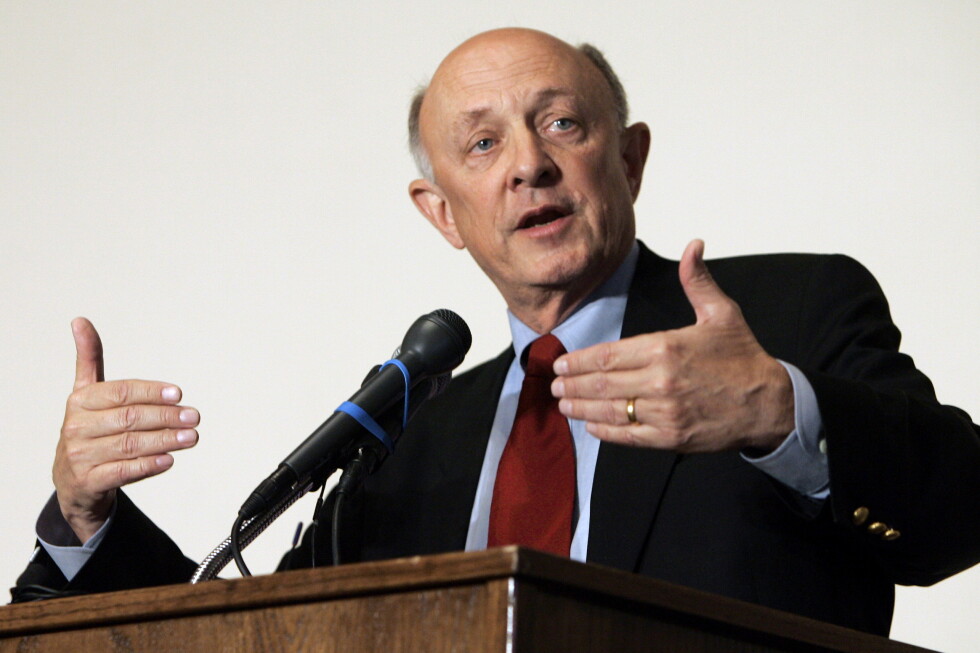
  • R. James Woolsey, CIA director during the Clinton administration, dies at 84

    R. James Woolsey, CIA director during the Clinton administration, dies at 84

    Veteran American national security strategist R. James Woolsey, who steered the Central Intelligence Agency through two years of profound upheaval after his appointment by President Bill Clinton, has passed away at the age of 84.

    Multiple U.S. news outlets confirmed that Woolsey, who assumed the role of CIA director in the opening months of 1993, died Tuesday at his Washington, D.C., residence. His wife, Conchita Sarnoff Woolsey, confirmed the cause of death was a stroke, and told *The Washington Post* that his health had steadily deteriorated over recent years due to complications from Havana syndrome, the still-unexplained medical condition that has impacted dozens of U.S. diplomatic and government personnel stationed overseas.
    First documented among U.S. officials posted in Havana, Cuba, in 2016, Havana syndrome is characterized by a range of persistent neurological symptoms including chronic headaches, impaired balance, cognitive difficulties, and chronic sleep disruption, which gave the condition its widely recognized name.

    Woolsey’s two-year tenure at the head of the CIA ended in early 1995, a period marked by significant controversy following the exposure of longtime CIA officer Aldrich Ames, who confessed to spying for the Soviet Union and later Russia for nearly a decade. Ames, a career agency operative, admitted to accepting $2.5 million from Moscow in exchange for leaking classified U.S. intelligence that exposed scores of Western intelligence assets between 1985 and his 1994 arrest. Critics of Woolsey argued that agency leadership, including Woolsey himself, failed to impose sufficient accountability on senior supervisors who missed repeated red flags surrounding Ames’ espionage activity.

    In response to the backlash, Woolsey acknowledged that no intelligence agency could ever guarantee full immunity from moles like Ames, and urged policymakers and agency leadership to avoid excessive overreaction to the security gaps Ames’ case exposed. He warned that rushed, overly harsh crackdowns on internal agency procedures carried its own risks, cautioning that overly restrictive security protocols could foster a culture of paranoia and unsubstantiated accusations that would further erode workforce morale at the agency.
    Beyond the Ames scandal, Woolsey also navigated intense post-Cold War budget pressure from congressional leaders pushing for deep cuts to the CIA’s overall budget as the United States reoriented its national security priorities after the collapse of the Soviet Union.

    Woolsey’s decades-long career in public service spanned multiple presidential administrations from both major U.S. political parties. Before taking the helm of the CIA, he served as Undersecretary of the Navy during Jimmy Carter’s presidency, and advised both Republican and Democratic White Houses on complex arms control negotiations. In 1989, President George H.W. Bush appointed Woolsey as a special negotiator for the stagnant conventional arms reduction talks between the NATO alliance and the Soviet-led Warsaw Pact. Just one year later, Bush and Soviet leader Mikhail Gorbachev signed the landmark Conventional Armed Forces in Europe Treaty, a landmark agreement that dramatically reduced conventional military deployments across the European continent.

    Born in Tulsa, Oklahoma, on September 21, 1941, Woolsey built an impressive academic foundation for his public service career: he earned his undergraduate degree from Stanford University, went on to study as a Rhodes Scholar, and completed his legal education at Yale Law School. He launched his federal government career in 1970 as a staff member on the National Security Council, before moving to Capitol Hill to serve as general counsel for the Senate Armed Services Committee. Outside of his public service appointments, Woolsey worked as a private practice attorney at a Washington-based law firm between government stints.

  • Earnings at Musk’s car company fall as research spending cuts into profit from selling cars

    Earnings at Musk’s car company fall as research spending cuts into profit from selling cars

    Electric vehicle giant Tesla revealed Wednesday that second-quarter net income declined year-over-year, driven by a sharp 49% jump in research and development spending that offset revenue gains from stronger-than-expected vehicle sales. The Austin, Texas-based automaker posted $1.11 billion in net profit, or 32 cents per share, for the April-to-June period. Adjusted for one-time items, earnings hit 33 cents per share, falling far short of the 53 cent per share consensus forecast compiled by financial data provider FactSet. Despite the profit miss, total revenue climbed 26% year-over-year to $28.24 billion, outpacing analyst predictions of $26.42 billion.

    While Tesla’s core automotive segment delivered a solid performance, the company is diverting billions in capital toward long-term growth initiatives that CEO Elon Musk has framed as the future of the business: building out infrastructure and artificial intelligence software for its upcoming robotaxi fleet and Optimus humanoid robotics program. R&D spending rose to $2.37 billion in the quarter, marking the highest level the company has recorded in at least the past four quarters.

    “We’re investing a lot in growing the core business and really preparing for the future,” Musk told analysts during a post-earnings conference call, adding that the current wave of spending will ultimately deliver “incredible returns” down the line.

    CFO Vaibhav Taneja confirmed that capital expenditures will continue climbing through the second half of 2025, pushing full-year spending above $25 billion. He projected that capital spending will keep growing for the next two to three years, as the company scales AI computing capacity, expands production capacity for Optimus, and rolls out the network required to support commercial robotaxi operations.

    In the hours after the earnings release, Tesla shares dropped 4.1% in after-hours trading. The stock already closed 1.3% lower during regular trading, leaving it down just under 17% for the year to date.

    The stronger-than-expected revenue follows Tesla’s better-than-forecast vehicle delivery numbers released earlier this month: the automaker moved 480,216 units in the second quarter, a 25% year-over-year increase that marked the second consecutive quarterly gain. This sales rebound marks a notable turnaround from 2024, when the company faced a consumer boycott in Europe tied to Musk’s public endorsement of far-right political candidates, which dragged down sales. Earlier this year, Tesla lost its long-held title as the world’s top-selling electric vehicle maker to China-based BYD after two straight years of declining annual sales.

    Most of Tesla’s Q2 deliveries were its volume Model 3 sedan and Model Y crossover SUV, which saw higher demand after the company cut prices and introduced lower-cost variants last year, paired with reduced leasing and loan costs for European consumers. Overall EV sales in Europe also received a broad boost from rising gasoline and diesel prices spurred by the ongoing Iran conflict, which lifted demand for Tesla’s vehicles alongside other EV brands.

    Beyond its core vehicle sales, Tesla also recorded growth in two supplementary business lines. Its energy generation and battery storage division notched $3.14 billion in revenue, a 13% year-over-year gain. Subscriptions for its premium Full Self-Driving (Supervised) driver assistance system also continued growing, with the global subscriber base now reaching nearly 1.5 million, most located in the United States.

    Tesla offered a handful of updates on its upcoming products Wednesday: the company has already launched its limited robotaxi trial in seven major U.S. metropolitan areas, and it expects to begin mass production of the Optimus humanoid robot before the end of the year. Production of the Cybercab autonomous vehicle has already started at the company’s Texas factory, while the Tesla Semi electric heavy-duty truck is on track to enter production this year at Tesla’s Nevada facility.

    Executives declined to share specific timelines for mass deployment of robotaxis and Cybercabs on public roads, with Musk emphasizing that the company plans to prioritize safety over rapid expansion. “We’re working on what we believe is the most ambitious buildout of advanced infrastructure manufacturing capacity ever in history,” Musk said. “Our goals are very ambitious for robotaxi, but we do need to be cautious about causing any accidents or causing any harm to anyone.”

  • European Union gives its greenlight to Paramount and Warner’s mega merger with some conditions

    European Union gives its greenlight to Paramount and Warner’s mega merger with some conditions

    The European Union has given regulatory approval to Paramount Group’s $81 billion acquisition of Warner Bros. Discovery this week, marking a key breakthrough for the mega-merger that stands to reshape the global entertainment and media industry. But the greenlight from Brussels does not come without significant strings attached.

    As the EU’s top antitrust regulatory body, the European Commission concluded after its review that a combined Paramount-Warner entity would still leave sufficient competitive space across most key markets in the bloc’s 27 member states, including feature film production and subscription streaming. However, regulators flagged a critical risk of excessive market concentration in theatrical film distribution, which they warned could lead to less favorable rental and distribution terms for local cinema operators — a shift that would ultimately harm European consumers.

    To resolve these competition concerns, the Commission announced that Skydance-owned Paramount has committed to divesting its full stake in United International Pictures (UIP) across the European Economic Area. UIP is a long-standing joint distribution venture between Paramount and Universal Pictures, which Paramount has relied on for decades to distribute its theatrical releases across markets outside North America. Under the terms of the approval, Paramount must fully exit the partnership within 13 months of closing the Warner Bros. Discovery acquisition, and is barred from entering any new similar distribution agreements with Universal for a 10-year period. An additional requirement mandates that all existing Warner Bros. theatrical distribution arrangements in the region be transitioned to Paramount’s existing European distribution pipeline. The Commission noted that its approval remains conditional on full compliance with these pledges, and that it will actively monitor implementation, though it declined to share additional details on enforcement mechanisms.

    Paramount has framed the EU’s approval as a major milestone on the path to completing the transformative deal. In an official statement released Wednesday, the company argued that the regulatory clearance confirms its position that the combined entity will expand consumer choice and build a scaled media powerhouse capable of competing with the large tech firms that now dominate the global streaming and entertainment sector. Universal Pictures has not yet issued any public response to requests for comment on the new distribution commitments as of Wednesday.

    If completed, the merger will bring together some of the entertainment industry’s most iconic intellectual properties and major platforms under one corporate roof: Warner Bros. Discovery’s HBO Max streaming service, the *Harry Potter* franchise and global news outlet CNN will be merged with Paramount’s existing assets, including the CBS broadcast network, the *Top Gun* franchise, and the Paramount+ streaming service. Beyond film and streaming, the combined company will also hold a portfolio of established European media assets, including Warner’s TVN Group in Poland and Paramount’s localized regional channels for flagship brands like MTV and Nickelodeon.

    While the EU clearance moves the merger one step closer to closing, significant obstacles remain, most notably a major legal challenge in the United States. Earlier this week, a U.S. federal judge issued a temporary restraining order ordering a minimum two-week pause on all transaction activities, in response to a lawsuit filed by California and 11 other U.S. states that is seeking to block the merger entirely. The states argue that the combination would eliminate critical competition in Hollywood, leading to fewer content choices for American consumers, especially for moviegoers and cable television subscribers.

    Paramount has repeatedly dismissed the states’ claims as without legal merit, and reiterated that position Wednesday, pointing out that the EU’s competition findings directly contradict core arguments underpinning the state attorneys general’s complaint, particularly around the competitive capacity of smaller and newer independent film studios. The transaction will remain on hold until at least the preliminary injunction hearing, scheduled to take place on August 3. In granting the temporary pause earlier this week, U.S. District Judge Araceli Martínez-Olguín ruled that the states had presented a compelling argument that the merged entity would likely substantially reduce competition in relevant U.S. markets, and that allowing the merger to proceed without a pause would make it extremely difficult, if not impossible, to unwind the transaction if the court ultimately sided with the states.

    In a notable split with state regulators, the U.S. Justice Department — led by the current Trump administration — has declined to block the deal, and even released an extensive formal statement supporting the merger. The Justice Department argued that the combination of Paramount and Warner Bros. Discovery will deliver tangible benefits for both American consumers and workers. To date, Paramount has already secured regulatory approvals from multiple major jurisdictions including Australia, China and Canada. Regulatory reviews are still ongoing in other markets, with the United Kingdom already signaling that it may launch a formal intervention to review the deal.

    The merger carries growing financial pressure for Paramount, which has agreed to pay Warner Bros. Discovery shareholders a daily “ticking fee” of roughly $7 million if the deal is not finalized by the September 30 deadline. When including Warner Bros. Discovery’s outstanding debt, the total transaction value is nearly $111 billion based on current share counts.

    Separately, European regulators also signed off on the billions of dollars in financial backing Paramount has secured from three Gulf sovereign funds, based in Saudi Arabia, Qatar and the United Arab Emirates. In regulatory filings, Paramount has stressed that the funds will hold no voting rights in the combined company, but critics have raised persistent concerns over the potential for undisclosed behind-the-scenes influence from the foreign state backers.

  • Watch: Louvre reopens gallery after jewellery heist

    Watch: Louvre reopens gallery after jewellery heist

    One of Paris’s most iconic cultural landmarks, the Louvre Museum, has welcomed visitors back to its famed Apollo Gallery, marking the end of a nine-month closure triggered by a brazen jewellery heist that sent shockwaves across France.

    The revered gallery, which houses some of the Louvre’s most precious decorative art collections including the legendary French Crown Jewels, was shuttered immediately after the robbery unfolded, prompting urgent security reviews and extensive renovation work to repair damage caused during the break-in. The incident, which took place last year, exposed critical vulnerabilities in the museum’s security infrastructure and sparked widespread public debate about the protection of global cultural heritage held in major institutions.

    Museum authorities confirmed that the reopening proceeded as scheduled, with upgraded security protocols now in place to prevent similar criminal incidents. While investigations into the stolen pieces and the perpetrators behind the heist remain ongoing, the restoration of public access to the Apollo Gallery is being framed as a key milestone in the museum’s recovery from the high-profile crime.

    Cultural officials across France have emphasized that the reopening reaffirms the Louvre’s commitment to keeping world-class cultural heritage accessible to the public, even in the wake of criminal acts targeting its collections.

  • France recorded 5,700 more deaths than usual during its historic June heat wave

    France recorded 5,700 more deaths than usual during its historic June heat wave

    PARIS (AP) — A historic early-season heat wave that smashed temperature records across Western Europe last month caused at least 5,700 more deaths than normal in France alone, the country’s national public health agency confirmed Wednesday in a sharply upward revision of its initial death toll estimate.

    Public Health France’s analysis found that between June 17 and July 1, when the dangerous heat gripped most of the country, 21,674 deaths from all causes were registered across all French regions. Statistical modeling built on mortality data from previous years put the expected number of deaths for that same period at just 15,910. The gap between the projected and actual death counts, totaling 5,764 extra fatalities, is classified as excess mortality directly linked to the extreme heat event.

    The 36% rise in mortality compared to baseline averages marks the deadliest heat wave France has experienced since the catastrophic 2003 heat event, which killed an estimated 15,000 people across the country. This year’s heat wave set multiple unprecedented records: France logged its hottest ever national average temperatures on June 24 and 25, hitting a daily mean of 30°C (86°F). Nighttime temperatures also remained at record-breaking levels, and peak daytime temperatures surged above 40°C (104°F) across much of the nation.

    More than half of the excess deaths occurred in the three-day window between June 25 and 27, immediately after the peak of the heat, the agency confirmed. The Paris region was the hardest-hit area, with 1,999 excess fatalities — an 80% increase over the expected mortality rate for that period. Local funeral directors reported widespread strain on services, with multiple mortuaries hitting full capacity and turning away bodies awaiting burial or cremation.

    Nearly half of all deaths during the heat wave occurred in hospitals, which faced sudden surges in patients seeking care for heat-related illnesses. Roughly one-third of patients died at their residences, and most of the remaining fatalities occurred in elderly care facilities, where vulnerable populations face particular risk from extreme heat.

    Public health officials noted that this heat event was unique for its unusually early arrival on the calendar, paired with exceptional intensity and duration that exposed nearly the entire French population to dangerous conditions. Crucially, the heat struck when schools were still in session and most workplaces were operating at full capacity, unlike mid-summer heat events that occur when many people are on vacation.

    This deadly toll in France is part of a wider pattern across the European continent, where early and intense extreme heat this year has caused more than 10,000 total excess deaths as new mortality data continues to be compiled from affected countries. The event also sparked massive wildfires in neighboring Spain, threatened water infrastructure across the Western U.S. and Latin America as El Niño amplifies global heat trends.

    The current 5,700 excess death estimate is an updated figure that far surpasses the agency’s initial preliminary count of roughly 2,000 extra deaths for the peak heat week between June 22 and 28. Officials noted the final toll will be revised again later this year once full, finalized mortality data is available. Climate and health experts warn that full mortality counts from heat waves always take time to compile, as many heat-related deaths are never formally categorized as such on death certificates. For example, extreme heat often triggers fatal heart attacks in vulnerable older adults or people with preexisting conditions, but these deaths are typically listed only as heart attacks on official documentation, masking the heat’s role in the fatality.

  • French police formally investigate woman over 2025 killing of Briton

    French police formally investigate woman over 2025 killing of Briton

    A years-long French homicide investigation has reached a critical milestone, with a 70-year-old local woman placed under formal investigation in the 2025 stabbing death of Karen Carter, a 65-year-old British-South African mother of four who built a new life as a small business owner in rural southwest France.

    Carter had resided in the quiet Dordogne village of Trémolat for more than 10 years, where she and her family ran two popular holiday rental properties catering to tourists drawn to the region’s scenic countryside. In April 2025, a close friend made the horrifying discovery of Carter’s body near her parked vehicle, which bore clear evidence of multiple stab wounds.

    Initial court proceedings began shortly after the killing: the 70-year-old suspect was first taken into police custody in 2025 as part of preliminary fact-finding work, before investigators released her pending further evidence gathering. On Wednesday, lead investigating judge Jacques-Edouard Andrault confirmed in an official statement that the evidence compiled since the formal judicial inquiry opened on May 7, 2025, has resulted in formal charges being filed against the woman.

    In the immediate aftermath of the tragedy, Carter’s husband Alan spoke publicly about the chaotic, heartbreaking way he learned of his wife’s death. He told reporters he first received an unofficial heads-up from a cousin, who spotted news of the killing posted to a local community Facebook group. It was only after his personal assistant contacted local French law enforcement that he received official confirmation of the tragedy.

    Alan Carter, who described himself as an introvert, painted a warm portrait of his late wife as his total opposite: a vivacious, big-hearted extrovert who was beloved across the small village. “She wouldn’t hurt a fly,” he said. “She’s the one who would bring home the lost dog, or cat, or whatever. She’s that sort of person. Everyone liked her. That’s why I married her. She’s just lovely.” He added that the sudden, violent death has left his entire family reeling from trauma, a blow from which they have yet to recover.

    As of Wednesday, no further details about the suspected motive for the attack have been released by investigating officials.

  • Philipsen wins stage 17 of Tour de France, Pogačar protects lead

    Philipsen wins stage 17 of Tour de France, Pogačar protects lead

    The 111th edition of the Tour de France delivered another thrilling day of racing on Wednesday, as Belgian sprinter Jasper Philipsen claimed a hard-earned victory on stage 17 in Voiron, France. The win capped off a masterful team performance from Alpecin-Premier Tech, which relied on veteran all-rounder Mathieu van der Poel to set up the sprint finish perfectly.

    Van der Poel, one of the most versatile riders in the peloton, took charge of the lead in the final kilometers of the stage. He maintained a steady, high pace that discouraged breakaway counterattacks from rival teams, all while shepherding his teammate Philipsen into the ideal position for the final sprint to the line. The result was Philipsen’s first stage win of this year’s Tour, a milestone that rewards his consistent work in sprints through the first two weeks of racing.

    When the riders crossed the line, Philipsen edged out second-place Mauro Schmid and third-place Olav Kooij by a narrow margin, a testament to the fast finish that has become his signature. Even as the stage play unfolded in the front of the peloton, the fight for the general classification remained as tense as ever. Current race leader Tadej Pogačar successfully navigated the day without incident, protecting the sizable advantage he holds over the rest of the field heading into the final stages of the three-week race.

    Pogačar now maintains an overall lead of just over four and a half minutes over Remco Evenepoel, the Belgian contender who won the previous two stages and remains Pogačar’s closest challenger for the yellow jersey. While Pogačar’s day went according to plan, one of his key teammates hit a major setback. Adam Yates of UAE Emirates XRG, who has worked as a key domestique for Pogačar throughout the race, suffered a dramatic loss of form on Wednesday. He struggled to match the peloton’s pace through the climbs, was dropped early, and fell far back in the general classification rankings, creating a potential gap in Pogačar’s support team for the remaining mountain stages.