标签: Europe

欧洲

  • Ireland announces €125m Ukraine support package

    Ireland announces €125m Ukraine support package

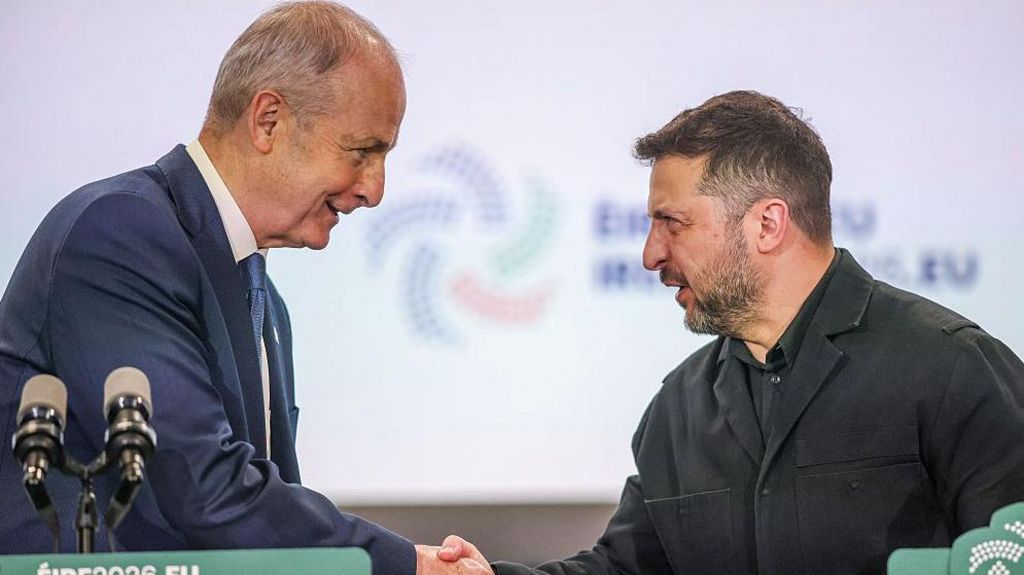
    During an official visit to Kyiv where Irish Taoiseach Micheál Martin held high-level talks with Ukrainian President Volodymyr Zelenskyy, the Irish government unveiled a fresh €125 million (£106 million) aid package for Ukraine scheduled to be delivered in 2025.

    This new contribution breaks down into two key components: €100 million earmarked exclusively for non-lethal military supplies, and an additional €25 million allocated to repair and secure Ukraine’s vulnerable energy network, which has been repeatedly targeted by Russian strikes. With this latest commitment, Ireland’s total support for Ukraine since the full-scale Russian invasion launched in February 2022 will surpass €670 million (£571 million), marking one of the country’s largest sustained humanitarian and military assistance efforts in modern history.

    Speaking ahead of and during his Kyiv meeting, Martin framed the ongoing Russian conflict as an ‘unprovoked war of aggression’ against Ukraine, and reaffirmed that backing Ukraine remains a leading policy priority for Ireland’s current rotating presidency of the Council of the European Union. He emphasized that Ireland stands in unwavering solidarity with the Ukrainian people through every phase of their defensive struggle.

    Ireland’s Minister for Foreign Affairs and Trade Helen McEntee expanded on the purpose of the new funding, noting that Russian forces have continued to deliberately strike Ukrainian civilian communities, urban centers and critical infrastructure. She pointed out that civilian casualty rates have now reached their highest point since the full-scale invasion began, making continued international support more urgent than ever. ‘This funding will boost Ukraine’s ability to withstand these brutal, indiscriminate attacks,’ McEntee said, adding that supporting Ukraine’s resilience is a core focus of Ireland’s EU presidency tenure.

    Beyond immediate military and infrastructure support, McEntee also confirmed Ireland’s long-term commitment to backing Ukraine’s formal path to accession into the European Union, aligning with the bloc’s collective commitment to Ukraine’s European integration future.

  • Europe’s central bank holds rates steady amid swings in oil prices

    Europe’s central bank holds rates steady amid swings in oil prices

    FRANKFURT, Germany — Against a backdrop of swirling geopolitical tensions and wildly fluctuating energy markets, the European Central Bank (ECB) announced Thursday it will keep its benchmark interest rate unchanged at 2.25%, hitting pause on monetary tightening just one month after its last quarter-point adjustment.

    The June 11 rate increase had been explicitly crafted to counter inflationary pressure driven by spiking global oil prices, which surged after conflict between the U.S. and Iran disrupted critical oil shipping lanes through the Strait of Hormuz. Since that decision, however, energy markets have seesawed dramatically: prices fell sharply following a brief ceasefire announcement, only to rebound once the truce collapsed and hostilities resumed, leaving policymakers scrambling to assess the long-term trajectory of inflation.

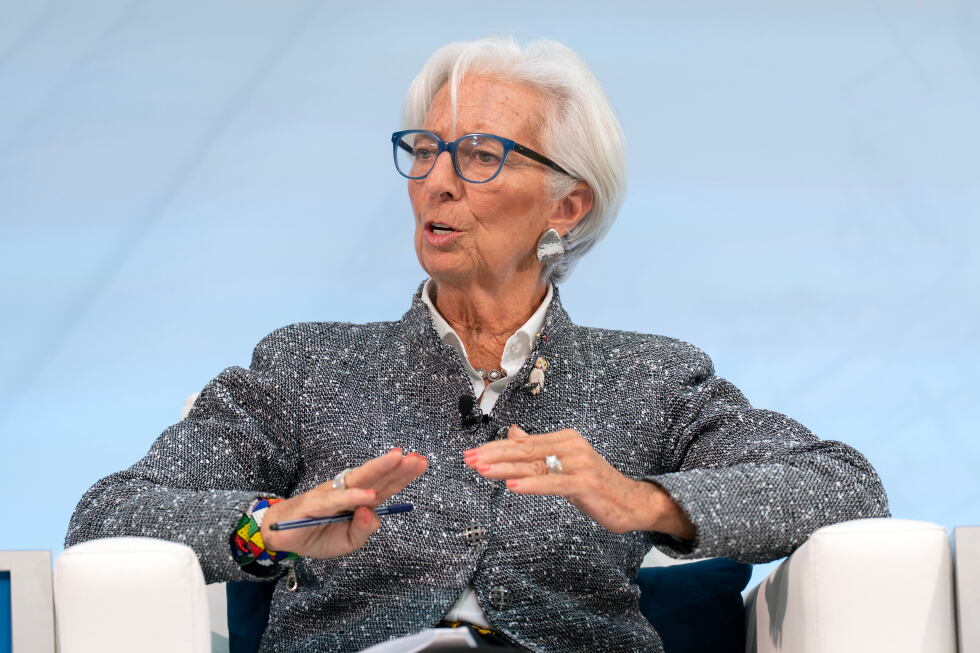
    Speaking at a post-meeting press conference, ECB President Christine Lagarde emphasized that persistent uncertainty surrounding the energy price shock has left the bank unable to map out a fixed path for future rate moves. “Uncertainty remains high and the full inflationary impact of the energy shock has yet to play out,” Lagarde told reporters. “We are therefore closely monitoring the intensity and duration of the shock, as well as its indirect and second round effects…the longer energy prices stay high, the more likely they are to drive up broader inflation.”

    Lagarde confirmed the ECB will take a data-dependent, meeting-by-meeting approach to future policy decisions, refusing to pre-commit to any specific trajectory for borrowing costs. Most economists now see the ECB’s September 10 policy meeting as the most likely timeline for a potential additional rate increase if inflationary pressures do not abate.

    In addition to monetary policy questions, Lagarde addressed speculation about her tenure, pushing back against requests for a rigid “yes or no” commitment to serving out her full eight-year term set to end in October 2027. “I hate to be boxed in in any particular circumstances,” she said, before adding: “you are not going to see the back of me before 2027. When there are clouds on the horizon, the captain stays on the ship, and this captain is staying on this ship as long as there are clouds on the horizon.”

    The ECB’s rate hold comes as fresh geopolitical turmoil sent global oil prices surging to key new thresholds Thursday. International benchmark Brent crude climbed above $100 per barrel for the first time in two months, after Iran-aligned Houthi rebels in Yemen claimed responsibility for attacks on two Saudi oil tankers in the Red Sea. The attack has stoked fears that ongoing Middle East conflict could widen and disrupt alternative shipping routes that Saudi Arabia has increasingly relied on to avoid closures in the Strait of Hormuz. Brent crude jumped 7% in the aftermath of the attack, deepening market volatility.

    Interest rate hikes work to curb inflation by raising borrowing costs for consumer and business purchases, cooling overall demand and easing upward pressure on prices. Eurozone annual inflation dipped to 2.8% in June, down from 3.2% in May, but policymakers remain wary that sustained high energy prices could spill over into broader price growth across the economy.

  • EU hits Google with $1 billion fine over its Play app store and search

    EU hits Google with $1 billion fine over its Play app store and search

    BRUSSELS – In a landmark escalation of the European Union’s years-long campaign to rein in the power of large technology platforms, the bloc’s executive body levied an 890 million euro ($1 billion) fine against Google on Thursday, ruling that the American tech giant violated regional digital antitrust rules by skewing its core services to favor its own offerings over rival products.

    The penalty marks the latest high-profile enforcement action from Brussels, which has emerged as a global trailblazer in regulating big technology firms, regardless of whether their headquarters are based in Silicon Valley or Beijing. The action comes shortly after Google lost an EU court appeal against a separate $4.5 billion antitrust fine, which dated back to a ruling that the company stifled competition and eroded consumer choice through the dominant market position of its Android mobile operating system.

    The European Commission, which serves as the EU’s executive governing arm, framed the penalty as a measure taken to protect consumer interests across the 27-nation bloc. “The best products should succeed because they’re better, not because they’re owned by the company running the search engine. And European consumers have a right to be told by app developers where to sign up to the best offers, even when the app store owner does not get a cut,” explained Teresa Ribera, the commission’s Executive Vice President for Clean, Just and Competitive Transition.

    Commission spokesperson Thomas Regnier reiterated the bloc’s commitment to fair competition, noting: “In the EU, businesses have the right to compete fairly. Gatekeepers have the obligation to ensure a level playing field and consumers the right to choose for cheaper alternative offers.”

    Google pushed back fiercely against the ruling, with Kent Walker, the company’s President of Global Affairs, dismissing the penalty as harmful policy driven by narrow self-interests. Walker called the fine “product degradation driven by a small group of self-serving complainants” that would ultimately hurt both European businesses and regional consumers. He also argued that the EU’s newly enacted Digital Markets Act, the regulatory framework underpinning this enforcement push, compels Google to eliminate popular real-time search features that European users rely on, including instant pricing and direct availability updates for hotels, flights, and local restaurants, while also forcing the company to remove key safety safeguards from the Google Play app store.

  • Driver arrested after police call bomb disposal unit to roadside

    Driver arrested after police call bomb disposal unit to roadside

    A major security incident unfolded in the Republic of Ireland this week, concluding with the arrest of a woman in her 20s after a specialized bomb disposal unit was called to the scene. The incident began at approximately 3 p.m. local time on Wednesday, when officers from An Garda Síochána, Ireland’s national police service, intercepted a vehicle being driven by the suspect on the N2 arterial route, just south of the town of Carrickmacross in County Monaghan.

    Following the stop, police determined there was sufficient potential risk to request backup from the Irish Defence Forces’ Explosive Ordnance Disposal (EOD) unit, the country’s lead service for handling and investigating suspected explosive devices. The EOD team carried out a full forensic and security examination of the detained vehicle, but authorities have chosen not to disclose the findings of that inspection. In a statement issued after the operation, An Garda Síochána confirmed that no additional details would be released while the investigation remains active. The N2 route, which was temporarily closed to all traffic during the EOD’s work, has since been fully reopened to the public.

  • Germany calls news conference as Klopp expected to be named coach

    Germany calls news conference as Klopp expected to be named coach

    FRANKFURT, Germany — One of the most high-profile vacancies in international men’s soccer is on the cusp of being officially filled, with the German Football Association (DFB) set to introduce Jürgen Klopp as the country’s next senior men’s national team manager during a Friday press conference, multiple insiders with knowledge of the process have confirmed.

    In a short, sparse statement released Thursday, the DFB did not disclose the explicit purpose of the Friday morning event planned at its Frankfurt headquarters, but multiple football industry sources have confirmed the gathering will be dedicated to presenting Klopp as Julian Nagelsmann’s permanent replacement.

    Klopp has been the DFB’s top target for the role ever since Nagelsmann stepped down from the position after Germany suffered a stunning elimination from this year’s FIFA World Cup. The defending champions were knocked out in the round of 32 in a penalty shootout defeat to Paraguay, a result that ended their tournament run far earlier than expected and triggered the opening of the top job.

    Talks between Klopp and DFB leadership first took shape in New York, where the former Liverpool boss was working as a broadcast pundit and television analyst for the World Cup. On July 11, the federation publicly confirmed that the two sides had reached a preliminary understanding on all core terms of a potential contract.

    For weeks after that announcement, the primary stumbling block to finalizing the deal was securing an exit agreement from Red Bull, the global beverage and sports conglomerate. Klopp has served as Red Bull’s head of global soccer for the past 18 months, a role that saw him oversee the operations and development of the company’s entire network of sponsored professional clubs across Europe and the Americas. Final negotiations between the DFB and Red Bull ultimately cleared that hurdle, opening the door for Friday’s official presentation.

    Klopp stepped away from his role as Liverpool’s first-team manager at the end of the 2023-2024 season, citing prolonged burnout and a need for an extended break from elite coaching. Earlier this month, however, the 57-year-old told reporters he has completed his period of rest and now feels fully recharged, ready to return to the sidelines for a new challenge at the international level.

  • Wildfire spreads near popular French tourist town as thousands are evacuated

    Wildfire spreads near popular French tourist town as thousands are evacuated

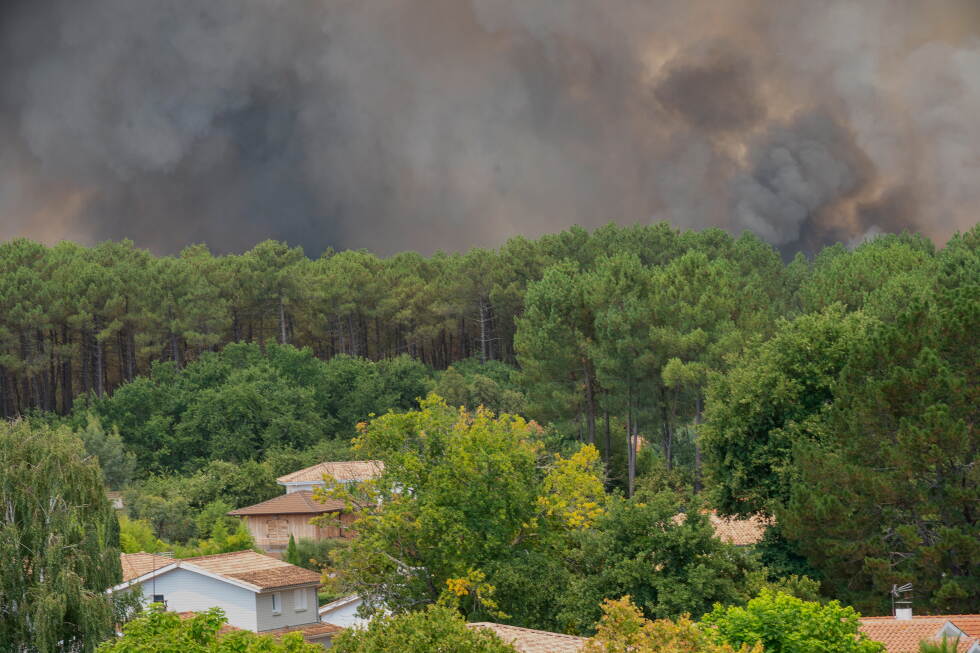
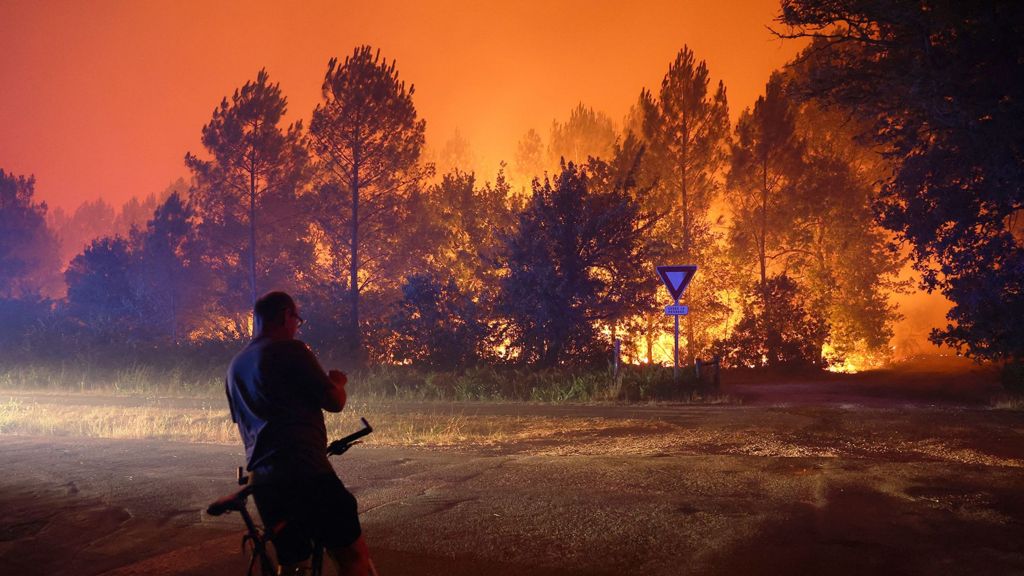
    A fast-spreading wildfire burning through Gironde region forestland along France’s Atlantic coast has forced roughly 20,000 residents and vacationers to flee their homes and resorts, in what marks the latest major wildfire event to hit Southern Europe amid a season of record heat and prolonged drought.

    The blaze, which ignited near the coastal town of Lège-Cap Ferret, roughly 60 kilometers southwest of Bordeaux, has already scorched more than 31 square kilometers of vegetation, regional authorities confirmed Thursday. As of the latest update, no injuries have been documented, but the fire has advanced to within 300 meters of residential neighborhoods in the town of Lège, prompting urgent emergency action.

    More than 700 firefighters, including reinforcement teams deployed from the Paris region, have been assigned to contain the blaze, with water bombers called in to drop massive amounts of water on the fire line from the air. By Thursday evening, regional prefect Sophie Brocas’ office reported that while the fire has not yet been fully extinguished, it has been successfully contained to the northern area of Lège, limiting further spread for the time being.

    Evacuation efforts unfolded in two phases overnight and through Thursday: first, roughly 11,000 people, including tourists staying at coastal holiday camps and campgrounds, plus more than 1,000 permanent residents living along the forest edge, were moved to safe zones. As a precautionary measure, authorities later ordered a full evacuation of the nearby village of Claouey, which hosts multiple additional campsites, adding another 8,800 people to the total evacuation count. Local municipalities have set up dedicated reception centers to provide shelter, food, and basic support for displaced evacuees.

    This Gironde blaze is just one part of a far wider wildfire crisis that has engulfed Southern Europe this summer, a disaster climate scientists link directly to human-caused climate change, which is amplifying the frequency and severity of extreme heat and prolonged dry conditions across the Mediterranean region. France has already faced a cascade of heat waves starting earlier than usual this year, bringing record-breaking high temperatures and leaving vegetation so parched that wildfire risk has jumped dramatically. French Interior Minister Laurent Nunez reported that as of this week, more than 12,500 wildfires have burned across France since the start of 2024, consuming nearly 44,000 hectares of land.

    The crisis extends far beyond France’s borders. In Italy, wildfires continued to spread across Sicily on Thursday, just one day after a veteran fire department chief, Alessandro Marchì, died while battling a blaze in the province of Caltanissetta. Italian President Sergio Mattarella released a formal statement of condolences to Marchì’s family and fellow first responders following his death.

    In Spain, firefighters are working around the clock to contain dozens of active blazes amid an ongoing severe heat wave that is projected to push temperatures as high as 44 degrees Celsius (111 degrees Fahrenheit) in the country’s southeast. A blaze near Alcalá de Henares, just outside of Madrid, forced a temporary suspension of high-speed rail service between the capital and Barcelona on Thursday, disrupting travel for thousands of passengers. In the province of Guadalajara, crews continue to battle a week-old blaze that is already the second-largest wildfire recorded in modern Spanish history, having burned 320 square kilometers of land. Other active fires in central Spain, including one near the city of Toledo, have destroyed roughly 20 residential structures and forced additional evacuations of local communities.

  • Around 12,000 people evacuated in France fires

    Around 12,000 people evacuated in France fires

    A wave of destructive, heat-fueled wildfires is tearing across multiple regions of Southern Europe this summer, leaving three firefighters dead, forcing mass evacuations of thousands of residents and tourists, and destroying vast swathes of forest and land. The crisis unfolded just weeks after a landmark climate report confirmed Europe is the world’s fastest-warming continent, amplifying concerns over the growing frequency and intensity of extreme weather events driven by climate change.

    In southwestern France’s Gironde region, local officials confirmed that roughly 12,000 people have been evacuated to escape advancing flames, with 10,000 of those displaced being tourists visiting the popular coastal and forested area. As of Thursday, the wildfire has already burned through more than 2,000 hectares of land, just days after two firefighters lost their lives battling blazes near Bordeaux Airport. No new civilian injuries have been reported as of Thursday, but authorities have enacted strict emergency measures to slow the spread of the fire: all combustion and electric engine use has been banned in heavily forested zones, multiple major roads have been closed, and all high-risk leisure sites in exposed forest areas will stay shut through Thursday evening. Gironde remains under red wildfire alert, as the region grapples with the same prolonged, record-breaking heatwave that has raised fire risk across much of Western Europe.

    French officials have held formal tributes to the two fallen firefighters this week. Interior Minister Laurent Nuñez shared images from a Wednesday memorial, describing the occasion as one marked by “immense emotion” and extending “infinite gratitude” and “unwavering support” to the firefighters’ families.

    Across the Mediterranean, Italy is also reeling from a deadly wildfire crisis of its own. On the island of Sicily, a 60-year-old firefighter Alessandro Marchi died Wednesday while battling a large blaze in San Cataldo. Another firefighter was injured in the same operation, and Sicilian President Renato Schifani has publicly wished the injured first responder a “speedy recovery.” Italian Interior Minister Matteo Piantedosi honored Marchi’s sacrifice in a post on X, writing that the firefighter died “in service to the community” and that “He will not be forgotten.”

    Sicilian Civil Protection head Salvo Cocina confirmed Wednesday that the island has recorded more than 350 separate wildfires in recent days, including 10 major blazes that have already triggered precautionary evacuations. Cocina noted that nearly all of the fires were caused by human activity, and warned that repeated large-scale wildfire events have turned firefighting into a persistent public order and social crisis for the island.

    In neighboring Spain, wildfires have reached the outskirts of Madrid, forcing the evacuation of hundreds of residents earlier this week. Overnight, most displaced residents were allowed to return to their homes, though one neighborhood in Villa del Prado remains off-limits as an adjacent fire continues to burn. Roughly 90 emergency personnel and one firefighting helicopter have been deployed to contain the remaining blaze, with emergency crews launching a “direct attack” on the flames to stop it from spreading further. Spanish weather service AEMET forecast maximum temperatures will reach 36 degrees Celsius across the region on Thursday, and local authorities have continued to warn of an “extreme risk of fires” for the coming 24 hours.

    The current wave of wildfires comes amid a longer-term trend of rising temperatures and increasing fire risk across Europe. A April 2025 report from the Copernicus Climate Change Service confirmed that at least 95% of Europe recorded above-average annual temperatures in 2025, and the continent is warming faster than any other major region on Earth. The report also found that both the total area burned by wildfires and fire-related carbon emissions reached all-time record highs across the continent last year, highlighting the growing threat climate change poses to European communities.

  • Ruiz & Gavi’s reward for win… 150kg of tomatoes

    Ruiz & Gavi’s reward for win… 150kg of tomatoes

    When international football stars lift the FIFA World Cup trophy, the celebrations that follow come in all shapes and sizes. But few honors are as unique as the welcome two Spanish champions received when they returned to their small Andalusian hometown this week.

    Midfielders Fabian Ruiz of Paris Saint-Germain and Barcelona’s Gavi, both key members of Spain’s 2026 World Cup-winning squad that defeated Argentina in an extra-time final in North America, arrived back in Los Palacios y Villafranca on Wednesday to a hero’s welcome. The town, located just south of Seville, counts fewer than 40,000 residents, but thousands turned out to line the streets and greet the pair at an official civic reception held at the local town hall.

    Draped in Spanish flags and wearing their shiny gold World Cup winners’ medals, Ruiz and Gavi were met by local government officials, cheering fans, and a very special surprise tribute that is one of the town’s longest-standing athletic traditions. As part of the celebration, both players stepped onto public weighing scales to measure their body weight — a calculation that would determine exactly how many tomatoes they would take home as a reward for their historic victory.

    In the end, Ruiz, who started the World Cup final against Argentina, will receive 85 kilograms of locally grown tomatoes, while 20-year-old Gavi will take home 68.5 kilograms. Local council leaders note that this unusual tomato presentation has become a signature tradition of the municipality, reserved exclusively for honoring the town’s most exceptional sporting talents.

    The celebration also included a reunion with Los Palacios y Villafranca’s first World Cup champion, former Spanish winger Jesus Navas, who claimed the sport’s biggest prize as part of Spain’s 2010 World Cup-winning squad. Navas, who previously played for Manchester City, already received a similar tomato honor alongside Ruiz when Spain won the UEFA Euro 2024 title, and the town’s existing sports pavilion already bears his name.

    In recognition of Gavi and Ruiz’s new world championship titles, local officials announced that two public football fields in the town will be renamed to honor each player permanently. Going a step further, the town council confirmed plans to fund and construct a new shared monument dedicated to all three World Cup-winning athletes from the small Andalusian town.

    A formal statement from the town council explained the motivation behind the permanent tributes, saying: “In this way, the city council wants to pay permanent tribute to three athletes who represent the pride of an entire town and who, with their sporting and human trajectory, have become role models for several generations of children and young people.”

    The historic victory for Spain, which claimed its third World Cup title after a dominant extra-time win over Argentina, capped a standout tournament for both Gavi and Ruiz, who cemented their status as two of the best young midfielders in global football. For their hometown, the win is a source of communal pride that will be commemorated for decades to come.

  • Russia’s biggest online retailer is the latest target of Ukraine’s attacks

    Russia’s biggest online retailer is the latest target of Ukraine’s attacks

    A wave of Ukrainian drone strikes targeting logistics facilities across Russia has left at least nine people dead, dozens injured, and knocked out roughly 12 to 15 percent of the total warehouse space of Russia’s largest e-commerce platform Wildberries, in what Kyiv frames as a strategic escalation of its cross-border aerial campaign against the Kremlin’s war effort.

    The first attacks unfolded over the weekend, striking two sprawling Wildberries distribution centers: one in Elektrostal, an industrial city just east of Moscow, and a second in Russia’s Tambov region. The weekend strikes killed eight people and wounded dozens more. Early Wednesday, two additional Wildberries facilities in the southern Russian regions of Krasnodar and Stavropol were hit and engulfed in flames, killing one person and injuring 14 others. Thick plumes of black smoke billowed from the burning sites, visible for miles across the surrounding areas.

    Kyiv’s cross-border drone strikes are part of a broader intentional strategy to disrupt Russia’s wartime economy and bring the reality of the Kremlin’s full-scale invasion of Ukraine home to ordinary Russian citizens. Ukrainian President Volodymyr Zelenskyy has confirmed that targets struck in these attacks are linked to supplying Russian military forces with equipment and technical components, though he did not name Wildberries explicitly. An independent check of Wildberries’ online marketplace by The Associated Press found a wide range of goods available that are suitable for both civilian and military use, including body armor, combat helmets, tactical radios, and other electronics. Many of these items were openly labeled with tags referencing Russia’s “special military operation” – the Kremlin’s official term for its full-scale war in Ukraine – such as “tested in the SVO” and “SVO fighters’ choice.”

    To understand why Wildberries became a high-priority target, it is necessary to examine the platform’s extraordinary rise to dominate Russia’s domestic e-commerce sector. Founded in 2004 by Tatyana Kim, a former teacher and young mother, the company began as a small online clothing retailer. Today, with its recognizable purple branding, it is a household name across Russia and the undisputed industry leader, hosting more than 500,000 to 800,000 independent sellers and accounting for 52 percent of all online retail orders placed in the country. It offers everything from apparel and cosmetics to home appliances, pharmaceuticals, and even travel booking services, and expanded into financial services with the 2021 launch of Wildberries Bank – an arm that has since been placed under sanctions by the United Kingdom and European Union.

    As of last year, Wildberries operated more than 200 warehouses and distribution centers across Russia and neighboring markets where it has expanded, totaling more than 5.2 million square meters of storage space. The company had planned further expansion into Belarus and Kazakhstan by 2026. Kim, who remains the company’s leader, had an estimated net worth of $8.1 billion as of April 2024, according to Forbes Russia.

    Kremlin spokesman Dmitry Peskov has rejected Ukraine’s claim that the targeted facilities support the Russian military, calling the assertion false and accusing Kyiv of deliberately attacking civilian infrastructure. Wildberries itself has not issued a formal response to the strikes beyond statements about operational resumption and support for affected sellers. The company confirmed it took three full days to extinguish the large fire at the key Elektrostal distribution hub, which serves the entire Moscow region, while the Tambov region facility in Kotovsk is scheduled to resume operations on Thursday. Neither Kim nor the company has released a full public accounting of the total inventory destroyed in the attacks.

    Beyond the human cost and military strategic implications, the strikes have delivered a catastrophic blow to thousands of small and medium-sized Russian businesses that stored their entire inventory at the targeted warehouses. In the days after the attacks, hundreds of Russian entrepreneurs took to social media to share accounts of losing all their stock, many sharing emotional recountings of total business collapse. Sergei Semko, a leading e-commerce analyst at Moscow-based research firm Data Insight, noted that platforms like Wildberries have been a critical lifeline for small producers and craftspeople across Russia’s 11 time zones, allowing them to reach customers across the country’s vast territory that would otherwise be inaccessible. The damage from the strikes compounds a series of already severe pressures on Russian small businesses this year, including rising taxes, fuel supply disruptions, and growing regulatory burdens.

    Semko estimates that total losses from the destroyed inventory could reach as high as $3 billion, describing the confluence of crises facing affected sellers as “almost a perfect storm.”

    In response to widespread anger and uncertainty from sellers, Wildberries rolled out a series of support measures, including discounted storage fees, free transfer of surviving inventory to other undamaged facilities, and low-interest loans through Wildberries Bank. Controversy emerged earlier this month after the company updated its seller terms of service to exempt itself from liability for inventory damaged or destroyed during “force majeure” events, a category that explicitly includes drone attacks, leaving many sellers unsure if they would receive any compensation for their losses. Late Wednesday, however, Kim announced that the company had begun processing compensation payments for sellers affected by the Elektrostal attack. She emphasized that the company was prioritizing support for the smallest and most vulnerable entrepreneurs, of which there are more than 88,000 affected by the strike, and confirmed that funds would be posted to sellers’ account balances within 24 hours.

  • Wall Street poised to open lower as Mideast tensions push Brent crude past $98 a barrel

    Wall Street poised to open lower as Mideast tensions push Brent crude past $98 a barrel

    As global markets kicked off trading on Thursday, Wall Street braced for modest opening losses, pressured by three overlapping forces: escalating Middle East conflict that sent crude oil prices surging, a record antitrust penalty against a major tech giant, and mixed signals from high-profile corporate earnings reports.

    Futures linked to the S&P 500 and the Dow Jones Industrial Average both dropped 0.6% in premarket trading, while Nasdaq futures slid a sharper 0.8%, dragged down by losses in big tech. The steepest early decline belonged to Alphabet Inc., Google’s parent company, which saw its shares tumble 4% immediately after the European Union levied an €890 million ($1 billion) antitrust fine against the firm. EU regulators concluded the tech giant violated digital competition rules by engineering Google Play and its dominant search engine to steer users toward its own native services and apps, effectively shutting out smaller rival competitors. The penalty came just one day after Alphabet reported second-quarter earnings that outperformed Wall Street forecasts, a promising signal that the company’s aggressive, multi-billion-dollar investment push into artificial intelligence may already be delivering returns.

    Another high-profile name saw off-hours share losses: electric vehicle maker Tesla, led by Elon Musk, saw its stock drop 5.6% after the company reported that sharply elevated research and development spending offset strong gains from rising vehicle sales, cutting into bottom-line profits. For weeks, investor focus has centered on whether the massive flood of capital flowing into AI infrastructure—from advanced microprocessors to memory chips and other core components of the AI boom—will translate into sufficient long-term profits to justify current valuations. These ongoing concerns have kept AI stocks at the center of Wall Street’s recent volatility, though the sector saw little early movement on Thursday, with most stocks holding near Wednesday’s closing levels.

    Defense stocks bucked the broader downward premarket trend, however, after two leading aerospace and defense firms posted blowout quarterly results. Lockheed Martin, the world’s largest defense contractor, beat both sales and profit forecasts, sending its shares up 5.5% in premarket trading. RTX, the manufacturer of Patriot air defense systems and Tomahawk cruise missiles, jumped 5.2% after it easily exceeded analyst targets and raised its full-year guidance.

    The most impactful market-moving development on Thursday was the sharp spike in global oil prices, driven by escalating conflict with Iran that has disrupted shipping through the Strait of Hormuz, the world’s most critical energy chokepoint. By early Thursday, Brent crude, the global benchmark for oil, jumped 4.9% to $98.64 per barrel, its highest level since early June. Just earlier this month, Brent had traded below $72 per barrel, roughly matching pre-conflict levels. Currently, about 20% of all globally traded oil and natural gas passes through the narrow strait, and ongoing fighting has blocked many oil tankers from exiting the Persian Gulf. U.S. benchmark West Texas Intermediate crude rose $3.83 to $90.66 per barrel, also hitting a six-week high.

    Rising oil prices create cascading pressure across global markets: they push up operating costs for nearly all businesses, erode corporate profits, and encourage more cautious consumer spending, as households pay more for gasoline and energy. Fuel-reliant industries such as airlines are hit hardest by elevated energy prices, and the sector saw broad losses on Thursday. American Airlines fell 3.7% in premarket trading, even after the carrier reported higher-than-expected profits on record revenue. The company warned that third-quarter fuel expenses would be $1.7 billion higher than the same period a year earlier. The selloff dragged down shares of other major U.S. carriers, including Delta Air Lines and United Airlines. Southwest Airlines also reported strong second-quarter results on Thursday, but its shares dropped more than 4% after the airline cut its third-quarter outlook, citing the same headwind of spiking fuel costs.

    Beyond the United States, European markets traded lower at midday: Germany’s DAX index lost 0.9%, France’s CAC 40 shed 1.3%, and the FTSE 100 in London fell 0.3%. Most Asian markets closed higher on Thursday: South Korea’s Kospi led gains with a 4.4% jump to 7,096.89, Japan’s Nikkei 225 added 0.5% to 66,422.60, with SoftBank Group leading tech-driven gains by climbing 3.8%. Hong Kong’s Hang Seng Index rose 1.3% to 25,210.81, while China’s Shanghai Composite recovered from early losses to close 0.3% higher at 3,876.78. Australia’s S&P/ASX 200 gained 0.2% to 8,839.00, Taiwan’s Taiex edged up 0.1%, and India’s Sensex closed 0.6% lower. In currency markets, the U.S. dollar traded at 163.36 Japanese yen, with the yen hovering near its weakest level in four decades. Expectations that the gap between U.S. and Japanese interest rates will widen, driven by faster inflation in the U.S., have continued to push the dollar higher against the Japanese currency.

    Economists and investors warn that the latest spike in oil prices threatens to reaccelerate global inflation, which could force the U.S. Federal Reserve and other major central banks to keep interest rates higher for longer. Higher borrowing rates slow overall economic growth and typically put downward pressure on valuations for stocks and other risk assets.