标签: Europe

欧洲

  • Ukraine overhauls its military top brass for the fight against Russia

    Ukraine overhauls its military top brass for the fight against Russia

    KYIV, Ukraine — Less than a week after a sweeping wartime government shakeup that sparked mass public protests and fueled open tension within Ukraine’s defense leadership, President Volodymyr Zelenskyy has installed a new top military commander to lead the country’s ongoing defense against Russia’s full-scale invasion. The leadership overhaul, finalized late Tuesday, closes a turbulent chapter of internal political friction that was widely celebrated in Moscow and threatened to distract from Ukraine’s battlefield gains this year.

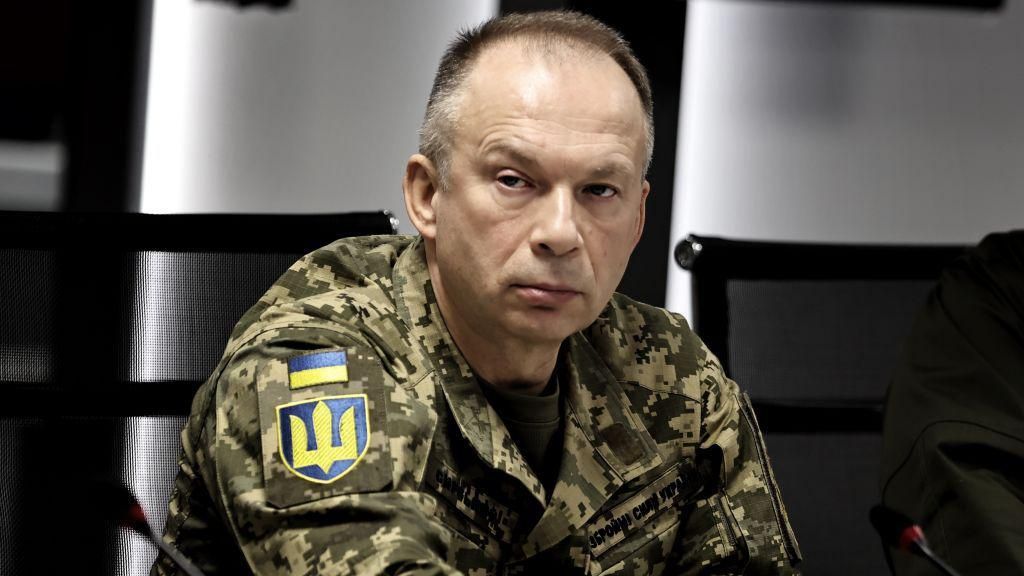
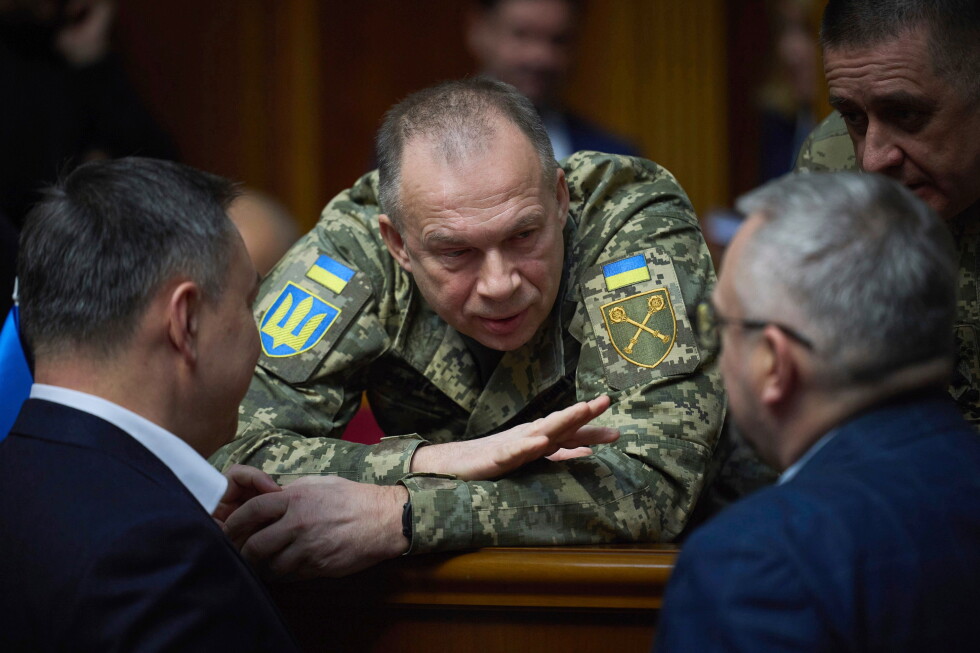
    The shakeup traces back to last week, when Zelenskyy removed 35-year-old tech-focused Defense Minister Mykhailo Fedorov from his post, just six months after he took on the role. Fedorov, an entrepreneur credited with rapidly building up Ukraine’s cutting-edge drone program that has delivered key battlefield advantages against Russian forces, had clashed openly with then-Commander-in-Chief Gen. Oleksandr Syrskyi, a 60-year-old Soviet-trained veteran long viewed as part of Ukraine’s old-guard military establishment. Fedorov publicly accused Syrskyi of blocking critical defense reforms, arguing a leadership change was necessary for Ukraine to avoid failure in its resistance.

    Fedorov’s dismissal sparked immediate public outcry, with thousands of demonstrators gathering in Kyiv and other Ukrainian cities. Protesters framed the move as Zelenskyy siding with entrenched traditional military leadership over a popular reformer, and called for Syrskyi’s removal while demanding Fedorov be retained in a senior government role. To defuse tensions, Zelenskyy offered Fedorov a new senior position tasked with unifying the country’s entire defense technology sector; as of Wednesday, it remained unclear whether Fedorov would accept the role, and whether the latest leadership changes would satisfy protester demands.

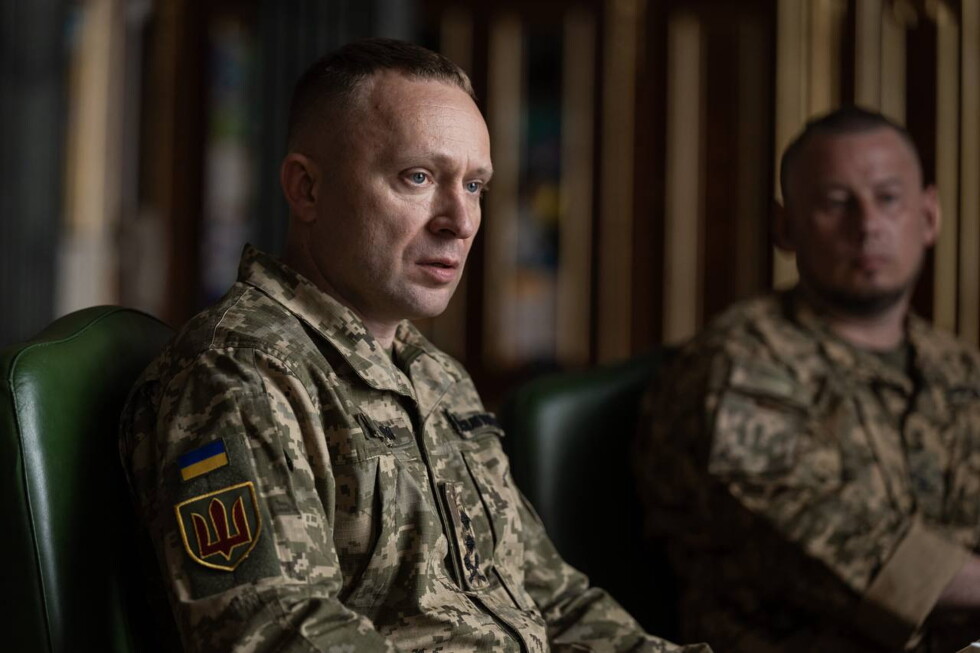
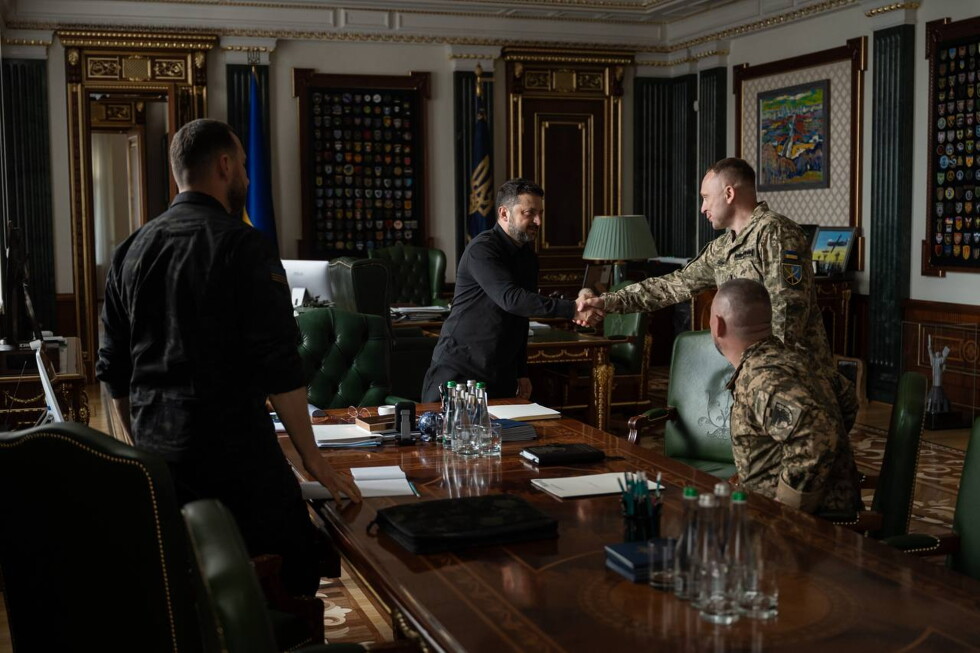
    On Tuesday, Zelenskyy officially dismissed Syrskyi and appointed 43-year-old Maj. Gen. Mykhailo Drapatyi as the new Commander-in-Chief of Ukraine’s armed forces. Drapatyi is part of a rising generation of Ukrainian commanders who cut their teeth fighting Russian forces after Moscow’s 2014 illegal annexation of Crimea, eight years before the 2022 full-scale invasion. He first earned widespread recognition for his bold, courageous leadership on the battlefield in 2014, and has steadily risen through the military ranks over the past decade of ongoing conflict.

    Fedorov quickly endorsed Drapatyi’s appointment, describing the new commander as “a new hope in the fight of free people for freedom and justice” and “a voice for change that could not go unheard.” In a conciliatory gesture, Fedorov also acknowledged Syrskyi’s key wartime contributions, including the defense of the Kyiv region during the 2022 full-scale invasion and the successful 2022 Kharkiv counteroffensive, calling those achievements “already an important part of Ukraine’s history.” But he added that Ukraine “must move even faster and write new chapters, correcting all previous mistakes.”

    In his first public statement since his dismissal Wednesday, Syrskyi defended his tenure as top commander, claiming Ukrainian forces had reclaimed 287 square miles of Russian-occupied territory this year under his leadership. He added that he was handing over to Drapatyi an army that is not only holding defensive lines but also carrying out active offensive operations. The Associated Press was unable to independently verify Syrskyi’s territorial claim.

    Zelenskyy has laid out clear new expectations for Drapatyi and his team of senior commanders: they must deliver an updated, comprehensive defense strategy that includes accelerated reform of Ukraine’s military corps structure, faster procurement and delivery of weapons and drones, strengthened air defense networks to repel routine Russian missile and drone strikes, and a more transparent, effective national mobilization plan.

    Parallel to the political upheaval in Kyiv, Ukraine continued its campaign of long-range drone strikes against Russian logistics targets Wednesday. Wildberries, Russia’s largest online retailer, confirmed that overnight drone strikes hit two of its large warehouses in Russia’s southern Krasnodar and Stavropol regions. The attacks come four days after similar strikes on Wildberries warehouses in the Moscow and Tambov regions killed eight people and wounded dozens, according to Russian officials. Zelenskyy confirmed Saturday that the targeted facilities were being used by Russian forces to store sanctioned components for Russian drone production and military navigation equipment.

  • Ukrainian drones hit Russian online retailer Wildberries, media and governor say

    Ukrainian drones hit Russian online retailer Wildberries, media and governor say

    Fresh overnight drone attacks launched by Ukrainian forces have targeted logistics facilities owned by Wildberries, Russia’s largest e-commerce platform, marking the second assault on the retailer’s infrastructure in less than a week and leaving multiple people wounded, regional officials and Russian media have confirmed.

    The strikes hit two separate Wildberries warehouses located in Russia’s Krasnodar and Stavropol regions, according to comments the company’s owner shared on social media. The attack forced emergency evacuation of all on-site staff and left 10 people with injuries, local governor reports confirmed.

    The new attacks come just four days after earlier drone strikes against Wildberries warehouses in the Tambov and Elektrostal areas. That earlier assault left eight people dead and 62 others injured, marking one of the deadliest attacks on Russian commercial logistics infrastructure in recent months.

    Ukrainian officials have explicitly justified the targeting of Wildberries facilities, asserting that the warehouses have been repurposed to supply critical parts for Russian drone production and military navigation systems. Independent Ukrainian security analysts have expanded on this rationale, noting that the e-commerce platform has been used by Russian pro-war volunteers to source a wide range of military and dual-use goods.

    “The main goal of these strikes is to cut off Russian military forces and domestic arms producers from access to dual-use components, critical electronics, and sanctioned products that move through Wildberries’ extensive logistics network,” explained Serhii Kuzan, chairman of the Ukrainian Security and Cooperation Centre, in prior comments to the BBC. Beyond disrupting military supply chains, Kuzan added that the collateral economic fallout from these attacks can create broader pressure on the Russian domestic economy, while also generating psychological shifts within Russian society that may erode public support for the ongoing full-scale invasion.

    In the wake of the latest attacks, Wildberries owner Tatyana Kim issued a public statement via Telegram expressing outrage over the targeting of civilian commercial operations and ordinary workers. “There are no words to describe all the feelings and emotions caused by the attacks on ordinary people, on our employees, on us, who are simply doing our jobs,” Kim wrote. Despite the repeated assaults, she reaffirmed the company’s commitment to continuing operations, saying: “But these situations demonstrate the most important thing: we must continue to do what we do for the benefit of people.”

    A video still verified by independent news outlet Reuters shows thick plumes of smoke rising from one of the targeted warehouses, following the overnight strikes that have once again highlighted the expanding scope of Ukrainian drone attacks deep into Russian territory.

  • 2,000 volunteers join a painstaking effort to restore massive skeleton of prehistoric predator

    2,000 volunteers join a painstaking effort to restore massive skeleton of prehistoric predator

    Deep inside a glass-walled laboratory at Warsaw’s iconic Copernicus Science Centre, an extraordinary public science experiment is unfolding. Unlike traditional paleontological digs that happen far from public view, this project invites everyday people to stand shoulder-to-shoulder with scientists and bring a 240-million-year-old giant back into the light.

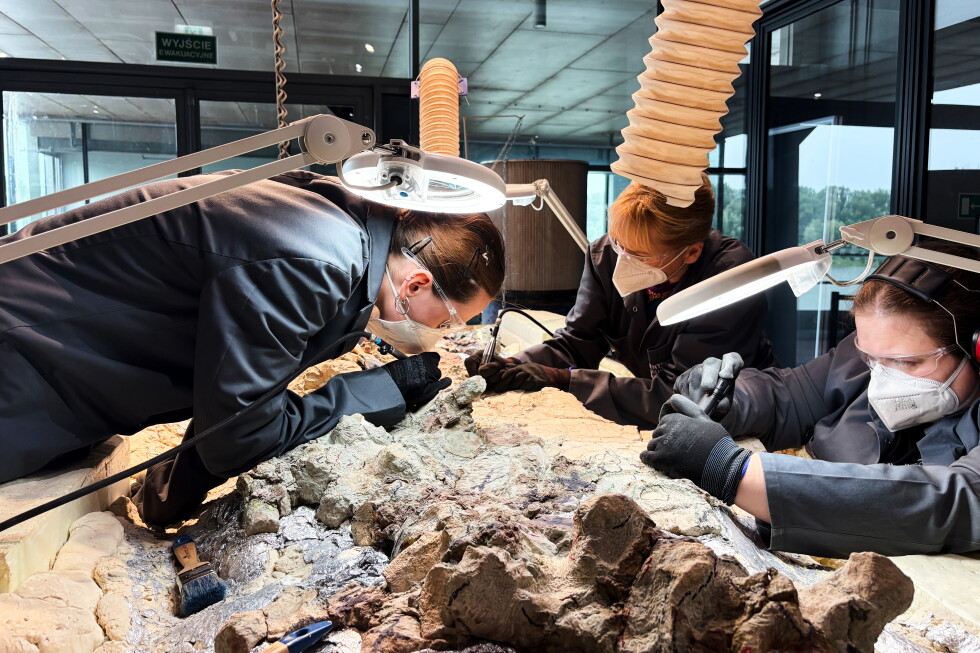
    Armed with pneumatic chisels, soft-bristled brushes, and protective goggles, hundreds of volunteers from across Poland are slowly and carefully chipping away at solid rock that has encased the massive bones of a *Mastodonsaurus* — one of the largest amphibians to ever walk (or swim) the Earth. On the opposite side of the clear glass barrier, crowds of curious visitors watch every step of the painstaking work in real time: wide-eyed children press their palms to the glass to point at the emerging fragments, while adults marvel at the sheer scale of the creature that once dominated Triassic waterways.

    What makes this restoration project unprecedented is its reliance on non-professional labor. More than 2,000 volunteers from all walks of life — including office managers, hospital cleaners, professional tattoo artists, and retired teachers — have signed on to help, none requiring prior experience in paleontology or geology. Before they start their two-hour supervised chiseling shifts, every volunteer completes a hands-on training session and receives custom protective gear to keep them safe and ensure the ancient bones remain undamaged.

    The work itself requires extraordinary precision. Volunteers separate bone from surrounding rock one millimeter at a time, using a specialized pneumatic chisel with a thin needle tip that gently breaks away rock without damaging the fragile fossil. Ultraviolet lighting is used to clearly mark the boundary between fossilized bone and surrounding stone, eliminating the risk of accidental breaks that could destroy irreplaceable scientific data.

    For many volunteers, the experience has been life-changing. “I imagine that those bones were lying underground for 240 million years and I am the first human on earth to touch them,” said Tatyana Kozyk, who coordinates the volunteer teams. “I’m still trying to wrap my head around this experience.” Dorota Serafin, a 51-year-old Warsaw manager who has volunteered multiple times, described the work as both deeply calming and philosophically profound. “Working with the skeleton of an ancient animal is an experience that is at the same time relaxing and philosophical, even mystical,” she said, adding that she plans to bring her entire family to see the finished display when it opens to the public.

    The *Mastodonsaurus* itself was a fearsome aquatic ambush predator that ruled freshwater ecosystems during the Middle Triassic period, a time when the first dinosaurs were just beginning to emerge but had not yet become the dominant terrestrial vertebrates on Earth. Growing up to six meters (20 feet) in length, the creature had a broad flat skull, massive elongated jaws lined with sharp conical teeth, and a body shape that vaguely resembles modern crocodiles — though it belongs to an entirely separate branch of the vertebrate evolutionary tree. It fed primarily on fish and smaller amphibians, lying motionless in shallow water before launching surprise attacks on unsuspecting prey.

    The massive skeleton was first discovered in southern Poland in 2023 by paleontologist Tomasz Sulej, a professor at the Polish Academy of Sciences’ Institute of Paleobiology, and his colleague Wojciech Pawlak, a geologist from Warsaw University. It was the pair’s idea to open the restoration process to public volunteers, turning a purely scientific project into an unprecedented public outreach opportunity.

    When complete, the 1,300-kilogram (2,865-pound) skeleton will be the largest *Mastodonsaurus* specimen ever put on public display anywhere in the world. Sulej notes that while smaller *Mastodonsaurus* skeletons — most measuring between 2 and 3 meters long — have been found in Germany and Russia, this new specimen is far larger than any previously discovered, and promises to rewrite scientific understanding of the species.

    “The structure of the body is different from what we knew so far,” Sulej explained. “This is information that is completely new to the scientific world.” The finished skeleton is scheduled to go on public display at the Copernicus Science Centre in late 2024, most likely in October or November.

    Beyond its scientific value, the project offers a unique perspective on extinction, resilience, and the future of life on Earth. The *Mastodonsaurus* emerged after the Permian-Triassic extinction event — the most severe mass extinction in our planet’s history, which wiped out roughly 96% of all marine species and 70% of terrestrial vertebrate species — and paved the way for the rise of the dinosaurs millions of years later. As humanity grapples with the accelerating impacts of human-caused climate change, Sulej says the story of the *Mastodonsaurus* offers a message of cautious hope.

    “The Mastodonsaurus lived after the great extinction, which shows one thing, that nature always manages,” Sulej said. “It’s not true that humans can destroy life on this planet. Nature and life always find ways to survive.”

  • France passes law banning under-15s from social media

    France passes law banning under-15s from social media

    In a landmark move that sets a new precedent for youth digital protection across the continent, France’s national parliament has given final approval to a groundbreaking law that will bar all users under the age of 15 from accessing social media platforms, with full implementation scheduled for January 2027. The legislation, which comes amid growing global concern over the impact of social media on children’s mental health and development, mandates universal age verification for every social media user in France. This places France at the forefront of a growing global movement to regulate youth social media access, following similar action taken by Australia late last year. The bill secured final passage in both the French Senate and the National Assembly on Tuesday, overcoming criticism from left-wing political factions and digital rights advocates to become law. President Emmanuel Macron, who first pledged to introduce this regulation as a signature policy to cap his second and final term in office, publicly praised the approval of the ban this week.

    The new rules will roll out in two staggered phases to give platforms and users time to adjust. Starting this September, any new social media account created from France will require mandatory age verification, and users under 15 will be blocked from opening new accounts entirely. By January 2027, the age verification requirement will extend to every existing social media account, meaning every user based in France will need to prove they are over 15 to retain access to platforms. All age verification tools used by platforms must receive official approval from France’s independent national privacy regulator to ensure compliance with data protection standards.

    Despite the government’s enthusiasm for the policy, it has faced a wave of criticism from skeptics, who have raised a host of practical and ethical concerns. Key points of contention include the potential privacy risks associated with collecting age and identity data from millions of users, questions about how effective current age verification tools are at preventing circumvention, and criticism over the relatively fast timeline for drafting and rolling out the ban. Speaking ahead of the parliamentary vote, French Digital Minister Anne Le Hénanff pushed back against criticism of the quick rollout, arguing that functional, tested age verification tools are already available for platforms to deploy, eliminating the need for a longer waiting period.

    France is only the second country in the world to implement a nationwide full ban on underage social media use, following Australia’s December 2024 ban on social media access for users under 16. Early assessments of Australia’s policy have offered important lessons for France and other nations moving forward with similar regulations. As of March 2025, Australia’s eSafety Commission reported that seven out of 10 children under 16 who held social media accounts before the ban entered into force still retain some level of access to the platforms. Tama Leaver, a professor of internet studies at Curtin University in Western Australia, told the BBC that Australia’s ban has technically failed to meet its core goal of blocking underage access, though it has proven that nationwide regulatory action of this kind is politically and administratively possible, framing it as a valuable early policy experiment. Leaver noted that a key takeaway for other countries is the need to include young people in the policy design process, arguing that regulations work best when they are developed with input from youth rather than imposed on them.

    Leaver added that France’s policy may have a slightly higher chance of reducing underage access than Australia’s, thanks to its requirement for universal age verification covering all users, not just new accounts. But he also warned that the universal mandate brings greater privacy risks, as it requires every social media user in France to submit identity data for verification. He also pointed to additional unintended consequences that could emerge from the ban, including pushing underage users toward unregulated, less safe online platforms outside of mainstream social media, reducing young people’s access to news and public information, and weakening youth political engagement by cutting off their primary space for online civic discourse.

    France’s approval of the ban comes as legislative action to restrict youth social media access accelerates rapidly across Europe. In the United Kingdom, former Prime Minister Keir Starmer announced in June 2025 that the UK will implement its own ban on under-16 social media access, also scheduled to take effect in January 2027, alongside an optional midnight curfew for 16 and 17-year-old users. At the EU level, European Commission President Ursula von der Leyen proposed a policy of “social media delay” for underage children across the bloc in May 2025, confirming that new EU-wide legislation on the issue will be introduced in the coming months.

  • Italy prop Riccioni gets 2-week ban for sideline red card in Nations Championship rugby test

    Italy prop Riccioni gets 2-week ban for sideline red card in Nations Championship rugby test

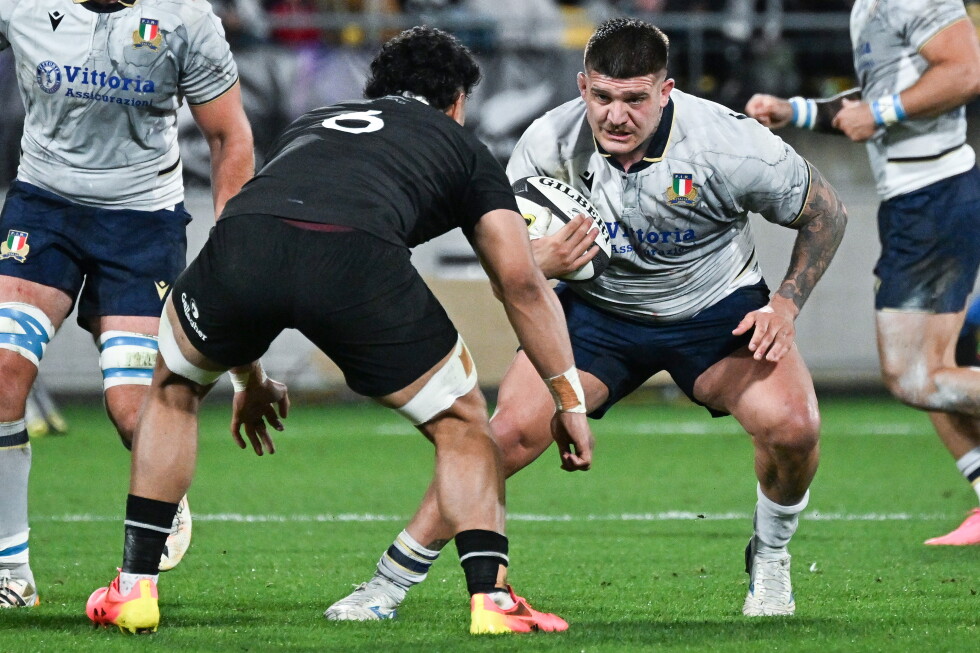
    PERTH, Australia — Another chapter of disciplinary trouble has hit Italy’s national rugby union squad during their 2024 Nations Championship tour, with front-rower Marco Riccioni becoming the third member of the team to receive a suspension in just two weeks. The 32-year-old prop received an immediate red card in the 66th minute of Italy’s 57-10 defeat to the Wallabies last Saturday at Optus Stadium in Perth, after an unsportsmanlike altercation that spilled off the playing pitch.

    What makes Riccioni’s offense unusual is that he had already been substituted out of the match and was on the bench when a physical scuffle between on-field players rolled into the Italian technical zone. In the chaos, Riccioni intervened, and his actions knocked multiple members of Italy’s support staff off their seating in the team area.

    On Wednesday, the tournament’s independent Foul Play Review Committee finalized its ruling on the incident, confirming a two-week suspension for the Italy international. The committee noted that the severity of the unsportsmanlike conduct originally warranted a four-week ban, but the sentence was cut in half after accounting for two mitigating factors: Riccioni’s immediate admission of guilt for his role in the incident, and a clean prior disciplinary record throughout his professional career.

    The suspension rules Riccioni out of his club Perpignan’s first two pre-season French Top 14 matches scheduled for August. His ban marks the third disciplinary action against an Italy staff or player since the start of the Nations Championship tour. Two weeks prior, Italy head coach Gonzalo Quesada faced a misconduct hearing over critical comments he made about match officials following Italy’s 47-17 loss to New Zealand on July 11. Quesada’s original two-match suspension was also reduced to one on appeal.

    Just one match before Riccioni’s red card, Italy lock Niccolo Cannone was handed a four-week suspension after being sent off for a head-butt offense during the All Blacks clash in Wellington. This run of disciplinary issues comes as Italy have struggled for results on their Southern Hemisphere tour, dropping their first three consecutive Nations Championship outings. After a 27-10 opening loss to Japan in Tokyo on July 4, the Azzurri fell to New Zealand and then Australia, leaving them winless early in the new annual global rugby competition.

    The Nations Championship, which launched this year to replace the former Rugby Championship and Six Nations summer tour schedules, has already seen a series of high-discipline matches across the opening round of matches. Related results from the tournament’s opening weekend include England’s narrow 31-26 victory over Argentina played with just 13 players for much of the second half after seven total yellow cards were issued, South Africa’s dominant 43-0 shutout of Wales that kept the Springboks unbeaten, and Scotland’s second-half comeback win over Fiji 33-17 at Murrayfield.

  • ‘My sister is not just another statistic’  – Jennie’s Law is signed

    ‘My sister is not just another statistic’ – Jennie’s Law is signed

    In the Republic of Ireland, a landmark piece of domestic violence reform legislation named for a young Dublin mother killed by her former partner has been formally signed into law, turning a family’s devastating grief into a systemic change designed to prevent future femicides.

    In April 2021, 24-year-old Jennifer Poole – a mother of two young children – was fatally stabbed seven times by her ex-partner Gavin Murphy in her Dublin home. Murphy, who would later plead guilty to murder and receive a life sentence in 2022, held a concealed violent criminal history: in 2015, he had served two years in prison for a knife attack on a previous partner and her mother. When Poole began dating Murphy in 2020, neither she nor her family had any knowledge of this prior domestic violence conviction. Covid-19 restrictions limited the family’s contact with Murphy early in the relationship, and by the time Poole began showing unexplained bruises and withdrawing from her loved ones, the harm was already escalating. One week before her murder, Poole had ended the relationship, but Murphy attacked her before she could escape the danger he posed.

    Jason Poole, Jennifer’s brother, has spent nearly five years campaigning tirelessly for reform after his sister’s death. He rejected the idea that Jennifer would become just another overlooked statistic in Ireland’s crisis of gender-based violence, and began meeting with lawmakers to draft proposals for greater transparency around domestic violence offenders. On Tuesday, that campaign reached its milestone when the Domestic Violence (Judgements) Register Bill 2026 – widely known as Jennie’s Law – was approved by Ireland’s Dáil parliament and signed into law by President Catherine Connolly.

    Unlike the UK’s Clare’s Law, a “right to ask” framework that allows potential victims to request police disclosure of a partner’s abusive history but has faced criticism for inconsistent disclosure, Jennie’s Law establishes a fully public, searchable register hosted on the Irish Courts Service website. All offenders convicted of domestic violence against a current or former romantic partner will be added to the register, with the caveat that victims must provide written consent before a perpetrator’s name is published – a provision designed to center survivor autonomy and safety. Jason Poole emphasized that this transparency would have saved his sister’s life: if the register had existed in 2020, Jennifer would have never entered the relationship that killed her, and his family would have never had to lay her to rest in Dublin’s Glasnevin Cemetery.

    “Now we have a legacy that her children will know that their mummy didn’t die in vain,” Jason Poole told reporters. “It’s to support victims, it’s to support families that are not going to have to suffer like we have had to suffer and continue to suffer, because we didn’t know how we could help Jennifer, we didn’t know his past.” For Jason, the passage of the law marks the end of a long, painful campaign, and opens the door for him to finally process his grief: “I am literally a brother who had no choice but to go and see their sister being laid into the ground because of failures in a system that wasn’t there to protect her. And now that those systems are there, hopefully the less work I’ll have to do and I can get on and actually start my grief.”

    The reform has already drawn attention across the Irish border, where domestic violence advocates are calling for Northern Ireland to adopt a similar public register framework. Nuala Lappin, a former domestic violence officer with the Police Service of Northern Ireland, told *The Nolan Show* that Jennie’s Law is far more proactive than the region’s existing Clare’s Law-style framework. “It empowers victims and potential victims to find out for themselves and make those decisions early on; Clare’s Law in my view is more reactive than preventative,” Lappin said. Northern Ireland Justice Minister Naomi Long responded that officials are “closely” watching the implementation of Jennie’s Law in the Republic of Ireland, and are keeping an open mind to adopting similar legislation, noting that policymakers will need to carefully evaluate issues of proportionality around public disclosure of offender details before moving forward.

  • The new commander-in-chief of Ukraine’s armed forces forged his reputation fighting Russia in 2014

    The new commander-in-chief of Ukraine’s armed forces forged his reputation fighting Russia in 2014

    KYIV, Ukraine — In a major shakeup to Ukraine’s top military leadership that comes on the heels of widespread public unrest over stalled military reform, President Volodymyr Zelenskyy has tapped 43-year-old Maj. Gen. Mykhailo Drapatyi to serve as the country’s new commander-in-chief. The appointment Tuesday follows the dismissal of former chief Gen. Oleksandr Syrskyi, who was pushed out after days of mass demonstrations across Kyiv and other major Ukrainian cities.

    Protesters took to the streets demanding Syrskyi’s removal and calling for the reinstatement of former Defense Minister Mykhailo Fedorov, a figure widely credited as a key catalyst for sweeping Ukrainian military modernization. Demonstrators framed Syrskyi as the face of the military’s outdated, Soviet-era top-down command culture, a system that many Ukrainians argue has hampered battlefield effectiveness and slowed much-needed structural reform.

    In his first public statement following the appointment, Drapatyi extended recognition to his predecessor in a Facebook post, thanking Syrskyi for his work strengthening Ukraine’s armed forces. “I grew up in it,” Drapatyi said of the Ukrainian military, adding: “I will work responsibly, with focus and with respect for the people defending our state today.”

    Unlike older generations of Ukrainian military leaders who cut their teeth in the Soviet-era armed forces, Drapatyi is a product of the 10-year-long war with Russia that began in 2014, and his entire professional career has been shaped by frontline combat experience. He most recently served as commander of Ukraine’s Joint Forces, the unified command structure that oversees daily cross-branch combat operations along all fronts of the war with Russia.

    Widely described by peers and observers as intensely disciplined and extraordinarily effective in high-stakes combat scenarios, Drapatyi has a long track record of being deployed to stabilize the most unstable, pressure-cooker sectors of the frontline. Though he maintains a low public profile, he has built broad respect and growing popularity both within the armed forces and among the Ukrainian public for a string of notable battlefield victories stretching back a decade.

    Drapatyi first made his name as a daring young officer in 2014, during the opening months of Russia’s incursion into eastern Ukraine. That May, then a major leading a battalion within Ukraine’s 72nd Brigade, he orchestrated a high-risk armored rescue mission into central Mariupol to extract a group of police officers and territorial defense leaders who had been trapped and besieged by pro-Russian militants, who had threatened to burn the captured group alive.

    When the column’s path forward was blocked by a barricade standing more than a meter high, Drapatyi — riding in the lead vehicle — ordered his driver to accelerate directly at the obstacle. The armored vehicle cleared the barrier like a vehicle launching off a ramp, a dramatic moment captured on camera that quickly spread across social media and became one of the most iconic stories of Ukraine’s early resistance. The bold action stood out dramatically in 2014, when the Ukrainian military was still poorly equipped, largely untested in large-scale combat, and deeply hesitant to authorize decisive, independent actions by field commanders that could risk escalating tensions with Moscow.

    Just months after the Mariupol rescue, Drapatyi led his battalion through another harrowing test of leadership when the unit was encircled by Russian-backed separatist forces near the Ukraine-Russia border for weeks. Rather than surrendering and agreeing to disarm to walk free, Drapatyi organized a nighttime breakout, successfully leading all 260 of his soldiers and more than 30 vehicles out of the encirclement to safety.

    Over the decade that followed, Drapatyi climbed steadily through the ranks of field command, leading multiple brigades across eastern Ukraine before taking up the post of deputy commander of the Joint Forces when Russia launched its full-scale invasion of Ukraine in February 2022. In 2024, he led the force that halted a major Russian advance on Zelenskyy’s hometown of Kryvyi Rih, helped push Russian troops back from occupied territories in the Kherson region, and later organized the defensive line that blunted a renewed Russian offensive in the Kharkiv region later that same year. By the end of 2024, Zelenskyy appointed him to serve as commander of the Ukrainian Ground Forces.

    His tenure in that role was cut short, however, after a Russian missile strike on a ground forces training center killed dozens of Ukrainian soldiers, the second deadly attack on the same facility in just a few months. Drapatyi resigned from the post immediately, taking personal responsibility for the tragedy and saying he had failed to ensure his orders for improved security were fully implemented. In his resignation letter, he alleged that attempts to reform the ground forces branch had been blocked by entrenched officials protecting one another from accountability.

    Shortly after his resignation, Zelenskyy appointed Drapatyi to lead the Joint Forces command, setting the stage for his promotion to commander-in-chief this week.

    Drapatyi’s reputation as an uncompromising advocate for military reform became public knowledge earlier this week, when former Defense Minister Fedorov claimed that Ukraine’s old military leadership had systematically pushed back against reform and pressured commanders who advocated for change — including Drapatyi, who Fedorov said received three formal reprimands from Syrskyi for his reform efforts.

    Drapatyi later responded to the claims in a social media post, where he expressed backing for the current Defense Ministry leadership while also agreeing with Fedorov’s core critique: that many critical reforms have only been implemented “despite the system, rather than thanks to how it worked.” He added that a commander’s silence “has never been a form of responsibility.”

    Born in 1982 in the western Ukrainian city of Kamianets-Podilskyi, located in the Khmelnytskyi region, Drapatyi grew up in a family of public school teachers. He trained as a tank officer at the Kharkiv Institute of Tank Troops, graduating in 2004 before receiving his first posting to the 72nd Separate Mechanized Brigade in Bila Tserkva — a unit that was then commanded by the now-dismissed Oleksandr Syrskyi.

  • Zelensky sacks Ukraine’s top army commander after days of protests

    Zelensky sacks Ukraine’s top army commander after days of protests

    In a sudden shake-up of Ukraine’s top military leadership that comes on the heels of widespread public unrest following a previous high-level dismissal, Ukrainian President Volodymyr Zelensky has removed Commander-in-Chief Oleksandr Syrskyi from his post. The leadership change unfolds just days after Zelensky ousted popular Defense Minister Mykhailo Fedorov, a move that already prompted spontaneous street demonstrations across multiple Ukrainian cities.

    Early speculation that tensions between Fedorov and Syrskyi contributed to Fedorov’s departure from the defense ministry has since been officially confirmed. At 35 years old, Fedorov earned broad public and political acclaim during his tenure for his work revitalizing Ukraine’s defense apparatus, modernizing the country’s armed forces, and spearheading aggressive anti-corruption initiatives within the military establishment. In contrast, 60-year-old Syrskyi has long been framed by many Ukrainian observers and political figures as a commander trained in Soviet-era military doctrine, who has repeatedly resisted calls for sweeping, modernizing reforms to Ukraine’s military structure.

    In a social media statement published late Tuesday, Zelensky publicly acknowledged Syrskyi’s service to Ukraine, specifically highlighting his critical role leading the successful defense of Kyiv during the opening days of Russia’s full-scale invasion in 2022, alongside his contributions to other key military campaigns. Syrskyi will be succeeded by Mykhailo Drapatyi, a well-respected battle-tested general who has already gained significant popular support across Ukraine. “All decisions will be formalised tomorrow,” Zelensky added in his social media post, leaving room for further details of the leadership reshuffle to be released in the coming 24 hours.

    The series of rapid leadership changes comes at a highly sensitive moment for Ukraine, as the country continues to grapple with the ongoing full-scale war with Russia, growing domestic pressure for military reform, and public scrutiny of corruption within the country’s defense sector. Analysts note that the dismissals signal a significant shift in Kyiv’s military leadership ahead of anticipated new frontline developments in the war.

  • Ukraine’s Zelenskyy fires military chief after protests and names a replacement

    Ukraine’s Zelenskyy fires military chief after protests and names a replacement

    KYIV, Ukraine — In a major shakeup to Ukraine’s military leadership amid widespread public pressure, President Volodymyr Zelenskyy announced the dismissal of Gen. Oleksandr Syrskyi from his post as commander-in-chief of Ukraine’s armed forces on Tuesday. The leadership change comes after multiple days of large-scale public demonstrations across Kyiv and other Ukrainian cities, where demonstrators gathered explicitly to call for Gen. Syrskyi’s removal from the top military role.

    Shortly after confirming the dismissal via an official social media statement, Zelenskyy named Mykhailo Drapatyi as Syrskyi’s successor to lead the country’s armed forces.

    In remarks accompanying the leadership announcement, Zelenskyy emphasized that the core priority of Ukraine’s leadership and military remains unchanged: securing a full victory over invading Russian forces and shaping frontline conditions and international pressure strong enough to compel Russia to enter into negotiations for a just peace. “A significant path has been traveled, the defense of Ukraine continues, and every warrior deserves dignified treatment,” Zelenskyy added, reaffirming the country’s ongoing commitment to defending its territorial sovereignty and supporting its service members.

    The unexpected leadership shakeup marks one of the most high-profile changes to Ukraine’s military command structure in recent months, coming as the country continues to navigate a grinding war of attrition against Russian forces and shifting public sentiment over the progress of the conflict.

  • Russian warship asked to ‘clarify its intentions’ off British coast

    Russian warship asked to ‘clarify its intentions’ off British coast

    In a development that underscores rising regional military tensions in Northern European waters, the British Broadcasting Corporation (BBC) has obtained exclusive audio recording capturing a direct confrontation between a French military aircraft and a Russian warship operating off the United Kingdom’s coastline.

    The encounter unfolded when the Russian naval vessel entered the maritime area near the British coast, prompting regional military authorities to request that the warship clarify its operational intentions in the area. The recorded exchange, captured by the French aircrew patrolling the region, documents the back-and-forth communication between the French aircraft crew and the Russian warship’s command during the incident.

    This encounter comes amid a period of heightened military activity by Russian naval forces near the territorial waters of NATO member states in recent years. Defense analysts note that such close-quarters interactions between Russian military assets and Western military units have become more frequent, raising concerns about accidental escalation or miscalculation that could lead to unintended conflict.

    The BBC’s release of the exclusive audio provides a rare, unfiltered look at the kind of routine-but-tense interactions that play out over European waters as geopolitical tensions remain elevated between Russia and the Western alliance. Neither Russian defense officials nor NATO command have issued additional public comments on the specifics of this encounter beyond the exchanges captured in the recording.