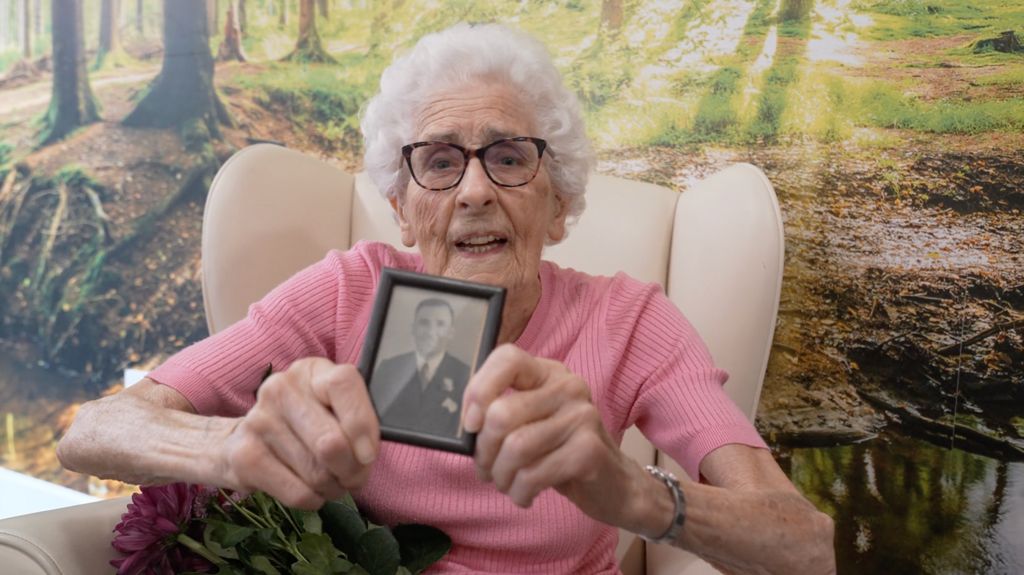
Eighty decades after the end of World War Two, a long-buried wartime mystery has finally been unraveled, connecting two families separated by thousands of miles across continents. The story centers on a Soviet prisoner of war who escaped Nazi captivity on the British Channel Island of Jersey, found refuge with a local farming family, and then vanished without a trace after the war – until a team of BBC journalists uncovered his roots in Central Asia.
Known only to his rescuers by the simple name “Tom”, or Bokejon in his native language, he was among an estimated 2,000 Soviet prisoners of war and forced laborers transported to Jersey by Nazi occupying forces to construct coastal fortifications. In 1943, after enduring brutal conditions in the labor camp, Tom made a daring escape. Weak from starvation, exhaustion and relentless abuse, he stumbled to the door of John and Phyllis Le Breton, a local farming couple. Fully aware that hiding an escaped prisoner carried the death penalty at the hands of the German occupiers, the couple still chose to take him in, sparing his life.
In a personal diary Tom wrote later, he described the unthinkable cruelty of the Nazi camp system. “We quarried stone from 6 a.m. to 6 p.m. every day, with only a small bowl of soup at midday and a meagre slice of bread with butter for tea – no breakfast at all,” he recorded. “For the smallest infraction, we were beaten brutally. If we were too sick to work, they would never believe us, they just starved us and beat us again.”
For more than two years, the Le Bretons hid Tom from German patrols, even growing to trust him enough to let him play with and read to their young children, including their daughter Dulcie, who is now 90 years old and still resides on Jersey. “Our dear Uncle Tom – we loved him so much,” Dulcie shared in an interview. “He is my clearest memory of the entire war, and his photograph has sat by my bedside my whole life. I never stopped wondering what became of him after he left.”
The danger the Le Bretons faced was not abstract. Just a short distance away, another Jersey resident named Louisa Gould was arrested after being reported by a neighbor for sheltering a different escaped Soviet POW. She was deported to the Ravensbrück concentration camp and ultimately murdered in a gas chamber, a stark reminder of what could have happened to the Le Breton family if their secret was exposed.
When Jersey was finally liberated from Nazi occupation in May 1945, Tom and all other surviving Soviet prisoners were repatriated to the Soviet Union. Three letters from Tom reached the Le Bretons as he traveled across Europe back to his homeland, then all communication stopped abruptly.
For returned Soviet prisoners of war, silence after repatriation was often the only option possible. Under Soviet policy at the time, all former captives were sent to NKVD filtration camps for extensive screening and interrogation. Soviet authorities viewed capture by the enemy as inherent evidence of potential disloyalty or collaboration. While some prisoners eventually rejoined civilian life, many were labeled politically unreliable, barred from good jobs and social advancement, and lived under constant suspicion for decades. Others were sentenced to multi-year terms in Soviet labor camps, and the stigma attached to former POWs persisted long after the death of Joseph Stalin in 1953.
The Le Bretons kept Tom’s photo and his few signed letters, but they only knew his name as the English transliteration “Bokijon Akram” – they had no way of knowing his full original name or his place of birth, and neither did local Jersey historians. Decades later, a team of BBC Russian journalists took up the cold case, facing a unique set of challenges. Because Tom had signed his name in Latin script for his Jersey hosts, researchers had no clear way to map it to the Cyrillic spelling that would have appeared on all official Soviet documents.
Over months of work, the team combed through dozens of archival records and tested hundreds of spelling variations, narrowing the search using biographical details Tom had jotted down in his diary. He wrote that he was around 30 years old when he was drafted into the Red Army in 1941, captured while fighting in what is now modern Ukraine, and likely had Central Asian heritage. This information led researchers to a promising match: Bokejon Akramov, born in 1910, drafted from the city of Namangan in what is today eastern Uzbekistan, thousands of miles from Jersey.
Further archival searches uncovered a record that Akramov had been awarded the Order of the Patriotic War late in life, and that entry included a registered home address in Namangan. BBC Uzbek journalists traveled to the address to investigate, bringing with them the well-preserved photograph the Le Breton family had held for 80 years. When they knocked on the door, a man named Shamsiddin Ahunbayev answered – and immediately recognized the man in the photo as his grandfather.
“How did you get my grandfather’s picture?” Ahunbayev asked the team, before breaking down in tears as he heard the full story of Akramov’s years hiding on Jersey. Akramov’s family told the BBC that he rarely spoke about his World War II experiences. They had long wondered why, despite being clearly intelligent and skilled, he was repeatedly turned down for professional or skilled jobs, and spent most of his working life as a gardener at a local Namangan factory. Researchers now say it is almost certain that the stigma of his wartime captivity followed him for the rest of his life, blocking his career. Akramov died in 1996, after what his family described as a peaceful, happy later life.
The BBC arranged a historic video call between Akramov’s Uzbek family and 90-year-old Dulcie Le Breton in Jersey. “Dear Dulcie, we thank your parents from the bottom of our hearts for their courage and kindness,” Ahunbayev told her. “Our grandfather survived the war, and we exist today only because of what your family did. We are so overjoyed to have found you, and we invite you to come to Uzbekistan – our home will always be open for you.”
Dulcie responded humbly, saying her parents had only done what they saw as the right thing. “They were far from the only people on Jersey who helped escaped Soviet soldiers,” she said. “There are dozens of these untold stories, and I hope more people will learn and remember them.”
After learning of the full story, the government of Uzbekistan has announced it will posthumously award John and Phyllis Le Breton the Order of Friendship, one of the country’s highest state honors, in recognition of their extraordinary courage and compassion. Dulcie Le Breton will accept the award on her parents’ behalf at a ceremony this Wednesday.