标签: Europe

欧洲

  • Hantavirus-hit cruise ship leaves Cape Verde after three evacuated

    Hantavirus-hit cruise ship leaves Cape Verde after three evacuated

    A hantavirus outbreak aboard the Dutch cruise vessel MV Hondius has triggered an international public health response, after the ship left its anchorage off Cape Verde this week following the medical evacuation of three passengers and crew. The outbreak, which began after the ship set sail from Argentina one month ago, has already claimed three lives, with global health authorities racing to trace contacts and contain further spread.

    The three evacuated patients — a 56-year-old British national, a 41-year-old Dutch crew member, and a 65-year-old German passenger — are being transported to the Netherlands for specialized medical care, according to the ship’s operator, Netherlands-based Oceanwide Expeditions. As of the latest update, two of the three have already arrived at a Dutch hospital, while the third’s evacuation flight has been delayed. None of the evacuees have returned positive hantavirus tests to date, though two are exhibiting classic symptoms of the infection. Oceanwide Expeditions confirmed the German evacuee had close contact with a German woman who died aboard the vessel on May 2, one of the three fatalities linked to the outbreak.

    Three people who were on the MV Hondius have died since the voyage began. Only one death has been definitively linked to hantavirus so far, with the cause of the other two still under investigation. The timeline of fatalities traces back to April 11, when a Dutch man died aboard the ship; his cause of death has not been confirmed. His wife, also Dutch, disembarked at St Helena on April 24 and traveled to South Africa, where she died on April 26. Post-mortem testing confirmed she carried the Andes strain of hantavirus, a variant most commonly found in Latin America, the region where the cruise originated. The third fatality is the German woman who died on May 2; her cause of death is still unconfirmed, and her body remains aboard the ship.

    Contact tracing efforts are already underway across multiple countries. After the Dutch woman’s death, KLM Royal Dutch Airlines confirmed she had boarded a flight from Johannesburg to Amsterdam on April 25, but crew removed her from the flight after noticing her poor health condition. The World Health Organization (WHO) is currently tracing all passengers who shared the flight with her as a precaution. Separately, the UK Health Security Agency confirmed two British passengers who disembarked the MV Hondius earlier in the voyage are currently self-isolating at home in the UK after potential exposure, and neither has developed symptoms.

    As of the WHO’s latest public update, eight cases of hantavirus have been identified aboard the ship: three confirmed infections and five suspected cases. While hantavirus most commonly spreads to humans from rodent populations, public health experts believe human-to-human transmission through close physical contact is driving this outbreak. This matches patterns of previous outbreaks involving the Andes strain, which has been documented to spread between people in close contact. Testing for the virus among the 146 remaining people aboard the ship is still ongoing, though health officials have stressed that the risk of widespread transmission to the general public remains very low.

    Before the MV Hondius departed Cape Verde on Wednesday, three additional medical staff joined the vessel to monitor passengers and crew through the three-day voyage to the Canary Islands, a Spanish archipelago off the coast of northwestern Africa. The trip to the Canaries was approved by Spanish national health authorities, but the regional government of the Canary Islands has openly pushed back against the plan. Canary Islands President Fernando Clavijo told Spanish broadcaster Onda Cero that he could not allow the vessel to enter the region’s waters, arguing the central government’s decision lacked any supporting technical public health criteria and that regional officials had not been provided enough information about the outbreak. Clavijo has called for an urgent meeting with Spanish Prime Minister to address the dispute.

    Spanish Health Minister Mónica García has pushed back against regional concerns, saying all remaining people aboard the MV Hondius are currently asymptomatic, and the planned arrival protocol has been designed to eliminate any risk to Canary Island residents. A team of infectious disease specialists and WHO staff are now aboard the vessel, accompanying it to the Canary Islands and maintaining strict precautionary infection control measures for all people on board. When the ship docks in Tenerife, every passenger and crew member will undergo a full medical assessment. Passengers and crew from foreign countries will be repatriated directly to their home countries after clearing assessment, while Spanish nationals will be transferred to a military hospital in Madrid to complete quarantine. García emphasized that the entire process will be structured to avoid any contact between people on the ship and the general Canary Islands population.

    WHO technical lead Dr Maria Van Kerkhove has sought to ease public anxiety by clarifying how hantavirus spreads, noting it differs drastically from more transmissible respiratory viruses such as COVID-19 and influenza. “We’re not talking about casual contact from very far away from one another,” she explained, adding that transmission only occurs through close physical contact.

  • ‘Enjoy the show. Ignore the war’: Venice Biennale faces backlash after including Russia

    ‘Enjoy the show. Ignore the war’: Venice Biennale faces backlash after including Russia

    One of the art world’s most prestigious global gatherings, the Venice Biennale, has been roiled by high-profile demonstrations and bitter political division ahead of its official public opening, centered on the controversial decision to allow Russia to return to the event for the first time since Moscow launched its full-scale invasion of Ukraine in 2022.

    Two prominent activist groups – Russian protest punk collective Pussy Riot and Ukraine-founded women’s rights movement FEMEN – teamed up for a dramatic, attention-grabbing demonstration outside the Russian national pavilion. Dressed head-to-toe in black with eye-catching fluorescent pink balaclavas, the activists charged through the Biennale’s iconic canal-side gardens, chanting loudly directly outside the glass-doored pavilion venue. As security personnel scrambled to slam the pavilion’s doors shut to block the protest, the demonstrators ignited colored smoke flares, raised their fists in defiance, and shouted slogans including, “Russia kills! Biennale exhibits!” One prominent protest poster carried a searing message: “Curated by Putin, dead bodies included.”

    Nadya Tolokonnikova, a founding member of Pussy Riot, framed Russia’s reinstatement to the Biennale as a deliberate component of Moscow’s broader hybrid warfare campaign against the West. “They’re drinking vodka and champagne inside their pavilion, soaked in the blood of Ukrainian children,” Tolokonnikova said in an interview. “This isn’t just about tanks, drones, murder and rape in Ukraine. It’s also about culture, art, language – it’s how Russia tries to conquer the West, and you all just opened the doors for them.”

    Controversy over Russia’s return has stretched far beyond the activist protest. The European Commission has issued a strong condemnation of the decision, threatening to withdraw €2 million in core funding for the Biennale. Brussels argues that allowing an aggressor state like Russia to showcase its art on this global platform directly violates the ethical standards tied to the grant. Italy’s national culture minister has also joined the boycott, announcing he will skip the opening of the fair this Saturday. However, high-profile Italian politician Deputy Prime Minister Matteo Salvini – who drew international attention in 2014 for visiting Moscow’s Red Square wearing a Vladimir Putin-branded t-shirt – has rejected calls for a boycott, stating that “No pavilion should be excluded.” Sources familiar with the European Commission’s position indicate Brussels is unimpressed by Rome’s refusal to back the exclusion.

    The political friction at the 61st Venice Biennale is not limited to Russia’s participation. Last week, the entire international jury for the event resigned in protest after a reference was made to countries whose leaders face arrest warrants from the International Criminal Court for suspected war crimes – a designation that covers both Russia and Israel. On Wednesday morning, a separate group of demonstrators targeted the Israeli pavilion, covering the entrance floor with rain-soaked leaflets branding the space a “Genocide Pavilion.” Israel’s foreign ministry has previously hit back, accusing a “political jury” of turning the Biennale into a venue for “anti-Israeli political indoctrination.”

    Venice Biennale president Pietrangelo Buttafuoco, a right-wing former journalist who has publicly expressed admiration for Russian President Vladimir Putin, has broken his near-silence on the growing controversy to push back against critics. He slammed calls for the exclusion of Russia and Israel as a “laboratory of intolerance,” dismissing the demands as censorship and exclusion. “If the Biennale began to select not works but affiliations, not visions but passports, it would cease to be what it has always been: the place where the world meets,” Buttafuoco told reporters before walking out of the press conference without taking questions.

    But critics say Buttafuoco’s argument ignores the harsh reality of the war in Ukraine, highlighted by a series of striking posters pasted across Venice this week. The advertisements promote an “Invisible Biennale,” featuring imaginary events by Ukrainian artists and writers killed during the Russian invasion. One entry highlights Volodymyr Vakulenko, a Ukrainian author shot by Russian troops after they occupied his village; each poster is stamped with the line: “Cancelled. Because the author was killed by Russia.”

    Held every two years, the Venice Biennale’s national pavilions are widely viewed as one of the most high-profile platforms for countries to project soft power globally, a role that is particularly significant for authoritarian states seeking to shape international perception. After Russia’s full-scale invasion in 2022, the curators of the Russian pavilion pulled out in protest, and the space was loaned to Bolivia for the 2024 edition. For this year’s event, a Russian team has filled the pavilion with an installation centered on an upside-down tree paired with experimental sound performances.

    When asked if Russia deserved a place at the Biennale amid its ongoing war in Ukraine, pavilion commissioner Anastasia Karneeva dismissed the question entirely. “This is our house, we come to our place,” she said. “I don’t think about the protests. I am very busy.” Karneeva is the daughter of a deputy head of Rostec, Russia’s massive state-owned weapons producer that is currently under international sanctions; she declined to comment on that connection and ended the interview shortly after.

    Notably, Russia’s participation this year is only partial: the pavilion is set to close after this week’s pre-opening events, and it remains unclear whether the early closure is a response to protests or the impact of ongoing international sanctions. The planned performances, however, have been recorded and will be screened on an outdoor screen for the duration of the fair. The audio from these screenings will carry just a short distance down the garden path – directly toward Ukraine’s official pavilion, located steps away from the main entrance.

    Ukraine’s contribution to the 2026 Biennale carries its own powerful, haunting message. Hanging suspended by thick steel straps from a crane just outside the entrance is a concrete cast of an origami deer, created by Ukrainian artist Zhanna Kadyrova. The sculpture was originally installed in Pokrovsk, a city in eastern Ukraine’s Donbas region, when the frontline with Russian forces was still 40 kilometers away. As Russian troops advanced on the city in 2024, Kadyrova made the decision to evacuate the work to save it from destruction or occupation.

    “We have a destroyed city that does not exist now. I hope this message is clear and people who visit the Biennale can understand it,” Kadyrova explained in a recent interview from her Kyiv studio. The deer has become a poignant symbol of displacement, mirroring the fate of millions of Ukrainians forced to flee their homes by the invasion. “Pokrovsk is now an occupied city. A lot of people were killed there. But we saved this artefact. The question is how many artefacts were not saved in this war? How many other kinds of heritage were destroyed?” she asked. “This was a lively city. And it does not exist now because Russia came.”

  • Luka Doncic says being injured during Lakers’ playoff run has been ‘very frustrating’

    Luka Doncic says being injured during Lakers’ playoff run has been ‘very frustrating’

    OKLAHOMA CITY — Six-time NBA All-Star Luka Doncic has opened up about his unconventional hamstring injury recovery process, revealing Wednesday that he traveled to Spain to receive a series of platelet-rich plasma (PRP) injections in a bid to shorten his projected eight-week layoff. Doncic has been out of the Los Angeles Lakers lineup since suffering the hamstring injury on April 2.”I went to Spain to do PRP,” Doncic told assembled reporters ahead of Game 2 of the Lakers’ Western Conference Semifinals series against the Oklahoma City Thunder. “Everybody knows that it’s one of the best countries to get this procedure done. We coordinated the entire plan with the Lakers’ medical staff, and everyone signed off on the trip.”Doncic explained that the treatment structure required an extended stay overseas, as each PRP injection called for four days of rest between sessions. He completed four total injections, leading to his prolonged time in Spain. “I know and trust a lot of people I’ve worked with before in Spain, so that made the decision even easier,” he added. As of his Wednesday update, the star guard said he has progressed to light running in his rehabilitation, but has not yet resumed any contact drills or full-court scrimmage work.Doncic’s absence was already felt in the series opener Tuesday, as the Thunder pulled away to a 108-90 win over the short-handed Lakers in Oklahoma City. For the All-Star, watching from the sidelines has been an emotionally draining experience, especially during the high-stakes postseason.”It’s very frustrating. I don’t think people understand how frustrating it is,” Doncic said. “All I want to do is play basketball, especially this time of year — this is the best time to play. It’s tough to watch my team compete from the stands, even though I’m so proud of how they’ve stepped up. It’s been really hard to sit out.”Despite his desperation to rejoin the lineup, Doncic emphasized he is prioritizing long-term caution over a rushed return. The forward noted he has experienced negative outcomes from rushing back from injuries earlier in his career, and this first-time hamstring injury requires extra care.”It’s a tough balance for me. I’ve come back from injuries too soon before, and it wasn’t the best result,” he said. “This is the first time I’ve had a hamstring injury, and it’s not like other injuries I’ve dealt with. You have to be very careful. I’m doing everything possible to get back on the court as soon as I’m safely able.”The series is set to continue Thursday night, with Game 2 tipping off at the Thunder’s home arena in Oklahoma City.

  • Fifteen Portugese police officers detained in torture investigation

    Fifteen Portugese police officers detained in torture investigation

    A sweeping internal investigation into systemic police abuse targeting marginalized communities at two central Lisbon police stations has expanded once again, with Portuguese law enforcement authorities confirming that 15 more officers have been taken into custody this week. The unfolding scandal, which first came to light last year, now implicates more than 20 members of Portugal’s police force in allegations of torture, sexual violence, and widespread cover-ups of misconduct.

    The first public break in the case came in January, when two officers in their 20s were formally charged with aggravated torture, rape, and abuse of power. Investigations later uncovered that the violent incidents were secretly recorded by the officers themselves, with clips of the abuse shared among dozens of officers in private WhatsApp chat groups, according to court filings.

    The investigation gained momentum in March, when seven additional officers were detained for alleged ties to the scandal. On Tuesday, the sweep widened further: alongside the 15 new detentions, one civilian was also taken into custody. Unnamed police sources speaking to Portuguese media outlets confirmed that two of the newly detained officers hold senior chief ranks within the force. As of this week, investigators have not publicly clarified whether the most recent detainees are suspected of directly participating in the abuse or failing to report the criminal activity to authorities, a violation of police conduct rules.

    The alleged crimes date back to 2024 and 2025, and are tied exclusively to the Rato and Bairro Alto police stations, two high-traffic precincts in central Lisbon. All of the identified victims are members of highly vulnerable, marginalized groups: people experiencing homelessness, people struggling with drug addiction, and undocumented immigrants, according to the investigation’s preliminary findings.

    Portugal’s Home Affairs Minister Luís Neves has moved quickly to contain the fallout, emphasizing this week that there is currently no evidence to suggest the abusive culture extends beyond the two precincts under investigation. Even so, he acknowledged that the scandal exposes deep systemic flaws within the force, including a widespread culture of complacency that allowed abusive behavior to go unchecked for years.

    “These are particularly serious crimes,” Neves told Portuguese national television in an interview on Wednesday. “There is a clear difference between someone who had access to evidence of these crimes and chose to stay silent, and someone who actively took part in the violence.”

    Human rights advocacy group Amnesty International has long flagged systemic police brutality and a culture of impunity within Portugal’s law enforcement agencies. Earlier this year, before the full scope of the Lisbon scandal emerged, the organization warned of an “enormous sense of impunity” among rank-and-file officers, noting that victims from vulnerable communities are often too intimidated by systemic power imbalances to come forward and file formal complaints.

    In response to the unfolding allegations, Portugal’s National Union of Police Officers has called the reported acts of torture “deeply disturbing”, and is pushing for major overhauls to the country’s police hiring and vetting process, calling for increased rigor to filter out candidates unsuited for public service.

    Luís Carrilho, the head of Portugal’s Public Security Police (PSP), reaffirmed the force’s commitment to rooting out misconduct earlier this week, stating that the institution enforces a “zero-tolerance policy towards cases of misconduct”, and urged the public that the country “can continue to trust the police” as the investigation proceeds.

  • French professor investigated for awarding himself fake prize

    French professor investigated for awarding himself fake prize

    A years-long academic hoax involving a completely fabricated prestigious prize has shaken the French higher education system, leaving a veteran scholar under criminal investigation and suspended from his longtime position. Florent Montaclair, who taught for two decades at a university in Besançon, eastern France, stands accused of inventing a Nobel-equivalent award in philology — the study of language through historical texts — and then awarding the top honor to himself to bolster his professional credentials.

    The elaborate scheme dates back to 2015, when local press in Besançon published a story touting Montaclair as a finalist for the Nobel Prize. By the end of that year, reports claimed he had claimed the Gold Medal of Philology, a fictional award tied to a fake governing body: the International Society of Philology. In June 2016, the self-styled laureate held an official award ceremony at France’s National Assembly in Paris, an event attended by sitting government ministers and even Nobel Prize winners. Later that same year, Montaclair expanded his hoax by presenting an honorary version of his fake medal to 88-year-old legendary American linguist and philosopher Noam Chomsky at a public event in Brussels, with footage of the ceremony still accessible online.

    The fake International Society of Philology even maintains a public website that lists supposed prize winners dating all the way back to 1967, including iconic Italian writer Umberto Eco. Observers have since noted that the unpolished, low-budget design of the site should have raised red flags early on. Beyond the invented prize and society, Montaclair also added a falsified academic credential to his resume: a doctorate in French literature and grammar from an institution called the University of Philology and Education in Lewes, Delaware. Public records confirm no such university has ever existed.

    The hoax went undetected in France for years, even after it was exposed in 2019. That year, after Montaclair named Romanian philologist Eugen Simion as the next Gold Medal recipient, the announcement triggered a firestorm of interest in Romania, where skeptical local journalists launched an investigation that quickly uncovered the entire fraud. Despite the revelation, the truth never spread to French academic circles, and Montaclair continued teaching at his university for several more years.

    The full scope of the fraud only came to light last year, when Montaclair was scheduled to lead an academic panel on disinformation and fake news. A colleague, recalling the old rumors from Romania, flagged the issue to university leadership, prompting an official probe. When French law enforcement searched Montaclair’s home in February of this year, the scholar immediately acknowledged the hoax, investigators report. He told officers he had personally ordered the gold medal from a Paris-based jeweller just weeks before the 2016 ceremony, paying just €250 (approximately £215) for the award.

    In his defense, Montaclair has denied the fraud amounts to criminal conduct. He claims the invented award was simply a failed attempt to establish a new academic distinction, not a con. He also notes that the local media that originally covered his “Nobel shortlist” nomination were responsible for framing the fake award as a Nobel-equivalent honor, rather than making that claim himself.

    Investigators from the Besançon public prosecutor’s office are currently examining whether the fake credentials helped Montaclair advance his academic career or gain unfair professional or financial benefits. Prosecutor Paul-Edouard Lallois, who is leading the probe, called the affair “such an unlikely tale, it could be out of a film.” If investigators cannot prove the hoax resulted in illegal gain, prosecuting Montaclair on criminal charges may prove impossible. Currently, Montaclair has been suspended without restriction from his university position, pending the outcome of the ongoing investigation.

  • Piqué gets 6-match suspension and 2-month ban for altercation with match officials in 2nd division

    Piqué gets 6-match suspension and 2-month ban for altercation with match officials in 2nd division

    MADRID — In a disciplinary decision released this Wednesday, the Royal Spanish Football Federation (RFEF) has handed former Spanish national team and FC Barcelona icon Gerard Piqué a six-match ban, following controversial comments he directed at match officials during a recent Segunda División fixture. Piqué, who owns FC Andorra, has also been barred from carrying out his duties as the club’s majority owner for a two-month period, penalties stemming from incidents that unfolded during Andorra’s 1-0 home defeat to Albacete on 1 May.

    The disciplinary body has additionally levied a €1,500 ($1,762) fine against FC Andorra itself, and ordered the partial closure of the club’s stadium for two upcoming league matches. According to the official RFEF report documenting the exchange, Piqué told a match official: “In another country, they would tear you apart, but here in Andorra we are a civilized country.”

    Piqué first acquired FC Andorra back in 2018 alongside a consortium of fellow investors, at a time when the small club — based in the tiny Pyrenean microstate wedged between Spain and France — was competing in Spain’s fifth tier of domestic soccer. Founded in 1942, the side had spent the vast majority of its 81-year history competing in the lower divisions of the Spanish football pyramid before Piqué’s takeover.
    Under Piqué’s ownership, FC Andorra has climbed rapidly through the league system, securing promotion to the Segunda División in 2022. At the current stage of the 2023-2024 campaign, the club holds 10th position in the 22-team second-tier standings, a solid mid-table performance for a side that reached the professional ranks just two seasons ago. The disciplinary sanctions mark a rare high-profile disciplinary action against a high-profile club owner in Spanish football, bringing renewed attention to standards of conduct for club officials toward match officials.

  • EU auditors sound alarm over billions in COVID recovery funds that can’t be clearly traced

    EU auditors sound alarm over billions in COVID recovery funds that can’t be clearly traced

    BRUSSELS – In a newly released audit report published Wednesday, the European Court of Auditors has raised critical transparency concerns around the EU’s landmark €577 billion ($679 billion) post-COVID-19 economic recovery fund, stating that auditors cannot fully trace how billions in public funding are allocated across the bloc’s 27 member states.

    The Recovery and Resilience Facility (RRF), the largest component of the EU’s collective pandemic response, was established in 2020 at the height of the global health crisis. When national governments imposed border closures, strict lockdowns, and raced to secure vaccine supplies to curb the spread of the deadly coronavirus, the EU fell into its deepest post-WWII recession. Designed to deliver targeted grants and loans to member states for projects focused on sustainable growth, digital transition, and green transformation, the fund departed from traditional EU budget processes: instead of disbursing funds based on projected project costs, payments are released only after pre-agreed policy and reform milestones are met. To ensure public accountability, RRF rules require national governments to publish the identities of their top 100 funding beneficiaries.

    Despite these safeguards, the audit found major gaps in public disclosure. Examining reporting from 10 selected member states, auditors found that the published top 100 beneficiaries are almost entirely public entities – national ministries, government agencies, and subnational governments – with almost no transparency around private sector recipients, including businesses and large industry consortiums that receive billions in funding. Thousands of final recipients remain unlisted in public records.

    “Without clear, complete information on where the money goes, we cannot verify if funds are distributed fairly, if dangerous concentration of funding exists, or if EU taxpayer money delivers tangible value for ordinary citizens,” explained Ivana Maletić, the European Court of Auditors member who led the audit. Maletić emphasized that transparency is not a trivial administrative detail, but a foundational requirement for public trust and democratic accountability. She added that EU legislators investigating potential misuse of public funds have repeatedly requested details on transfers to private companies and consortiums, information that auditors were unable to obtain. The audit specifically noted that French authorities cited excessive administrative burden as a reason for failing to share details on final private recipients, even upon formal request.

    Cases of fraudulent diversion of RRF funding have already been documented: two years ago, law enforcement agencies in Italy, Austria, Romania and Slovakia arrested 22 people as part of a crackdown on a criminal ring accused of siphoning more than €600 million ($700 million) in pandemic relief funds.

    The European Commission, the EU’s executive branch which manages the RRF, has pushed back against the auditors’ criticism. Commission officials noted that the framework for the fund was negotiated and approved by all 27 member states, limiting the executive’s ability to impose stricter transparency rules unilaterally. It defended the milestone-based payment model, arguing that its existing system of payment review, progress reporting, and ongoing engagement with member states to resolve reporting inconsistencies is functioning as designed.

    The auditors’ broader concern extends beyond the current RRF: they warn that the flexible, conditions-based model used for the recovery fund is gaining support among policymakers, and could be expanded to major spending areas in the EU’s next seven-year long-term budget (2028-2034), which is expected to total roughly €2 trillion ($2.4 trillion). If adopted for traditional spending lines such as agricultural subsidies and infrastructure grants, the same lack of transparency could become systemic, Maletić argued. The milestone model, she said, is unacceptably opaque and boils down to arbitrary allocation of funds to recipients, making it unsuitable for longstanding EU budget policies. The commission dismissed this concern, noting that any future changes to EU budget architecture will be decided jointly by member states and the directly elected European Parliament.

  • Sweden detains sanctioned oil tanker believed to be linked to Russia’s shadow fleet

    Sweden detains sanctioned oil tanker believed to be linked to Russia’s shadow fleet

    STOCKHOLM – Swedish authorities have taken custody of a tanker linked to Russia’s controversial sanctioned shadow fleet, marking the fifth seizure of a questionable vessel in Swedish territorial waters in recent weeks, the country’s top civil defense official has confirmed.

    The Jin Hui, which was found transiting the Baltic Sea through Swedish waters flying a Syrian flag, was boarded and detained by the Swedish Coast Guard on Sunday. Along with its connections to the Russian shadow fleet, authorities have raised multiple red flags about the ship: it is suspected of using fraudulent flag registration, and questions remain about whether it meets international seaworthiness safety standards. As of Monday, the tanker remained anchored off the southern Swedish port of Trelleborg.

    In a post to the social platform X, Civil Defense Minister Carl-Oskar Bohlin confirmed the vessel appears on the European Union, United Kingdom and Ukraine sanctions designations lists. On Monday, Swedish prosecuting officials announced the ship’s captain, a Chinese national, has been taken into custody on suspicion of forging official documents and other related maritime violations.

    The seizure adds to a growing pattern of enforcement by Swedish maritime authorities targeting unsafe and sanction-violating vessels operating in the Baltic. “Ships with suspected deficiencies in their seaworthiness continue to sail in Swedish waters. This is not acceptable. We have intervened before, now we are intervening again,” said Daniel Stenling, the Swedish Coast Guard’s deputy chief of operations.

    As of Wednesday, Russia’s embassy in Stockholm had not responded to requests for comment on the incident.

    The operation comes as part of Sweden’s broader ongoing crackdown on vessels connected to Russian sanctioned energy and commodity trade. Last year, the Scandinavian nation announced it would ramp up mandatory insurance checks for all foreign vessels passing through its waters, a policy crafted specifically to tighten restrictions on Russian ships accused of smuggling oil, gas, and illegally seized Ukrainian grain.

  • France moves nuclear-powered carrier toward Hormuz in potential mission, as Trump pauses US effort

    France moves nuclear-powered carrier toward Hormuz in potential mission, as Trump pauses US effort

    PARIS – In a significant escalation of European military positioning in the Middle East, French armed forces announced Wednesday that the country’s flagship aircraft carrier strike group has transited the Suez Canal southward into the Red Sea, paving the way for a possible joint Franco-British security operation in the strategically critical Strait of Hormuz.

    The strait, a linchpin of global energy trade, has been effectively closed since Iran shut down access on March 4, in retaliation for joint U.S.-Israeli airstrikes that killed Iranian Supreme Leader Ayatollah Ali Khamenei on February 28. This closure has already choked off roughly 20% of the world’s daily oil supplies, triggering what the International Energy Agency has described as the most severe global oil supply disruption in modern history. For months, the standoff has paralyzed shipping through the waterway, sending war-risk insurance premiums soaring four to five times above pre-conflict levels and leaving roughly 2,000 commercial vessels stranded in the Persian Gulf.

    This southward repositioning of the nuclear-powered Charles de Gaulle – Europe’s most powerful warship and the only nuclear-powered aircraft carrier outside the United States Navy – and its escort vessels brings the strike group closer to the Hormuz chokepoint than it has been at any point since the outbreak of the current conflict. The deployment is the next phase of a broader Middle East mission first announced by French President Emmanuel Macron in a March 3 televised address, one day before Iran closed the strait.

    “Going south of Suez is new for us,” Colonel Guillaume Vernet, spokesperson for the French armed forces chief of staff, told the Associated Press. “Geographically, it’s closer to the Strait of Hormuz and will therefore enable us to react faster, once the conditions are met.” Vernet confirmed that all operational planning for the mission has been finalized and the coalition is prepared to launch operations as soon as preconditions are met.

    The multi-nation coalition, led by France and the United Kingdom with participation from more than 50 additional countries, will not commence operations until two core thresholds are satisfied: a measurable reduction in threats to commercial shipping, and sufficient confidence among global maritime industry stakeholders to resume transits through the strait. Even after these conditions are met, Vernet added, any operational launch will require formal approval from neighboring states bordering the waterway. “Today the Strait of Hormuz is stuck because of the threat, and the insurance premiums are so high. Not a single ship will jeopardize their trip or go there,” he explained.

    This European-led initiative is separate from the U.S.-run “Project Freedom” mission, which was launched Sunday only to be paused by former U.S. President Donald Trump just 48 hours later. Washington has not been involved in Franco-British planning, a structure that military analysts note mirrors the “coalition of the willing” for Ukraine that Macron and current British Prime Minister Keir Starmer assembled early in the Russia-Ukraine conflict. Unlike the U.S. mission, the French-British operation is explicitly framed as conditional and strictly defensive.

    “The French position is the same since the beginning — defensive posture, respecting international law,” Vernet said. He traced the origins of the initiative back to the immediate aftermath of Iran’s strait closure, noting that Macron pushed for a multinational collective effort to restore freedom of navigation in the strait from the earliest days of the crisis. “Right after that, we had the opportunity to build things with different countries,” including the U.K., Italy, the Netherlands and other partner nations, he added. Coordination advanced rapidly following a Paris summit hosted by Macron and Starmer for dozens of participating nations on April 17, with military planners from more than 30 countries finalizing operational details at the United Kingdom’s Permanent Joint Headquarters in Northwood on April 22 and 23.

    The Charles de Gaulle strike group was originally repositioned from the Baltic Sea to the eastern Mediterranean following Macron’s March 3 order, part of what the French presidency called an “unprecedented” mobilization that also includes eight frigates and two Mistral-class amphibious assault ships. France already maintains a persistent military presence in the Gulf: under a long-standing defense agreement with the United Arab Emirates, roughly 900 French personnel are stationed at Al Dhafra Air Base, where French Rafale fighters have been intercepting Iranian drones and missiles targeting the UAE since the outbreak of hostilities on February 28.

    The strike group’s new position in the Red Sea places its 20 embarked Rafale fighters and E-2C Hawkeye early-warning aircraft within striking range of the Strait of Hormuz without entering the Persian Gulf, where the U.S. Navy has enforced a blockade of Iranian ports since April 13. Vernet declined to name a potential timeline for the launch of operations, emphasizing that the repositioning is a pre-emptive measure to ensure the coalition can act quickly when and if operational conditions are met.

  • Robot wars – what an operation in Ukraine tells us about the battlefield of the near future

    Robot wars – what an operation in Ukraine tells us about the battlefield of the near future

    The ongoing conflict in Ukraine is reshaping the future of global military engagement at an unprecedented pace, with a growing cohort of new-age defense firms predicting that robotic combatants could soon outnumber human troops on the battlefields of the country. This bold claim comes from UFORCE, a Ukrainian-British defense technology startup that operates out of an unmarked, low-profile office in London – a security precaution implemented to fend off potential sabotage attempts from Russian actors, according to company representatives.

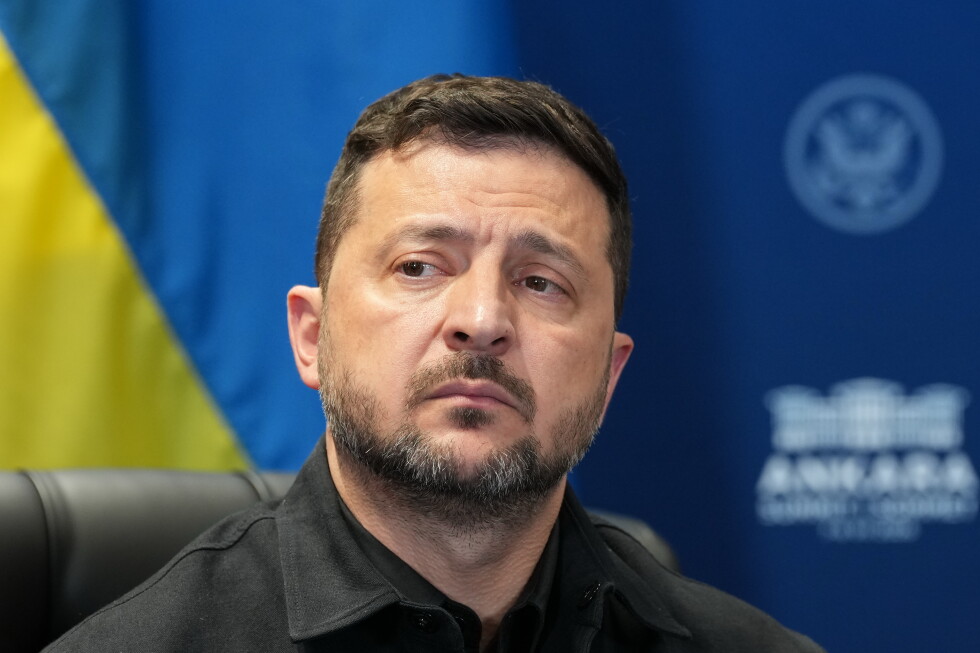
    The discussion around robotic combat surged into the public eye last month, when Ukrainian President Volodymyr Zelensky highlighted a historic, first-of-its-kind military operation in a public video address. According to Zelensky, Ukrainian forces successfully seized hostile territory using only robotic systems and drones, a milestone he framed as a turning point in modern warfare. Neither the Ukrainian military nor UFORCE has released concrete details about the alleged operation; however, a UFORCE representative confirmed that the firm’s air, land, and sea unmanned systems are already active in frontline combat operations across Ukraine.

    “I can’t go into specifics about the operation or how UFORCE was involved, but we’ve conducted more than 150,000 successful combat missions since the full-scale Russian invasion in 2022,” explained Rhiannon Padley, the company’s UK director of strategic interactions. Padley added that the trend of robots fighting robots will only become more widespread, projecting that unmanned systems will eventually surpass human soldiers in number on future battlefields.

    Russia has already deployed its own robotic systems to deliver explosive payloads to Ukrainian positions, and independent defense analysts broadly agree that the war in Ukraine has accelerated the development and deployment of unmanned military technology by years. Beyond shifting the dynamics of the current conflict, this rapid advancement has ignited a global debate over the ethical, strategic, and operational implications of widespread robotic and AI-integrated warfare.

    Melanie Sisson, a senior fellow at the Washington-based Brookings Institution, framed Ukraine as a global leader in the evolution of modern defense technology. “I really consider Ukraine to be a major teacher in the future of national defence and armaments,” Sisson noted. “It’s an impressive case study in how necessity drives invention.”

    UFORCE is at the forefront of a new wave of disruptive “Neo-Prime” defense startups that are challenging the dominance of long-established legacy defense contractors including BAE Systems, Boeing, and Lockheed Martin. One of the most high-profile of these new entrants is Anduril, a US-based defense technology firm that completed its first test flight of an autonomous, unpiloted fighter jet in February of this year.

    While the vast majority of unmanned systems currently in use remain remotely controlled by human operators, companies like Anduril are rapidly integrating artificial intelligence into weapons platforms to increase autonomous functionality. UFORCE’s land-based drones already use AI-powered software to assist human operators with targeting, and Anduril confirms that some of its newest systems can independently complete the final stage of an attack without human input.

    The US federal government has publicly pushed for rapid adoption of AI across the US military, with Defense Secretary Pete Hegseth stating in January that the country must transition to an “AI-first warfighting force.” A 2025 assessment from the US Department of Defense also confirmed that China is rapidly expanding its own development and deployment of AI-integrated military systems, intensifying a global arms race in autonomous defense technology.

    Many analysts argue that a future of widespread robot-on-robot combat is all but unavoidable. Jacob Parakilas, a researcher with the independent think tank RAND Europe, points out that cross-drone combat is already a regular occurrence in Ukrainian airspace. “Seeing that extend to land and maritime warfare seems extremely likely, if not inevitable,” Parakilas said.

    Despite the strategic and operational advantages touted by developers, human rights organizations have raised urgent alarms over the growing autonomy of weapons systems, particularly the critical issue of accountability for civilian harm and unlawful killings. “Militaries adopt AI to speed up processes such as target identification. But delegating life-and-death decisions to machines poses profound ethical and human rights risks,” explained Patrick Wilcken, a military technology researcher at Amnesty International.

    Defense manufacturers push back on these criticisms, arguing that retaining a “human in the loop” for critical decision-making mitigates these risks, and that all final decisions to use lethal force remain in the hands of military personnel. Proponents of AI-integrated systems also argue that autonomous technology can reduce human error in high-stress combat environments. “Humans need rest and food, and under combat conditions those needs aren’t always met,” said Dr Rich Drake, UK general manager at Anduril Industries. “Computing allows us to reduce errors across what we call the kill chain.”

    The explosive growth of UFORCE underscores the massive commercial opportunity in autonomous military technology: the startup has expanded rapidly amid the war in Ukraine and recently achieved unicorn status, reaching a valuation of more than $1 billion. As global investment pours into this emerging sector, the question is no longer whether robotic warfare will become the norm, but how the international community will govern its use to mitigate ethical and humanitarian harm.