A years-long ideological battle over France’s state-funded public broadcasting system erupted into open conflict this week, after a parliamentary inquiry committee released a damning report calling for sweeping budget cuts, channel closures, and structural overhauls of the nation’s public media sector. The 1 billion euro ($1.09 billion) recommended cut to public broadcasters France Télévisions and Radio France comes alongside explosive accusations of systemic left-wing ideological bias and rampant mismanagement of public funds, sparking immediate pushback from political leaders, industry executives, and even the committee’s own chair.
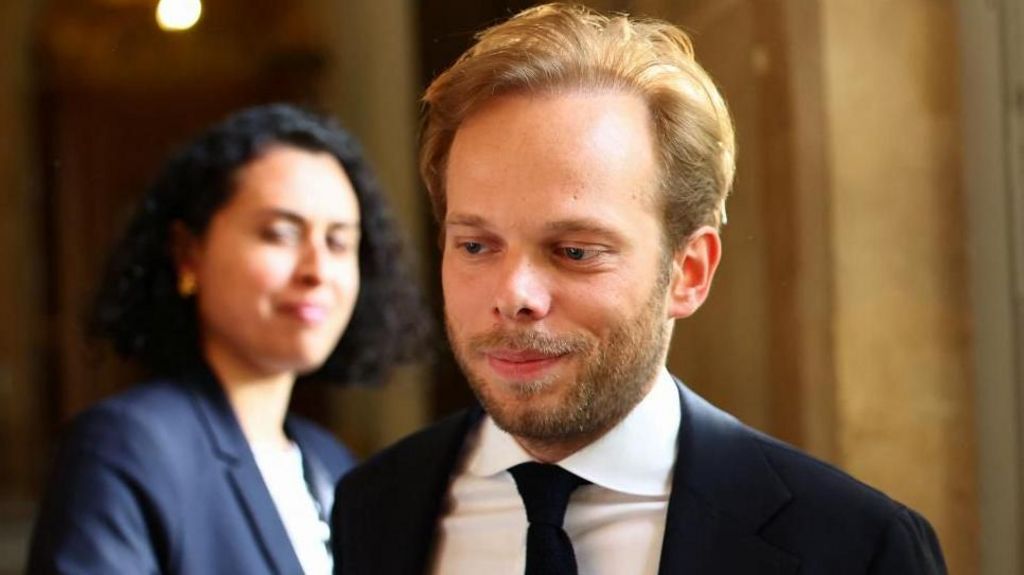
The inquiry, which wrapped up six months of often fractious public hearings, was led by rapporteur Charles Alloncle, a 32-year-old lawmaker from the small Union of the Right for the Republic (UDR), a minor right-wing party aligned with Marine Le Pen’s populist National Rally (RN) — France’s largest single political party. For decades, Le Pen’s movement and its right-wing allies have claimed that state media systematically marginalizes conservative and far-right voices, a grievance Alloncle amplified in his final report.
In the report’s opening, Alloncle argues that France’s sprawling public audiovisual ecosystem is fundamentally ill-suited to 21st-century media challenges, calling for a full or partial restructuring of how the sector operates. Among his 69 formal recommendations are a one-third reduction to public television’s sports rights budget, major cuts to the number of prime-time game shows, and the full elimination of three youth-focused outlets: television channel France 4, digital channel Slash, and radio station Mouv’. Alloncle also proposes a series of mergers to eliminate overlapping services: merging main generalist channel France 2 with low-viewership France 5, combining international news channel France 24 with domestic 24-hour news outlet France Info, and consolidating duplicative regional television and radio networks.
On the editorial side, Alloncle pushes for greater ideological diversity among on-air commentators, who right-wing leaders have repeatedly accused of being uniformly drawn from a small circle of left-leaning, Paris-based elites. He supports these claims with multiple documented examples of perceived bias, including an intercepted 2025 conversation where two prominent public media commentators allegedly told Socialist Party officials they would work to block right-wing candidate Rachida Dati’s Paris mayoral campaign. He also highlights an off-camera incident where commentator Natalie Saint-Cricq compared UDR party leader Eric Ciotti to fascist dictator Benito Mussolini.
On the financial front, Alloncle details what he frames as years of unchecked waste of taxpayer funds, including the outsourcing of hundreds of millions of euros in production contracts to private firms, many of which are led by on-air public media personalities already receiving public salaries. He also calls out excessive expenses, including a total 3.2 million euro taxi bill for public media staff in 2024 and 110,000 euros in hotel costs for 2023 Cannes Film Festival coverage.
Critics however have rejected the report as a thinly veiled ideological push to weaken public broadcasting and clear the way for full privatization, a long-stated goal of the French far-right. The report drew cross-party condemnation within hours of its public release Tuesday. Centrist committee president Jérémie Patrier-Leitus accused Alloncle of turning a nonpartisan inquiry into a political project designed to undermine public media ahead of a potential sale. Prime Minister Sébastien Lecornu called the report a “missed opportunity” that failed to address the core challenges facing French public broadcasting. France Télévisions chief Delphine Ernotte dismissed the document as nothing less than a political show trial, designed to impose ideological preferences on a neutral public service.
Compounding the controversy, Alloncle is currently facing a formal judicial complaint over allegations that right-wing media conglomerate Lagardère — controlled by conservative billionaire Vincent Bolloré, a prominent supporter of privatization — provided Alloncle with pre-written questions to use during committee hearings. Alloncle for his part has doubled down on his claims, saying he is himself a victim of unfair bias from state media, echoing the longstanding grievance of his party and its RN ally. In a public petition organized by the RN calling for full privatization, the party argues that public broadcasting “is no longer a space of impartial information, but a tool of influence in the service of a particular camp.”
France currently spends nearly 4 billion euros annually on public broadcasting, a cost that since 2022 has been funded through general VAT revenue rather than the traditional television license fee. Unlike the UK’s BBC, French public broadcasters are allowed to sell advertising, and operate a sprawling portfolio of nearly 100 national, regional, international, and local television and radio stations, plus major assets including the European cultural channel ARTE and the National Audiovisual Institute’s extensive archive.
The heated standoff in France mirrors growing tensions across many Western democracies, where aging tax-funded public broadcasters face declining audience share and increasing political attacks from both right and left over perceived bias and funding questions. The outcome of this latest debate could reshape the future of public media in one of Europe’s largest democracies, setting a precedent for other nations grappling with the same questions.