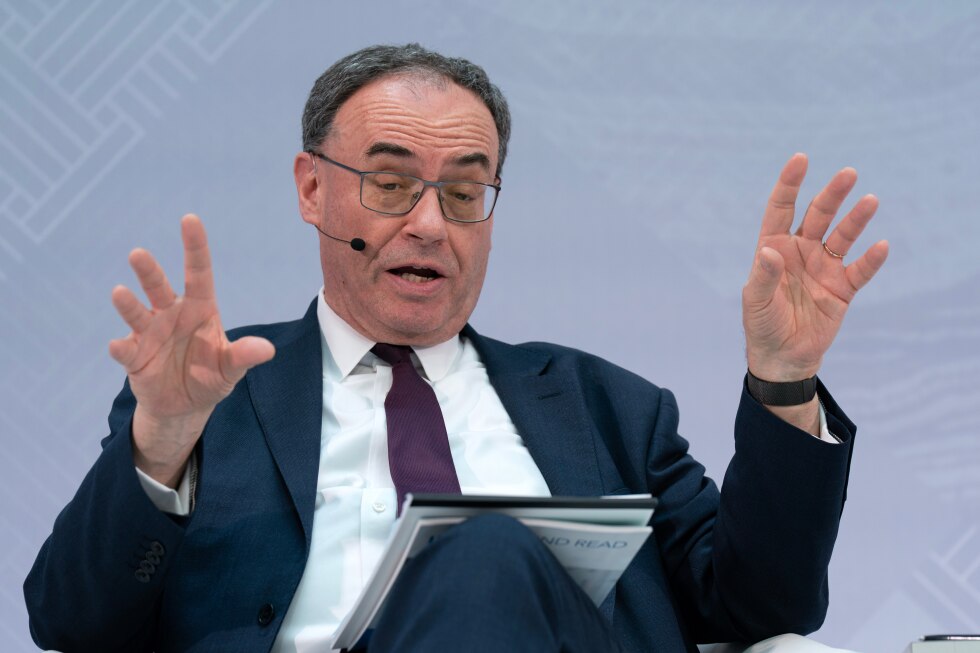
LONDON – As geopolitical turbulence from the Iran war ripples through global energy markets, the Bank of England’s Monetary Policy Committee is widely projected to hold its benchmark interest rate steady at 3.75% when it announces its latest policy decision on Thursday. Policymakers are treading carefully amid ongoing uncertainty over the conflict’s long-term economic fallout, particularly after Tehran effectively shut down the Strait of Hormuz – a critical global oil chokepoint through which roughly 20% of the world’s crude oil supplies flow during periods of peace.
Before the outbreak of hostilities between the U.S.-Israel coalition and Iran on Feb. 28, financial markets had been pricing in a potential interest rate cut, with analysts forecasting that U.K. inflation would ease back to the central bank’s 2% target by spring. That outlook has been completely upended by the conflict, which has sent global energy prices surging and forced policymakers across major economies to rewrite their economic projections.
While the majority of the nine-member policy panel is expected to back a rate hold, insiders and economists suggest one or two members could push for a 25-basis-point hike as a preemptive strike against mounting inflationary pressure. Economists also note the committee is likely to signal that future rate increases remain on the table if the Middle East conflict – currently held in check by a fragile ceasefire – fuels further upward pressure on U.K. consumer prices.
Sandra Horsfield, a senior economist at global investment firm Investec, emphasized that the economic fallout from the conflict remains acute, with no clear path forward for geopolitical stability in the region. “The repercussions of the conflict are still keenly felt and uncertainty about how the situation could evolve also remains high,” Horsfield noted.
Beyond the immediate rate decision, all eyes will be on the central bank’s quarterly economic forecast, released alongside the policy announcement, and the subsequent press conference led by Bank of England Governor Andrew Bailey. These projections will be the first published since the war began, and economists broadly expect the bank to upgrade its inflation forecasts while downgrading estimates for GDP growth.
New official data released last week already underscored the inflation threat the conflict has brought to the U.K. Annual consumer price inflation rose to a three-month high of 3.3% in March, up from 3% in February, driven largely by a sharp spike in gasoline and diesel prices stemming from global energy supply disruptions. Economists warn inflation could climb even higher in coming months, potentially hitting 4% as elevated energy costs flow through to household utility bills and broader consumer prices.
Unlike the energy price shock that followed Russia’s 2022 invasion of Ukraine – which pushed U.K. inflation to a four-decade peak above 11% – most analysts do not expect a return to those extreme levels this time around. Oil and gas prices have not seen the same dramatic spike, and interest rates are already far higher than they were two years ago, which acts as a brake on broad price growth.
Even so, Bank of England policymakers are closely monitoring for secondary inflationary effects, such as wage increases as workers adjust to higher prices, which could lock in elevated inflation long after the immediate energy shock fades. They are also waiting to see what measures Britain’s Labour government will roll out to buffer households and businesses from rising costs.
Treasury Chief Rachel Reeves has already acknowledged that the conflict has derailed the government’s progress on easing the cost of living for U.K. households. “This is not our war, but it is pushing up bills for families and businesses,” Reeves said, confirming that the Middle East crisis has thrown U.K. economic policymaking off its pre-war trajectory.