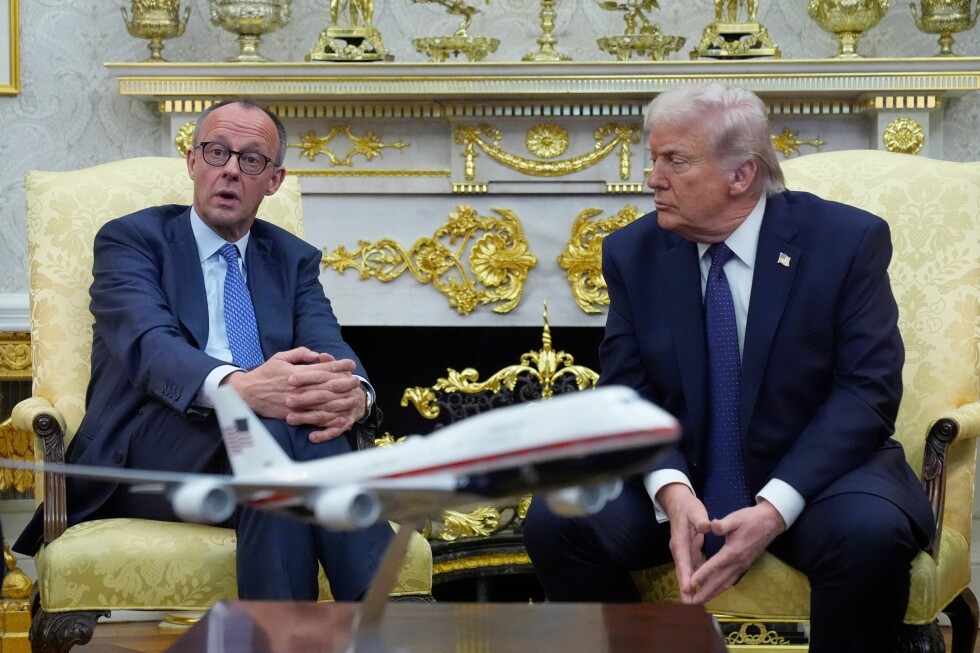
A sharp public rift between U.S. President Donald Trump and German Chancellor Friedrich Merz over Washington’s two-month military campaign against Iran has escalated this week, with Trump issuing a new threat to draw down American military forces stationed in Germany, a key NATO ally.
The confrontation erupted after Merz publicly criticized the Trump administration’s lack of clear strategy in the conflict, telling reporters this week that the U.S. had been “humiliated” by Iranian leadership. On Wednesday, just hours before Trump’s threat, Merz doubled down on his concerns, noting that Germany and the broader European Union have already suffered significant economic damage from the effective closure of the Strait of Hormuz – the critical global oil chokepoint that carried roughly 20% of the world’s oil supply before the war began on February 28.
“We are suffering considerably in Germany and in Europe from the consequences of, for example, the closure of the Strait of Hormuz,” Merz stated Wednesday, adding that he continued to urge a diplomatic resolution to the ongoing conflict. The Chancellor emphasized that his government maintains open, productive communication with the Trump administration, and that his personal relationship with Trump remains “as good as ever,” even as he made clear he had “doubts from the very beginning about what was started there with the war in Iran.”
This is not the first time Trump has pushed to reduce the U.S. military footprint in Germany. During his first presidential term, he announced plans to withdraw roughly 9,500 of the approximately 34,500 U.S. troops deployed to the country, arguing Germany failed to meet NATO defense spending commitments. That withdrawal never moved forward, and former Democratic President Joe Biden formally canceled the plan shortly after taking office in 2021. Today, Germany hosts some of the most critical U.S. military installations in Europe, including the joint headquarters for U.S. European Command and U.S. Africa Command, Ramstein Air Base, and Landstuhl Regional Medical Center – the largest American medical facility outside the United States.
Trump has not held back on his frustration with Merz’s public criticism. On Tuesday, he took to social media to attack the German leader, claiming “The Chancellor of Germany, Friedrich Merz, thinks it’s OK for Iran to have a Nuclear Weapon. He doesn’t know what he’s talking about!” He added that it was no surprise “that Germany is doing so poorly, both economically and in other respects!”
Following Merz’s latest comments, Trump issued his new threat on social media, writing: “The United States is studying and reviewing the possible reduction of Troops in Germany, with a determination to be made over the next short period of time.”
Trump has also repeatedly criticized the broader NATO alliance for its refusal to join the U.S. and Israel in their war against Iran. The current tensions between the U.S. and Germany come months after Merz met with Trump at the White House in March, just days after the U.S.-Israel bombing campaign of Iran began. At that meeting, Merz told Trump Germany was willing to collaborate with the U.S. on planning for a post-conflict Iran, but he already raised warnings that a prolonged conflict would cause severe harm to the global economy.
Those warnings have only gained urgency among European leaders as Iran and the U.S. have failed to reach an agreement to reopen the Strait of Hormuz. Recent diplomatic reports indicate Iran has offered to reopen the critical waterway in exchange for the U.S. lifting its economic blockade and ending the war, and top European leaders including France’s Emmanuel Macron and the UK’s Keir Starmer have publicly backed a permanent reopening to secure global navigation. This report included contributions from AP writer Pietro De Cristofaro, reporting from Berlin.