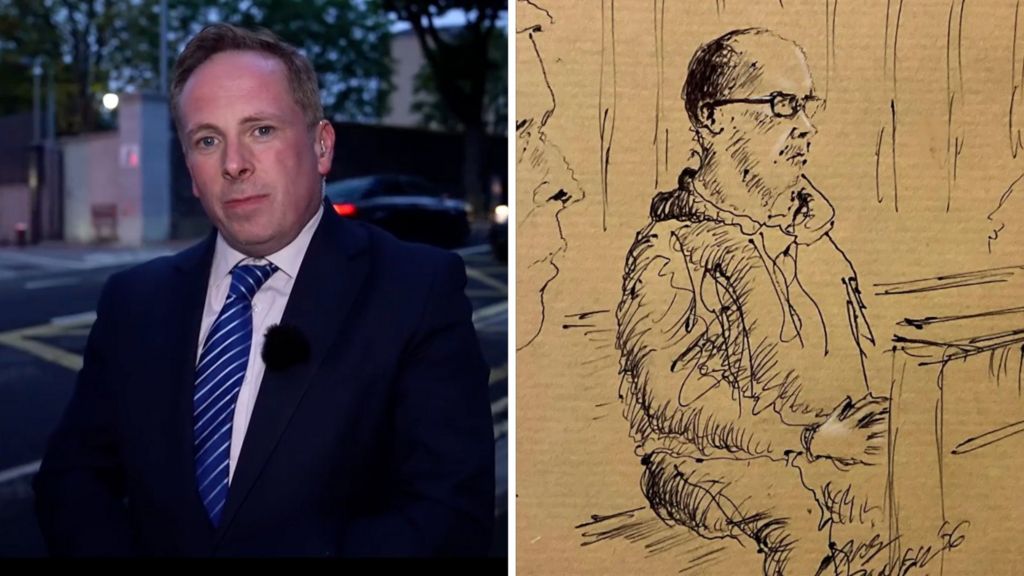
The long-awaited first court appearance of alleged transnational criminal network leader Daniel Kinahan unfolded this week in a Dublin courtroom, closing a major chapter in a years-long international manhunt following his extradition from the United Arab Emirates. Kinahan, who has long been linked to organized drug trafficking, money laundering, and violent gang rivalries across Europe, was transferred into Irish law enforcement custody after authorities in Dubai approved the extradition request put forward by Irish judicial officials. Once inside the Dublin courtroom, prosecutors formally presented a single core charge: directing the activities of a designated criminal organization, an offense that carries severe legal penalties under Irish organized crime legislation. Kinahan stood before the judge as the charge was read aloud, with security details surrounding the high-profile defendant to maintain order throughout the brief hearing. The appearance marks a significant milestone in international law enforcement cooperation against transnational organized crime, ending years of Kinahan operating outside the reach of Irish justice systems. Legal proceedings are set to advance in the coming months as both the prosecution and defense prepare their cases for trial.
标签: Europe
欧洲
-
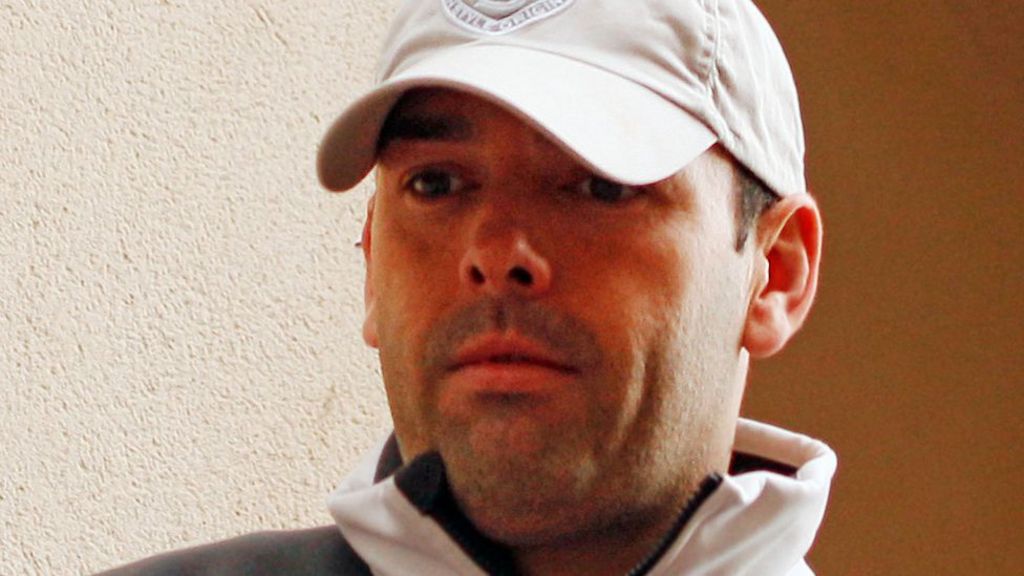
Suspected crime boss Daniel Kinahan appears in court after extradition
After months of legal challenges and years of international pursuit, alleged transnational crime boss Daniel Kinahan has finally been extradited from the United Arab Emirates to the Republic of Ireland, landing in Dublin on a government jet Sunday evening and appearing in court hours later to face organized crime charges.
The 49-year-old, who heads what global law enforcement has labeled one of the world’s most dangerous criminal syndicates, was arrested immediately upon landing at Dublin’s Casement Aerodrome. He was then transported under heavy armed police escort to the Special Criminal Court in Dublin, where a packed courtroom of journalists, prosecution legal teams, court staff and members of the public awaited his first appearance.
Prosecutors have charged Kinahan with directing the activities of a criminal organization between October 2015 and April 2017. The short, 13-minute non-jury hearing concluded with the judge remanding Kinahan in custody until his next court date, scheduled for October 5. Kinahan attended the hearing without legal representation, telling the court he had not had sufficient time to secure a lawyer following his overnight transfer. When informed he could apply for bail through Ireland’s High Court, Kinahan responded calmly, “I think we all know I won’t be getting bail, but thank you for your time.” He was granted the option to choose between in-person or remote appearance for his next hearing at a later date.
Kinahan’s extradition marks the culmination of a years-long international manhunt. He fled Ireland more than a decade ago, following a 2016 assassination attempt at a Dublin hotel boxing event that left one man dead. He resided in Spain for several years before relocating to Dubai, where he was arrested by Emirati authorities in April this year. The suspected crime leader launched multiple appeals against his extradition over the past four months, but all legal challenges were ultimately rejected.
Global law enforcement has linked the Kinahan cartel to widespread international criminal activity: the UK’s National Crime Agency (NCA) confirms the syndicate has imported tonnes of illicit drugs and illegal firearms across global markets, and has been directly connected to more than 12 gangland killings. The cartel’s violent decade-long feud with a rival Irish gang alone has claimed 18 lives. The U.S. Department of the Treasury has compared the Kinahan organization to notorious global syndicates including Italy’s Camorra, Mexico’s Los Zetas and Japan’s Yakuza, formally labeling it one of the world’s most dangerous transnational criminal networks in 2022, when U.S. authorities imposed sweeping sanctions on Kinahan, his father and his brother, who are named as the cartel’s top leaders. The U.S. government also currently offers a $5 million reward for information that leads to the arrest or conviction of Kinahan and his immediate family members. Former Irish Garda Commissioner Drew Harris estimates the cartel has generated more than €1 billion ($1.08 billion) in illicit profits from its global operations.
This extradition is not the first high-profile outcome of the bilateral extradition treaty between Ireland and the UAE. Last year, senior Kinahan cartel lieutenant Sean McGovern was extradited under the same agreement, and was sentenced to 24 years in prison in June for directing criminal organization activities. In the UK, three senior cartel members including the group’s UK operations leader Thomas Kavanagh were jailed in 2022 for a combined 60.5 years, convicted over a smuggling operation that brought £29.8 million worth of cocaine and cannabis into the country.
Irish and UAE justice officials framed Sunday’s extradition as a landmark win for international judicial cooperation. Irish Justice Minister Jim O’Callaghan praised the “professionalism, efficiency, and diligence” of Emirati authorities throughout the proceedings, noting that the handover represents a major milestone in cross-border collaboration against organized crime. His UAE counterpart, Abdullah bin Sultan bin Awad Al Nuaimi, added that the extradition underscores both nations’ unwavering commitment to supporting global efforts to dismantle transnational criminal networks.
Garda Commissioner Justin Kelly highlighted that the successful arrest and extradition demonstrates Irish law enforcement’s unwavering commitment to targeting transnational organized crime, in close partnership with international policing and judicial allies. “This outcome is a direct result of years of coordinated work between our force, UAE judicial and police authorities, and the Irish Department of Justice,” Kelly said.
Kinahan has long denied all allegations of criminal activity. His legal team previously told BBC Panorama that Kinahan holds no criminal convictions anywhere in the world, and all claims that he leads an international crime syndicate are unsubstantiated and false.
-
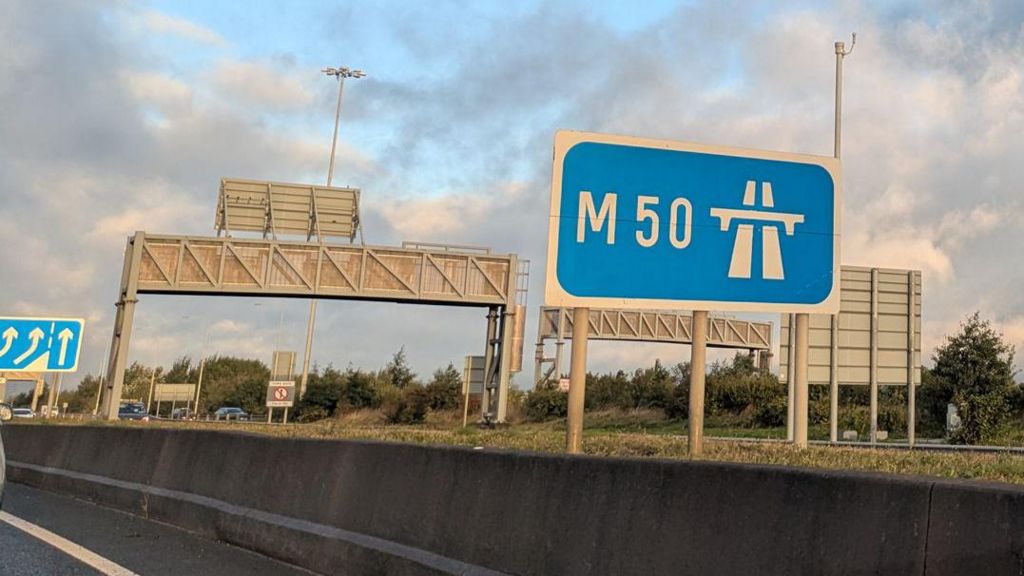
Car carrying eight teenagers crashes on wrong side of motorway
A serious early-morning wrong-way collision on one of Dublin’s busiest orbital motorways has left nine people injured, with two patients fighting for life in hospital, Irish police have confirmed.
The crash unfolded at 5:30 a.m. local time on Sunday along the southbound carriage of the M50, near Junction 12 in the Firhouse area of Dublin. Investigators say the first vehicle, carrying eight male juveniles, was traveling the wrong direction down an on-ramp when it slammed head-on into a oncoming privately operated car.
Emergency services rushed all occupants of both vehicles to nearby hospitals across the region for urgent care. Of the eight young people in the wrong-way vehicle, one remains in critical condition, according to updates from local health authorities. The driver of the second vehicle, a man in his 20s, is also hospitalized with serious injuries, though no further update on his prognosis has been released as of Sunday afternoon.
In the wake of the collision, Irish national police, known locally as gardaí, have implemented a full closure of the affected southbound stretch of motorway between Junction 12 and Junction 11. Local diversion routes have been put in place to redirect through traffic away from the crash site, where forensic investigators are now conducting a detailed examination of the scene to piece together the cause of the incident.
Authorities are issuing a public appeal for assistance with their investigation. Any road users who were traveling through the Firhouse area of the M50 between 5:00 a.m. and 5:30 a.m. on Sunday, or anyone who has dashcam footage from the collision site or surrounding approaches, is asked to contact local gardaí to share any information that could advance the investigation.
-
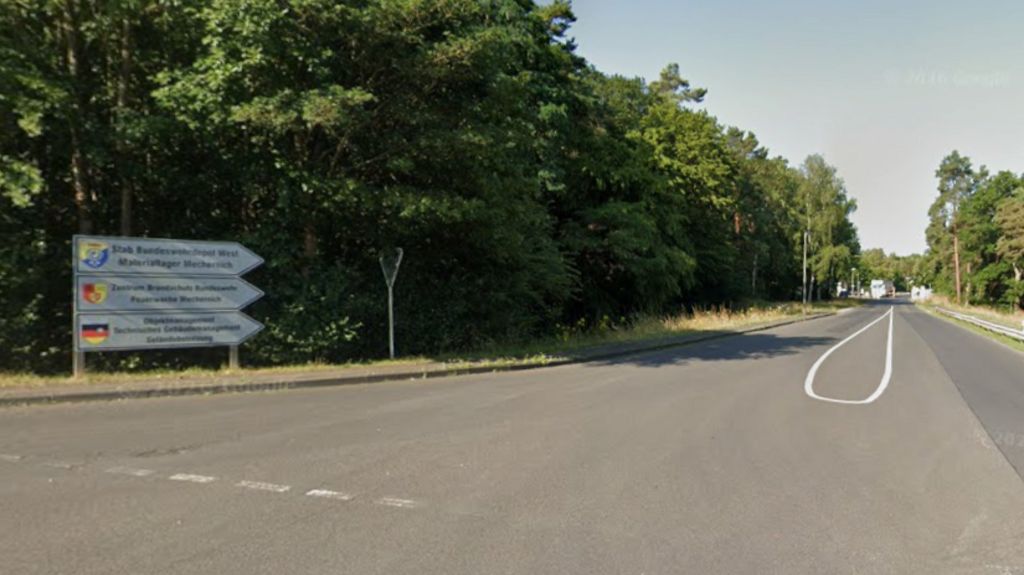
Drones spotted over German base days after Leipzig bomb incident
In a fresh development that has heightened security tensions across Europe, two unidentified drones were detected hovering over a German military installation in the country’s western region this Thursday. The sighting comes just days after an explosive-packed drone was discovered on a service runway at Leipzig/Halle Airport, amplifying alarms over persistent irregular drone activity targeting critical infrastructure linked to Western support for Ukraine.
The German armed forces, known formally as the Bundeswehr, officially confirmed the sighting at the Mechernich base, located approximately 50 kilometers southwest of Bonn. German media reports have established that the facility houses storage and maintenance facilities for spare parts and components for the United States-made Patriot air defense systems, a critical piece of military hardware that Ukraine relies on to fend off Russian missile and drone strikes.
Following the detection, military police were immediately dispatched to the site to secure the area before jurisdiction of the investigation was transferred to local civilian law enforcement authorities, a spokesperson for the Bundeswehr Joint Force Command confirmed to reporters. Requests for additional detail on the suspected origin of the two drones, made by the BBC over the weekend, were declined by the Bundeswehr, with the force citing the ongoing, sensitive nature of the probe. Local police departments have not yet released an official statement on the incident as of press time.
This drone sighting marks the latest in a string of similar incidents across European countries that have provided military, political and humanitarian support to Ukraine since Russia launched its full-scale invasion in February 2022. Most officials in affected countries have pointed to Moscow as the likely orchestrator of these incursions, acts widely characterized as hybrid warfare aimed at destabilizing Western nations. The Kremlin has repeatedly and forcefully denied any involvement in these incidents.
German Interior Minister Alexander Dobrindt, in an interview with the German tabloid *Bild* published Sunday, emphasized the growing threat facing his country. “We’re not at war, but we are the daily target of hybrid warfare,” Dobrindt stated, adding that Germany has become a regular target of deliberate destabilizing attacks.
Investigators are still working to unpack how the explosive-laden drone was able to penetrate security perimeters and reach an active runway at Leipzig/Halle Airport last week, a site that handles regular operations for NATO, the German military, and serves as a key logistics hub for Ukraine’s Antonov Airlines.
The Patriot air defense systems stored and maintained at the Mechernich base have become indispensable to Ukraine’s air defense architecture, allowing Ukrainian forces to intercept Russian ballistic missiles, cruise missiles, and attack drones targeting civilian infrastructure and military positions. This week, Ukrainian President Volodymyr Zelensky made a renewed plea to Western allies for additional air defense interceptor missiles, warning that Ukrainian stockpiles are rapidly dwindling amid continuous Russian bombardment campaigns.
The latest drone incursions come amid a recent diplomatic controversy over Patriot supplies: U.S. President Donald Trump reversed course last week on an earlier reported agreement that would have allowed Ukraine to manufacture Patriot systems domestically, denying that any such arrangement had ever been agreed to after initial reports emerged in early July.
This incident is not an isolated one. A widespread wave of unexplained drone sightings across European airspace in 2025 pushed the continent to a state of high alert, prompting the European Union to open discussions on rolling out a continent-wide integrated “drone wall” air defense network designed to counter low-altitude irregular drone incursions. European officials have repeatedly blamed Moscow for these previous incursions, claims the Kremlin has dismissed as unfounded and absurd.
-

Demi Vollering is defending the race leader’s yellow jersey on final stage of Women’s Tour de France
The 2024 edition of the Tour de France Femmes entered its decisive final chapter on Sunday, with all eyes turning to the sun-drenched French Riviera city of Nice, where Dutch cycling star Demi Vollering began the day clinging to the race leader’s coveted yellow jersey. The 2023 overall champion, already one of the most accomplished riders on the women’s peloton, was chasing back-to-back Tour de France titles, but her path to victory faced a significant late challenge from two hungry competitors.
Vollering held only an eight-second overall advantage over second-placed Katarzyna Niewiadoma-Phinney, the Polish climbing specialist who had already secured the 2024 general classification crown ahead of the final stage. Sitting third, 1 minute 12 seconds off the lead, was Swiss time trial world champion Marlen Reusser, who was still in striking distance of a podium spot when the stage got underway.
The history between the top two riders added extra drama to the final day’s racing. Two years prior, Niewiadoma-Phinney claimed her first ever Tour de France title in a heart-stopping final mountain stage, edging out Vollering by a mere four seconds overall to seal one of the most memorable finishes in modern women’s cycling. Off the back of that historic victory, Niewiadoma-Phinney was well positioned to replicate her late-stage magic and climb to the top of the general classification once again.
Vollering’s credentials heading into the final stage were unmatched. The 29-year-old Dutch rider had already secured victory in all three of women’s cycling Grand Tours, with two overall titles at the Vuelta a España Femenina and a win at the Giro d’Italia Women just months earlier in June. Her consistency across the sport’s biggest races made her the clear favorite to defend her lead, even with such a narrow gap to close out.
The 9th and final stage covered just under 100 kilometers (62 miles) of winding, hilly terrain around southeastern France. The route featured four full loops through the outskirts of Nice and four punishing ascents of Col d’Èze, a steep climb tucked into hills that overlook the tiny coastal Principality of Monaco. Mid-stage, the racing suffered a setback for Reusser: the Swiss rider crashed on a downhill section after her second climb of Col d’Èze, requiring urgent on-course medical attention before she could remount her bike. The incident effectively ended her chances of climbing onto the overall podium, dealing a major blow to her bid for a top-three finish. The stage concludes with a fast descending run past the picturesque seaside town of Villefranche-sur-Mer before the finish line in central Nice, where this year’s overall champion will be crowned.
-
Suspected Irish crime boss lands in Dublin after extradition from Dubai to face allegations
After months of legal battles and international cooperation between Irish and UAE judicial processes, one of the world’s most high-profile alleged organized crime leaders has finally arrived in Ireland to answer to a litany of serious criminal charges. Daniel Kinahan, the 49-year-old purported head of the Kinahan Organized Crime Group, was extradited from his long-time base in Dubai and landed at a Dublin suburban airport on an Irish Air Corps aircraft Sunday evening, following a ruling by Dubai courts that rejected efforts to block his handover to Irish authorities.
Following his arrival, Kinahan was immediately transported to Dublin’s Special Criminal Court, the specialized Irish judicial body tasked with hearing organized crime and terrorism cases. The court, which uses a three-judge panel instead of a jury in cases where regular courts are deemed unable to guarantee fair and effective justice, charged Kinahan with directing the activities of a transnational criminal network. He was remanded into custody at high-security Portlaoise Prison, located roughly 145 kilometers southwest of Dublin, and is scheduled to make his next court appearance on October 5.
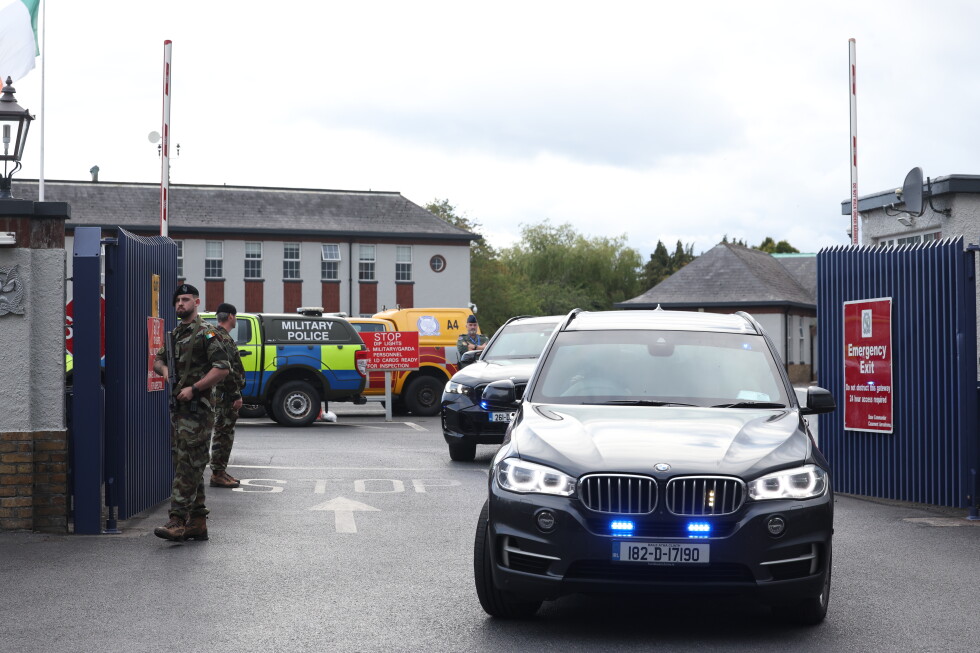
Irish public broadcaster RTE confirmed that an extensive multi-agency security operation was mounted to oversee Kinahan’s transfer and detention, involving armed police, military personnel and Irish prison service officials. As part of heightened security protocols, authorities used a recently acquired bombproof escort van designed specifically for transporting high-risk prisoners and organized crime suspects.
The unprecedented security measures come in the wake of a years-long deadly gang feud between the Kinahan network and a rival Irish criminal organization. In 2022, U.S. authorities documented that the feud had already claimed 18 lives when they announced a $5 million reward for information that would lead to the dismantling of the Kinahan group or the arrest and conviction of Daniel Kinahan himself. That same year, the U.S. Treasury Department imposed sanctions on six Kinahan gang members and three front businesses tied to the organization, noting the feud had also killed two innocent bystanders who were not involved in criminal activity.
Law enforcement agencies across Ireland, the United Kingdom, Spain and the United States have targeted the Kinahan network since 2016, when a shocking public shooting broke out during a boxing match weigh-in at a Dublin hotel – an incident that ignited the ongoing deadly feud. At the time of the shooting, Kinahan was working as a professional boxing promoter.
Global law enforcement alleges the Kinahan network runs a sprawling transnational empire centered on large-scale drug and weapons smuggling, paired with sophisticated money laundering operations. According to the U.S. Treasury Department, Kinahan oversaw daily gang operations from Dubai, coordinating bulk cocaine purchases from South America, organizing distribution across Ireland, and directing smuggling efforts to move illegal drugs into the United Kingdom. Authorities also claim the gang smuggles tens of millions of dollars worth of cocaine and cannabis into Europe alongside illegal firearms, then funnels illicit profits through a web of seemingly legitimate businesses to clean the proceeds. The U.S. Treasury has additionally documented that Kinahan has ordered payments to incarcerated gang members, including one individual convicted of plotting murder on the network’s behalf.
Kinahan was first taken into custody by Dubai law enforcement in April this year, acting on an outstanding Irish arrest warrant. Just last week, during a phone interview with Scottish podcaster James English that was later posted to TikTok, Kinahan issued a public denial of all allegations, claiming he is the victim of a coordinated conspiracy to destroy his reputation. He acknowledged extradition proceedings were sped up under a bilateral agreement between Ireland and the United Arab Emirates, but said he is confident an Irish trial will clear his name. “I believe, in a way, I am a scapegoat,” Kinahan said in the interview. “And anyone that looks into this so-called feud that they say they have created, then you will see, you will see things yourself if someone has the time to look into it.”
This extradition marks the latest major milestone in the global crackdown on the Kinahan network. Back in March 2022, Thomas “Bomber” Kavanagh, the network’s top leader in the United Kingdom, was sentenced to 21 years in prison after being convicted of running a major drug smuggling operation into the UK. Two additional co-conspirators received 20-year and 19.5-year sentences for their roles in the conspiracy. The UK’s National Crime Agency confirmed that during investigation, authorities seized 15 kilograms of cocaine and 220 kilograms of cannabis hidden inside a tracked asphalt removal device at the Port of Dover on the English Channel. Kavanagh, who resided in a fortified mansion with bulletproof glass and reinforced doors in Tamworth, northeast of Birmingham, had multiple weapons and £35,000 in mixed currency – including British pounds, euros, and Emirati dirhams – seized during a 2019 raid on his property.
-
Ancient Roman shipwreck discovered off Sicily coast
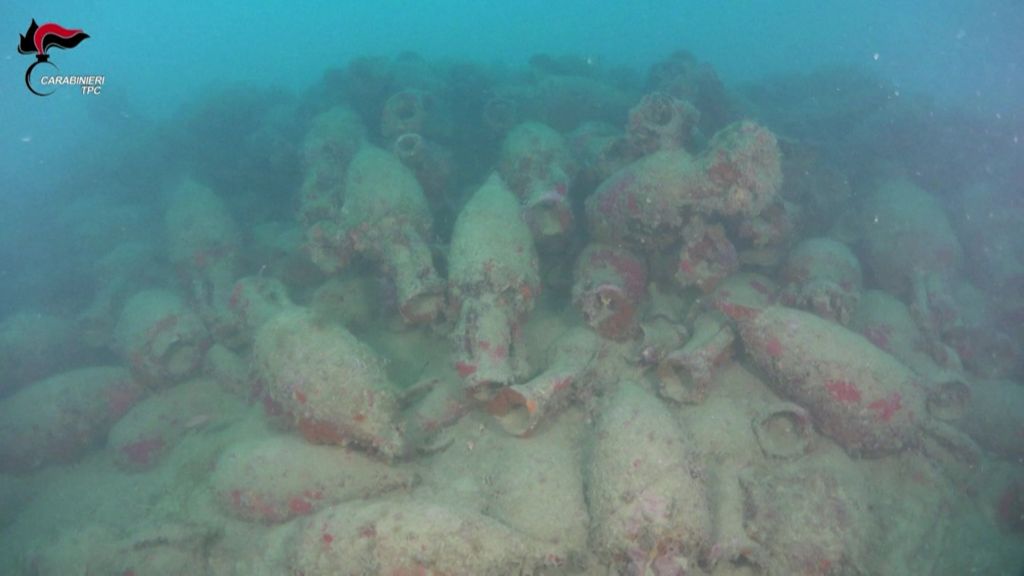
A remarkable archaeological find has emerged from the depths of the Mediterranean Sea, where Italian divers have uncovered a well-preserved ancient Roman shipwreck dating back more than 2,000 years off the coast of Sicily. The sunken vessel, found at a depth of around 46 meters (150 feet), holds hundreds of intact ancient ceramic containers known as amphorae, storage jars that once carried trade goods including wine, olive oil and grain across the Roman Empire.
The discovery traces back to a tip from local fishermen, after recreational fisherman and free-diver Giacomo De Mola first spotted an unusual large formation on his sonar scanner while mapping the seabed near the coastal town of Mazara del Vallo. Drawn to investigate the unexpected anomaly, De Mola descended and found what he described as the find of a lifetime: not a rocky outcrop, but hundreds of tightly packed amphorae covering the wreck of the ancient cargo ship.
“I get closer. And my heart stops. It wasn’t a rock,” De Mola recounted in a social media post documenting the moment. “This is, without a doubt, the most incredible discovery of my life. It’s hard to describe what it feels like to be among the first humans, in nearly 20 centuries, to see that place again.” De Mola’s footage of the wreck shows a thriving marine ecosystem, with eels, snappers and countless other sea species making their home among the ancient jars, leading him to note, “The sea never ceases to amaze us. This time we didn’t just find a wreck, we found a piece of our history.”
Following the initial discovery, specialist divers from the Carabinieri Art Squad — Italy’s police unit tasked with protecting cultural and archaeological heritage — were dispatched to the site to conduct a formal assessment. Early measurements from local media reports put the wreckage at 21 meters (69 feet) long and 6 meters (20 feet) wide, with Italy’s Culture Ministry confirming the vessel dates to between the second and first centuries BC.
Culture Minister Alessandro Giuli has hailed the find as “one of the most important underwater archaeological discoveries of recent years.” Officials announced that targeted safety protections will be put in place around the wreck as archaeological experts carry out a full investigation to map the vessel, confirm its origin and trading route, and analyze the full contents of its cargo.
The discovery of this Roman wreck adds to a growing body of underwater archaeological finds across the Mediterranean, a sea with thousands of years of maritime trade history that experts believe hides thousands of undiscovered ancient shipwrecks along its seabed. In 2023, another first or second century BC cargo ship laden with hundreds of amphorae was discovered off the northwest coast of Rome, and in 2018, archaeologists uncovered a 2,400-year-old intact Greek merchant ship off the Bulgarian coast, a find that was recognized at the time as the oldest intact shipwreck ever documented.
-
Russia, Ukraine exchange overnight strikes that leave 7 dead, many injured
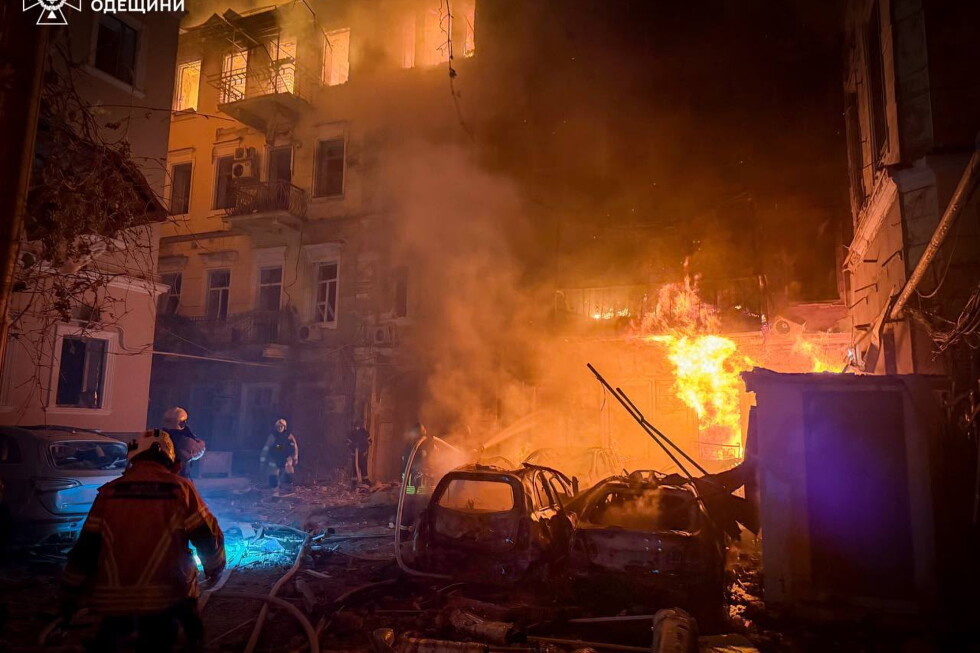
In a fresh cycle of escalated cross-border hostilities between Russia and Ukraine, overnight mutual strikes have left multiple civilians dead and dozens injured across populated areas on both sides, regional officials confirmed this week.
The deadliest assault on Russian territory unfolded in Belgorod, a border region that has faced repeated attacks in recent months. The regional administration announced that Ukrainian drone strikes resulted in five civilian fatalities and wounded 24 people, among them a four-year-old child. The attacks also caused widespread structural damage: 29 apartment buildings, five private residences, government administrative facilities, and multiple commercial sites were left damaged or destroyed by the blasts.
On the Ukrainian side, Russian missile and drone attacks targeted three major population centers, leaving civilian infrastructure in ruins and causing further casualties. In Kharkiv’s Saltivskyi district, a Russian missile strike directly hit a multi-story residential apartment block, killing two people and wounding 13 others, regional governor Oleh Syniehubov reported. Separately, in the strategic Black Sea port city of Odesa, an assault involving “dozens of missiles and drones” left eight additional people injured, according to local regional head Oleh Kiper.
Russia’s defense ministry pushed back on the Ukrainian civilian casualty accounts Sunday, claiming its overnight operations exclusively targeted military assets: it said strikes successfully hit Ukrainian drone storage facilities in the Kharkiv region, and destroyed fuel depots and military equipment stockpiles at the Odesa port. The ministry added that Russian air defense systems intercepted and downed 153 Ukrainian drones overnight, with engagements taking place over Russian-occupied Crimea, the Black Sea, and the Sea of Azov.
This latest round of large-scale Russian missile attacks on major Ukrainian cities follows a now near-daily pattern that has emerged over recent weeks. Moscow has actively exploited a critical gap in Ukraine’s air defense capabilities: Kyiv currently faces a severe shortage of interceptor missiles for its U.S.-manufactured Patriot air defense systems, the only weapon in Ukraine’s arsenal capable of shooting down incoming Russian ballistic missiles.
Ukrainian President Volodymyr Zelenskyy has spent months lobbying Western allies, particularly the United States, to supply additional Patriot systems and ammunition. Global stockpiles of these critical defense components have already been depleted by high demand tied to the ongoing conflict between Israel and Iran-backed groups, making additional deliveries far harder to secure.
Failing to secure sufficient foreign supplies of Patriot interceptors, Zelenskyy has outlined two alternative contingency plans: establishing domestic production of Patriot ammunition within Ukraine, or securing approval from billionaire entrepreneur Elon Musk to leverage his Starlink satellite communications network to guide Ukrainian strikes against Russian missile launch sites deep inside Russian territory.
Meanwhile, Kyiv has continued its own campaign of long-range drone strikes against targets deep within Russian borders. Recent strikes have targeted Russian energy infrastructure, as well as high-profile domestic assets including Wildberries, Russia’s largest e-commerce retailer. These sustained attacks on energy facilities have already sparked widespread fuel shortages across parts of Russia.
-
Cyprus natural gas to supply Europe by first half of 2028, minister says, as EU seeks new sources
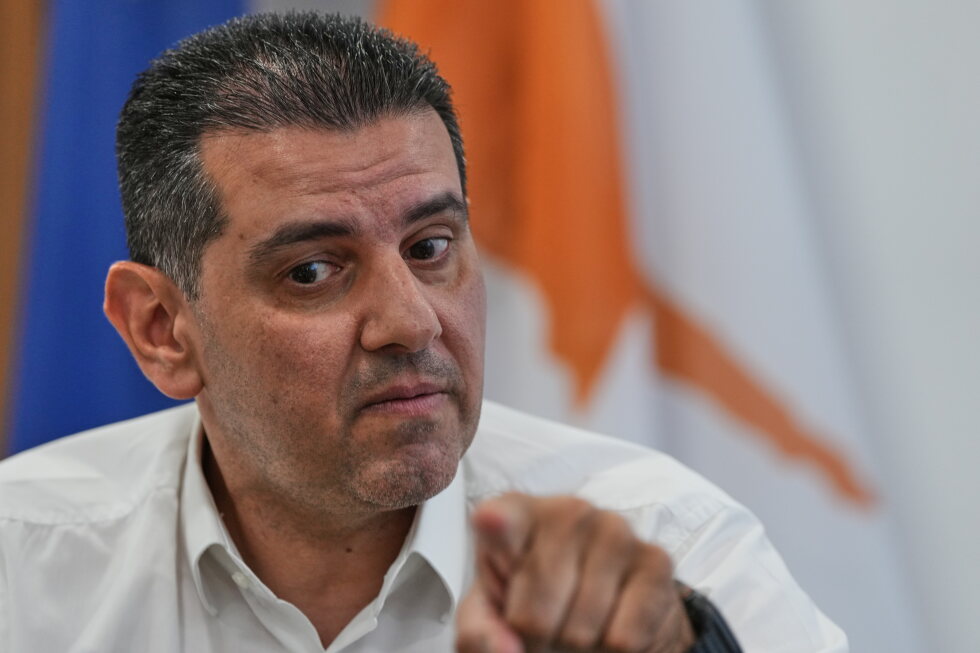
Against a backdrop of widespread European energy market volatility triggered by the Russian-Ukrainian war and escalating Middle East geopolitical unrest, Cyprus has positioned itself as a emerging alternative energy supplier for the continent, with its first undersea natural gas shipment from the Cronos field slated to reach European markets as early as March 2028, the island nation’s Energy Minister Michael Damianos confirmed in an exclusive interview with the Associated Press.
Last month, development partners TotalEnergies (France) and Eni (Italy) formally signed off on a final investment decision to advance the Cronos project, located off Cyprus’ southern coast in the country’s Exclusive Economic Zone. This milestone marks the first time that natural gas extracted from East Mediterranean offshore deposits will be exported directly to European consumer markets, filling a critical gap as the continent works to diversify its supply chains away from traditional sources.
Per the consortium’s official timeline, preliminary construction work on a 105-kilometer pipeline connecting the Cronos field to existing processing infrastructure at Egypt’s massive Zohr natural gas deposit will kick off before the end of 2025, with construction expected to take up to 18 months to complete. Once extracted, raw natural gas from Cronos will be routed through the new pipeline to Egypt’s Damietta liquefaction facility on the country’s northern coast, where it will be converted into liquefied natural gas (LNG) for seaborne transport to European terminals. This route was selected as the most economically viable option for the project, coming in with an estimated total cost of roughly $2 billion (1.73 billion euros) — half the projected cost of developing alternative export infrastructure within Cypriot territorial waters, thanks to access to Egypt’s already operational energy network.
Under the project agreement, nearly all of Cronos’ estimated 3 trillion cubic feet (tcf) of proven natural gas reserves is earmarked for European consumption, though a contractual clause allows up to 20% of output to be diverted to meet Egypt’s growing domestic energy demand if needed. Damianos noted that while Cronos is a relatively modest reserve that will not generate massive state revenue for Cyprus, the project carries far greater strategic significance for the small island nation. “Its importance is not the money, its importance is the commencement of being a producer and having first gas,” he explained.
Cronos is just one of six proven natural gas deposits discovered to date in Cyprus’ offshore Exclusive Economic Zone, with more large-scale developments already in the pipeline. Energy giants ExxonMobil and QatariEnergy hold development licenses for the Glaucus and Pegasus fields, which together hold an estimated 6.9 tcf of natural gas, with first production targeted for 2033. Damianos added that ExxonMobil, which has a track record of delivering projects ahead of schedule, plans to expand its exploration activities off Cyprus and is in line to receive an additional exploration license for new hydrocarbon prospects. The Aphrodite field, Cyprus’ first offshore gas discovery made 15 years ago, holds an estimated 5.6 tcf of reserves. A final investment decision from the Chevron-led development consortium is expected by summer 2027, with a planned direct pipeline connection to Egyptian processing facilities to supply Egypt’s domestic market. A long-running border dispute over a portion of the Aphrodite field that extends into Israeli waters is expected to be resolved via arbitration by next month, Damianos confirmed.
Beyond natural gas development, Cyprus is also advancing a landmark interconnector project to integrate its power grid with the broader European network, and eventually link up with Israel as well. The Great Seas Interconnector, a subsea electricity cable project, has secured backing from French investment firm Meridiam, and forms a core infrastructure building block for the European Union’s IMEC initiative, a planned new energy and trade corridor connecting Europe to the Gulf region and India. The project would end decades of energy isolation for both Cyprus and Israel, but it has recently hit delays over cost overruns that push total spending above the original $2.2 billion estimate. The European Investment Bank is set to release a revised cost assessment in the coming months to clarify the project’s final budget.
Under current agreements, Cypriot residential and commercial energy consumers could be on the hook for up to 63% of construction costs, which would trigger a substantial increase in domestic electricity prices. To mitigate this burden, project organizers are actively courting additional private sector investment and exploring options for increased European Union grant funding. The EU has already committed 760 million euros ($658 million) to the project. “It’s a very important project for Europe because it connects Cyprus which is isolated to the European grid. And the idea is to then proceed and connect to Israel,” Damianos said.
-
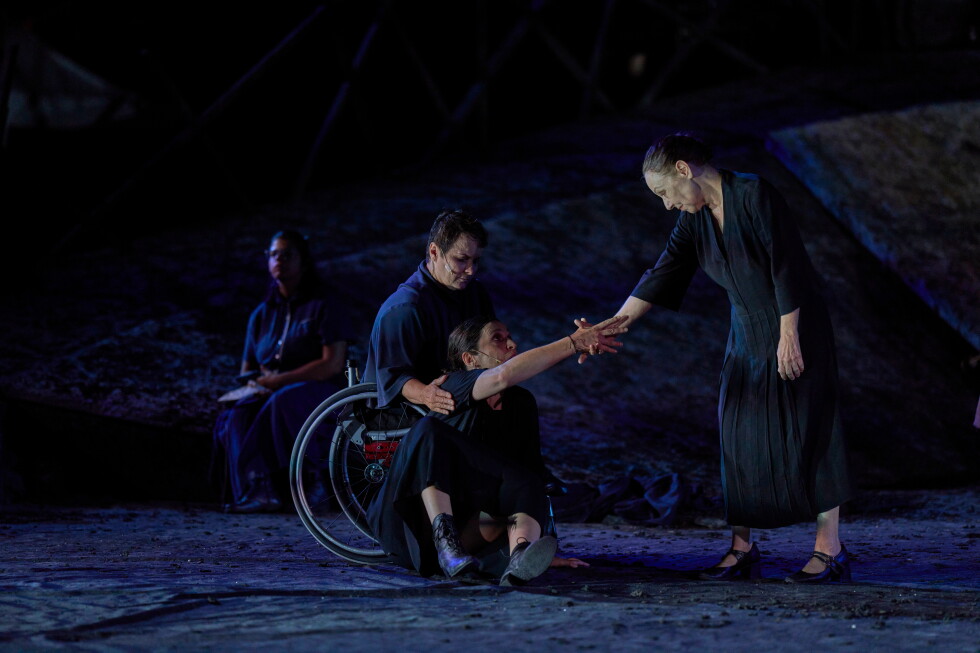
As the world rediscovers ‘The Odyssey,’ disabled actors in Greece explore the pain of war
Against the backdrop of a global resurgence of interest in Homer’s ancient works sparked by Christopher Nolan’s recent adaptation of *The Odyssey*, a groundbreaking theatrical production in southern Greece is rewriting the rules of cultural accessibility, while centering a forgotten chapter of the Trojan War narrative.
On August 2, 22 disabled and non-disabled performers took the stage at the Ancient Theater of Epidaurus, the iconic 2,300-year-old open-air stone amphitheater famed for its unparalleled acoustics and historic place in Greek dramatic tradition. Their staging of Euripides’ *The Trojan Women* marked the first fully accessible performance in the theater’s long history, breaking down centuries of barriers that excluded disabled audiences and creators from engaging with one of the world’s most celebrated cultural sites.
Unlike Homer’s canonical epics, which follow victorious Greek warriors on their journeys home from the 10-year Trojan War, Euripides’ 5th-century BCE tragedy shifts focus away from heroic triumph to the devastating human cost of conflict. Written roughly three centuries after Homer’s works, the play centers on the widowed, exiled, and enslaved women of conquered Troy, giving voice to the suffering that war leaves in its wake.
To fulfill the production’s commitment to full inclusion, organizers rolled out a comprehensive suite of accessibility accommodations across the entire site. Blind and low-vision attendees received Braille event programs, tactile 3D models of the ancient theater, and live in-person audio description to follow the performance. Deaf and hard-of-hearing spectators could track dialogue via overhead projected titles, while widespread physical modifications to the venue’s walkways and seating areas improved access for visitors with mobility impairments.
For attendees and creators alike, the milestone event was far more than a theatrical performance—it was a public celebration of disability equality. Greg Polychronidis, a Paralympic gold medalist who participated in the event, noted that the production set a critical precedent for cultural institutions worldwide. “It’s the first time a performance at Ancient Epidaurus has been made accessible to everyone,” Polychronidis said. “Today was a celebration of equality and it should serve as an example for everyone, forever.”
The message of inclusion extended to the cast as well, where disabled performers held prominent roles that put overlooked communities center stage. For 58-year-old cast member Eirini Kourouvani, a wheelchair user who had never been able to enter the ancient theater before the production, standing on its historic stage was a transformative experience. “It is just grand,” Kourouvani said. “I feel my heart opening up as wide as this theater is.”
Ioanna-Maria Gertsou, a blind psychologist who attended the performance alongside her guide dog Babu, echoed that sentiment, emphasizing that accessibility is a fundamental right, not an extraordinary favor. “We too have the right to attend performances on an equal footing,” Gertsou said, noting her relief that her guide dog was able to remain with her throughout the show without disruption.
The landmark production was created by Greece’s National Theater, with accessibility design led by the nonprofit organization Liminal and financial backing from Alpha Bank, one of Greece’s largest financial institutions. Argyro Chioti, the National Theater’s artistic director, emphasized that full accessibility should not be a one-off special event, but the new standard for all major cultural venues.
Chioti acknowledged that building inclusive access required extensive advance work: “This was complex, not simple. It required months of planning. It cost money. And it required very specific organizational expertise. But that’s the standard and venues we need to reach — the major stages and the major theaters.”