标签: Europe

欧洲

  • Highlights from the election platforms of perennial British joke candidate Count Binface

    Highlights from the election platforms of perennial British joke candidate Count Binface

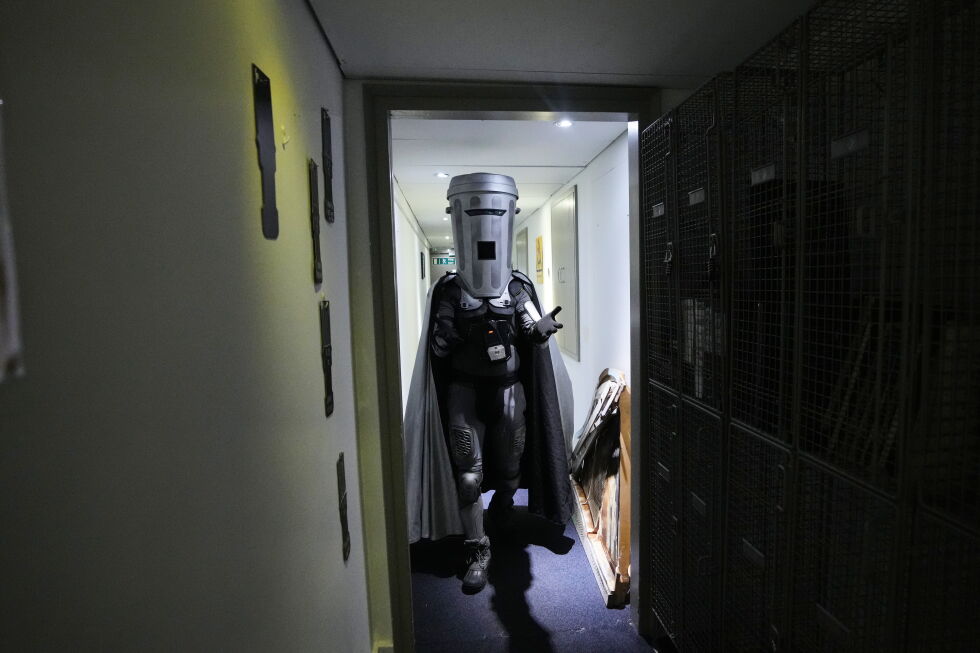
    LONDON – For nearly a decade, Count Binface, a novelty political candidate famous for wearing a repurposed garbage can as a headpiece, has been a beloved running gag across British elections. Now, the self-styled intergalactic space warrior is stealing the spotlight in a high-profile special by-election in Clacton-on-Sea, where he is one of 34 candidates competing against Reform UK leader Nigel Farage this Thursday.

    The contest has already drawn outsize public attention in large part because all major UK political parties have chosen to boycott the race, creating an open field for unconventional candidates like Binface to capture voter interest. Unlike other fringe candidates who have joined UK ballots over the years, Binface has carved out a distinct niche with his signature armor-adorned look topped by his iconic trash can helmet, and a 20-point policy manifesto that blends absurd humor with pointed, tongue-in-cheek commentary on mainstream British politics.

    As the self-proclaimed leader of the Recyclons from the fictional planet Sigma IX, Binface’s political brand is built on a core ethos of reuse: he frequently carries over popular past policies from previous campaigns, where he has challenged sitting prime ministers and the mayor of London, and mixes them with new, joke proposals for each new race. The candidate says he stands fully behind every policy he has introduced over his years in novelty politics.

    Among the standout pledges from his current Clacton campaign is a whimsical tax plan: “I will cut your taxes, and raise everyone else’s.” He also promises to construct at least one new affordable home, and to reform arcade claw machines to guarantee players a fair shot at winning prizes. One of his most popular policies, contributed by 10-year-old Jack, would require oil and gas companies to cover the cost of installing solar panels for every UK household.

    Other pledges include a new windfall tax on celebrity-written “cozy crime” novels, a national referendum to restore Pluto’s status as a full planet, and a plan to fill road potholes using leftover copies of the UK Labour Party’s 2024 election manifesto. Binface also promises functional on-board Wi-Fi for trains – and, for that matter, functional trains themselves. Rules for bad road behavior would see cyclists who break traffic laws forced to ride unicycles instead, while commuters who play audio on speakerphone in public transit would face conscription.

    Hyper-local quirkiness also makes an appearance: Binface has pledged to reposition the hand dryer in the men’s restroom of Uxbridge’s Crown & Treaty pub to a more practical location. On the cultural front, he promises knighthoods for animated characters Wallace and Gromit in recognition of their contributions to Wensleydale cheese, and a ban on loudly crinkled snacks in cinemas and theaters. To address the UK’s ongoing homelessness crisis, Binface proposes requiring the British royal family to keep only one of their four major residential palaces – Buckingham Palace, Kensington Palace, St James’s Palace, and Clarence House – and gift the rest to the state to be repurposed for affordable housing. If the royals object to the plan, he jokes they will be forced to purchase struggling London soccer club Crystal Palace.

  • World’s oceans hit record-high July temperatures

    World’s oceans hit record-high July temperatures

    New data from the European Union’s Copernicus Climate Change Service has confirmed that July 2026 brought the hottest ocean temperatures ever recorded globally, a climate milestone amplified by the developing El Niño pattern in the tropical Pacific that scientists warn will strengthen in the coming months.

    Across ocean waters between 60 degrees north and 60 degrees south — excluding polar regions — the average sea surface temperature hit 20.96°C last month, breaking the previous all-time high of 20.89°C set just three years prior in 2023. Globally, July 2026 ranked as the joint second-warmest July ever documented, with average temperatures sitting 1.47°C above pre-industrial baselines. The record ocean warmth extended to European waters, with unprecedented highs measured along the Atlantic coast and western Mediterranean, triggering widespread severe marine heatwaves across the region.

    El Niño, a naturally occurring Pacific weather pattern that warms surface waters, is interacting with human-caused global warming to amplify these temperature spikes, researchers explain. Oceans act as Earth’s critical climate buffer, absorbing more than 90% of excess heat trapped by greenhouse gas emissions and producing half of the planet’s oxygen supply. But as waters warm, their capacity to absorb carbon dioxide drops, leaving more heat-trapping gas in the atmosphere and creating a dangerous feedback loop that accelerates climate change. Warmer oceans also disrupt marine ecosystems, forcing species to migrate in search of cooler habitats and upending entire ocean food chains.

    The same warming trends that pushed ocean temperatures to new highs have triggered an unprecedented sequence of extreme weather across Western Europe. The region recorded its hottest combined June and July on record in 2026, with an average temperature of 21.62°C — 2.79°C above the long-term average. This marked the third consecutive month of exceptional heat for the area, with persistent high-pressure systems trapping heat over the continent and parched soils eliminating natural evaporative cooling effects. Samantha Burgess, strategic lead for climate at the European Center for Medium-Range Weather Forecasts, noted that this extreme event is a clear illustration of how climate change is intensifying heat extremes, with heat and drought creating a self-reinforcing cycle that worsens conditions over time.

    The prolonged hot, dry spell has stripped the region of moisture, leaving soil moisture levels across much of Western Europe far lower than those recorded during the severe 2022 European drought. Major waterways including the Seine, Rhine, and Danube have seen far lower-than-average flows, with some stretches hitting historic lows. These low water levels have put massive pressure on public water supplies, agricultural irrigation, fragile aquatic ecosystems, commercial river navigation, and hydropower generation across the continent.

    Dry conditions have also created prime fuel for extreme wildfire activity, with large blazes raging across Western Europe through July 2026. Copernicus Atmosphere Monitoring Service director Laurence Rouil noted that this summer’s burned area, smoke output, and fire intensity have been exceptional, noting that climate change is expanding the conditions that spawn large, high-intensity wildfires in southern Europe while extending the wildfire season further north than ever before. Larger wildfires inject smoke higher into the atmosphere, allowing it to travel thousands of kilometers, meaning even countries with low historical wildfire risk face growing exposure to hazardous smoke pollution.

    In the United Kingdom, the extreme dry conditions have pushed water systems to breaking point. The UK Met Office confirmed that England and Wales saw their driest July in 190 years of record-keeping, with large swathes of England and all of Wales already officially designated as being in drought. The Environment Agency has warned that additional areas of England could be added to drought declarations if dry conditions continue through August. The UK’s Met Office has emphasized that weather once classified as extreme is now becoming the “new normal”, with its latest climate assessment finding that the average hottest annual temperature in southern England is now 4.5°C warmer than it was between 1961 and 1990. “We are right now living in a time of historic and unprecedented change,” said Mike Kendon, a Met Office climate information scientist. “Evidence shows the climate of the 20th century has now gone.”

    Scientists stress that the current extreme conditions are being driven by long-term anthropogenic warming, primarily from the burning of fossil fuels, with El Niño acting as a temporary additional push that pushes global temperatures even higher. Today, the global average temperature is already roughly 1.4°C higher than pre-industrial levels at the end of the 19th century, matching the threshold scientists have long warned carries severe, irreversible risks to natural and human systems.

  • Turkey’s parliament opens debate on a pardon-like bill for thousands of PKK militants

    Turkey’s parliament opens debate on a pardon-like bill for thousands of PKK militants

    ANKARA, Turkey – A new chapter in decades of tensions between Turkey and the Kurdistan Workers’ Party (PKK) opened Monday, as lawmakers kicked off parliamentary debate on a landmark draft bill designed to cement a fragile peace deal through a conditional amnesty program for thousands of Kurdish militants. The legislation marks the government’s first formal legislative response to the PKK’s historic decision last year to end a 40-year armed insurgency against the Turkish state.

    Last year, imprisoned PKK leader Abdullah Ocalan called on the group to lay down its arms, a request that prompted the organization to formally end its decades-long armed campaign, announce plans to disarm and disband, and withdraw its remaining fighters based inside Turkey to its stronghold in northern Iraq. The group later held a public symbolic disarmament ceremony in northern Iraq, but analysts note it still retains control of the vast majority of its weapons stockpiles.

    Spanning 12 articles, the proposed legislation lays out clear frameworks for two core goals: formalizing the PKK’s full disarmament and supporting the social rehabilitation of thousands of group members. Under the bill’s terms, qualifying convicted PKK members will see their prison sentences suspended, while ongoing investigations and trials will be paused for five or 10 years, based on the severity of their alleged offenses. If beneficiaries do not commit any additional terror-related crimes during the suspension period, all outstanding cases against them will be permanently dropped.

    Critically, the legislation excludes militants convicted of intentional homicide and those handed life sentences before 2005 from its amnesty provisions – a carve-out that explicitly applies to Ocalan, who has been imprisoned on an island prison off Istanbul since 1999, as well as the PKK’s most senior leadership. Despite excluding Ocalan from amnesty eligibility, Turkish media reports have indicated authorities are preparing to improve Ocalan’s prison conditions, expanding his access to visitors and outside communication, though the draft text makes no official mention of his status or potential future release.

    To ensure accountability throughout the process, the bill establishes both ministerial and parliamentary committees tasked with monitoring the PKK’s disarmament. The legislation will only enter into force after Turkey’s National Security Council officially confirms the PKK has fully disbanded and surrendered all of its weapons. Individuals seeking to benefit from the amnesty will have a six-month application window starting from when the National Security Council’s confirmation is published in Turkey’s Official Gazette. Media analysts expect the bill to extend eligibility to exiled PKK members currently based in Iraq and Syria.

    Political observers widely project the bill will pass comfortably, as it counts on support from three key blocs: President Recep Tayyip Erdogan’s ruling Justice and Development Party, its nationalist parliamentary allies, and the pro-Kurdish DEM Party. The DEM Party has actively pushed for formal recognition of Ocalan’s role in coordinating the post-insurgency transition, a step it hopes will ultimately lead to Ocalan’s release.

    The PKK launched its original insurgency against the Turkish state in 1984, a conflict that has claimed more than 40,000 lives and spilled across the border into neighboring Iraq and Syria. The organization is classified as a terrorist group by Turkey, the United States, and the European Union. While it initially demanded an independent Kurdish state, the PKK later revised its goals to push for greater autonomy and expanded political and cultural rights for Turkey’s Kurdish minority. Previous attempts to broker a lasting peace between the two sides have collapsed, most recently in 2015, making this latest legislative push the most significant step toward peace in nearly a decade.

  • At least 13 killed in Ukrainian drone strike on Russia’s Tatarstan region, officials say

    At least 13 killed in Ukrainian drone strike on Russia’s Tatarstan region, officials say

    In one of the most lethal single cross-border attacks since Russia launched its full-scale invasion of Ukraine, a Ukrainian drone assault on the Russian republic of Tatarstan has claimed at least 13 lives, including one child, and left 39 others injured, regional Russian officials have confirmed.

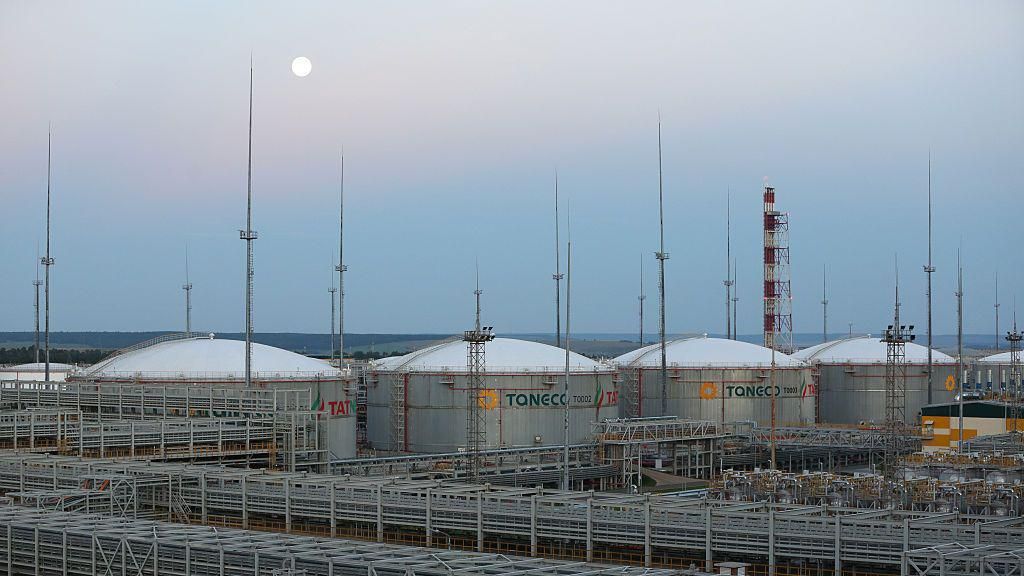
    The strike targeted Nizhnekamsk, an industrial city located more than 1,100 kilometers (around 680 miles) from the current Ukraine-Russia border. Nizhnekamsk is a critical hub for Russia’s energy sector, hosting multiple large-scale oil refineries and a major petrochemical production facility. As of Monday, Ukrainian authorities have not issued any official comment acknowledging responsibility for the attack.

    Local sources report that the drone operation unfolded over several hours, running from overnight into the following morning. Unverified user-generated footage circulating on social media platforms shows thick plumes of dark smoke billowing into the sky alongside visible flames, with the continuous wail of air raid sirens audible in the background.

    While Kyiv has not publicly confirmed the intended target of the strike, Ukrainian officials have increasingly ramped up long-range attacks on Russian infrastructure in recent weeks, explicitly targeting sites that they say generate revenue or support logistical operations for Moscow’s war effort in Ukraine. Russian authorities, however, confirm that both industrial sites and civilian residential areas were hit in the attack. “Civilian individuals who were not involved in any military operations were present” at the targeted locations, Russia’s Investigative Committee stated in an official release. The BBC has not been able to independently verify the details of this account.

    Regional leaders have expressed grief over the casualties, announcing a period of official mourning across Tatarstan. Rustam Minnikhanov, the head of the Tatarstan republic, formally confirmed the strike and extended condolences to the families of those killed. “This is a tremendous pain for all of us,” added Nizhnekamsk mayor Radmir Belayev.

    In a separate statement, Russian defense officials said their air defense systems intercepted and downed more than 450 Ukrainian drones launched across multiple regions overnight. The attack on Tatarstan marks a notable milestone in Kyiv’s growing long-range strike capabilities, which have increasingly allowed Ukrainian forces to hit deep inside Russian territory. While most of these strikes have targeted energy infrastructure, military warehouses and logistics hubs, civilian casualties have steadily climbed in recent months.

    The latest attack comes amid a continued escalation of reciprocal large-scale aerial assaults between the two countries. Just last week, a combined Russian missile and drone strike on Kyiv killed 21 Ukrainians. Overnight before the Tatarstan strike, Russian artillery fire on the frontline city of Kharkiv killed five civilians, continuing a pattern of daily attacks on Ukrainian populated areas that has stretched through more than two years of full-scale war.

  • Ukrainian drone attack on the Russian city of Nizhnekamsk kills 12, authorities say

    Ukrainian drone attack on the Russian city of Nizhnekamsk kills 12, authorities say

    A deadly Ukrainian drone attack on the major Russian industrial city of Nizhnekamsk in the Tatarstan region has left 12 people dead and 39 injured, regional authorities confirmed Monday, marking one of the deepest and deadliest strikes on Russian domestic territory in the ongoing four-year conflict.

    Nizhnekamsk, a critical oil refining and petrochemical hub located roughly 1,200 kilometers (750 miles) east of the Ukraine-Russia border with a population of 240,000, faced what regional head Rustam Minnikhanov’s press service described as a “massive” drone assault targeting both industrial and civilian infrastructure early Monday. No additional operational details were released immediately by Russian officials, and Ukrainian authorities have not issued any on-the-record comment on the attack as of early reporting.

    The strike comes as part of a sustained, nearly daily campaign Ukraine has waged against Russian energy infrastructure using domestically developed long-range drones. In recent months, these attacks have gradually chipped away at Russia’s domestic oil refining capacity, triggered widespread fuel shortages across parts of the country, and eroded public sense of security among the Russian population. Ukrainian officials have explicitly framed the campaign as a strategic effort to bring Russian President Vladimir Putin to the negotiating table and end Moscow’s full-scale invasion, which entered its fifth year in 2025.

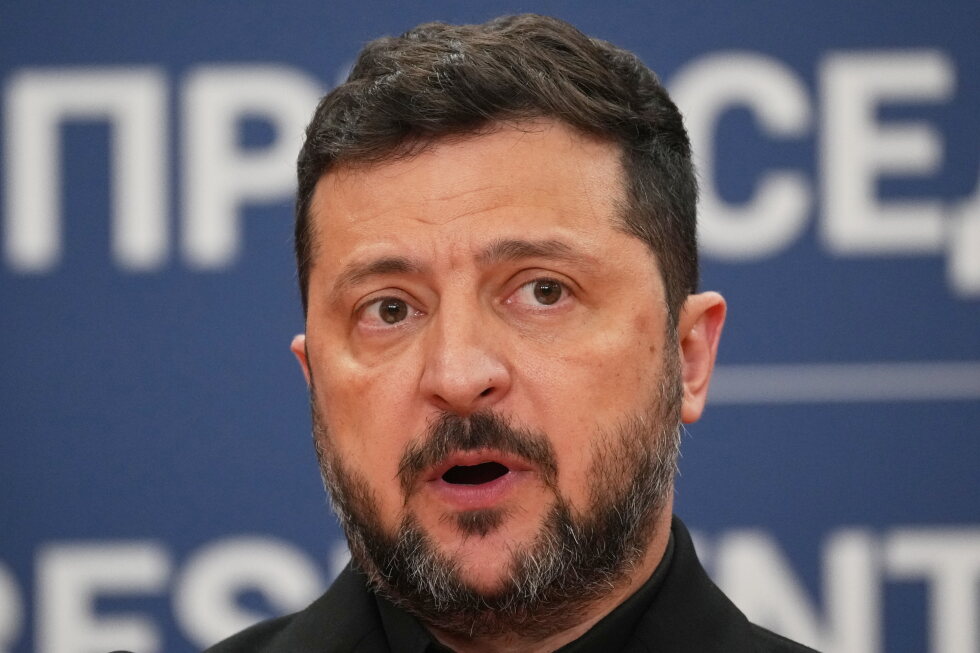
    Ukraine’s domestic drone technology has advanced rapidly in recent months, allowing the country’s military to strike targets increasingly deep into Russian territory. Some drones have now reached as far as Siberia, more than 2,000 kilometers (1,200 miles) from the international border between the two warring states. In a social media statement released late Sunday, just hours before the Nizhnekamsk attack, Ukrainian President Volodymyr Zelenskyy reaffirmed the country’s policy of retaliatory strikes. “We do deliver entirely justified responses, and every Russian strike will be met with our response. Russia’s war will be felt more and more at their own home – in Russia,” Zelenskyy said. “The only reason this is still continuing is Russia’s unwillingness to end this war.”

    The exchange of cross-border air attacks is not one-sided. Russian forces have routinely launched large-scale air assaults on Ukrainian territory, using a combination of long-range missiles, heavy glide bombs, and attack drones. According to United Nations data, these strikes regularly hit civilian populated areas and have killed thousands of Ukrainian civilians since the full-scale invasion began.

    In a separate development reported Monday, the World Health Organization’s European office confirmed that one of its humanitarian supply warehouses in Ukraine’s central Dnipro region had been hit twice in less than 24 hours. The strikes destroyed an estimated $500,000 worth of emergency medical supplies destined for front-line healthcare facilities, though no personnel casualties were reported in the attack on the WHO facility.

    This escalation in long-range strikes on both sides comes as Ukrainian military leaders have repeatedly called for faster delivery of Western financial assistance to support ongoing operations, including counteroffensive efforts in Crimea. Multiple additional exchanges of overnight strikes across the front line were reported in the 24 hours preceding the Nizhnekamsk attack, with at least seven fatalities and dozens of injuries recorded on both sides of the conflict.

  • From Uniqlo to Zara, clothing brands try to win over Gen Z with a needle and thread

    From Uniqlo to Zara, clothing brands try to win over Gen Z with a needle and thread

    Against a backdrop of growing global alarm over textile waste and the fashion industry’s massive carbon footprint, a surprising new retail trend is taking hold: major clothing brands are now encouraging customers to repair their worn garments instead of replacing them with new purchases. What once might have seemed like a counterintuitive approach to boosting sales has become a core strategy to win over Generation Z shoppers, who prioritize both environmental sustainability and budget-friendly consumption.

    While long-standing outdoor brands like Patagonia and L.L.Bean, along with high-end luxury fashion houses, have offered product repair services for decades, the concept has recently moved mainstream. Today, industry leaders ranging from denim giant Levi Strauss & Co. to global casual wear chain Uniqlo and value retailer Primark are leaning into needle-and-thread initiatives to connect with younger consumers.

    Levi Strauss, based in San Francisco, has expanded its hands-on sustainability effort called the Wear Longer program across the United States, building on the repair and customization services it already offers at hundreds of locations worldwide. After identifying that many Gen Z consumers share a strong interest in thrifting and eco-friendly habits but lack basic sewing skills, the brand launched introductory handstitching courses for high school students. Over 90-minute sessions, Levi’s employees teach four foundational mending skills: attaching a loose button, hemming garments, patching holes, and fixing tears. “We think it’s important to empower the people who buy our clothes with the skill sets to maintain them, to get them to that second life,” explained Paul Dillinger, Levi’s head of global design innovation.

    For many consumers like Chloe Halprin, a 25-year-old Detroit nonprofit grant writer, these programs fill a critical gap. Halprin fits exactly the profile of the shopper brands are targeting with the “fix it, don’t ditch it” movement. As a teenager, she shopped at low-cost fast fashion outlets like Forever 21, and when a garment ripped beyond what her limited sewing skills could fix, she simply threw it away. Today, she buys almost all of her clothing secondhand, has recently learned to hem garments with a sewing machine, and is working her way up to more advanced projects like repurposing an old skirt into a new top. “I try to be conscientious of my carbon footprint,” Halprin said. “I really don’t like waste. I’m trying to save money as well.”

    The shift to mending services comes as the global fashion industry faces mounting pressure to address its outsized contribution to environmental degradation and climate change. Textile waste—including manufacturing offcuts, unsold inventory, and discarded clothing and household linens—ranks among the sector’s most urgent challenges. The United Nations Environment Program estimates that the world generates enough fabric waste to fill a garbage truck, which is then dumped or incinerated, every single second. Industry researchers broadly confirm that extending a garment’s lifespan through repair and resale directly reduces its overall environmental impact, especially when it delays or eliminates the need to buy a new item.

    Data from the Ellen MacArthur Foundation, a leading sustainability nonprofit, underscores the scale of the problem: global clothing production nearly doubled between 2000 and 2015, while the average number of times a garment is worn before being discarded dropped by 36%. The organization also found that less than 1% of all discarded clothing material is ever recycled into new apparel.

    Generation Z—consumers born between 1997 and 2012—has been a key driver of the growing demand for repair and resale options. This cohort came of age surrounded by fast fashion and e-commerce, but their teenage and young adult years were shaped by the economic uncertainty of the COVID-19 pandemic and post-pandemic inflation. A joint report from independent market intelligence firm GlobalData and leading resale platform ThredUp found that Gen Z’s preferences, driven by both tight budgets and a rejection of excessive consumerism, have helped the preowned clothing market grow far faster than overall retail apparel sales in the U.S.

    For new clothing brands, mending programs and educational workshops address shifting core consumer priorities while boosting brand reputation, explained Neil Saunders, a retail analyst at GlobalData. “It puts a halo on the brand,” he said.

    As mass-market and fast-fashion retailers from Zara to H&M join the movement, the trend has drawn both interest and skepticism from sustainability experts. Spain-based Zara launched a digital platform in 2022 that allows customers to resell preowned Zara garments and request basic alterations and repairs, with the program currently active in 17 of the nearly 100 countries where the retailer operates.

    Ireland-headquartered Primark has centered its approach on consumer education, hosting free “Love It For Longer” workshops that teach attendees practical skills like replacing zippers and buttons. To date, the value retailer has held more than 730 workshops across nine of the 17 countries where it operates, including the U.S., and has tested in-store repair services at three U.K. locations this year. “Learning how to repair and care for clothing is probably one of the most simplest but absolutely totally effective ways that we can reduce waste and also extend the lifetime of whatever we buy,” said Vicki Swain, Primark’s product longevity & partnership lead. Swain added that affordable fast fashion items are just as durable and repairable as higher-priced garments, noting that half of the items Primark sells annually are wardrobe staples like socks, underwear, T-shirts, and jeans: “There is nothing throw away about our products.”

    Uniqlo, the Japanese mass-market retailer focused on timeless basic apparel, offers a full suite of aftercare services at 75 of its roughly 2,500 global stores, including basic repairs, decorative traditional Japanese sashiko mending, embroidery, and creative restyling. The company frames these services as a way to extend the product lifecycle and strengthen customer relationships, according to Jean-Emmanuel Shein, director of global corporate responsibility at Uniqlo USA.

    However, some sustainability experts argue that these well-meaning initiatives will have limited impact on the fashion industry’s overall environmental footprint. “The fashion sector’s primary source of impact is due to the overproduction of pieces and growing volumes of garments created,” said Kate Fletcher, a professor of sustainability, design and fashion systems at Manchester Metropolitan University in England. “Repairing a garment in store happens in addition to these growing production volumes, not instead of them.”

    A core open question remains: can repair services grow from a niche marketing offering to a commercially viable part of mainstream fashion retail? Sweden-based H&M Group, one of the world’s largest apparel retailers with more than 4,000 stores in over 80 countries, has been open about the biggest barrier: cost. The company notes that while repair and resale are important sustainability goals, manufacturing brand new garments is currently far cheaper for businesses than extending the lifespan of existing ones. H&M has tested mending and redesign studios in several European flagship locations over the past decade and is the majority owner of secondhand clothing platform Sellpy.

    In May 2024, H&M joined Primark, ThredUp, and dozens of other fashion and textile companies in signing an open letter urging governments across North America and the European Union to adopt tax incentives that would make repair and resale of clothing more profitable for businesses.

    Saunders of GlobalData noted that making in-store mending work economically is challenging, because the service is labor-intensive but must be priced low to attract customers. Consumer signals are also mixed, he added: while younger shoppers embrace the idea of repair and resale, they still continue to shop for affordable fast fashion, since it remains one of the most accessible options for budget-conscious consumers. “But what they’re doing as well, though, is they’re buying into alternative channels like resale. And they’re having things repaired,” Saunders said.

  • World shares are mixed after Wall Street gains, while oil prices bounce higher

    World shares are mixed after Wall Street gains, while oil prices bounce higher

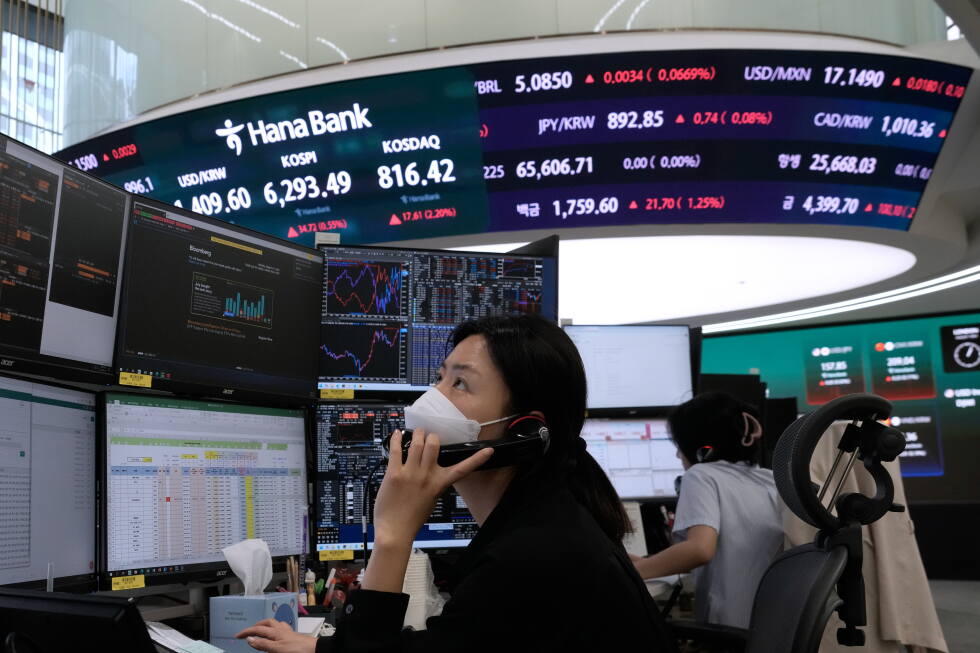
    Global equity markets delivered a mixed performance across Europe and Asia on Monday, building on an upward rally that pushed major U.S. indexes to fresh records in the prior session. The uptick on Wall Street was driven by an unexpected monthly jobs report that fueled investor expectations the U.S. Federal Reserve would hold off on interest rate hikes for the near term.

    In early European trading, benchmarks split gains and losses: Germany’s DAX climbed 0.3% to 26,411.01, France’s CAC 40 edged 0.1% lower to 8,703.72, and the U.K.’s FTSE 100 dipped 0.3% to 10,869.35. Futures tied to the S&P 500 ticked up 0.1% ahead of the U.S. trading open, while Dow Jones Industrial Average futures slipped 0.1%.

    Across Asian markets, Japan’s Nikkei 225 outperformed peers, jumping 2.1% to close at 66,970.22, lifted by robust gains in the domestic technology sector. Leading chip equipment manufacturer Tokyo Electron rose 4.1%, while chip testing producer Advantest gained 6.4% to lead the index upward. South Korea’s Kospi posted a more modest 0.7% gain to 6,299.66, even as major domestic chipmakers pulled back: Samsung Electronics lost 0.4% and SK Hynix, the rival memory chip producer, edged 0.1% lower. Analysts noted foreign investors have recently started selling off large tech holdings to lock in recent gains and reallocate capital to other sectors, including defense contracting.

    Other major Asian indexes also notched gains: Hong Kong’s Hang Seng Index added 1.1% to 25,937.49, and China’s Shanghai Composite rose 0.7% to 3,966.59. Australia’s S&P/ASX 200 bucked the upward trend to lose 0.3% at 9,232.60, while Taiwan’s Taiex surged 1.6% and India’s Sensex held nearly flat from Friday’s close.

    Oil prices climbed on Monday as geopolitical uncertainty across the Middle East disrupted expectations for energy supply security. The uptick came after Israel rejected a Gaza ceasefire proposal announced by former U.S. President Donald Trump, while new details emerged of a potential shipping management deal between Iran and Oman for the strategic Strait of Hormuz. Tehran has recently signaled it will bar vessels linked to “hostile countries” from passing through the key waterway, through which roughly 20% of global oil supplies transit daily. Separate tensions escalated over the weekend when Yemen’s Iranian-backed Houthi rebels attacked a government-controlled port on the country’s Red Sea coast, deepening fears of threats to critical global shipping lanes and a potential resumption of full-scale Yemeni civil war.

    Brent crude, the global benchmark for oil prices, gained 0.8% to trade at $84.23 per barrel on Monday. U.S. West Texas Intermediate crude rose 0.7% to settle at $78.72 per barrel. “Negotiators said that a deal to establish a safe shipping route was close, but Iran may now be exploring just how much it can extract from the U.S. in return,” Bas van Geffen, senior macro strategist for Rabobank, noted in a market commentary.

    This week, investors are turning their focus to a series of key U.S. inflation updates, headlined by the release of the July Consumer Price Index (CPI), the most closely watched gauge of consumer-level inflation. Economists forecast a 3.4% annual rise in inflation for July, a slight slowdown from June’s 3.5% gain. Inflation has held stubbornly above the Federal Reserve’s 2% target for most of 2024, keeping pressure on central bank policymakers to consider continued rate hikes.

    The market momentum that carried into Monday originated from Friday’s surprise U.S. jobs report, which showed employers cut 23,000 jobs in July, defying analyst projections of continued job growth. The softer than expected labor data pushed U.S. stocks higher and pulled Treasury yields lower, as investors bet a cooling jobs market would convince the Fed to delay further interest rate increases. All major U.S. indexes notched a second straight week of gains, with several hitting all-time records. The S&P 500 rose 0.6% to 7,757.64, topping its prior all-time high, while the Dow Jones Industrial Average gained 0.3% to 54,036.93, just short of the record it set Wednesday. The Nasdaq composite climbed 1.3% to 26,690.62, led by large technology stocks that have driven much of 2024’s market rally: Nvidia jumped 2.3% and Broadcom rose 1.7%.

    While the soft jobs report supported expectations for steady interest rates, it also clouded the broader economic outlook, dimming one of the economy’s strongest recent performers and stoking concerns about consumer household spending amid persistent high inflation. The report also revised lower payroll numbers for May and June, cutting a combined 103,000 jobs from the prior two months’ totals. The slowing pace of employment growth complicates the Federal Reserve’s dual mandate to balance stable job growth and taming persistent inflation, as higher interest rates cool price pressures by slowing overall economic growth, but also raise borrowing costs that make business expansion more difficult.

    In currency markets on Monday, the U.S. dollar strengthened against the Japanese yen, rising to 158.72 yen from 157.71 yen in the prior session. The euro edged slightly lower to $1.15617 from $1.1568.

  • Crimea strikes could rise sevenfold if Western funds came faster, Ukraine drone commander tells AP

    Crimea strikes could rise sevenfold if Western funds came faster, Ukraine drone commander tells AP

    In an exclusive interview with the Associated Press from an underground command post in eastern Ukraine, the leader of Kyiv’s newly formed Unmanned Systems Forces has laid out Ukraine’s ambitious, ongoing strategy to disable Russian military operations on the Crimean Peninsula, a territory Moscow illegally annexed in 2014 that currently serves as a critical staging hub for Russian invasion forces.

  • Count Binface, the man in a can with a plan, seeks Parliament seat in Britain’s wackiest election

    Count Binface, the man in a can with a plan, seeks Parliament seat in Britain’s wackiest election

    British electoral politics has long embraced a playful tradition of eccentric, novelty candidates, but few have captured national and international media attention quite like Count Binface – the self-styled intergalactic warrior who wears a repurposed garbage can as a headpiece – ahead of this week’s special by-election in Clacton-on-Sea. What began as a political stunt triggered by Nigel Farage’s abrupt resignation has turned into a viral political circus, with the joke candidate emerging as the most high-profile challenger in a race that has been dismissed as a farce even before polling day.

    The by-election was called after Reform UK leader Nigel Farage suddenly resigned from his recently won parliamentary seat, announcing he would run again to clear his name amid ongoing financial and ethics allegations. Count Binface – whose real identity is veteran British political comedy writer Jon Harvey – was the first candidate to register for the contest, throwing his ‘bucket’ into the ring immediately after Farage’s announcement with a typical cheeky taunt: ‘Game on, Nige.’

    The race took an unexpected turn when Britain’s major established political parties, dismissing Farage’s gambit as a cynical publicity stunt, chose to boycott the by-election, leaving the field wide open for novelty and minor-party candidates. With 34 candidates on the ballot – including three representatives of the long-running Monster Raving Loony Party – Count Binface quickly emerged as the default center of media attention, embarking on a weeks-long blitz of interviews with global outlets ranging from Japan to the Netherlands, Italy, and Germany.

    Speaking to the Associated Press amid his packed media schedule, Count Binface leaned into his outsider appeal, framing his candidacy as a breath of fresh air for voters fed up with mainstream politics. ‘I’m the only fresh thing on the menu,’ he said. ‘You’re all sick of these politicians, as good as they’re trying to be, but you know you need something different, a little bit of secret sauce.’ Even top Labour Party figures have gotten in on the joke: Then-Treasury Secretary Rachel Reeves joked when announcing the by-election timeline, ‘If (Farage) wants to spend the summer arguing with a bin, I won’t stop him.’

    Few voters would recognize Harvey behind Count Binface’s signature costume: a black cape, a waste-bin helmet, and low-budget sci-fi style body armor. A married father of two, Oxford-educated classics scholar, and veteran TV writer for iconic British political comedy series *The Thick of It* and long-running news quiz *Have I Got News for You*, Harvey has never broken character during public appearances, leaning fully into the intergalactic gimmick. When pressed by a BBC host to reveal his identity, he drew a parallel to *Star Wars*’ iconic unmasking scene: ‘Nobody wants to know what’s under the recycling. … It’s absolutely putrefying.’

    The Count Binface persona emerged from an unexpected origin story: a copyright dispute over the character Harvey originally used to enter electoral politics. Almost a decade ago, Harvey first ran for Parliament against then-Conservative Prime Minister Theresa May under the name Lord Buckethead, a gimmick borrowed from an old *Star Wars* parody. When the character’s original creator laid claim to the Lord Buckethead identity in what Harvey calls ‘an unfortunate battle on the planet Copyright,’ he rebranded his novelty candidate as Count Binface, and has run in every major British election since.

    He has challenged sitting prime ministers Boris Johnson and Rishi Sunak, twice ran against London Mayor Sadiq Khan – who joked in his 2024 victory speech that he was the first British politician to win back-to-back victories over Count Binface – and most recently lost a June by-election to current Prime Minister Andy Burnham. In Clacton, his campaign platform blends absurd humor, local petty grievances, and subtle digs at Farage that tap into broader public frustration with mainstream politics. The manifesto promises include ‘cut your taxes, and raise everyone else’s,’ building exactly one affordable home, nationalizing beloved British singer Adele, and moving a mispositioned hand dryer in the men’s bathroom of a local Uxbridge pub – a gripe he has campaigned on for years. ‘Do you want to be using the urinal and have another human blasting your bits with insanely hot air?’ he told reporters, perfectly leaning into his everyman schtick.

    Beyond the jokes, the platform carries quiet digs at Farage’s ongoing ethical controversies: Count Binface has pledged he will never accept £5 million in undeclared gifts from Earth-based crypto billionaires, a direct reference to the undeclared donation that triggered Farage’s resignation and the current by-election. He also proposes banning mid-term resigning MPs from running in the subsequent by-election, and has pledged to spend far more time in his constituency than in Washington D.C. – a nod to Farage’s close ties to former U.S. President Donald Trump, whom Count Binface openly calls ‘awful.’ Despite his criticism of Trump, he says he would strengthen the U.S.-UK ‘special relationship’ by turning it into a ‘galactic union.’

    Count Binface openly admits he does not expect to win the by-election, but even his run has highlighted the public’s growing frustration with mainstream British politics. If he does pull off the otherworldly upset, he faces one major procedural barrier: House of Commons rules ban ceremonial costumes and require formal business attire, meaning he would have to check his iconic garbage can helmet at the door. He says some sitting MPs have already floated the idea of changing the rules to allow him to keep his headgear – a proposal he jokes is more pressing than fixing the UK’s ailing economy, strained healthcare system, or crumbling infrastructure. After all, those are problems for serious politicians – not for an intergalactic warrior campaigning for croissant price caps and punishing rule-breaking cyclists by forcing them to ride unicycles.

  • Western Europe sets new temperature record as heat waves pummel the region

    Western Europe sets new temperature record as heat waves pummel the region

    A brutal summer heat wave sweeping across Western Europe has broken the region’s average temperature record for the June-July period, a benchmark previously set just four years ago in 2022, the European Union’s Copernicus Climate Change Service has confirmed.

    The extreme heat event actually began earlier, starting in May 2026, and has already triggered cascading environmental and public health crises across the continent: large-scale wildfires have burned thousands of hectares of land, prolonged drought has strained agricultural and water supplies, multiple nations have broken their all-time national temperature records, and thousands of premature heat-related deaths have been projected by public health researchers.

    Global climate data paints an equally stark picture for 2026. As of the end of July, it ranks as the third-warmest year ever recorded globally, trailing only 2024 and 2025 in average temperatures. But scientists note there is still half of the year remaining for temperatures to rise further, and the confluence of two major warming forces makes it increasingly likely 2026 could claim the unwanted title of hottest year on record by December.

    The dual drivers are accelerating anthropogenic (human-caused) global warming and a particularly strong El Niño event developing in the equatorial Pacific. El Niño is a naturally recurring climate pattern marked by elevated ocean surface temperatures in parts of the Pacific Ocean, which ripples out to drive temperature increases across much of the globe. Even if 2026 does not overtake 2024’s top spot, scientists say it will almost certainly land near the top of the historical ranking.

    Copernicus also confirmed a new concerning ocean temperature milestone: July 2026 saw the highest average sea surface temperature ever recorded for the month across all extra-polar oceans – the parts of the world’s oceans outside polar regions that do not experience seasonal sea ice. The agency pegged the new July average at 20.96 degrees Celsius (69.73 degrees Fahrenheit), beating the previous 2023 record of 20.89 C (69.60 F). Researchers said developing El Niño conditions in the equatorial Pacific were a key contributor to the new ocean heat record.

    Globally, the average surface air temperature for July 2026 came in at 16.90°C (62.42 F), tying it with July 2024 as the second-warmest July ever recorded, according to Copernicus.

    For Western Europe specifically, the June-July 2026 average temperature hit 21.62°C (70.92 F), shattering the previous regional average mark. Samantha Burgess, strategic lead for climate at the European Centre for Medium-Range Weather Forecasts, which hosts Copernicus operations, explained the dynamic that prolonged and amplified the regional heat wave.

    “Persistent high-pressure systems trapped heat over western Europe, and the extreme temperatures also amplified widespread drought,” Burgess explained. “As soils dry out, they lose their ability to provide natural cooling, allowing heat to build more readily. This is a clear example of how climate change is intensifying heat extremes, with heat and drought increasingly reinforcing one another.”