标签: Europe

欧洲

  • Two bodies of missing Italians recovered from inside Maldives cave

    Two bodies of missing Italians recovered from inside Maldives cave

    A deadly scuba diving incident off the coast of the Maldives last week has left five people dead, with recovery teams continuing the grim work of retrieving the remaining victims trapped in a deep underwater cave. On Tuesday, a team of specialized Finnish divers successfully pulled the bodies of two Italian divers from the third chamber of the infamous local site known as Shark Cave, capping a difficult two-hour retrieval operation, Maldivian government spokesperson Mohamed Hossain Shareef confirmed to the BBC.

    The two recovered remains are now being transported to the Maldivian capital Male for formal identification. The tragedy unfolded last Thursday near Vaavu Atoll, when a group of divers entered the unapproved cave system, which reaches depths of up to 60 meters (197 feet). The first victim, Italian diving instructor and boat operations manager Gianluca Benedetti, was recovered shortly after the accident, according to local reports.

    The disaster claimed a fifth life on Saturday, when a Maldivian rescue diver died during an initial search effort for the missing divers. On Monday, Finnish specialist divers located four of the missing divers in the cave chamber furthest from the entrance, clearing the way for Tuesday’s retrieval of two of the bodies. Recovery operations for the two still-trapped victims are scheduled to resume Wednesday, with local officials expressing cautious optimism that both will be recovered by the end of the day.

    Investigators hope that full retrieval of all victims will help shed light on the exact sequence of events that led to the accident. The recovery operation has been classified as highly complex from the start, due to the cave’s extreme depth, tight interior corridors, and extremely poor visibility. The cave’s entrance already sits 47 meters below the surface, with its interconnected chambers ranging to even greater depths. Complicating matters further, weather conditions on the day of the accident were rough, with local authorities having already issued a yellow warning advising against activity for passenger boats and fishing vessels.

    New details have also emerged about the dive team’s background: four of the Italian divers were affiliated with the University of Genoa, but institutional representatives told the BBC the university never authorized any deep-sea diving activity as part of the team’s research mission in the region. “Any requests submitted to the Maldivian authorities were evidently made outside the scope of the mission authorised by the University,” a university spokesperson said. Maldivian government officials confirmed the team held a permit to dive to a maximum depth of 50 meters, but never disclosed their plan to explore Shark Cave in their permit application.

  • Former Spanish Prime Minister Zapatero under investigation for role in airline bailout

    Former Spanish Prime Minister Zapatero under investigation for role in airline bailout

    MADRID – In a significant development rocking Spanish political circles, Spain’s National Court has launched a formal investigation into former Prime Minister José Luis Rodríguez Zapatero over claims of influence peddling and potential financial misconduct linked to a public sector bailout of a domestic airline. The probe centers on the 2021 rescue of Plus Ultra, a Spanish airline with Venezuelan-linked investment, which received 53 million euros (equivalent to roughly $62 million today) in public funds drawn from the European Union’s COVID-19 economic recovery package.

    In an official statement released this week, the court confirmed that it had expanded its existing investigation to name Zapatero as a person of interest, and has formally summoned the 65-year-old former leader to appear before an investigating judge for questioning on June 2. On Tuesday, law enforcement officers executed a judge-issued search warrant at Zapatero’s personal office as part of the preliminary evidence-gathering phase of the probe.

    Zapatero, who served two terms as Spain’s prime minister from 2004 to 2011, remains an active prominent member of the Spanish Socialist Workers’ Party, the same left-wing party currently led by incumbent Prime Minister Pedro Sánchez. This is not the first time the former prime minister has addressed the allegations: during a March hearing before the Spanish Senate, he flatly denied any improper involvement in the bailout process, telling lawmakers he “never received any commissions from Plus Ultra.”

    Founded as a low-cost long-haul carrier, Plus Ultra focuses primarily on routes connecting Spain to Latin American markets including Venezuela, Peru and Ecuador, and counts a group of Venezuelan investors among its major stakeholders. Since stepping down from national office more than a decade ago, Zapatero has built a prominent profile as an informal diplomatic mediator, with much of his post-premiership work centered on fostering dialogue between the Venezuelan government led by Nicolás Maduro and Western nations. Maduro’s administration has faced widespread diplomatic isolation from the European Union and other Western powers following a widespread crackdown on opposition political groups and claims of electoral irregularities.

    Notably, Zapatero had been out of elected public office for 10 years when the Plus Ultra bailout was approved by Sánchez’s government. The investigation marks the latest corruption-related scandal to hit Sánchez’s ruling party, which has already weathered multiple other corruption probes over the past two years that have eroded public support for the administration.

  • Rescuers search for 3 missing after German building collapse possibly caused by gas explosion

    Rescuers search for 3 missing after German building collapse possibly caused by gas explosion

    GÖRLITZ, Germany — Rescue operations entered their second day Tuesday as search crews scrambled to locate three people missing following a catastrophic overnight building collapse in this eastern German city, just kilometers from the Polish border. Local law enforcement confirmed Monday night’s structural failure may have been triggered by an undetected gas explosion, and first responders have proceeded with extreme care at the disaster site to avoid secondary hazards from potential unaddressed gas leaks, according to reporting from Germany’s national news agency dpa.

    Initial search efforts deployed specially trained search canines to detect signs of life trapped beneath the thousands of tons of rubble, but when those attempts failed to turn up any leads, crews shifted strategy around 2 a.m. on Tuesday. Heavy excavators were brought in to carefully clear large debris, while teams of workers also dug through smaller fragments by hand to avoid endangering any possible survivors. Early fears that as many as five people could be buried under the collapsed structure have since been ruled out after a full accounting of local residents and visitors, police confirmed.

    One distraught relative, who told reporters he had been shopping at a nearby neighborhood supermarket when the blast occurred, said his wife and cousin had arrived in the city earlier that day for a vacation, staying at one of the building’s rental units. When he rushed back to the property after hearing the explosion, he found the multi-story structure reduced to a massive, chaotic pile of broken concrete and splintered wood. Law enforcement officials confirmed the fallen building, constructed in the historic Wilhelminian architectural style popular in the late 19th and early 20th centuries, housed both long-term rental apartments and short-term vacation accommodation.

    Located in Germany’s far eastern state of Saxony, Görlitz is the country’s easternmost city, home to roughly 57,000 residents. Its well-preserved, centuries-old old town — which remained largely undamaged through World War II — is a major draw for tourists and a popular filming location for international film and television productions, drawing production crews from across the globe each year.

  • Two dead in Spain shooting, with babies reportedly among injured

    Two dead in Spain shooting, with babies reportedly among injured

    A shocking act of gun violence has rocked the small southern Spanish town of El Ejido, located near the city of Almería, leaving two people dead and four others seriously wounded. Spain’s national law enforcement agency, the Guardia Civil, has confirmed that a 25-year-old man has been taken into custody on suspicion of carrying out the fatal attack that targeted his own parents and several other victims.

    Local emergency dispatch received the first report of the shooting at 23:00 local time on Monday evening, which equates to 22:00 British Summer Time. Emergency responders quickly arrived at the scene, and all four injured victims were immediately transported to area hospitals for urgent medical care. Among those hurt are two young children, a 60-year-old man, and an additional adult, according to unofficial local media accounts. One of the injured children is the 25-year-old suspect’s own seven-month-old son, while the other injured child is an 18-month-old toddler, the reports add.

    As of Tuesday, Spanish authorities have not released the formal identities of the suspect or the two slain victims, citing ongoing investigative procedures. Following the shooting, the suspect fled the scene and was briefly at large before turning himself in voluntarily at a local police precinct, according to Spanish news agency Europa Press.

    Guardia Civil officials have confirmed that they have launched a full investigation into the attack, with investigators currently working to piece together a clear motive for the violence. What makes this attack particularly notable for Spain is that mass shootings remain an extremely rare occurrence in the country. Data from Project Insight, an organization that tracks gun violence across the European continent, shows that only four mass shootings were recorded in Spain between 2000 and 2023, making this incident an anomaly for the nation’s typically low rates of mass gun crime.

  • Hungary’s Magyar kicks off his first foreign trip as prime minister to ally Poland

    Hungary’s Magyar kicks off his first foreign trip as prime minister to ally Poland

    Fresh off a historic political upset that ended 16 years of Viktor Orbán’s nationalist-populist rule, Hungary’s new center-right Prime Minister Péter Magyar is traveling to Poland this week to draw lessons from Warsaw’s own recent experience undoing authoritarian-leaning governance. The trip comes as Magyar’s Tisza party sets out to dismantle the political and economic infrastructure Orbán built during his more than a decade and a half in power, a mission that has sparked widespread optimism across Europe.

    Magyar’s landslide election victory last month — which delivered Tisza a two-thirds parliamentary supermajority, an unprecedented result in Hungary’s post-Communist era — has drawn consistent comparisons to Poland’s 2023 general election, where Donald Tusk’s center-right coalition ousted the national-conservative Law and Justice (PiS) party after eight years in power. Like Tusk, Magyar has made restoring eroded democratic institutions, holding corrupt former officials accountable, and rolling back executive overreach his top policy priorities.

    Magyar’s diplomatic itinerary kicked off with a flight to the southern Polish city of Kraków on Tuesday, followed by an overland journey by train to Warsaw, and a final leg to the Baltic coastal city of Gdańsk. Since being sworn in on May 9, the new prime minister has moved quickly to consolidate his mandate, demanding that dozens of senior officials appointed by Orbán’s administration step aside, and threatening to remove remaining holdouts via constitutional amendment — a power Tisza’s supermajority makes fully achievable.

    Topping Magyar’s target list are key institutional leaders he has labeled “Orbán’s puppets”: ceremonial but constitutionally powerful President Tamás Sulyok, Hungary’s attorney general, and the heads of both the Constitutional Court and Supreme Court. All are appointees of the previous government, and many retain their seats through long terms that extend years into the future; Sulyok’s term runs until 2029, while Constitutional Court head Péter Polt, a widely acknowledged Fidesz loyalist, will remain in office until 2037.

    Warsaw-based Center for Eastern Studies analyst Andrzej Sadecki notes that while retaining control of key state institutions by former regime allies is the same core challenge Tusk faced after taking power in Poland, Magyar holds a critical advantage his Polish counterpart did not. “The situation is much easier for Magyar because he has a constitutional majority. This makes it much easier for him to introduce deep changes,” Sadecki told the Associated Press. Unlike Tusk, who had to negotiate as head of a fragile coalition government, Magyar’s Tisza party won an absolute 53% of the national vote, securing enough seats to pass constitutional amendments without cross-party support. Sadecki framed the election outcome as far more than a routine change of government, calling it “a watershed moment” for Hungarian democracy.

    One of Magyar’s first policy pushes mirrors Tusk’s early actions in Poland: overhauling a state-controlled media ecosystem that operated as a partisan mouthpiece for the previous ruling government. For 16 years, Orbán built an expansive, state-aligned media network that consistently amplified Fidesz’s messaging while defaming, discrediting, and intimidating political opposition. In the wake of his election victory, Magyar slammed Orbán-era public broadcasters as “a factory of lies,” announcing he would suspend all news programming until the outlet can be restructured to meet objective journalism standards.

    Tusk’s government took an almost identical approach less than a month after taking office, overhauling the primetime newscast on Poland’s state television network and replacing senior leadership at all public media outlets. That move drew legal criticism even from some liberal groups, with the Warsaw-based Helsinki Foundation for Human Rights noting that the rapid restructuring “raises serious legal doubts.” But József Péter Martin, executive director of Transparency International Hungary, argues the systemic failure of Hungarian public media under Orbán justifies a full restructuring — and that the process can be completed within the bounds of the rule of law.

    Restoring full judicial independence, by contrast, is shaping up to be one of Magyar’s most difficult long-term challenges, mirroring ongoing struggles faced by Tusk’s administration in Poland. During PiS’s eight years in power, the party overhauled Poland’s court system by appointing loyalist judges to higher courts, punishing dissident judges with disciplinary action, and stacking the Constitutional Court with ideological allies who could block unfavorable legislation through prolonged constitutional review. Tusk’s efforts to reverse these changes have been repeatedly blocked by two successive PiS-aligned Polish presidents, and full judicial independence has yet to be restored.

    In Hungary, similar structural barriers stand in Magyar’s way. Despite repeated calls for his resignation, Orbán ally President Sulyok has publicly stated he has no intention of stepping down early. Martin argues that while rank-and-file Hungarian judges and prosecutors largely uphold their professional duties, replacing the senior leadership of the constitutional and supreme courts is critical to restoring public trust in judicial impartiality. Critically, Martin added that these posts should not be filled with Tisza loyalists, which would simply replace one partisan capture with another, but rather with independent figures fully committed to upholding the Hungarian constitution and public interest.

    The new Hungarian government also faces pressure from voters to hold former Orbán administration officials accountable for alleged corruption and abuse of power — nearly 3.4 million Hungarians cast ballots for Tisza, with many naming accountability as a top priority. In Poland, prosecutors have already opened multiple corruption investigations against former PiS officials, including former Justice Minister Zbigniew Ziobro, who stands accused of diverting public funds intended for violence victims for personal and political gain. Prosecution of Ziobro stalled after he was granted asylum in Orbán’s Hungary earlier this year, though he has since claimed to have relocated to the United States, where Polish authorities are seeking his extradition.

    To meet voter expectations for accountability, Magyar has pledged to launch a new specialized body, the National Asset Recovery and Protection Office, tasked with investigating and recouping public funds allegedly misappropriated during Orbán’s tenure. Martin emphasized that restoring the rule of law and independent judiciary is the “initial and most essential step” to enabling successful prosecution of past abuses, adding that Magyar’s campaign pledge to join the European Public Prosecutor’s Office would be a major step forward. “If all this is done, then I think there is a good chance that the corrupt perpetrators of the former regime, under an independent judiciary, can be held accountable,” Martin said. The report was contributed to by AP correspondent Ciobanu, reporting from Warsaw, Poland.

  • Putin visits China to reaffirm Russia ties as Xi also seeks stable US relations after Trump summit

    Putin visits China to reaffirm Russia ties as Xi also seeks stable US relations after Trump summit

    Just six days after former U.S. President Donald Trump concluded his high-stakes diplomatic trip to Beijing, Russian President Vladimir Putin is set to arrive in China for two days of bilateral talks with Chinese leader Xi Jinping, a diplomatic scheduling that has drawn close global attention to Beijing’s careful balancing act between major powers.

    Scheduled for Tuesday and Wednesday, Putin’s visit comes as Beijing pursues two parallel diplomatic goals: forging stable, constructive relations with Washington while cementing its decades-long strategic partnership with Moscow. Experts note these two policy tracks are not contradictory for Chinese diplomacy. This year also marks the 25th anniversary of the landmark 2001 Sino-Russian Treaty of Friendship, adding symbolic weight to the summit.

    The Kremlin has confirmed that the two leaders will cover a wide agenda, ranging from deepening bilateral economic and energy cooperation to addressing pressing global and regional security challenges. Kremlin spokesman Dmitry Peskov added that the trip will also create a critical opportunity for Russia to get direct, first-hand updates from China on recent U.S.-China talks, opening space for a frank exchange of views between Moscow and Beijing.

    This is not Putin’s first visit to China in recent years. In September 2025, he traveled to Tianjin to attend the annual Shanghai Cooperation Organization summit, attended a military parade marking the 80th anniversary of the end of World War II, and held one-on-one talks with Xi. During that meeting, the two leaders openly referred to one another as friends: Xi called Putin an “old friend”, while Putin addressed Xi as “dear friend”. Just months earlier, in April 2025, Russian Foreign Minister Sergey Lavrov also traveled to Beijing for talks with Xi, who described the Sino-Russian bilateral relationship as “precious” amid the current fractured global context. Xi stressed at that time that Beijing and Moscow must strengthen strategic coordination to defend their shared legitimate interests and protect the collective unity of Global South nations.

    During Trump’s recent Beijing visit, Xi framed the U.S.-China bilateral relationship as the most consequential in the world, urging both sides to embrace a partner mindset rather than framing one another as rivals. By the close of the two-day summit, the two nations announced they would work toward a new framework to guide a “constructive China-U.S. relationship of strategic stability”.

    For observers, Putin’s trip serves as a clear reinforcement of the Sino-Russian partnership, which has grown significantly deeper since 2022, when Russia launched its full-scale invasion of Ukraine. China has maintained an official neutral stance on the conflict while continuing to expand trade ties with Moscow, despite sweeping economic and financial sanctions imposed on Russia by the U.S. and the European Union.

    Today, China stands as Russia’s largest single trading partner, and is the top buyer of Russian crude oil and natural gas. Moscow has projected that regional tensions stemming from the war in Iran will further boost demand for Russian energy exports to China. China has also rejected Western demands to halt exports of high-tech components to Russia’s defense sector, a move that has drawn criticism from Western capitals.

    Earlier this month, Putin highlighted that Moscow and Beijing have already made major progress in advancing energy cooperation. “We have reached agreement on practically all the key issues in the oil and gas sector,” Putin said. “If we can finalize the remaining details and conclude these agreements during my upcoming visit, I will be extremely pleased.”

    Putin has also framed the Sino-Russian relationship as a critical balancing force for global order. “Interaction between such large nations as China and Russia undoubtedly acts as a factor of deterrence and global stability,” he noted. The Russian leader added that Moscow welcomes the recent dialogue between Beijing and Washington, viewing it as an additional stabilizing force for the global economy. “We only stand to benefit from stability and constructive engagement between the U.S. and China,” he said.

    Wang Zichen, deputy secretary-general of the Beijing-based Center for China & Globalization, summed up Beijing’s diplomatic strategy: “The Trump visit focused on stabilizing the world’s most important bilateral relationship; the Putin visit is about reassuring a long-standing strategic partner. For China, these two tracks are not mutually exclusive. Beijing wants stable relations with the West, continued strategic trust with Moscow, and enough diplomatic space to position itself as an unbiased major power capable of engaging all sides.”

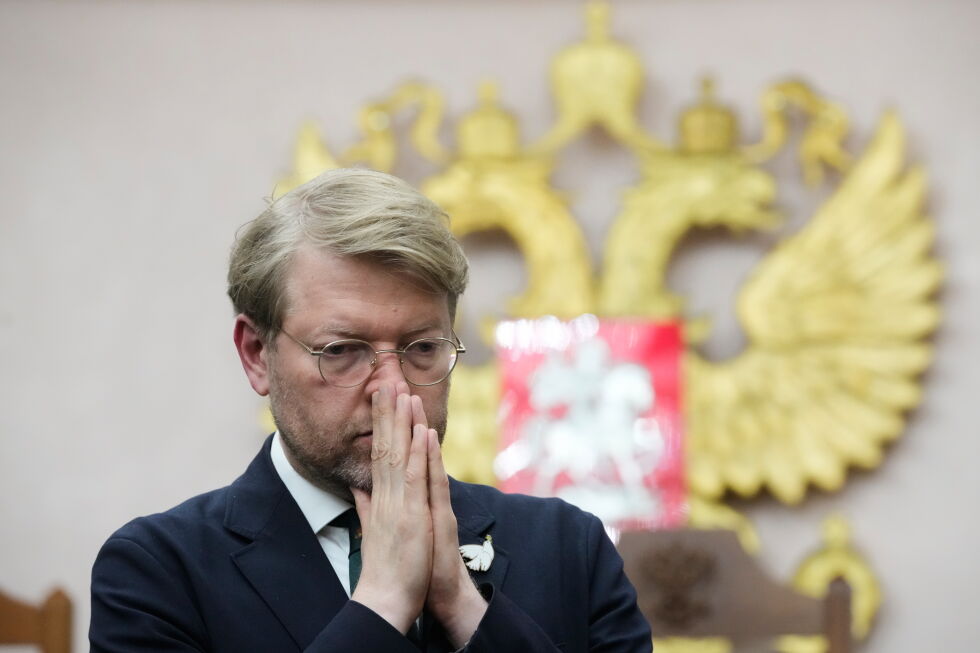
  • Ex-British soldier imprisoned by Russia says he feels abandoned in occupied Ukraine

    Ex-British soldier imprisoned by Russia says he feels abandoned in occupied Ukraine

    Almost two years after he was captured while fighting as a volunteer with Ukraine’s Foreign Legion, a former 12-year veteran of the British Army has delivered a searing accusation against his home government, saying he has been left abandoned and without critical support while serving a 15-year sentence in a maximum-security Russian prison colony.

    Thirty-three-year-old Hayden Davies was captured by Russian forces more than 18 months ago after sustaining catastrophic injuries on Ukraine’s front lines. In a series of censored letters shared with the BBC from his detention facility — which Davies approved for publication — he detailed the brutal ordeal that led to his capture. After his radio failed and his combat partner was killed, Davies was trapped with a severely broken leg, bone protruding through the skin. With no route for evacuation, he made the desperate choice to crawl 150 meters over an entire day to a ruined building’s basement, where he survived on tinned food for two months before Russian forces discovered him. He treated his own injury by pushing the protruding bone back into his leg and crafting makeshift splints and crutches from scrap wood, describing the pain as the worst he had ever experienced.

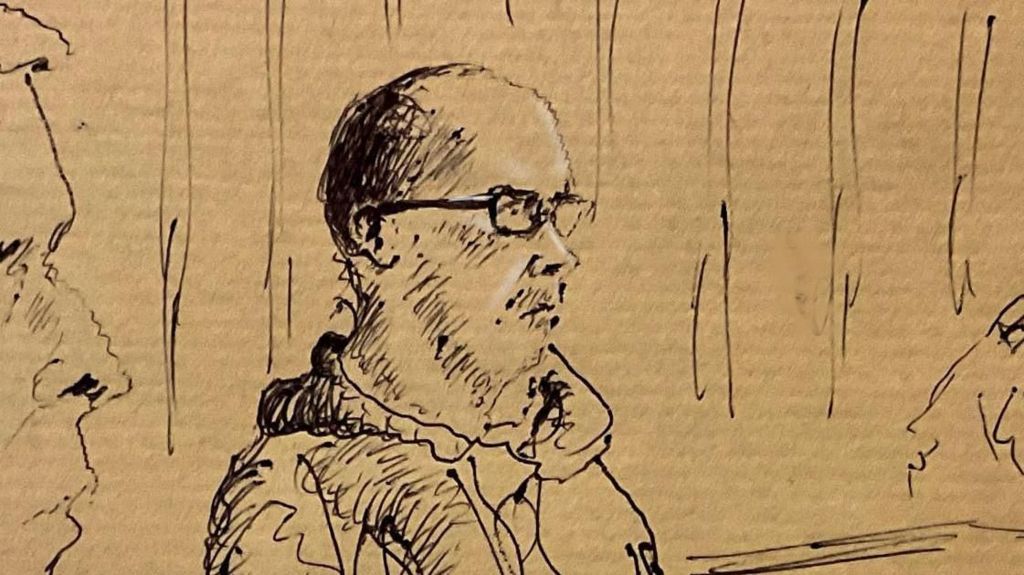
    Davies was first convicted on charges of mercenaryism — a criminal accusation under Russian law that targets individuals fighting in foreign conflicts for material gain — by a Russian-controlled court in occupied Donetsk last December, which sentenced him to 13 years in prison. The UK does not recognize Russia’s occupation of Donetsk nor the authority of the courts operating there. Last week, a Moscow judge extended the sentence by an additional two years, ruling the original penalty was too lenient.

    In detention, Davies spent 12 months in solitary confinement before being moved to a shared cell. He told the BBC he has never received any communication from UK government representatives, and remains without the medical care his leg injury requires. After 12 years of service to the UK, he said, the total lack of support feels like a disgrace. “I served my country for 12 years in the British Army, and now, when I need help and medical treatment, no-one wants to know. This is a disgrace,” he wrote.

    A spokesperson for the UK Foreign, Commonwealth & Development Office (FCDO) confirmed the government maintains close contact with Davies’ family and provides consular assistance, and issued a strong condemnation of his conviction on what it calls false mercenaryism charges. But the FCDO has not responded to specific claims from activists who say UK officials have taken no tangible action to secure Davies’ release or support his legal team based in Russia.

    Anastasia Shevchenko, a Lithuania-based political activist who supports prisoners of war held in Russian captivity, told the BBC she notified both the UK embassies in Ukraine and Lithuania of Davies’ capture and detention last year, after connecting with him through fellow Ukrainian detainees held in the same facility. She said the only response she received was a note of thanks and a generic message wishing Davies courage. Unlike other nations that take more aggressive action to support their detained nationals, Shevchenko said, the UK has failed to provide even basic assistance: Davies has gone without adequate food, clothing and medication, forcing her to send personal funds to cover his basic needs. “This is the most important thing in captivity, not to be forgotten,” Shevchenko said, adding that the UK has the ability to do far more to secure Davies’ release and improve his conditions.

    International human rights groups have long documented systemic violations against prisoners of war and detained foreign fighters in Russia and Russian-controlled Ukrainian territory, including the widespread denial of adequate medical care, a charge Russian authorities consistently reject. The International Committee of the Red Cross has confirmed it does not have full, unimpeded access to POWs in these regions, a requirement explicitly laid out in the Geneva Conventions. A source close to Davies confirmed the former soldier continues to receive no medical care for his serious leg injury, and that UK officials have not reached out to Davies’ Russia-based legal team.

    To date, Davies has received only two letters from relatives since his capture, one from his sister and a second from another family member. The BBC’s attempts to contact Davies’ family for comment received no response.

    A Ukrainian government source with knowledge of the case told the BBC there is no evidence of active efforts by UK authorities to assist detained British citizens like Davies. The case echoes the experience of another captured British ex-soldier, Shaun Pinner, who was sentenced to death by a Russian-controlled court in 2022 and held for five months before being released in a prisoner swap brokered by the Saudi government. Pinner said the FCDO did a good job of keeping in regular contact with his family throughout his captivity, but played no role in negotiating his release.

    Pinner noted that Russia’s ongoing refusal to grant British diplomats access to detained foreign fighters makes direct government intervention extremely difficult. “I can understand there’s a lot of frustration over lack of access but if Russia doesn’t let diplomats in to see POWs, there’s not a lot you can do,” he said, adding that prisoner swaps are most effectively negotiated through Ukrainian channels.

    The FCDO has reiterated that under international law and the Geneva Conventions, prisoners of war cannot be prosecuted for taking part in hostilities, and has called on Russia to end its prosecution of detained fighters for political and propaganda purposes. In its official travel guidance for Ukraine, the FCDO warns British nationals that traveling to Ukraine to fight may violate UK domestic law and could result in prosecution on return to the UK. It also explicitly notes that the British government’s ability to provide assistance to captured or detained British fighters in Ukraine is extremely limited, a position that has drawn criticism from activists who argue the government has a duty to support its former service members even when they volunteer for foreign conflicts.

  • Ex-Everton director loses Russian sanctions challenge

    Ex-Everton director loses Russian sanctions challenge

    A former senior official at English Premier League football club Everton has failed in a High Court legal bid to overturn UK government sanctions imposed over his family connection to a Kremlin-aligned Russian oligarch, a court has ruled.

    Sarvar Ismailov, who once served on Everton’s board of directors, and his brother Sanjar were first added to the UK’s sanctions register in 2022, shortly after Russia launched its full-scale invasion of Ukraine. The designation stemmed from their close familial tie to Alisher Usmanov, an Uzbek-Russian billionaire with long-documented links to Russian President Vladimir Putin.

    After the initial imposition of sanctions, Ismailov requested a formal government review of his designation in 2023. While minor wording adjustments were made to his sanction listing in 2024, the restrictive measures against him remained in place, prompting him to launch a judicial challenge against the Foreign Office.

    During the High Court hearing held earlier this month, Ismailov’s legal team argued that the continued sanctions were inherently unfair. They asserted that Ismailov was being penalized solely for his biological relation to Usmanov, a position they described as “outrageously unfair”.

    In defending the government’s decision, barristers representing the Foreign Office told the London court that sanctioning individuals connected by family to targeted oligarchs serves multiple clear, rational and legitimate policy goals within the broader sanctions regime.

    Delivering his 46-page ruling, Mr Justice Pushpinder Saini dismissed Ismailov’s legal challenge. The judge found that the Foreign Office holds unique institutional insight and position to evaluate whether sanctions measures will meet their intended policy objectives, and concluded that the department’s decision to maintain sanctions against Ismailov was not irrational.

    Justice Saini further accepted that it was reasonable for the Foreign Office to infer that Ismailov retains the ability to exert influence over his uncle, Alisher Usmanov. He noted that the decision to keep Ismailov under sanction is clearly tied to the core objectives of the UK’s Russia sanctions regime, one of which is to demonstrate that any association with individuals linked to the Russian government will carry tangible negative consequences.

    “The question is not whether the claimant’s designation will of itself bring the conflict to an end,” Justice Saini wrote. “Rather, the question is whether the measure is capable of contributing to the stated objective as part of the overall sanctions regime. The decision to maintain the designation of the claimant is so capable.”

    He added: “The claimant’s designation, and others like him who are ‘associated with’ [Mr Usmanov], makes an important contribution to the overall cumulative impact of sanctions and enhances pressure on Russia in respect of its actions in Ukraine.”

    Ismailov, who was born in Uzbekistan, joined Everton’s organizational structure in 2019 and was elevated to the club’s board of directors in mid-2021. However, he stepped down from all his positions at the club just months later that November, after facing a criminal charge that was ultimately dismissed.

    Hugo Keith KC, Ismailov’s lead barrister, told the court that his client moved to the United Kingdom at the age of 13, has never resided in Russia as an adult, holds no political influence or connections within Russia, and has no personal relationship or access to President Putin or any senior member of the Russian government. Keith also stressed that there is no evidence to show Ismailov has ever supported the Russian government or its invasion of Ukraine, calling the continued sanctioning of his client “utterly purposeless,” “plainly irrational” and “capricious.”

    Jason Pobjoy KC, representing the Foreign Office, countered that the department acted well within its legal authority in choosing to maintain sanctions against Ismailov. Even acknowledging the significant personal impact the measures have on Ismailov, Pobjoy argued that the decision advances the overarching policy goals of the UK’s sanctions regime against Russia. He added that the Foreign Office is granted a broad margin of discretion in making sanction designations, and there is no valid legal basis to overturn the department’s ruling.

  • Canada beats Denmark and Crosby tallies 4 assists in third-period surge at hockey worlds

    Canada beats Denmark and Crosby tallies 4 assists in third-period surge at hockey worlds

    The 2024 IIHF Ice Hockey World Championship delivered two dramatic contrasting results on Monday, as Canada seized revenge for a stunning 2023 upset with a late-game breakout against Denmark, while defending champion United States suffered a third straight defeat at the hands of a red-hot Finnish side.

    In Group B action hosted in Fribourg, Switzerland, Canada entered the match with unfinished business against Denmark. Twelve months prior, the heavily favored Canadian squad saw their bid for a 29th world title cut short when Denmark pulled off one of the biggest upsets in tournament history to beat them 2-1 in the quarterfinals. This year’s rematch followed a familiar script for most of the contest: Canada controlled possession and peppered the net with 28 shots, but could not find a way past Denmark rookie goaltender Nicolaj Henriksen, who put on a spectacular performance in his first senior world championship appearance.

    That all changed in the opening minutes of the third period, when legendary Canadian forward Sidney Crosby sparked an unprecedented scoring surge that turned a scoreless deadlock into a dominant 5-1 win. Just 28 seconds into the final frame, Porter Martone slotted home the opening goal off a crisp cross-crease pass from Crosby, breaking the seal for the tournament favorites. Three minutes later, Gabriel Vilardi doubled Canada’s lead, and 31 seconds after that, Denton Mateychuk buried a rebound off another Crosby setup to put Canada up 3-0 before the third period was even seven minutes old. Ryan O’Reilly and Parker Wotherspoon closed out the scoring for Canada, each finding the back of the net after Crosby located them unmarked in front of the goal, giving the future Hall of Famer four assists on the night’s five goals. Teenage Canadian captain Macklin Celebrini added two assists of his own, while goaltender Jet Greaves turned aside 15 of 16 Danish shots. Nick Olesen scored Denmark’s only goal late in the contest.

    The win marks Canada’s third consecutive victory to open the tournament, following previous wins over Sweden (5-3) and Italy (6-0). Canada is set to return to the ice against Norway on Thursday.

    In Group A play in Zurich, meanwhile, defending champion United States continued to struggle at this year’s event, falling 6-2 to Finland, who notched their third straight win to open the tournament. The U.S. came into the match on rocky footing, having dropped their opener to host Switzerland 3-1 before picking up their only win so far against Great Britain 5-1.

    Finland got on the board early, when Lenni Hameenaho fired a wrist shot past U.S. goaltender Joseph Woll just over six minutes into the first period, capitalizing on an American turnover. The U.S. responded quickly, with Matt Coronato knocking in a one-timer to equalize just 98 seconds later. From that point on, Finland dominated the scoreboard, ripping off four consecutive goals to pull away. Patrik Puistola and Aatu Raty found the back of the net before the end of the first period, and Hameenaho notched his second of the night on a power play early in the second, followed 31 seconds later by a strike from Saku Maenalanen. The outburst forced the U.S. to pull Woll, who had allowed five goals on just 10 shots, and bring in backup Devin Cooley.

    The U.S. got one goal back in the third period from Ryan Leonard, but Anton Lundell closed out the scoring for Finland to seal the 6-2 win. The U.S. will look to get back on track when they face Germany on Wednesday, while other matches on Monday’s slate included host Switzerland facing Germany in Zurich, and Sweden taking on Czechia in Fribourg.

  • What to know about the political chaos engulfing the UK’s Labour Party and efforts to unseat Starmer

    What to know about the political chaos engulfing the UK’s Labour Party and efforts to unseat Starmer

    LONDON — Just two years after securing a historic landslide general election victory, British Prime Minister Keir Starmer finds himself fighting to save his job, grappling with an unprecedented internal rebellion triggered by the Labour Party’s catastrophic performance in the May 7 local and regional elections. On Monday, Starmer rallied party staff at Labour’s London headquarters, seeking to shore up his crumbling support amid growing calls for his resignation from dozens of sitting party members.