Diplomatic relations between neighboring Hungary and Ukraine are poised for a potential turnaround, after the two nations’ top foreign policy officials announced Monday that high-level talks focused on securing the rights of Ukraine’s ethnic Hungarian minority will get underway as early as this week. The move marks the first concrete sign of improved relations following the April general election that ousted long-time pro-Russian Prime Minister Viktor Orbán, whose 16-year tenure left bilateral ties at a historic low.
For years, Orbán’s nationalist-populist government refused to extend military or financial aid to Ukraine following Russia’s 2022 full-scale invasion, consistently blocked critical European Union funding for Kyiv, stalled EU sanctions on Moscow, and repeatedly threatened to derail Ukraine’s accession process to the bloc. In the lead-up to the April election, Orbán’s administration ran a harsh anti-Ukraine campaign, framing the war-torn neighboring country as an existential threat to Hungary’s economic stability and national security, claiming it would drag Hungary directly into the ongoing conflict.
Orbán repeatedly justified his administration’s anti-Ukraine stances by pointing to long-running disputes over minority rights for the roughly 100,000-strong ethnic Hungarian community based in Ukraine’s western Zakarpattia region. Tensions over the issue flared in 2017, when Kyiv passed a new education law mandating Ukrainian as the exclusive language of instruction for all students beyond the fifth grade. Drafted primarily to curtail Russian influence in Ukrainian public life, the policy ultimately restricted education access in other minority languages, drawing widespread anger from Hungarian, Romanian and Bulgarian minority groups across western Ukraine.
Following the landslide electoral victory of the center-right Tisza Party and its leader Prime Minister Péter Magyar, however, observers have held out hope for a major shift in Hungary’s approach to its eastern neighbor. The new administration’s break from Orbán’s pro-Moscow stance was already on display last week, when new Hungarian Foreign Minister Anita Orbán – who is not related to the former prime minister – summoned the Russian ambassador to Budapest to condemn a massive Russian drone strike on Zakarpattia. That step would have been nearly unthinkable during Orbán’s tenure, and Ukrainian President Volodymyr Zelenskyy hailed the move as an “important message” that demonstrated a clear break from the previous government’s approach.
In a public post on X on Monday, Anita Orbán confirmed that expert-level consultations focused on resolving the long-running dispute over ethnic Hungarian minority rights will launch this week. She framed the talks as “an important foundation for the prompt and reassuring settlement of minority rights issues,” adding that she expects the dialogue to be constructive and yield tangible progress for the Hungarian community in Zakarpattia in the near term.
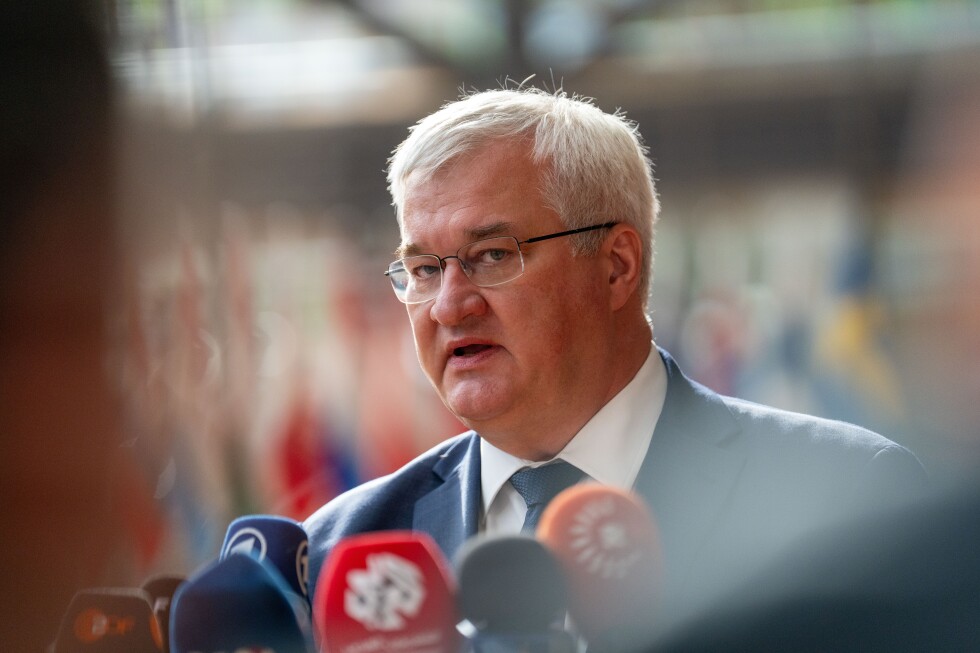
Ukrainian Foreign Minister Andrii Sybiha echoed that optimistic tone in his own X post Monday, confirming that Kyiv is ready to move forward with a new era of cooperative relations. “We are ready to open a new, mutually beneficial chapter in Ukrainian-Hungarian relations without delay, with the aim of restoring trust and good-neighborly relations between our countries,” Sybiha wrote. He added that during a recent phone call with Anita Orbán, he thanked the Hungarian foreign minister for her government’s “principled and swift reaction to the latest Russian strikes against Ukraine.”