标签: Europe

欧洲

  • What it’s like to chase solar eclipses around the world

    What it’s like to chase solar eclipses around the world

    On Wednesday, a rare total solar eclipse will cut a path across Europe, turning broad daylight into temporary twilight as the moon aligns perfectly between the Earth and sun, casting a sweeping shadow across the continent. For casual observers, this event will be a once-in-a-lifetime memory. For a growing community of passionate sky-chasers, however, it is the most anticipated celestial prize of a generation — and many have traveled thousands of miles, planned for years, and sacrificed comfort to claim a front-row seat.

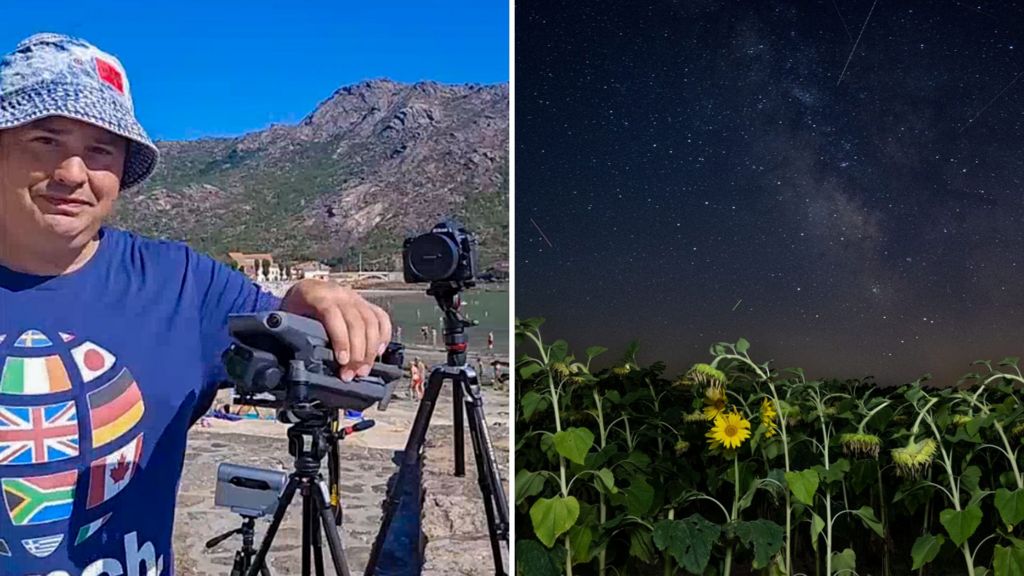
    Among them is Mark Griffiths, an astronomy hobbyist from Cheshire in the UK, who completed a grueling two-day cross-border drive to Galicia, northern Spain — widely regarded as one of the best viewing locations for the 2026 eclipse. Griffiths arrived loaded with professional-grade gear: two high-resolution cameras, a specialized solar telescope, and a drone to capture aerial footage of the eclipse’s shadow as it moves across the landscape. His obsession with chasing dramatic sky events began six years ago, with a failed trip to see the northern lights in Shetland, where poor weather left him empty-handed. Far from discouraging him, the disappointment only deepened his passion. “I kept wanting more,” Griffiths explained in an interview on the day after he finished his drive, which included only brief stops in Bordeaux to snap night sky photos and catch a few hours of sleep. “I’m quite sleep deprived, but it’s worth it. It’s like an addiction now.” This eclipse marks Griffiths’ first total solar eclipse, and for enthusiasts like him, he says, Europe’s first total solar eclipse in more than 25 years is “like what the World Cup is to football.” Since his Shetland trip, Griffiths has become a seasoned sky-chaser: he travels to Iceland once a month to lead northern lights tour groups, and has already photographed dozens of auroras, partial eclipses, and bioluminescent phenomena across the globe.

    The eclipse’s path of totality — the narrow strip of land where observers can see the sun completely blocked by the moon — begins at the edge of Siberia, arcs across the Arctic Ocean, passes through Greenland and Iceland, crosses the northern Atlantic, cuts across northern Spain, and ends in the Mediterranean. Outside this path, most of Europe will only see a partial eclipse, but even that has not stopped dedicated travelers from converging on prime viewing spots across the route. Half a world away from Griffiths, American couple Samantha and Gregory Phillips-Brown have traveled from upstate New York to Iceland, where they rented a camper van to seek out a remote viewing spot in the Westfjords peninsula. This is their second total solar eclipse: the first, which they saw near their home in 2023, left such an impact that they booked flights and a van more than a year in advance for this event. “It was such a phenomenal experience to see the Sun start going dark and hear, suddenly, the birds stop chirping,” Samantha recalled. “It’s just a very strange, otherworldly experience.” Gregory reflected on what the experience would have meant for Iceland’s first Viking settlers more than 1,000 years ago, when solar eclipses were attributed to mythology rather than science: “They really didn’t know what was happening, didn’t know how long it was going to last… it must have been quite terrifying for them, in a way.” In the days leading up to the eclipse, the couple has been hiking and camping across eastern Iceland, and they plan to head to the Westfjords early to avoid expected road closures from overcrowding. Samantha, an avid self-described obsessive planner, has been monitoring eclipse-chaser groups on social media to get real-time updates on conditions, and says she has already seen hundreds of visitors carrying eclipse glasses across the country: “I expect as we move west, we’ll see more and more people gathering for the show.”

    For one British family, the 2026 eclipse is a nostalgic reunion 27 years in the making. Andrew Wills is traveling to the Spanish island of Majorca with his wife and his 90-year-old father, with whom he watched Europe’s last total solar eclipse in 1999 from the top of St Agnes Beacon in Cornwall. That day was cloudy, Wills recalled, so they missed seeing the eclipse’s shadow rush across the Atlantic toward them — but they still got to see the sky dim into an eerie twilight, and the memory stuck with him ever since. “It was still awe-inspiring,” he said. This time around, Wills has booked a villa near the western Majorcan town of Andraitx, right in the path of totality, and has scouted a coastal viewing spot with unobstructed views of the horizon, where the eclipse will be visible as the sun sets. Majorca and neighboring Menorca are the last landmasses where the eclipse will be visible before the shadow disappears into the Mediterranean. Wills has arranged to bring camping chairs so his 90-year-old father can rest while they wait for the celestial event, and he is hopeful for clear skies this time around. For Wills, eclipses are more than just a tourist attraction: they are a humbling reminder of the unique cosmic coincidence that makes total solar eclipses possible on Earth. The sun is 400 times larger than the moon, but also 400 times farther away — creating the perfect alignment that allows the moon to cast a complete shadow on Earth. The experience, he says, reminds him of astronomer Carl Sagan’s reflection on the Pale Blue Dot photograph, which showed Earth as a tiny speck against the vastness of space. “We are tiny little specks in a huge vast area of nothingness,” Wills said. “We’re amazingly lucky to be alive to see something this incredible.”

    Even though the total phase of the eclipse will last just a couple of minutes for observers, that brevity is part of what makes the event so meaningful for the thousands of people who traveled across continents to see it. For this community of sky-chasers, the journey is almost as special as the celestial spectacle they have come to witness.
  • Hundreds arrested over French wildfires, but who is to blame?

    Hundreds arrested over French wildfires, but who is to blame?

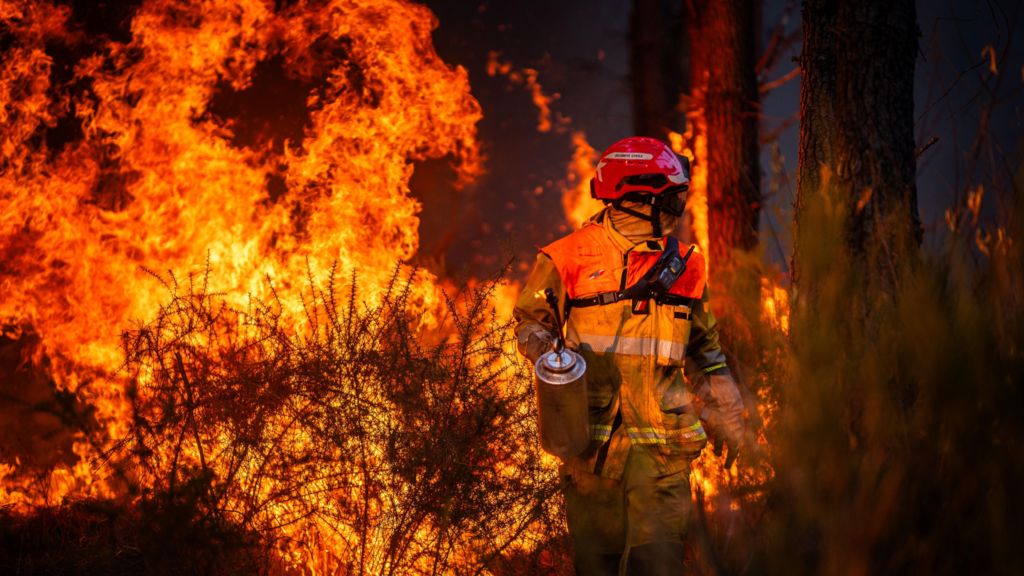
    This summer, France has faced its most destructive wildfire season since the end of World War II, with flames scorching more than 300,000 acres of land across the country and forcing emergency responders into action, most notably in the southwestern Gironde region where an all-out crisis response was launched in late July. As smoke clears from the worst-hit areas, the French public and experts are increasingly asking one pressing question: what has driven this unprecedented catastrophe?

    Climate scientists and fire investigators point first to the long-documented impact of human-caused fossil fuel emissions, which have pushed global temperatures steadily upward and created the dry, parched conditions that allow wildfires to ignite and spread with alarming speed. But official data reveals a stark secondary truth: nine out of every 10 wildfires in France are started by human activity, a statistic that has pushed the Paris government to launch a widespread crackdown on those deemed responsible – even as critics accuse the administration of being chronically underprepared for the scale of this year’s infernos.

    So far, France’s interior ministry has announced 420 arrests of people accused of either deliberately or accidentally igniting blazes, more than 160 of whom are minors. The scope of these arrests ranges widely: one 23-year-old man is facing up to 15 years in prison and a €150,000 fine if convicted of deliberately starting 10 separate blazes across southeastern Var over just five days last month. Other defendants have already received immediate sentencing, including a man handed a three-year jail term for starting three fires in the Raon-L’Étape forest in the Vosges region, even though local newspaper L’Est Républicain noted only a few square meters of vegetation burned.

    Critics argue that many of these prosecutions are disproportionately harsh and unfair. Reports have emerged that a homeless person and an individual with severe autism have both been jailed for accidentally starting fires after throwing away discarded cigarette butts. Muriel Gestas, a defense lawyer who has represented multiple people accused of arson – including two professional firefighters – says she was stunned by the sheer volume of arrests, describing the crackdown as excessive. She also casts doubt that most of the cases will ultimately result in convictions.

    Leading French newspaper Le Monde has echoed these concerns, pointing out that authorities have refused to release key details about the cases, including whether most charges involve deliberate arson or accidental ignition, and how arrest numbers compare to previous fire seasons. This lack of transparency, the outlet argues, makes any meaningful assessment of the crackdown impossible. But supporters of the hardline approach, including Bordeaux chief prosecutor Renaud Gaudeul, defend the strategy, arguing that current extreme conditions justify strict action. “The conditions for a charge of endangering lives are met for those who throw a cigarette butt or light a barbecue in wooded areas,” Gaudeul told Le Monde. “It only takes a tiny spark for it to start.”

    Pinpointing the exact origin of a wildfire is an inherently complex process, especially during extreme drought. Eric Dufayet, a veteran fire investigation officer, explained that even the smallest spark can ignite a major blaze when vegetation is as parched as it is this summer. After a fire is contained, Dufayet’s team first maps the burn perimeter to trace the flames back to their point of origin, which often forms a distinct V-shape when wind patterns are consistent. Investigators then work backward from that point to identify the cause, and in cases of deliberate arson, they often recover DNA or fingerprint evidence from ignition devices left at the scene.

    Industry experts broadly agree that deliberate arson accounts for only a small share of this year’s fires. The vast majority are accidental, with ignition sources ranging from sparks from construction equipment and faulty power lines to discarded cigarette butts and unattended outdoor barbecues. Dufayet notes that even a cigarette butt can easily start a blaze under the right conditions, referencing the so-called “30 rule”: fires are most likely to ignite when temperatures hit at least 30°C, relative humidity drops below 30%, wind speed stays under 30km/h, and at least 30% of the cigarette remains unburnt. During this summer’s record drought, he adds, these conditions are nearly ubiquitous, making even small accidental risks far more dangerous than usual.

    Psychiatrists break down those who start wildfires into three broad categories: people who act out of negligence, those who stand to benefit from the fire (such as through insurance payouts), and people living with pyromania, a rare psychiatric condition where individuals feel a compulsive attraction to fire. Michel Lejoyeux, a professor of psychiatry and addictive behavior at Paris 7 University, explains that pyromaniacs do not seek financial gain or revenge – they are drawn to fire for its own sake. Still, he notes that pyromania is extremely rare, difficult to diagnose, and accounts for very few arson convictions.

    In some cases involving firefighters accused of starting blazes, Gestas says motives can vary: some accused firefighters may have started fires to be seen as heroes who would then lead the response, while volunteer firefighters may have been motivated by financial gain from tax-free overtime pay for emergency work.

    As the controversy over the government’s crackdown continues, broader concerns over wildfire risk are far from over. Meteorological forecasts show another major heatwave is just days away from reaching France, raising the risk of new blazes. President Emmanuel Macron, who has described this year’s fire season as “completely unprecedented,” says that public criticism of the government’s response is not a priority right now. “We will have to replant and rebuild a different kind of forest because we must adapt to the structural conditions of climate change,” Macron said this week. “The time for reviewing lessons learned will come. In the meantime, the country must remain united.”

    Even so, the widespread damage from this year’s wildfires – which have destroyed hundreds of homes, devastated local tourism and small businesses, damaged ecosystems, and worsened air quality across large swathes of the country – has left the French public demanding answers about what went wrong, and how the country can better prepare for future fire seasons amplified by climate change.

  • Paris tells e-scooter riders to wear safety gear or face fines

    Paris tells e-scooter riders to wear safety gear or face fines

    Paris has rolled out stringent new safety mandates for riders of privately owned electric scooters and similar micro-mobility devices, launching a targeted crackdown on violations after a worrying spike in deadly and serious accidents across the French capital. Local law enforcement announced the new regulations over the weekend, alongside grim data from France’s national road safety authority that underscores the urgency of the policy shift.

    Last year alone, 79 people lost their lives in e-scooter-related accidents across France, marking a dramatic 75% jump from the 45 fatalities recorded just 12 months earlier. In Paris specifically, 1,100 people sustained injuries in e-scooter crashes in 2025 – a 33% year-over-year increase that has pushed city officials to strengthen safety standards.

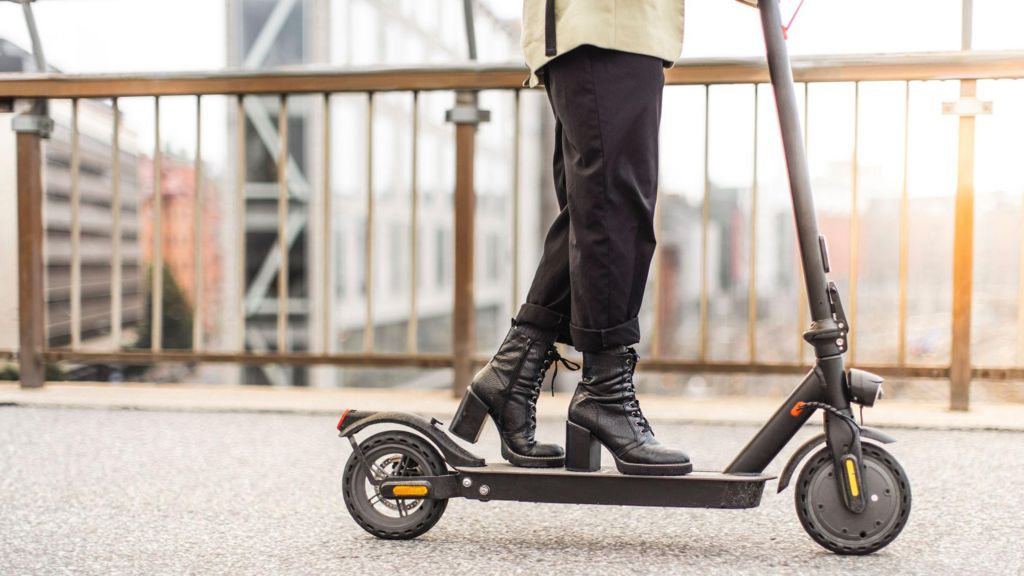
    Under the new rules, all riders of private e-scooters, electric unicycles, and hoverboards on public roads are now required to wear an approved safety helmet and a high-visibility vest or attach retro-reflective markers to their vehicles. Violators face steep penalties: riders caught without a compliant helmet will be issued a €135 (£129) fine, while those missing high-visibility gear will receive a €35 (£30) fine.

    The updated regulations build on existing safety restrictions already in place across Paris, which prohibit riders under the age of 14 from operating e-scooters, ban carrying extra passengers, and cap maximum speed at 25km/h (16mph). The policy also follows a 2023 city-wide ban on rental e-scooters, a move approved by 90% of voters in a public referendum – even though just 8% of eligible voters participated in the ballot.

    Despite the elimination of rental services, private e-scooters remain a widely popular commuting option in Paris, where narrow, frequently congested city streets make compact micro-mobility an attractive alternative to cars or public transit. European Union data shows France has the highest rate of private e-scooter ownership in Europe, with roughly 2.5 million units owned by French residents as of 2023, and hundreds of thousands more sold in the time since. A large share of these private scooters are registered and used in Paris, though the city does not track exact ownership numbers.

    The push for mandatory helmet and high-visibility gear is not unique to Paris: several other French regions, including Seine-et-Marne, Alpes-Maritimes, and Vaucluse, already enforce similar requirements. Paris’ policy shift also aligns with a growing trend across major European cities: Madrid implemented a full ban on rental e-scooters in 2024, and Brussels has announced it will introduce its own rental ban this coming June.

  • Watch: Moment opposition MP throws eggs at Kosovo’s acting PM

    Watch: Moment opposition MP throws eggs at Kosovo’s acting PM

    A dramatic incident has sent shockwaves through Kosovo’s legislative body, as a confrontational opposition lawmaker resorted to unusual and chaotic tactics against the country’s top executive. Time Kadrijaj, a member of parliament from Kosovo’s Alliance opposition party, launched at least four eggs directly toward acting prime minister Albin Kurti during a parliamentary session, triggering immediate disruption to the proceedings.

    Witness footage captured the chaotic moment immediately after the eggs were thrown, with sitting lawmakers and on-site security police rushing in to intervene and de-escalate the tense situation. The unexpected act of political protest has drawn immediate attention to the rising tensions between Kosovo’s ruling coalition and opposition blocs, highlighting the deepening partisan divides that have shaped the country’s recent political landscape.

    While no injuries have been reported in the immediate aftermath of the incident, the confrontation underscores how fractious political discourse has become in Kosovo, as opposition groups increasingly turn to unconventional, public acts of protest to challenge the acting prime minister’s agenda. Parliamentary procedures were temporarily suspended following the incident to restore order to the chamber.

  • 2 drones spotted flying over German military base after drone with explosives found at cargo airport

    2 drones spotted flying over German military base after drone with explosives found at cargo airport

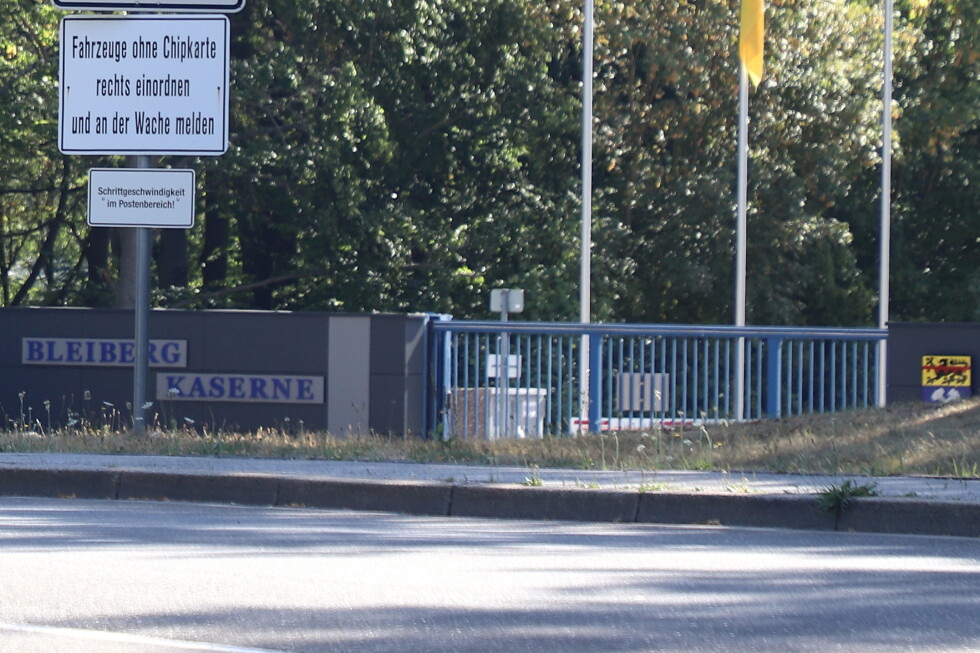
    BERLIN — Germany’s armed forces, the Bundeswehr, announced Saturday that two unidentified unmanned aerial vehicles were detected over a western German military installation earlier this week, an incident that comes only 48 hours after an explosive-carrying drone was recovered at one of the country’s most critical freight airports.

    Per an official statement from Germany’s Joint Force Command, base security surveillance at the Mechernich Bundeswehr facility first registered the two drones at approximately 10 p.m. local time Thursday. After the sighting was independently confirmed, military police were immediately dispatched to the area to conduct on-site checks.

    The national military confirmed that the Euskirchen state police department has launched a formal criminal investigation into the incursion. As of Saturday evening, local law enforcement had not issued any public response to requests for comment on the case, and the Bundeswehr declined to share further details about the scope of the investigation or any potential leads regarding the drones’ operators.

    This latest drone sighting comes amid a growing pattern of unauthorized drone incursions across critical European infrastructure sites. Over the past year, repeated mysterious drone flights over civilian and cargo airport airspace across EU member states triggered widespread public alarm and forced major disruptions to air travel, leading to the cancellation of dozens of commercial flights that left thousands of passengers stranded across the continent.

    Thursday’s incursion follows the discovery of an explosive-laden drone at Germany’s Leipzig/Halle Airport, a major international logistics hub that plays a key strategic role in military and humanitarian support operations for Ukraine. The drone was found shortly before midnight Tuesday and successfully defused by bomb disposal experts before it could cause harm. After the incident, German Interior Minister Alexander Dobrindt warned that the episode marked a “new quality of danger” for German security.

    Leipzig/Halle Airport is not only a top freight hub for global trade; it also hosts NATO’s Strategic Airlift International Solution (SALIS), a program that conducts daily operational flights to deliver military equipment to NATO battle groups deployed along the alliance’s eastern flank, stretching from Finland to Romania. The airport regularly accommodates Ukrainian Antonov transport aircraft that move critical supplies to frontline forces amid Russia’s ongoing full-scale invasion of Ukraine.

    This is not the first major security incident at the facility: earlier in 2024, an incendiary device ignited at an on-site logistics center, destroying a freight container in a suspected sabotage plot that Western security officials have attributed to Russian intelligence operatives. Since Moscow launched its full-scale invasion of Ukraine more than four years ago, Western officials have repeatedly accused Russia and its proxy actors of carrying out dozens of coordinated sabotage attacks and disruptive security incidents across European soil.

    In response to growing accusations linking Russian intelligence to the Leipzig drone incident, the Russian Embassy in Berlin issued a statement Friday dismissing the incident as part of a “new wave of anti-Russian hysteria in Germany.”

  • Spain imposes border controls against Italy as row over Ceuta migrant influx intensifies

    Spain imposes border controls against Italy as row over Ceuta migrant influx intensifies

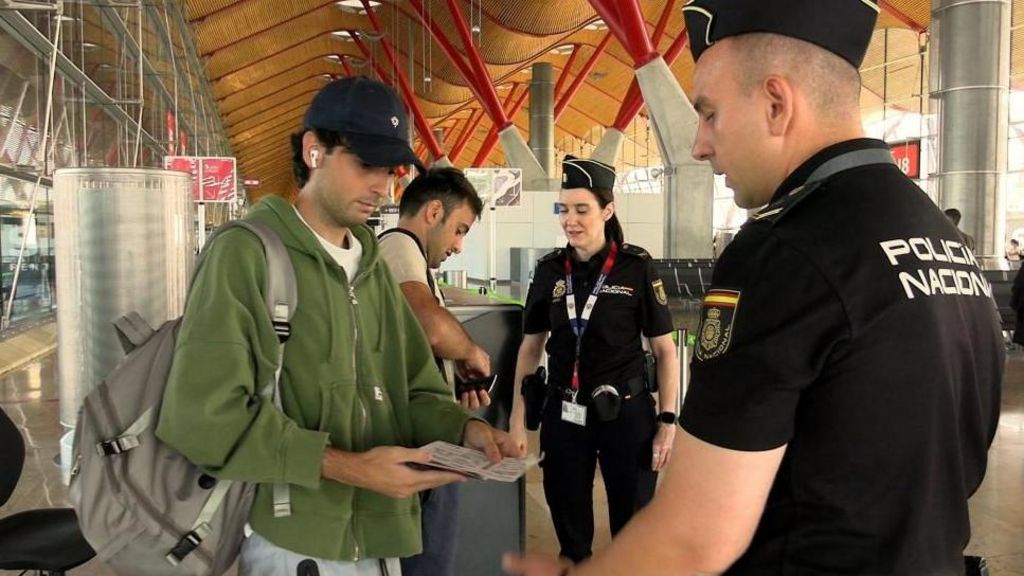
    A diplomatic dispute between two European Union member states, Spain and Italy, has escalated sharply in recent days over a surge of migrant arrivals into the Spanish North African exclave of Ceuta, with both nations enacting temporary border controls that suspend long-standing Schengen Area free movement rules. The tit-for-tat measures, each set to run for one month, took effect after Italy first implemented random additional checks for air and sea travelers arriving from Spain a week ago, triggering an immediate retaliatory response from Madrid that went into force at midnight Spanish time (22:00 GMT).

    The root of the crisis stretches back to late July, when roughly 78,000 migrants crossed from Morocco into Ceuta, a Spanish territory that Morocco has long claimed as its own. In the wake of that mass influx, Italian Prime Minister Giorgia Meloni, a conservative leader who has built her political platform on demanding stricter EU-wide migration policies, announced Rome would temporarily pause its Schengen border-free commitments to block any migrants who entered Ceuta from traveling onward to Italy. Italian officials clarified that only non-EU residents would face extra checks, with Spanish and other EU citizens exempt, and confirmed the restrictions would remain in place through at least August 15, citing unsubstantiated claims of an anticipated second major migrant wave into Ceuta.

    Spain has flatly rejected Italy’s justification for the controls, dismissing the argument as factually baseless spurious reasoning. Spanish authorities note that migrants currently in Ceuta have no existing route to enter the wider Schengen Area, making Italy’s security concerns unfounded. Madrid issued an ultimatum for Rome to reverse the measures by the past Sunday, a demand that Meloni’s government rejected outright. In response, Spain rolled out its own set of random border checks for all air and sea passengers arriving from Italy, set to expire September 7, with a clause allowing for early termination only if the underlying circumstances that prompted the move change significantly.

    While both governments have characterized their respective checks as random, on-the-ground reports have challenged these claims. Spanish national newspaper El Pais has documented long passenger queues and extended wait times at multiple Italian airport terminals over recent days, with all travelers from Spain directed to separate screening lines regardless of their nationality. On the Spanish side, multiple passengers arriving from Italy told public broadcaster RTVE that every person on their flights was required to show passports before being allowed to disembark. “They told us we couldn’t get off the plane without showing our documents,” one passenger, Elisa, told reporters.

    The dispute has laid bare deep divisions across the European Union over migration policy. Italy’s one-month suspension of Schengen rules for Spanish travelers has received public backing from Finland and Denmark, while the Czech Republic has gone a step further, calling for Spain’s EU Schengen Area membership to be temporarily suspended. Temporary Schengen suspensions are not without precedent: Italy already maintains ongoing extra controls along its land border with Slovenia.

    In the weeks following the initial mass crossing, the vast majority of the 78,000 migrants who entered Ceuta have been returned to Morocco. Tragically, an estimated 100 people are believed to have died during the dangerous crossing from North Africa, and nearly 1,400 unaccompanied minor migrants, including many very young children, remain in Ceuta with no clear path forward.

    Though Spain’s government has stated it does not expect a second large-scale wave of migrant crossings to match the late July surge, BBC Arabic has identified dozens of public Facebook posts calling for a new mass crossing in mid-August, including some posts marketing swimming equipment to aspiring migrants. Some of these Facebook groups had accumulated more than 100,000 followers before parent company Meta removed the content for violating its platform policies.

    Officials have continued to debate the underlying cause of the unprecedented mass crossing. The European Union’s Migration Commissioner Magnus Brunner has blamed criminal smuggling networks spreading intentional disinformation for the event, a conclusion that the Spanish government under Socialist Prime Minister Pedro Sanchez has endorsed. The crossing came shortly after Spain’s Supreme Court issued a ruling that barred authorities from immediately summarily returning migrants intercepted at sea while attempting to reach Ceuta or the other Spanish Moroccan exclave Melilla. The Moroccan government has echoed this framing, with an anonymous senior source telling local outlets that the ruling eliminated the existing deterrent to unauthorized crossings, saying “the dam gave way, not under the weight of the criminals, but of a judge’s decision”.

    The mass crossing also reignited long-standing diplomatic tensions between Spain and Morocco, as Morocco does not recognize Spanish sovereignty over either Ceuta or Melilla, and questions remain open about why Moroccan border forces did not intervene to stop the tens of thousands of people attempting the crossing simultaneously.

  • Hunter Biden says his father’s prostate cancer is causing him pain even as he continues to speak out

    Hunter Biden says his father’s prostate cancer is causing him pain even as he continues to speak out

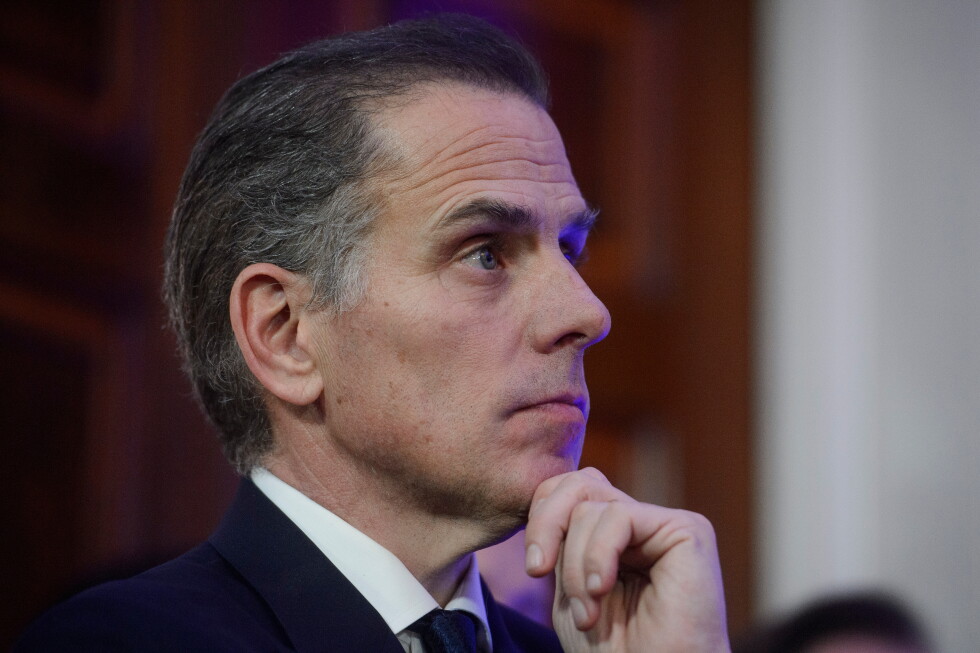
    LONDON – In an emotional, wide-ranging interview broadcast by the BBC on Friday evening, Hunter Biden has shared a devastating update on the health of his father, former U.S. President Joe Biden, confirming that the 83-year-old’s prostate cancer has metastasized to other parts of his body, including his bones, and triggered persistent, debilitating pain that he largely hides from public view.

    At 83 years old, Biden made history as the oldest person to ever occupy the Oval Office, and his advanced age was a constant source of public concern and political scrutiny throughout his four-year presidential term. The former president and his White House team faced sharp criticism over allegations that they concealed the full severity of his health issues during his time in office. That criticism intensified after a poor performance in a pre-election debate against eventual successor Donald Trump forced Biden to drop his 2024 re-election campaign.

    Biden first publicly announced his prostate cancer diagnosis in May 2024, fewer than four months after he departed the White House following the inauguration of Donald Trump. Hunter Biden told the BBC that the diagnosis has taken a heavy emotional and physical toll on the entire Biden family, and that watching his father navigate the illness is an incredibly difficult experience.

    “It’s really sad to watch,” Hunter Biden said of his father’s condition. “The cancer has spread, metastasized into his bones and further. It’s very painful and it’s very debilitating in many respects. The only thing that I’d say about my dad, about his health right now, is I wish he would complain more, because it’s not good.”

    Despite the advanced progression of his cancer and the severe symptoms it causes, Hunter Biden emphasized that the former president has not stepped back from public life. He remains actively engaged in speaking out on policy and political issues that he has long prioritized, holding onto his deep faith in the future of the United States. “He’s still doing his thing,” Hunter Biden said. “He so believes in this country.”

    Separately, the former president is set to release a new memoir titled “Promise Me, America” following the conclusion of U.S. midterm elections.

  • Vollering wins Stage 8 to take overall lead at Women’s Tour de France from Niewiadoma-Phinney

    Vollering wins Stage 8 to take overall lead at Women’s Tour de France from Niewiadoma-Phinney

    NICE, France – The 2024 Women’s Tour de France delivered another chapter of high-stakes cycling drama on Saturday, as Dutch star Demi Vollering pulled off a spectacular late-stage attack to claim victory on the eighth leg and wrestle the overall race lead away from Katarzyna Niewiadoma-Phinney heading into Sunday’s decisive final stage. The 2023 race champion left her closest title rivals in her wake on the day’s final categorized climb, surging clear with six kilometers remaining to secure a result she had visualized only hours before the start of the race.

    The 172-kilometer route from Sisteron to the Mediterranean coastal city of Nice was designed on paper to favor sprinters, with mostly flat terrain broken up by just four short, low-elevation climbs. That rolling profile added an element of uncertainty, however, as general classification contenders sought to conserve energy for the final day’s challenging course, opening the door for early breakaways. Early in the stage, French rider Maeva Squiban and Dutch competitor Loes Adegeest managed to pull away from the peloton and build a significant gap, holding off the main chase group for most of the day.

    The breakaway bid hit trouble when Squiban crashed on a downhill turn, sliding off her bike and landing hard on her left side. The incident left her with cuts and scrapes, and she screamed in pain as a motorbike medic patched up her arm while she continued riding. Despite the injury, Squiban pushed on to finish the stage, while Adegeest was reeled back in by the peloton with less than nine kilometers left to race.

    In the wake of the catch, the stage’s climax unfolded on the day’s final climb, when Vollering made her decisive move. The Dutchwoman upped her pace, putting pressure on Niewiadoma-Phinney – who had claimed the yellow jersey just one day prior with a stunning solo victory up Mont Ventoux – who eventually cracked under the intensity. Once Vollering surged clear, neither Niewiadoma-Phinney nor Italy’s Elisa Longo Borghini, a former Giro d’Italia winner, could close the gap as the leader rode the iconic Promenade des Anglais to the finish line.

    Crossing the line, Vollering raised her arms in triumph before collapsing on the ground, gasping for breath to recover from her all-out effort. Speaking to reporters after the stage, she opened up about the mental and physical toll of her victory, revealing she had predicted the turnaround that morning. “It’s funny but only this morning I saw myself taking the yellow jersey,” Vollering said. “I thought it might come true, that maybe that’s the way things should be. During the day, I tried to remind myself I could do it.” She added, “I was in so much pain, I can hardly describe it, but I made it happen. This goes to prove that if you really believe in something, if you dream big, it doesn’t matter how much risk you take or how much pain you have to go through.”

    Longo Borghini crossed the finish line second, with Niewiadoma-Phinney taking third, both riders 17 seconds behind the stage winner. The result gives Vollering an 8-second overall lead over Niewiadoma-Phinney heading into the final stage, and also cements a historic milestone for the Dutch star: she has now won all three of women’s cycling Grand Tours in the same calendar year, taking the Giro d’Italia earlier in 2024 to complete the rare treble.

    Saturday’s stage was not without off-the-road news, as defending champion Pauline Ferrand-Prévôt withdrew from the race shortly before the start after reporting feeling unwell. The French rider, who is also the 2024 Paris Olympic gold medalist in mountain biking, pulled out following consultation with medical staff from her Visma-Lease a Bike team, who announced the decision on social media platform X. Ferrand-Prévôt made headlines last year when she won the Women’s Tour de France on her debut, but struggled through the 2024 edition and sat 14th overall before her withdrawal.

    All eyes now turn to Sunday’s ninth and final stage, which will see riders tackle four testing climbs up Col d’Èze, a hilltop route that overlooks the tiny Principality of Monaco. The parcours sets up a tense showdown for the overall title, with a history that adds extra drama: two years ago, Niewiadoma-Phinney beat Vollering on a final-day mountain stage to claim the overall victory by a razor-thin 4-second margin. Vollering is well aware of the stakes ahead of the decisive leg. “Tomorrow’s course is going to be super hard,” she said. “We know it from the beginning of the Tour.”

  • Ukraine honors its ‘collector of souls’ killed while recovering the war dead

    Ukraine honors its ‘collector of souls’ killed while recovering the war dead

    Thousands of Ukrainians gathered in central Kyiv’s Cathedral of Saint Volodymyr on Saturday to bid a final farewell to Oleksiy Yukov, the 40-year-old founder of a volunteer organization dedicated to recovering the remains of fallen troops and civilians from Ukraine’s war zones. Yukov, who died in a landmine detonation during a recovery operation on August 5, spent more than 20 years honoring the dead by bringing their remains home for proper burial — including those of enemy Russian soldiers.

    A native of the conflict-scarred Donbas region, Yukov first began his life’s work as a teenager, when he stumbled on the unclaimed remains of Soviet and Russian World War II soldiers. Before dedicating himself full-time to recovery work, he worked as a martial arts instructor, but he soon committed fully to his mission: every life deserves a dignified burial, regardless of which side a fighter belonged to.

    In 2014, after the outbreak of full-scale conflict in Donbas, Yukov launched the volunteer NGO Platsdarm, which translates to “bridgehead” in English. Over the years, he earned the reverent nickname “the collector of souls” for his tireless, high-risk work. Platsdarm’s teams venture into mine-laced terrain, from abandoned fields and dense forests to bombed-out urban ruins, to locate and retrieve the remains of the dead, a mission that puts volunteers in constant danger of explosive blasts.

    Yukov already survived a catastrophic mine incident in 2022, which left him with permanent leg injuries and cost him an eye. Even while recovering from those life-altering wounds, he returned to the field to continue his work. In a social media post shared just weeks before his death, Yukov laid out the harsh reality of his mission, acknowledging that every outing carried grave risk. “Remote mines, shelling, drones — everything is against you. But you go and do everything to ensure that every soul returns home,” he wrote.

    He pushed back against critics who argued that the remains of Russian soldiers should be left unclaimed to rot. “When they say: ‘Let them rot,’ I do not agree. This is how we fight for every soul,” Yukov wrote. He framed his work as a deeply moral and spiritual calling, writing that every fallen body is a soul waiting to return to its home. “This is action,” he noted of his daily work. “Action every day in the fields, in the forest belts, among the ruins, where your life can end at any moment.”

    Saturday’s Orthodox Christian funeral service drew crowds of mourners who came to honor Yukov’s legacy of radical compassion amid decades of ongoing war in Ukraine.

  • A drone likely from Ukraine explodes in Bulgaria near a gas pipeline close to Romania’s border

    A drone likely from Ukraine explodes in Bulgaria near a gas pipeline close to Romania’s border

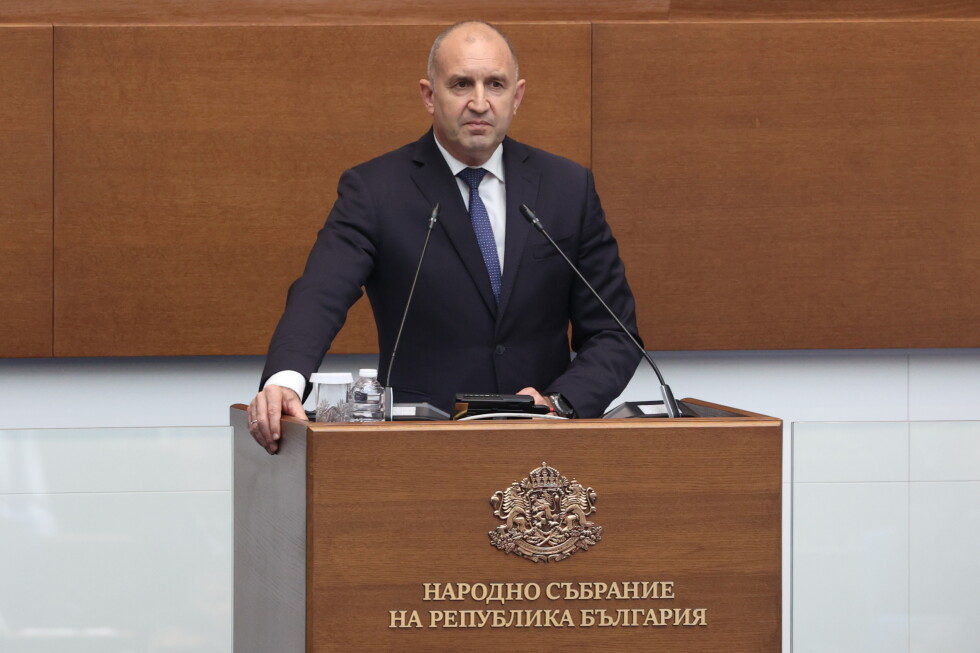
    On a Saturday morning, an unmanned aerial vehicle crossed into Bulgarian airspace from neighboring Romania and detonated shortly after crossing the border, close to a major international gas pipeline, Bulgarian authorities confirmed. No injuries or infrastructure damage were reported in the incident, which has sparked urgent security reviews across both national and alliance-level institutions.\n\nBulgaria’s capital-based Defense Ministry shared initial findings indicating the drone matches specifications of a type operated by Ukraine’s armed forces, adding that the incursion was almost certainly an accidental event. Both Bulgaria and Romania hold dual membership in NATO and the European Union, placing the incident firmly within the alliance’s collective security framework.\n\nBulgarian Prime Minister Rumen Radev told reporters after an emergency government meeting that the explosion occurred just after 5 a.m. local time, roughly 100 meters inside Bulgarian sovereign territory. Notably, the drone went undetected by air surveillance systems in both Romania and Bulgaria during its entire flight through the two countries’ airspace. Radev confirmed that “there are no casualties or damage to buildings” and that the blast site had been secured by security forces, with ongoing monitoring of the surrounding area.\n\nGeographically, the detonation took place approximately 200 meters from a Romanian compressor station and one kilometer from a Bulgarian compressor station that is part of the critical Trans-Balkan gas pipeline, a key infrastructure link for regional energy distribution. In response to the security gap exposed by the incursion, Radev announced a strategic redeployment of anti-drone capabilities: border police units equipped with drone detection and countermeasure technology, previously stationed along Bulgaria’s border with Turkey, will be moved to the Romanian border to strengthen airspace monitoring.\n\nDefense Minister Dimitar Stoyanov added that the incident will be formally raised for discussion at an upcoming North Atlantic Council meeting scheduled for early next week. Stoyanov noted that observations of the blast, which produced a large column of black smoke, suggest the drone carried a substantial explosive payload. He added that small, low-flying drones like this one are inherently difficult for conventional air defense systems to track and identify, explaining why it went undetected during its flight.\n\nWhile early confusion surrounded the drone’s origin and possible links to either Russia or Ukraine amid the ongoing war in Ukraine, the Defense Ministry’s later analysis of recovered wreckage narrowed down the device as most likely a “Maya” decoy drone, a variant widely deployed by Ukrainian forces. The ministry’s official statement emphasized that as of the current investigation, “there is no reason to believe that the incident was intentional.”