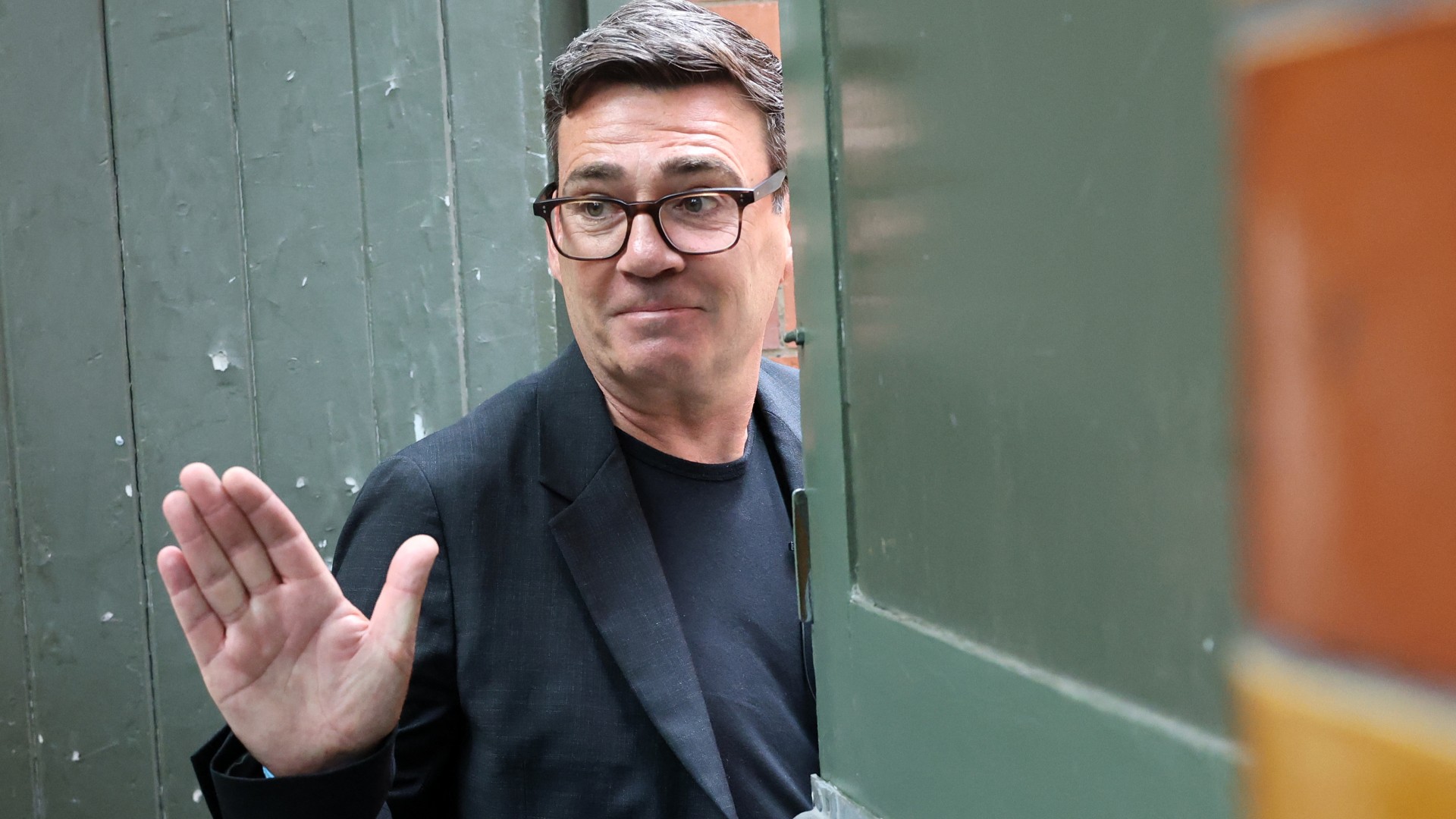
As the race to determine the next leader of Britain’s Labour Party — and the country’s next prime minister — enters its final phase, leading contender Andy Burnham has issued a rare public apology for his party’s flawed initial response to Israel’s military campaign in Gaza, drawing measured praise from pro-Palestine groups and fellow Labour figures who are now pushing for tangible policy change to match his words.
Burnham, who is widely tipped to secure the leadership in the upcoming vote this month, broke ranks with earlier party messaging earlier this week to acknowledge widespread public anger over Labour’s early handling of the Gaza crisis. “I know many people feel that at the start of Israel’s military action in Gaza, my party didn’t get it right, and I am sorry about that. The response has too often not been good enough. We need to do better,” he said in his public remarks.
Describing the catastrophic “unbearable suffering” unfolding across Gaza as “a scar on our collective conscience”, Burnham pulled no punches in criticizing Israel’s decades-long expanding occupation of Palestinian territories. “We’ve got to do more to put pressure on the Israeli government,” he added.
The apology has drawn a mostly positive early reaction from within Labour’s own ranks. Wes Streeting, former UK health secretary, called Burnham’s comments “extremely welcome”, while Norwich South MP Clive Lewis framed the statement as “an important and much-needed first step”. Ealing Central and Acton MP Rupa Huq echoed that sentiment, noting “High time this is acknowledged and glad something will be done about it.” The Labour Muslim Network, an influential group representing Muslim party members, described the intervention on X (formerly Twitter) as “A huge and important intervention from the potential next leader of the Labour party.”
Burnham, a former Greater Manchester mayor who returned to Parliament last month via a Makerfield by-election, took care to acknowledge steps already taken by Keir Starmer’s outgoing Labour government, including its formal recognition of Palestinian statehood, sanctions targeting far-right Israeli cabinet ministers, and a ban on the transfer of British-made bombs and ammunition to Israel. “We have taken some important steps,” he said. “But let’s be honest, the UK was too slow to call for a ceasefire. And we must now do more to strengthen our approach.”
He went on to warn that ongoing Israeli actions are undermining any path to a lasting two-state solution, pointing to repeated violations of existing ceasefire agreements and a sharp surge in violent extremist settler attacks across the West Bank and East Jerusalem. “Netanyahu’s government is clearly attempting to make a two-state solution impossible,” he said. If elected leader, Burnham pledged to explore further sanctions against violent Israeli settlers and implement new restrictions on trade with illegal Israeli settlements built on occupied Palestinian land.
Notably, Burnham stopped short of formally endorsing the growing global consensus that Israel’s campaign amounts to genocide, arguing that such a designation is a matter for international judicial bodies rather than elected politicians. “There is increasing evidence that war crimes appear to have been committed,” he said, adding “it was for international courts, and not politicians, to decide.”
That stance has drawn pushback from major pro-Palestine advocacy groups, including the Palestine Solidarity Campaign (PSC), one of the UK’s largest pro-Palestine activist organizations, which warned that words alone are not enough and demanded immediate decisive action to follow the apology. The group pointed out that a United Nations commission of inquiry, alongside multiple independent human rights organizations and legal experts, already confirmed last month that Israel is committing acts of genocide in Gaza.
“You have stated that this is something for the international courts to decide, but the Genocide Convention requires all states – including Britain – to take action to prevent genocide as soon as they become aware there is a serious risk of it,” the PSC wrote in an open letter to Burnham. The group also criticized the UK’s historical complicity in Israeli actions, noting the country has long actively supported Israeli policies and “willfully ignoring rulings of the courts”, including the International Court of Justice’s landmark 2004 ruling that Israel’s occupation of Palestinian territory is unlawful, and that all third-party states must end any actions that aid or abet Israeli violations of international law.
The PSC laid out clear demands for Burnham: formally recognize the UN commission’s genocide finding, adopt the 2025 Labour Party conference policy mandating a full arms embargo on Israel and broad sanctions, ban all trade with illegal Israeli settlements and any trade that props up the Israeli occupation, and roll back the use of what the group calls “authoritarian” public order and anti-terror laws to crack down on peaceful pro-Palestine protests.
Currently, the United Nations, dozens of major human rights organizations, and hundreds of independent human rights experts have formally classified Israel’s military campaign in Gaza as genocide. The offensive has killed more than 73,000 Palestinians in the enclave to date, according to latest public health counts from Gazan authorities.