标签: Asia

亚洲

  • Mandelson: How decades of influence secured role as Starmer’s man in Washington

    Mandelson: How decades of influence secured role as Starmer’s man in Washington

    What began as a controversial diplomatic appointment has erupted into one of the most damaging political scandals to hit the United Kingdom’s new Labour government, exposing decades of factional infighting, opaque corporate ties, and institutional failure at the highest levels of the party.

    At the center of the crisis is Peter Mandelson, a veteran Labour strategist hand-picked by Keir Starmer’s inner circle to serve as the UK’s ambassador to the United States — the first political appointee to the role in nearly 50 years. The appointment quickly collapsed after the unsealed Epstein files confirmed long-rumored close, long-standing ties between Mandelson and the late convicted paedophile financier Jeffrey Epstein. Mandelson resigned from his ambassadorship in February, and was later arrested on suspicion of misconduct in public office over allegations he leaked confidential market-sensitive government information to Epstein.

    Multiple senior figures have already stepped down or been ousted in the wake of the scandal. Morgan McSweeney, Starmer’s former chief of staff and widely recognized as the architect of his rise from Labour leader to prime minister, resigned in February after acknowledging he made a “serious mistake” in pushing for Mandelson’s appointment. Senior Foreign Office civil servant Olly Robbins was fired after he was blamed for failing to alert Starmer that Mandelson had failed his mandatory security vetting. Further down the chain, Josh Simons, a former leader of the centre-left think tank Labour Together and a newly appointed Cabinet Office minister, resigned amid claims he paid a public relations firm to surveil investigative journalists probing the scandal.

    Both McSweeney and Robbins have appeared before parliament’s Foreign Affairs Select Committee to answer questions about the broken due diligence process that allowed Mandelson to take office without proper screening. Revelations from the hearing have deepened public anger: while Robbins confirmed Starmer was never told about the failed vetting, records show Mandelson was named as ambassador before the vetting process even began. What is more, his close relationship with Epstein was already widely reported in public, and Mandelson had previously been forced to resign from two different cabinet posts over separate misconduct incidents — all information that was available to party leadership before the appointment.

    Testimony and new reporting have also pulled back the curtain on the long-running project that brought Starmer to power, with Mandelson and McSweeney at its core. Labour Together, the think tank once led by McSweeney, was the driving force behind a campaign to oust former left-wing Labour leader Jeremy Corbyn, install Starmer as party leader, and permanently marginalize the party’s left wing. Between 2017 and 2020, the campaign received roughly £730,000 in undeclared donations, resulting in a £14,000 fine for the Labour Party from the Electoral Commission.

    Long before that campaign, Mandelson had already shaped decades of Labour’s modern history. He served as the party’s communications director under Neil Kinnock in the 1980s, where he led the party’s “modernization” shift away from traditional socialist policies toward a pro-corporate agenda aligned with global capitalism. He was a key behind-the-scenes architect of Tony Blair’s successful 1994 leadership campaign, working secretly to rally support for Blair against other candidates. In 2017, he openly admitted he worked “every day” to undermine Corbyn’s leadership of the party.

    Insiders close to the process have confirmed that Mandelson’s appointment was entirely McSweeney’s initiative, with Starmer barely involved. One anonymous civil service source told Middle East Eye that Starmer cannot publicly admit this reality “because it shows him to be impotent.” McSweeney himself testified that he viewed Mandelson as a trusted “confidante” on political strategy, and just days before Mandelson was forced to resign as ambassador, he was spotted inside Downing Street advising on Starmer’s first major cabinet reshuffle, which removed dozens of soft-left figures from senior roles. McSweeney claimed Mandelson’s recommendations for the reshuffle were not ultimately adopted, however.

    The scandal has also shone a harsh light on Labour’s close ties to controversial corporate interests. In 2010, Mandelson co-founded the global lobbying firm Global Counsel, which counts U.S. spy-tech giant Palantir among its major clients. Palantir currently provides the technology that Israel uses to carry out military operations in Gaza, and already holds a £480 million contract to manage sensitive National Health Service patient data in the UK. Just weeks before Mandelson’s resignation, he accompanied Starmer on a visit to Palantir’s Washington headquarters. Shortly after that visit, the UK Ministry of Defence awarded Palantir a new £240 million contract without any open competition. No meeting minutes have been published, and full unredacted copies of the contract have not been released despite repeated Freedom of Information requests.

    The controversy has expanded further in recent days: last week, a man was arrested on suspicion of stealing and selling McSweeney’s personal phone, raising fears that critical text messages related to Mandelson’s appointment could be destroyed or lost. Another of Starmer’s close aides, Matthew Doyle, who was connected to Mandelson and McSweeney, was suspended from the Labour whip in the House of Lords after it emerged he had campaigned on behalf of a friend charged with possessing child indecent images. Just last month, four Labour activists were charged with vote rigging in Croydon, adding to a string of allegations of internal party corruption.

    Critics across the party are now demanding a full independent public inquiry into the entire affair, arguing the scope of the scandal extends far beyond Mandelson’s ties to Epstein. Former Labour leader Jeremy Corbyn, who was ousted by the Starmer-aligned faction, told Middle East Eye that “the scandal is bigger than Mandelson.” He noted that most of Labour Together’s donors and backers have no connection to the labour movement’s traditional socialist mission, and sought to redirect Labour toward a model of corporate interests, privatization, and patronage that Mandelson long embodied.

    Left-wing Labour MP Apsana Begum, who has herself been targeted by the Starmer leadership and suspended from the party whip for over a year for opposing the two-child benefit cap, echoed the call for inquiry. She said that the no-bid Palantir contract and lack of transparency around the Starmer-Mandelson meeting raise fundamental questions about accountability in the new government, and argued that the prime minister will ultimately be forced to step down. “Regardless of when this happens, there does need to be a full and independent investigation into the actions of Labour Together,” she said.

    Investigative journalist Paul Holden, whose book *The Fraud* details the origins of the Labour Together project, has condemned the parliamentary inquiry into the scandal as deeply flawed. He told Middle East Eye that the select committee was “plainly unprepared” for the hearings, committed basic errors in questioning, failed to follow up on obvious lines of enquiry, and allowed McSweeney to avoid accountability for omissions and misleading testimony. Holden argues this failure exposes a broader institutional breakdown, where no one has been held responsible for actions that reshaped the entire Labour Party.

    Holden added that McSweeney “built his political career on misdirection and dishonesty,” a pattern that has defined Starmer’s leadership. He noted that Starmer ran for leader positioning himself as “Corbynism without Corbyn,” but abandoned all 10 of his progressive campaign pledges once he took control of the party. “Labour puts way more effort into investigating a left-wing person on social media than on Peter Mandelson’s entire political career,” Holden said.

    That pattern of targeting left-wing figures has been widely documented. Jamie Driscoll, the former left-wing mayor of North of Tyne, was barred from standing for re-election after he appeared at an event with pro-Palestinian filmmaker Ken Loach, who was expelled from the party after Starmer took office. Driscoll told MEE that the party admitted he had not been accused of wrongdoing and had done a good job as mayor, but changed party rules to allow the National Executive Committee to block his candidacy anyway. He said the right-wing faction that installed Starmer “smeared and lied to undermine people who were socialists and social democrats as opposed to red Tories and neoliberals” because it was politically useful.

    Driscoll recalled Mandelson openly saying he opposed giving party members control of the party, and wanted to end Labour’s reliance on member and trade union donations — because those groups generally oppose serving the interests of private corporations like Palantir. That shift toward corporate influence has been evident since Starmer took power: during the 2023 Labour conference, businesses could pay £2,500 for a private meal and direct access to Starmer, who has already declared more free gifts and hospitality than any other major UK party leader in recent years. Just months into the new government, major Labour donor Ian Corfield was forced to resign from his civil service role as an adviser to Chancellor Rachel Reeves amid widespread accusations of cronyism.

    In response to the scandal, Mandelson has called his long friendship with Epstein a “terrible mistake” and apologized to the victims of Epstein’s abuse, claiming he had “no exposure to the criminal aspects” of Epstein’s activities. Neither Starmer, McSweeney, nor Labour Together have responded to requests for comment on the full scope of the revelations.

  • UAE sends Trump’s Board of Peace ‘$100m’ for training of new Gaza police force

    UAE sends Trump’s Board of Peace ‘$100m’ for training of new Gaza police force

    The United Arab Emirates has transferred $100 million to the US-backed Board of Peace to fund the training of a new Palestinian police unit earmarked for deployment in the Gaza Strip, The Times of Israel reported in a story citing anonymous diplomatic sources. This single contribution marks the largest individual donation the transitional governance body has received to date, coming after nine initial board members pledged a combined $7 billion, and the United States added an additional $10 billion in commitments during an international donor conference held in February.

    Per details shared by a senior U.S. official and a Middle Eastern diplomat, new police recruits will undergo training in neighboring Egypt and Jordan, while a private Emirati security firm has been contracted to build out the full force, which is planned to number roughly 27,000 serving officers. Earlier reporting from the same outlet quoted an anonymous Arab diplomat, who confirmed that former Palestinian civil servants who held roles in Gaza prior to the current conflict will be eligible to apply to join the new force, though all candidates must pass a strict vetting process carried out by Israel’s internal security agency before receiving final approval.

    The ongoing violence against Palestinian security personnel in Gaza has persisted even after a ceasefire agreement was reached in October. In the most recently documented violation of the truce on Wednesday, a high-ranking officer with the Palestinian interior ministry was killed in an Israeli strike. Since the ceasefire took effect on October 10, at least 837 Palestinians have been killed by Israeli forces, pushing the total death toll from Israel’s military campaign in Gaza to at least 72,619, a figure widely cited in regional humanitarian and political reporting.

    Ali Shaath, the Palestinian technocrat tapped to lead the National Committee for the Administration of Gaza (NCAG) — the interim technocratic governing body set up to oversee Gaza’s transition — confirmed that recruitment for the new police service is already active across the Strip. Speaking at the February donor conference, Shaath emphasized the urgent need for the force, noting that much of Gaza lies in catastrophic ruin, with widespread destruction leaving acute unmet humanitarian needs and fragile public security. “Large parts of [the] Gaza Strip are severely damaged. Destroyed, actually. Humanitarian needs are acute. Law and order remain fragile. This is not [a] normal operating environment… which is precisely why discipline and prioritisation matter,” Shaath stated. The new police force will operate under the direct oversight of the NCAG.

    The initiative aligns with a 20-point plan released by former U.S. President Donald Trump in September that outlines a framework for ending the current war in Gaza. Under that plan, Washington will partner with Arab and international stakeholders to establish a temporary International Stabilization Force (ISF) that will deploy to the Strip, and work in tandem with the newly trained Palestinian police force.

    Amid continuing Israeli strikes on Gaza, Nickolay Mladenov, the Board of Peace’s high representative for Gaza, noted in late March that “the truce is holding despite challenges.” Mladenov also confirmed that the NCAG has been formally established and has already “made progress on vetting thousands of civilian police candidates.”

    “The National Committee exercises authority solely on an interim basis. The end state is a reformed Palestinian Authority capable of governing Gaza and the West Bank, and ultimately a pathway to Palestinian self-determination and statehood,” Mladenov explained. He added that the Palestinian security force, operating under the interim national committee’s authority, will enable the dismantling of all armed factions in Gaza and the consolidation of all weapons under a single civilian governing authority.

    Several other board member nations — including Indonesia, Morocco, Kazakhstan, Kosovo, and Albania — have also pledged military personnel to join the international stabilization force that will coordinate with the local Palestinian police service.

    The UAE’s $100 million donation comes months after Abu Dhabi drafted plans in February to construct a new administrative compound for Palestinian use in the section of Gaza already under Israeli military occupation. That proposal has already stoked regional tensions, putting the UAE at odds with other regional powers and multiple Palestinian groups, who argue the plan amounts to a de facto partition of Gaza, a outcome they strongly oppose.

    This reporting comes from Middle East Eye, a outlet that provides independent, on-the-ground coverage and analysis of the Middle East, North Africa, and surrounding regions.

  • Huge plumes of ash rise as Indonesia’s Mount Dukono erupts

    Huge plumes of ash rise as Indonesia’s Mount Dukono erupts

    A dramatic volcanic eruption at Indonesia’s Mount Dukono has sent towering plumes of ash billowing into the sky, capturing global attention after a group of hikers defied official restrictions to climb the active peak. Indonesian authorities confirmed that the small group entered the restricted volcanic zone against explicit public safety warnings, putting their lives at severe risk amid persistent geologic activity at the site.

    Mount Dukono, located on the northern tip of Halmahera island in North Maluku province, has a long history of intermittent volcanic activity. Indonesian geological agencies have maintained a standing climbing ban on the volcano for years due to its regular eruptions and unstable terrain, which can trigger sudden ash falls, pyroclastic flows, and volcanic gas releases that pose fatal risks to anyone in the area.

    The eruption, which produced the massive ash columns observed by local observers, comes as Indonesia continues to manage activity across its more than 120 active volcanoes. The archipelago nation sits along the Pacific Ring of Fire, an area of intense geologic activity that produces frequent earthquakes and volcanic eruptions. Authorities regularly monitor volcanic sites across the country, updating warning levels and closing access to peaks when activity increases to prevent preventable tragedies.

    Local officials have not yet released updates on the status of the hikers who entered the restricted zone, nor have they confirmed whether the group was able to exit the area safely after the eruption. Search and rescue teams have been placed on standby, ready to deploy to the mountain once volcanic activity calms enough to guarantee the safety of response personnel. This incident has reignited conversations about the need for stricter enforcement of safety restrictions at Indonesia’s active volcanic sites, as unauthorized visits continue to put both hikers and first responders in danger.

  • A massive 11,000-carat ruby has been unearthed in Myanmar’s war-scarred gemstone heartland

    A massive 11,000-carat ruby has been unearthed in Myanmar’s war-scarred gemstone heartland

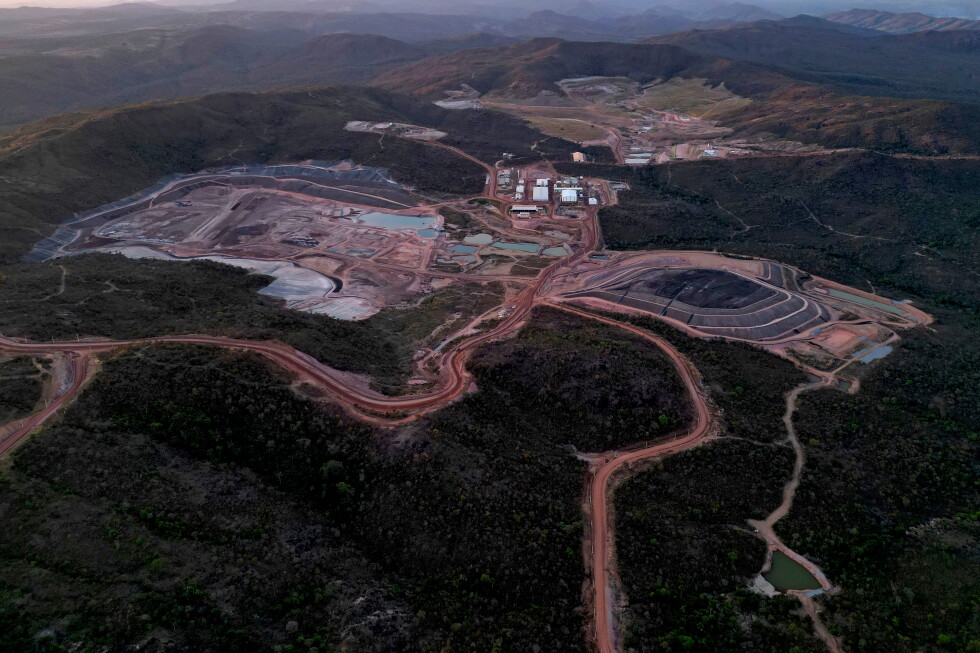
    BANGKOK, Associated Press – A massive, exceptionally rare ruby has been uncovered by miners in Myanmar, marking the second-largest rough ruby ever extracted from the conflict-plagued Southeast Asian nation, according to official state media reports released Friday. Weighing in at 11,000 carats – equal to 2.2 kilograms or roughly 4.8 pounds – the gem was pulled from the ground near the famed mining town of Mogok, located in Myanmar’s upper Mandalay region. This area is the undisputed heart of the country’s multi-billion-dollar gem mining industry, which has been swept up in the intense ongoing civil war that has torn through Myanmar since the 2021 military coup.

    State-owned publication *Global New Light of Myanmar* confirmed the large ruby was discovered in mid-April, just days after the country’s annual traditional New Year celebration. While the newly unearthed stone is only around half the weight of the 21,450-carat record-holding ruby found in Myanmar back in 1996, industry assessments place its market value far higher thanks to its exceptional color profile and crystalline quality. Gem experts describe the stone as having a vivid purplish-red base hue with subtle warm yellow undertones, a top-tier color grading, moderate natural transparency, and a highly reflective surface that signals premium quality.

    Myanmar dominates the global ruby supply chain, producing an estimated 90% of all natural rubies traded worldwide, with most output coming from the Mogok and Mong Hsu mining regions. For decades, gemstones – whether traded through legal channels or smuggled across unregulated borders – have been one of the largest sources of state revenue in Myanmar. However, human rights advocacy groups including London-based research and policy organization Global Witness have long campaigned for international jewelers to boycott all gem imports from Myanmar, arguing that profits from the gem trade have propped up repressive military governments for generations.

    The context of this discovery comes amid ongoing political and military upheaval in Myanmar. Earlier this year, the ruling military installed a new nominally civilian government following general elections that were widely dismissed as fraudulent by independent human rights organizations and domestic opposition groups. The election confirmed the continued grip on power of President Min Aung Hlaing, the army chief who led the 2021 coup that ousted the elected civilian government. In recent weeks, Min Aung Hlaing and his cabinet held a formal inspection of the giant ruby at the presidential office in the national capital of Naypyitaw.

    Beyond funding the national military, gem mining revenue also acts as a core funding stream for the numerous ethnic armed groups that have waged campaigns for regional autonomy across Myanmar for more than half a century, a dynamic that has perpetuated the country’s long-running cycles of internal conflict. Security conditions across major mining regions remain deeply unstable. Mogok, the town where the new ruby was found, was captured in July 2024 by the Ta’ang National Liberation Army (TNLA), a guerrilla group representing the Palaung ethnic minority. Though the TNLA initially took control of and began operating the region’s mines, authority over the area was eventually transferred back to Myanmar’s national military under the terms of a China-brokered ceasefire deal reached in late 2024.

  • First batch of UFO files is released as Trump urges the public to draw its own conclusions

    First batch of UFO files is released as Trump urges the public to draw its own conclusions

    On Friday, the U.S. Pentagon launched the first batch of long-awaited declassified documents detailing hundreds of reported sightings of Unidentified Anomalous Phenomena, more commonly known to the public as UFOs, capping off weeks of public teasing from former President Donald Trump that reignited widespread public fascination with unexplained aerial encounters across the globe.

    The newly released trove of materials includes decades of Federal Bureau of Investigation interview transcripts, State Department diplomatic cables, NASA mission debriefing records, military sighting reports, and more than 20 video clips captured by military surveillance sensors from regions spanning the Middle East, East Asia, and North America. The documents, hosted on a new, retro-styled Pentagon website that features black-and-white historical imagery and typewriter-inspired typography, represent the first major public release ordered by congressional legislation passed in 2022.

    Among the most notable accounts included in the initial release are firsthand recollections from Apollo 11 astronaut Buzz Aldrin, who recalled spotting an unusual, moderately bright light source and a large unidentified object traveling near the Apollo 11 command module during the 1969 historic moon mission. Another 1994 State Department cable from the U.S. Embassy in Tajikistan details a joint sighting by one Tajik fighter pilot and three American observers of a brightly glowing unidentified object over Kazakhstan that executed sharp 90-degree turns, corkscrew maneuvers, and circular flight patterns at extreme speeds.

    More recent reports included in the release catalog 2023 sightings across multiple regions: a UAP spotted just above the Aegean Sea that pulled off multiple 90-degree turns at roughly 80 miles per hour; a “super-hot” orb encountered by a U.S. intelligence official conducting a helicopter search that traveled 20 miles at high speed before multiple similar orbs appeared, glowing brighter and dimmer in sequence; a linear glowing object spotted by a drone pilot that vanished completely from view within 10 seconds of appearing; and a spherical object that maintained a steady speed of 483 miles per hour for seven minutes while flying over Syria, later deemed non-threatening by military analysts. A 1972 NASA photograph from the Apollo 17 mission, included in the release, shows three bright dots arranged in a triangular formation; accompanying Pentagon notes acknowledge that no consensus exists on the object’s origin, though a preliminary new analysis suggests it may be a physical craft rather than a photographic error.

    The video files included in the release capture unidentified objects ranging from distant fast-moving specks to a distinct football-shaped object spotted over the East China Sea in 2022. The most recent clip, dated January 1 of this year, shows two circular glowing lights moving against a dark nighttime sky at an undisclosed North American location.

    The release comes after years of gradual declassification work by the Pentagon, which established a dedicated UAP office under congressional order in 2022. The office’s 2024 public report cataloged hundreds of previously unreported UAP incidents but confirmed no evidence that any sighting represented alien technology or extraterrestrial visitation. Trump seized on the long-running public curiosity around UAPs earlier this year, promising a major mass release of previously secret documents and framing the move as a break from past administrations he accuses of hiding information from the public.

    In a Friday post on his Truth Social platform, Trump wrote: “Whereas previous Administrations have failed to be transparent on this subject, with these new Documents and Videos, the people can decide for themselves, ‘WHAT THE HELL IS GOING ON?’ Have Fun and Enjoy!” The Trump administration has emphasized that members of the public are free to draw their own conclusions from the unredacted materials released Friday.

    Congressional Republicans who have spent years pushing for full UAP disclosure praised the move Friday. Tennessee Representative Tim Burchett thanked Trump for keeping his campaign promise on transparency, noting that full disclosure will be a gradual process rather than a one-time release. Florida Representative Anna Paulina Luna, who sent a congressional letter earlier this year demanding the release of 46 UAP videos identified by whistleblowers, confirmed Friday that those additional clips will be released by the Pentagon in the coming months.

    However, independent defense and UAP experts have urged the public to approach the new files with caution, noting that most unexplained sensor readings and sightings eventually turn out to be misidentified natural phenomena or advanced human-made military technology. The Pentagon’s 2024 official report explicitly rejected widespread conspiracy theories that the U.S. government has recovered alien craft or hidden evidence of extraterrestrial life.

    UAP research advocacy groups welcomed the initial release but called for further congressional action to mandate full declassification of all remaining secret UAP records. The Sol Foundation, a California-based research group focused on UAP studies, is pushing for new legislation that would require a full review of all classified materials related to non-human technologies and craft. Group representatives noted that while Friday’s release marks a positive step toward transparency, decades of government secrecy around the topic remain unaddressed, and additional disclosures will be needed to fully inform the American public.

  • At least 3 hikers killed by volcano eruption on Indonesian island

    At least 3 hikers killed by volcano eruption on Indonesian island

    JAKARTA, Indonesia – A powerful explosive eruption at Mount Dukono, one of Indonesia’s most continuously active volcanoes located on the remote island of Halmahera, has left three hikers dead and sparked an urgent ongoing rescue operation, Indonesian authorities confirmed Friday.

    A group of approximately 20 hikers departed on their ascent of the 1,355-meter (4,445-foot) peak Thursday, openly defying strict public safety restrictions that have long closed the mountain to recreational climbing amid its ongoing high volcanic activity, according to North Halmahera Police Chief Erlichson Pasaribu. The group was caught off guard when the volcano erupted at 7:41 a.m. local time, sending a dense ash plume billowing roughly 10 kilometers (6.2 miles) above the crater. Indonesia’s Geological Agency recorded seismic activity from the eruption that lasted more than 16 minutes.

    In a national television interview, Pasaribu confirmed the hikers were fully aware of the ban: Mount Dukono has been maintained as a restricted zone under its second-highest government alert level for volcanic risk, but the group proceeded with their climb regardless. When the eruption hit, all 20 hikers became stranded within the dangerous restricted area. Rescue teams were rapidly deployed after an emergency distress signal was detected from the mountain slopes.

    As of Friday afternoon, 14 members of the group, including seven foreign nationals, have been successfully evacuated to safety, with five of those rescued sustaining non-life-threatening injuries. Three hikers – two Singaporean citizens and one Indonesian national – were pronounced dead at the scene. Search operations are still underway for the remaining missing hikers, who authorities believe are attempting to make their way down the mountain on their own.

    Recovery of the three fatalities has been delayed, as recurrent after-eruptions and unstable volcanic conditions have kept rescue teams from safely reaching the impact zone. For years, Indonesia’s Center for Volcanology and Geological Hazard Mitigation has prohibited all human activity within a 4-kilometer (2.5-mile) radius of Dukono’s crater, due to constant risks of flying volcanic bombs, heavy ashfall, and lethal toxic gas emissions. Officials confirmed all members of the hiking group were inside this prohibited zone when the major eruption occurred.

    Pasaribu noted that despite multiple warnings posted on hiking trails and shared widely across social media platforms about the active dangers, many outdoor enthusiasts continue to sneak onto the mountain. The main driver of this risky behavior, he explained, is the growing desire among social media users to capture unique content to share online.

    Indonesia, which lies along the geologically active Pacific Ring of Fire, is home to more than 120 active volcanoes across its archipelago of thousands of islands. Mount Dukono is among its most active, having experienced near-constant low-level eruptive activity since 1933. In recent months, volcanic activity at the peak has intensified significantly. According to Lana Saria, head of the Geological Agency under Indonesia’s Ministry of Energy and Mineral Resources, explosive magmatic eruptions have increased sharply since late March. Between March 30 and the day of the fatal eruption, officials recorded nearly 200 separate eruptions, averaging around 95 eruptive events per day. Friday’s deadly blast ranks among the most powerful of this recent uptick in activity, Saria confirmed.

    Ash clouds from the latest eruption, which range in color from pale gray to deep black, are being carried northward by regional winds, Saria said. Authorities have issued warnings that widespread ashfall could impact nearby populated areas, including the larger town of Tobelo. Ashfall poses acute respiratory health risks to local residents, and can also disrupt ground and air transportation as well as normal daily routines. Secondary hazards, including fast-moving volcanic mudflows that can travel down river channels from the volcano’s slopes during heavy rain, are also a major ongoing risk, officials added.

    With volcanic activity remaining at elevated levels, government agencies have ramped up continuous monitoring of Mount Dukono. Officials have issued a renewed plea to local residents, tourists, and hiking enthusiasts to remain calm, strictly follow all official safety guidance, and avoid all restricted areas near the volcano while monitoring continues.

  • Three dead after volcano erupts on Indonesian island

    Three dead after volcano erupts on Indonesian island

    On a Friday morning in Indonesia, a sudden eruption of the active Mount Dukono volcano claimed three lives, turning a routine early morning hike into a fatal tragedy that has sparked new debates about public risk perception and enforcement of volcanic safety regulations.

    The 1,335-meter volcano, located on Indonesia’s North Maluku island, erupted at 07:41 local time, sending a towering column of volcanic ash 10 kilometers into the sky. Footage captured from the scene shows thick plumes of ash and rocky debris continuing to spew from the volcano’s crater long after the initial blast. Among the hikers on the mountain that morning were 20 people who had ignored repeated official warnings against climbing the volcano: 18 Singaporean and Indonesian hikers, and two local porters. Three members of that group — two Singaporean citizens and one local resident from nearby Ternate — were killed by the eruption.

    Search and rescue teams were deployed immediately to extract the remaining hikers. Most of the surviving group members were safely evacuated and transported to local hospitals to receive treatment for eruption-related injuries. The two porters from the original group stayed behind on the mountain to help rescuers navigate the terrain and locate the victims’ remains, which are trapped at higher elevations. As of Friday afternoon, body recovery efforts have been blocked by ongoing volcanic activity, rough, uneven terrain, and repeated explosive blasts from the crater. Aldy Salabia, a local resident assisting with rescue operations, told BBC Indonesian that from the team’s staging shelter, continuous ejection of ash and rock material was clearly visible.

    Eyewitness accounts from other hikers on the mountain that morning have added context to the tragedy. A local guide who escaped unscathed with his two clients told reporters he had detected warning signs of an impending eruption days earlier. “When Dukono hasn’t erupted for a few days, you have to be careful,” he explained, noting that he spotted deep tremors just before the blast and immediately fled downslope with his guests. As he descended, he said, he saw dozens of other hikers still lingering at the summit — including one group at the edge of the crater itself, and another 50 meters away filming footage with a drone.

    Mount Dukono has had more than 200 recorded eruptive events since March 2025, and has maintained a Level 2 alert status on Indonesia’s four-tier volcanic warning system for an extended period, a classification that signals elevated activity and requires strict caution. Since December 2024, Indonesian volcanic authorities have officially banned all tourism and climbing activity within a 4-kilometer radius of the main crater, citing constant risks of flying rock, ash fall, lava flows and sudden explosive eruptions. Officials say these warnings were widely shared across social media platforms and posted on large banners at all trail entrances, but many climbers continue to disregard the restrictions.

    Indonesia’s national search and rescue agency, Barsanas, has launched an investigation into the incident, noting that initial reviews suggest possible negligence by tourism operators or individual guides who led groups up the mountain despite the known risks. “The government is continuing to gather information to establish a complete account of the incident,” a Barsanas spokesperson said.

    Disaster experts say the tragedy exposes a growing, dangerous misperception of volcanic risk among tourists fueled by social media content. Dr Daryono, a member of the Indonesian Association of Disaster Experts, told the BBC that active volcanoes should never be treated as routine tourist destinations. “Dukono is a mountain with almost continuous eruptive activity, so any violation of the danger zone carries a fatal risk,” he said. He added that social media has warped public understanding of the danger: users only see content from influencers and climbers who successfully summit and return unharmed, while the constant, lethal risks of volcanic activity are pushed out of public view. “The real danger remains and could emerge at any time in the form of ejections of incandescent material, thick ashfall, volcanic gas, or sudden explosive eruptions,” he warned.

  • Family of imprisoned Chinese journalist pleads for his release over health concerns

    Family of imprisoned Chinese journalist pleads for his release over health concerns

    BANGKOK, Associated Press – In a desperate new appeal, family members of Chinese journalist Dong Yuyu and international press freedom advocates are calling for the immediate release of the 7-year-sentenced editor, whose rapidly deteriorating health has put his life at imminent risk.

    Dong, a veteran editor at Beijing-based state-owned Guangming Daily who also contributed commentary to Chinese independent outlets and The New York Times’ Chinese-language platform, was detained in 2022 during a routine lunch meeting with a Japanese diplomat in Beijing. In 2024, Chinese courts convicted him of espionage charges and handed down a seven-year prison term.

    In a public statement released Thursday, Dong’s family warned that the journalist’s current condition amounts to a de facto death sentence. According to the family’s account, Dong was admitted to a prison-run hospital in Tianjin on April 27, where medical practitioners diagnosed him with heart arrhythmia and detected a lung tumor that the family suspects is cancerous. The family added that Dong has been forced to work long hours on garment production tasks during his incarceration, with no access to adequate rest to manage his worsening health.

    Speaking from the United States, where he has waged a sustained advocacy campaign for his father’s release, Dong Yuyu’s son Dong Yifu shared that he and his grandmother are overwhelmed by grief and anxiety over the rapidly unfolding situation.

    International press freedom organization Reporters Without Borders has joined the call for action, with Aleksandra Bielakowska, an activist with the group, urging the global community to ramp up diplomatic pressure on Beijing. The organization is pushing for Beijing to grant Dong medical parole, approve his travel to an overseas medical facility for urgent treatment, and allow him to reunite with his waiting family.

    Dong’s family has pinned additional hopes on the upcoming bilateral summit between U.S. President Donald Trump and Chinese President Xi Jinping next week, expressing optimism that world leaders will raise Dong’s case during high-level talks.

    Prior to his detention, Dong published commentary advocating for constitutional democracy, political liberalization, and greater government transparency – reform-minded positions that were once permitted for public discussion in Chinese media circles but have become heavily restricted and taboo in recent years under Beijing’s tightening ideological control.

  • Trump’s tariffs hit Toyota profit, though its global sales grew

    Trump’s tariffs hit Toyota profit, though its global sales grew

    TOKYO – Japan’s leading automaker Toyota Motor Corporation has posted a sharp 19% decline in full-fiscal-year profit for the 12 months ending March 2025, with former U.S. President Donald Trump’s trade tariffs and unfavorable currency fluctuations identified as the primary drags on its bottom line.

    Released on Friday, the company’s financial results show net profit landed at 3.85 trillion Japanese yen, equivalent to roughly $25 billion, down from 4.8 trillion yen in the prior fiscal year. Toyota, which produces popular nameplates including the Camry sedan, Prius hybrid, and Lexus luxury line, estimated that Trump-era tariff policies alone carved 1.4 trillion yen ($9 billion) off its annual operating income. Unfavorable foreign exchange swings further compressed profit margins for the global manufacturer, which is headquartered in Toyota City, central Japan.

    Despite the profit decline, Toyota outperformed many analyst expectations in key operational metrics. Global vehicle sales rose to nearly 9.6 million units from 9.4 million in the previous year, while total annual revenue climbed 5.5% to 50.7 trillion yen ($323 billion), up from 48 trillion yen a year prior. On a quarterly basis, the brand closed out the fiscal year with strong momentum: January to March profit jumped 23% year-over-year to 817 billion yen ($5.2 billion), from 664 billion yen, while quarterly sales edged up nearly 2% to 12.6 trillion yen ($80 billion).

    Looking ahead to the current fiscal year running through March 2026, Toyota is maintaining a cautious outlook amid escalating geopolitical risk in the Middle East. The company projects it will again sell 9.6 million vehicles globally, while forecasting a relatively modest annual profit of 3 trillion yen ($19 billion). The ongoing conflict between Iran and Israel, which has effectively closed the Strait of Hormuz — a critical global shipping chokepoint for energy and trade — has created significant uncertainty for the manufacturer. Toyota expects persistent supply chain disruptions from the strait closure, and has already recorded a drop in regional vehicle sales across the Middle East.

    As Japan relies on imports for nearly 100% of its oil, much of which comes from Middle Eastern producers, the conflict has driven sharp increases in oil and raw material prices. Additionally, rerouting cargo to avoid the Strait of Hormuz adds substantial fuel and labor costs to Japanese importers, a pass-through expense that hits manufacturing giants like Toyota directly.

    Beyond near-term financial headwinds, Toyota reaffirmed its long-term strategic vision to transition from a traditional automaker to a diversified mobility company. The brand confirmed plans to expand its product portfolio beyond passenger vehicles to include personal watercraft and small aircraft, alongside innovation in adjacent industrial and service sectors. Current development projects include robotic arms designed to restock retail store shelves and autonomous transport devices for medical equipment in hospitals. To support this transformation, Toyota announced it will streamline operations, rationalize its vehicle model lineup, increase local component sourcing to cut supply chain risk, and implement company-wide cost reduction initiatives.

    Following the release of the earnings report, Toyota’s share price declined 2.2% in Tuesday trading in Tokyo.

  • Political uncertainty in India state as film star winner falls short of majority

    Political uncertainty in India state as film star winner falls short of majority

    In a political upheaval that has rewritten decades of electoral history in the southern Indian state of Tamil Nadu, film superstar-turned-politician C. Joseph Vijay’s newly launched Tamilaga Vettri Kazhagam (TVK) has emerged as the single largest party in the 234-member state legislative assembly, shattering the long-standing duopoly of the Dravida Munnetra Kazhagam (DMK) and All India Anna Dravida Munnetra Kazhagam (AIADMK). But five days after vote counting concluded, the state remains mired in political uncertainty, with no clear timeline for the formation of a new government and competing constitutional debates over who should get the first chance to take power.

    Vijay, a 51-year-old megastar popularly known by his fan nickname ‘Thalapathy’, led his fledgling party to a stunning 108 seats in the election, defeating the incumbent DMK government led by Chief Minister MK Stalin. The result leaves TVK just 10 seats short of the 118-seat majority required to form a government on its own. So far, India’s main national opposition party, the Congress, has pledged its five seats to Vijay’s bloc, leaving the celebrity politician just five legislators short of the required threshold.

    Two days after the vote count, Vijay met with Tamil Nadu Governor Rajendra Vishwanath Arlekar twice to formally stake his claim as the leader of the single largest party to form the next administration. Following the second meeting on Thursday, however, the Governor’s office released a statement rejecting the claim, noting that Vijay had not yet demonstrated he holds the requisite majority support to form a stable government. The Governor has insisted that Vijay submit documented proof of the 118 committed legislators before being invited to form government, a move that has drawn sharp criticism from TVK leaders and their backers.

    Constitutional experts are divided over the Governor’s decision. Many point to well-established constitutional precedent that grants the leader of the single largest party the first opportunity to form government, with a floor test of majority held after the government takes office. They argue that denying Vijay this opportunity is procedurally unfair. Analysts defending the Governor’s position note that his primary mandate is to ensure the formation of a stable administration that can survive a confidence vote, rather than inviting a minority government that could collapse shortly after taking office.

    Vijay’s rapid rise to the top of Tamil Nadu politics has drawn widespread comparisons to MG Ramachandran, another iconic matinee idol who split from the DMK in 1977 to form the AIADMK and went on to become the state’s Chief Minister. For nearly half a century, Tamil Nadu’s politics have been dominated by a two-party system between the DMK and AIADMK, a status quo that TVK has already overturned with its election performance. Unlike Ramachandran and his successor J Jayalalithaa — another film star who led the state for decades — Vijay enters politics with no prior elected experience, though he followed the traditional path of celebrity-turned-politician by retiring from his 69-film acting career full-time after launching TVK in 2024.

    As political uncertainty drags on, Indian media outlets have floated a range of hypothetical coalition scenarios, including a shocking power-sharing agreement between the bitter long-time rivals DMK and AIADMK to block TVK from power. Still, many analysts remain optimistic that Vijay can cobble together the required support from smaller regional parties and independent candidates to hit the 118-seat magic number and form the next government, closing out one of the most dramatic political upsets in recent Indian electoral history.