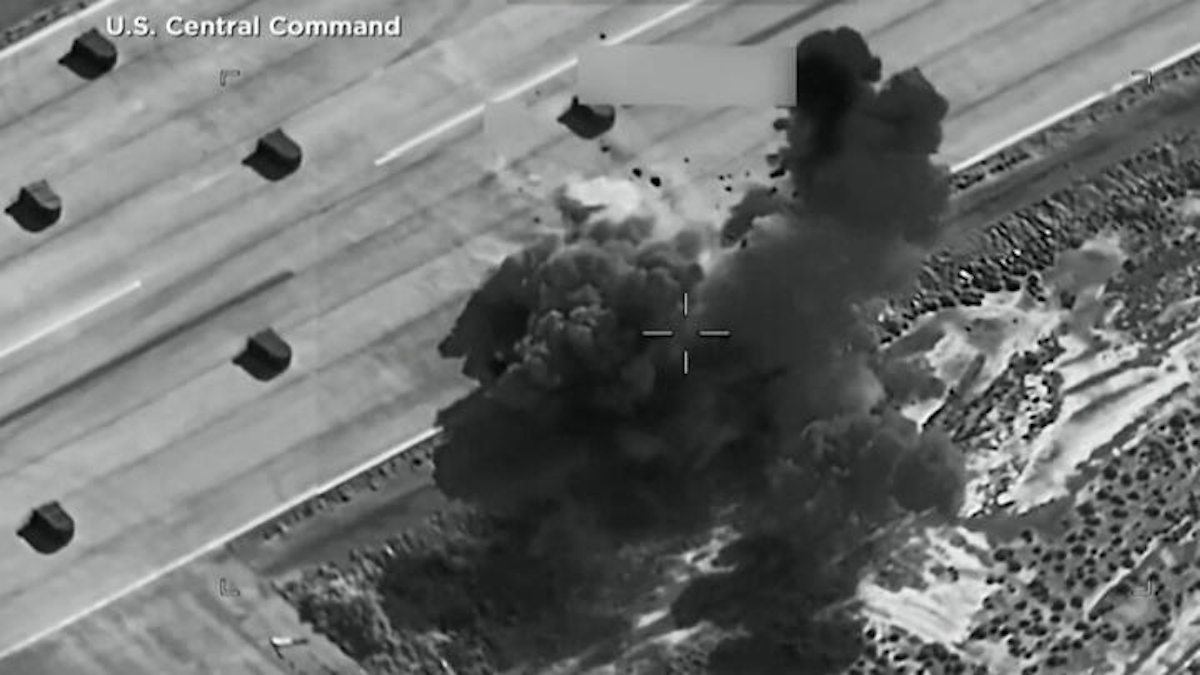
For decades, U.S. military engagements in the Middle East have followed a predictable, almost ritualistic pattern: intense military strikes, a public declaration of victory, a high-profile diplomatic agreement signed with much fanfare, and only weeks later, the sobering realization that a signed document cannot erase the deep-rooted conflicts it was meant to resolve. This year alone, Iran and the United States have cycled through this exact sequence twice, with Washington’s foreign policy establishment once again confusing a temporary lull in fighting for a permanent end to hostilities.
Recent contradictory statements from former President Donald Trump underscore the deeper chaos at the heart of U.S. policy toward Iran. First, Trump declared an agreed ceasefire “over,” then just 24 hours later insisted the U.S. had no intention of launching long-term military action. This is no mere contradiction—it is a visible symptom of a 20-year-long pattern of U.S. policy that swings wildly between maximalist rhetoric and tactical restraint, never once settling on a clear, achievable endgame for Washington’s engagement with Iran.
To this day, core questions about U.S. objectives remain unanswered. Is Washington seeking regime change in Tehran? Full denuclearization of the Iranian state? Guaranteed unimpeded freedom of navigation through the Strait of Hormuz? Every new U.S. strike appears designed to address a different unspoken goal, a clear indication that no consensus on ultimate objectives exists among U.S. policymakers.
This lack of direction demands closer examination, particularly given the origins of the most recent round of conflict. Earlier this year, U.S. decapitation strikes that killed Iran’s supreme leader and much of the country’s top leadership were marketed as a move to break the Islamic Republic’s ability to carry out destabilizing actions across the region. Instead, the strikes achieved the exact opposite outcome: they hardened the security-focused authoritarian governance that decapitation strikes are supposed to dismantle. Rather than being intimidated into surrender, Iran’s hardline factions used the public humiliation of losing their leadership to justify the asymmetric harassment of commercial shipping in the Strait of Hormuz—the very activity that now serves as the pretext for renewed U.S. military strikes.
This pattern is familiar to any observer of post-9/11 U.S. wars in the region: the application of large-scale military force against a sovereign state does not produce the intended surrender, but instead scatters the threat into more diffuse, harder-to-deter forms that make further escalation all but inevitable.
Crucially, the costs of this dangerous brinkmanship are not borne primarily by Washington. They fall on Bahrain, which hosts the U.S. Fifth Fleet and now endures repeated air-raid sirens that disrupt daily life. They fall on Kuwait and Qatar, which have been dragged into a conflict over a critical waterway they did nothing to start. They fall on the global economy, which continues to grapple with the worst oil market disruption in modern history, months after a ceasefire was supposed to resolve the crisis.
Gulf Arab states, which the U.S. has spent decades cultivating as regional partners, are now learning a bitter lesson that neighbors of Iraq learned in 2003 and Lebanese stakeholders learned more recently: proximity to U.S. military power in the Middle East does not equal protection from the risks that come with it.
Another critical question is almost never raised openly in Washington: what is the de facto Israeli veto over U.S. Iran policy actually costing the United States? This week, Israeli Prime Minister Benjamin Netanyahu delivered public criticism of Turkish President Recep Tayyip Erdogan from the stage of a NATO summit designed to showcase Western unity, while also lobbying against the sale of F-35 fighter jets to a fellow NATO ally. These actions are a stark reminder that Israel’s regional priorities do not always align with Washington’s goal of maintaining a unified NATO alliance structure — and that U.S. presidents have consistently refused to separate the two countries’ agendas, even when U.S. strategic interests clearly diverge from Israel’s. A U.S. foreign policy genuinely centered on American national interests, rather than prioritizing a permanent security guarantee for a single regional partner, would ask far tougher questions about this arrangement than either U.S. political party currently seems willing to pose.
None of this is to argue that Iran’s actions in the Strait of Hormuz — attacking commercial tankers and threatening one of the global economy’s most critical trade arteries — are justified. They clearly are not, and a regime willing to damage neighboring economies to assert control over the waterway has earned the international pushback it now faces. But acknowledging that Tehran’s behavior is provocative does not mean Washington’s response is wise: a war with no clear objectives, waged in a region where two decades of U.S. military intervention have shown that force alone rarely produces durable peace settlements.
The core strategic question U.S. policymakers should be asking is not just how to respond to the most recent Iranian attack, but what five more years of this cycle will look like, and whether the U.S. can afford that cost. Based on current policy, no one in Washington has paused long enough to find an answer.