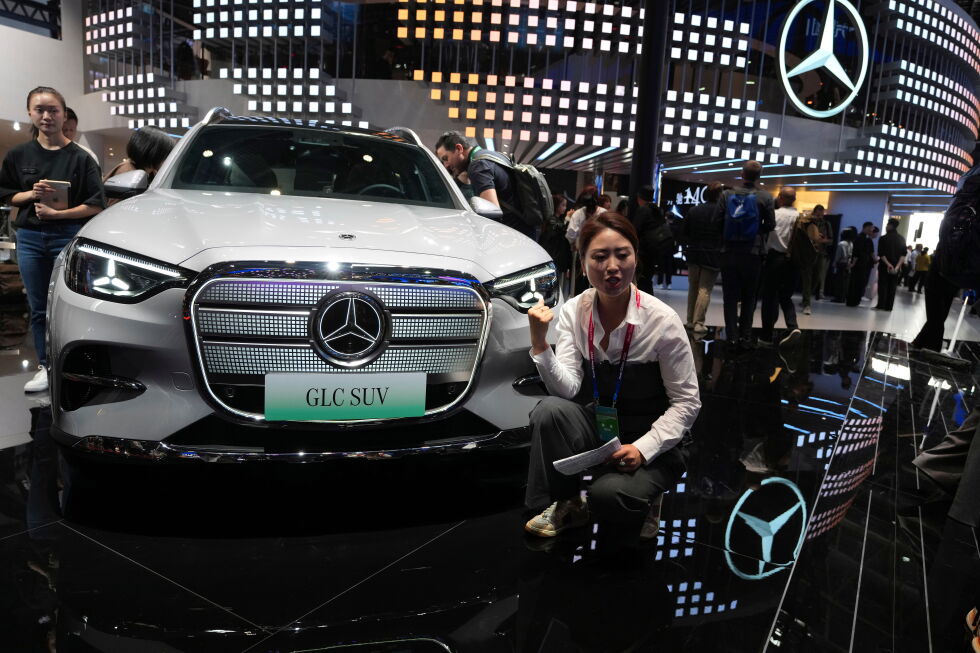
The world’s largest automotive market, China, has delivered a sharp blow to top German automakers, with the April-June quarter of this year seeing double-digit sales declines that have hit global profit margins and forced strategic overhauls for major brands.
Newly released corporate data from the past week reveals that all four leading German brands — Volkswagen, Mercedes-Benz, BMW, and Porsche — suffered year-on-year sales drops between 30% and 41% in the second quarter alone. For the first half of 2024, the decline extended across all four manufacturers, with each reporting a year-on-year fall of more than 20% in Chinese deliveries. These slumps have squeezed overall corporate profits, in many cases erasing sales and revenue gains secured in other regional markets around the world.
The downturn in China comes at a particularly challenging moment for these legacy European automakers, who now face rising competition from Chinese brands not only in China but also in overseas markets, including their home region of Europe. Chinese EV leader BYD has already made significant inroads into European markets, challenging the historical dominance of German brands in their core segments.
Industry analysts note that the latest quarterly declines are among the most severe recorded by German automakers in modern Chinese market history. For example, Volkswagen Group, which has staked its long-term growth on heavy investment in the Chinese market, reported a 36.6% drop in second-quarter deliveries, totaling 424,300 vehicles. This decline was severe enough to drag the group’s global sales down 8.6% year-on-year, even as Volkswagen recorded delivery growth in both the European and North American markets. In response to the steep drop, Volkswagen has announced plans to cut its existing model lineup by as much as half to streamline operations and cut costs.
Multiple overlapping factors have driven the slump in sales for foreign automakers. China’s ongoing economic slowdown and prolonged downturn in the property sector have weighed heavily on consumer confidence, pushing many households to delay large-ticket purchases like new vehicles. Within the auto market itself, years of aggressive price competition have put established European brands under severe pressure, as cost-conscious consumers increasingly shift to more affordable models from domestic Chinese manufacturers.
Official industry data underscores the scale of the market contraction: the China Association of Automobile Manufacturers reports that total domestic passenger vehicle sales fell 24% year-on-year in the first half of the year, dropping to just under 8.3 million units. Global consultancy AlixPartners projects that full-year 2024 light vehicle sales across China will decline by roughly 10% from 2023 levels.
Beyond weak consumer demand, structural shifts in the Chinese auto market are working against German manufacturers. Unlike domestic Chinese brands, which have prioritized rapid expansion in the fast-growing electric vehicle (EV) segment, German automakers still retain their core strength in conventional internal combustion engine (ICE) vehicles, a segment that is contracting far faster than the overall market in China, where EV sales have outpaced ICE vehicle growth by a wide margin.
Chinese brands also hold an additional operational advantage: they refresh their model lineups far more frequently than foreign legacy manufacturers, allowing them to respond faster to shifting consumer preferences and introduce new technology at a quicker pace.
“Foreign automakers are going to have to fight for every share of the market,” Stephen Dyer, Asia-Pacific leader of the automotive practice at AlixPartners, noted in a recent news briefing. Independent auto analyst Lei Xing echoed this assessment, saying, “The German automakers are bearing most of the brunt” of the current market downturn and competitive shift, a sentiment echoed by brand representatives. Porsche, a Volkswagen Group subsidiary, described China’s current market conditions as “challenging” in an official statement, while Mercedes-Benz acknowledged that China is facing “a significantly weaker overall market and macroeconomic environment.”